When a nor’easter recently hit the Eastern Seaboard, it transformed my driveway into a stretch of whitewater rapids and nearly obliterated my perennials, their shapes irretrievably distorted by high winds and heavy rain. Unfortunately, it’s not the first time.
And it won’t be the last: Scientists predict an increase in extreme weather events, including storms and floods, fed in part by human-caused climate change.
Click to Gallery
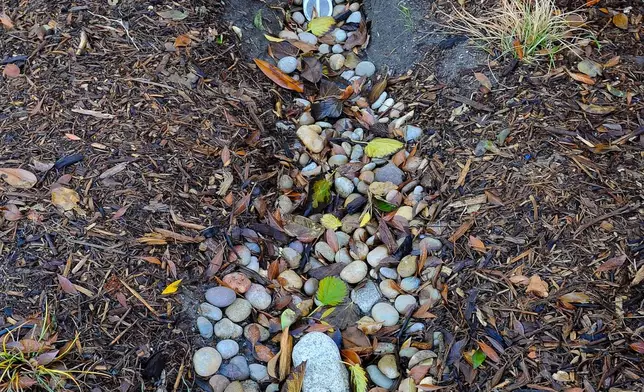
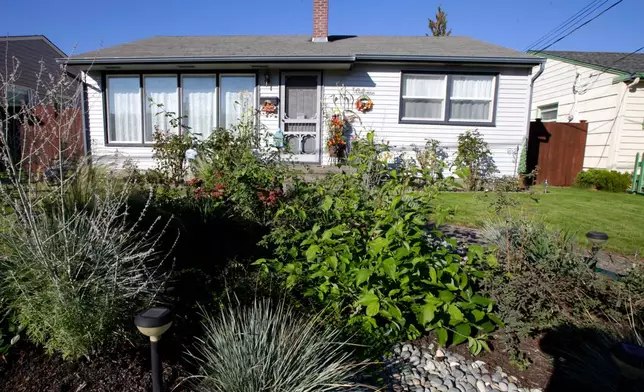
FILE - A pipe from a backyard cistern protrudes into the front yard of a home in North Hollywood, Calif., on Jan. 7, 2016, where where rain water captured in the cistern can be released into a sunken rain garden. (AP Photo/Michael Owen Baker, File)
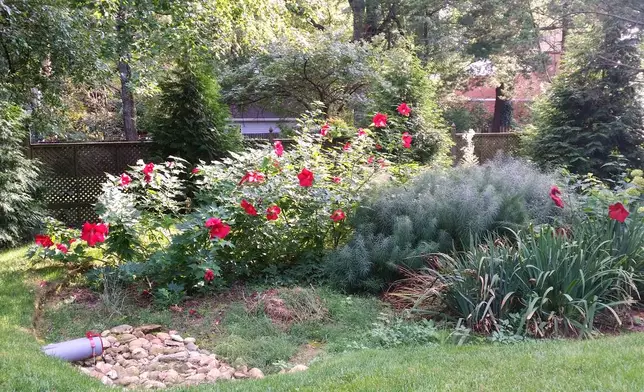
A rain garden with mature plantings appears in Montgomery County, Md., on Sept. 14, 2014. (Montgomery County Department of Environmental Protection via AP)
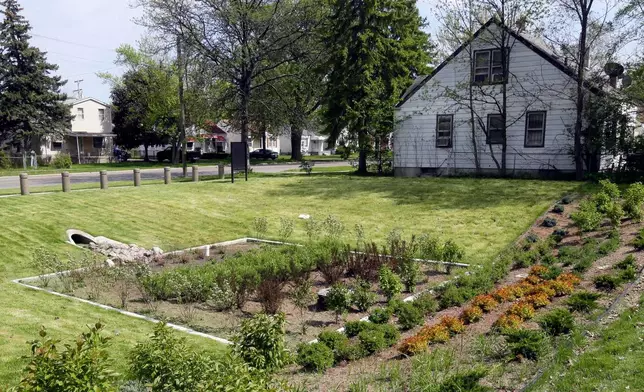
FILE - A bioretention garden built to collect rain runoff appears at a home in the Warrendale neighborhood of Detroit on May 16, 2016. (AP Photo/Carlos Osorio, File)
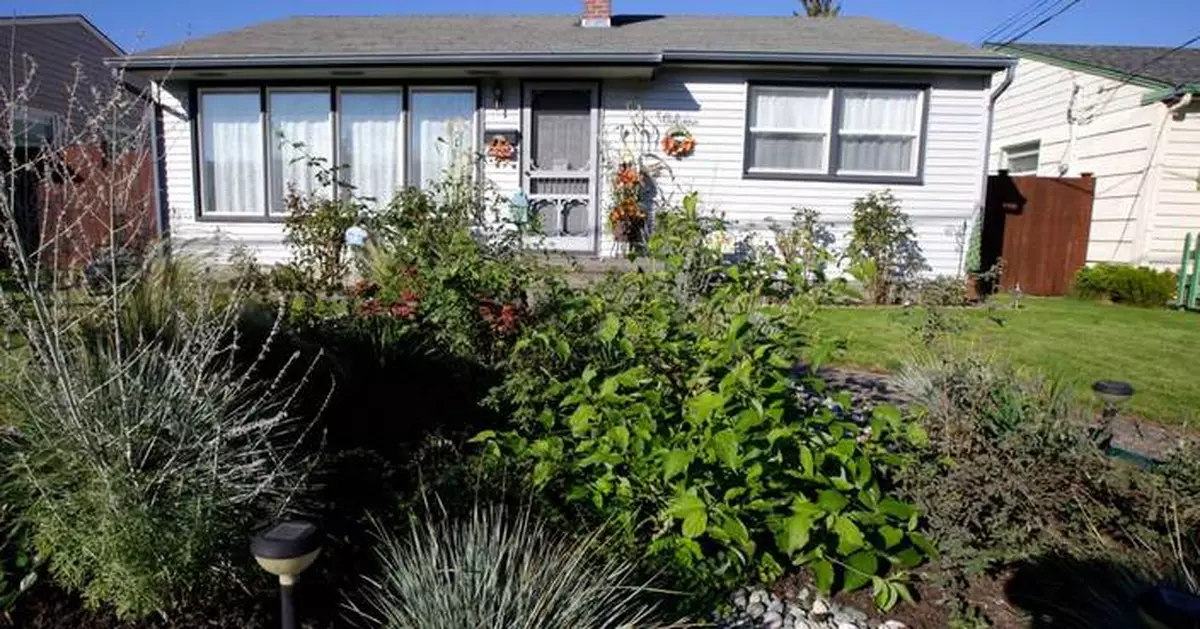
FILE - A rain garden appears in a residential area of Puyallup, Wash., on Oct. 18, 2011. (AP Photo/Ted S. Warren, File)
I swept, then hosed, the debris off the blacktop, and used twine to wrangle my mums and catmints back into shape, at least until cold weather does them in. But my experiences and scientists' predictions have got me planning a rain garden.
Simply put, a rain garden is a depressed bed planted with native perennials and shrubs selected for their high-water tolerance. It’s strategically situated in a spot where water — from downspouts, driveways, compacted soil and other sources of runoff — flows downward toward it. That runoff waters the plants and filters pollutants as the soil absorbs it. And it means the excess water, as well as the road sediment, debris, pet waste pathogens, fertilizers and chemicals it picks up along the way, is kept out of storm drains, watersheds and wetlands.
Rain gardens can also stop water from entering your basement or affecting your foundation.
In dry, drought-stricken regions, too, many gardeners are turning to rain gardens and other methods of collecting rainwater.
You can make a rain garden as big or small as you like, but keep it at least 10 feet (3 meters) from your house, garage or other structures. Don’t plant it over a septic tank or underground utilities, or near a well that provides drinking water. And avoid sloped areas and those that are soggy to begin with.
Dig the bed in your preferred size and shape (kidney, crescent, round and teardrop are popular). You can either gradually grade the soil toward the center so it is 6 inches (15 centimeters) lower than the perimeter, or dig everything but the perimeter 6 inches (15 centimeters) deep so a berm that high surrounds the sunken bed.
Direct water toward the bed by installing a gutter extension, creating a downhill slope, digging a trench or connecting a PVC pipe to a distant gutter and running it underground to the rain garden. Slow the flow of water by lining your trench or slope with rocks or small stones.
Some gardeners prefer to keep the center free of plants and cover the soil there with stones, as well.
Choose native plants best suited to high-water or, if planting the center, even swampy conditions. Natives are naturally adapted to your region’s environment, so they’ll be easier to grow, require less maintenance and will also provide a habitat for bees, birds, butterflies and other wildlife.
Consider planting flowering perennials alongside sedges and grasses, and incorporating shrubs and small trees, if space allows. Including some evergreens will further help avoid erosion.
The Ladybird Johnson Wildflower Center’s Plant Finder is a good resource that lets you narrow searches by horticultural zone, sun exposure and other parameters.
Put plants with the highest water needs at and around the center of your rain garden, where water will collect and pool for a bit before seeping into the soil. Plant those with moderate water needs along the elevated perimeter of the bed, which will be somewhat drier.
In the absence of rain, water the plants as necessary throughout their first year, as their roots grow and anchor into the ground. Keep on top of weeds, too, until the plants grow and fill in the bare spots between them.
After you’ve designed, graded and planted your rain garden, there won’t be very much for you to do, except sit back and enjoy your striking natural landscape — and its hidden ecological function.
Jessica Damiano writes weekly gardening columns for The Associated Press. She publishes the Weekly Dirt Newsletter. Sign up here for weekly gardening tips and advice.
For more AP gardening stories, go to https://apnews.com/hub/gardening.
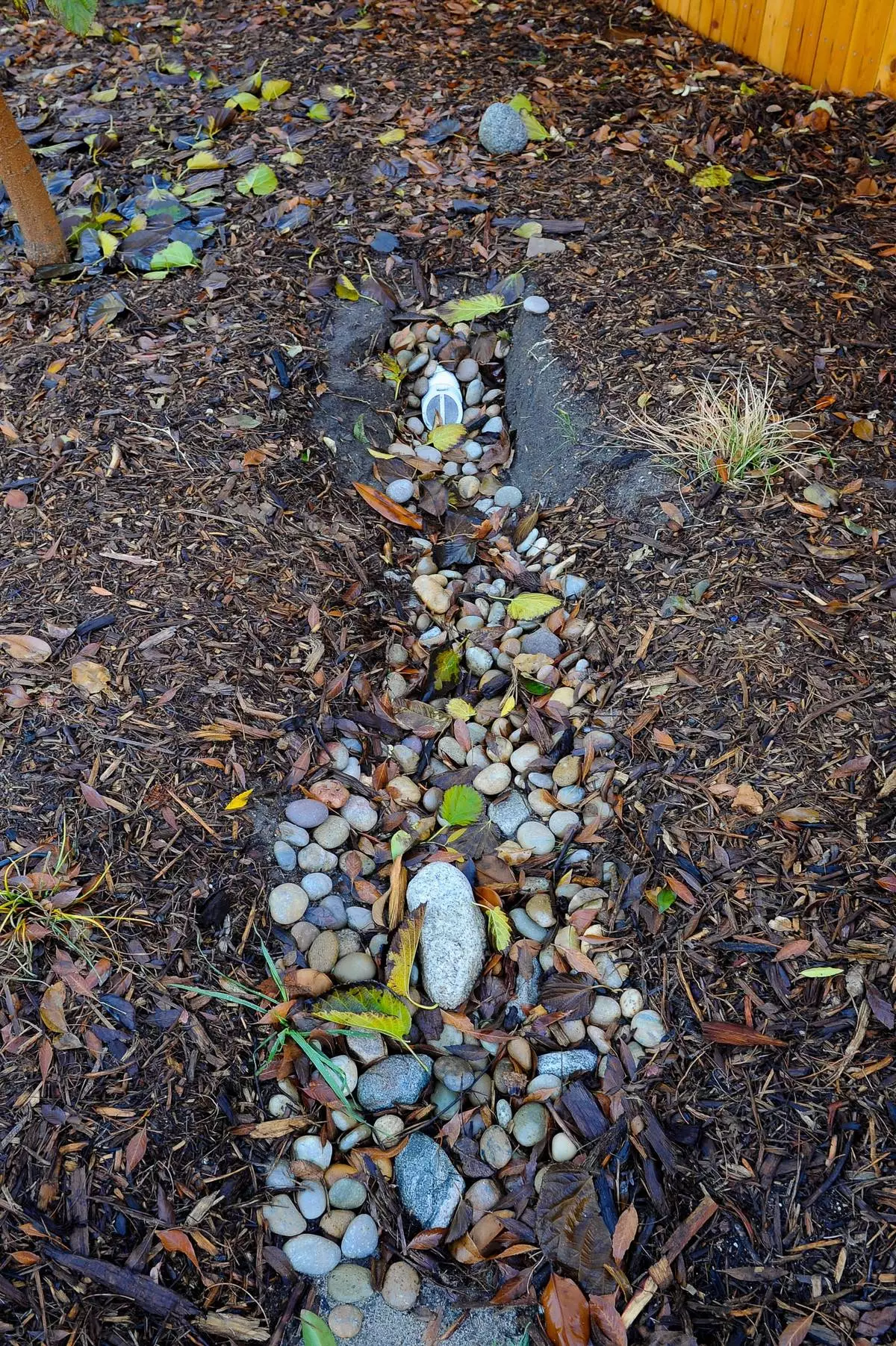
FILE - A pipe from a backyard cistern protrudes into the front yard of a home in North Hollywood, Calif., on Jan. 7, 2016, where where rain water captured in the cistern can be released into a sunken rain garden. (AP Photo/Michael Owen Baker, File)
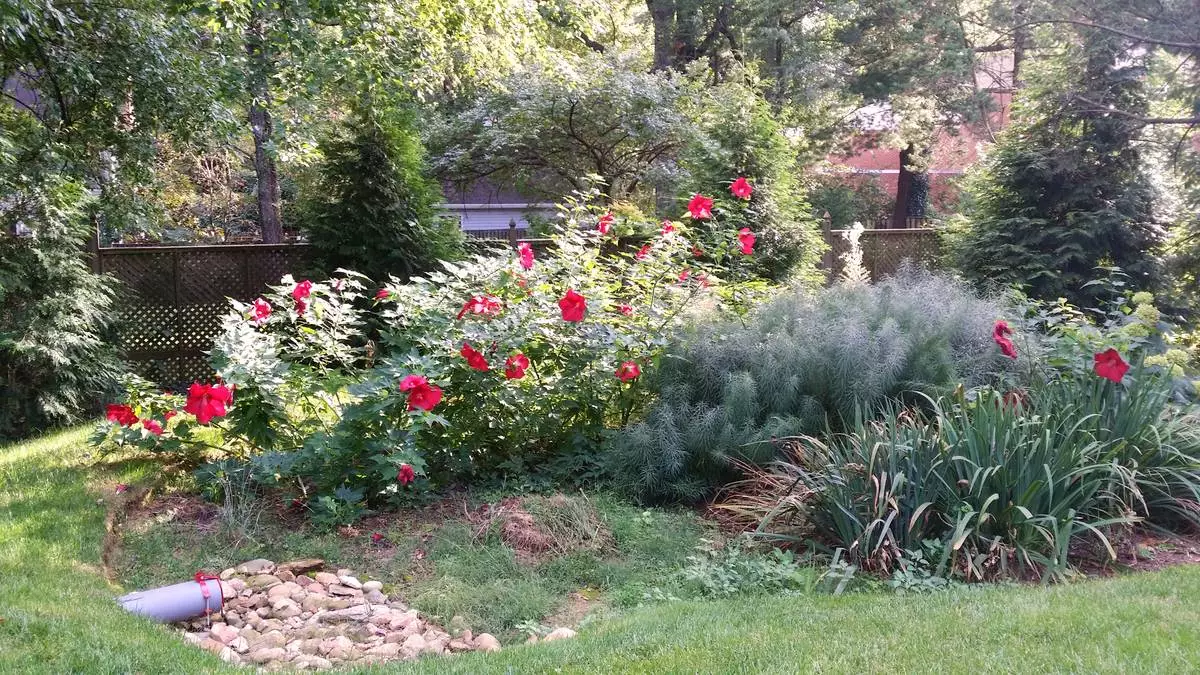
A rain garden with mature plantings appears in Montgomery County, Md., on Sept. 14, 2014. (Montgomery County Department of Environmental Protection via AP)
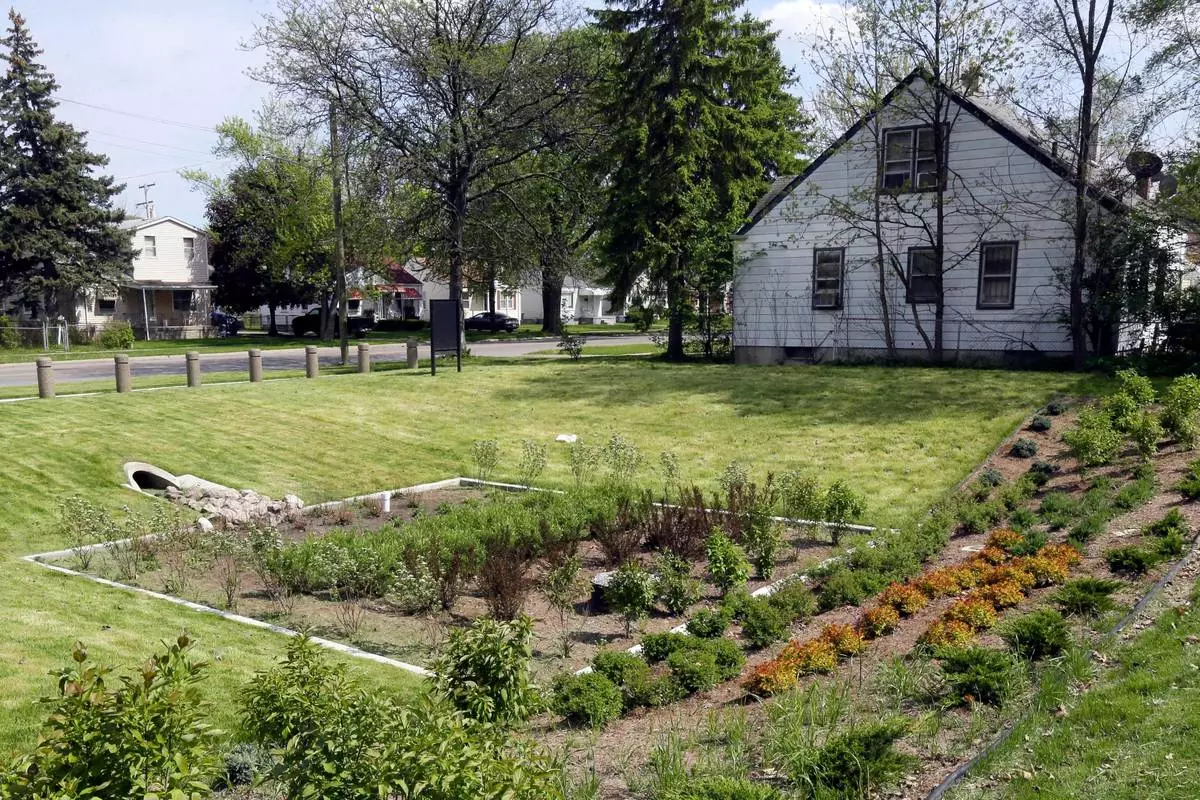
FILE - A bioretention garden built to collect rain runoff appears at a home in the Warrendale neighborhood of Detroit on May 16, 2016. (AP Photo/Carlos Osorio, File)
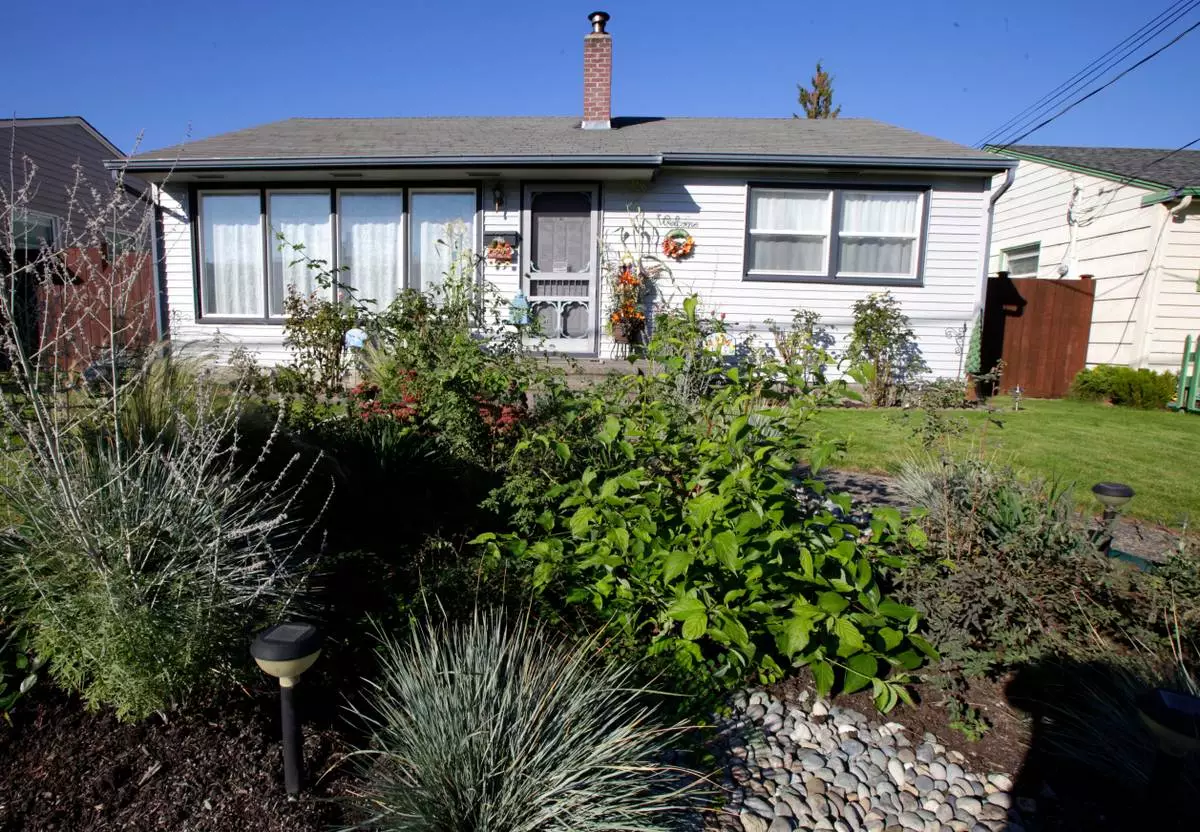
FILE - A rain garden appears in a residential area of Puyallup, Wash., on Oct. 18, 2011. (AP Photo/Ted S. Warren, File)
REYKJAVIK, Iceland (AP) — U.S. Secretary of State Marco Rubio on Tuesday sought to reassure NATO ally Iceland that President Donald Trump's administration has no designs on the island but shares its deep concerns about Arctic security as tensions between the United States and Russia rise in the high north and elsewhere.
Rubio hailed the role of diplomacy in resolving conflicts as he began a three-nation tour of NATO allies in the capital of Iceland, where concerns over the Republican administration’s often brusque and sometimes rude approach to traditional friends and partners have stirred unease.
Rubio, whose tour of NATO members will include Greece and Portugal, met Tuesday with Icelandic Foreign Secretary Thorgerdur Katrín Gunnarsdóttir at Reykjavik’s Hofdi House, the site of the 1986 summit between U.S. President Ronald Reagan and Soviet leader Mikhail Gorbachev that is widely regarded as the beginning of the end of the Cold War.
“The house symbolizes diplomacy’s role in ending the Cold War and defeating communism,” Rubio posted on social media after the talks that took place just days before the 40th anniversary of the landmark meeting.
However, both Rubio and Gunnarsdóttir downplayed differences between the allies and said both countries were committed to deepening and expanding military and commercial ties. Rubio made clear that the United States would not do anything in Iceland without Iceland's consent.
“We would be open to having those conversations to see what we can do together,” he said, noting that the U.S. had a decades-long permanent military presence in Iceland until 2006, when shifting priorities caused it to close its Keflavik base outside of Reykjavik. He noted that priorities have shifted again.
And, he went out of his way to praise Iceland: “We have tremendous respect for the people. We have respect for the country in the role it plays, and it has for a very long time,” he said.
Iceland has been uneasy about Trump’s intentions toward it after the posting of a map showing the colors of the U.S. flag sprawling across all of North America and extending to Iceland and Greenland. The unease has persisted despite an agreement reached last month to increase the U.S. presence in the neighboring Danish territory of Greenland that appears to have ended Trump’s earlier demand for the U.S. to take full control.
But on Tuesday, after Rubio's talks with Gunnarsdóttir and Iceland's Prime Minister Kristrún Frostadóttir, those tensions appeared to be on the wane.
Gunnarsdóttir said the matter had been largely, if not entirely, resolved. “We remain focused on the future," she said. Rubio, meanwhile, said he was not in Iceland to talk about social media posts. “Everything is very positive,” he said.
Before leaving Washington on Monday, Rubio said the visit is intended to “advance our shared priorities: a secure Arctic, stronger commercial and energy ties, and closer defense cooperation.” He offered no hint of tensions with the island that, while a NATO member, has no standing army.
The map incident, however, alarmed Icelanders, and in response, Gunnarsdóttir summoned U.S. Ambassador Billy Long to a meeting at which she made it clear the post was unacceptable.
Iceland, which is just 180 miles (290 kilometers) from Greenland, had already been on edge after Trump mistakenly named the country four times while speaking about Greenland.
Long, a colorful former Missouri congressman, IRS commissioner and professional auctioneer, also has made waves in Iceland. Before he took up his post in August, thousands of Icelanders signed a petition urging the prime minister to reject him after he made a crack earlier this year about Iceland becoming the 52nd U.S. state and making him governor. He has since apologized for the quip.
Long is not the first Trump ambassador to Iceland to have raised concerns with the host government. In Trump’s first term, Ambassador Jeffrey Ross Gunter left locals in relatively crime-free Reykjavik aghast over his request to hire armed bodyguards, which prompted complaints.
At Rubio’s next stop in Athens, he may be dealing with another ambassador controversy. Rep. Gregory Meeks, a New York Democrat who is the ranking member of the House Foreign Affairs Committee, said last week that he would investigate allegations of misconduct and impropriety by the U.S. ambassador to Greece, Kimberly Guilfoyle.
In a letter to Rubio, Meeks said that he wanted answers following the allegations reported by The Wall Street Journal last month and that he would call for Guilfoyle’s dismissal if the behavior outlined in the news report was true.
The Journal reported that Guilfoyle told guests at a reception that the U.S. could undermine the Greek government if it chose to, promoted the business interests of one particular Greek construction and energy company, and allowed its lobbyist into private diplomatic meetings.
Some Greek opposition parties have called for an inquiry into the allegations, but it's unclear if they will proceed.
Guilfoyle, a former Fox News Channel host and California prosecutor who was once engaged to Trump’s son Donald Jr., has denied any wrongdoing, and Rubio has defended her before.
Guilfoyle, Rubio said after the Journal story appeared, “has been an incredible advocate for the president’s agenda in Greece and across Europe.” Rubio said he and Trump greatly value the ambassador’s “pivotal work and leadership,” notably on energy issues.
The Trump administration sees Greece as key to advancing the promotion and export of U.S.-produced liquefied natural gas to Southeastern and Central Europe.
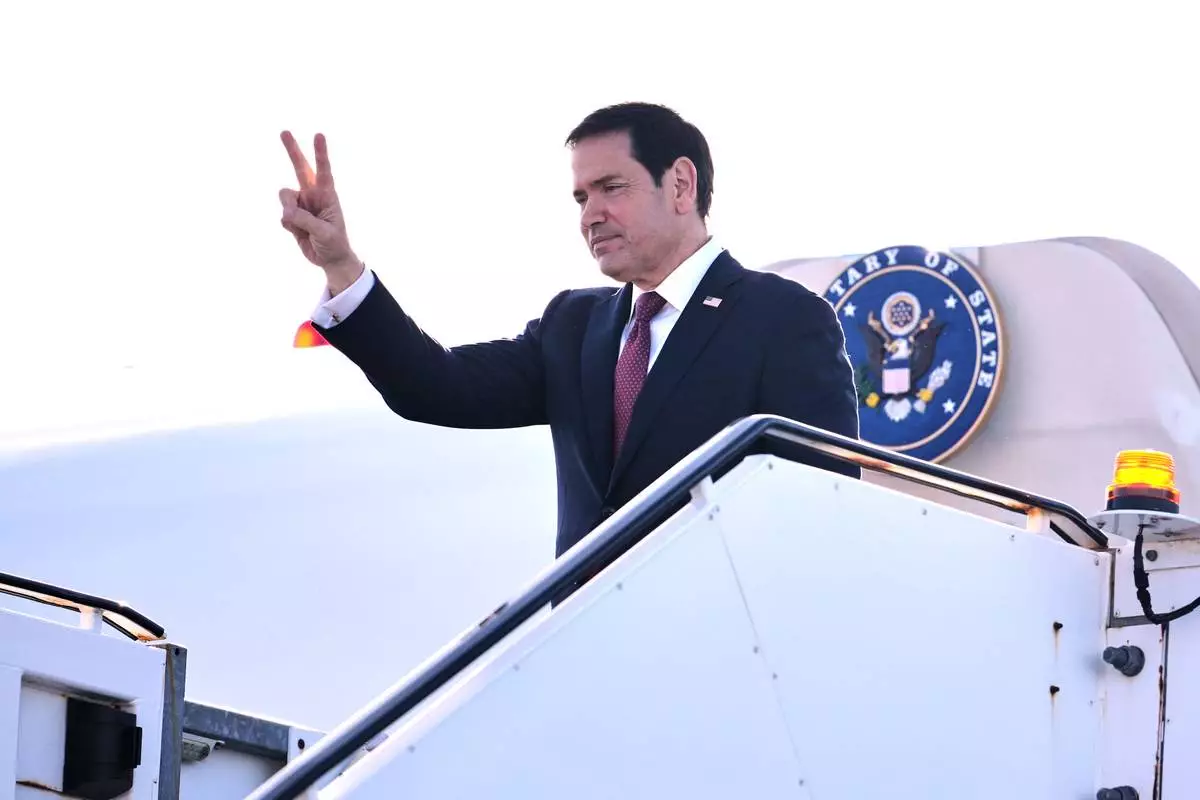
U.S. Secretary of State Marco Rubio boards a plane Tuesday, Oct. 6, 2026, at Keflavik Airport in Iceland. (AP Photo/Mark Schiefelbein, Pool)
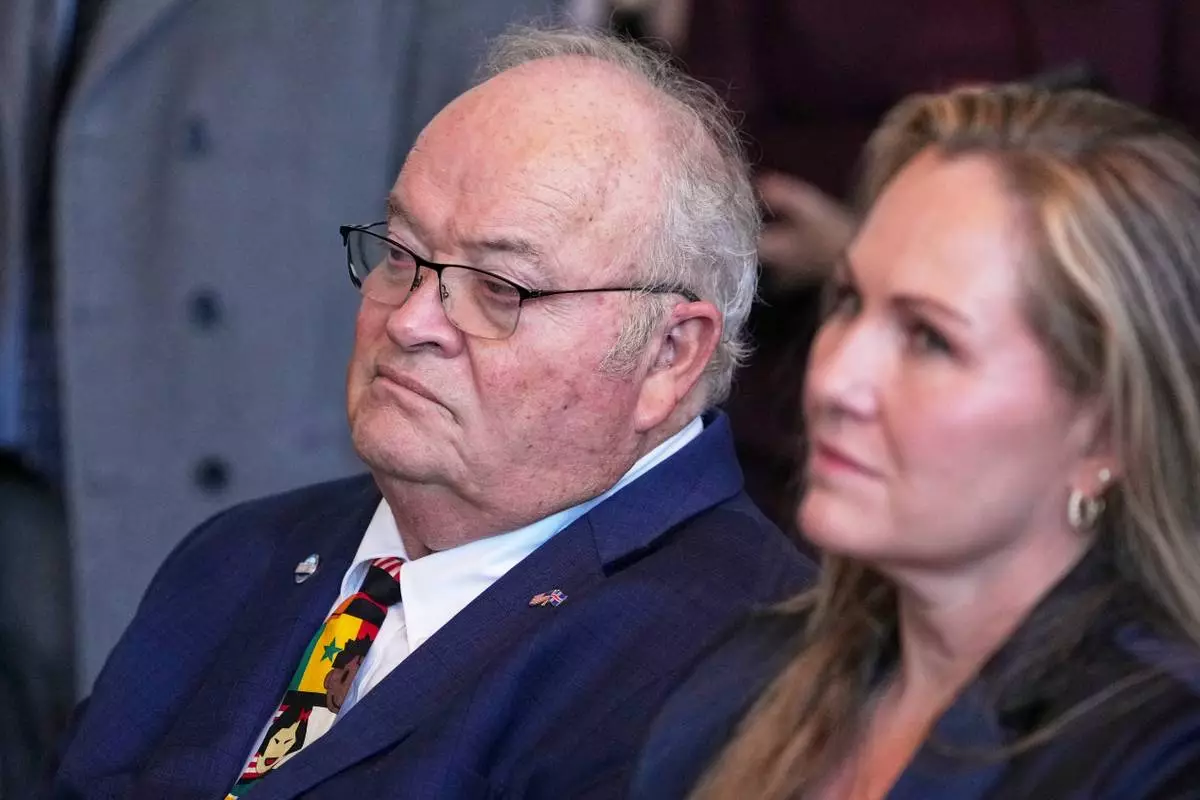
U.S. ambassador to Iceland Billy Long attends a joint press conference held by U.S. Secretary of State Marco Rubio and Iceland's Foreign Minister Thorgerour Katrín Gunnarsdottir at the House of Collections, Tuesday, Oct. 6, 2026, in Reykjavik, Iceland. (AP Photo/Mark Schiefelbein, Pool)
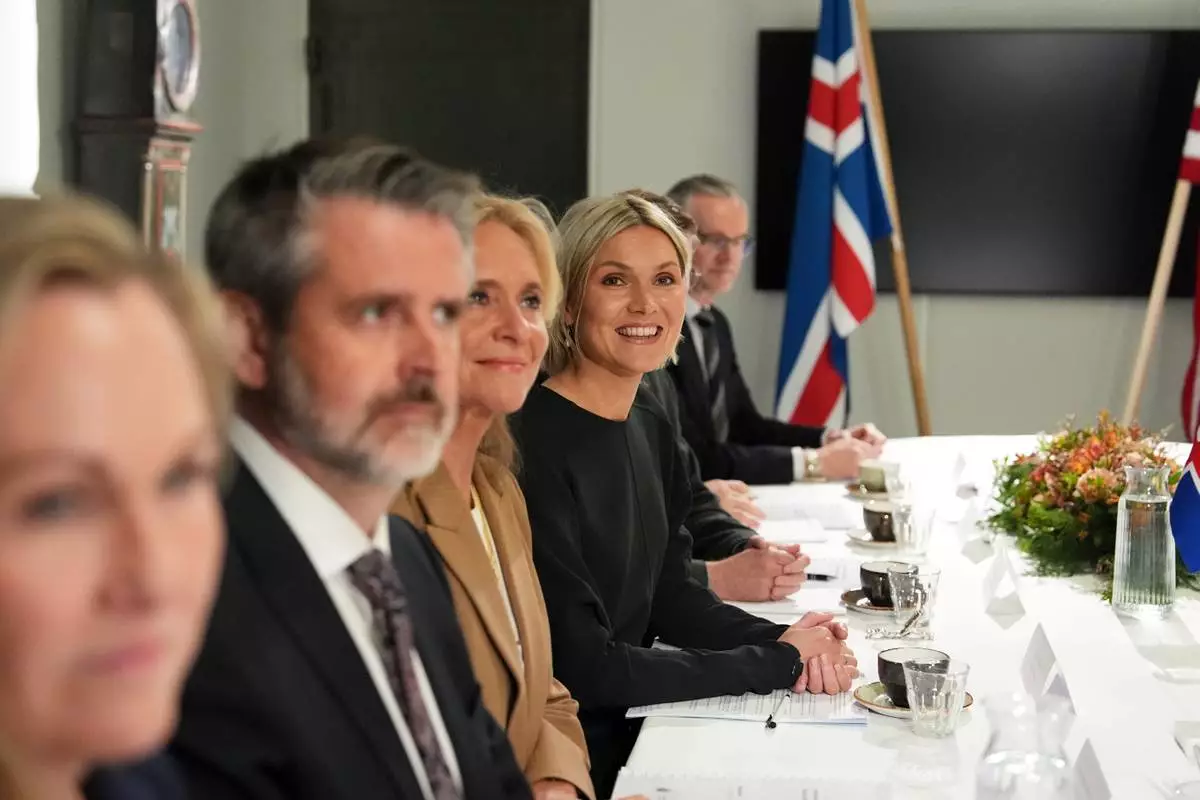
Prime Minister Kristrún Frostadóttir attends a meeting with U.S. Secretary of State Marco Rubio at the House of Collections, Tuesday, Oct. 6, 2026, in Reykjavik, Iceland. (AP Photo/Mark Schiefelbein, Pool)
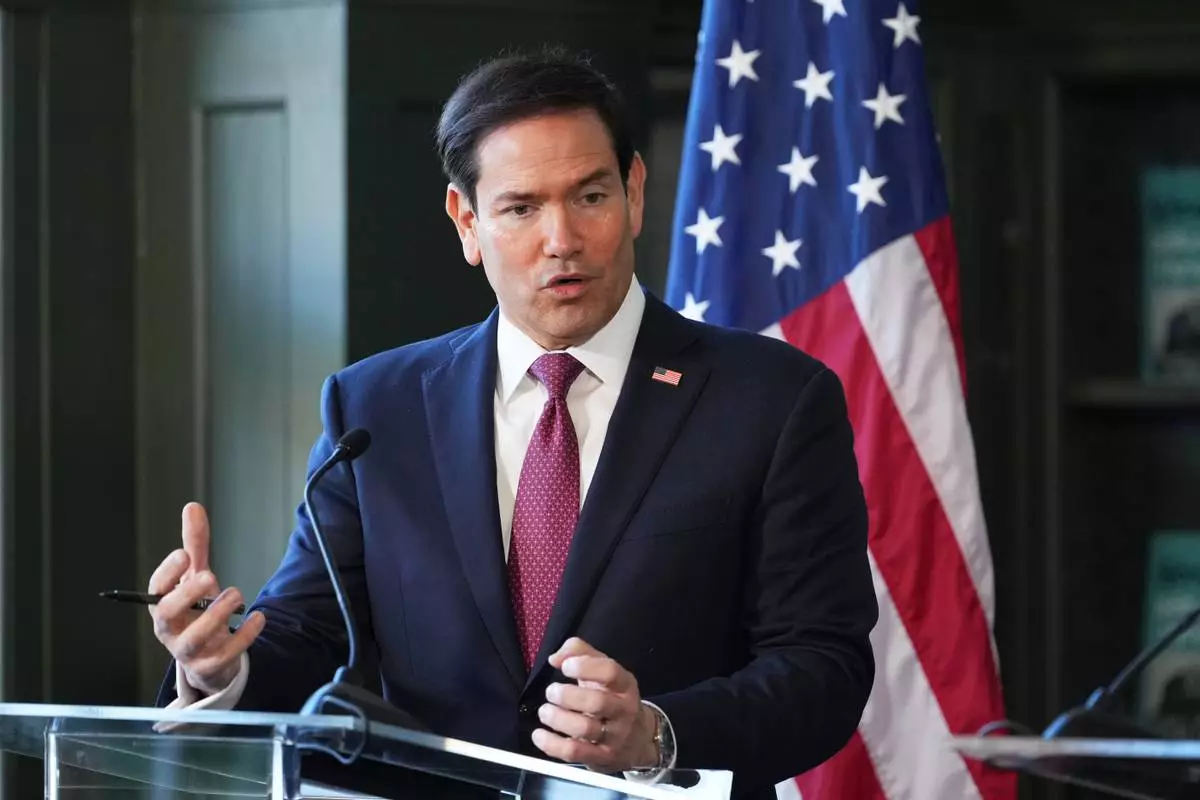
U.S. Secretary of State Marco Rubio speaks during a press conference with Iceland's Foreign Minister Thorgerour Katrín Gunnarsdottir at the House of Collections, Tuesday, Oct. 6, 2026, in Reykjavik, Iceland. (AP Photo/Mark Schiefelbein, Pool)
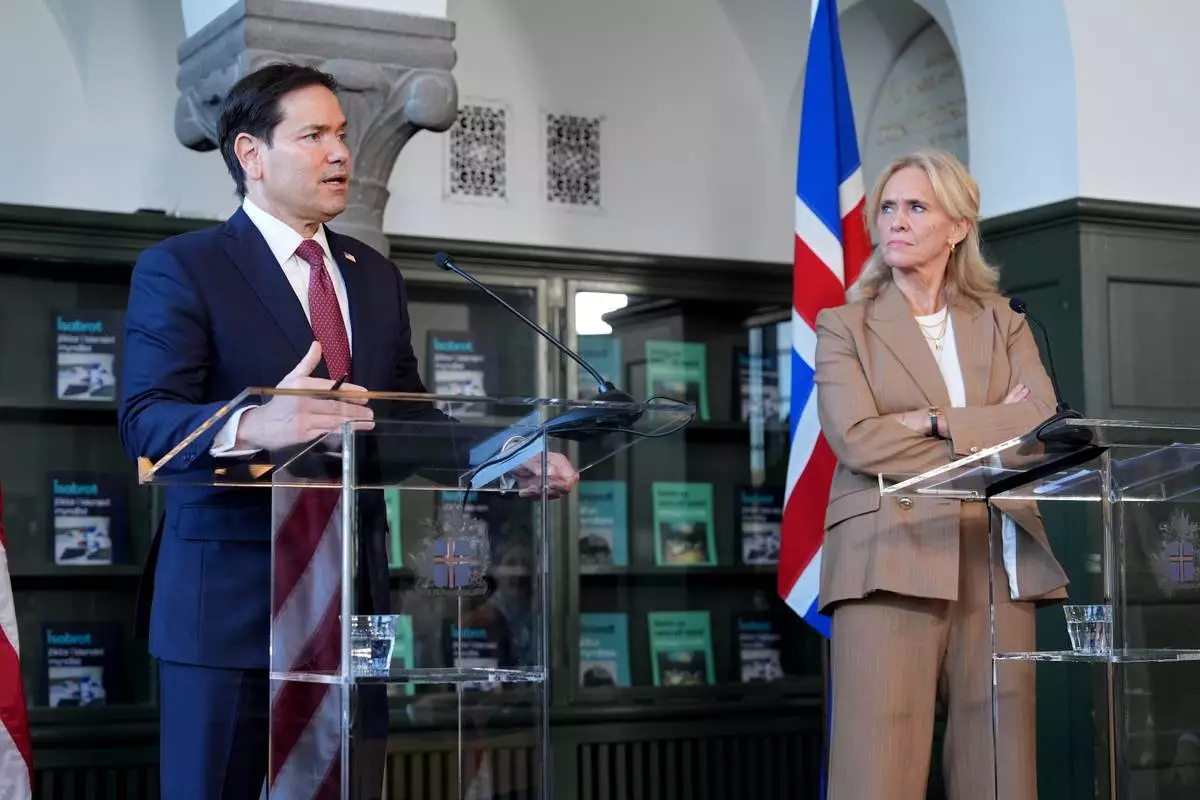
U.S. Secretary of State Marco Rubio speaks during a press conference with Iceland's Foreign Minister Thorgerour Katrín Gunnarsdottir at the House of Collections, Tuesday, Oct. 6, 2026, in Reykjavik, Iceland. (AP Photo/Mark Schiefelbein, Pool)
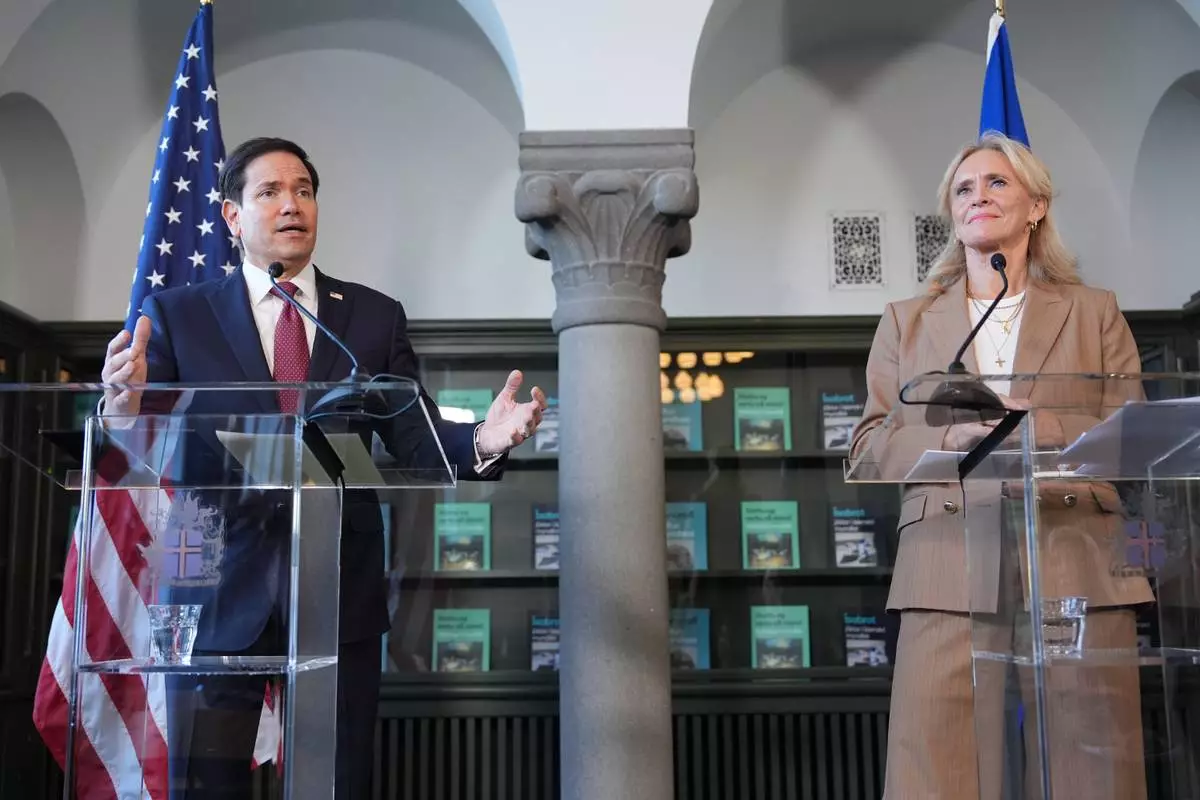
U.S. Secretary of State Marco Rubio speaks during a press conference with Iceland's Foreign Minister Thorgerour Katrín Gunnarsdottir at the House of Collections, Tuesday, Oct. 6, 2026, in Reykjavik, Iceland. (AP Photo/Mark Schiefelbein, Pool)
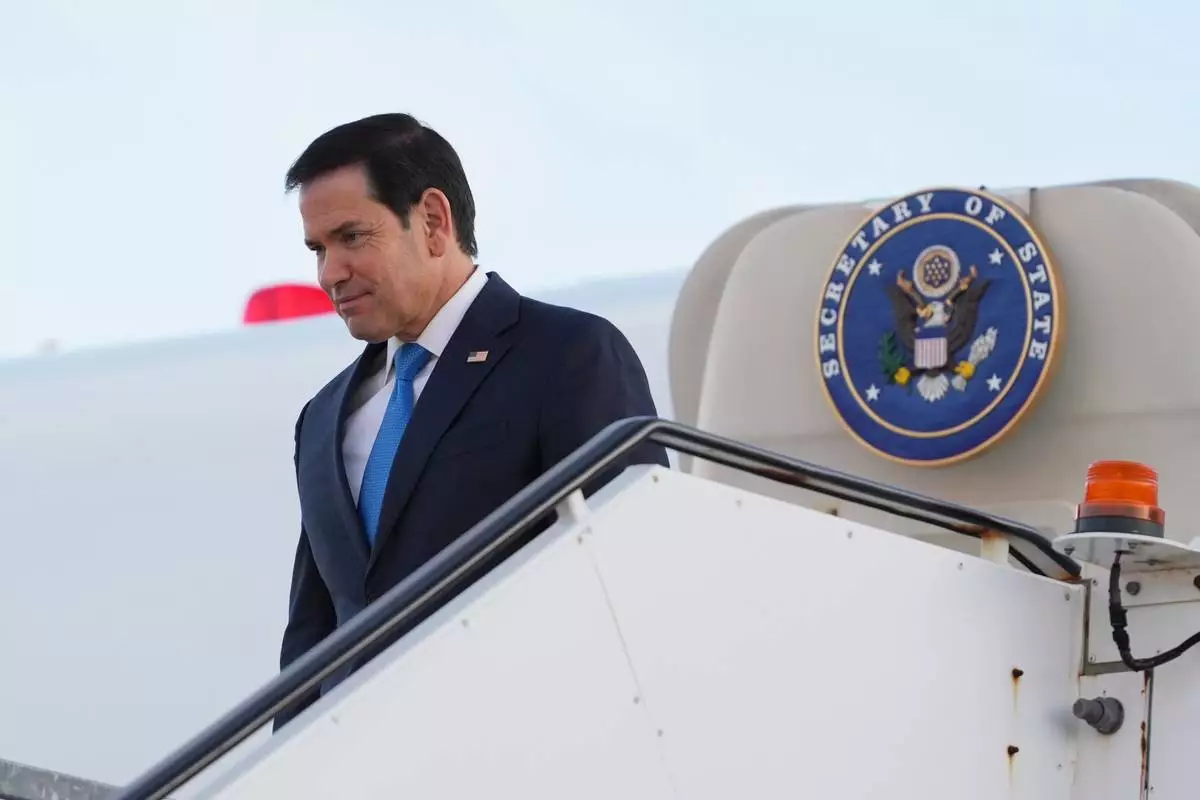
U.S. Secretary of State Marco Rubio arrives at Keflavik Airport, Iceland, Monday, Oct. 5, 2026. (AP Photo/Mark Schiefelbein, Pool)
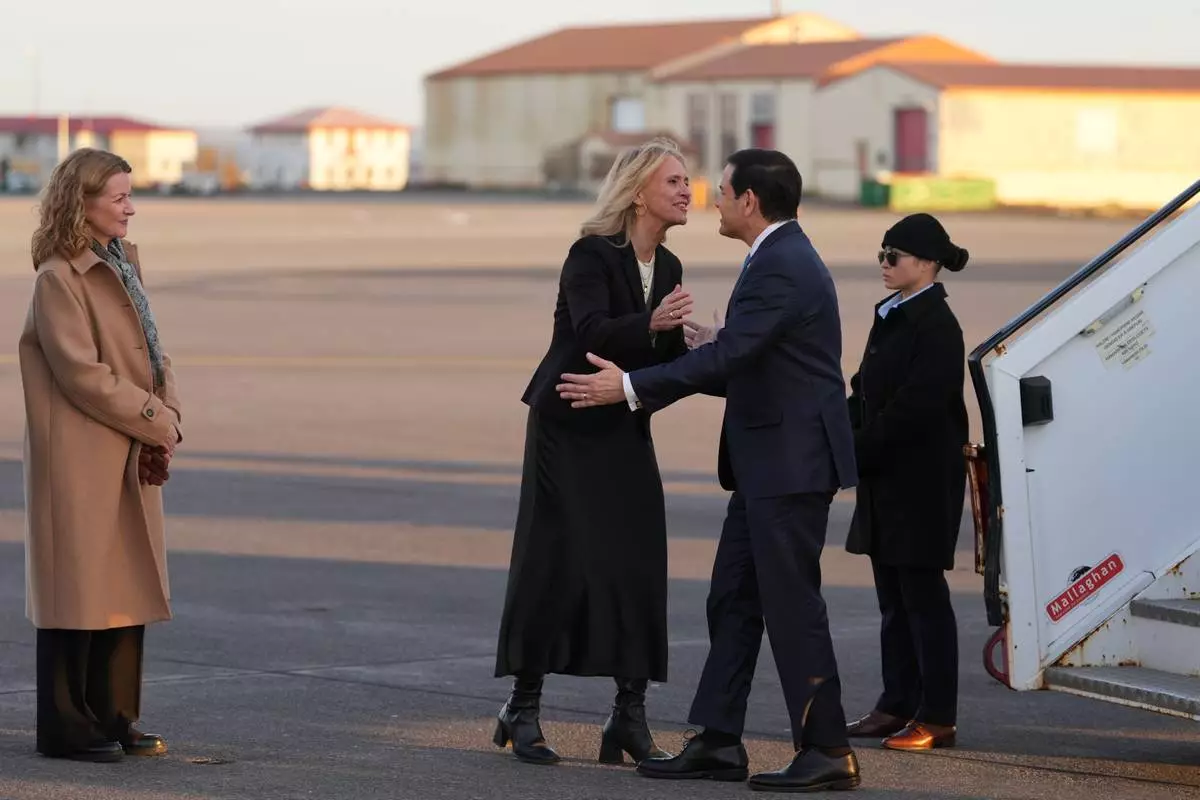
U.S. Secretary of State Marco Rubio, is welcomed by Iceland's Foreign Minister Thorgerour Katrín Gunnarsdottir, center, and by Chief of Protocol Helga Hauksdottir, as he arrives at Keflavik Airport, Iceland, Monday, Oct. 5, 2026.(AP Photo/Mark Schiefelbein, Pool)
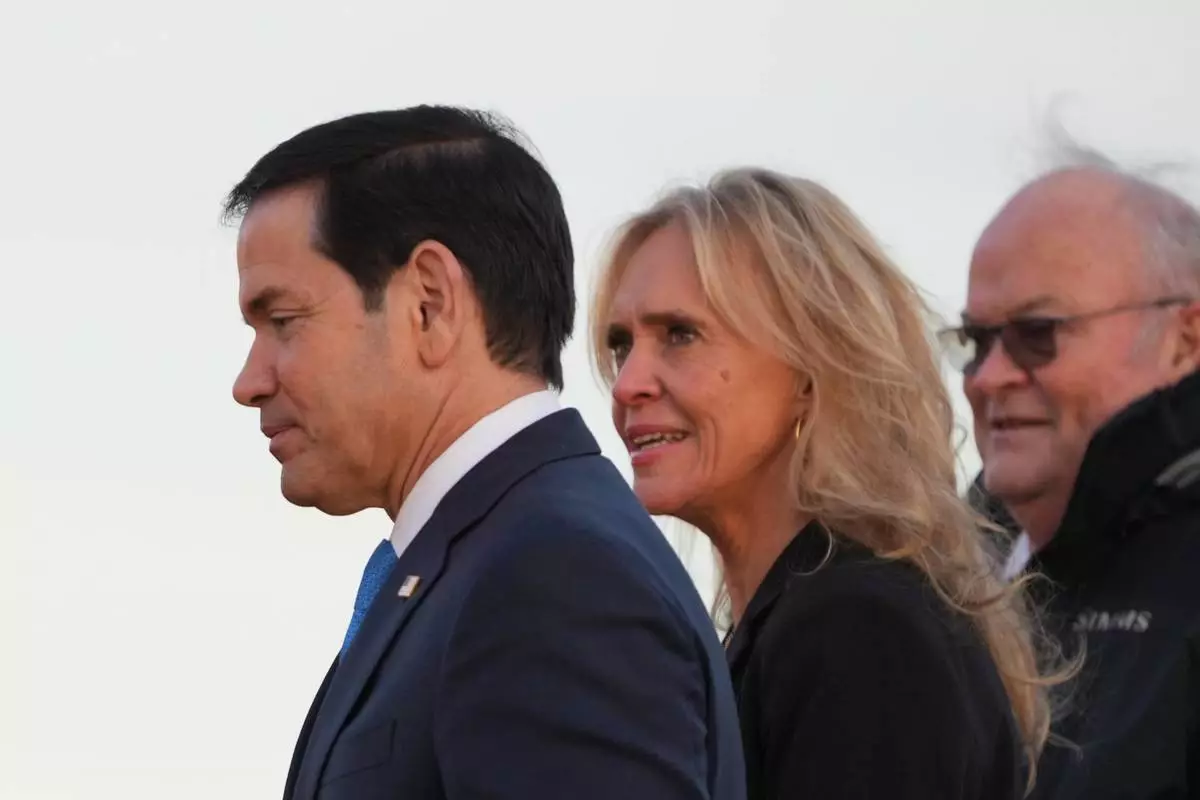
U.S. Secretary of State Marco Rubio, left, is welcomed by Iceland's Foreign Minister Thorgerour Katrín Gunnarsdottir, center, and William Long, the U.S. Ambassador to Iceland, as he arrives at Keflavik Airport, Iceland, Monday, Oct. 5, 2026. (AP Photo/Mark Schiefelbein, Pool)