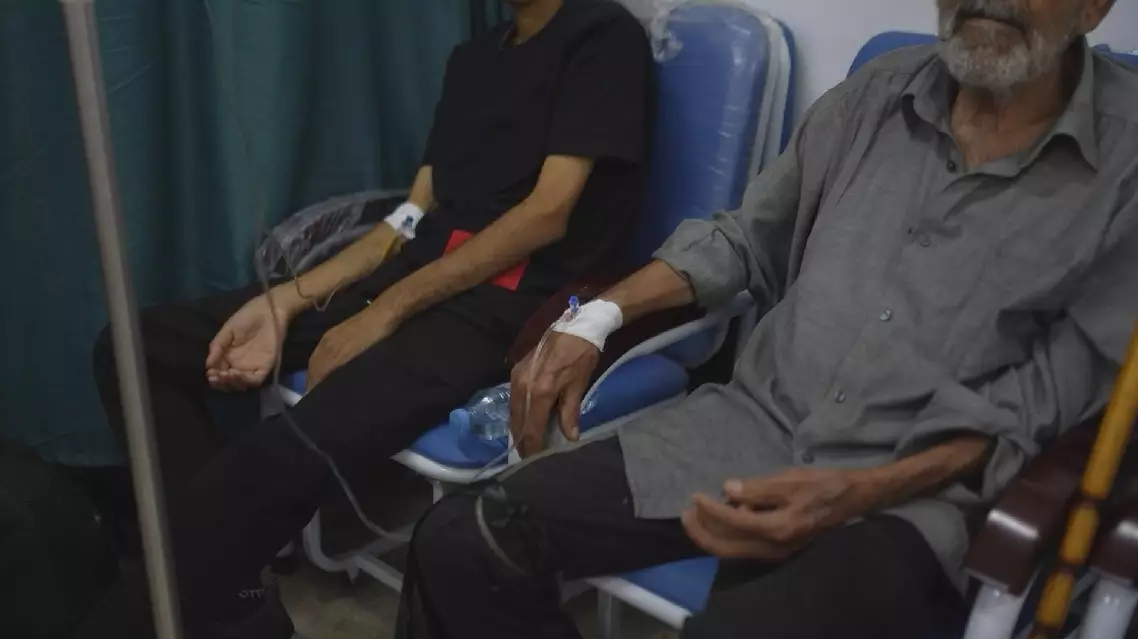
As the latest round of the Palestinian-Israeli conflict reached its three-year mark on Wednesday, thousands of cancer patients in Gaza remain trapped in desperate waiting. Of Gaza's original 36 hospitals, only 19 are barely operational with limited services, leaving cancer patients to fight not only their deadly illnesses but also crippling power outages, critical medicine shortages, paralyzed transportation and tortuous journeys to access medical care.
A recent report from the United Nations Office for the Coordination of Humanitarian Affairs (OCHA) states that as of the end of September, Gaza faced life-threatening gaps in cancer care, driven by severe shortages of chemotherapy and radiotherapy supplies.
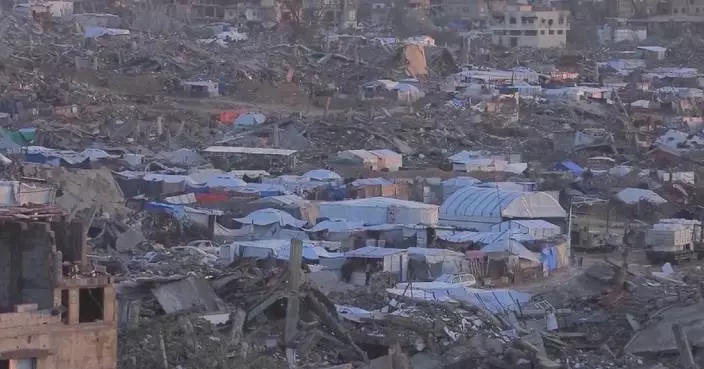
At a displacement camp in Gaza City, tucked beside rubble, a simple tent forms the entire world of cancer patient Rami Ayyad and his family. The cramped space holds a small bed with tattered bedding laid straight on sandy ground. There is no clean drinking water and little basic household supplies.
For Ayyad, who suffers from severe illness and a weakened immune system, this is not a shelter -- it feels like an inescapable prison.
"As a cancer patient, I hardly know where to begin. Should I talk about where we live? I suffer through sleepless nights, just waiting for daylight to step outside the tent and breathe some fresh air. Is this a place fit to live? Is this water safe to drink? We lack nearly everything. There is a shortage of water and daily necessities, and rats are everywhere," he said.
Beyond the harsh living conditions, power cuts directly threaten Ayyad's lifeline. His chemotherapy injections and medications require cold storage, yet there is no electricity or refrigerator inside the camp.
To keep these life-saving drugs from spoiling, Ayyad has no choice but to store them at a private pharmacy equipped with power generators.
"Keeping my medication refrigerated is one of my biggest struggles. I have no fridge in the tent, so I have to store my injections and medicines at an outside pharmacy. That is where the drugs stay. I go there once every three days to get my injection," Ayyad said.
For this exhausted family torn between war and disease, accessing medical treatment has become nearly impossible. Transport has completely broken down, and most pharmacies have been destroyed. Rami's son, Muhammad Ayyad, even has to walk for kilometers through rubble to fetch medicine for his father.
"Now when you need medicine and cannot find it in hospitals, you have to buy it from outside pharmacies. Our finances are stretched thin, and many medicines are simply beyond our means. Most pharmacies and major hospitals across the Gaza Strip have been destroyed. I have to walk long distances just to get medicine. Financial hardship, broken transport and drug shortages at hospitals have dealt us a devastating blow," said the son.
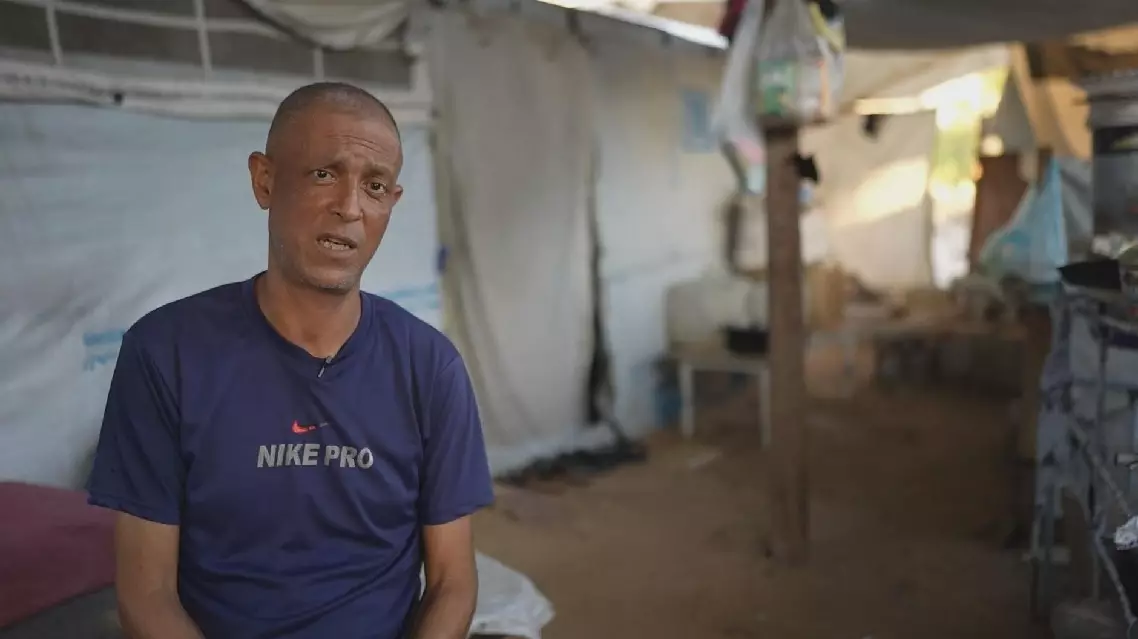
Gaza cancer patients face life-threatening drug shortages as conflict hits three-year mark
Gaza cancer patients face life-threatening drug shortages as conflict hits three-year mark