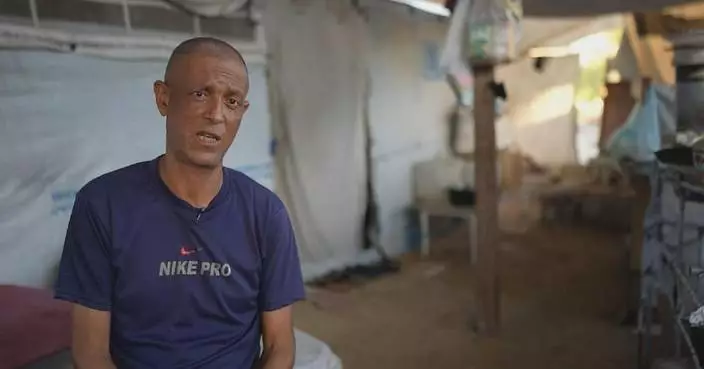
Cancer patients in the Gaza Strip have been left without lifesaving treatments as the enclave's only specialized cancer facility, the Friendship Hospital, has ceased functioning due to fuel shortages and damage.
As the Friendship Hospital was completely destroyed in the latest round of the Israeli-Hamas conflict, the temporary "Gaza Cancer Center", consisting of the Al-Shifa Hospital in the north and the Nasser Hospital in the south, was urgently established this year.
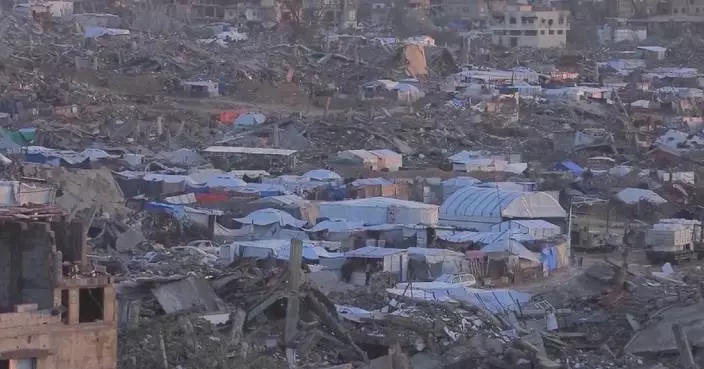
The Al-Shifa Hospital in Gaza City was largely destroyed in the conflict, and the cancer center is built in the remaining building, which is riddled with bullet holes and possesses extremely fragile infrastructure.
Patients and their families need to pass through the surrounding ruins before they can enter the treatment area.
Doctors there have to provide treatments based only on the existing conditions, rather than diagnosis based on the needs of patients.
Mohammed Abu Nada, director of the Gaza Cancer Center, said at the current cancer center, all kinds of sophisticated instruments and equipment have long been wiped out in air raids, resulting in about 40 percent of cancer patients who are completely unable to receive the urgently needed radiotherapy during the treatment cycle.
"The services currently provided by the center are far fewer than those we offered at the Friendship Hospital. We faced many problems there at that time, but we had a system to track patients at various treatment stages and some equipment such as computed tomography (CT) and magnetic resonance imaging (MRI) devices, as well as the ability to conduct sample testing. However, after the conflict broke out, we completely lost these devices and testing capabilities," Nada said.
And an even more fatal difficulty than the paralysis of medical equipment is the complete depletion of chemotherapy drugs.
Nada said that the current supply of chemotherapy drugs across Gaza can only meet 20 percent of the normal demand, meaning that four fifths of the nearly 10,000 cancer patients in the Gaza Strip are either out of medication or have insufficient doses.
"There are no drugs in the hospital. That's exactly why we have to keep running back and forth. This piece of paper is from the pharmacy saying they don't have the medication, so they sent us back to find the doctor," said Khaled Abu Obaid, a family member of a patient.
"Every day we went there and came back again, with no results. The doctors here are helpless too," said Mohammed Abu Obaid, the patient.
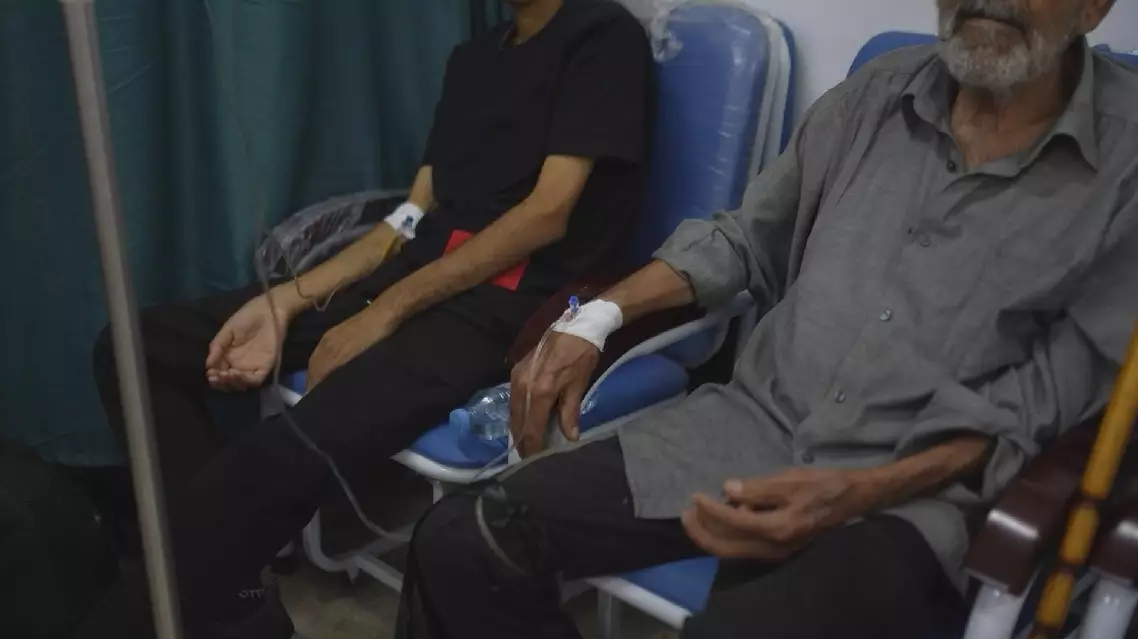
Lifesaving care slips away for Gaza cancer patients as basic medical support collapses