PALO ALTO, Calif.--(BUSINESS WIRE)--Oct 8, 2026--
Odyssey, an AI research company pioneering foundation world models, today announced Odyssey-3, its most powerful world model to date. The new model represents a significant advance toward general-purpose intelligence that can understand, predict, and interact with both physical and virtual environments.
This press release features multimedia. View the full release here: https://www.businesswire.com/news/home/20261008756684/en/
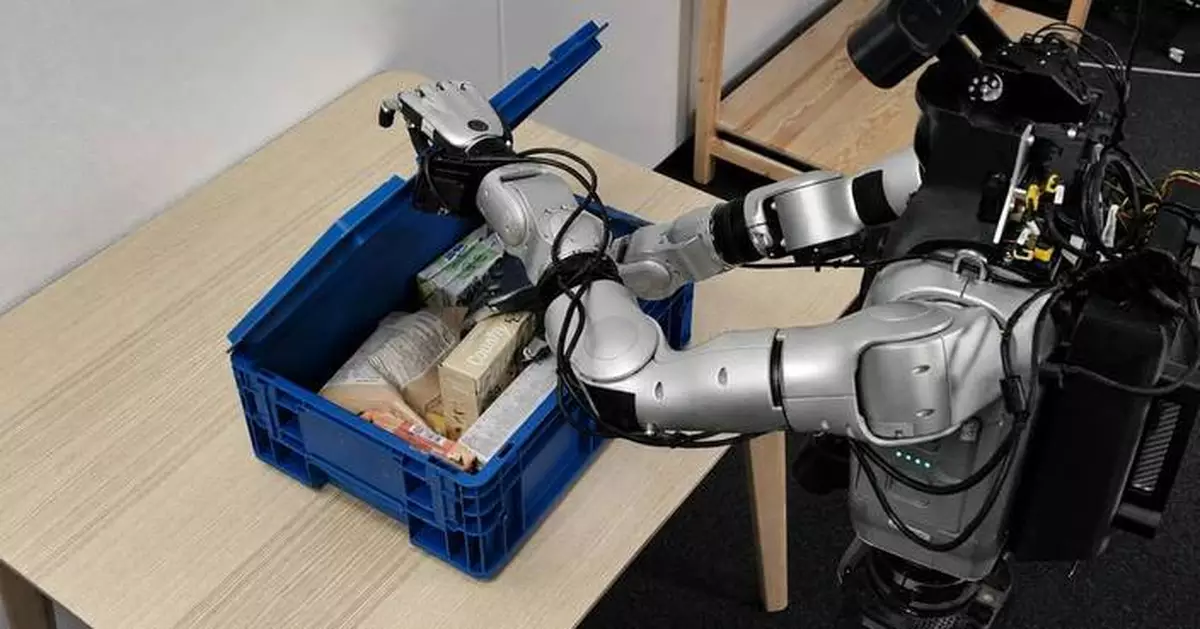
World models learn from vast examples of the world evolving to predict and simulate what happens next, including how actions affect outcomes. Odyssey-3 gives intelligent systems a general understanding of how the world works before they are taught a specific task. The model has shown the ability to control robots and humanoids, drive vehicles, pilot drones, generate environments for training AI agents, and play video games. The new model has already been adopted by companies including Flexion, a leader in humanoid autonomy.
Trained on a vast dataset of visual observations of the world, Odyssey-3 builds on world models the company has been developing over the past three years. It has learned representations of physics, dynamics, cause and effect, and human behavior that can be applied across physical and virtual systems.
Using this pretrained foundation, Odyssey-3 enables physical agents: intelligent systems that can apply a shared understanding of the world across different machines, environments, and tasks. Rather than learning every new task entirely from scratch, these systems can draw on a broader model of how the world works and adapt that knowledge to new situations with relatively little additional experience.
“Odyssey-3 is a big step toward a single intelligence that can understand and operate in the world around us,” said Oliver Cameron, co-founder and CEO of Odyssey. “World models give physical agents a foundation of knowledge they can carry from one machine, environment, or task to another. We believe that the ability to learn broadly and then adapt with relatively little experience is the path toward increasingly general physical intelligence.”
The company has demonstrated Odyssey-3 across six domains:
Odyssey-3 is designed as a foundation that can span these domains rather than a model optimized for a single machine or application. By learning common representations of how environments behave and how actions change them, Odyssey is working toward world models that can transfer knowledge across increasingly diverse physical and virtual systems.
About Odyssey
Odyssey is an AI lab pioneering general world models: causal, multimodal systems that learn to predict and interact with the world over long horizons. This foundational technology promises to revolutionize robotics, science, healthcare, education, gaming, defense, and beyond.
Odyssey’s founders previously pioneered one of the most complex applications of physical AI: self-driving cars. They’ve since brought together a world-class research team from DeepMind, Tesla, Waymo, Meta, Apple, and Wayve, whose members have contributed to language models, video models, world models and autonomous systems, including DeepMind Gemini, DeepMind Veo, Wayve GAIA and Tesla FSD.
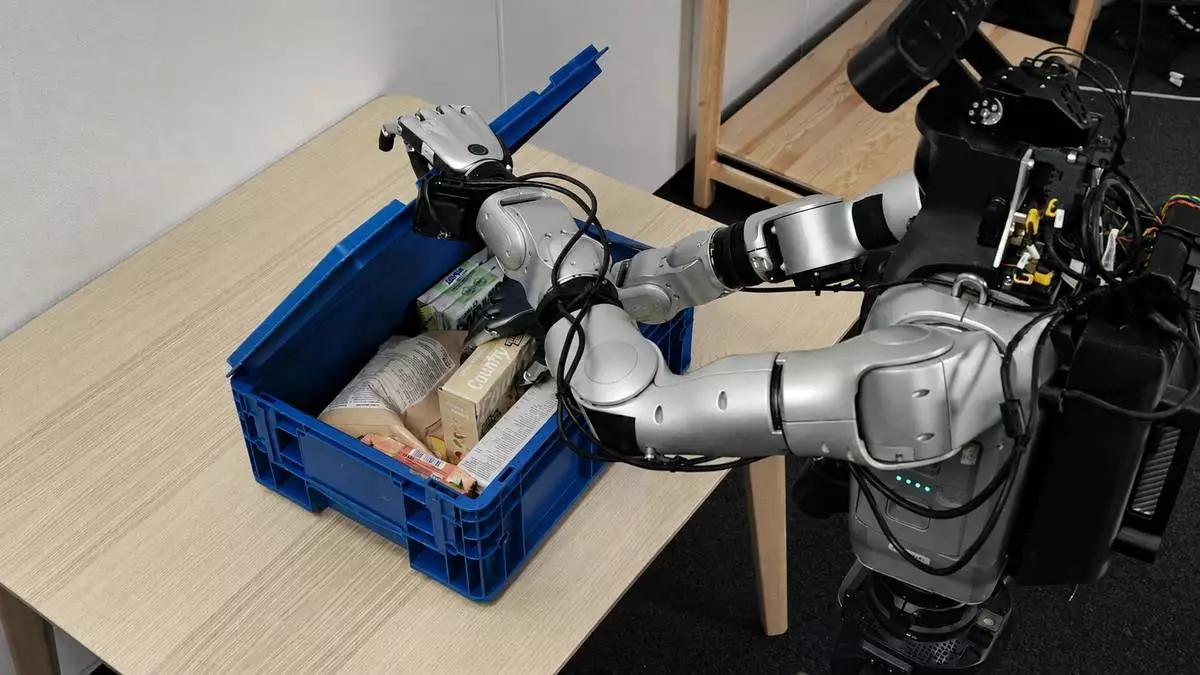
Caption: Odyssey’s latest world model powering Flexion’s robot. Credit: Odyssey
WASHINGTON (AP) — President Donald Trump said Thursday that he will not order a resumption of military strikes on Iran before the Nov. 3 midterm elections in the United States.
Trump, while stumping for Republicans this week, has hinted that he was confident that an endgame to the war could come in the days before or after the election, while also hinting that he remained open to resuming full-scale military operations against Iran.
For weeks, Trump has been threatening that a post-midterm election escalation in the seven-month-old war remains a viable option, despite his initial promises to Americans of a military campaign that would last a matter of weeks.
But Trump in a social media post on Thursday said the U.S. “will not be attacking Iran at any time prior to the Midterm Elections to be held in the United States on November 3rd.”
Trump added that his team has been “having productive discussions with the Islamic Republic of Iran.”
The U.S. and Iran signed a short-lived interim agreement in June, intended to establish a 60-day ceasefire and framework for a permanent peace deal.
The deal signed by Trump and Iranian President Masoud Pezeshkian collapsed within weeks amid renewed military actions and disputes over control of the Strait of Hormuz, the critical water which one-fifth world's oil flowed through before the war.
Negotiations had appeared at a standstill since Trump late last month publicly rejectedIran’s proposal to reopen the strait within seven days if the U.S. met certain conditions.
Iran, however, said last week they had received a U.S. counterproposal. And Foreign Minister Abbas Araghchi earlier on Thursday said he expected Tehran would offer a formal reply within days.
Trump on Wednesday during a campaign rally in San Antonio, Texas, said that his special envoy, Steve Witkoff, has continued indirect negotiations with Iranian officials.
But at the same time, Trump suggested he had mixed feelings about ending the war at this point.
“I think the deal isn’t really something that I want to do, but they’re willing to offer us anything to stop,” Trump said.
Trump believes that the U.S. is gaining leverage as the U.S. military is having greater success in helping oil tankers traverse the Strait of Hormuz and get Gulf allies’ oil to market, while a Navy blockade is shutting down Iran’s own oil exports.
Iran has lost its near chokehold over oil flows through the vital waterway with U.S. Central Command shepherding oil tankers through the strait at night with their location systems turned off.
That with the help of Gulf pipelines that skirt the strait, has allowed Gulf countries to export oil at nearly prewar levels.
But Iran has ramped up attacks on tankers passing through the strait in recent days. And overall, ship traffic remains well below prewar levels, as are shipments of liquid natural gas and fuel products.
Tanker operators willing to risk running the gauntlet under Central Command’s protection are in some cases charging rates of $1 million a day or more, shipping analysts say.
The situation has become further complicated as Saudi Arabia and Yemen’s government have launched a military campaign aimed at driving Iran-backed Houthi rebels from the Bab el-Mandeb strait, another critical Mideast trade route for oil and other goods. The Houthis, in turn, are targeting Saudi airports and key infrastructure in the kingdom with drone and missile strikes.
Trump's post comes as the military has dispatched more resources to the region. U.S. officials have said a third aircraft carrier, the USS Theodore Roosevelt, and thousands of troops aboard it and accompanying ships could arrive as early as the end of October.
Trump’s announcement was made the same day the USS Abraham Lincoln was due to arrive to its home port in San Diego after a record-long deployment in support of the Iran war. There have been reports of crew stress and poor mental health, as well as supply shortages, including food and hygiene products.
The USS George Washington, which is usually based in Asia, relieved the Lincoln in August. The other aircraft carrier in the Middle East, the USS George H.W. Bush, has been deployed for about six months, but it pulled into Phuket, Thailand, for a port visit several days ago.
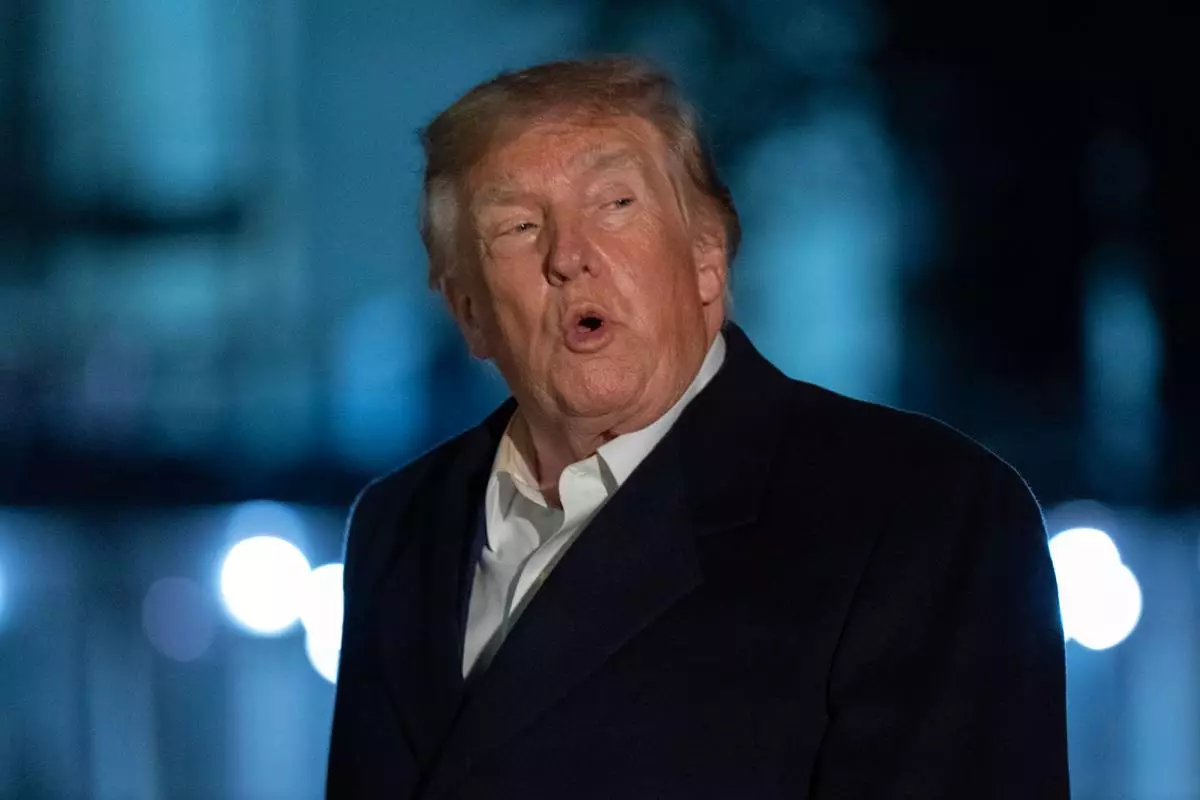
President Donald Trump talks to reporters as he walks on the South Lawn upon his arrival to the White House, Thursday, Oct. 8, 2026, in Washington. (AP Photo/Jose Luis Magana)