Skip to Content Facebook Feature Image

Moscow’s secrecy about a suspected plague case follows a pattern from the Soviet era

News

Moscow’s secrecy about a suspected plague case follows a pattern from the Soviet era
News

News

Moscow’s secrecy about a suspected plague case follows a pattern from the Soviet era

2026-10-08 22:32 Last Updated At:22:51

The Kremlin has long maintained a culture of secrecy when it comes to controlling public information, especially involving accidents -- from industrial disasters to health emergencies.

The suspicious death last week of a worker at a research lab in Siberia that has fueled global concerns about suspected pneumonic plague is just the latest example of how leaders in Moscow manage the official narrative that often covers up the truth for years.

More Images
This undated photo released in 2019 by the Irkutsk Anti-Plague Research Institute of Siberia and Far East, shows the institute workers in a lab. (The Irkutsk Anti-Plague Research Institute of Siberia and Far East via AP) ADDITION: adding photo was released in 2019
This undated photo released in 2019 by the Irkutsk Anti-Plague Research Institute of Siberia and Far East, shows the institute workers in a lab. (The Irkutsk Anti-Plague Research Institute of Siberia and Far East via AP) ADDITION: adding photo was released in 2019

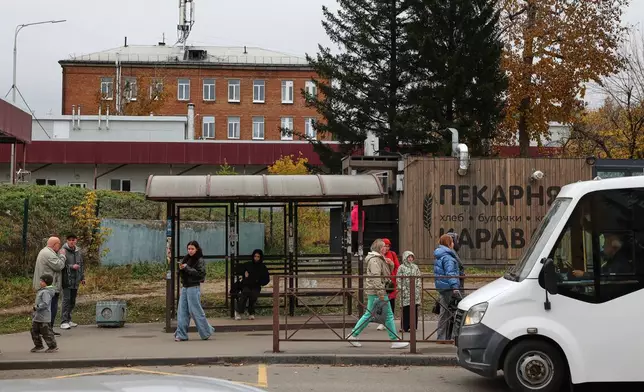
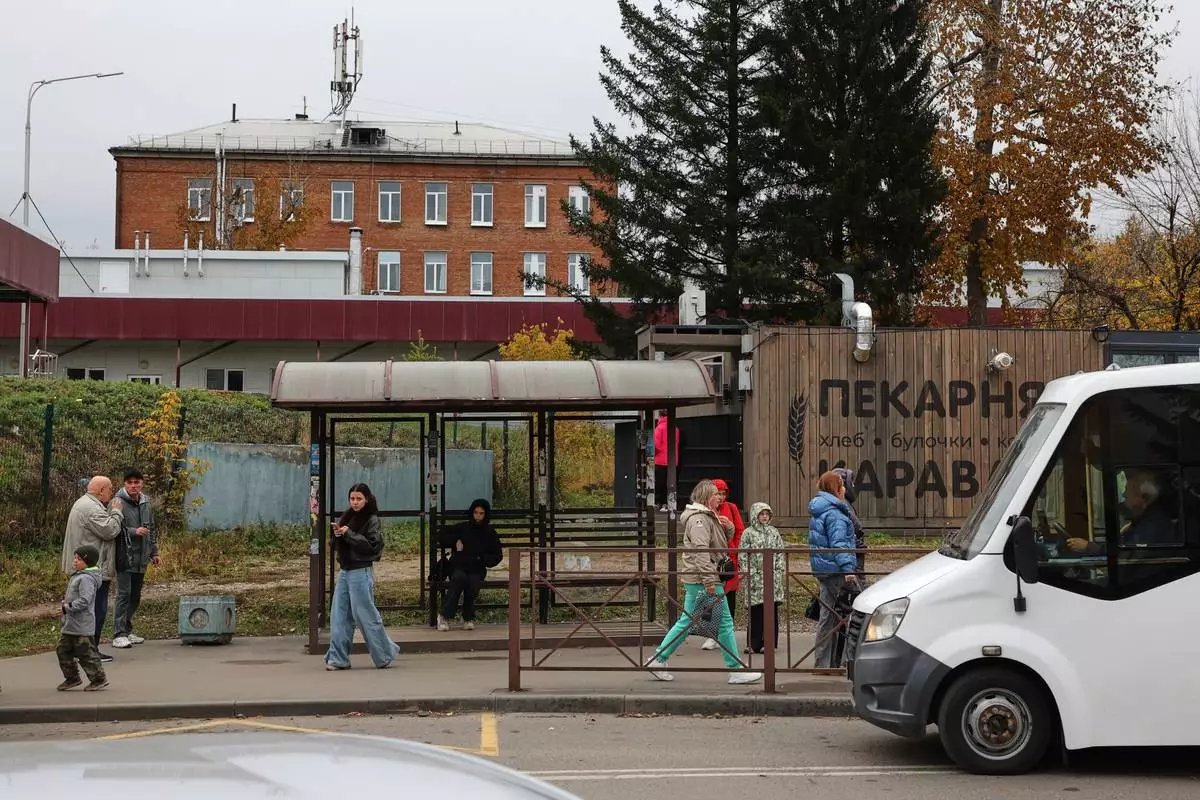
People are seen at a bus stop in Shelekhov outside Irkutsk, Russia, on Thursday, Oct. 8, 2026, backdropped by the district hospital and the medical center for treating infectious diseases. (AP Photo)
People are seen at a bus stop in Shelekhov outside Irkutsk, Russia, on Thursday, Oct. 8, 2026, backdropped by the district hospital and the medical center for treating infectious diseases. (AP Photo)

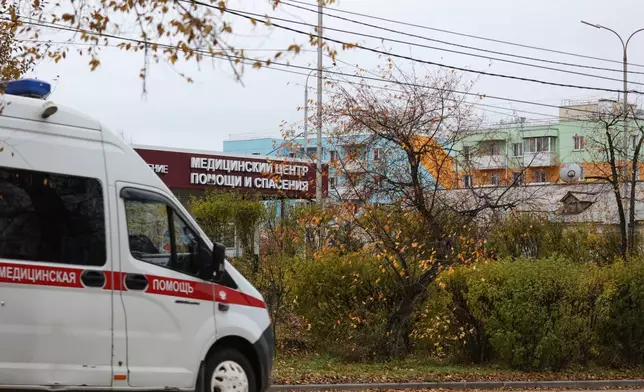
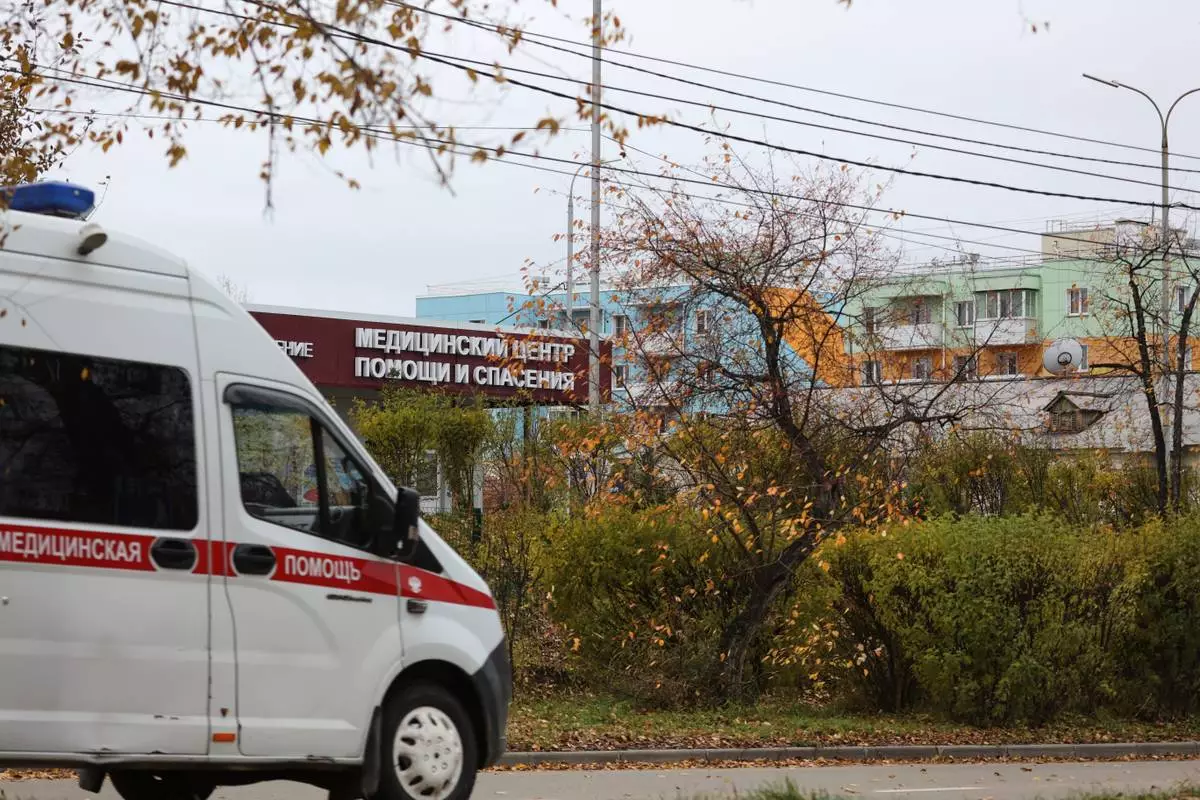
An ambulance drives past the medical center for treating infectious diseases, center, in Shelekhov, outside Irkutsk, Russia, on Thursday, Oct. 8, 2026. (AP Photo)
An ambulance drives past the medical center for treating infectious diseases, center, in Shelekhov, outside Irkutsk, Russia, on Thursday, Oct. 8, 2026. (AP Photo)

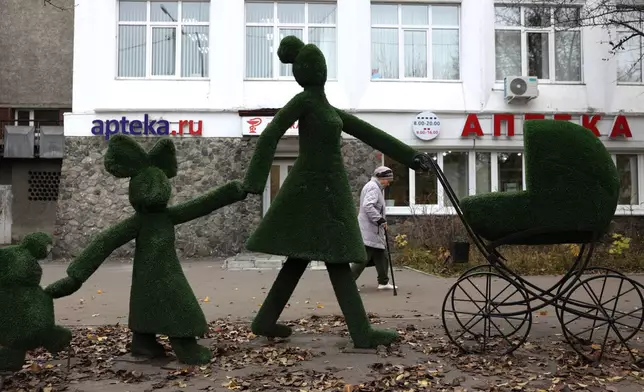
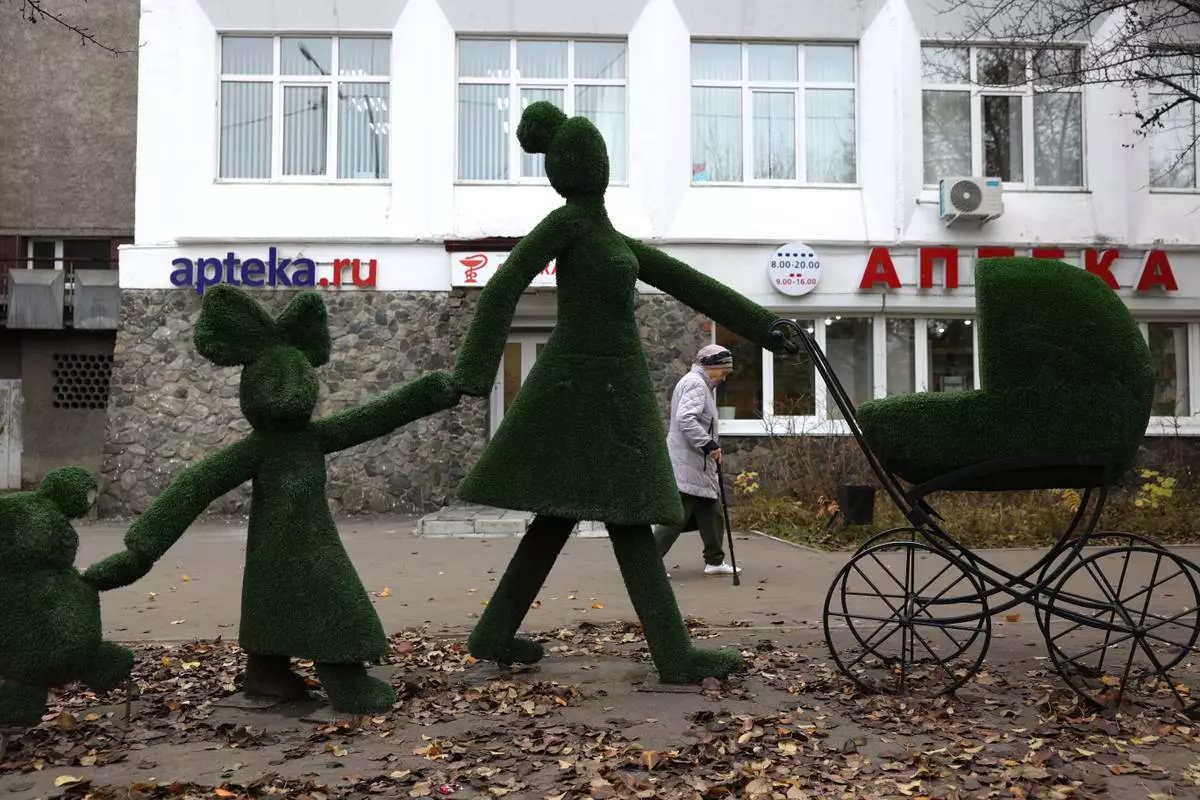
An elderly woman walks past a pharmacy in Shelekhov outside Irkutsk, Russia, on Thursday, Oct. 8, 2026. (AP Photo)

An elderly woman walks past a pharmacy in Shelekhov outside Irkutsk, Russia, on Thursday, Oct. 8, 2026. (AP Photo)

FILE - This aerial view shows the Chernobyl nuclear power plant in Chernobyl, Ukraine, April 26, 1986. (AP Photo/Volodymyr Repik, File)

FILE - This aerial view shows the Chernobyl nuclear power plant in Chernobyl, Ukraine, April 26, 1986. (AP Photo/Volodymyr Repik, File)

Russia’s public health watchdog, Rospotrebnadzor, has told the World Health Organization that no case of plague has been registered in the Irkutsk region of southeastern Siberia. In tersely worded statements, the Russian agency said the lab worker contracted pneumonia of “unknown” origin and that tests found no evidence her illness was caused by any of the pathogens she worked with at the Irkutsk Anti-Plague Research Institute of Siberia and the Far East.

The WHO urged Russia to share more information to clarify the cause of the severe pneumonia, the pathogen that prompted the public health measures and media reports that a second employee had pneumonia of undetermined cause.

Scarce official information about the worker's death, which unconfirmed reports in Russia blamed on pneumonic plague, follows the Soviet-era patterns of secrecy in dealing with outbreaks of infectious diseases, accidents and other emergencies.

Here are other examples of Moscow censoring public health information:

In the final days of December 1959, leading Soviet graphic artist Alexei Kokorekin fell ill and died shortly after returning from a trip to India.

Doctors initially struggled to identify the cause of death as smallpox, which was considered eradicated decades earlier. Once it became clear, authorities launched a massive effort to contain the outbreak.

The KGB meticulously tracked down Kokorekin’s contacts, and thousands of people were put in isolation. An Aeroflot flight carrying one of his contacts was contacted before it landed in Paris and ordered to return to Moscow.

Authorities halted all travel to and from Moscow and launched an unprecedented effort in which thousands of vaccination teams distributed shots to millions of residents of the capital and the surrounding region. International news outlets reported the massive campaign, but Soviet state media kept silent about it.

The outbreak led to 46 confirmed cases and three deaths in Moscow before it was contained in 44 days. A novel and movie based on the outbreak appeared later, but the true details of what happened were hidden from the public until the waning years of the Soviet Union.

During tests of a smallpox bioweapon on a tightly guarded range on Vozrozhdeniya Island in the Aral Sea in August 1971, a research ship accidentally sailed too close to the aerosolized plume of microbes.

A marine biologist on the ship contracted smallpox and spread it to several others in the town of Aralsk in what is now part of Kazakhstan, resulting in 10 infections and three deaths. The town was quarantined and more than 40,000 people were vaccinated against smallpox within days, but the public remained unaware of what happened.

The incident only became widely known in 2002 when U.S. researchers publicized old Soviet archives.

On April 2, 1979, anthrax spores were accidentally released from a secret biological weapons lab in Sverdlovsk, the Ural Mountains city that is now called Yekaterinburg.

The accident was caused by a worker failing to replace a faulty ventilation filter, resulting in the release of the deadly spores into the air. At least 68 people died in the resulting anthrax outbreak.

Soviet authorities officially blamed the deaths on contaminated meat from a street market and the KGB made sure to keep details of the accident under wraps, confiscating medical records.

It wasn’t until after the 1991 collapse of the Soviet Union that the truth about the outbreak became known under Russian President Boris Yeltsin, a former Communist Party boss in Sverdlovsk.

When the reactor No. 4 exploded at the Chernobyl nuclear power plant in the then-Soviet republic of Ukraine on April 26, 1986, it spewed a radioactive cloud across Europe.

Authorities were slow to report the incident and warn the public about the radioactive threat. When Sweden detected the radiation, Moscow initially denied that any accident had occurred.

Soviet officials waited for 36 hours before ordering the evacuation of the town of Pripyat near the plant. Five days later, tens of thousands of people were exposed to radioactive fallout as they marched through the streets of Kyiv during the May Day parade.

Despite Soviet leader Mikhail Gorbachev's policy of “glasnost,” or greater openness, authorities heavily censored medical data and casualty figures as part of their efforts to conceal the true scale of the disaster. Immediately after the accident, 30 plant workers and firefighters died from acute radiation sickness, and thousands of people later died from radiation-related illnesses.

During the COVID-19 pandemic, some independent Russian news outlets and international media reports claimed the country’s coronavirus death toll could be much higher than government officials said. The reports cited a spike in total mortality rates.

Russian authorities angrily rejected the claims as part of a Western disinformation campaign against Moscow.

Officials in Moscow explained the relatively low death toll by crediting a swift ban on travel from China early in the pandemic, a speedy introduction of restrictions and a broad testing effort that allowed authorities to spot infections quickly and prevent patients from developing life-threatening complications.

Authorities denied claims of widespread shortages of personal protective equipment and questionable infection control procedures at dozens of hospitals. Some medical workers said they were threatened with dismissal or even prosecution for complaining about the situation.

In 2020, Russia criminalized “false information” about threats to public safety, and human rights groups documented that dozens of people were prosecuted for making purportedly fake claims. But at the end of that year, officials effectively conceded the death toll was several times higher than previously reported.

In early 2022, Russian authorities reported a total of over 13.5 million confirmed COVID-19 and 338,091 deaths — by far the highest death toll in Europe at the time. Russia’s state statistics agency Rosstat, which uses broader counting criteria, said there were 681,100 virus-linked deaths between April 2020 and December 2021.

“The system can silence, but it’s not competent enough to coordinate, so it produces contradiction instead of a unified false account,” Judy Twigg, professor of political science at Virginia Commonwealth University, said in written comments this week.

Dasha Litvinova in Tallinn, Estonia, contributed.

This undated photo released in 2019 by the Irkutsk Anti-Plague Research Institute of Siberia and Far East, shows the institute workers in a lab. (The Irkutsk Anti-Plague Research Institute of Siberia and Far East via AP) ADDITION: adding photo was released in 2019
This undated photo released in 2019 by the Irkutsk Anti-Plague Research Institute of Siberia and Far East, shows the institute workers in a lab. (The Irkutsk Anti-Plague Research Institute of Siberia and Far East via AP) ADDITION: adding photo was released in 2019

People are seen at a bus stop in Shelekhov outside Irkutsk, Russia, on Thursday, Oct. 8, 2026, backdropped by the district hospital and the medical center for treating infectious diseases. (AP Photo)
People are seen at a bus stop in Shelekhov outside Irkutsk, Russia, on Thursday, Oct. 8, 2026, backdropped by the district hospital and the medical center for treating infectious diseases. (AP Photo)

An ambulance drives past the medical center for treating infectious diseases, center, in Shelekhov, outside Irkutsk, Russia, on Thursday, Oct. 8, 2026. (AP Photo)
An ambulance drives past the medical center for treating infectious diseases, center, in Shelekhov, outside Irkutsk, Russia, on Thursday, Oct. 8, 2026. (AP Photo)

An elderly woman walks past a pharmacy in Shelekhov outside Irkutsk, Russia, on Thursday, Oct. 8, 2026. (AP Photo)

An elderly woman walks past a pharmacy in Shelekhov outside Irkutsk, Russia, on Thursday, Oct. 8, 2026. (AP Photo)

FILE - This aerial view shows the Chernobyl nuclear power plant in Chernobyl, Ukraine, April 26, 1986. (AP Photo/Volodymyr Repik, File)

FILE - This aerial view shows the Chernobyl nuclear power plant in Chernobyl, Ukraine, April 26, 1986. (AP Photo/Volodymyr Repik, File)
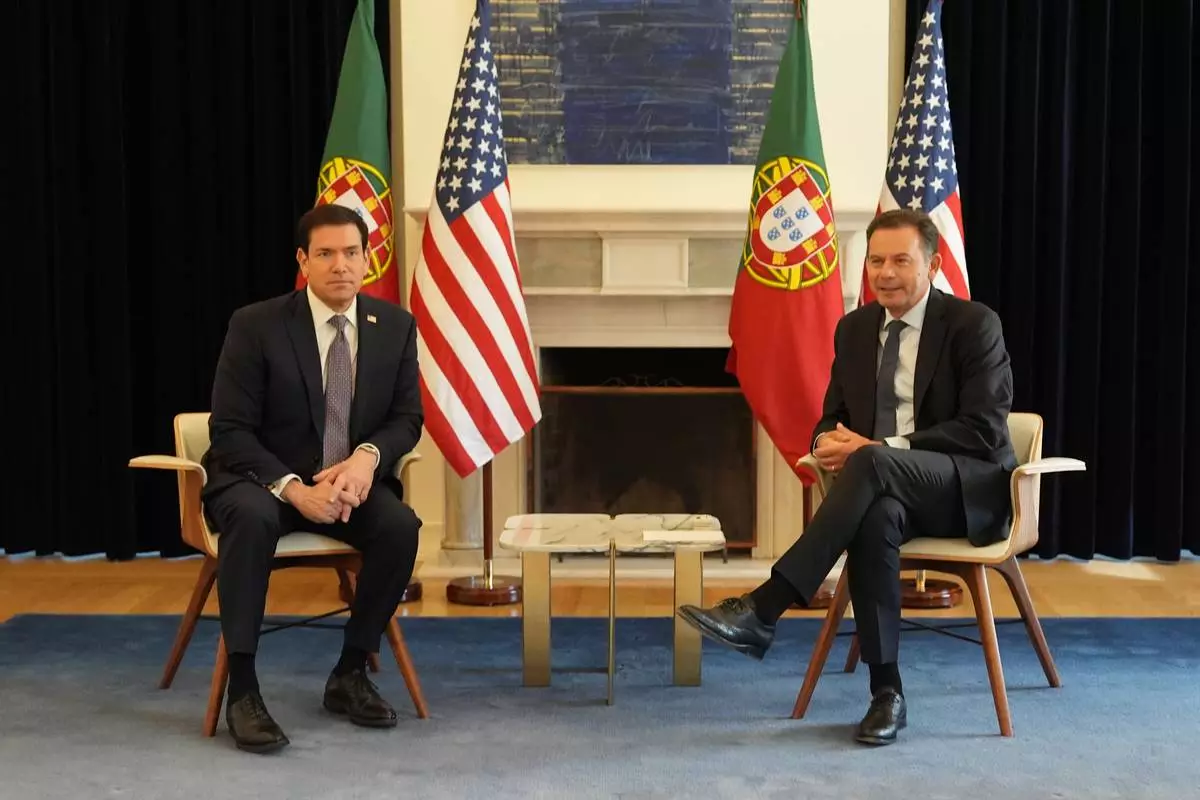
LISBON, Portugal (AP) — U.S. pressure on NATO allies to increase their defense spending “is not a hostile thing,” U.S. Secretary of State Marco Rubio said Thursday, but reiterated that the Trump administration wants the military alliance to be a stronger deterrent against threats.

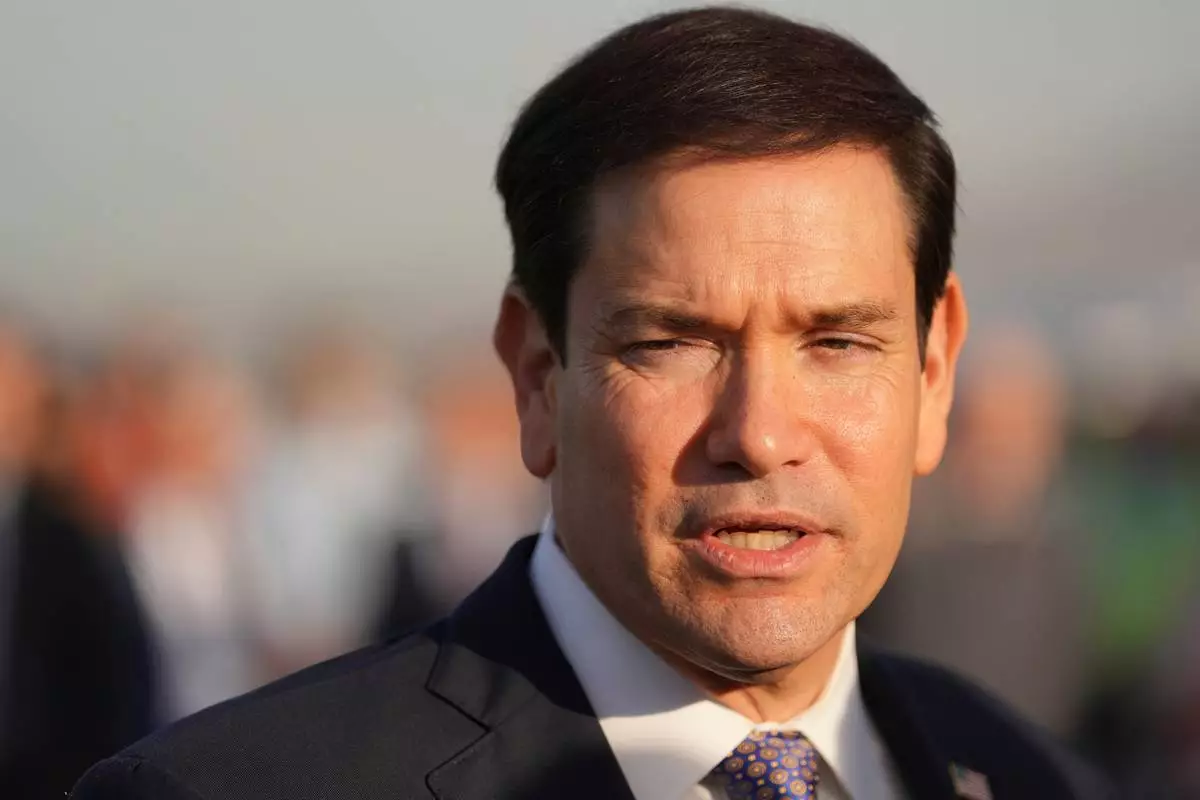
Rubio told reporters during a visit to European NATO ally Portugal that “the stronger the members of NATO are, the stronger NATO is, the stronger the alliances and the stronger the deterrence is.”

U.S. President Donald Trump has long railed against NATO allies for spending too small a fraction of their national budgets on defense, leaving the United States to shoulder what he says is an unfair burden. Some members of the 32-country alliance have been reluctant to divert funds from other government policies, however.

“People sometimes view this call to invest more in defense as a hostile thing,” Rubio said. “It is not a hostile thing.”

Rubio, who was in Portugal on the last leg of a three-nation tour of NATO allies that also included Iceland and Greece, acknowledged that some smaller NATO members, such as Portugal, have difficulty finding the funds for major military projects.

“Every country is of a different size and proportion. Some countries can contribute more than others, but every country in NATO needs to be as strong as they can possibly be,” Rubio told a news conference in Lisbon.

He noted the danger of the war in Ukraine, following Russia’s full-scale invasion of its neighbor on Feb. 24, 2022, spilling beyond Ukrainian borders. An apparent stalemate in Ukraine could bring a military escalation in Europe, he said.

“That escalation could wind up being a sabotage campaign in neighboring countries that are members of NATO,” he said. That could “quickly turn what is a war between two countries into a much broader and far more dangerous regional conflict.”

European officials have accused Moscow of a campaign of sabotage and disruption aimed at undermining support for Ukraine and destabilizing European nations.

Rubio also said that the Trump administration will keep trying to facilitate a negotiated settlement to the war, but that it has been difficult.

“We have tried, we will continue to try, but we’re also not going to invest in pointless processes if we can’t make progress,” he said, coming after new Russian strikes in eastern Ukraine killed 30 people.

Meanwhile, Rubio also praised Portuguese efforts toward meeting the NATO target for defense spending.

Portugal, a country of fewer than 11 million people, spends just over 2% of its gross domestic product on defense, according to NATO. The government says it plans to increase defense spending to around 3%, including dual-use investments in civilian infrastructure.

That still leaves it below the 5% of GDP set aside for defense spending that Trump has demanded and that requires investment at an unprecedented scale in Europe.

Portuguese Foreign Minister Paulo Rangel said at the news conference that his country views its relationship with the U.S. as “fundamental.”

Portugal provided support for American operations in the Iran war by allowing the U.S. to use the Lajes Field air base in the mid-Atlantic Azores islands, which is strategically located for military refueling flights.

The U.S. Air Force has long had a base there under an agreement with Portugal. Unlike neighboring Spain, where Prime Minister Pedro Sánchez, a Socialist, refused to allow the American military to use Spanish bases to stage operations for attacks on Iran, Portugal’s center-right government granted Washington “conditional approval” to use Lajes Field.

“Portugal is a great ally, very cooperative ally of the United States and a country with which we already have a solid and growing relationship. And we visit these countries in order to reinforce those ties,” Rubio said before arriving in Lisbon. “That’s the purpose of the trip.”

Some Portuguese political parties balked at the decision to allow the U.S. to use the Azores islands air base, however. Following a formal complaint by a small left-wing political party called Left Bloc, the country’s attorney general’s office said last week that it's looking into whether the use of the Lajes Field base was lawful.

Rubio visited Portugal a day after delivering a speech in the Greek capital, Athens, urging European countries to save Western civilization by upholding the values and traditions of ancient Greece.

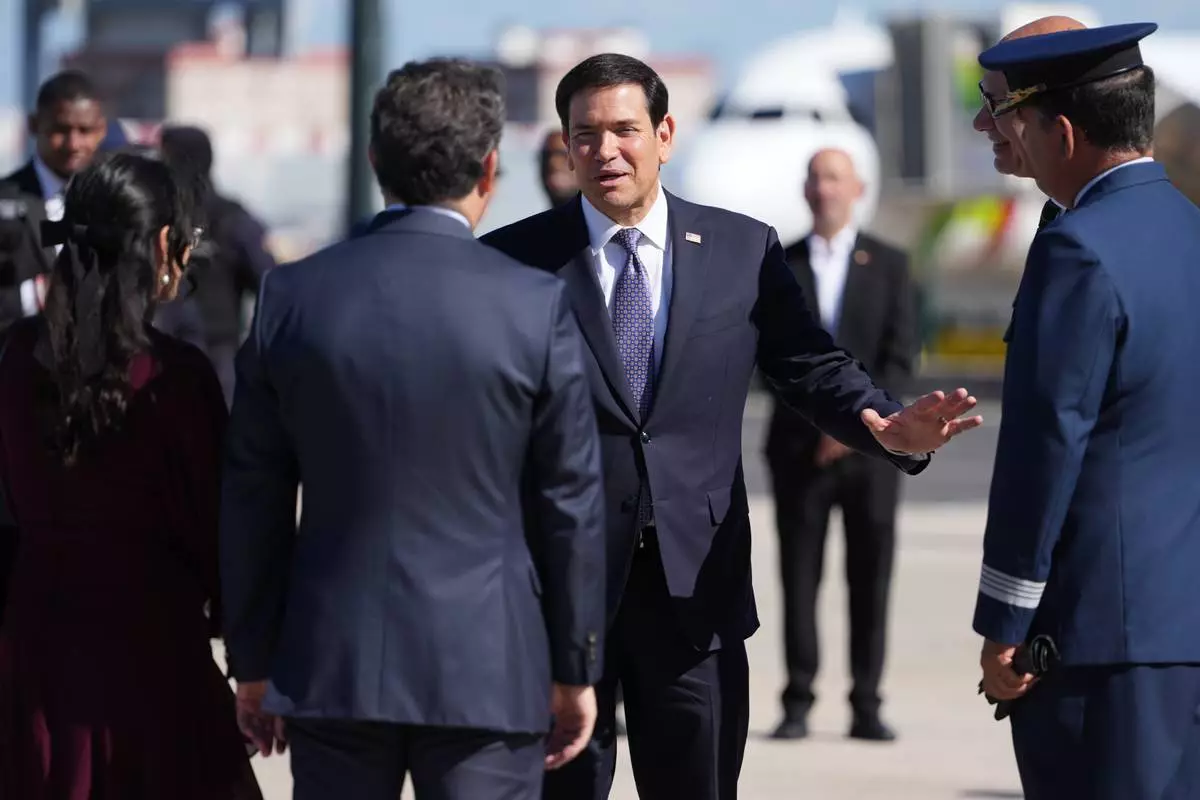
U.S. Secretary of State Marco Rubio talks to the staff before boarding a plane Thursday, Oct. 8, 2026, at Lisbon Airport in Lisbon. (AP Photo/Mark Schiefelbein, Pool)

U.S. Secretary of State Marco Rubio talks to the staff before boarding a plane Thursday, Oct. 8, 2026, at Lisbon Airport in Lisbon. (AP Photo/Mark Schiefelbein, Pool)

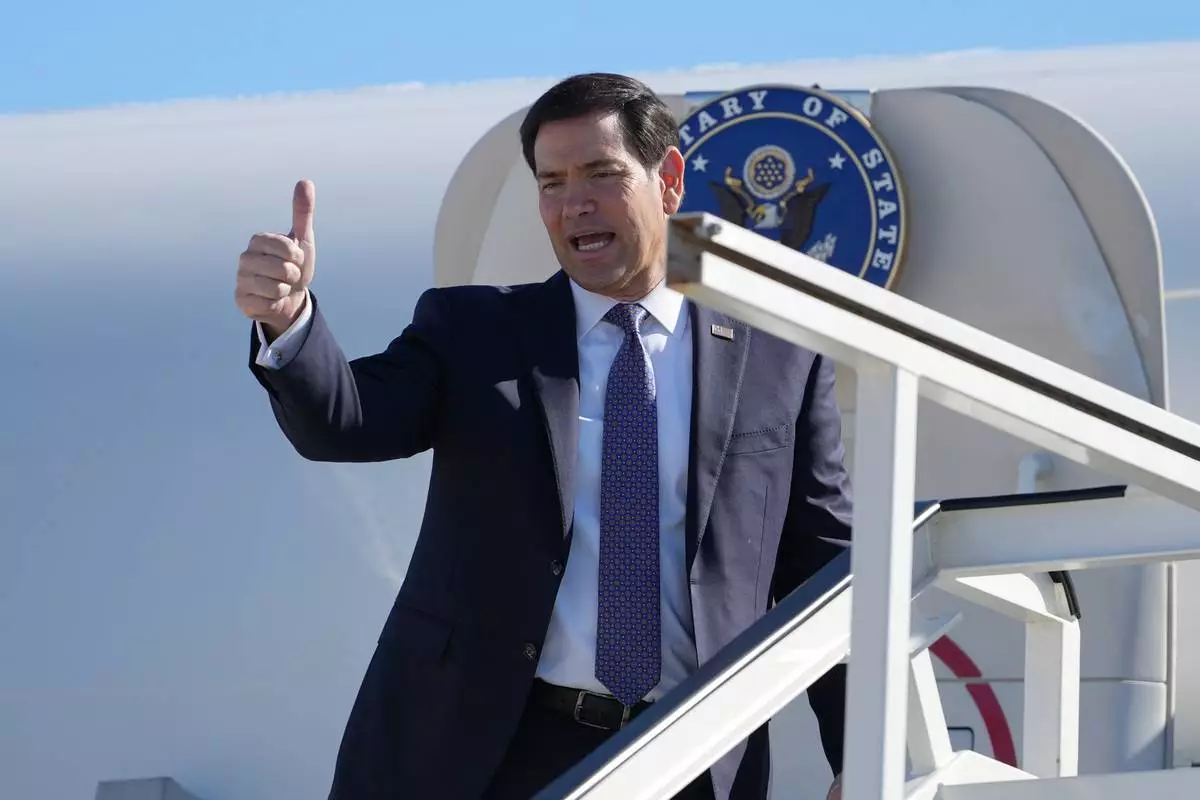
U.S. Secretary of State Marco Rubio boards a plane Thursday, Oct. 8, 2026, at Lisbon Airport in Lisbon. (AP Photo/Mark Schiefelbein, Pool)

U.S. Secretary of State Marco Rubio boards a plane Thursday, Oct. 8, 2026, at Lisbon Airport in Lisbon. (AP Photo/Mark Schiefelbein, Pool)

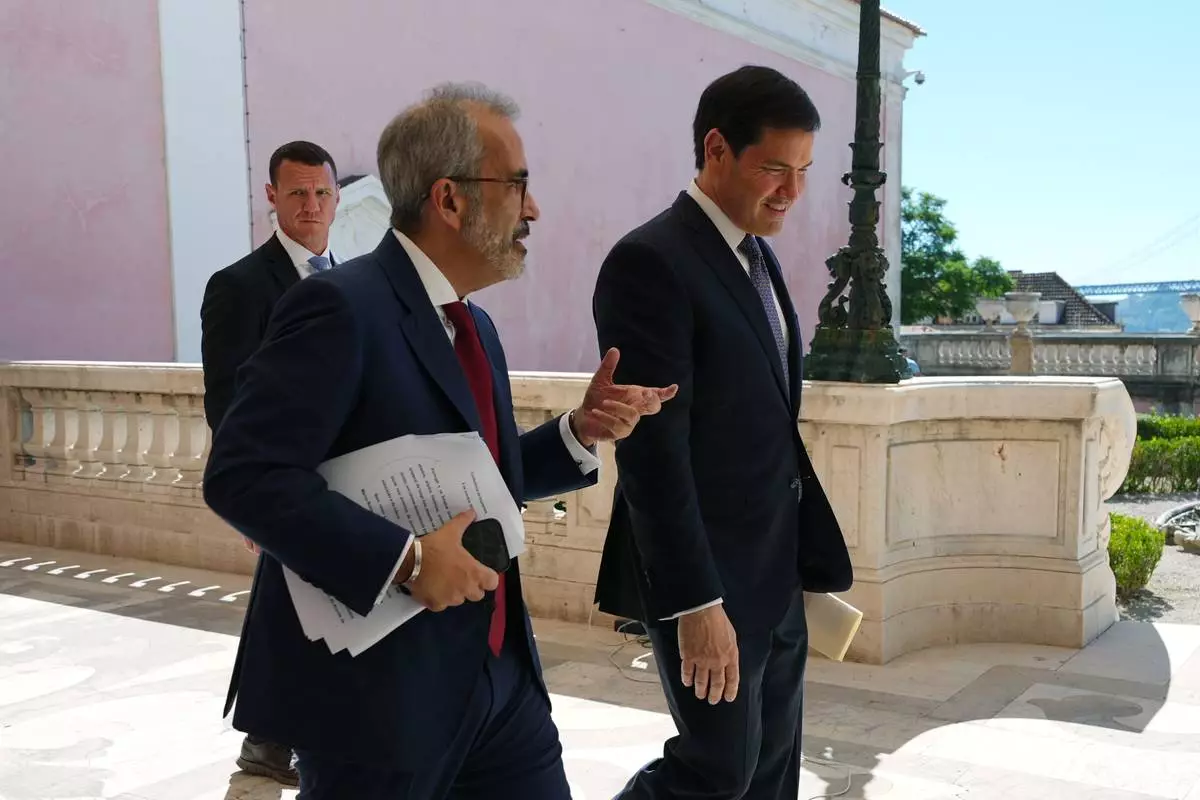
Portugal's Foreign Minister Paulo Rangel and U.S. Secretary of State Marco Rubio depart after their joint news conference, Thursday, Oct. 8, 2026, at the Necessidades Palace, the Portuguese foreign ministry, in Lisbon. (AP Photo/Mark Schiefelbein, Pool)

Portugal's Foreign Minister Paulo Rangel and U.S. Secretary of State Marco Rubio depart after their joint news conference, Thursday, Oct. 8, 2026, at the Necessidades Palace, the Portuguese foreign ministry, in Lisbon. (AP Photo/Mark Schiefelbein, Pool)

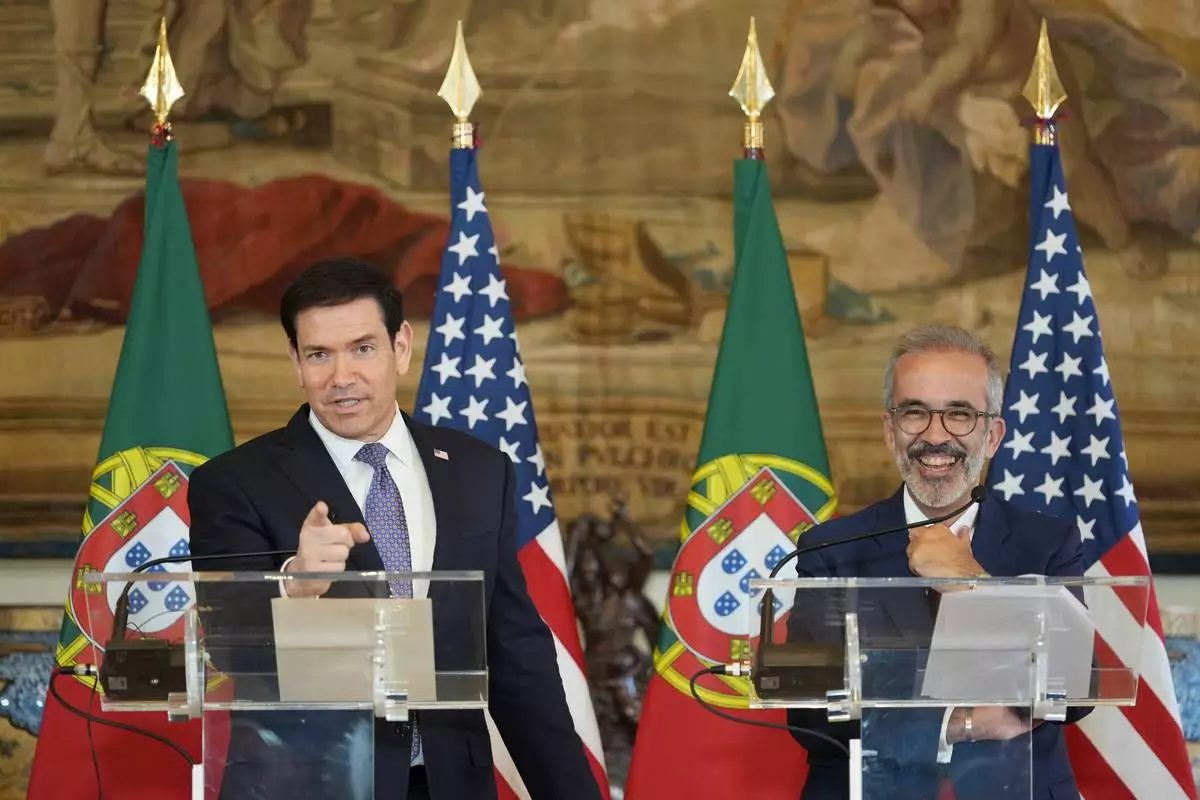
U.S. Secretary of State Marco Rubio speaks during a joint press conference with Portugal's Foreign Minister Paulo Rangel, Thursday, Oct. 8, 2026, at the Necessidades Palace, the Portuguese foreign ministry, in Lisbon. (AP Photo/Mark Schiefelbein, Pool)

U.S. Secretary of State Marco Rubio speaks during a joint press conference with Portugal's Foreign Minister Paulo Rangel, Thursday, Oct. 8, 2026, at the Necessidades Palace, the Portuguese foreign ministry, in Lisbon. (AP Photo/Mark Schiefelbein, Pool)

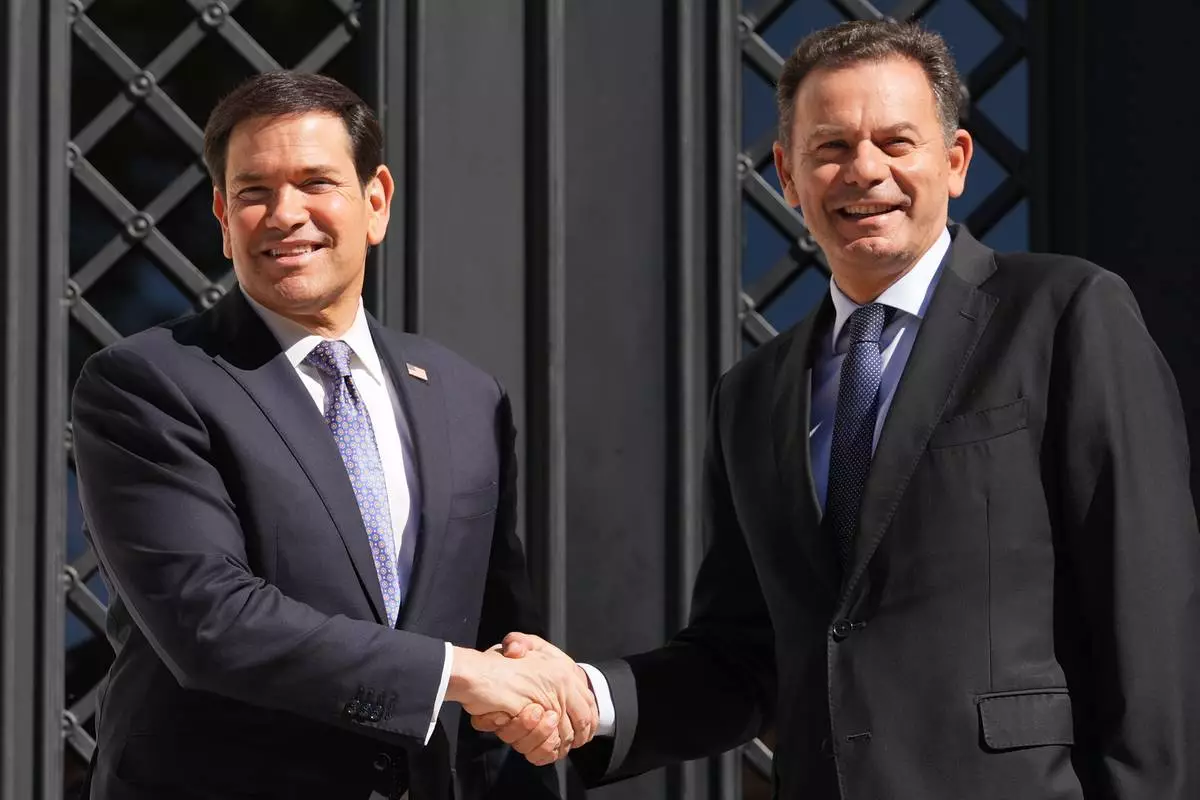
U.S. Secretary of State Marco Rubio is greeted by Portugal's Prime Minister Luis Montenegro, Thursday, Oct. 8, 2026, at the Sao Bento Palace in Lisbon. (AP Photo/Mark Schiefelbein, Pool)

U.S. Secretary of State Marco Rubio is greeted by Portugal's Prime Minister Luis Montenegro, Thursday, Oct. 8, 2026, at the Sao Bento Palace in Lisbon. (AP Photo/Mark Schiefelbein, Pool)

U.S. Secretary of State Marco Rubio is greeted by Portugal's Prime Minister Luis Montenegro, Thursday, Oct. 8, 2026, at the Sao Bento Palace in Lisbon. (AP Photo/Mark Schiefelbein, Pool)

U.S. Secretary of State Marco Rubio is greeted by Portugal's Prime Minister Luis Montenegro, Thursday, Oct. 8, 2026, at the Sao Bento Palace in Lisbon. (AP Photo/Mark Schiefelbein, Pool)

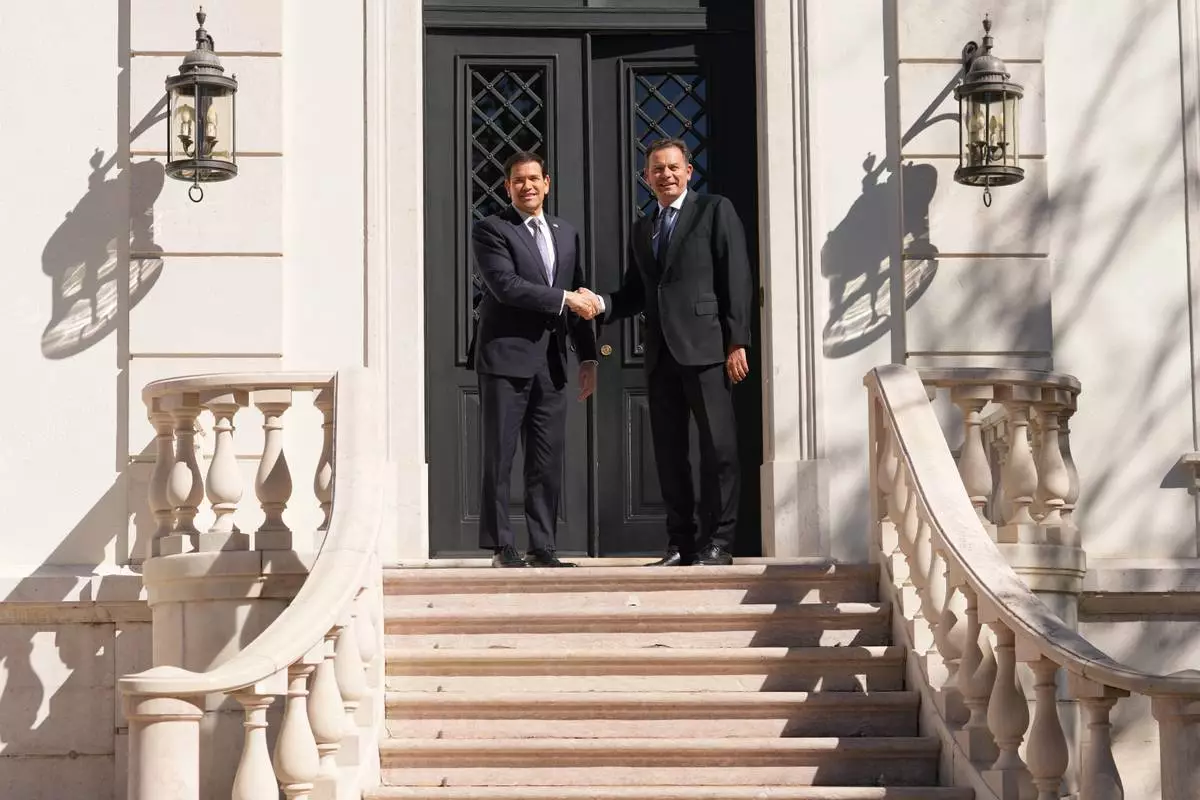
U.S. Secretary of State Marco Rubio, left, meets with Portugal's Prime Minister Luis Montenegro, Thursday, Oct. 8, 2026, at the Sao Bento Palace in Lisbon. (AP Photo/Mark Schiefelbein, Pool)

U.S. Secretary of State Marco Rubio, left, meets with Portugal's Prime Minister Luis Montenegro, Thursday, Oct. 8, 2026, at the Sao Bento Palace in Lisbon. (AP Photo/Mark Schiefelbein, Pool)

U.S. Secretary of State Marco Rubio speaks to the press before boarding a plane at Eleftherios Venizelos International Airport near Athens, Greece, Thursday, Oct. 8, 2026. (AP Photo/Mark Schiefelbein, Pool)

U.S. Secretary of State Marco Rubio speaks to the press before boarding a plane at Eleftherios Venizelos International Airport near Athens, Greece, Thursday, Oct. 8, 2026. (AP Photo/Mark Schiefelbein, Pool)

Recommended Articles