WASHINGTON (AP) — President Donald Trump said Thursday that he will not order a resumption of military strikes on Iran before the Nov. 3 midterm elections in the United States.
Trump, while stumping for Republicans this week, has hinted that he was confident that an endgame to the war could come in the days before or after the election, while also hinting that he remained open to resuming full-scale military operations against Iran.
For weeks, Trump has been threatening that a post-midterm election escalation in the seven-month-old war remains a viable option, despite his initial promises to Americans of a military campaign that would last a matter of weeks.
But Trump in a social media post on Thursday said the U.S. “will not be attacking Iran at any time prior to the Midterm Elections to be held in the United States on November 3rd.”
Trump added that his team has been “having productive discussions with the Islamic Republic of Iran.”
The U.S. and Iran signed a short-lived interim agreement in June, intended to establish a 60-day ceasefire and framework for a permanent peace deal.
The deal signed by Trump and Iranian President Masoud Pezeshkian collapsed within weeks amid renewed military actions and disputes over control of the Strait of Hormuz, the critical water which one-fifth world's oil flowed through before the war.
Negotiations had appeared at a standstill since Trump late last month publicly rejectedIran’s proposal to reopen the strait within seven days if the U.S. met certain conditions.
Iran, however, said last week they had received a U.S. counterproposal. And Foreign Minister Abbas Araghchi earlier on Thursday said he expected Tehran would offer a formal reply within days.
Trump on Wednesday during a campaign rally in San Antonio, Texas, said that his special envoy, Steve Witkoff, has continued indirect negotiations with Iranian officials.
But at the same time, Trump suggested he had mixed feelings about ending the war at this point.
“I think the deal isn’t really something that I want to do, but they’re willing to offer us anything to stop,” Trump said.
Trump believes that the U.S. is gaining leverage as the U.S. military is having greater success in helping oil tankers traverse the Strait of Hormuz and get Gulf allies’ oil to market, while a Navy blockade is shutting down Iran’s own oil exports.
Iran has lost its near chokehold over oil flows through the vital waterway with U.S. Central Command shepherding oil tankers through the strait at night with their location systems turned off.
That with the help of Gulf pipelines that skirt the strait, has allowed Gulf countries to export oil at nearly prewar levels.
But Iran has ramped up attacks on tankers passing through the strait in recent days. And overall, ship traffic remains well below prewar levels, as are shipments of liquid natural gas and fuel products.
Tanker operators willing to risk running the gauntlet under Central Command’s protection are in some cases charging rates of $1 million a day or more, shipping analysts say.
The situation has become further complicated as Saudi Arabia and Yemen’s government have launched a military campaign aimed at driving Iran-backed Houthi rebels from the Bab el-Mandeb strait, another critical Mideast trade route for oil and other goods. The Houthis, in turn, are targeting Saudi airports and key infrastructure in the kingdom with drone and missile strikes.
Trump's post comes as the military has dispatched more resources to the region. U.S. officials have said a third aircraft carrier, the USS Theodore Roosevelt, and thousands of troops aboard it and accompanying ships could arrive as early as the end of October.
Trump’s announcement was made the same day the USS Abraham Lincoln was due to arrive to its home port in San Diego after a record-long deployment in support of the Iran war. There have been reports of crew stress and poor mental health, as well as supply shortages, including food and hygiene products.
The USS George Washington, which is usually based in Asia, relieved the Lincoln in August. The other aircraft carrier in the Middle East, the USS George H.W. Bush, has been deployed for about six months, but it pulled into Phuket, Thailand, for a port visit several days ago.

President Donald Trump talks to reporters as he walks on the South Lawn upon his arrival to the White House, Thursday, Oct. 8, 2026, in Washington. (AP Photo/Jose Luis Magana)
BAYOU LA BATRE, Ala. (AP) — Isaias surged toward the U.S. Gulf Coast on Thursday as the first hurricane of the Atlantic season, prompting mandatory evacuations, school closures and local government shutdowns in parts of Florida.
Isaias was forecast to intensify rapidly and bring strong winds and a life-threatening storm surge to the Florida Panhandle, southern Alabama and southern Mississippi when it makes landfall along the northern Gulf Coast late Friday or early Saturday. Heavy rain and flooding were possible into the weekend as far inland as the Tennessee Valley.
“We are expecting Isaias to be a dangerous hurricane when it makes landfall,” Michael Brennan, director of the National Hurricane Center in Miami, said in a mid-morning update.
He added: “Today is the day to prepare and get ready and be in your safe place by tomorrow as conditions will rapidly deteriorate along the northern Gulf Coast as Isaias approaches.”
The hurricane had maximum sustained winds of about 85 mph (140 kph) and was moving east-northeast at 10 mph (17 kph) as of late Thursday morning, the hurricane center said. It was centered about 380 miles (610 kilometers) south of the mouth of the Mississippi River.
Coastal communities moved quickly to prepare, as officials in Alabama cities of Gulf Shores and Orange Beach urged tourists to evacuate immediately, warning that bridges could be closed by midday Friday. At least four Florida school districts canceled late-week classes, while several counties announced mandatory evacuations for some coastal areas. The governors of Florida and Alabama declared states of emergency for dozens of counties ahead of Isaias' arrival.
Dauphin Island, a 15-mile-long barrier island off the Alabama coast, encouraged some people to voluntarily evacuate.
“That area is traditionally very vulnerable to storm surge — saltwater flooding — and that is also where most of the visitors are," Mayor Jeff Collier said Thursday of the western part of the island.
He said he didn't anticipate substantial damage, “but at the same time, these things are very fickle and a little jog here or there or some last-minute increase in strength, we just have to be prepared for the worst.”
Water from the storm surge and high tide could reach heights of 5 to 7 feet (1.5 to 2 meters) in parts of Alabama and Mississippi, the hurricane center said. Isaias also could dump up to 15 inches (38 centimeters) of rain along parts of the Gulf Coast and spawn tornadoes overnight Friday into Saturday from Alabama to the Florida Panhandle and southwestern Georgia. The hurricane is expected to quickly weaken after making landfall.
The National Weather Service told communities from Ocean Springs, Mississippi, to Gulf County, Florida, to prepare for the possibility of “long-duration power outages.”
Isaias developed more than four months into the Atlantic hurricane season and was one day short of tying a 121-year-old record for the area’s latest-forming hurricane. According to the weather service, the record dates to 1905, when the year’s first Atlantic hurricane formed on Oct. 8.
The Atlantic hurricane season has been unusually quiet this year because of a strong El Niño, which disrupts storm formation over the Atlantic. Storm activity has been above average in the Pacific, where Tropical Storm Simon formed Wednesday off Mexico and where Tropical Storm Rachel, formerly a hurricane, was expected to approach northern Baja California, Mexico, and Southern California this weekend, the hurricane center said.
Isaias is expected to strike a swath of coastline that’s familiar with major hurricanes.
One of the 20th century’s worst storms, Hurricane Camille, killed more than 250 people after hitting land near Waveland, Mississippi, in 1969. Hurricane Katrina in 2005 razed neighborhoods in Mississippi, flooded New Orleans and killed nearly 1,400 people. And Hurricane Michael leveled homes and buildings near Panama City, Florida, in 2018.
Ahead of the storm, oil and gas producers shut down a significant share of offshore production in the Gulf, which accounts for almost 15% of crude pumped annually in the U.S.
As of Wednesday, about 25% of the oil production in the region had been temporarily halted, taking about 511,000 barrels a day off the market, according to the Marine Minerals Administration. It said eight of the Gulf's 371 manned oil platforms had been evacuated.
With oil prices already high, the production cuts are steep enough to affect markets, though other Gulf hurricanes have caused larger disruptions, said Jim Burkhard, global head of crude oil market research for S&P Global Energy. More concerning, he said, is whether Isaias strikes as a powerful storm near refineries.
As it moves inland, Isaias might also disrupt Saturday’s college football showdown between rivals Georgia and Alabama, a game President Donald Trump has planned to attend.
In Gulf Shores, an Alabama community encouraging voluntary evacuations, resident Maranie Adams gathered water and other supplies as her family moved belongings, including a hot tub motor, to higher ground. Her family planned to ride out the storm at home, roughly a half-mile from shore, sheltering indoors alongside their flock of chickens.
“We’re having to get crates to bring them into the house so they don’t blow away,” Adams said. “It’s going to be noisy.”
Alabama Gov. Kay Ivey issued a state of emergency for 40 counties, while Florida Gov. Ron DeSantis declared one for 25 counties in the Panhandle and Big Bend regions. The state also planned to deploy a Miami-based urban search and rescue task force.
In Pensacola, officials said the airport will close to commercial flights Friday morning, while utility crews prepared for power outages and officials opened sandbag distribution sites. Mayor D.C. Reeves urged residents to check on older adult neighbors and others who might need help.
“Obviously no need to panic at this point,” Reeves told a news conference. “This is really about preparation.”
Rico reported from Atlanta and Collins reported from Hartford, Connecticut. Associated Press reporters Kim Chandler in Montgomery, Alabama; Hallie Golden in Seattle; Kathy McCormack in Concord, New Hampshire; and Julie Walker in New York contributed to this report.
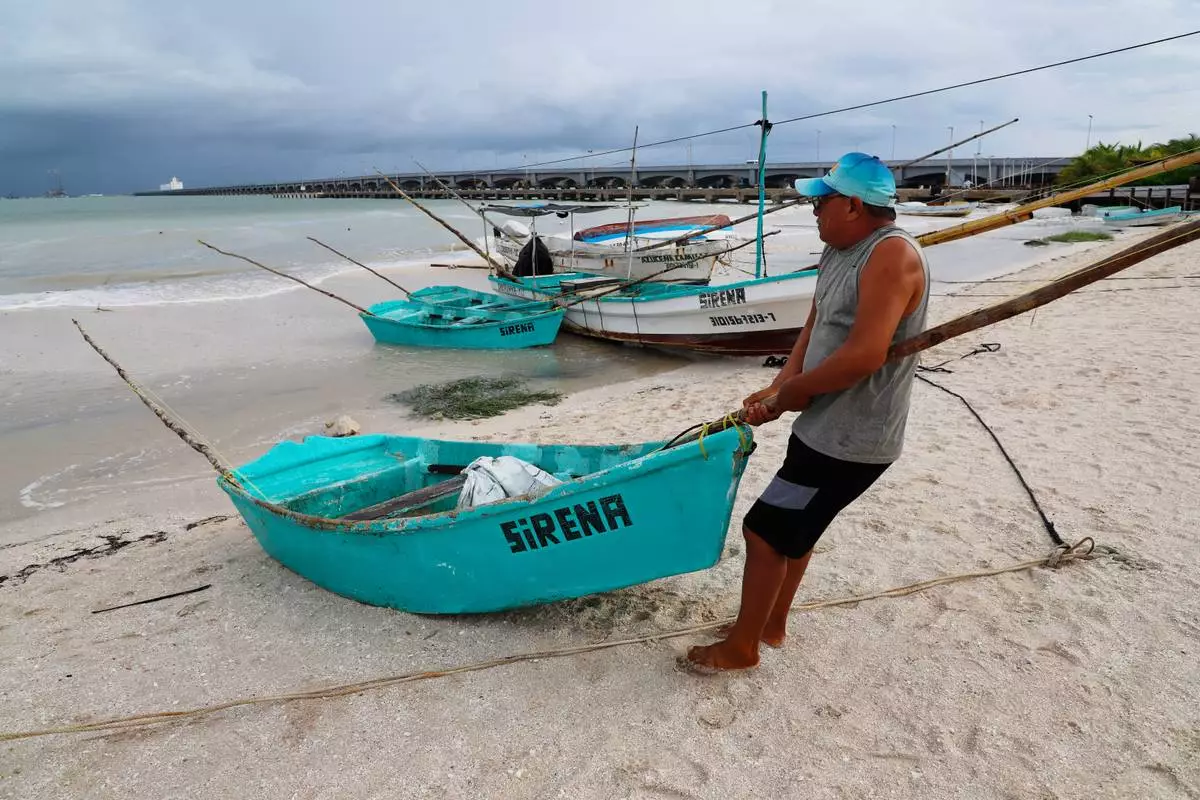
Gaspar Amalla pulls his boat out of the water as Hurricane Isaias passes through the Gulf of Mexico, north of Progreso, Yucatan state, Mexico, Thursday, Oct. 8, 2026. (AP Photo/Martin Zetina)
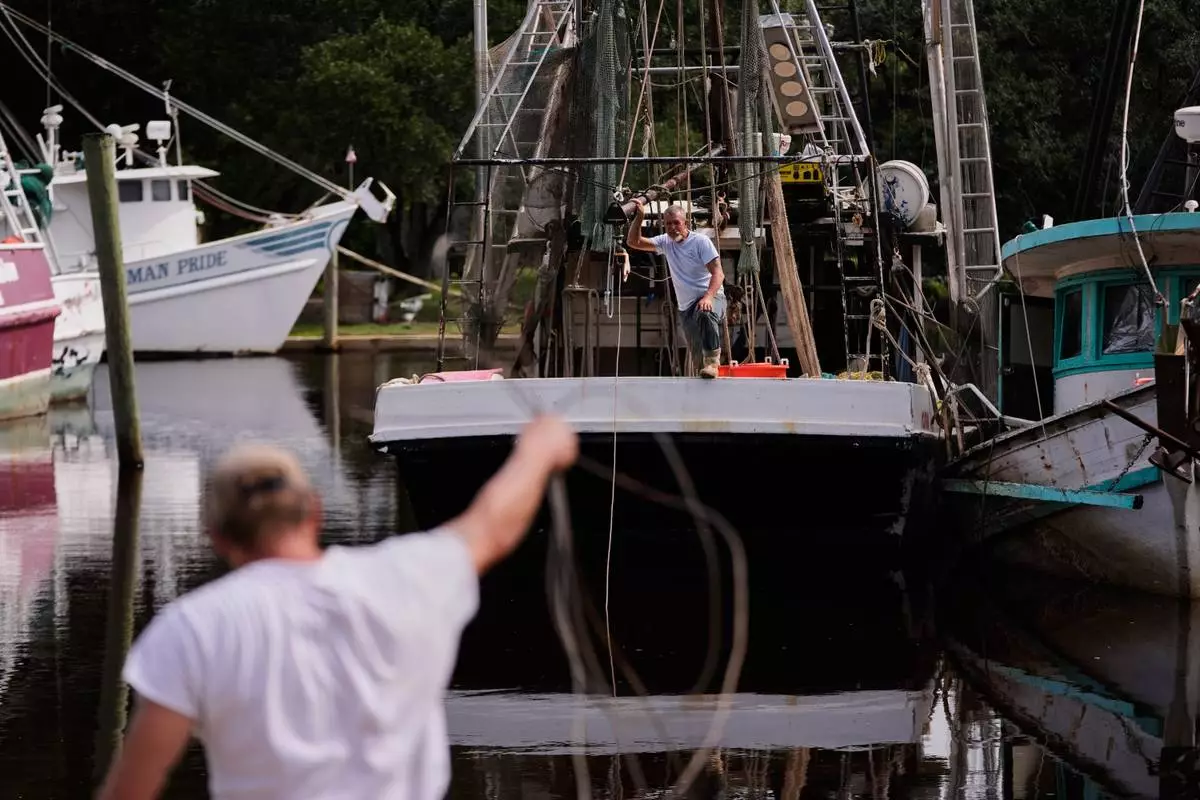
Boat owner Tony Rice, foreground, and his friend Lance Connor haul doors onto his boat to secure it as Hurricane Isaias approaches Bayou La Batre, Ala., Thursday, Oct. 8, 2026. (AP Photo/Gerald Herbert)
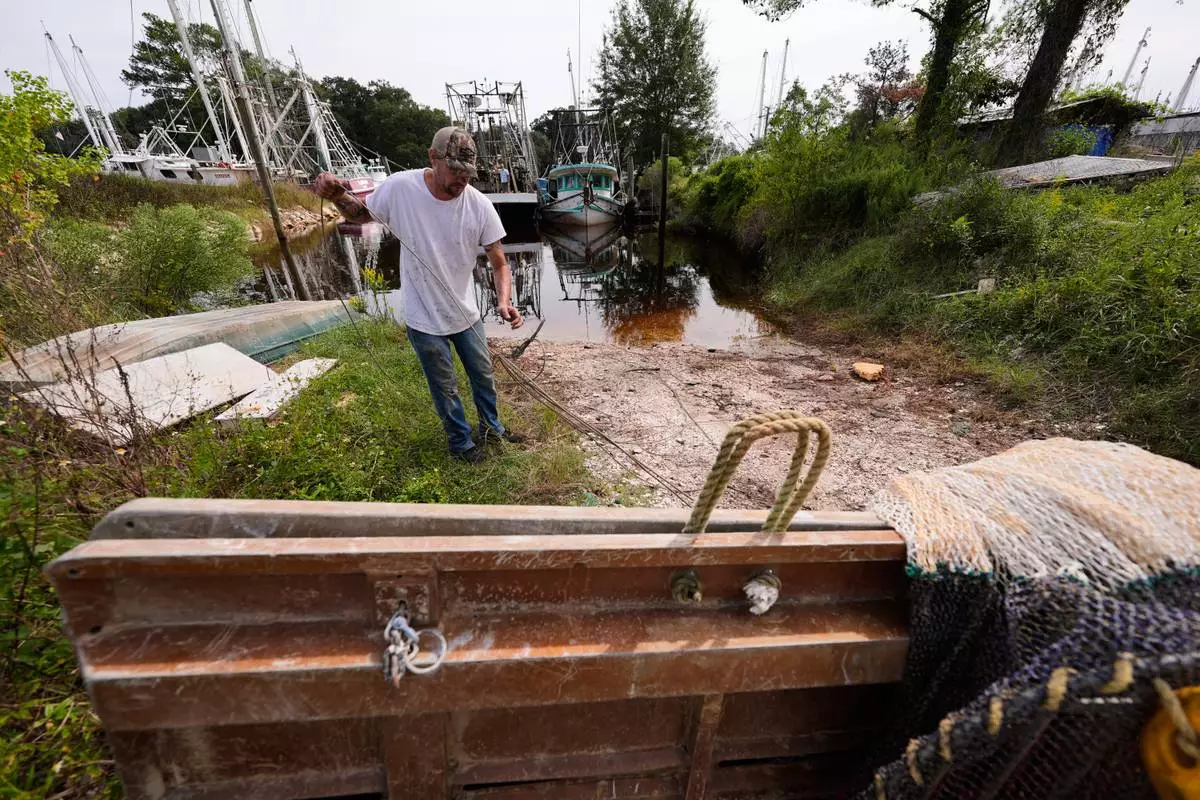
Boat owner Tony Rice prepares to haul doors onto his boat to secure it as Hurricane Isaias approaches Bayou La Batre, Ala., Thursday, Oct. 8, 2026. (AP Photo/Gerald Herbert)

Residents pick up sandbags for storm preparation at the James Seals Jr. Parks & Recreation Center ahead of Hurricane Isaias' expected landfall along the Gulf Coast, Thursday, Oct. 8, 2026, in Mobile, Ala. (AP Photo/Octavio Jones)
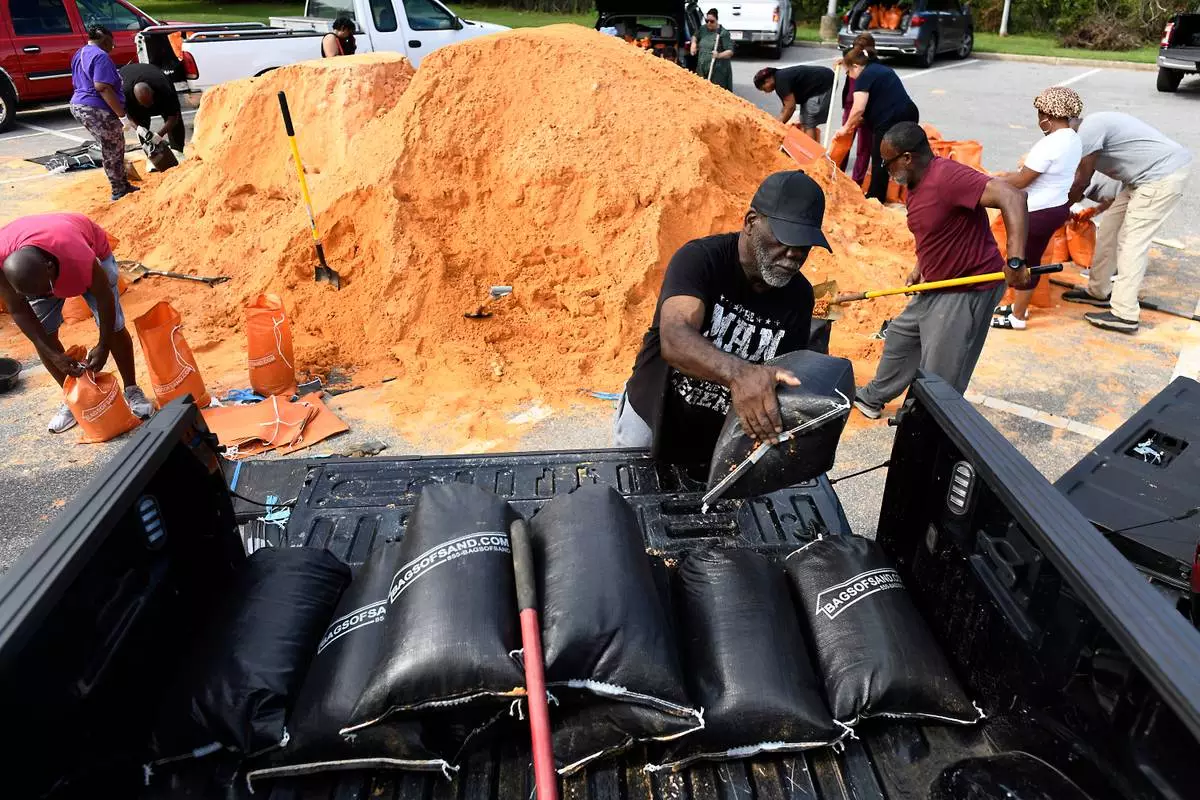
Residents pick up sandbags for storm preparation at the James Seals Jr. Parks & Recreation Center ahead of Hurricane Isaias' expected landfall along the Gulf Coast, Thursday, Oct. 8, 2026, in Mobile, Ala. (AP Photo/Octavio Jones)
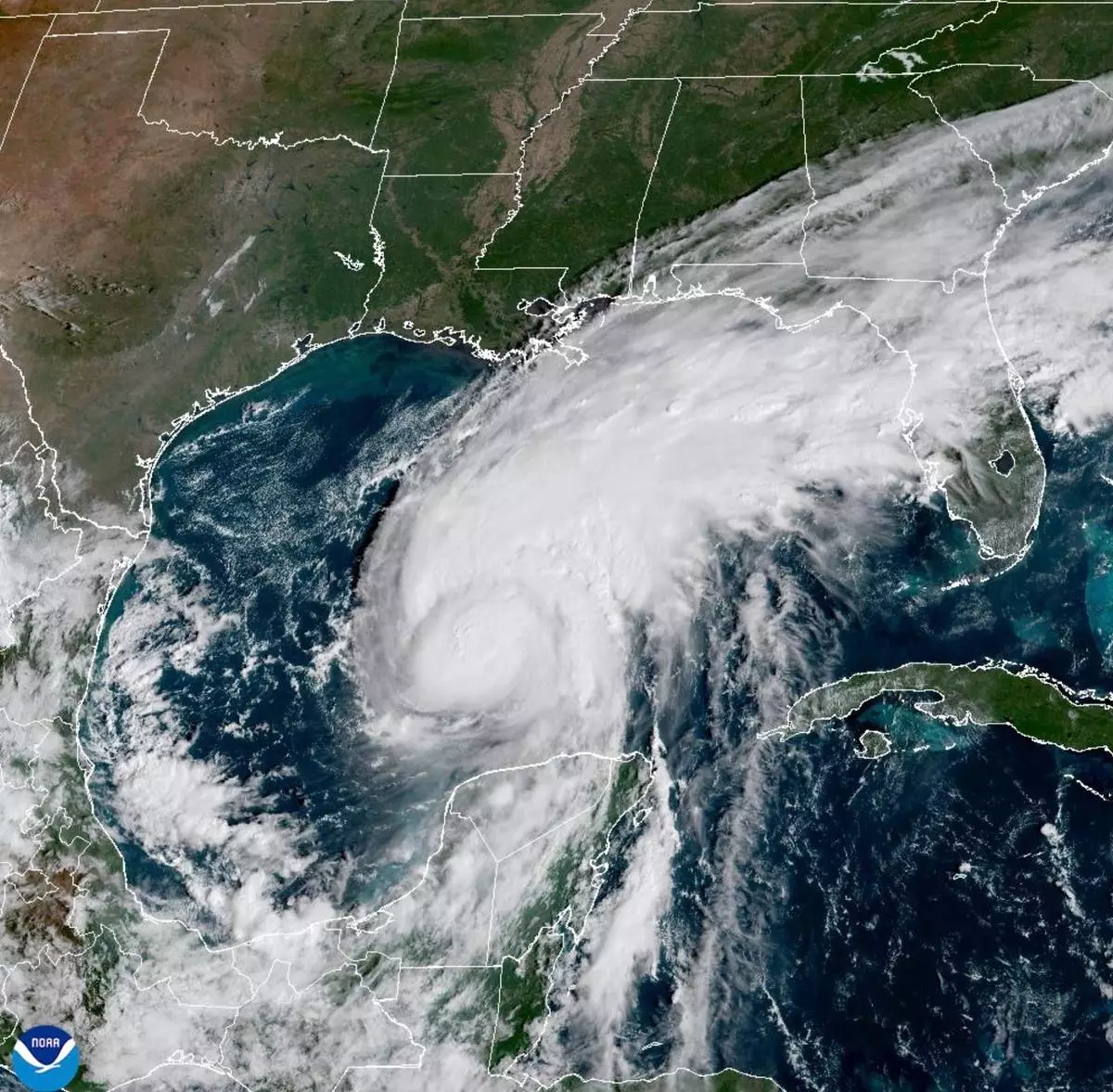
This satellite image from the National Oceanic and Atmospheric Administration shows Hurricane Isaias surging toward the U.S. Gulf Coast on Thursday, Oct. 8, 2026. (National Oceanic and Atmospheric Administration via AP)
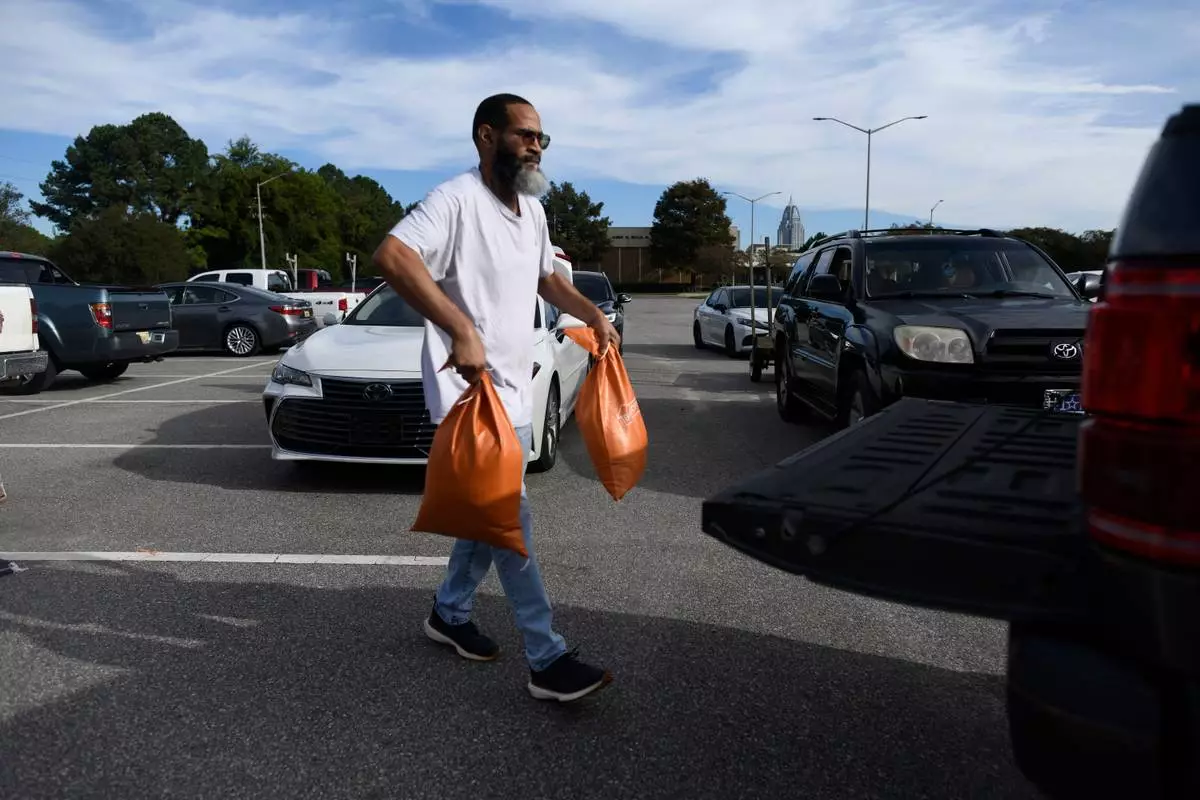
Residents pick up sandbags at the James Seals Jr. Parks & Recreation Center as they prepare for Hurricane Isaias expected landfall along the Gulf Coast, Thursday, Oct. 8, 2026, in Mobile, Ala. (AP Photo/Octavio Jones)
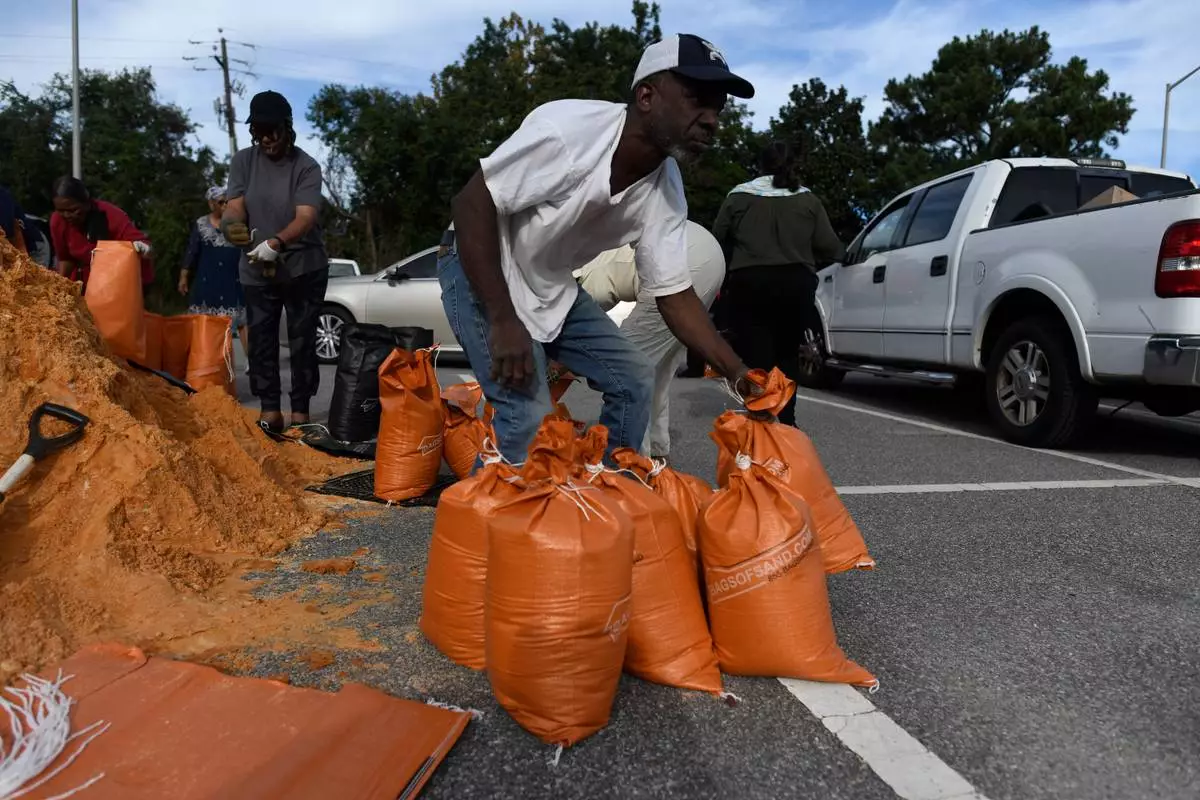
Residents pick up sandbags for storm preparation at the James Seals Jr. Parks & Recreation Center ahead of Hurricane Isaias, expected landfall along the Gulf Coast, Thursday, Oct. 8, 2026, in Mobile, Ala. (AP Photo/Octavio Jones)
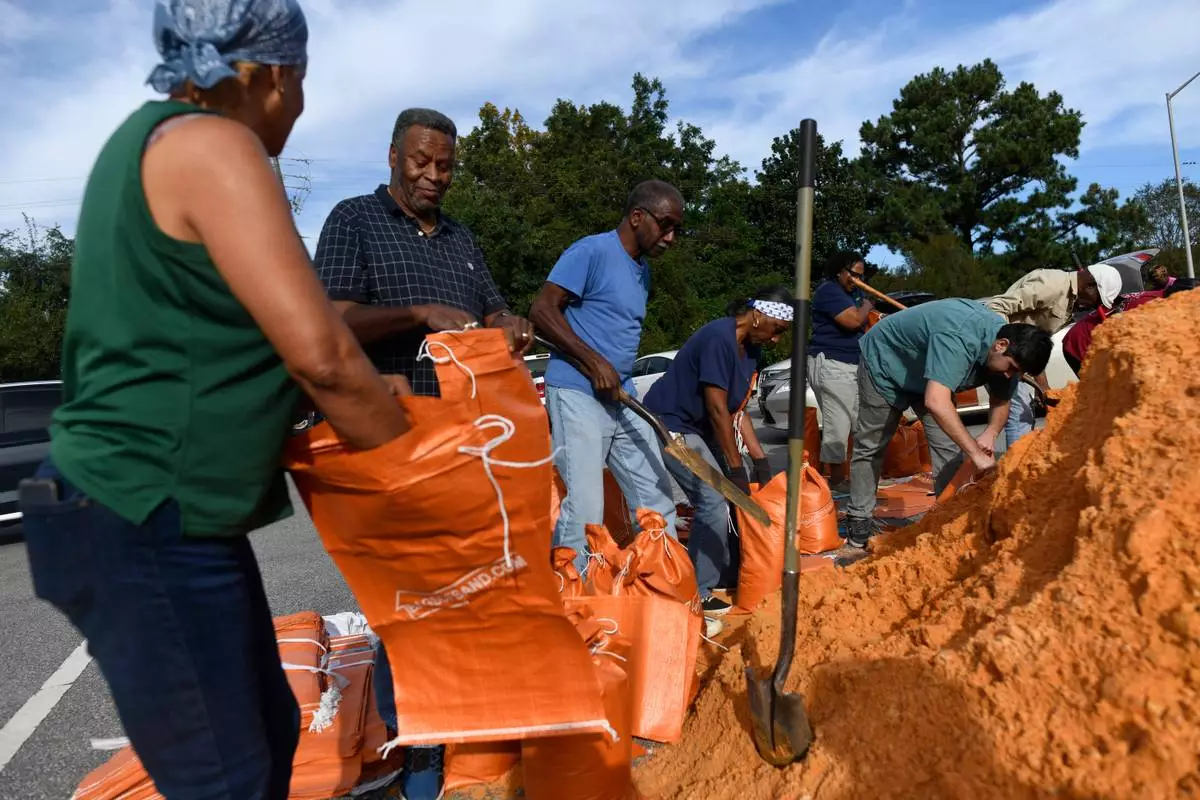
Residents pick up sandbags for storm preparation at the James Seals Jr. Parks & Recreation Center ahead of Hurricane Isaias' expected landfall along the Gulf Coast, Thursday, October 8, 2026, in Mobile, Alabama (AP Photo/Octavio Jones)

Residents pick up sandbags at the James Seals Jr. Parks & Recreation Center as they prepare for Hurricane Isaias expected landfall along the Gulf Coast, Thursday, Oct. 8, 2026, in Mobile, Ala. (AP Photo/Octavio Jones)
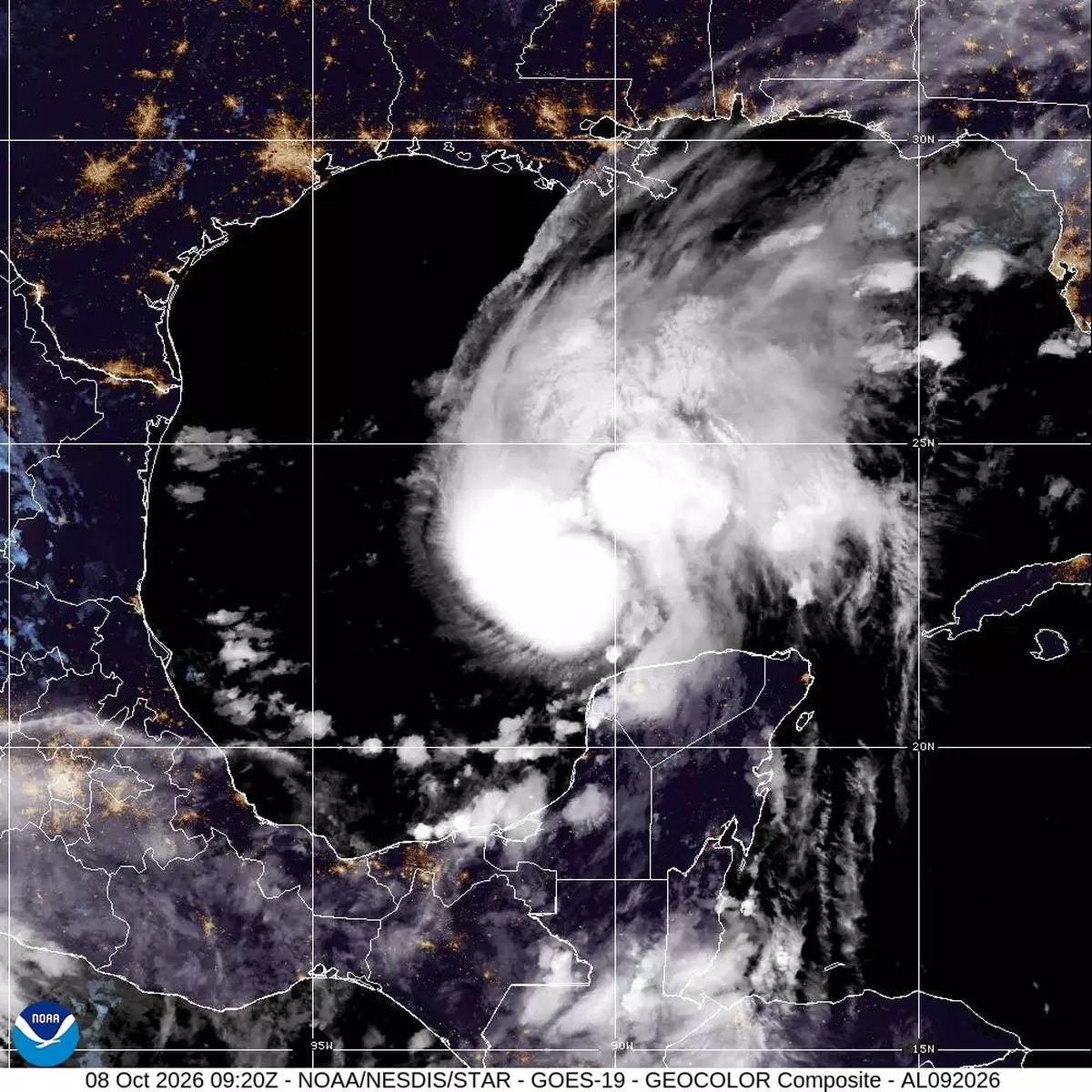
This satellite image from the National Oceanic and Atmospheric Administration shows Hurricane Isaias in the Gulf of Mexico, Thursday, Oct. 8, 2026. (National Oceanic and Atmospheric Administration via AP)
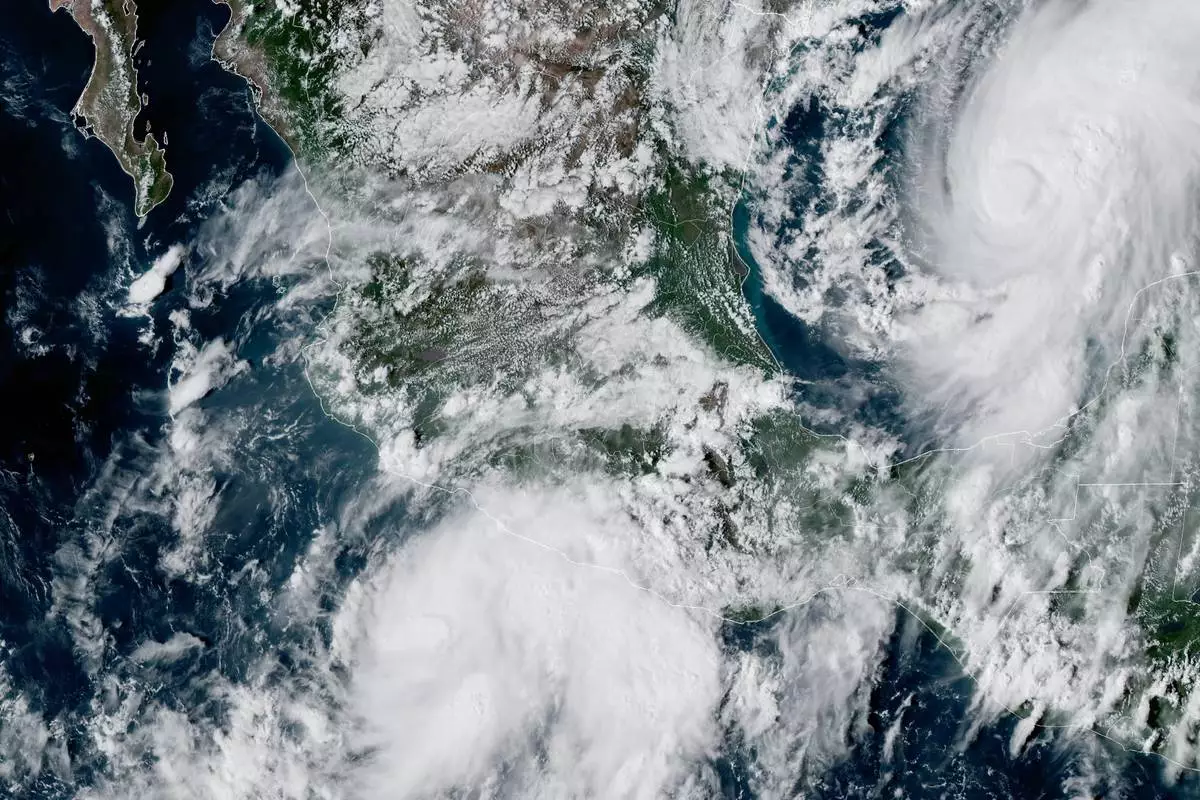
This GOES-19 GeoColor satellite image provided by the National Oceanic and Atmospheric Administration (NOAA) and taken at 4:57 p.m. EDT, Wednesday, Oct. 7, 2026, shows Tropical Storm Simon, bottom center, in the Pacific Ocean, off the southwestern coast of Mexico, and Tropical Storm Isaias, upper right, east of Mexico in the Gulf of Mexico. (NOAA via AP)
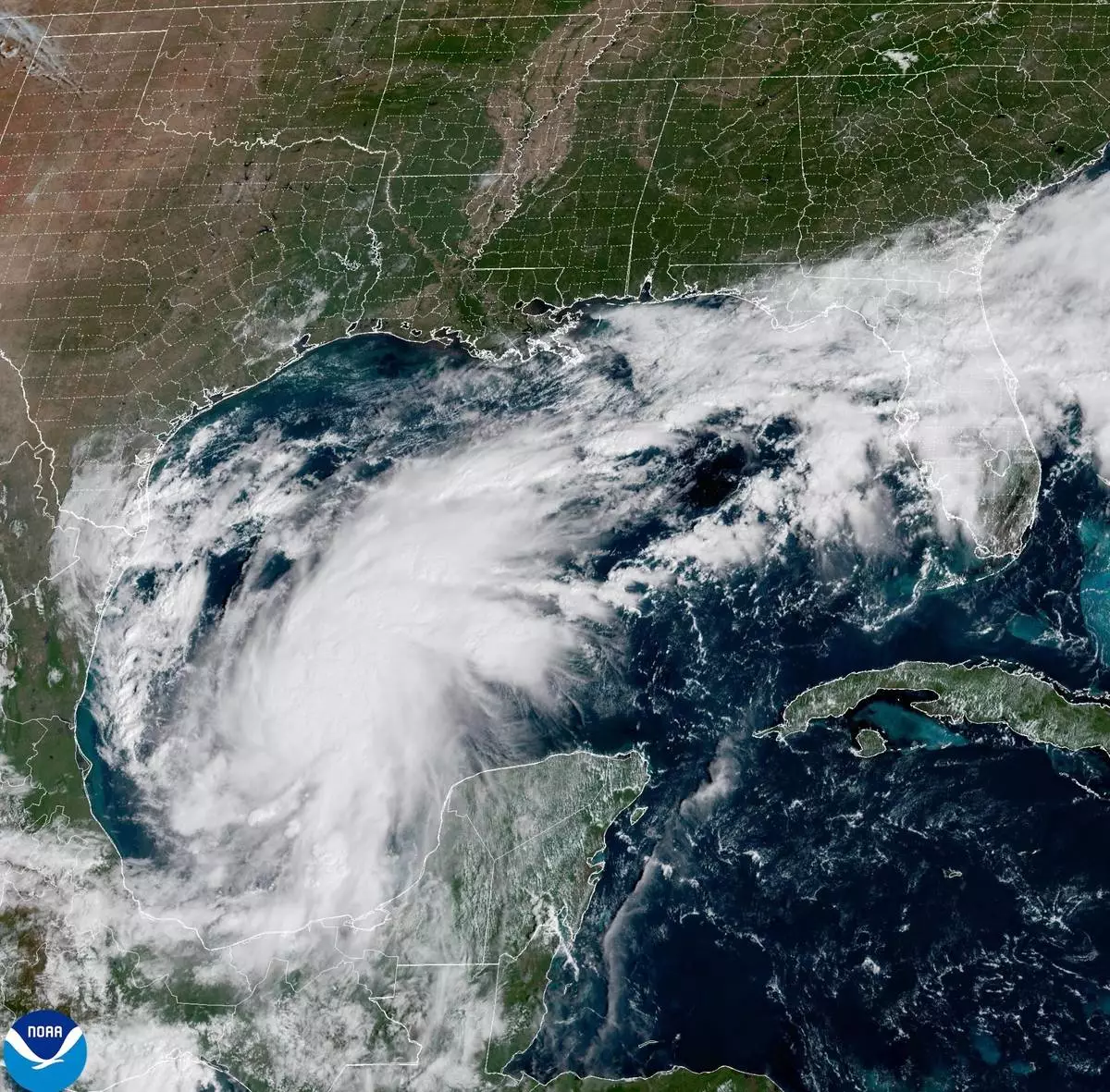
This satellite image from the National Oceanic and Atmospheric Administration shows Tropical Storm Isaias off the eastern coast of Mexico on Wednesday, Oct. 7, 2026. (National Oceanic and Atmospheric Administration via AP)