Curtis Flowers, a Black man who spent more than 22 years in prison and was on death row in Mississippi before the U.S. Supreme Court threw out his conviction and death sentence, has died. He was 56.
Flowers' family confirmed that he died Wednesday at his home in Mississippi, attorney Rob McDuff told The Associated Press Thursday.
No cause of death was given, said McDuff, who was part of Flowers' legal team.
Flowers was 26 when he was arrested several months after the July 1996 shooting deaths of four people inside a Winona, Mississippi, furniture store.
At the time, prosecutors described him as a disgruntled former employee who sought revenge against the store’s owner because she fired him and withheld most of his pay to cover the cost of merchandise he damaged. Nearly $300 was found missing after the killings.
Flowers was tried in the killings six times. Justice Brett Kavanaugh wrote in the high court's 7-2 decision in 2019 that the removal of Black prospective jurors deprived Flowers of a fair trial.
During the sixth trial in 2010, Flowers was sentenced to death. There were 11 white jurors and one Black juror who considered the case after District Attorney Doug Evans struck five Black prospective jurors.
Flowers remained in prison for six months after the Supreme Court ruling because he was still under indictment. He finally was released in December 2019 after a judge set bond.
Mississippi dropped charges against Flowers in September 2020.
“Today, I am finally free from the injustice that left me locked in a box for nearly twenty three years,” Flowers said in a statement. “I’ve been asked if I ever thought this day would come. I have been blessed with a family that never gave up on me and with them by my side, I knew it would.”
The legal team that represented Flowers for more than two decades said Thursday in a statement that each member feels “privileged to have called him a client.”
“Later, in the years after his release and exoneration, we felt equally honored to call him a friend,” the legal team said. “No matter where he was — on death row, at home on his parents’ porch with his feet up, singing in church, or fishing in a local pond — Curtis shared his light.”
The trials stretched back more than 20 years. The records showed Evans’ “relentless, determined effort to rid the jury of black individuals,” with the goal of an all-white jury, Kavanaugh wrote.
In the earlier trials, three convictions were tossed out, including one when the prosecutor improperly excluded African Americans from the jury. In the second trial, the judge chided Evans for striking a juror based on race. Two other trials ended when jurors couldn’t reach unanimous verdicts.
Kavanaugh noted that Evans had removed 41 of the 42 prospective Black jurors over the six trials.
Flowers filed a lawsuit in 2021 against Evans and three investigators who worked with the district attorney. The suit claimed Evans and the investigators engaged in misconduct, including “pressuring witnesses to fabricate claims about seeing Mr. Flowers in particular locations on the day of the murders” and ignoring other possible suspects.
Earlier that year, a judge ordered the state of Mississippi to pay Flowers $500,000 for wrongful imprisonment — the maximum under a state law that allows up to $50,000 a year for 10 years.
Evans retired in 2023 after more than 30 years as district attorney. His jury selection tactics had been scrutinized for years.
Flowers' name is “etched into U.S. Supreme Court jurisprudence — about what it means to fight for a fair trial free from racial bias in the selection of jurors,” Flowers' legal team said. “And also for that, but for so many other reasons, his name is etched into our memories, too — professional and personal. We will miss him.”
Williams is a member of AP's Race & Ethnicity team. He reported from Detroit.
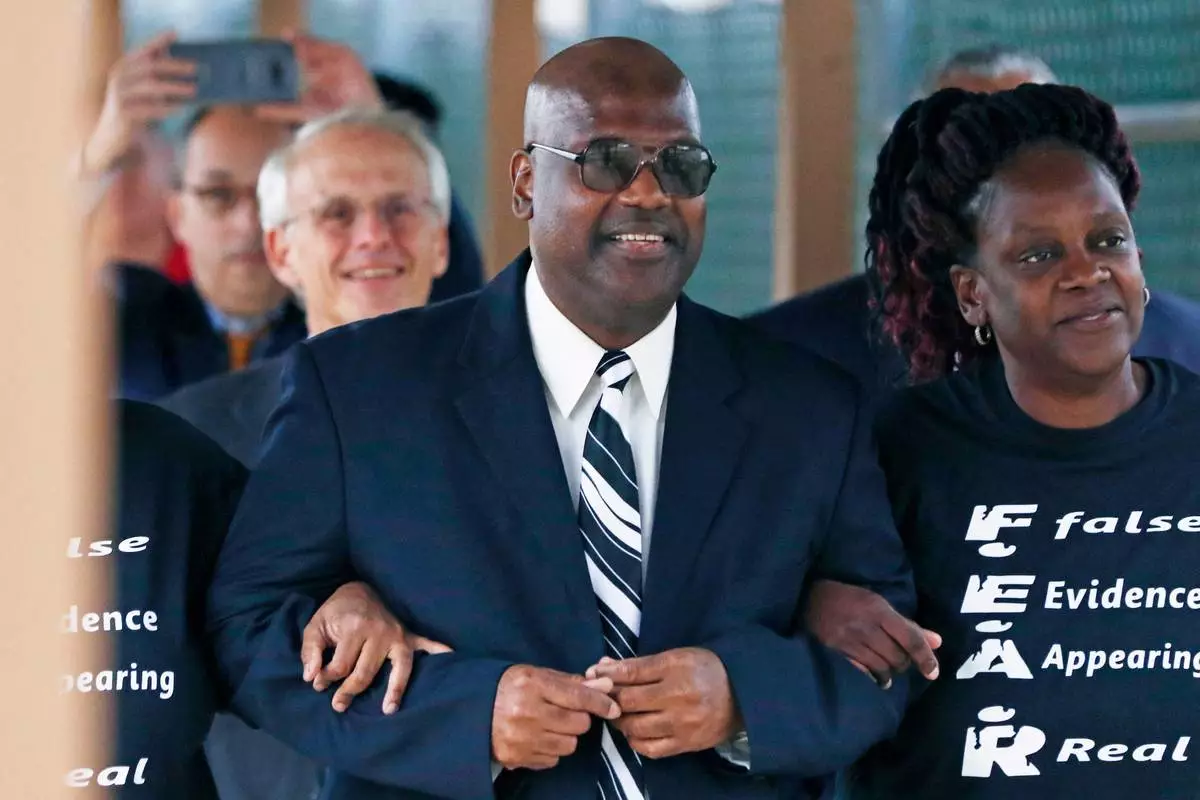
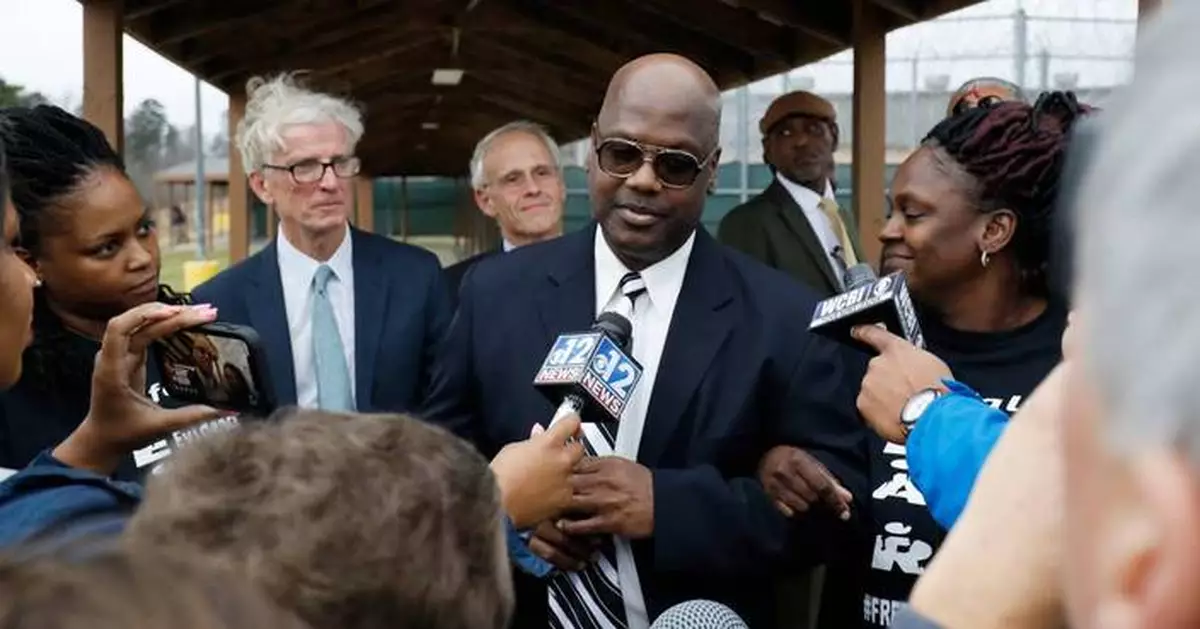
FILE - Curtis Flowers, flanked by sister Priscilla Ward, right, exits the Winston Choctaw Regional Correctional Facility in Louisville, Miss., on Monday, Dec. 16, 2019. (AP Photo/Rogelio V. Solis, File)
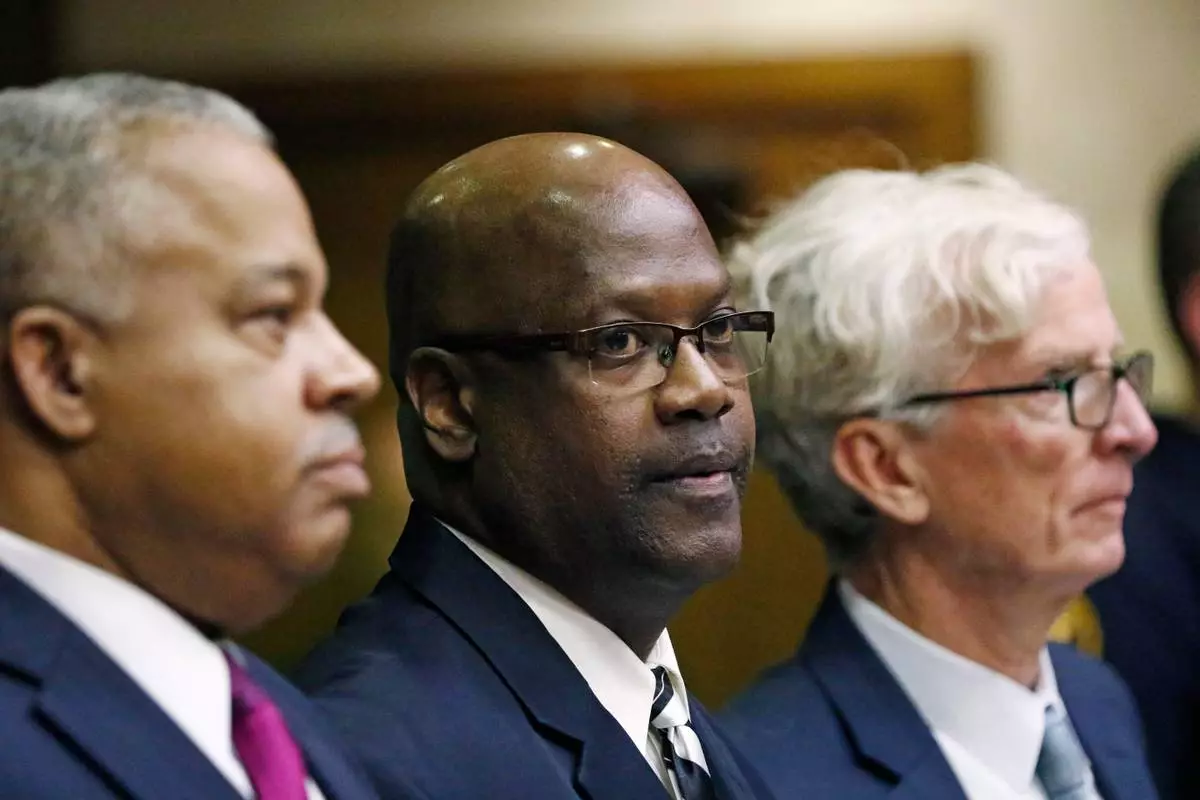
FILE - Defendant Curtis Flowers, center, stands with his attorneys Henderson Hill, left, and Rob McDuff at his bail hearing in Winona, Miss., Monday, Dec. 16, 2019. (AP Photo/Rogelio V. Solis, File)
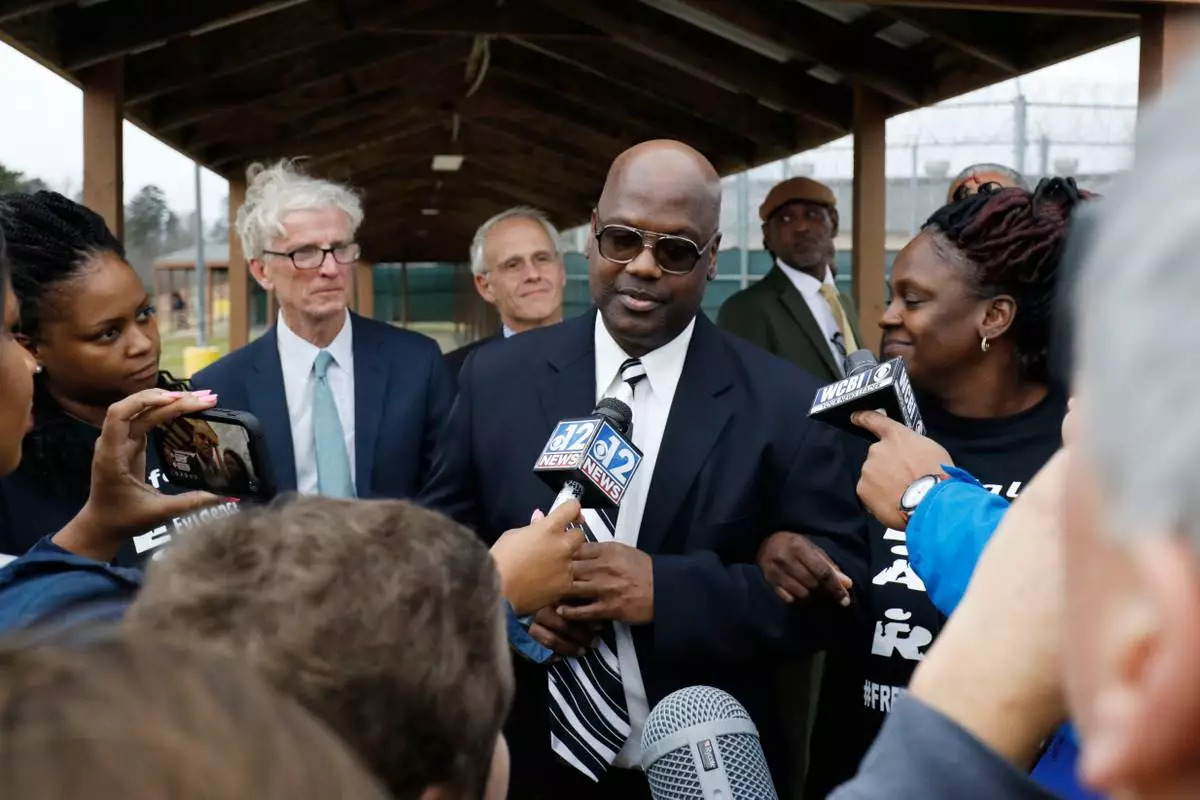
FILE - Curtis Flowers speaks with reporters as he exits the Winston-Choctaw Regional Correctional Facility in Louisville, Miss., Monday, Dec. 16, 2019. (AP Photo/Rogelio V. Solis, File)
PARIS (AP) — Students barricaded a high school in northeastern Paris with garbage bins on Thursday before police moved in with tear gas, as France’s nationwide protests showed few signs of ending.
The Hélène Boucher high school has been a flashpoint for clashes in the French capital and was one of hundreds of schools disrupted by protests Thursday. Riot police gathered in side streets as students converged on the school. Many protesters wore surgical masks or hoodies, apparently to avoid being recognized.
At least a dozen demonstrations supporting the high school students’ movement were planned across France later in the day, including a rally at Place de la Bastille in Paris, where tear gas and a water cannon were fired at protesters.
Police have made more than 6,600 arrests since late September, when students, most of them under 18, began protesting to demand more education funding, according to the Interior Ministry. The Education Ministry said 375 schools were fully or partially closed Thursday.
While the number of school closures was down compared to Tuesday, pressure is mounting on the government of outgoing President Emmanuel Macron.
The protests against the underfunding of schools — many of them struggling with dilapidated facilities and insufficient staff — have drawn troublemakers not concerned about the aims of the protest movement as well as unions and political groups.
In a TV address, Prime Minister Sébastien Lecornu lamented the “violence, students and staff being attacked, police officers and gendarmes injured, schools set on fire or vandalized, thousands of hours of classes lost, not to mention threats and insults.”
He took aim at “political leaders who use this anger to conduct their electoral battles.” France goes to the polls for a presidential election in April. “We cannot play with the safety of France’s youth,” Lecornu said.
At the Lycee, 18-year-old university student Emma Khelil came to offer support to those at the barricades at her former high school. She told The Associated Press that she’s really concerned about police violence.
“We’re here to defend our rights, not to lose an eye or a hand,” Khelil said. She also said that she had noticed insulation problems and water leaks in the school building and had even seen rats on occasion. Other students confirmed that they’d seen rats too.
She was not convinced by Lecornu’s efforts to calm the situation.
“I don’t think the movement is going to lose momentum. As long as things don’t change, we’re going to see the movement grow stronger, and potentially a convergence of struggles, especially with the next presidential election coming up,” she said.
Not long after she spoke, police surrounded a nearby square. The crowd surged, and tear gas was fired.
Smoke from burning garbage nearby hung in the air at Place de la République as hundreds of high school and university students prepared to march toward Place de la Bastille, the demonstration’s focal point.
Some carried signs bearing their schools’ names; others held placards reading “More money for repression than for our education” and “Who protects us from the police?”
“We’re here, we’re demonstrating, and we won’t stop. Until October, November, December if necessary. Nothing will stop us,” said Sofia Ferdials, 18, a student at Paris 8 University.
Dounia Gergeon, a 39-year-old school librarian, said she joined the demonstration at Place de la Bastille because she shared students’ concerns and worried about a broader crisis facing young people anxious about their futures. At the middle and high school where she works, time was set aside for students to discuss their demands.
“They do not feel supported,” she said. “They feel cornered and forced to work under these conditions.”
Authorities deployed tear gas and a water cannon at the protesters, some of whom hurled projectiles at riot police.
France is not the only country to be dealing with student-related protests.
In Belgium, Willy Demeyer, the mayor of Liege, issued a ban on public gatherings until midnight on Oct. 16, citing a “real, serious and imminent risk” of further clashes and vandalism.
City police said they used water cannon and tear gas on Wednesday to hold back several hundred protesters. Authorities sent emergency text messages advising shopkeepers to close due to rioting.
Nearly 90 people were arrested and several police were injured. Police reinforcements were sent from the capital, Brussels, and from Antwerp, and more are coming. Smaller protests have been held in Mons and Charleroi.
Belgium’s Interior Minister Bernard Quintin said on social media that the “perpetrators will have to answer for their actions before the courts.”
The Belgian protests, organized through online chat groups, include demands for more teachers and smaller classes as well as complaints about education reform in Belgium, but are also likely inspired by events in France.
Student protests have spread to several Italian cities, though on a much smaller scale and over a broader set of domestic grievances. Activists have explicitly invoked the French movement with the slogan “let’s do as they do in France,” while organizing school occupations, assemblies and marches.
In Turin, students occupied several high schools over building conditions, education funding and increased military spending. In Rome, students occupied one high school and walked out of another, while students in Naples added opposition to a planned migrant detention center to their demands.
Cook reported from Brussels. Masha Macpherson in Paris and Giada Zampano in Rome contributed to this report.
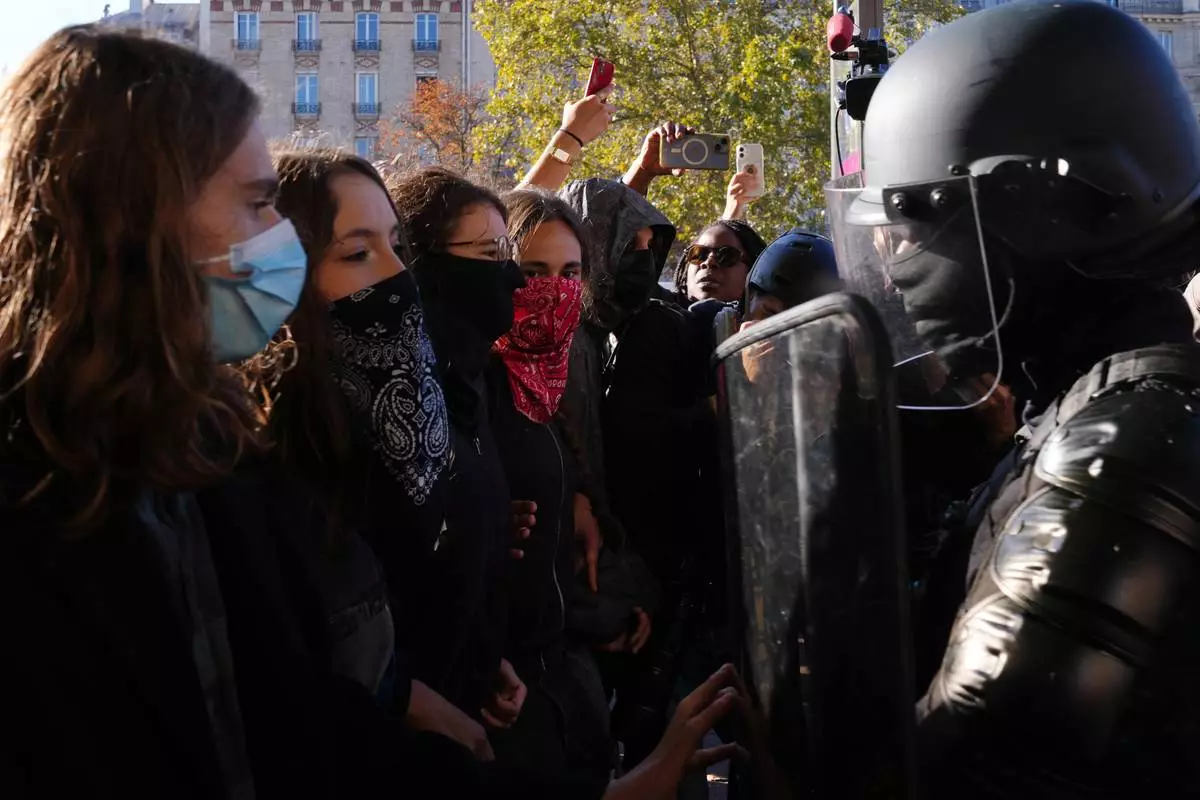
Students face police officers in front of the Helene Boucher high School during a protest against under-resourced schools, in Paris, Thursday Oct. 8, 2026. (AP Photo/Aurelien Morissard)
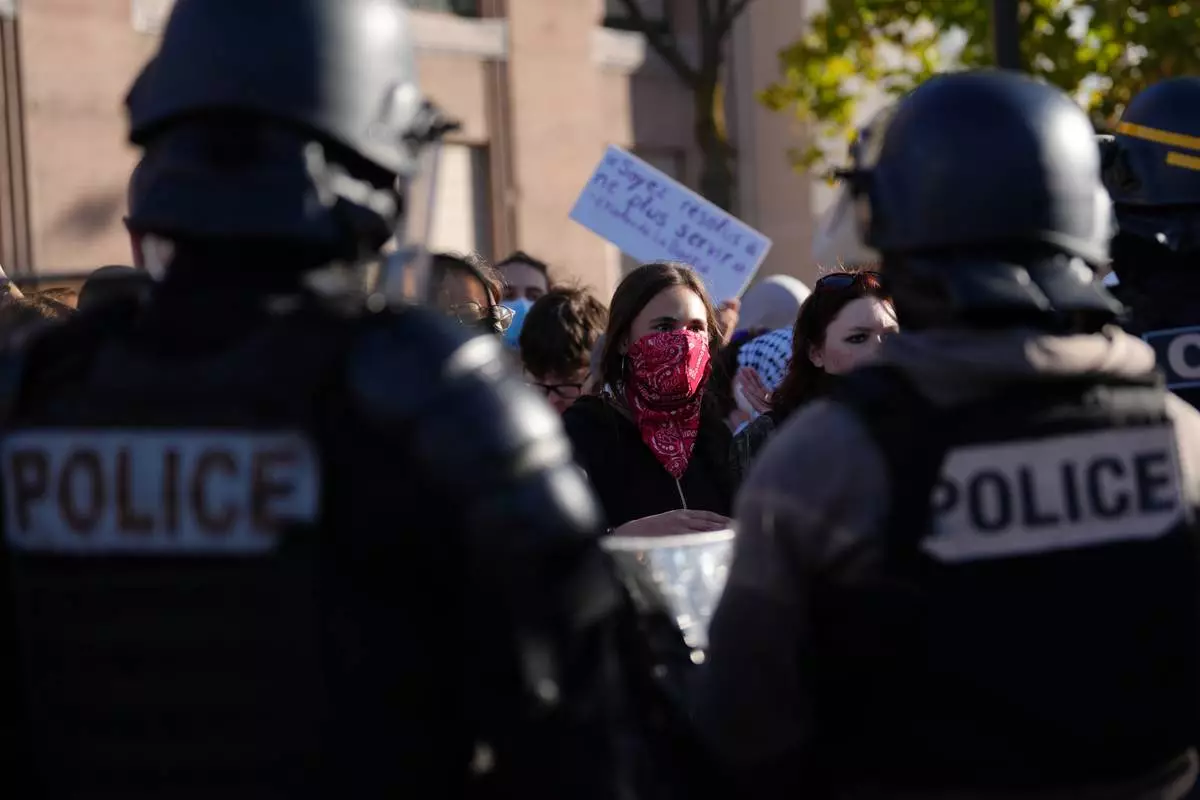
Students face police officers in front of the Helene Boucher high School during a protest against under-resourced schools, in Paris, Thursday Oct. 8, 2026. (AP Photo/Aurelien Morissard)
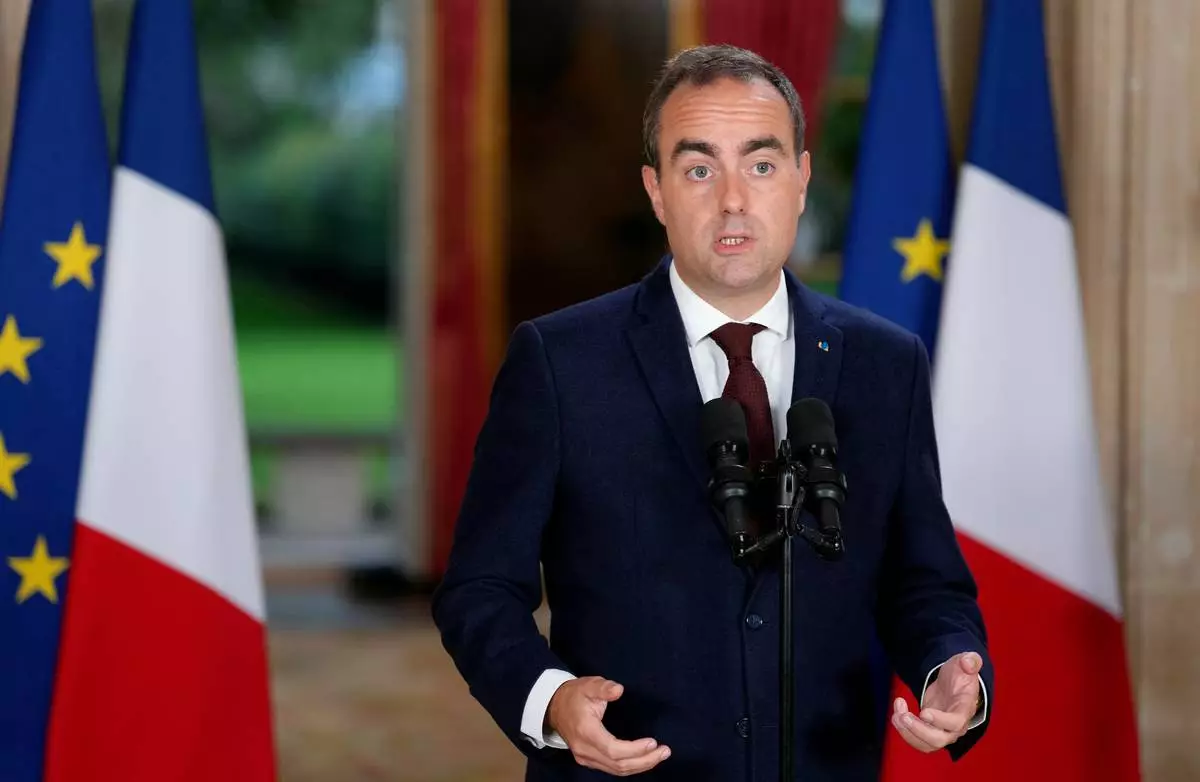
France's Prime Minister Sebastien Lecornu makes a statement at the Hotel de Matignon in Paris, Wednesday, Oct. 7, 2026. (Dimitar Dilkoff/Pool Photo via AP)
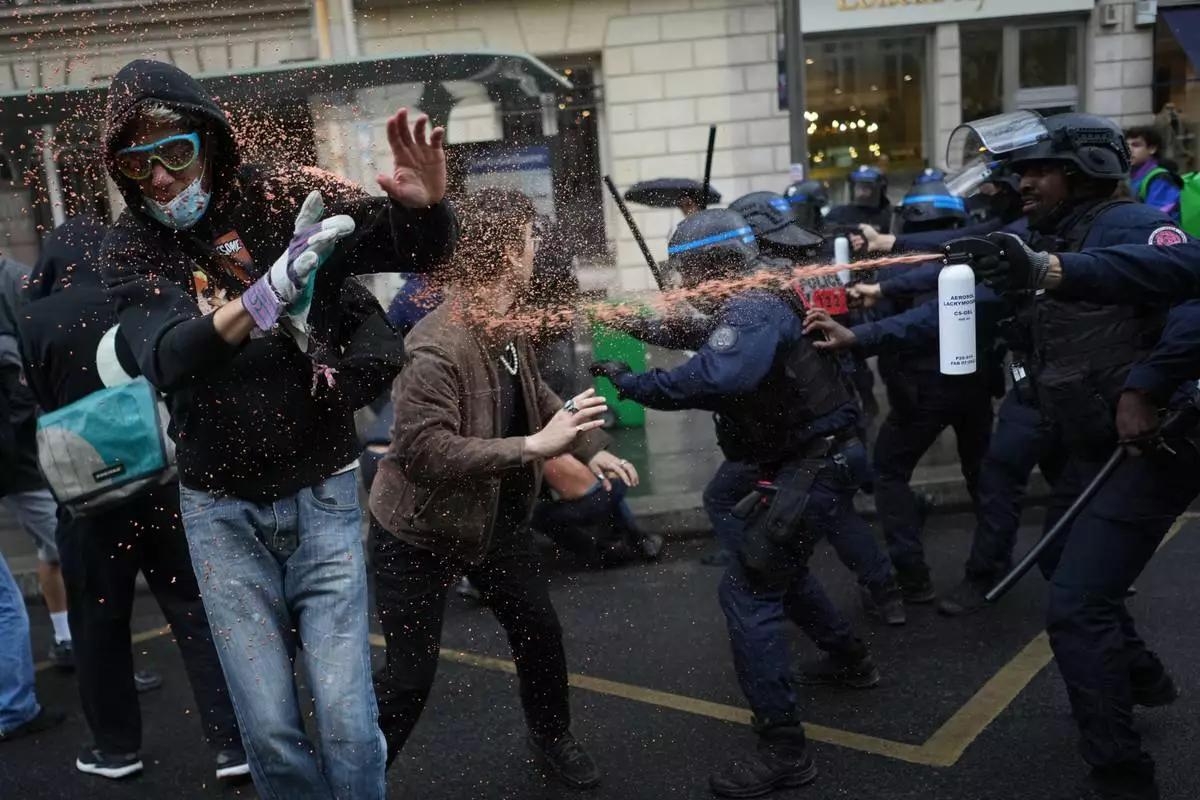
Police officers spray students with pepper spray near Sciences Po university as they protest against under-resourced schools, in Paris, Wednesday, Oct. 7, 2026. (AP Photo/Thibault Camus)
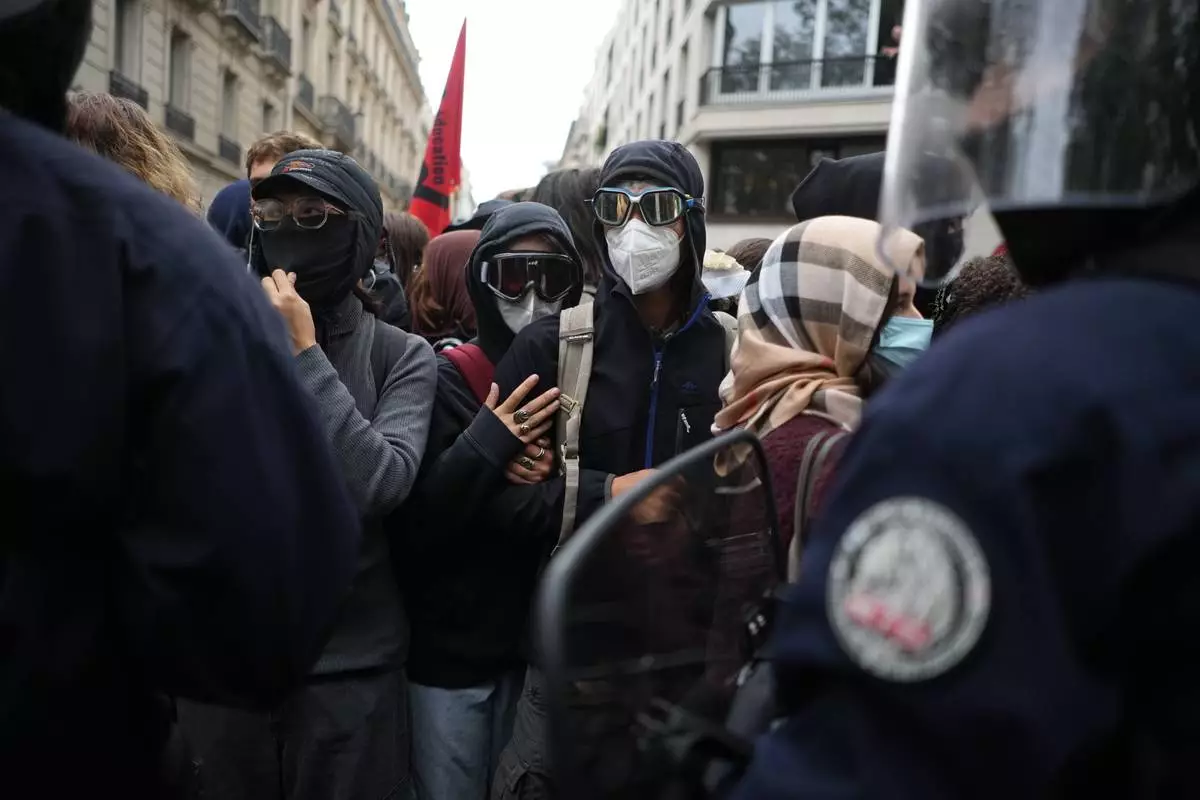
Students face policemen near Sciences Po University as they protest against under-resourced schools, in Paris, Wednesday, Oct. 7, 2026. (AP Photo/Thibault Camus)