Beijing's 12345 Public Service Hotline has transformed vaguely defined public requests into clear, accountable governance by matching every complaint directly to a specific legal duty rather than a generic department, according to a public policy expert.
Launched in 2019, the service has handled hundreds of millions of calls from individuals and businesses.
Officials said that it takes around three minutes to assign a call to the relevant government department through an auto-assignment system that recognizes responsible departments based on location, keyword and degree of urgency.
The smart system also boosts efficiency by grouping similar complaints together, and the hotline service follows up on outcomes to ensure every ticket receives an adequate response. Service managers will intervene if an assigned department rejects a ticket.
In an interview with China Global Television Network (CGTN) on Thursday, Professor Yin Chengzhi, deputy Party secretary of Tsinghua University's School of Public Policy and Management said that Beijing's reform has made every case find a home, with whoever accepts a case becoming the first responder and unable to reject it.
"Vague requests came from department centric classification. Beijing's reform refined its dispatch catalogue, allowing operators to match a complaint to a specific legal duty rather than a generic department. While requests cut across urgencies, whoever accepts this case becomes the first responder and he or she could not reject it. Recurring, ambiguous issues are estimated through one issue per month campaigns. It means that a deputy mayor may lead a city-level urgency to fix the policy root cause rather than individual cases. It transforms welfare claims from a routine problem into a governance problem. It means that it is going to empower the lowest competence tier to coordinate," said Yin.
Asked about the long-term impact on a megacity, Yin said that high-precision governance will make urban renewal more demand-responsive and community governance more co-produced. "The available hotline records and platform data will turn urban renewal from a mass demolition in the past into targeted micro renewal of smaller things like courtyards, blocks and infrastructure, balancing heritage preservation with livability. A feedback loop turns governance into something like urban sensing. Collected data exposes structured problems; it would directly guide budget planning and renewal priorities, and therefore making governance more predictive rather than reactive," said Yin.
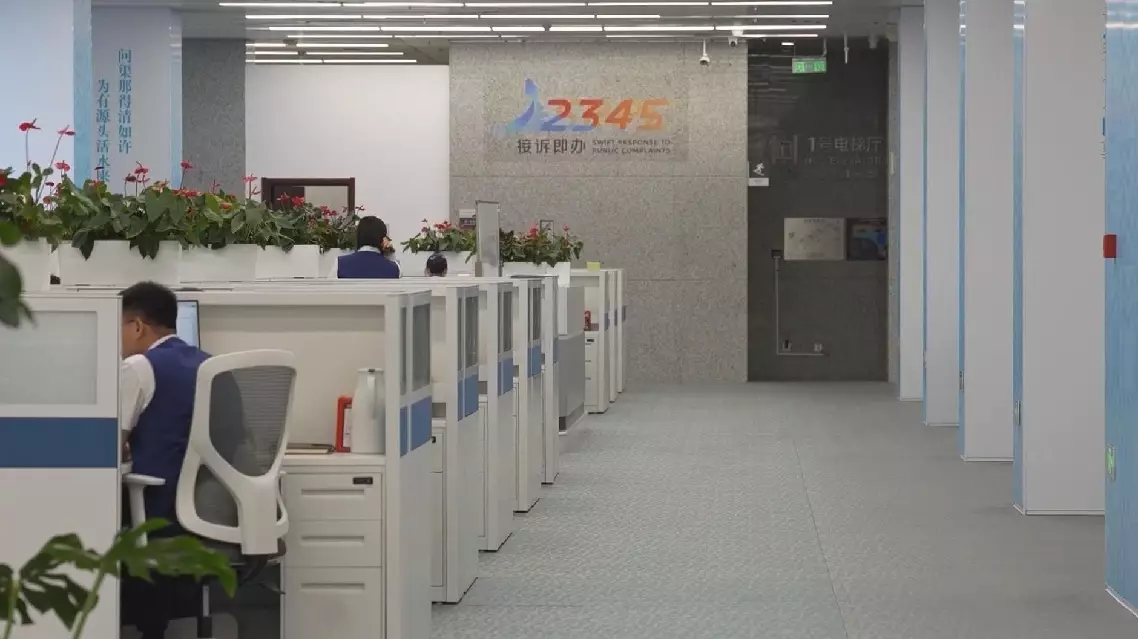
Beijing's 12345 hotline turns vague requests into clear, accountable governance: expert