Singapore's digital government services have changed the way residents interact with public agencies, making everything from reporting neighborhood problems to accessing essential services in a simpler way.
The system reflects decades of efforts to cut bureaucracy and connect services across agencies. But the shift towards digital services also raises questions about inclusion and public trust.
For residents like Bibi Chia, that change is tangible.
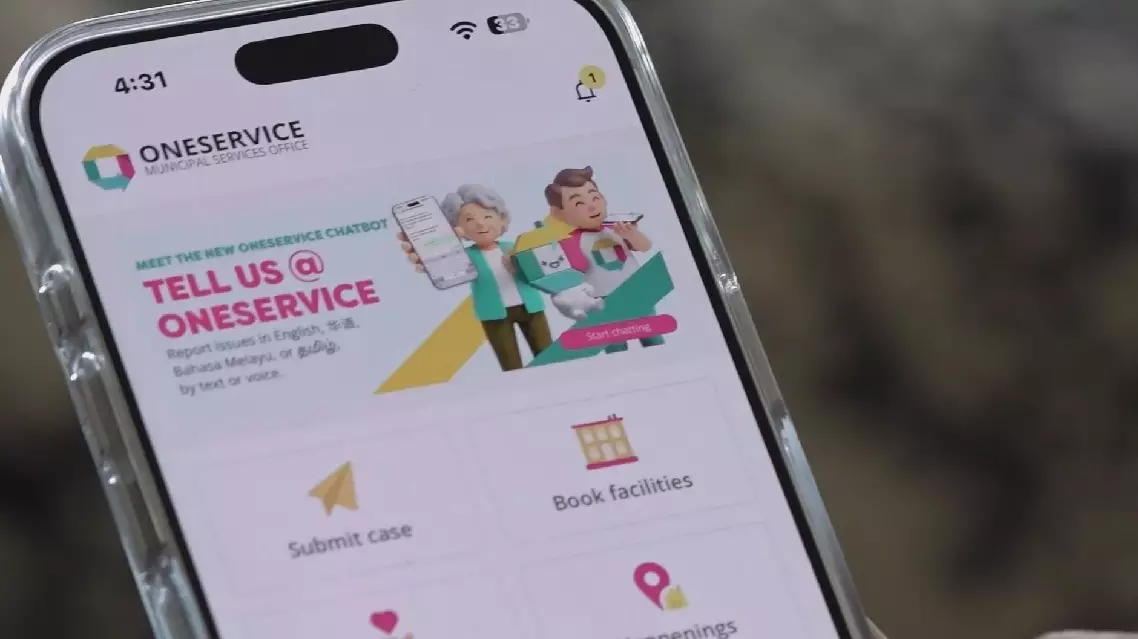
When a tree began growing into her property, she would report it through Singapore's OneService app, which handles everything from maintenance issues to community services. The National Parks Board would take over the case and send a team to trim the tree within a month. More recently, she used the same app to report birds' nests in her public housing estate. "I just took a photo and I submitted the case, and within the next couple of hours, it is now in progress and has been sent to the town council. I didn't have to identify which department I would like to send the report to. It was all digital," she said. For Bibi, OneService was a way to report a neighborhood problem. But it is just one of several digital platforms Singapore has developed to make public services more accessible. Others include Singpass, which is essentially a national digital ID, and LifeSG, which provides support at critical life events. Together, they are part of a wider effort to connect different agencies, to reduce red tapism and to help residents get things done seamlessly and efficiently. Singapore's digital push gained momentum in 2014, when former Prime Minister Lee Hsien Loong launched the Smart Nation initiative. The city-state calls it a citizen-centric approach, building services around residents rather than around departments and ministries.
"Singapore is quite unique in comparison with other countries in how we push out digital services online. Fundamentally, we are small geographically as well as in terms of the complexity of our government structure. Our national government is our local government, so that simplifies things a lot. And [for] our high level of digital services among the citizens, that helps a lot," said Calvin Chan, associate professor of Singapore University of Social Sciences. The system is built in layers. Singpass allows residents to verify their identity when accessing government services. Myinfo then fills in forms using details the government already holds. These tools support platforms such as LifeSG. When parents register a child's birth, for example, they can log in using Singpass and have their personal details retrieved through Myinfo.
Behind this is GovTech, a government agency that develops the digital infrastructure for public agencies to build their own platforms. Experts say the system has been well received, reflecting a high level of trust in government. But that same trust also brings risks.
"The easiest way to scam Singaporeans is the impersonation of government officials. That's not really true elsewhere. So I think trust is now a double-edged sword. We call that the paradox of trust. So I think the government now is thinking about how can we help citizens to be more discerning," said Reuben Ng, associate professor with the Lee Kuan Yew School of Public Policy. Singapore's aging population presents another challenge. "I have an aunt. She's in her early 70s. She's illiterate and she doesn't have a mobile phone. When there are a lot of news campaigns that are all given out through social media, news and online media, it's not getting to this group of people. What governments here and also overseas are trying to do is to reach out to them proactively," Ng said.
Singapore's digital government services reshape how residents access public services