Saudi Arabia's aviation authorities said Friday that attacks targeting the international airport in Riyadh and an aircraft there the previous day killed three Saudi citizens.
A U.N. human rights chief who chaired an investigation that determined Israel had committed genocide in Gaza won the Nobel Peace Prize and residents of Yemen's capital reported explosions.
Here is the latest news from the Middle East on Friday. Read our full coverage here.
The attack on an airport in the Saudi capital and an aircraft there killed three Saudi nationals and injured other people on Thursday, Saudi Arabia’s General Authority of Civil Aviation said.
Friday's statement from the authority did not identify those responsible for the attack, though Iran-backed Houthi rebels in neighboring Yemen have claimed they targeted the airport with a ballistic missile.
According to Saudi Arabia’s General Authority of Civil Aviation, the two strikes targeted the King Khalid International Airport in Riyadh and a Saudia Airlines aircraft.
Several people were injured, some seriously, and were transferred to a hospital for treatment, said the authority, adding that the attacks also caused material damage. It did not specify the types of weapons used or those responsible.
The authority said it was coordinating with security agencies to assess the damage and take measures to ensure the safety of passengers and workers.
Several countries condemned the attacks, including Pakistan and Kuwait.
In Sanaa, the rebel-held capital of Yemen, residents heard heavy explosions overnight and into Friday as intense fighting between the Iran-backed Houthis and Saudi-backed government forces resumed.
In the downtown, witnesses said they heard explosions, but the origin wasn’t clear.
The strikes were so powerful their house shook and it felt as if the entire structure was collapsing on top of them, one Sanaa resident told The Associated Press, speaking on condition of anonymity in fear of reprisals.
Anees al-Asbahi, spokesperson for the Houthi-run Health Ministry, said on X that two of the overnight strikes on Sanaa injured six people, including a child.
The Houthis' military spokesman, Brig. Gen Yahya Saree, claimed Thursday that airstrikes launched from bases in Saudi Arabia targeted multiple rebel-held areas for 24 hours, including in Sanaa and the provinces of Marib, Taiz, Hajjah, Saada, Lahj, Ibb and al-Baydaa.
He did not provide any evidence for the claim and the AP couldn’t independently verify Saree’s claims.
— By Fatma Khaled
The South African-born jurist and former U.N. human rights chief Navi Pillay, who is currently an ad hoc judge at the International Court of Justice, won the Nobel Peace Prize on Friday for her efforts to promote peace and international law.
Pillay chaired the Commission of Inquiry on the Occupied Palestinian Territory and Israel, which was created by the U.N.-backed Human Rights Council. The commission a year ago concluded Israel was responsible for genocide in Gaza, with a specific intent to destroy Palestinians in Gaza.
Her win is sure to be seen as a high-profile rebuke to U.S. President Trump and Israeli Prime Minister Benjamin Netanyahu, who have both rejected the findings led by her commission.
Israel’s Foreign Ministry slammed the award and said on X: “If there were an award for lies, hatred, and blood libels, Navi Pillay wouldn’t just be a contender. She’d be a frontrunner.”
It added that the Nobel prize “isn’t a recognition of justice. It’s the grotesque weaponization of an award to legitimize anti-Israel hatred and prejudice.”
Speaking Friday at a regional summit in Turkmenistan, Iranian President Masoud Pezeshkian called for deeper regional cooperation and said countries should strengthen their resilience against war, crises and external pressure while avoiding competition aimed at excluding one another.
Regional states should build networks for producing, transmitting and exchanging oil, gas, electricity and renewable energy rather than seeking to eliminate competitors from energy markets, he said.
“Our region, more than ever, needs resilience against war, crises, external pressure and disruptions to economic and communication routes,” Pezeshkian said. “Success in this path, more than anything else, requires linking the region’s capacities together.”
Pakistan International Airlines suspended flights to Riyadh over the evolving situation in the Middle East, an airline spokesman said Friday.
Abdullah Hafeez told the AP that the airline apologized for the inconvenience. He said an update would be provided after assessing the situation on the ground.
This report will be updated throughout the day as new developments emerge.
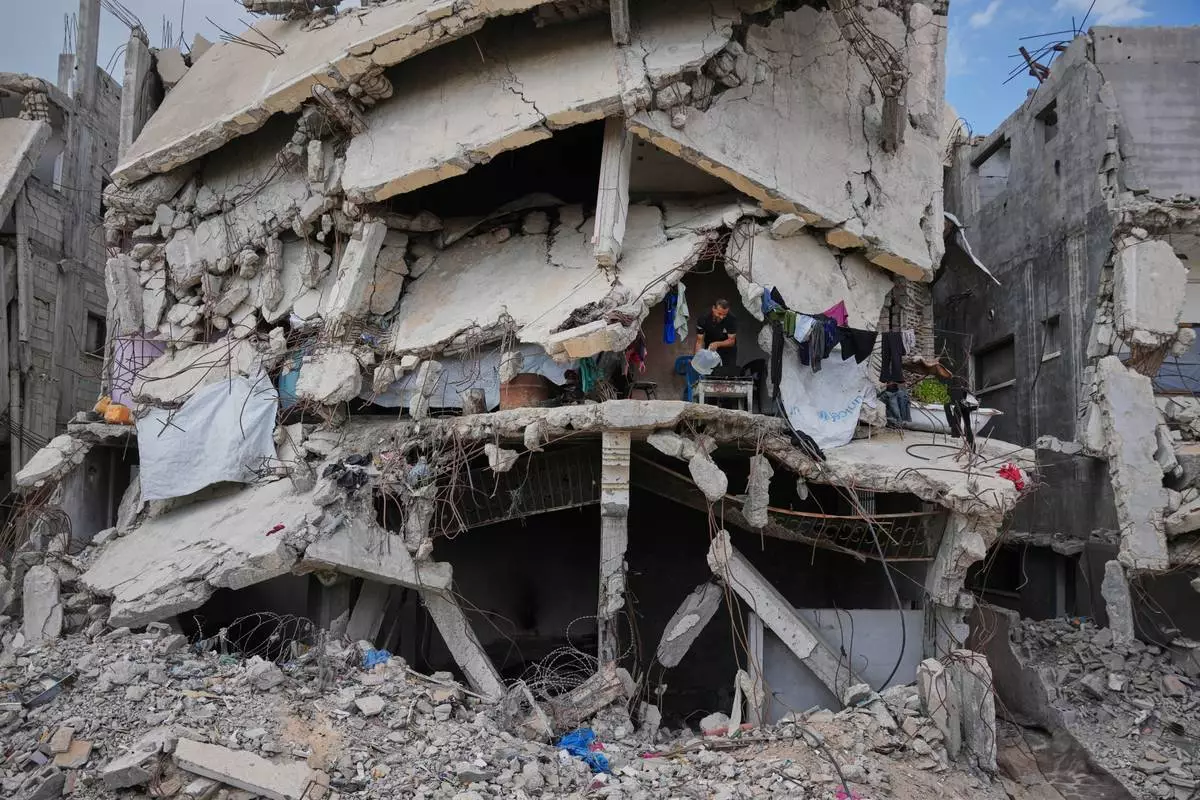
Murid Akhziq, 43, lights a fire for cooking inside his home, which was destroyed during the Israel-Hamas war, in Gaza City, Tuesday, Oct. 6, 2026. (AP Photo/Abdel Kareem Hana)
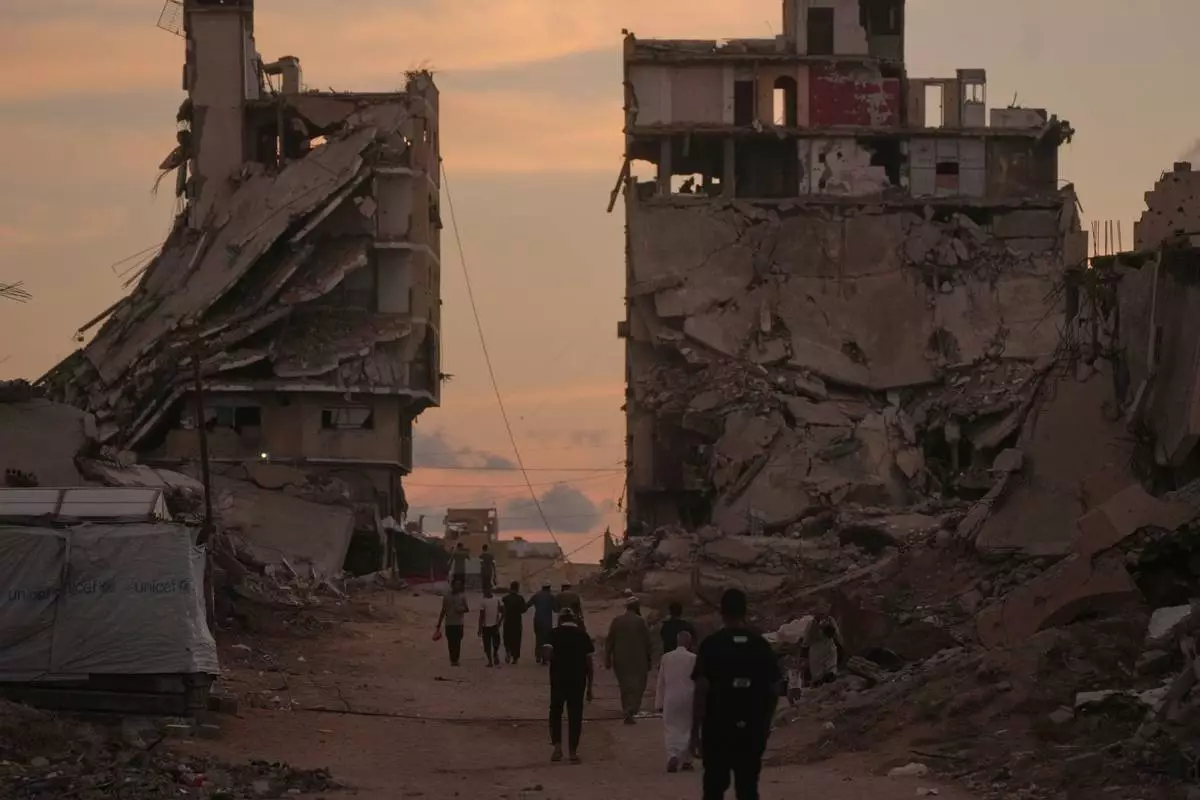
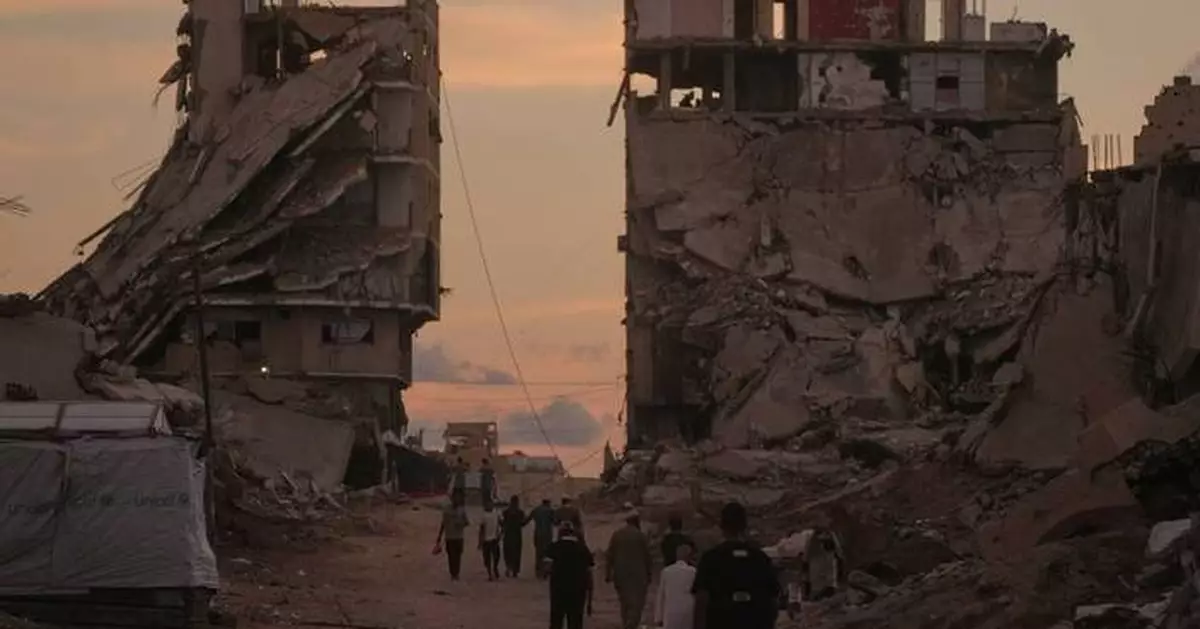
Palestinians walk along a street surrounded by buildings destroyed in Israeli military strikes during the Israel-Hamas war in Gaza City, Tuesday, Oct. 6, 2026. (AP Photo/Jehad Alshrafi)
A supersized El Niño’s decapitating winds and the Gulf of Mexico’s toasty, storm-fueling waters are battling over the future strength of Hurricane Isaias. And the storm’s tilt and eye show who’s winning.
For now, it's the waters charged by climate change.
All Atlantic hurricane season there has been “this battle between shear and just the overall conducive conditions,” said Colorado State University hurricane researcher Phil Klotzbach.
El Niño — the natural temporary warming of parts of the Pacific that warps weather worldwide — dominated. Its wind patterns smothered almost any wisp of a storm from strengthening in the Atlantic, while boosting what will soon be record high levels in the Pacific, Klotzbach said.
It's called wind shear and it pushes the tops and middle of storms around, making them lopsided and keeping them from making a complete circular eyewall, which is when storms can really power up, Klotzbach and University at Albany's Kristen Corbosiero said.
The other ingredients for a storm to turbocharge a storm are pushing back. There is plenty of fuel in warm water and moisture. The Gulf of Mexico is about 2.7 degrees Fahrenheit (1.5 degrees Celsius) warmer than normal. The 86 degree waters (30 degrees Celsius) are 100 to 500 times more likely to be that extra hot because of climate change from the burning of coal, oil and gas, said climate scientist Kristina Dahl, vice president of the nonprofit Climate Central, which calculates the boost global warming causes to extreme weather.
“But there’s a certain point where it’s like, I don’t care how hot the waters are and how much moisture you have, if shear gets to a certain point, the shear is gonna win,” Klotzbach said.
The thunderstorm seeds of something bigger earlier in the week grew from circular winds over Central America but often were lopsided and couldn’t quite form a crucial eyewall, all because of El Niño’s high-level strong winds that pushed a would-be storm's top sideways, experts said.
Then a window of moderation opened for just a couple of days, but it was enough, Corbosiero said. It makes sense it was in the Gulf of Mexico and in October, because El Niño has less of an effect in the Gulf than it does in the main Atlantic, she said. And storms often pop up in that region in October because of more northerly storm systems that help foster the right conditions.
Wind shear wasn’t exactly low, but it was a moderate level, when other factors like unusually warm waters and heavy moisture can kick in. Isaias rapidly intensified from 40 mph to 80 mph (64 kph to 129 kph) in a day and by late Wednesday, Isaias became the latest-in-the-season first Atlantic hurricane to form since 1914, Klotzbach said.
“The warm waters and high moisture won,” Klotzbach said. Isaias Friday was not tilting and had a strong eye, the hurricane center said.
By Friday morning, Isaias blew past the threshold for becoming a major hurricane with winds of 111 mph (178 kph), strengthening to 120 mph winds (195 kph). The National Hurricane Center forecasts it to weaken to a strong Category 2 storm before landfall.
Before Isaias comes ashore — forecast for probably somewhere from the Mississippi and Alabama coast to the Florida Panhandle late Friday night or early Saturday — the wind shear will strengthen from moderate levels of around 20 mph (32 kph) to 52 mph (84 kph) and then Isaias will start to struggle, which is good news for coastal residents, Klotzbach said.
But as of Friday morning, hurricane center forecasters said the coast is in “a tenuous spot” because it would only take a six-hour delay in the onset of that more intense wind shear for Isaias to bring a stronger-than-expected landfall. Regardless of what will happen with wind shear, it will still be a dangerous hurricane when it hits land, forecasters said.
“Once it gets to the coast, we know that the storm surge is going to be deeper and farther reaching because of sea level rise caused by climate change,” Dahl said. “So in this part of the world, there’s been about six and a half inches of sea level rise over the past 100 years or so that’s attributable directly to climate change.”
The National Hurricane Center is calling the surge “life-threatening.”
A warmer atmosphere means storms hold and then dump more rain, worsening flooding, Dahl said. The hurricane center is warning about urban, river and flash flooding in the Southeast this weekend.
“There’s a little bit of a battle here going on, but I think the really important thing to remember is that climate change is like this long-term big kahuna warming everywhere, and El Niño’s like a little icing on the cake,” Dahl said.
The Associated Press’ climate and environmental coverage receives financial support from multiple private foundations. AP is solely responsible for all content. Find AP’s standards for working with philanthropies, a list of supporters and funded coverage areas at AP.org.
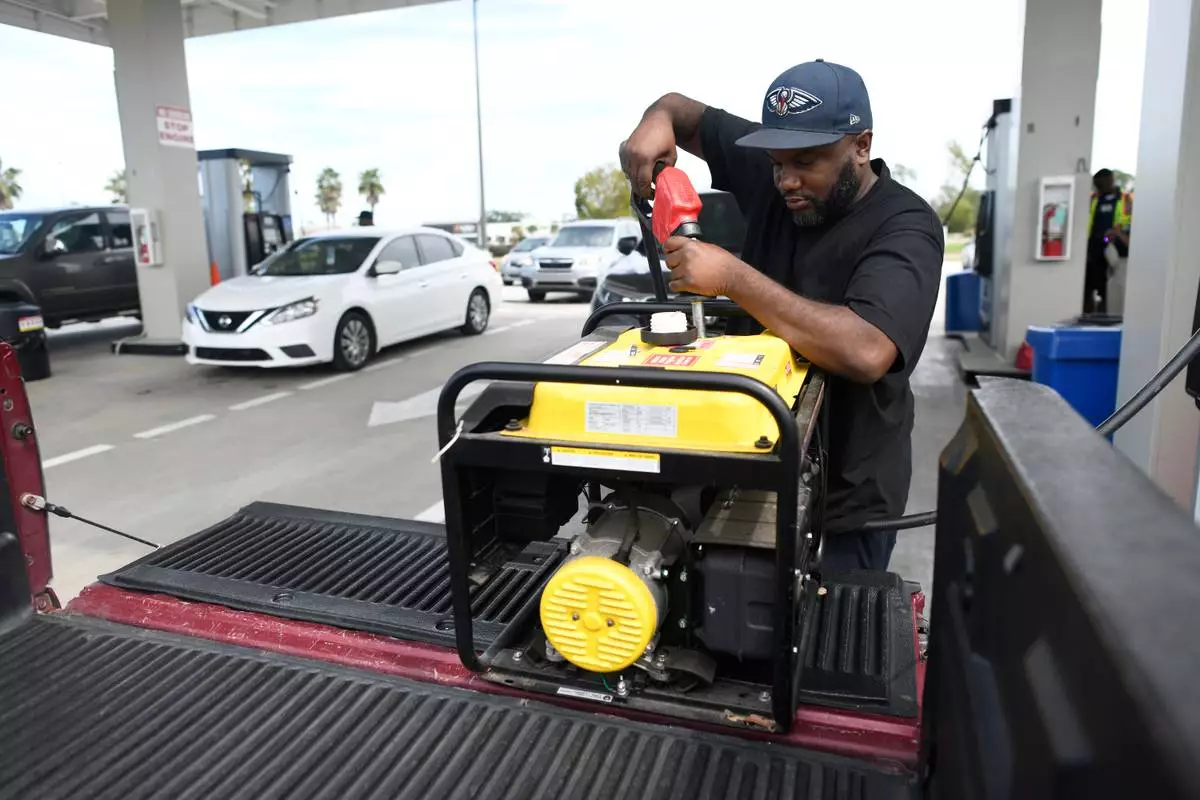
Residents fill up their gas tanks and generators at the Costco Wholesale Gas Station ahead of Hurricane Isaias' expected landfall along the Gulf Coast, Thursday, Oct. 8, 2026, in Mobile, Ala. (AP Photo/Octavio Jones)
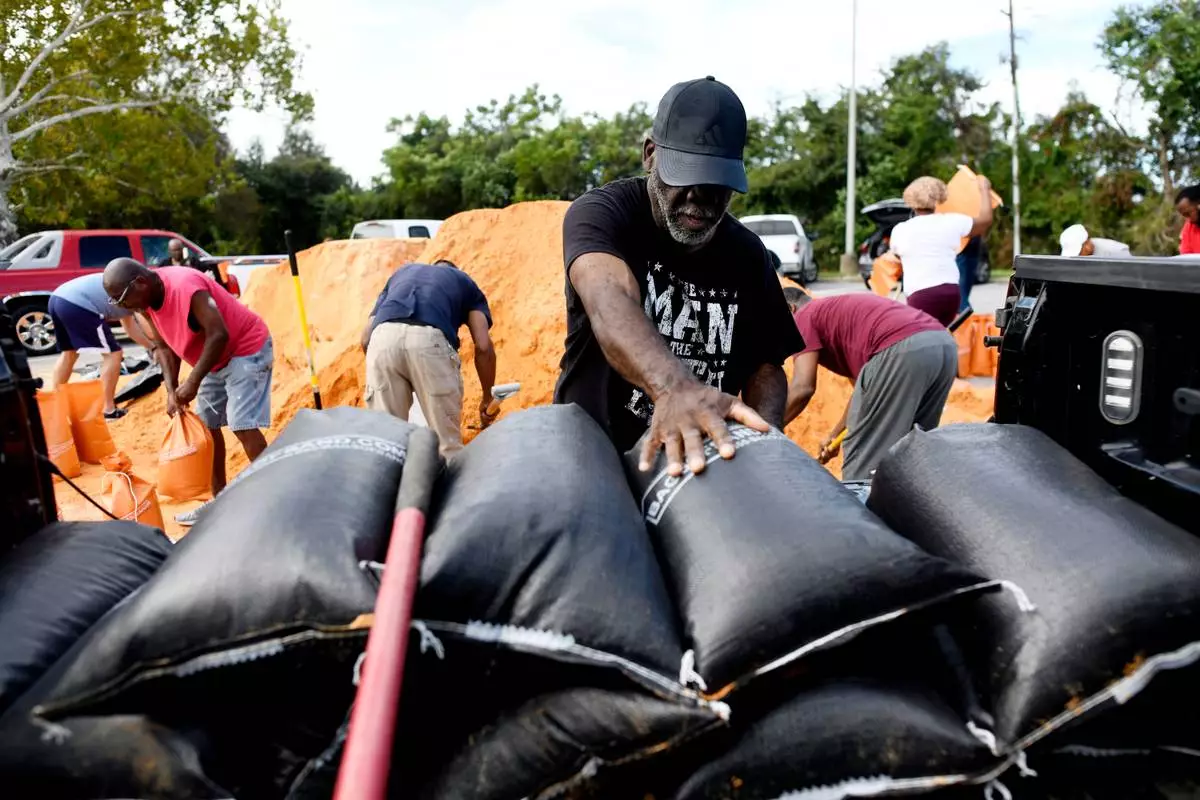
Residents pick up sandbags for storm preparation at the James Seals Jr. Parks & Recreation Center ahead of Hurricane Isaias' expected landfall along the Gulf Coast, Thursday, Oct. 8, 2026, in Mobile, Ala. (AP Photo/Octavio Jones)

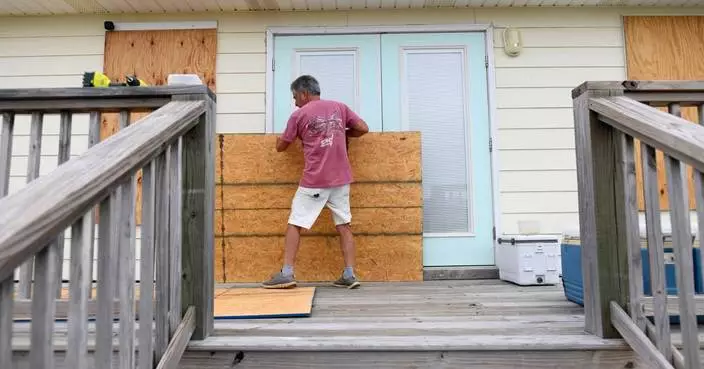
Boat owner Tony Rice, right, and his friend Lance Connor haul doors onto his boat to secure it as Hurricane Isaias approaches Bayou La Batre, Ala., Thursday, Oct. 8, 2026. (AP Photo/Gerald Herbert)
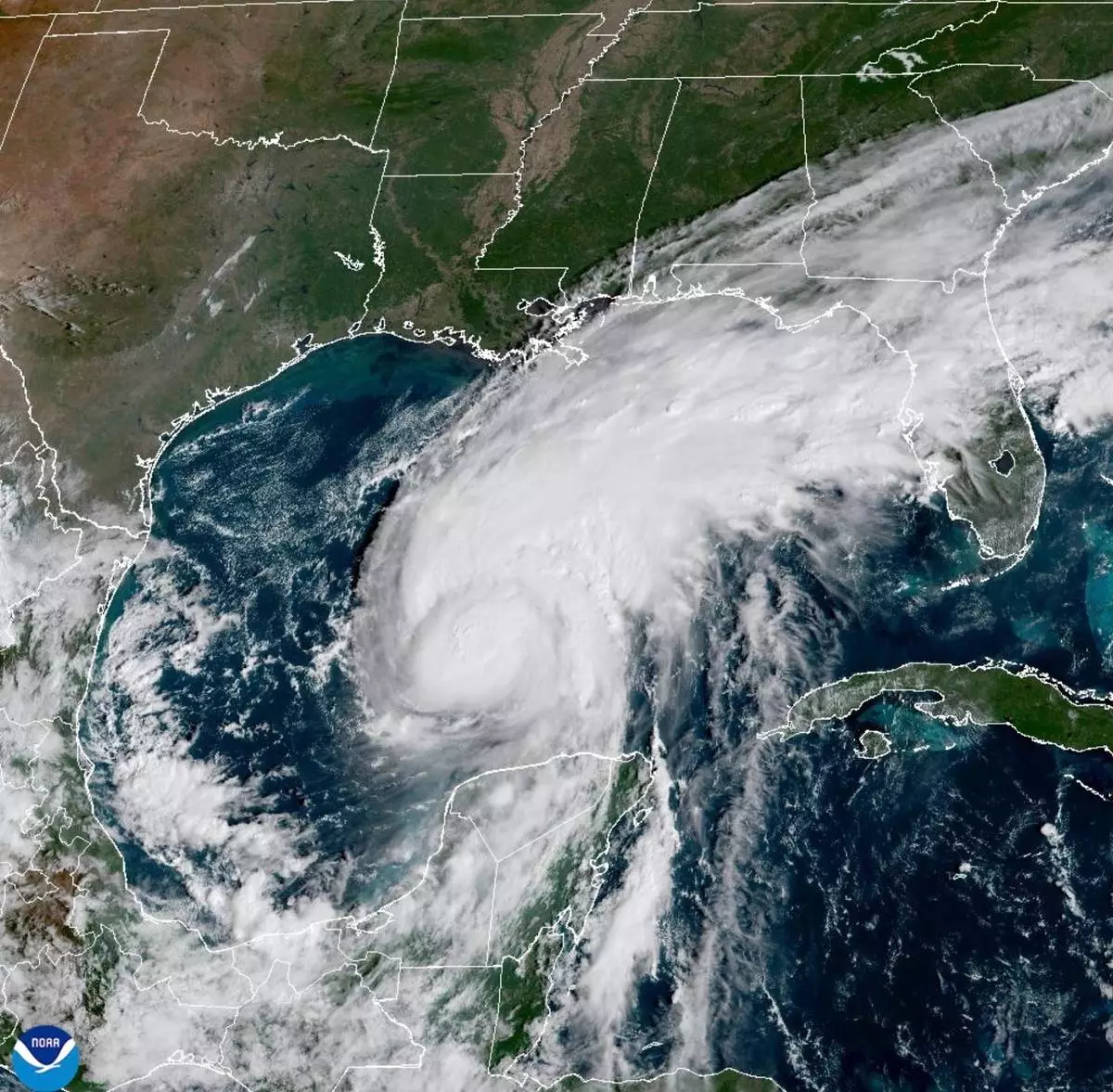
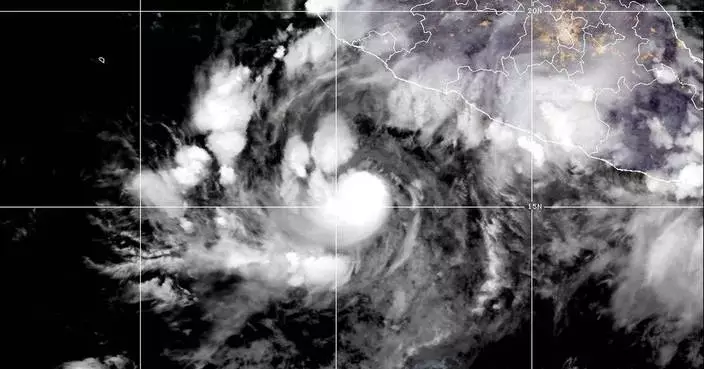
This satellite image from the National Oceanic and Atmospheric Administration shows Hurricane Isaias surging toward the U.S. Gulf Coast on Thursday, Oct. 8, 2026. (National Oceanic and Atmospheric Administration via AP)