The People's Bank of China (PBOC) on Thursday released a statement outlining its policy stance on the RMB exchange rate, saying it does not preset a target level, does not intervene in long-term trends, and will maintain the currency's flexibility and two-way fluctuation.
The PBOC, China's central bank, stressed that the country adopts a managed floating exchange rate regime based on market supply and demand with reference to a basket of currencies, and remains committed to letting market forces play a decisive role in exchange rate formation.
Having exited normalized foreign exchange intervention after 2017, the central bank now focuses on preventing large short-term fluctuations, especially sharp depreciation, that could affect financial stability.
In specific situations, such as a sudden pandemic outbreak or major external shocks like the tariff war in April 2025, the PBOC uses macroprudential management tools to adjust and guide expectations. In extreme cases, it may directly intervene in the foreign exchange market to prevent destructive short-term overshooting. Such measures, the central bank added, are consistent with international rules and practices.
"For example, during the 2008 international financial crisis, currencies of some emerging economies fluctuated sharply, and relevant countries carried out foreign exchange intervention to avoid financial risks caused by excessive depreciation of their currencies," said Wen Bin, chief economist at China Minsheng Bank, one of China's major joint-stock commercial banks.
Beyond guarding against risks, the PBOC has also steadily enhanced the transparency of its exchange rate policy, improving the scope and frequency of its data releases, and will report further foreign exchange-related data to the International Monetary Fund (IMF) starting in 2027.
The RMB's track record dates back to the exchange rate reform in 2005, since when the currency has fluctuated both ways while generally remaining strong among major international currencies, the central bank said. Appreciation and depreciation cycles have alternated since 2010, making two-way movement more pronounced and significantly enhancing exchange rate flexibility.
"The RMB to U.S. dollar exchange rate has experienced three appreciation cycles and three depreciation cycles, generally operating within a range of 6.04 to 7.35 yuan, with fluctuations in each cycle exceeding 10 percent," said Wen.
Since 2025, the RMB has traded in both directions while appreciating in an orderly manner, gaining a cumulative nine percent against the U.S. dollar.
The nine percent gain has carried into 2026, even as a surging U.S. dollar and rising Treasury yields have pushed most other currencies lower, leaving the RMB to buck the broader trend and continue strengthening.
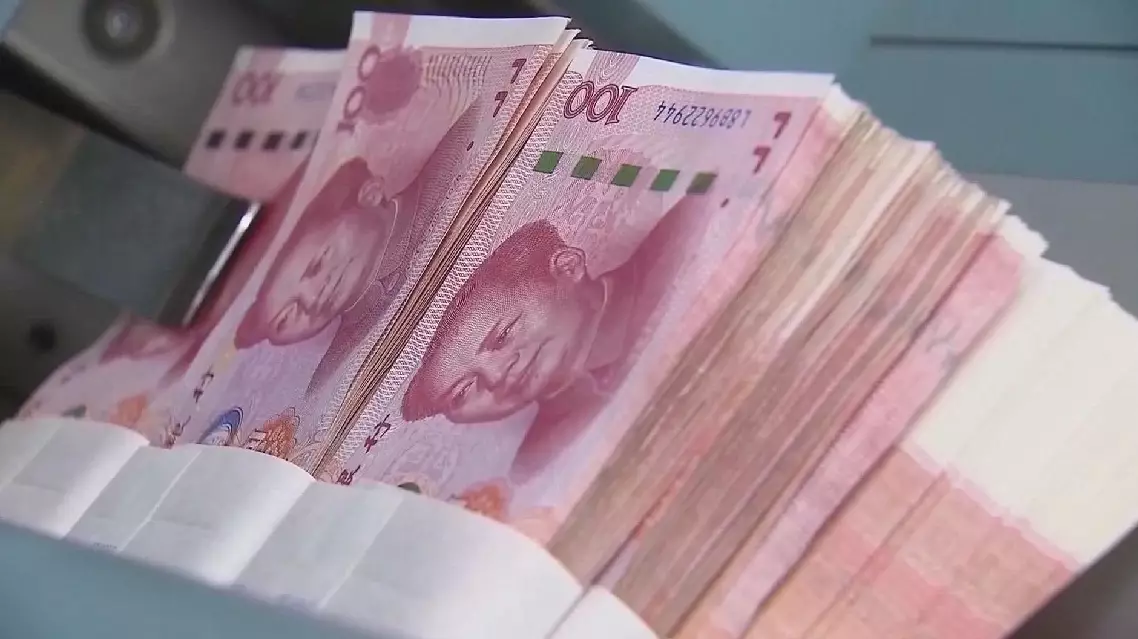
China's central bank rules out preset yuan target, pledges to keep exchange rate flexible