Skip to Content Facebook Feature Image

The fish behind America’s fish sticks is fueling a fight over trawling in Alaska

News

The fish behind America’s fish sticks is fueling a fight over trawling in Alaska
News

News

The fish behind America’s fish sticks is fueling a fight over trawling in Alaska

2026-10-09 21:10 Last Updated At:21:21

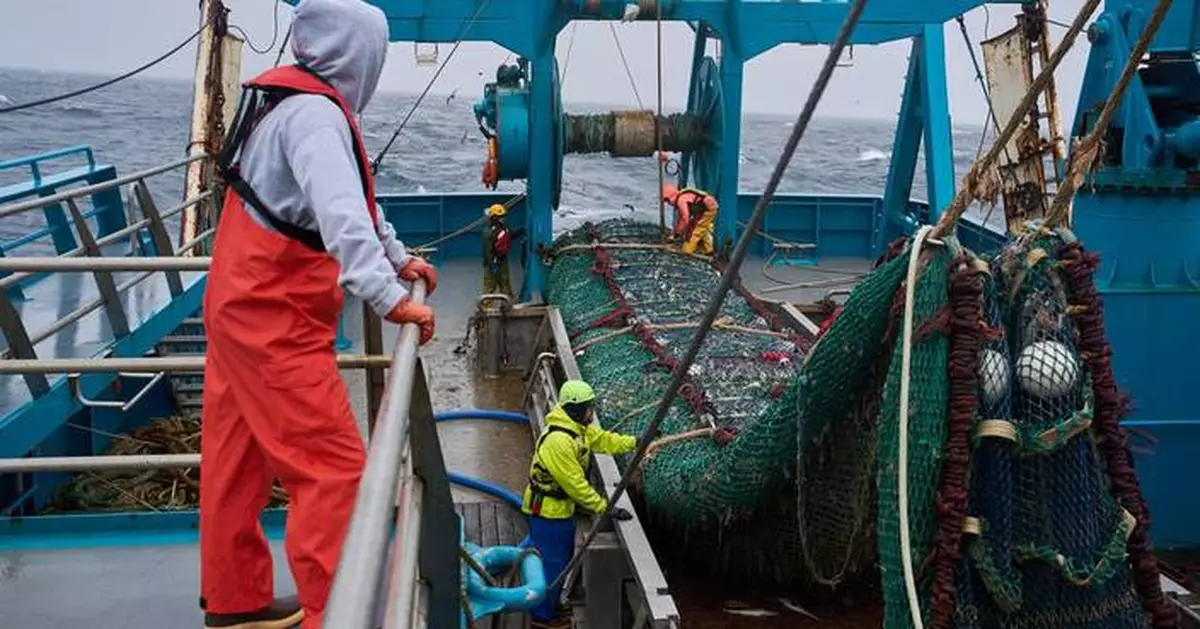
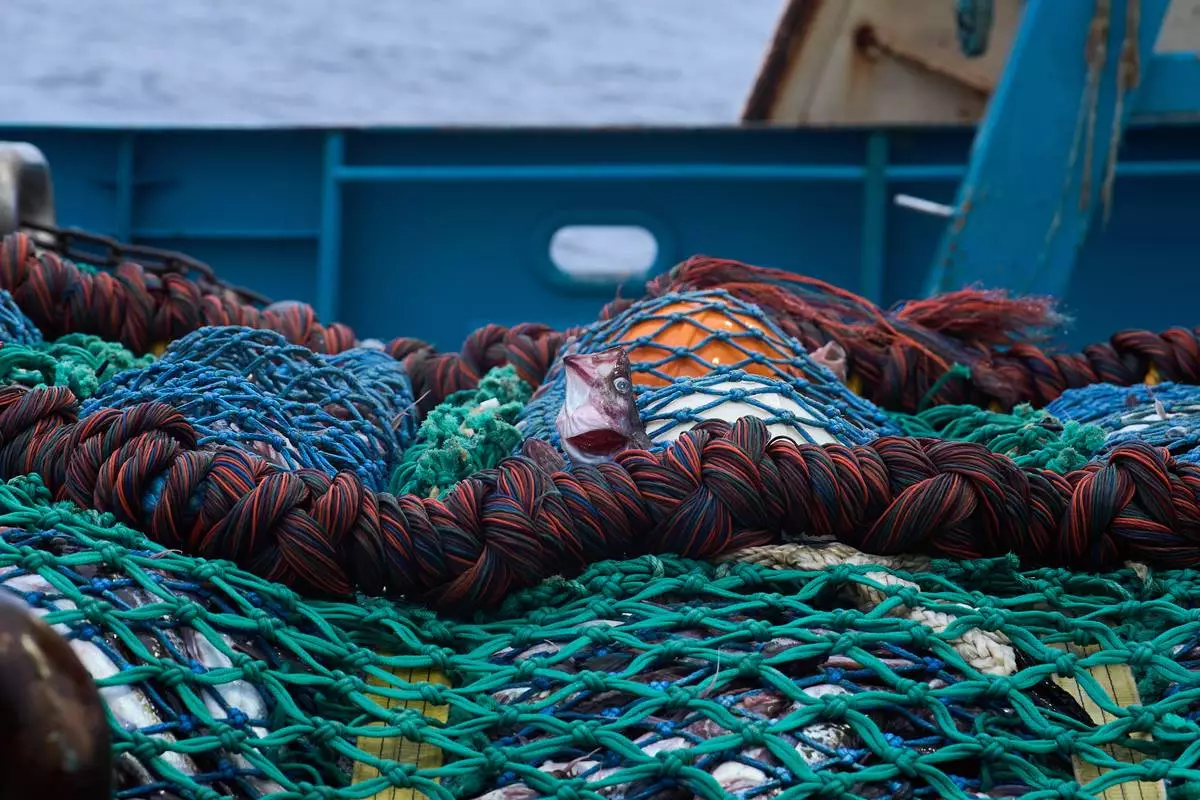
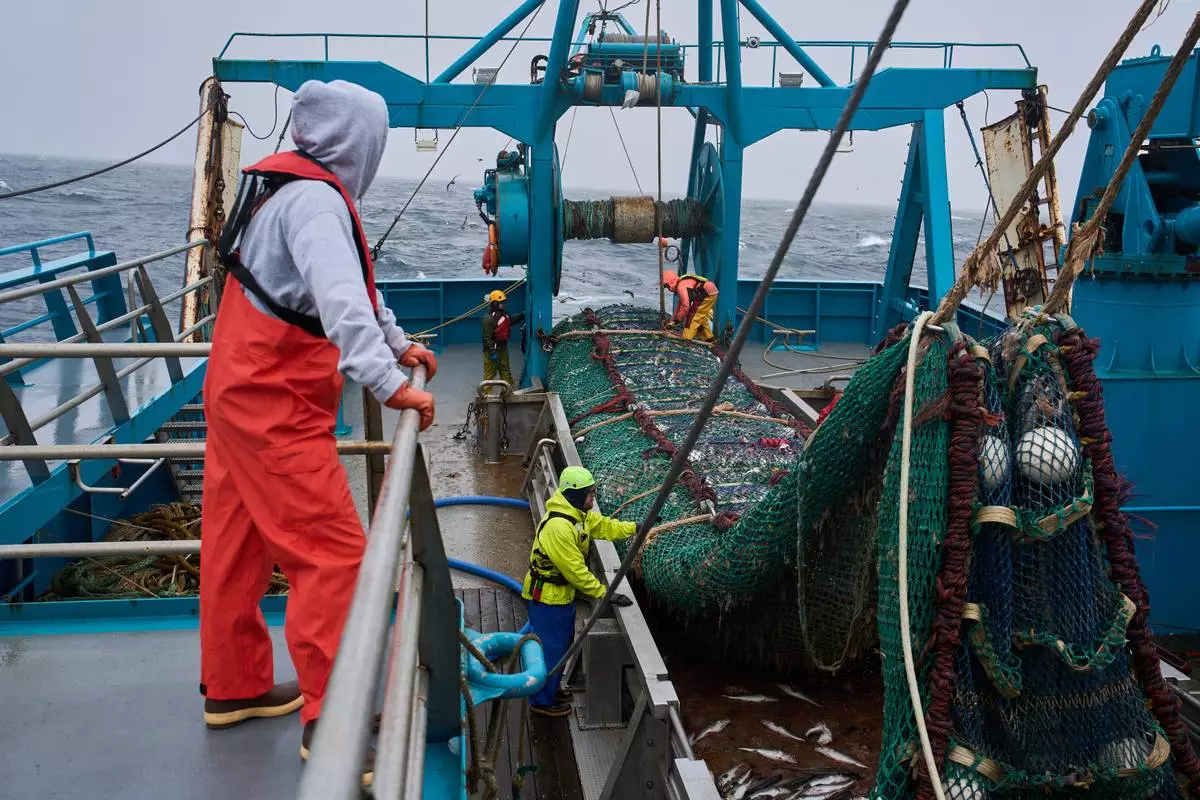
THE BERING SEA (AP) — The net rose from the heaving Bering Sea swells, packed so tightly with Alaska pollock that their heads squeezed through the webbing.

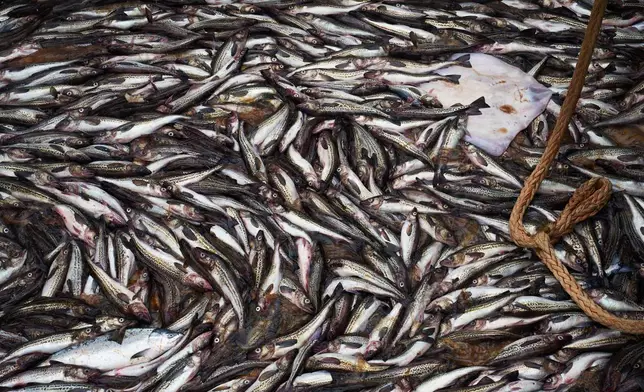
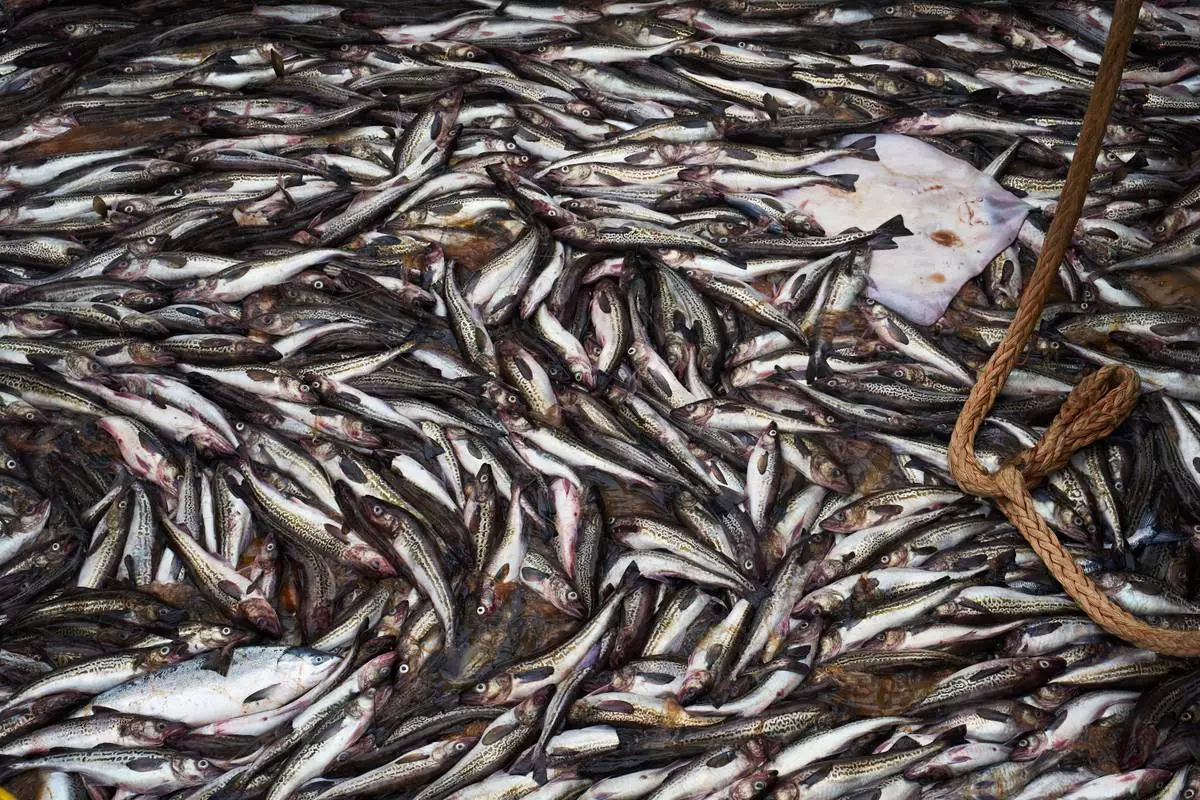
As the catch spilled onto the deck, other dead marine life came with it: a skate, crabs, jellyfish and, among the most consequential, salmon — the fish at the center of a growing political and cultural fight over industrial trawling in Alaska.

More Images
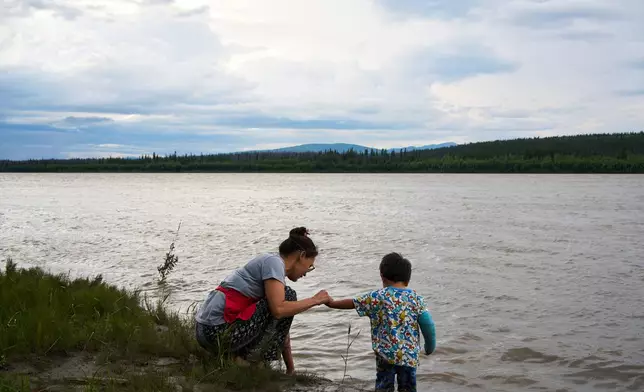
Brooke Woods and her son Lewis Thomas play in the Yukon River in Rampart, Alaska, Saturday, July 11, 2026. (AP Photo/Annika Hammerschlag)
Brooke Woods and her son Lewis Thomas play in the Yukon River in Rampart, Alaska, Saturday, July 11, 2026. (AP Photo/Annika Hammerschlag)

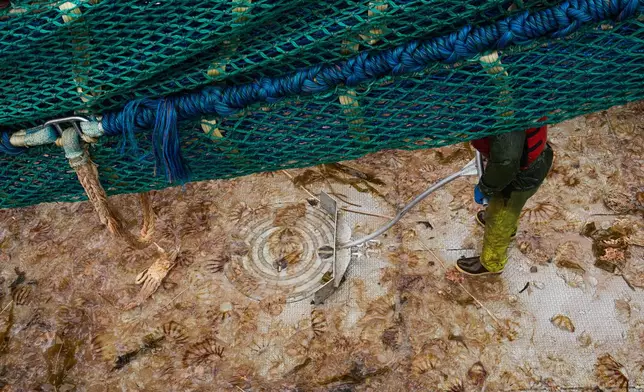
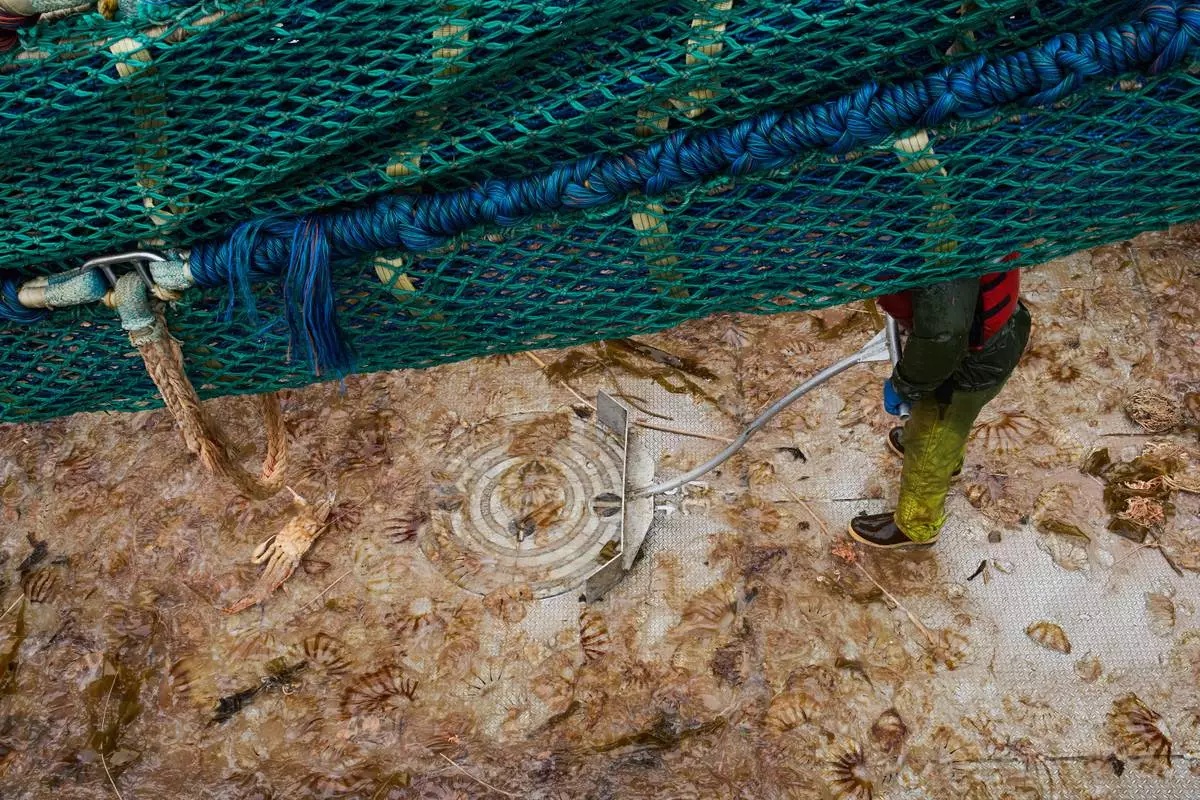
A crew member shovels jellyfish and other bycatch, including a Tanner crab and basket stars – animals that live on the seafloor – from the deck after a haul in the Bering Sea off the coast of Alaska, Wednesday, July 22, 2026. (AP Photo/Annika Hammerschlag)
A crew member shovels jellyfish and other bycatch, including a Tanner crab and basket stars – animals that live on the seafloor – from the deck after a haul in the Bering Sea off the coast of Alaska, Wednesday, July 22, 2026. (AP Photo/Annika Hammerschlag)

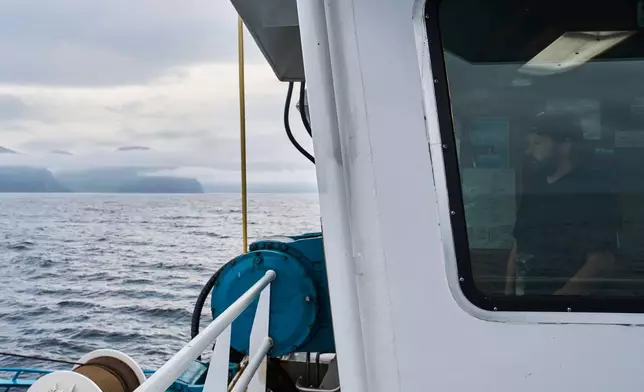
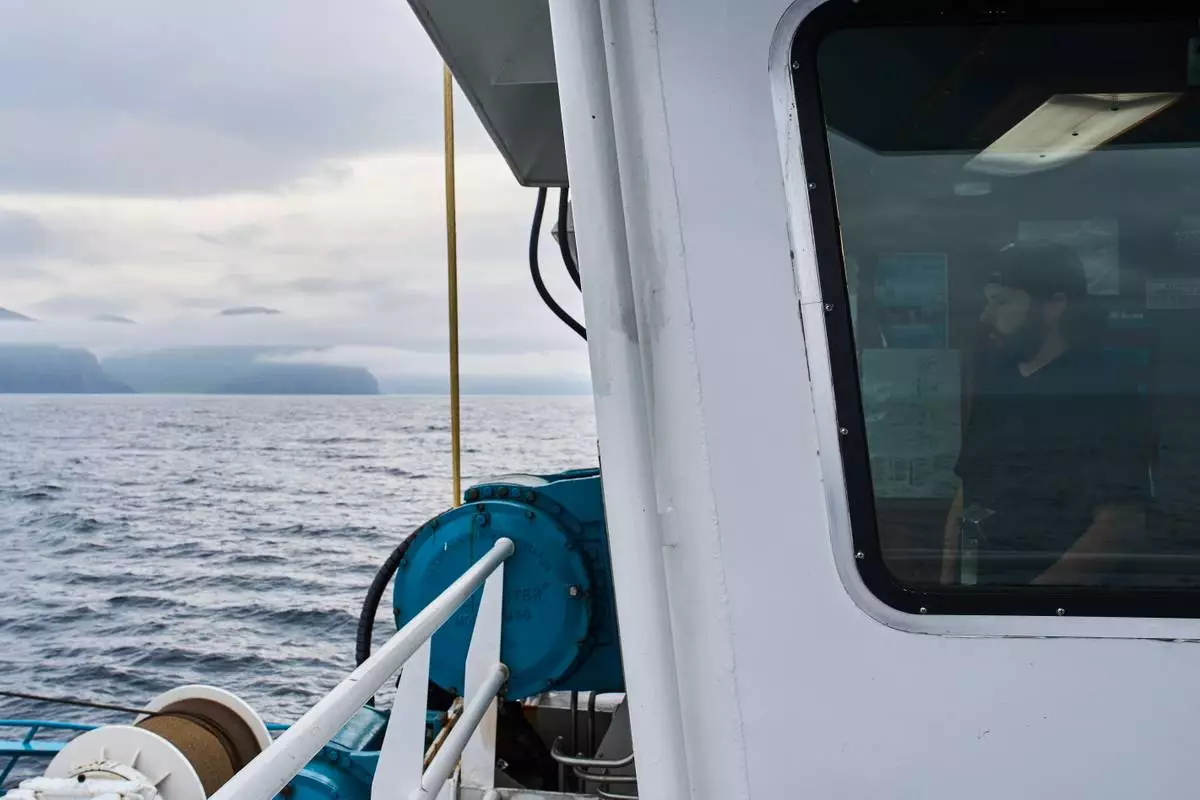
Maverick Blake, captain of the F/V Progress, looks out from the wheelhouse as he navigates his way out of Dutch Harbor, Alaska, Tuesday, July 21, 2026. (AP Photo/Annika Hammerschlag)
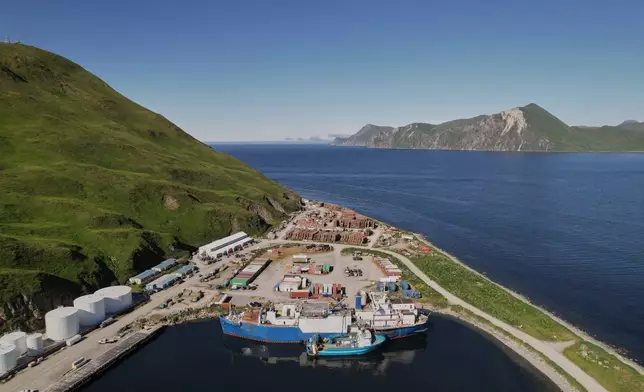
Maverick Blake, captain of the F/V Progress, looks out from the wheelhouse as he navigates his way out of Dutch Harbor, Alaska, Tuesday, July 21, 2026. (AP Photo/Annika Hammerschlag)

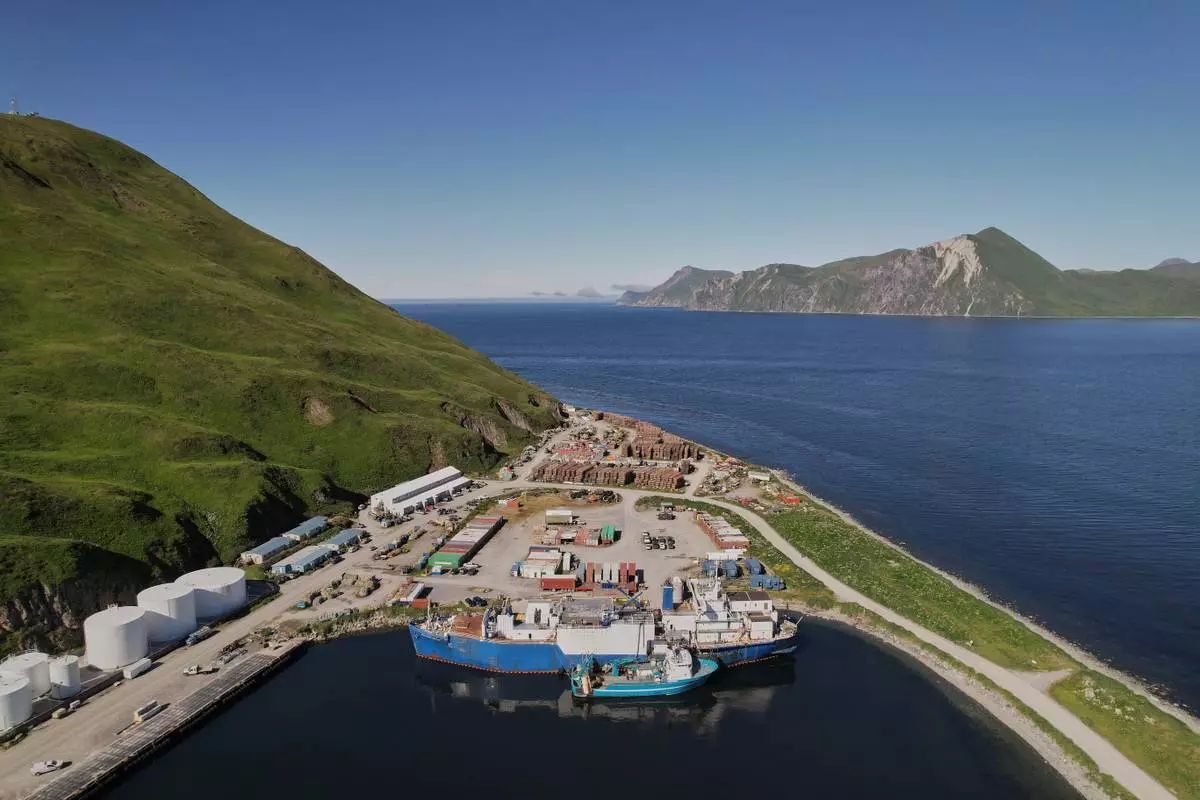
The F/V Progress delivers its catch to a processing vessel, front, in Dutch Harbor, Alaska, Friday, July 24, 2026. (AP Photo/Annika Hammerschlag)
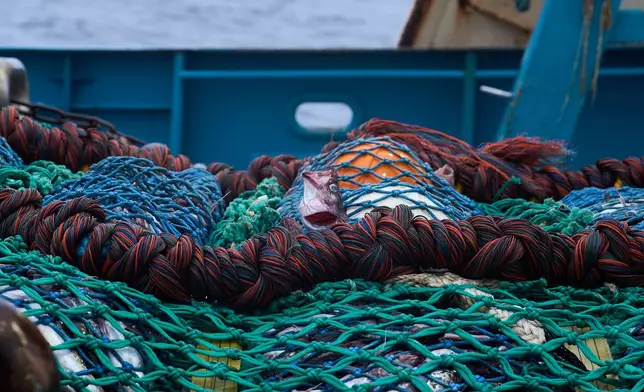
The F/V Progress delivers its catch to a processing vessel, front, in Dutch Harbor, Alaska, Friday, July 24, 2026. (AP Photo/Annika Hammerschlag)

Pollock pack a trawl net so tightly that their heads squeeze through the mesh aboard the F/V Progress in the Bering Sea off the coast of Alaska, Friday, July 24, 2026. (AP Photo/Annika Hammerschlag)
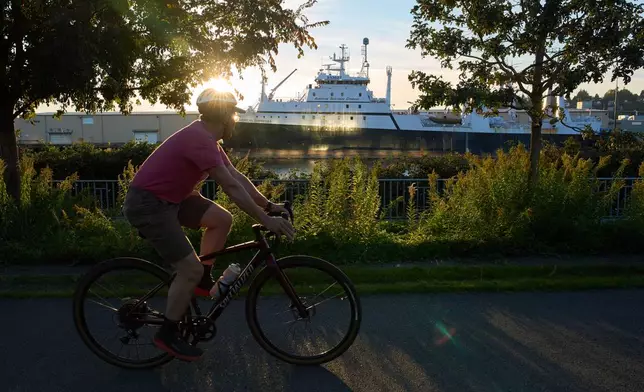
Pollock pack a trawl net so tightly that their heads squeeze through the mesh aboard the F/V Progress in the Bering Sea off the coast of Alaska, Friday, July 24, 2026. (AP Photo/Annika Hammerschlag)

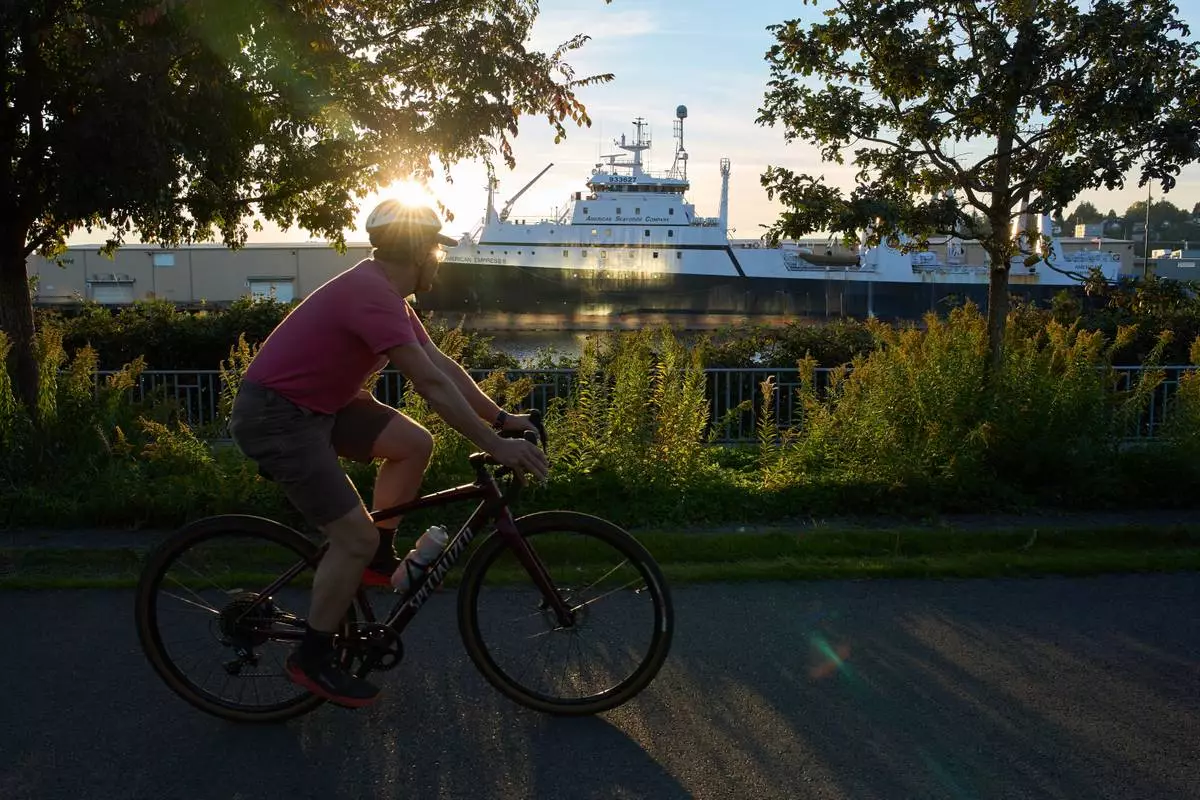
A cyclist bikes past the American Empress II, a trawler operated by Seattle-based American Seafoods in Seattle, Tuesday, Oct. 6, 2026. (AP Photo/Annika Hammerschlag)
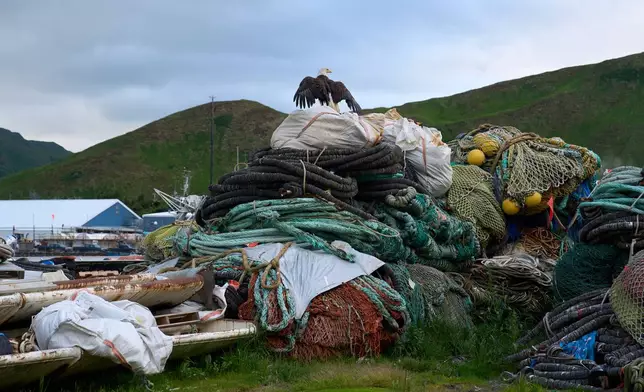
A cyclist bikes past the American Empress II, a trawler operated by Seattle-based American Seafoods in Seattle, Tuesday, Oct. 6, 2026. (AP Photo/Annika Hammerschlag)

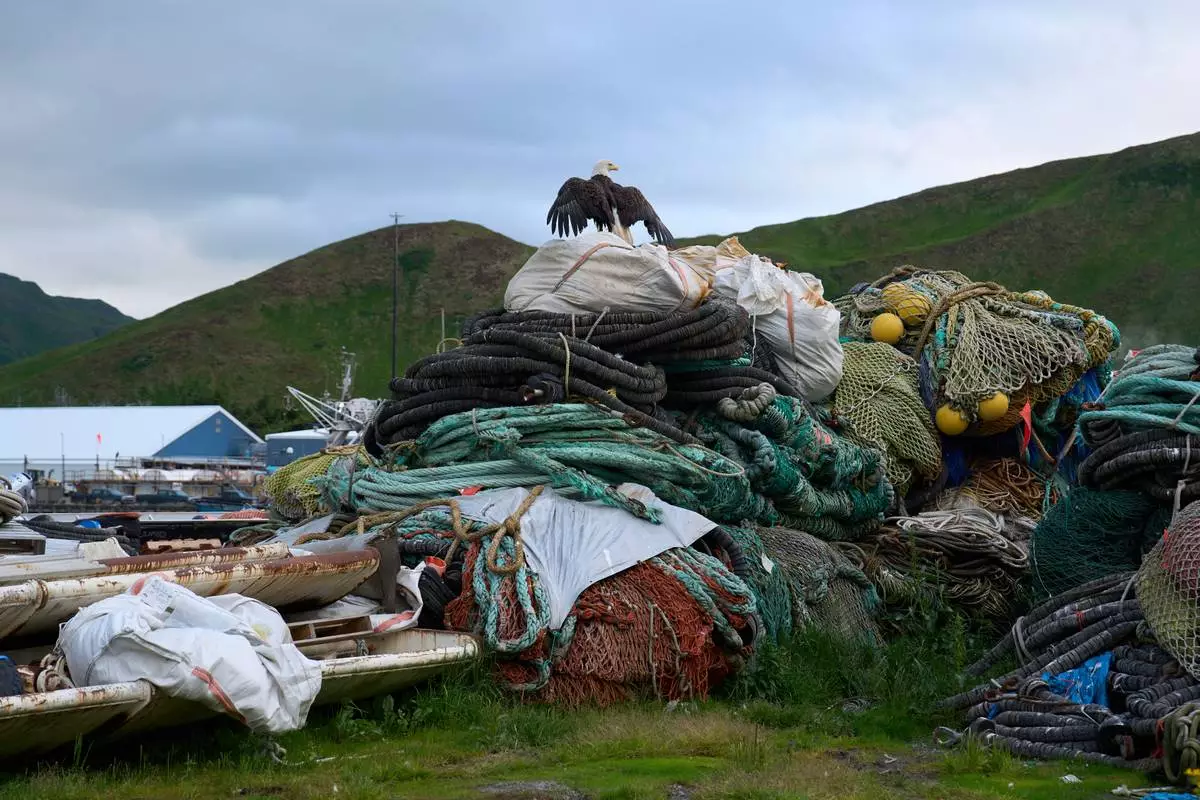
A bald eagle stands atop fishing gear in Dutch Harbor, Alaska, Saturday, July 25, 2026. (AP Photo/Annika Hammerschlag)
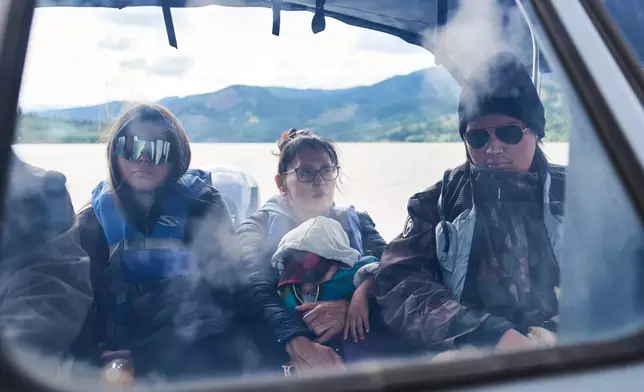
A bald eagle stands atop fishing gear in Dutch Harbor, Alaska, Saturday, July 25, 2026. (AP Photo/Annika Hammerschlag)

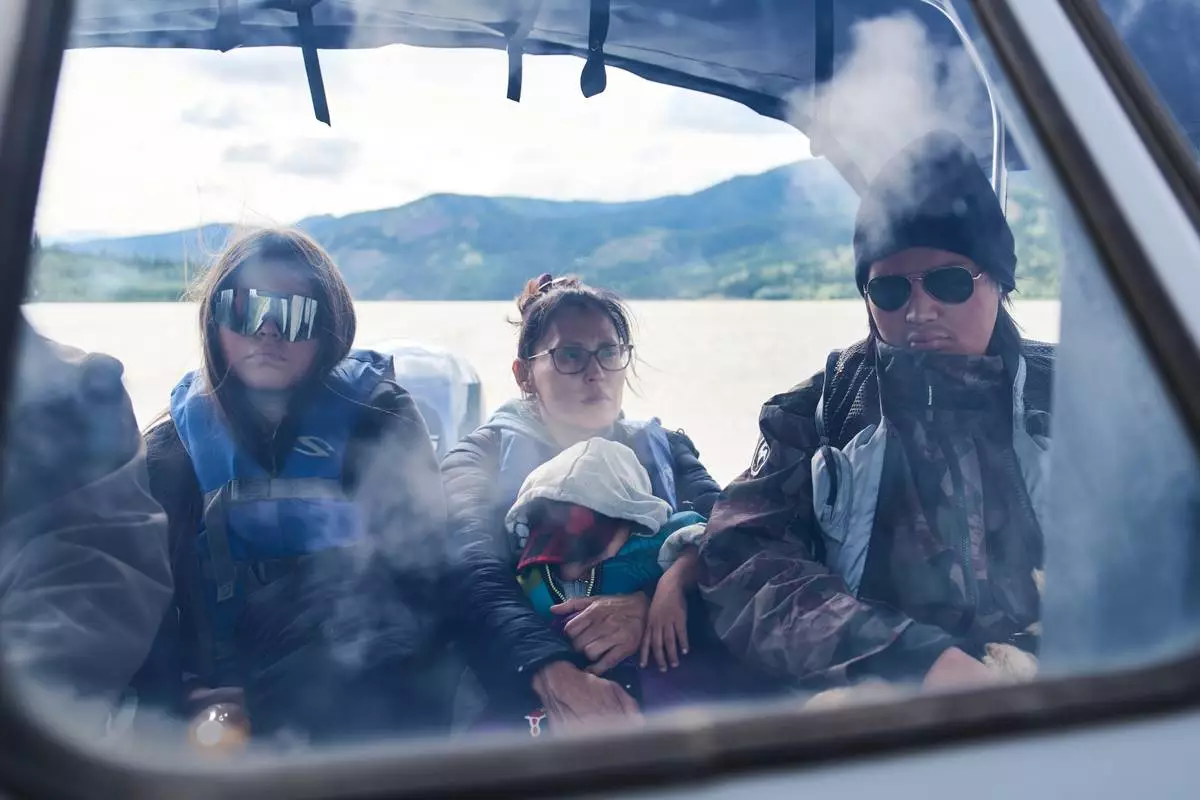
The Woods family travels by boat along the Yukon River from Rampart, Alaska, toward Fairbanks, Monday, July 13, 2026. (AP Photo/Annika Hammerschlag)
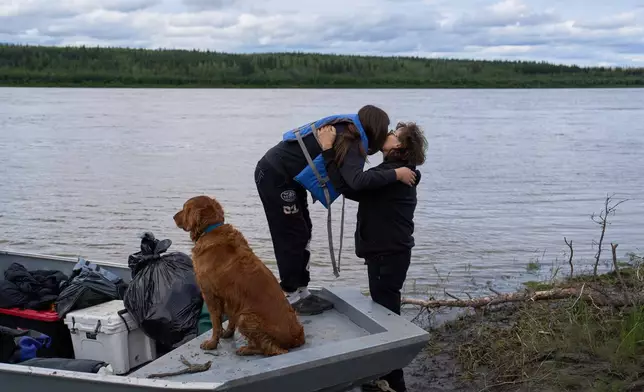
The Woods family travels by boat along the Yukon River from Rampart, Alaska, toward Fairbanks, Monday, July 13, 2026. (AP Photo/Annika Hammerschlag)

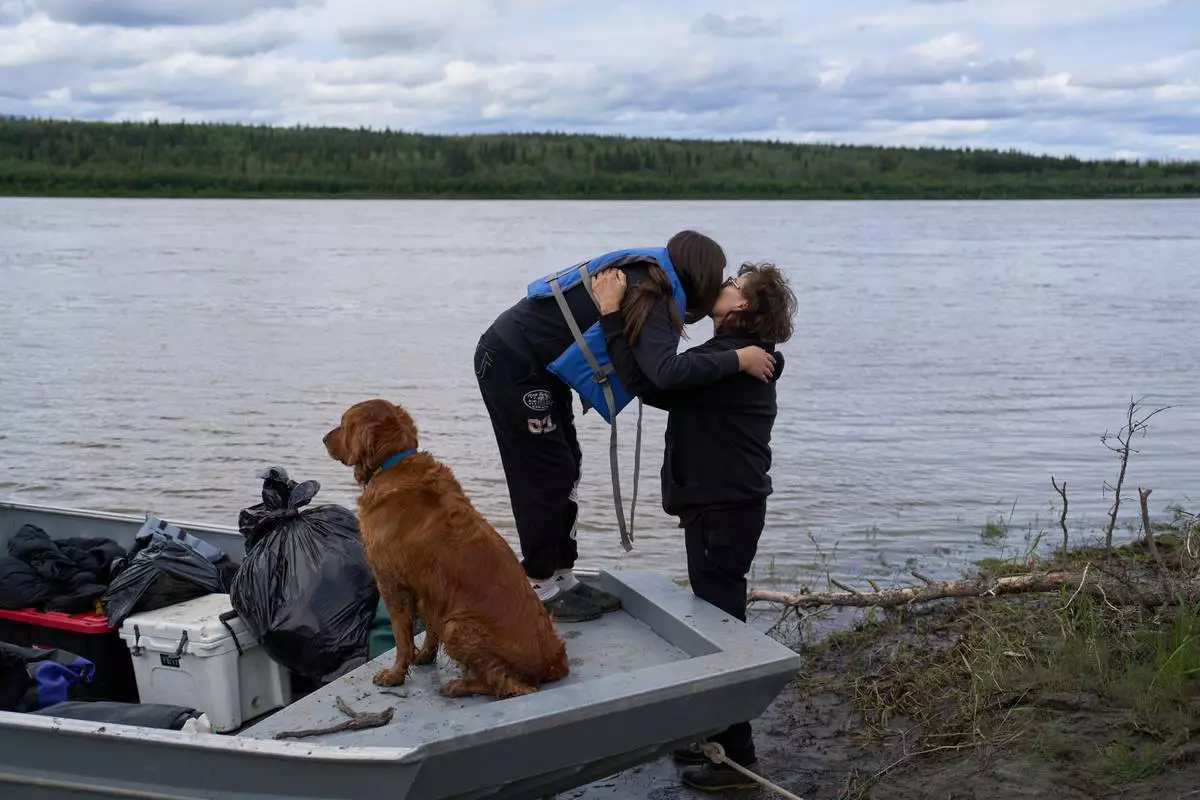
Alara Woods kisses her grandmother Janet Woods, right, goodbye in Rampart, Alaska, as she prepares to return to Fairbanks, Monday, July 13, 2026. (AP Photo/Annika Hammerschlag)

Alara Woods kisses her grandmother Janet Woods, right, goodbye in Rampart, Alaska, as she prepares to return to Fairbanks, Monday, July 13, 2026. (AP Photo/Annika Hammerschlag)

Brooke Woods serves herself moose meat tacos while wearing a shirt that reads "Salmon is Life" at her home in Rampart, Alaska, Sunday, July 12, 2026. (AP Photo/Annika Hammerschlag)

Brooke Woods serves herself moose meat tacos while wearing a shirt that reads "Salmon is Life" at her home in Rampart, Alaska, Sunday, July 12, 2026. (AP Photo/Annika Hammerschlag)

Lewis Thomas watches TV at his home in Rampart, Alaska, Saturday, July 11, 2026. (AP Photo/Annika Hammerschlag)
Lewis Thomas watches TV at his home in Rampart, Alaska, Saturday, July 11, 2026. (AP Photo/Annika Hammerschlag)

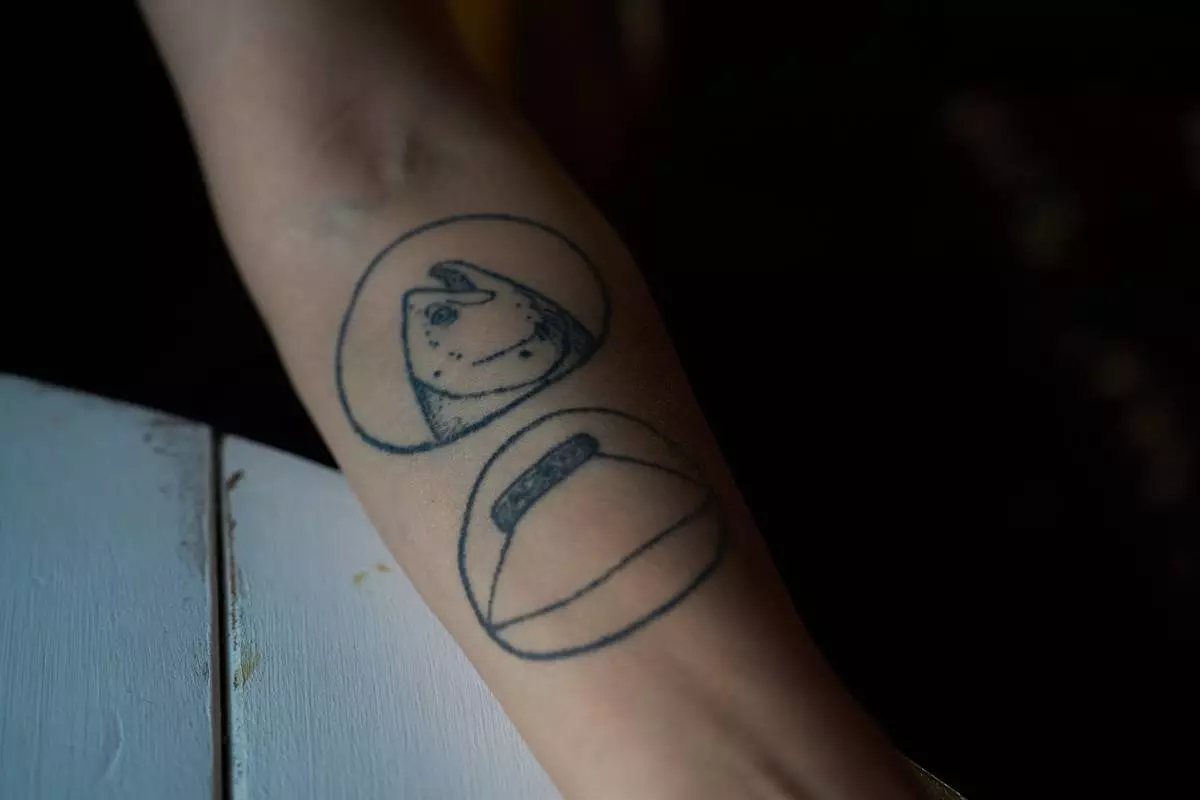
Brooke Woods shows her salmon tattoo in Rampart, Alaska, Monday, July 13, 2026. (AP Photo/Annika Hammerschlag)
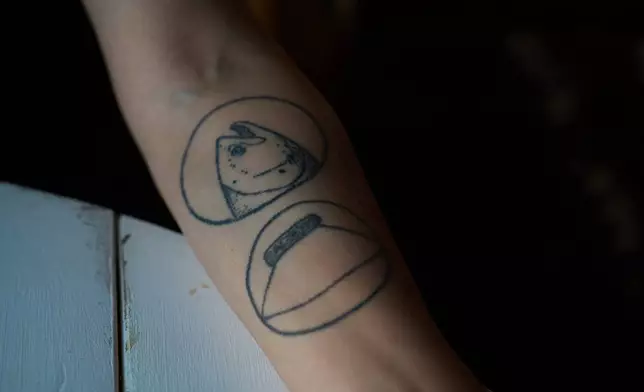
Brooke Woods shows her salmon tattoo in Rampart, Alaska, Monday, July 13, 2026. (AP Photo/Annika Hammerschlag)

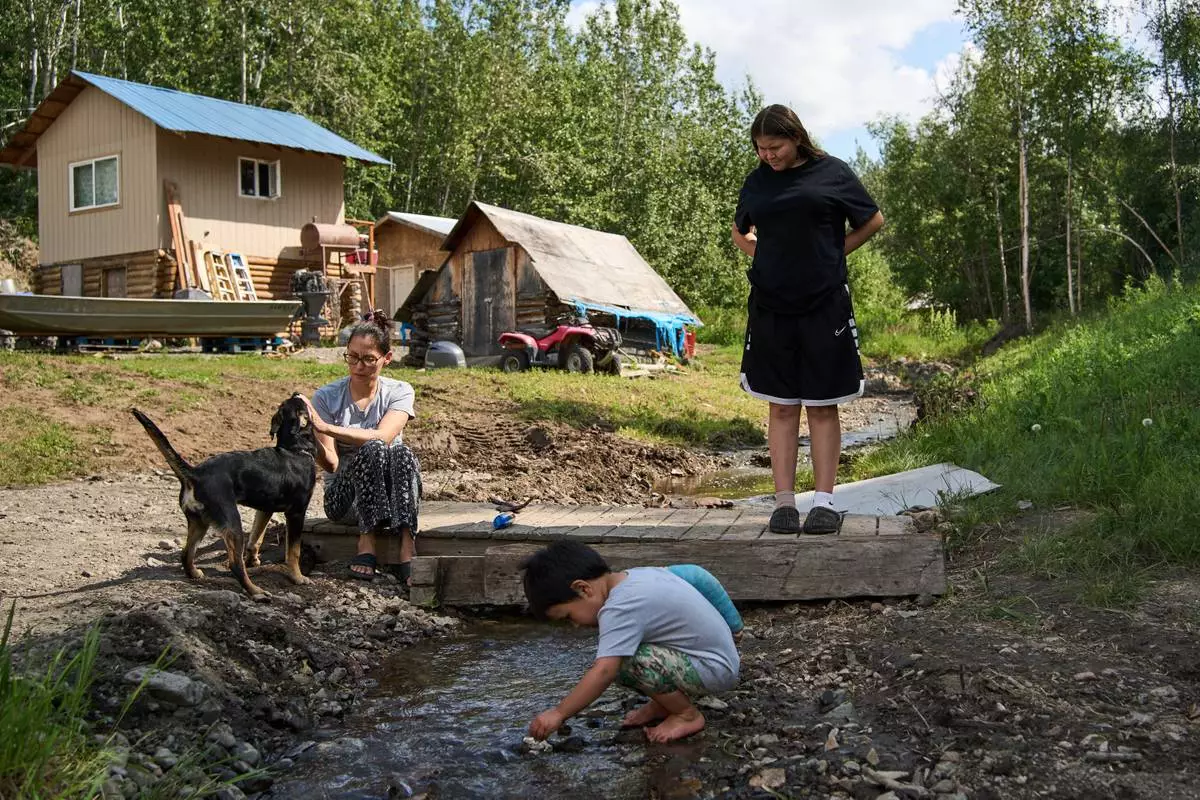
Lewis Thomas, front, plays in a creek as his cousin Alara Woods, right, watches and his mother, Brooke Woods, shovels gravel at their home in Rampart, Alaska, Saturday, July 11, 2026. (AP Photo/Annika Hammerschlag)
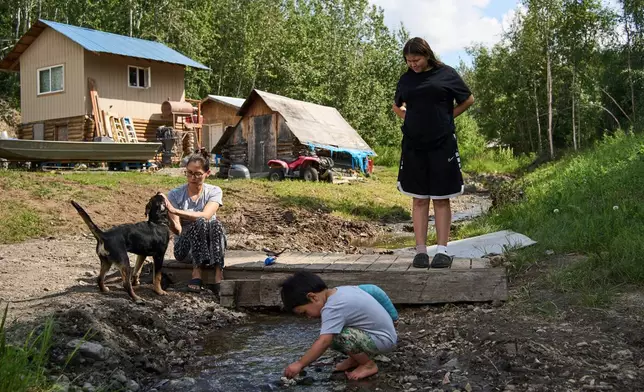
Lewis Thomas, front, plays in a creek as his cousin Alara Woods, right, watches and his mother, Brooke Woods, shovels gravel at their home in Rampart, Alaska, Saturday, July 11, 2026. (AP Photo/Annika Hammerschlag)

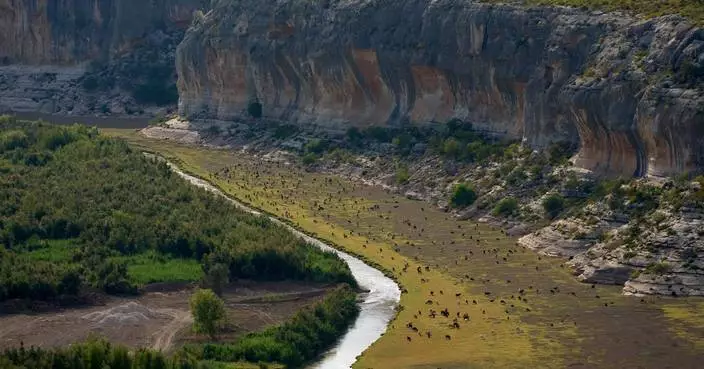
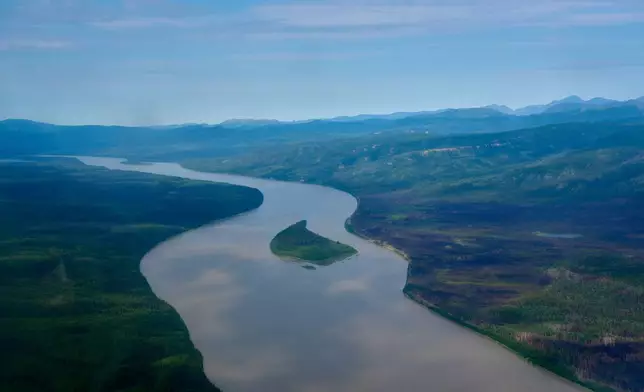
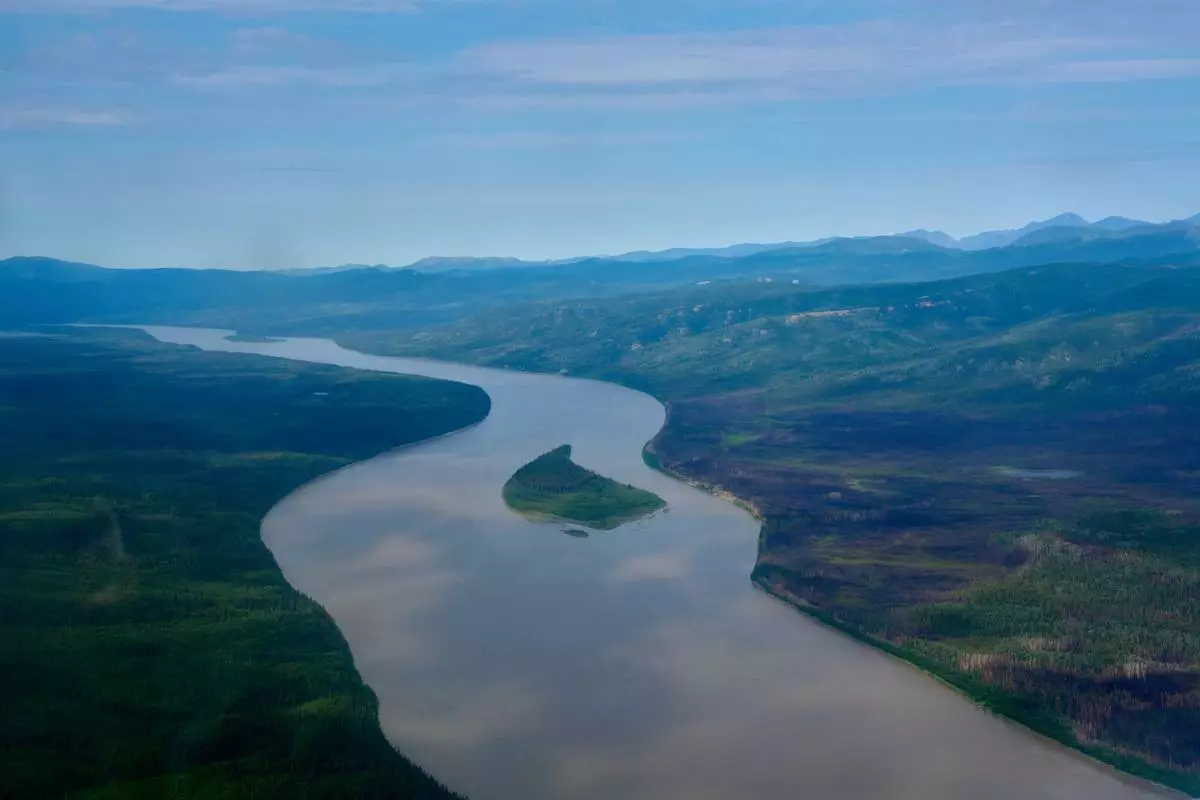
The Yukon River winds through Alaska, Friday, July 10, 2026. (AP Photo/Annika Hammerschlag)
The Yukon River winds through Alaska, Friday, July 10, 2026. (AP Photo/Annika Hammerschlag)

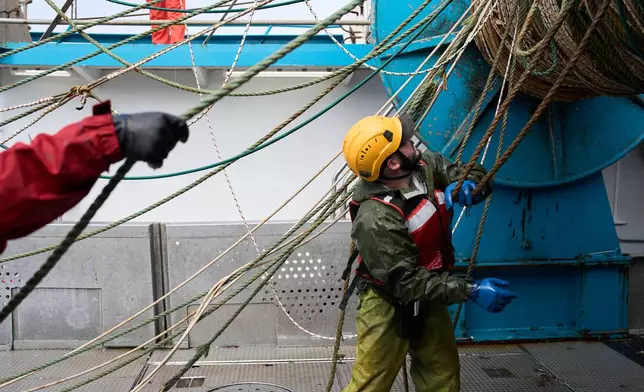
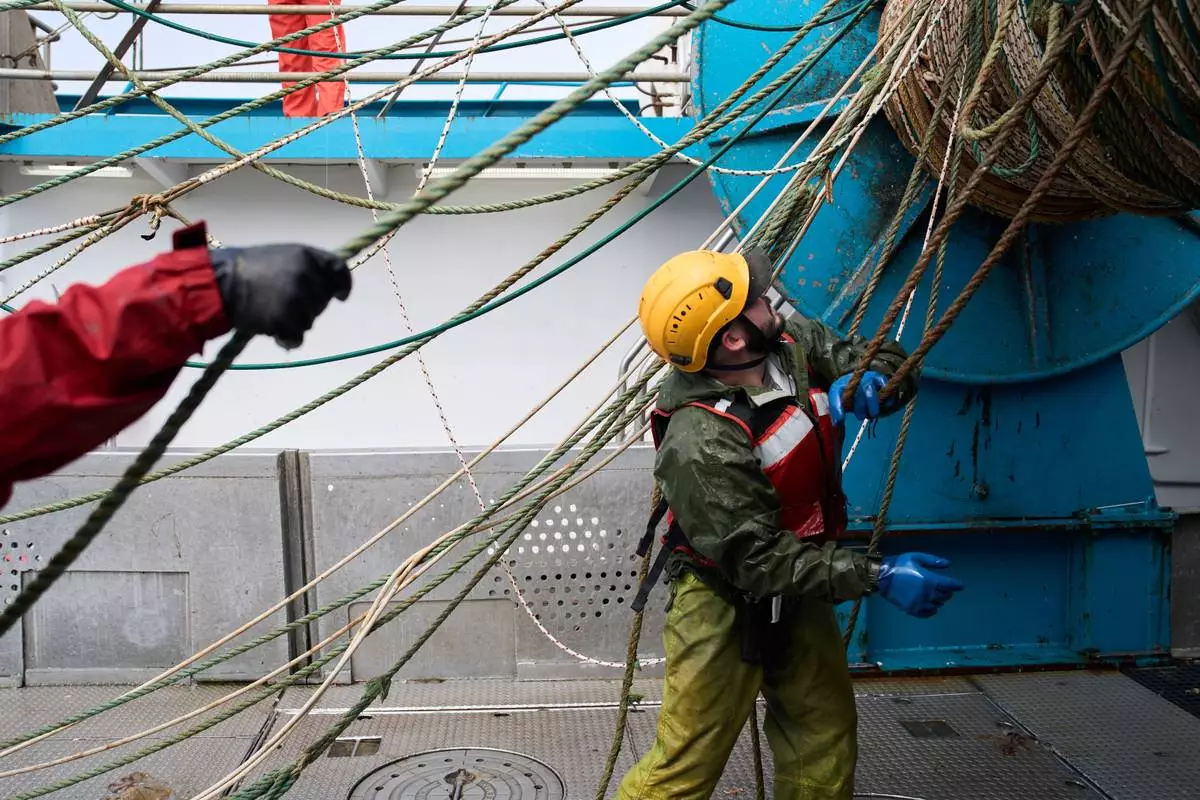
Crew members work aboard the F/V Progress in the Bering Sea off the coast of Alaska, Thursday, July 23, 2026. (AP Photo/Annika Hammerschlag)
Crew members work aboard the F/V Progress in the Bering Sea off the coast of Alaska, Thursday, July 23, 2026. (AP Photo/Annika Hammerschlag)

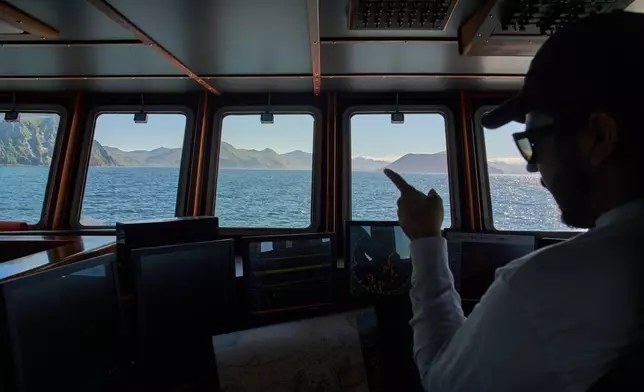
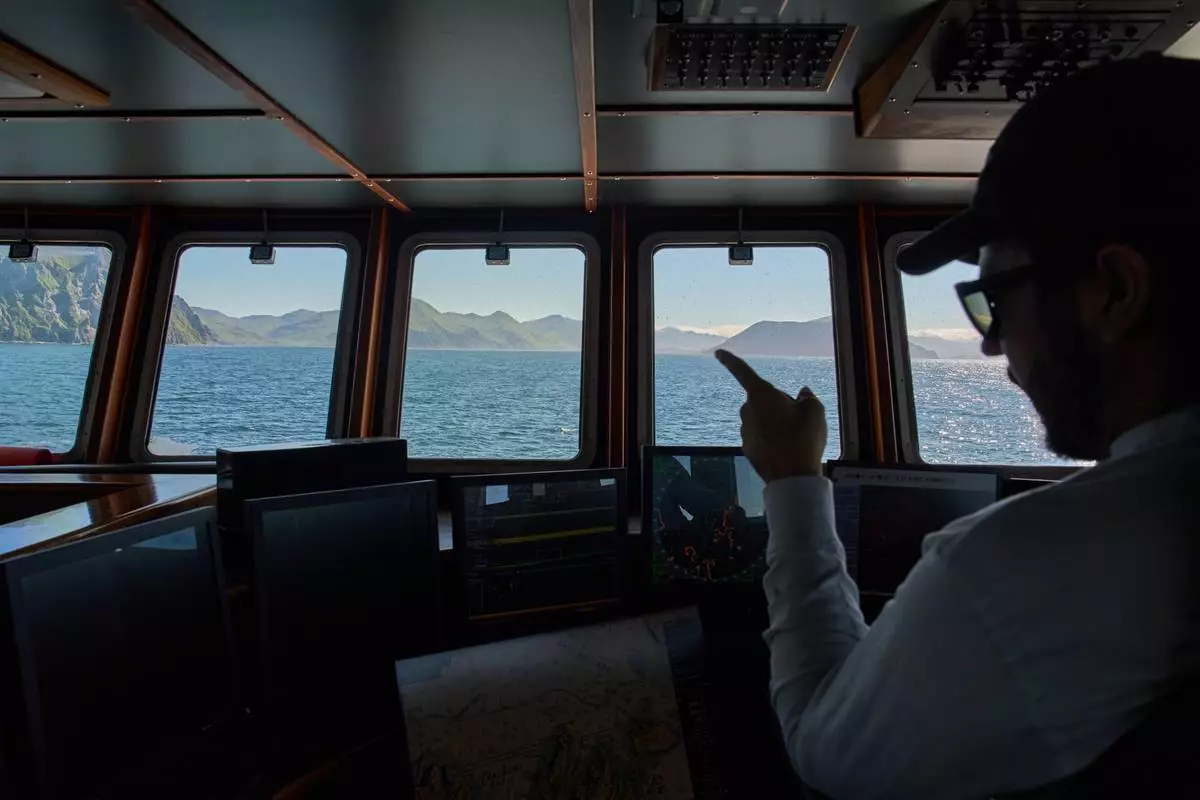
Maverick Blake, captain of the F/V Progress, monitors screens in the wheelhouse that help track fishing conditions in the Bering Sea off the coast of Alaska, Friday, July 24, 2026. (AP Photo/Annika Hammerschlag)

Maverick Blake, captain of the F/V Progress, monitors screens in the wheelhouse that help track fishing conditions in the Bering Sea off the coast of Alaska, Friday, July 24, 2026. (AP Photo/Annika Hammerschlag)

A McDonald's Filet-O-Fish sandwich, made from Alaskan pollock, sits on a table Wednesday, Oct. 7, 2026 in Seattle (AP Photo/Annika Hammerschlag)
A McDonald's Filet-O-Fish sandwich, made from Alaskan pollock, sits on a table Wednesday, Oct. 7, 2026 in Seattle (AP Photo/Annika Hammerschlag)

Bycatch including a skate, right, and a chum salmon, left, are visible among a pollock catch aboard the F/V Progress in the Bering Sea off the coast of Alaska, Wednesday, July 22, 2026. (AP Photo/Annika Hammerschlag)
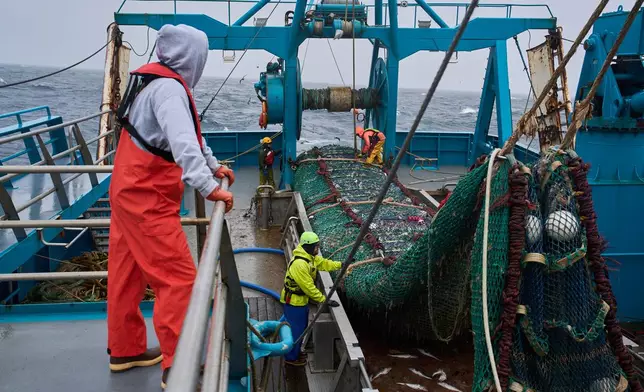
Bycatch including a skate, right, and a chum salmon, left, are visible among a pollock catch aboard the F/V Progress in the Bering Sea off the coast of Alaska, Wednesday, July 22, 2026. (AP Photo/Annika Hammerschlag)

Crew members haul in a catch aboard the F/V Progress in the Bering Sea off the coast of Alaska, Wednesday, July 22, 2026. (AP Photo/Annika Hammerschlag)

Crew members haul in a catch aboard the F/V Progress in the Bering Sea off the coast of Alaska, Wednesday, July 22, 2026. (AP Photo/Annika Hammerschlag)

“This is a wild capture fishery so you do run into your nontarget species, and a lot of people have a problem with that,” said Maverick Blake, the boat’s captain. “But this is what it takes to put seafood on the table.”

Blake redirected the boat toward another fishing ground where he hoped to encounter fewer salmon.

Alaska pollock is the second-largest fishery on Earth. It is the fish inside U.S. McDonald’s Filet-O-Fish sandwiches and is also turned into fish sticks and imitation crab. The fishery uses methods that it — and McDonald’s — say are aimed at minimizing environmental impacts, but the nets that catch pollock catch other marine life, too.

Bycatch — marine life caught unintentionally while fishers target something else — makes up 2% of the pollock fishery’s total catch. At the scale of a fishery that harvests billions of pounds of pollock annually, that can mean hundreds of thousands of salmon. Over the last 10 years, Bering Sea pollock trawlers caught an average of about 18,000 Chinook and 288,000 other salmon a year, nearly all of them chum.

Those catches have become especially contentious as salmon runs have collapsed across western Alaska, where dozens of Native communities have relied on salmon for generations. The backlash has spread to smaller commercial and charter fishers who say they, too, are bearing the costs of declining stocks. And trawling and bycatch have become prominent issues in Alaska's midterm elections, with candidates for governor and in the state's closely watched U.S. Senate contest sparring over how aggressively to restrict the industry.

In 2024, Alaska and Canada instated a seven-year ban on Chinook fishing along the Yukon River — one full salmon life cycle — to give depleted populations a chance to rebuild. The Kuskokwim River has faced repeated Chinook and chum closures too, while other Yukon salmon fisheries have also been restricted.

Scientists point to warming waters and changing ocean conditions, not trawl bycatch, as the primary causes of the declines. Warmer oceans can also increase the risk of salmon bycatch by changing where salmon and pollock overlap, according to a 2025 study.

But critics argue bycatch is one of the few sources of fish mortality managers can directly control, and even small losses matter when runs are depleted.

“Each fish is critical to communities along the Yukon River,” said Andrew Seitz, professor of fisheries at the University of Alaska Fairbanks. “The people who feel that they bear the brunt of the conservation measures are people along the river.”

During the four days The Associated Press was on the F/V Progress, the vessel caught some 210 chum salmon. Blake, who has spent 13 years in the pollock industry, said avoiding salmon is a central part of his job. He said the search for waters with fewer salmon burned nearly 3,000 gallons (11,360 liters) of fuel. Had he stayed put, he said, the boat could have filled its holds in half a day with far less.

“The subsistence users see this huge machine industry out here harvesting in the ocean and I can understand their frustration,” he said. “I would be upset if somebody told me that I wasn’t allowed to fish like my ancestors had done for thousands of years before.”

Still, Blake and industry representatives call it one of the best managed fisheries in the world. Captains stay in contact with other vessels throughout each trip to share information about salmon concentrations, while the fleet follows weekly closure areas based on reports from the fishing grounds. Every pollock vessel also carries a salmon excluder, a device that gives salmon a way out of the net.

Every salmon caught by the Bering Sea pollock fleet is counted. Trawlers are monitored by observers or cameras, as are deliveries at shoreside processing plants.

“The amount of science and management effort that goes into improving it is basically unprecedented anywhere,” said Matt Tinning, CEO of the At-Sea Processors Association, which represents five Alaska pollock companies. “The system is designed to really incentivize salmon avoidance every day, all the time.”

At 9 a.m. on a July morning in Rampart, an Alaska Native village, about a dozen boats sat moored along the Yukon River. In years past, families would have been pulling nets and carrying salmon to their smokehouses.

The Yukon flows some 1,250 miles (2,010 kilometers) across Alaska before emptying into the Bering Sea. Salmon born in its tributaries migrate to the ocean, spend years feeding at sea, then return to spawn, linking villages like Rampart to the same waters where the pollock fleet fishes.

“We have this big void in our lives right now,” said Brooke Woods, a Koyukon Alaska Native, mother of six and commissioner for the Yukon River Inter-Tribal Fish Commission. “We’ve never had a generation that hasn’t had the opportunity to learn and be taught by elders and parents, and that has such a big impact on our youth.”

Woods’ family once spent long summer days checking nets, cutting fish and tending the smokehouse. This summer, her 3-year-old son, Lewis, watched TV and played in the creek behind the house. He has never set a salmon net with his parents.

Restrictions on their own harvest are difficult to accept when pollock trawlers are fishing offshore.

“You really get angry. Why are we the only ones that have to take the burden?” said Brooke’s mother, Janet Woods.

Rampart has no grocery store, and reaching Fairbanks takes about five hours by boat and road. Families stock up when they travel and have long relied on fishing and hunting to fill their freezers.

Managers briefly opened chum fishing around Rampart this summer, but only with selective gear such as dip nets and beach seines. The Woods family didn't have that equipment.

“You think back in history how they tried to destroy us,” Janet said. “Taking our language, our ceremonies, and now our culture, and it’s been forever a fight for us just to hang on to what very little we have.”

Fish from across the North Pacific mix in the Bering Sea, so a salmon caught in a trawl net could have come from western Alaska, the Pacific Northwest or as far away as Russia or Japan.

NOAA has long used genetic testing to trace salmon bycatch. Since 2024, the Bristol Bay Science and Research Institute has also produced weekly chum bycatch estimates from summer to fall to give the fleet faster information about where western Alaska salmon are showing up.

The results support one of the industry’s main arguments: Most chum caught by pollock trawlers are not from western Alaska. In recent years, western Alaska fish made up an average of about 17% of chum and half of Chinook bycatch.

But even a small share can mean tens of thousands of salmon. In 2021, for example, 9% of chum bycatch came from western Alaska, which equated to more than 51,000 salmon, according to NOAA.

In February, after hearing testimony from more than 170 people, the North Pacific Fishery Management Council, which sets many of the rules for the Bering Sea fleet, recommended a cap of 45,000 western Alaska chum bycatch. Critics said the limit was too high.

Pollock is big business in Alaska. More than 3 billion pounds (1.36 billion kilograms) were landed from the Bering Sea and Gulf of Alaska in 2024, worth about $432 million, according to NOAA. While the fishery supports thousands of Alaska jobs, critics note most of the economic benefit flows outside the state, with many of the largest vessels owned by Seattle-area companies.

“We’re trying to play this balancing game” between helping conserve western Alaska salmon for subsistence communities and maintaining “a very valuable economic fishery,” said Abby Duffy, who manages the Bristol Bay institute’s genetics lab in Dutch Harbor.

Small commercial halibut and crab fishers as well as charter operators have echoed the grievances heard along the Yukon. They too have faced shrinking catch limits and closures as stocks decline, while groundfish trawlers continue to catch both species as bycatch.

In 2025 alone, Alaska trawl fisheries discarded some 96 million pounds (44,000 metric tons) of bycatch, according to the North Pacific Fishery Management Council. That's roughly equivalent to 100 fully loaded Boeing 747-8s.

“It’s extremely frustrating,” said Linda Behnken, a commercial fisher and executive director of the Alaska Longline Fishermen’s Association.

But the larger concern, she said, is what trawling does to the seafloor.

“The habitat damage is really insidious and long lasting,” she said.

Pollock vessels use pelagic, or midwater, trawls that are designed to fish in the water column rather than along the seafloor the way bottom trawls do. But pollock often swim close to the seafloor, so the nets make substantial bottom contact. That contact was evident during the AP’s trip aboard the F/V Progress, when Tanner crabs and basket stars — animals that live on the seafloor — came up in the net.

Meanwhile, some of the same areas that are closed to bottom trawling for the protection of coral, sponges, crab and other marine life are open to pelagic trawlers.

“So they’re dragging in the same areas, defeating the whole purpose of these habitat conservation areas,” said Ben Enticknap, fisheries campaign director at Oceana.

Anti-trawl sentiment has attracted Democrats, Republicans, commercial and sport fishers, and Alaska Native communities — constituencies that don’t often line up on the same side of resource debates.

At least half the original candidates in Alaska's crowded governor’s race took positions critical of trawling or bycatch as contenders across the political spectrum called for tighter restrictions. The governor has significant influence over federal fisheries policy with the power to nominate five of the North Pacific council’s seven appointed voting seats. Several gubernatorial candidates campaigned specifically on using those appointments to shift the council away from trawl interests.

In the U.S. Senate race, Democrat Mary Peltola has called for an end to large factory trawlers, while Republican Sen. Dan Sullivan has introduced legislation aimed at reducing bycatch and keeping trawl gear off the seafloor.

Back in the Bering Sea, Captain Blake kept fishing for pollock. Along the Yukon, the Woods family’s boat remained tied to the bank.

Blake hopes his son will one day fish beside him on the trawler. Brooke Woods hopes her son will one day set a salmon net with her.

“It’s frightening for me to not know if I’ll be able to pass on the same knowledge that my mother, grandmother and parents had,” Woods said. “I’ve heard elders say that if we lose our salmon, that assimilation has worked.”

Follow Annika Hammerschlag on Instagram: @ahammergram.

The Associated Press receives support from the Walton Family Foundation for coverage of water and environmental policy. The AP is solely responsible for all content. For all of AP’s environmental coverage, visit https://apnews.com/hub/climate-and-environment
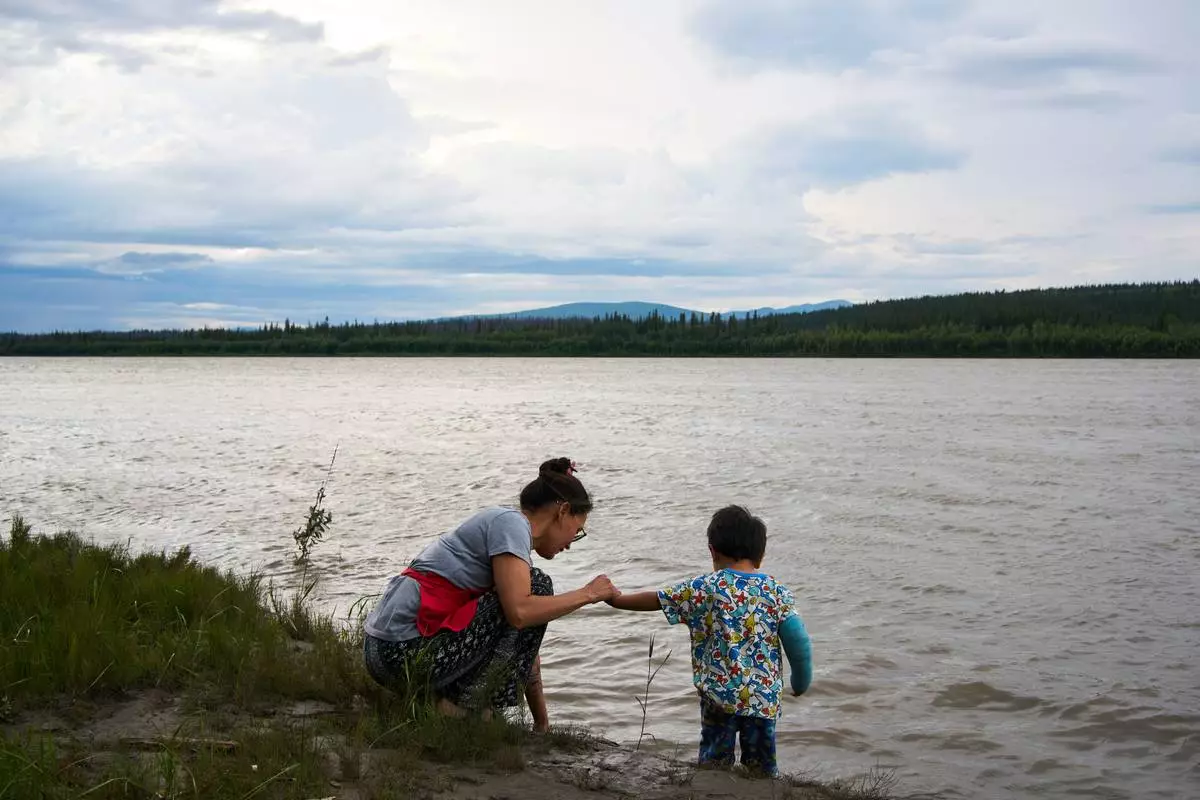
Brooke Woods and her son Lewis Thomas play in the Yukon River in Rampart, Alaska, Saturday, July 11, 2026. (AP Photo/Annika Hammerschlag)
Brooke Woods and her son Lewis Thomas play in the Yukon River in Rampart, Alaska, Saturday, July 11, 2026. (AP Photo/Annika Hammerschlag)

A crew member shovels jellyfish and other bycatch, including a Tanner crab and basket stars – animals that live on the seafloor – from the deck after a haul in the Bering Sea off the coast of Alaska, Wednesday, July 22, 2026. (AP Photo/Annika Hammerschlag)
A crew member shovels jellyfish and other bycatch, including a Tanner crab and basket stars – animals that live on the seafloor – from the deck after a haul in the Bering Sea off the coast of Alaska, Wednesday, July 22, 2026. (AP Photo/Annika Hammerschlag)

Maverick Blake, captain of the F/V Progress, looks out from the wheelhouse as he navigates his way out of Dutch Harbor, Alaska, Tuesday, July 21, 2026. (AP Photo/Annika Hammerschlag)
Maverick Blake, captain of the F/V Progress, looks out from the wheelhouse as he navigates his way out of Dutch Harbor, Alaska, Tuesday, July 21, 2026. (AP Photo/Annika Hammerschlag)

The F/V Progress delivers its catch to a processing vessel, front, in Dutch Harbor, Alaska, Friday, July 24, 2026. (AP Photo/Annika Hammerschlag)
The F/V Progress delivers its catch to a processing vessel, front, in Dutch Harbor, Alaska, Friday, July 24, 2026. (AP Photo/Annika Hammerschlag)

Pollock pack a trawl net so tightly that their heads squeeze through the mesh aboard the F/V Progress in the Bering Sea off the coast of Alaska, Friday, July 24, 2026. (AP Photo/Annika Hammerschlag)
Pollock pack a trawl net so tightly that their heads squeeze through the mesh aboard the F/V Progress in the Bering Sea off the coast of Alaska, Friday, July 24, 2026. (AP Photo/Annika Hammerschlag)

A cyclist bikes past the American Empress II, a trawler operated by Seattle-based American Seafoods in Seattle, Tuesday, Oct. 6, 2026. (AP Photo/Annika Hammerschlag)
A cyclist bikes past the American Empress II, a trawler operated by Seattle-based American Seafoods in Seattle, Tuesday, Oct. 6, 2026. (AP Photo/Annika Hammerschlag)

A bald eagle stands atop fishing gear in Dutch Harbor, Alaska, Saturday, July 25, 2026. (AP Photo/Annika Hammerschlag)
A bald eagle stands atop fishing gear in Dutch Harbor, Alaska, Saturday, July 25, 2026. (AP Photo/Annika Hammerschlag)

The Woods family travels by boat along the Yukon River from Rampart, Alaska, toward Fairbanks, Monday, July 13, 2026. (AP Photo/Annika Hammerschlag)
The Woods family travels by boat along the Yukon River from Rampart, Alaska, toward Fairbanks, Monday, July 13, 2026. (AP Photo/Annika Hammerschlag)

Alara Woods kisses her grandmother Janet Woods, right, goodbye in Rampart, Alaska, as she prepares to return to Fairbanks, Monday, July 13, 2026. (AP Photo/Annika Hammerschlag)

Alara Woods kisses her grandmother Janet Woods, right, goodbye in Rampart, Alaska, as she prepares to return to Fairbanks, Monday, July 13, 2026. (AP Photo/Annika Hammerschlag)

Brooke Woods serves herself moose meat tacos while wearing a shirt that reads "Salmon is Life" at her home in Rampart, Alaska, Sunday, July 12, 2026. (AP Photo/Annika Hammerschlag)

Brooke Woods serves herself moose meat tacos while wearing a shirt that reads "Salmon is Life" at her home in Rampart, Alaska, Sunday, July 12, 2026. (AP Photo/Annika Hammerschlag)

Lewis Thomas watches TV at his home in Rampart, Alaska, Saturday, July 11, 2026. (AP Photo/Annika Hammerschlag)
Lewis Thomas watches TV at his home in Rampart, Alaska, Saturday, July 11, 2026. (AP Photo/Annika Hammerschlag)

Brooke Woods shows her salmon tattoo in Rampart, Alaska, Monday, July 13, 2026. (AP Photo/Annika Hammerschlag)
Brooke Woods shows her salmon tattoo in Rampart, Alaska, Monday, July 13, 2026. (AP Photo/Annika Hammerschlag)

Lewis Thomas, front, plays in a creek as his cousin Alara Woods, right, watches and his mother, Brooke Woods, shovels gravel at their home in Rampart, Alaska, Saturday, July 11, 2026. (AP Photo/Annika Hammerschlag)
Lewis Thomas, front, plays in a creek as his cousin Alara Woods, right, watches and his mother, Brooke Woods, shovels gravel at their home in Rampart, Alaska, Saturday, July 11, 2026. (AP Photo/Annika Hammerschlag)

The Yukon River winds through Alaska, Friday, July 10, 2026. (AP Photo/Annika Hammerschlag)
The Yukon River winds through Alaska, Friday, July 10, 2026. (AP Photo/Annika Hammerschlag)

Crew members work aboard the F/V Progress in the Bering Sea off the coast of Alaska, Thursday, July 23, 2026. (AP Photo/Annika Hammerschlag)
Crew members work aboard the F/V Progress in the Bering Sea off the coast of Alaska, Thursday, July 23, 2026. (AP Photo/Annika Hammerschlag)

Maverick Blake, captain of the F/V Progress, monitors screens in the wheelhouse that help track fishing conditions in the Bering Sea off the coast of Alaska, Friday, July 24, 2026. (AP Photo/Annika Hammerschlag)

Maverick Blake, captain of the F/V Progress, monitors screens in the wheelhouse that help track fishing conditions in the Bering Sea off the coast of Alaska, Friday, July 24, 2026. (AP Photo/Annika Hammerschlag)

A McDonald's Filet-O-Fish sandwich, made from Alaskan pollock, sits on a table Wednesday, Oct. 7, 2026 in Seattle (AP Photo/Annika Hammerschlag)
A McDonald's Filet-O-Fish sandwich, made from Alaskan pollock, sits on a table Wednesday, Oct. 7, 2026 in Seattle (AP Photo/Annika Hammerschlag)

Bycatch including a skate, right, and a chum salmon, left, are visible among a pollock catch aboard the F/V Progress in the Bering Sea off the coast of Alaska, Wednesday, July 22, 2026. (AP Photo/Annika Hammerschlag)
Bycatch including a skate, right, and a chum salmon, left, are visible among a pollock catch aboard the F/V Progress in the Bering Sea off the coast of Alaska, Wednesday, July 22, 2026. (AP Photo/Annika Hammerschlag)

Crew members haul in a catch aboard the F/V Progress in the Bering Sea off the coast of Alaska, Wednesday, July 22, 2026. (AP Photo/Annika Hammerschlag)

Crew members haul in a catch aboard the F/V Progress in the Bering Sea off the coast of Alaska, Wednesday, July 22, 2026. (AP Photo/Annika Hammerschlag)

OSLO, Norway (AP) — Navi Pillay, a South African-born jurist and former U.N. human rights chief whose career has spanned from defending the rights of an imprisoned Nelson Mandela to leading a panel that found that Israel committed genocide in Gaza, won the Nobel Peace Prize on Friday for her efforts to promote international law as it comes under attack.

Her win is sure to be seen as a high-profile rebuke to U.S. President Donald Trump and Israeli Prime Minister Benjamin Netanyahu, who have both rejected the findings of the U.N. commission she led on Gaza. The leaders also have been highly critical of the International Court of Justice and the International Criminal Court; Pillay has worked at both.

Pillay’s work “is a source of hope and inspiration to all those who seek to bring about a more peaceful world,” said Jørgen Watne Frydnes, chair of the Norwegian Nobel Committee, in announcing her win in Oslo, Norway, as part of the peace prize’s 125th anniversary.

The committee said it sought to strengthen international law at a time of conflict, and Watne Frydnes said Pillay’s award was a message to those seeking to undermine “the international rules-based system and the institutions.”

In places such as Israel and in apartheid-era South Africa, she and peers took on some of the world’s most painful and sensitive legal issues and most vulnerable populations.

Pillay, 85, received the news while attending a forum in Nuremberg, Germany, where the trials of Nazi war criminals helped lay the foundations of international law. She was in the same room where the trials were held when prize was announced in Norway.

“Perhaps it was meant to be that I was in this historic Courtroom 600” of the Nuremberg Palace of Justice, she said.

She said efforts to weaken international criminal justice “endanger the progress painstakingly made since Nuremberg, and they risk returning us to a world in which power, rather than law, determines whose suffering matters.”

World leaders, she added, have a “legal obligation to protect human rights and refrain from war.”

Pillay chaired the Commission of Inquiry on the Occupied Palestinian Territory and Israel, which was created by the U.N.-backed Human Rights Council. The commission a year ago concluded Israel was responsible for genocide in Gaza with a specific intent to destroy Palestinians in Gaza.

Gaza was among Pillay’s first comments Friday after hearing she had won. “What’s happening there is genocide,” she said in Germany, to more applause.

The commission last year also found that the Israeli president, prime minister and former defense minister "have incited the commission of genocide.” Israel, which has refused to cooperate with the commission since it was established in 2021, has strenuously denied the accusations.

Pillay has repeatedly rebuffed critics who accused her of antisemitism or turning a blind eye to the Hamas attacks in Israel. Under her leadership, the commission also issued reports accusing Hamas of war crimes and violations of international humanitarian law during its Oct. 7, 2023, attack.

In an interview with The Associated Press last year, she recalled how she worked closely with some Jewish lawyers in the fight against apartheid in her native South Africa and was invited to Israel as the U.N. rights chief from 2008 to 2014.

Growing up under the harsh system of segregation influenced Pillay's interest in human rights and the law. Starting with Mandela’s presidency, South Africa’s government has openly compared the situation faced by nonwhite people during apartheid to the Palestinians’ plight.

“We know too well that our freedom is incomplete without the freedom of the Palestinians,” Mandela said soon after apartheid ended.

The Nobel announcement came at another critical time for Gaza, just two days after the anniversary of the Hamas-led attack on Israel on Oct. 7, 2023, that killed about 1,200 people and sparked the war. Over 74,000 Palestinians have since been killed, with their territory devastated. Saturday marks a year since a fragile ceasefire took effect, while Israeli strikes continue.

A senior Hamas official, Bassem Naim, in a statement Friday called the Nobel for Pillay a message of hope for Palestinians, especially in Gaza, that “humanity still resists the forces of evil targeting international justice.”

The Israeli Foreign Ministry, meanwhile, said in a statement that “if there were an award for lies, hatred, and blood libels, Navi Pillay wouldn’t just be a contender. She’d be a frontrunner.”

The ministry added on X that the award “isn’t a recognition of justice. It’s the grotesque weaponization of an award to legitimize anti-Israel hatred and prejudice.”

The award was announced less than three weeks before Israel’s election, in which Netanyahu is fighting to stay in power.

Pillay’s win brings renewed attention to Trump’s ongoing feud with the International Criminal Court, where Pillay was a judge from 2003 to 2008. The Trump administration already has sanctioned 13 of the ICC’s staff members, among them key prosecutors and nine judges, including the court’s Japanese President Tomoko Akane.

In his speech to the United Nations General Assembly last month, Trump called the court an “out of control institution” and an “anti-American tribunal with no jurisdiction” over the U.S. He urged member states to quit the court.

There are fears the court as a whole could be sanctioned, a move that could seriously hamper its ability to mete out justice.

Pillay currently serves as an ad hoc judge at the International Court of Justice, the highest court of the United Nations, in the ongoing genocide case against Myanmar.

When countries do not have a national on the court’s permanent, 15-judge panel, they can appoint an expert of their choice. Gambia, which launched the proceedings in 2019, selected Pillay when the country accused Myanmar of committing genocide against the Rohingya minority group.

As a young lawyer in apartheid South Africa, part of Pillay’s work involved establishing key rights for political prisoners being held on Robben Island, which included Mandela, who later won the Nobel Peace Prize.

After apartheid ended, then-South African President Mandela appointed Pillay to be the country’s first non-white woman to serve as a High Court judge.

Last year, Venezuelan opposition leader María Corina Machado won the Nobel Peace Prize for her struggle to achieve a democratic transition in the South American nation.

Machado gave Trump her Nobel medal shortly after the United States ousted then-President Nicolás Maduro. But it was largely a symbolic gesture: The Nobel Committee has said the honor itself cannot be transferred.

In Trump’s second term, he has been outspoken about his desire for the Nobel, but has expressed doubts that the committee would ever award him the prize.

“They have a reputation for maybe not giving it to people like me,” Trump told reporters Wednesday.

Four of this year's Nobels were announced earlier this week, in the categories of medicine, physics, chemistry and literature. The Nobel Memorial Prize in Economic Sciences will be announced Monday.

The prize money this year is 12 million Swedish kronor (about $1.2 million), whether for an individual, small group of laureates or organization.

Dazio reported from Berlin, and Keaten reported from Geneva. Associated Press journalists Gerald Imray in Cape Town, South Africa; Ali Swenson in New York; Cara Anna in Jerusalem; Molly Quell and Mike Corder in The Hague, Netherlands; and Mark Lewis in Stavanger, Norway, contributed to this report.

AP Nobel Prizes: https://apnews.com/hub/nobel-prizes

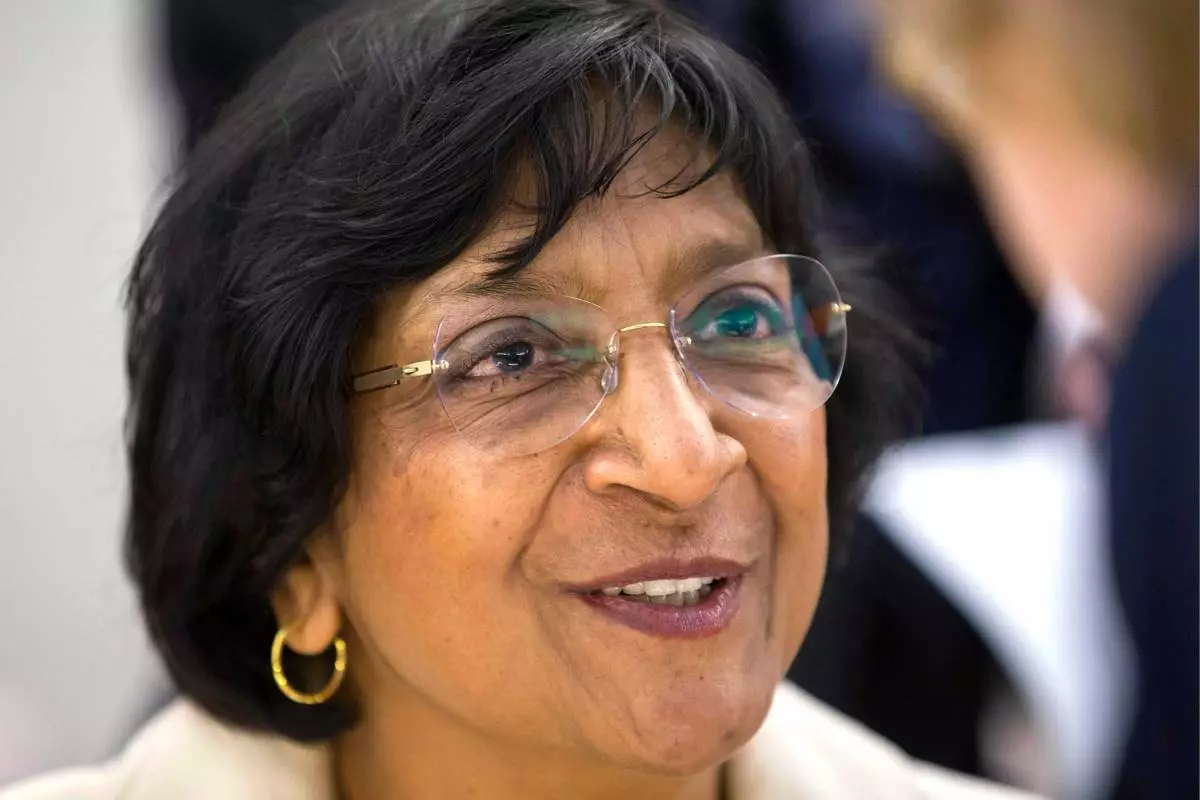
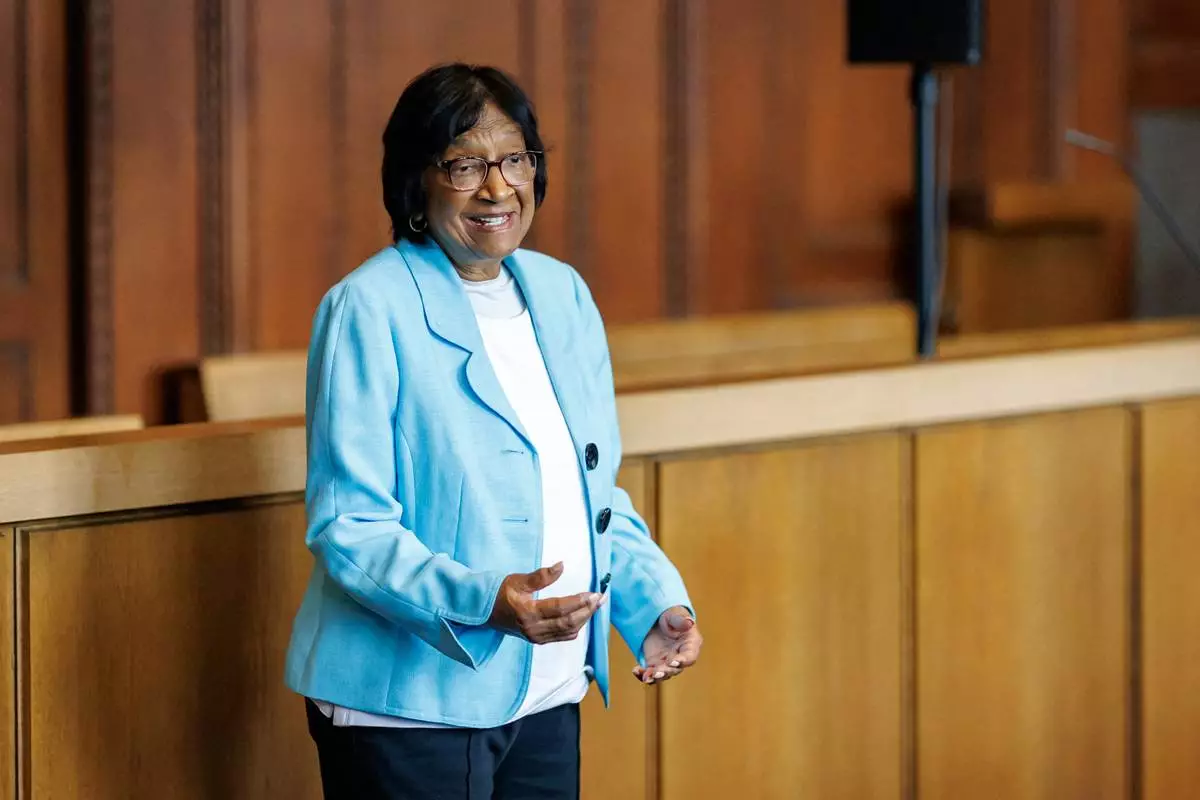
South African-born jurist and former U.N. human rights chief Navanethem "Navi" Pillay, speaks at the Nuremberg Forum in Nuremberg, Germany, Friday, Oct. 9, 2026, following the announcement that she had been awarded the 2026 Nobel Peace Prize. (Daniel Karmann/dpa via AP)

South African-born jurist and former U.N. human rights chief Navanethem "Navi" Pillay, speaks at the Nuremberg Forum in Nuremberg, Germany, Friday, Oct. 9, 2026, following the announcement that she had been awarded the 2026 Nobel Peace Prize. (Daniel Karmann/dpa via AP)

South African-born jurist and former U.N. human rights chief Navanethem "Navi" Pillay, speaks at the Nuremberg Forum in Nuremberg, Germany, Friday, Oct. 9, 2026, following the announcement that she had been awarded the 2026 Nobel Peace Prize. (Daniel Karmann/dpa via AP)

South African-born jurist and former U.N. human rights chief Navanethem "Navi" Pillay, speaks at the Nuremberg Forum in Nuremberg, Germany, Friday, Oct. 9, 2026, following the announcement that she had been awarded the 2026 Nobel Peace Prize. (Daniel Karmann/dpa via AP)

The Chairman of the Nobel Committee, Jørgen Watne Frydnes, announces Navanethem Pillay as the 2026 Nobel Peace Prize laureate at the Nobel Institute in Oslo, Norway, Friday, Oct. 9, 2026. (Javad Parsa/NTB Scanpix via AP)

The Chairman of the Nobel Committee, Jørgen Watne Frydnes, announces Navanethem Pillay as the 2026 Nobel Peace Prize laureate at the Nobel Institute in Oslo, Norway, Friday, Oct. 9, 2026. (Javad Parsa/NTB Scanpix via AP)

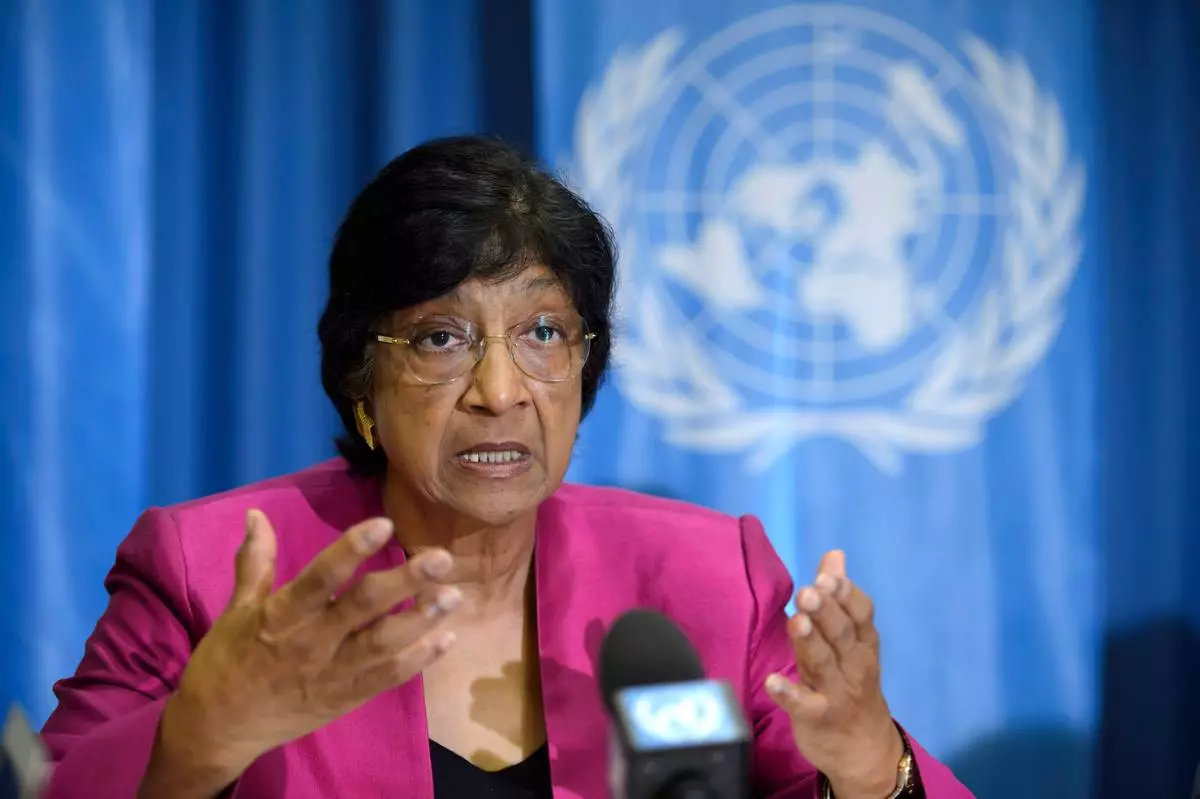
FILE - UN High Commissioner for Human Rights Navi Pillay, answers journalist's questions during a press conference at the Geneva Press Club, in Geneva, Switzerland, July 31, 2014. (Martial Trezzini/Keystone via AP, File)

FILE - UN High Commissioner for Human Rights Navi Pillay, answers journalist's questions during a press conference at the Geneva Press Club, in Geneva, Switzerland, July 31, 2014. (Martial Trezzini/Keystone via AP, File)

FILE - U.N. High Commissioner for Human Rights Navanethem Pillay, center, visits the Yad Vashem Holocaust memorial, in Jerusalem, Feb. 8, 2011. (AP Photo/Sebastian Scheiner, File)

FILE - U.N. High Commissioner for Human Rights Navanethem Pillay, center, visits the Yad Vashem Holocaust memorial, in Jerusalem, Feb. 8, 2011. (AP Photo/Sebastian Scheiner, File)

FILE - Navanethem "Navi" Pillay, U.N. High Commissioner for Human Rights, speaks during a press conference, at the European headquarters of the United Nations in Geneva, Switzerland, Oct. 18, 2012. (Martial Trezzini/Keystone via AP, File)

FILE - Navanethem "Navi" Pillay, U.N. High Commissioner for Human Rights, speaks during a press conference, at the European headquarters of the United Nations in Geneva, Switzerland, Oct. 18, 2012. (Martial Trezzini/Keystone via AP, File)

FILE - United Nations High Commissioner for Human Rights Navanethem Pillay, center, visits Al- Daraj Elementary Co-ed UNRWA school in Gaza City, Feb. 10, 2011. (AP Photo/Adel Hana, File)

FILE - United Nations High Commissioner for Human Rights Navanethem Pillay, center, visits Al- Daraj Elementary Co-ed UNRWA school in Gaza City, Feb. 10, 2011. (AP Photo/Adel Hana, File)

The Chairman of the Nobel Committee, Jørgen Watne Frydnes, announces the Nobel Peace Prize 2026 at the Nobel Institute in Oslo, Norway, Friday, Oct. 9, 2026. (Javad Parsa/NTB Scanpix via AP)

The Chairman of the Nobel Committee, Jørgen Watne Frydnes, announces the Nobel Peace Prize 2026 at the Nobel Institute in Oslo, Norway, Friday, Oct. 9, 2026. (Javad Parsa/NTB Scanpix via AP)

The Chairman of the Nobel Committee, Jørgen Watne Frydnes, announces Navanethem Pillay as the 2026 Nobel Peace Prize laureate at the Nobel Institute in Oslo, Norway, Friday, Oct. 9, 2026. (Javad Parsa/NTB Scanpix via AP)

The Chairman of the Nobel Committee, Jørgen Watne Frydnes, announces Navanethem Pillay as the 2026 Nobel Peace Prize laureate at the Nobel Institute in Oslo, Norway, Friday, Oct. 9, 2026. (Javad Parsa/NTB Scanpix via AP)

FILE - U.N. High Commissioner for Human Rights South African Navanethem Pillay prior to the 23rd session of the Human Rights Council, at the European headquarters of the United Nations in Geneva, Switzerland, May 27, 2013. (Salvatore Di Nolfi/Keystone via AP, File)

FILE - U.N. High Commissioner for Human Rights South African Navanethem Pillay prior to the 23rd session of the Human Rights Council, at the European headquarters of the United Nations in Geneva, Switzerland, May 27, 2013. (Salvatore Di Nolfi/Keystone via AP, File)

FILE - U.N. human rights chief Navanethem Pillay prior to the opening of a session of the Human Rights Council at the European headquarters of the United Nations in Geneva, Switzerland, June 18, 2012. (Salvatore Di Nolfi/Keystone via AP, File)

FILE - U.N. human rights chief Navanethem Pillay prior to the opening of a session of the Human Rights Council at the European headquarters of the United Nations in Geneva, Switzerland, June 18, 2012. (Salvatore Di Nolfi/Keystone via AP, File)

FILE - A Nobel diploma and medal are displayed, Dec. 8, 2020, during a ceremony in New York. (Angela Weiss/Pool Photo via AP, File)

FILE - A Nobel diploma and medal are displayed, Dec. 8, 2020, during a ceremony in New York. (Angela Weiss/Pool Photo via AP, File)

Recommended Articles