The Jinsha River crossing in Luquan County of southwest China's Yunnan Province where local boatmen helped the Chinese Communist Party-led Red Army escape pursuing forces of the Kuomintang on the historic Long March in 1935 now lies beneath a hydropower reservoir, while one brave boatman's granddaughter tells moving battlefield stories of the forefathers at her restaurant in what is now a nearby resettlement community.
Faded photographs of the boatmen line a wall of Pei Xinhui's restaurant. The names of all 37 are displayed there. Pei's grandfather, Zhang Chaoman, helped ferry the troops across.
"These are photos of three of the boatmen. My grandfather, Zhang Chaoman, is at the top. The second is Li Zhengfang, and the third is Chen Yueqing. My grandfather was the youngest when they helped the Red Army cross the river. He was around 21 or 22 at that time," Pei said.
This year marks the 90th anniversary of the end of the Long March, the Red Army's retreat across China from 1934 to 1936. In May 1935, Kuomintang forces were close behind as the Red Army reached the fast-flowing Jinsha River, a stretch of the upper Yangtze between Yunnan and neighboring Sichuan. Crossing it would allow them to escape encirclement and continue the northward Long March.
At the Jiaoping Ferry, 37 local boatmen used six wooden boats to carry more than 30,000 troops from Luquan to Huili in neighboring Sichuan Province over seven days and nights.
"The 37 boatmen were divided into six groups, with six assigned to each boat. They worked in two shifts of three. While three made about 10 round trips between Luquan and Huili, the other three rested. Then they switched," said Jiang Zhijun, a researcher at the Luquan County Party School.
Pei recalled what her grandfather told her about the crossing.
"The boatmen they chose were all strong swimmers. Hardly anyone fell into the river, and all the livestock and other property made it across safely. My grandfather said, 'Looking back, I feel lucky to have been one of those who helped the Red Army cross the Jinsha River,'" Pei said.
Decades later, the river changed Pei's life too. Construction of the Wudongde Hydropower Station began in 2015, and more than 850 residents moved from the old Jiaoping Ferry area before its reservoir filled in 2020, submerging the crossing. Pei was among them. She opened the restaurant and a guesthouse in the new community.
The plant has 10.2 gigawatts of installed capacity.
"The plant is designed to generate an average of 38.91 billion kilowatt-hours of electricity a year. That can save more than 11 million tons of standard coal and reduce carbon dioxide emissions by more than 32 million tons annually," said Yao Dengfeng, director of the Wudongde Hydropower Plant.
Three bridges built as part of the project now link communities across the Jinsha River in Yunnan and Sichuan.
"We want to take good care of this major national project, run this multi-million-kilowatt plant well and make full use of its benefits to serve local communities. I think that is the best way to carry forward the spirit of the Long March," Yao said.
The Red Army soldiers, forerunners of today's People's Liberation Army, began their strategic retreat in 1934. They endured raging rivers, snow-capped mountains, and vast grasslands -- some marching as far as 12,500 kilometers -- before finally reaching Yan'an in Shaanxi Province in northwest China in 1936, where they established the CPC headquarters before the People's Republic of China was founded in 1949.

Treacherous river crossing during Long March now lies under hydropower station, lighting up modern China

Treacherous river crossing during Long March now lies under hydropower station, lighting up modern China
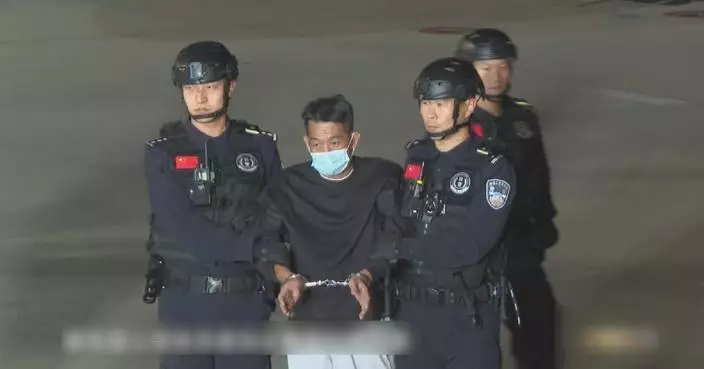
Chinese and Myanmar police have broken the deadlock over Muse region and jointly launched a sweeping crackdown on telecom fraud dens across northern Myanmar after painstaking intelligence operations, high-level consultations and evidence-based persuasion.
Since China launched its special campaign against crimes in northern Myanmar targeting Chinese nationals in July 2023, the ringleaders of Kokang's "Four Families" have all been captured, and fraud syndicates in Wa State and Shan State Special Region-4 have been dismantled.
However, Muse, the campaign's fourth front, remained unbroken.
Muse lies in northeastern Myanmar's Shan State, facing Ruili City of southwest China's Yunnan Province across a narrow river. Long a vital gateway between the two countries, its rugged terrain and complex geopolitical makeup have also made it a preferred hiding ground for telecom fraud syndicates.
With the assistance of local police in Muse, the Ruili police collected and sorted clues from various sources. Through case analysis and suspect screening, they have gradually obtained detailed information on the telecom fraud dens, and finally secured a map clearly marking the locations of these operations in Muse.
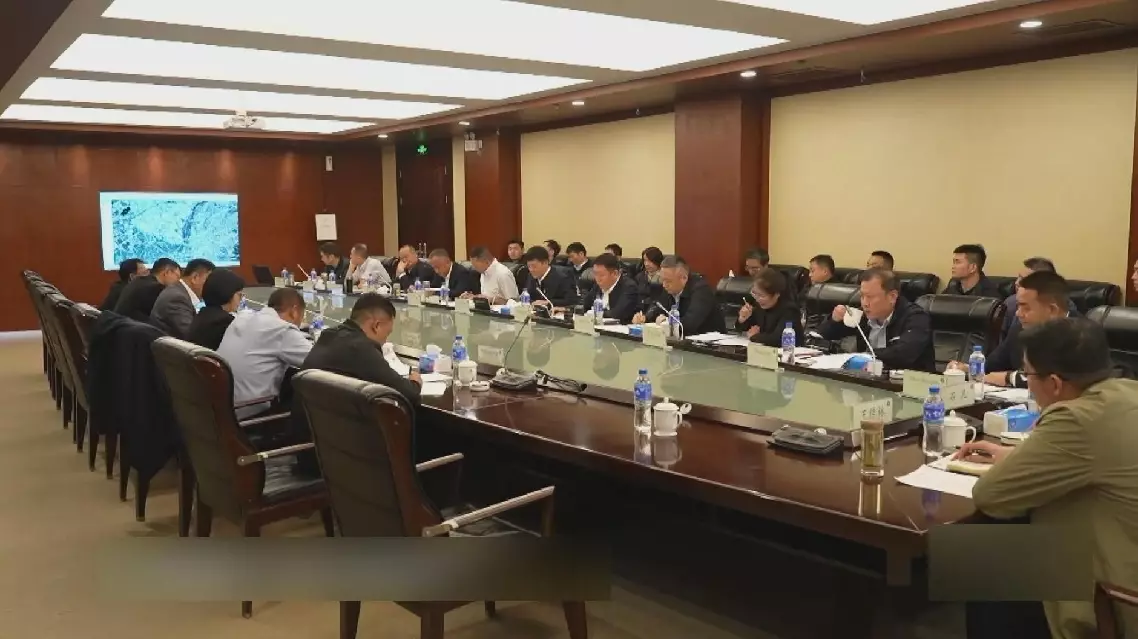
Afterwards, leveraging the law enforcement cooperation mechanism established along the China-Myanmar border, senior police officials from both sides were engaged in in-depth consultations regarding the crackdown on new types of telecom fraud dens that were scattered and concealed across the Muse area.
"We on the Chinese side have firmly focused on the fact that combating criminal activity is a shared responsibility of both the Chinese and Myanmar police forces, and we have engaged with them on this premise," said Zhao Nanfang, then head of the criminal investigation corps of the Yunnan Provincial Public Security Department.
At the talks, with the help of the fraud den distribution map in Muse jointly drawn up by Chinese and Myanmar police, China's representative Geng Bang gave a detailed briefing backed by data cross-verified through case analysis, with each set of figures corresponding precisely to a specific telecom fraud compound.
"Who ran the area, who were the financiers and key members, who provided protection, roughly how many people were inside -- we've got all these straight," said Geng, then deputy head of the criminal investigation corps of the Yunnan Provincial Public Security Department.
"Myanmar's military carried out disguised reconnaissance and verified the sites on the ground. Except for a very few locations where people had moved away over time, they later confirmed the rest -- these were indeed compounds or parks running telecom frauds," said Zhang Jun, then head of the telecom and online fraud investigation division of the Criminal Investigation Bureau under the Ministry of Public Security.
With professional, solid and detailed evidence, as well as candor toward partners and resolve against crimes, Chinese police won the unanimous recognition of the Myanmar officials present, laying a firm foundation for subsequent talks round after round.
"We aimed to achieve a 'dynamic zero-case' goal regarding the telecom fraud activities affecting our border areas. We wanted to demonstrate our determination and stance, showcase our concrete measures, and put forward a strategy for joint China-Myanmar crackdowns," said Zhao.
In late March and early April 2024, after careful planning, Chinese and Myanmar police carried out their first joint operation in Muse, arresting 807 suspects.
This also marks the completion of the comprehensive crackdown on telecom fraud dens across four areas of northern Myanmar of the Shan State Special Region-4, Wa State, Kokang, and Muse.
Chinese, Myanmar police crack down on telecom fraud in Muse through close cooperation