Skip to Content Facebook Feature Image

UCLA Marks 10 Years of the Pritzker Emerging Environmental Genius Award and Names Zuzana Buřivalová as 2026 Winner of $100,000 Prize

Business

UCLA Marks 10 Years of the Pritzker Emerging Environmental Genius Award and Names Zuzana Buřivalová as 2026 Winner of $100,000 Prize
Business

Business

UCLA Marks 10 Years of the Pritzker Emerging Environmental Genius Award and Names Zuzana Buřivalová as 2026 Winner of $100,000 Prize

2026-10-10 00:12 Last Updated At:00:21

LOS ANGELES--(BUSINESS WIRE)--Oct 9, 2026--

The need for bold, innovative thinkers capable of addressing the world’s most pressing environmental challenges has never been greater. For the past decade, through the Pritzker Emerging Environmental Genius Award, the UCLA Institute of the Environment and Sustainability (IoES) has identified those changemakers early in their careers, giving them recognition, resources and a platform to advance their work. Tonight, UCLA celebrated the award’s 10th anniversary, recognizing Zuzana Buřivalová with a $100,000 prize as its 2026 recipient. Established by the Anthony Pritzker Family Foundation and administered by UCLA IoES to recognize exceptional environmental innovators under 40, Zuzana Buřivalová joins a distinguished community of prior awardees and emerging leaders working across conservation, climate science, environmental justice, clean energy, Indigenous stewardship and sustainable technology.

This press release features multimedia. View the full release here: https://www.businesswire.com/news/home/20261009451991/en/

Buřivalová's award honors her tropical forest conservation work giving biodiversity a voice through bioacoustic tracking and reporting.

“My sincere thanks to the UCLA Institute of the Environment and Sustainability and the Anthony Pritzker Family Foundation for this honor," said winner Zuzana Buřivalová. "This award will enable me to bring our soundscapes from the Sound Forest Lab to new ears, pushing the conservational impact of our work to new heights."

“We are so impressed by all three of the finalists that the award process has highlighted, and we certainly are proud of Zuzana Buřivalová and her accomplishments,” said Tony Pritzker. “It is incredibly rewarding to look back on the cumulative impact of awarding this prize for the past 10 years and see the ongoing accomplishments that past recipients have gone on to make around the world. Each year, choosing one winner becomes more difficult, and this year is no exception.”

“Congratulations to Zuzana Buřivalová, and to all three of this year’s finalists whose work reflects the kind of bold thinking and meaningful action the planet needs right now,” said Alex Hall, Director, Institute of the Environment and Sustainability. “For 10 years, the Pritzker Award has allowed UCLA to recognize emerging environmental leaders from around the world and give their work a broader platform. We are incredibly grateful to the Anthony Pritzker Family Foundation for supporting this process and the remarkable changemakers who promise to advance the ideas and solutions that will shape our environmental future.”

The 2026 finalists - Zuzana Buřivalová, Doris Njagi and Suzanne Pierre, Ph.D. - represent the ambitious, interdisciplinary environmental leadership the Pritzker Award was created to recognize. Working across tropical forest conservation, ecological restoration, agricultural systems, microbial ecology and climate science, each is developing new approaches to some of the most complex challenges facing ecosystems and communities around the world.

Buřivalová, an associate professor at the University of Wisconsin-Madison and principal investigator of the Sound Forest Lab, has pioneered the use of bioacoustics to understand the health and biodiversity of tropical forests. By listening to the sounds produced by forest ecosystems, her research informs conservation in places and at scales where traditional approaches can be difficult to apply.

Njagi is the founder of Forest Restored, an organization working to restore native forests across East Africa while creating economic opportunities for smallholder farmers. Njagi developed a model that enables farmers to grow native trees while contributing to the recovery of natural habitats, demonstrating how restoration can support ecosystems and the communities that depend on them.

Pierre, a microbial ecologist plus founder and lead investigator of the Critical Ecology Lab, researches the intersection of global ecological change, social justice, and liberation of oppressed peoples. She brings together ecological research and community-centered approaches to examining connections between ecological change, social systems and environmental justice.

The award’s 10th anniversary offers a decade-long look at the impact of identifying environmental leaders at an early stage of their careers. Since its founding in 2016, the Pritzker Emerging Environmental Genius Award has recognized nine winners and 21 finalists from 133 nominees around the world, spanning fields including conservation, climate action, Indigenous stewardship, clean energy, environmental justice, sustainable materials and technology. Among the award’s alumni are environmental leaders who have gone on to receive broader international recognition including TIME 100 Honors and Earthshot Prize recognition.

The global reach of the award reflects the mission of UCLA and IoES. UCLA, recently ranked the number 1 public university in the nation by U.S. News & World Report, brings together researchers, students and experts across disciplines to address challenges that extend far beyond the university and Los Angeles. IoES is a cross-campus research institute dedicated to educating the next generation of environmental leaders and moving science into action, with work that spans local and global environmental challenges.

That mission is reflected in the way UCLA approaches the Pritzker Award. Each year, UCLA IoES draws on a network of distinguished nominators and experts to look across the planet for individuals whose work is already creating meaningful environmental change and whose ideas have the potential to shape what comes next. The 2026 nomination and review process brought together environmental scientists, conservationists, journalists, researchers, academics and other leaders from across the field, helping UCLA identify innovators working in diverse communities and ecosystems around the world.

Ten years after its founding, the Pritzker Emerging Environmental Genius Award has built a community of changemakers tackling the planet’s most consequential challenges from different disciplines, geographies and perspectives. Their work demonstrates that even amid unprecedented environmental pressures, innovative solutions are being developed around the world by people willing to challenge assumptions and create change. The award’s mission remains as vital as ever: to find these leaders early, support their work and give their ideas the reach they need to make an even greater impact.

For more information on the award, visit https://www.ioes.ucla.edu/pritzker-genius/

About the Pritzker Emerging Environmental Genius Award

The Pritzker Emerging Environmental Genius Award provides $100,000 to a scientist, entrepreneur, engineer, activist or artist under 40 who is poised to make a game-changing environmental difference. Since 2017, the award has recognized 9 winners, 21 finalists and 133 nominees from around the world — including TIME 100 honorees, Earthshot Prize winners and leaders whose work spans six continents.

About UCLA Institute of the Environment and Sustainability (IoES)

UCLA IoES is an interdisciplinary research center that supports sustainability and addresses global environmental challenges, translating science into real-world action at the front lines of environmental progress.
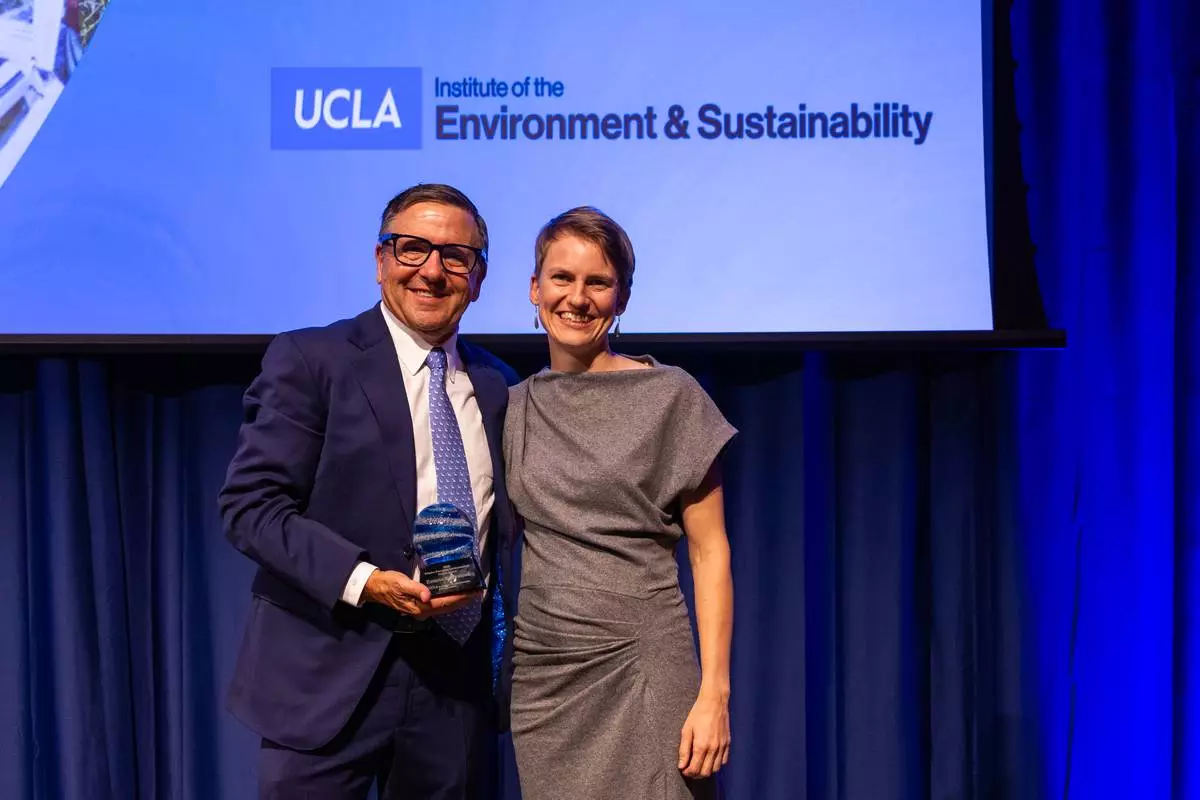
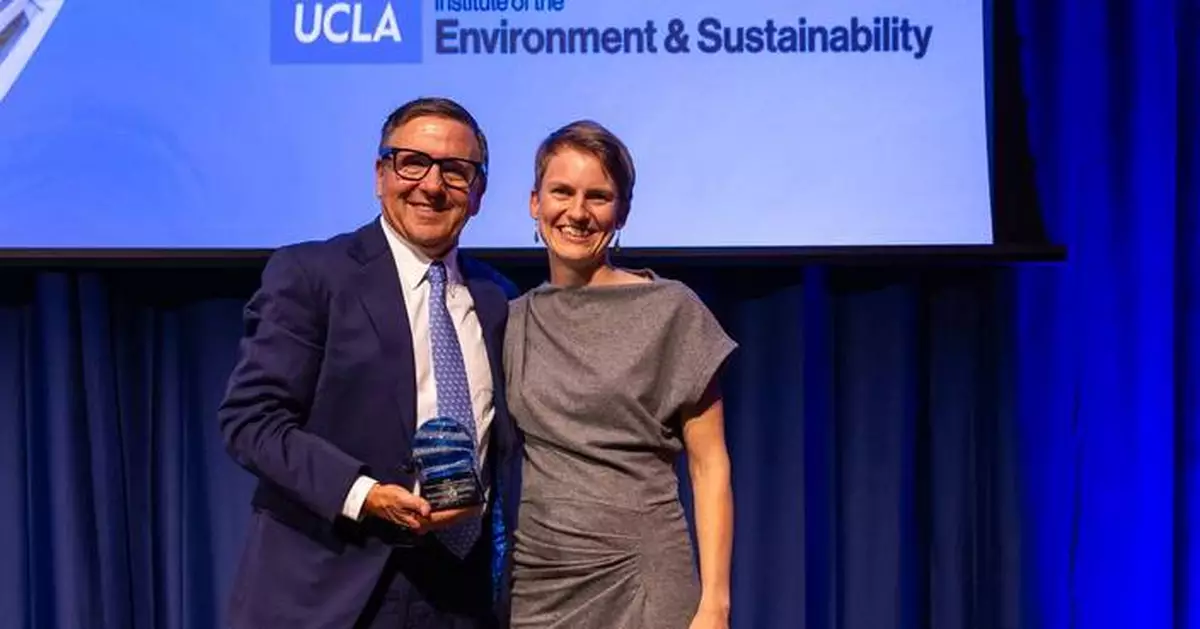
Tony Pritzker and Zuzana Buřivalová, Winner of the Pritzker Emerging Environmental Genius Award from UCLA IoES and the Anthony Pritzker Family Foundation. Credit: Alexandra Foley

Tony Pritzker and Zuzana Buřivalová, Winner of the Pritzker Emerging Environmental Genius Award from UCLA IoES and the Anthony Pritzker Family Foundation. Credit: Alexandra Foley
SACRAMENTO, Calif. (AP) — It is not just tech moguls and venture capitalists fighting a California proposal to tax the net worth of billionaires, even though they are putting up the majority of the money in one of the most expensive ballot fights in state history.

Lining up alongside them is a coalition of prominent Democratic voices and party allies like Gov. Gavin Newsom, Planned Parenthood and the California Teachers Association, as well as most Republicans. They say it will drive wealthy people — and their tax money — out of California, creating bigger budget problems in the years ahead.

They have raised more than $300 million in opposition to the measure, with nearly a third of that coming solely from Google co-founder Sergey Brin. That is roughly 10 times the amount raised by the “yes” side, which includes some labor unions, California Rep. Ro Khanna and Vermont Sen. Bernie Sanders. With much less money to spend, the “yes” campaign is relying heavily on Sanders and the attention he commands among progressives to make their case ahead of the Nov. 3 deadline to vote.

“Are we destined to live in an oligarchic society begging for crumbs while our economic and political lives are controlled by a handful of the wealthiest people on Earth?” Sanders declared at one of three recent California rallies. “Brothers and sisters, that is the question on the ballot.”

The measure, known as Proposition 40, is not a long-term wealth tax like the one Sanders and some other progressives have long championed. It would impose a one-time, 5% tax on the wealth of Californians whose net worth exceeds $1 billion, with most of the revenue dedicated to replacing federal funding cuts to healthcare. It would be the nation’s first tax on the wealth of billionaires — targeting the main way the ultra-wealthy make their money, through their investments, rather than simply raising taxes on the paycheck they receive from work.

Voters were largely split on the measure in a September poll by the Public Policy Institute of California. About half, 52%, of likely voters said they would vote yes on the measure, while 46% said they would vote no.

With mail ballots being sent to voters, opponents are aggressively ramping up their campaign, spending or booking roughly $96 million of airtime and digital messaging, compared with just $209,000 by supporters, according to data compiled by the ad-tracker AdImpact.

A few hundred billionaires live in California, according to the nonpartisan Legislative Analyst’s Office.

Opponents are concerned the proposal is already driving wealthy people away. That could deal a blow to California’s budget because the state relies on its top 1% of earners for nearly half its personal income tax revenue.

“We’re not opposed to the concept of a wealth tax,” said Jodi Hicks, CEO of Planned Parenthood’s California chapter. “We just believe this proposal is seriously flawed and could do more damage than good.”

Some Silicon Valley tech moguls began cutting ties with the state in anticipation of the tax, including Brin and his fellow Google co-founder, Larry Page. The tax would apply to billionaires living in the state as of Jan. 1, 2026.

Newsom has walked a fine line on the issue as he prepares to leave office and considers a bid for president in 2028. He has largely opposed tax increases during his eight years as governor. But he has called for a national tax on billionaires, arguing a single-state proposal will not be effective and could hurt California's bottom line.

His opposition to the California proposal wasn't enough to dissuade the state Democratic Party's executive board from endorsing the measure earlier this year.

Billionaires including Brin, venture capitalist John Doerr and former Google CEO Eric Schmidt have given millions to a political committee called Building a Better California. The committee is fighting the tax and backing other ballot measures that would nullify it, including a proposal to ban new taxes on financial assets and other personal property, excluding real estate.

In one ad funded in part by Building a Better California, doctors wearing white coats warn it will cost California revenue in the long run and force the state to cut funding to hospitals and clinics.

Under the measure, 90% of the money would go toward funding healthcare, and the rest would go toward education and food assistance programs.

Debra Schade, president of the California School Boards Association, said there is no guarantee public schools will substantially benefit from the tax.

“The devil is in the details,” she said.

Cristobal Young, a sociology professor at Cornell University, said previous California tax increases on millionaires didn't lead to a mass exodus of wealthy people.

“These really high-income folks — they’re already doing great, and they don’t need to move somewhere else,” he said.

But the latest proposal is poorly designed, he said. The state, and the country, should instead pass tax code reforms to prevent wealthy people from shielding their financial assets from taxation, he said.

The SEIU United Healthcare Workers West, the union behind the ballot measure, says it is necessary to replace an estimated $100 billion that will be lost in federal healthcare funding over five years. The union forged ahead earlier this year despite pleas from fellow Democrats to drop the measure.

The campaign has raised $32.4 million, and another group backing the billionaire tax, Tax the Ultra-Rich Now, has received about $369,000.

One ad the campaign plans to release digitally and on cable next week warns that children make about 1.5 million emergency room visits a year in California, and the federal funding cuts could threaten the hospitals that serve them.

They have also released ads urging voters to “join Bernie Sanders, tax the billionaires, stop California’s healthcare collapse” and showing a Planned Parenthood employee object to Hicks' opposition to the measure.

The billionaire tax fight grew more contentious last month after the lead proponent of the measure, SEIU UHW President Dave Regan, was accused of harassing female colleagues and threatening other union leaders to urge them to back the measure.

Regan called the allegations a distraction.

“For the first time in the history of the country, the billionaires are going to have to be accountable to regular people who only wish they could have one tiny speck of what the most fortunate people on planet Earth have,” he said at a news conference.

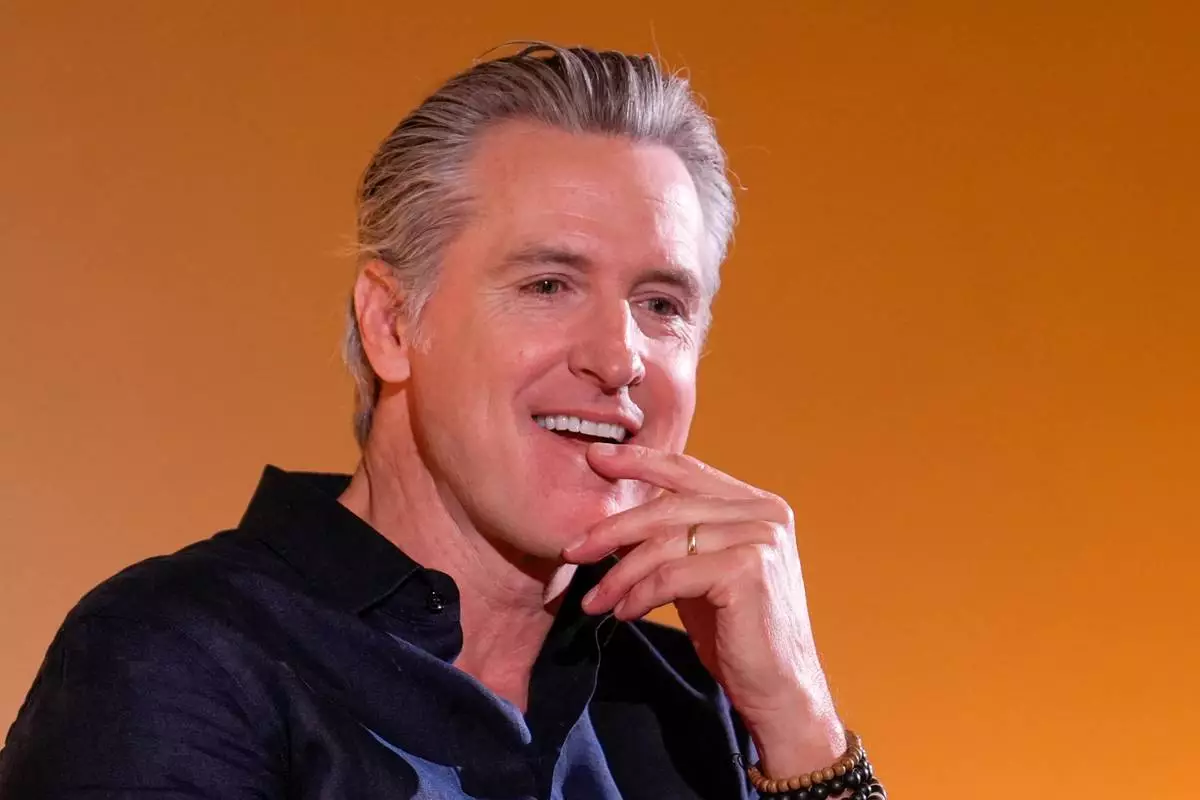
California Gov. Gavin Newsom pauses while discussing environmental issues in San Francisco, Tuesday, Sept. 29, 2026. (AP Photo/Rich Pedroncelli)

California Gov. Gavin Newsom pauses while discussing environmental issues in San Francisco, Tuesday, Sept. 29, 2026. (AP Photo/Rich Pedroncelli)

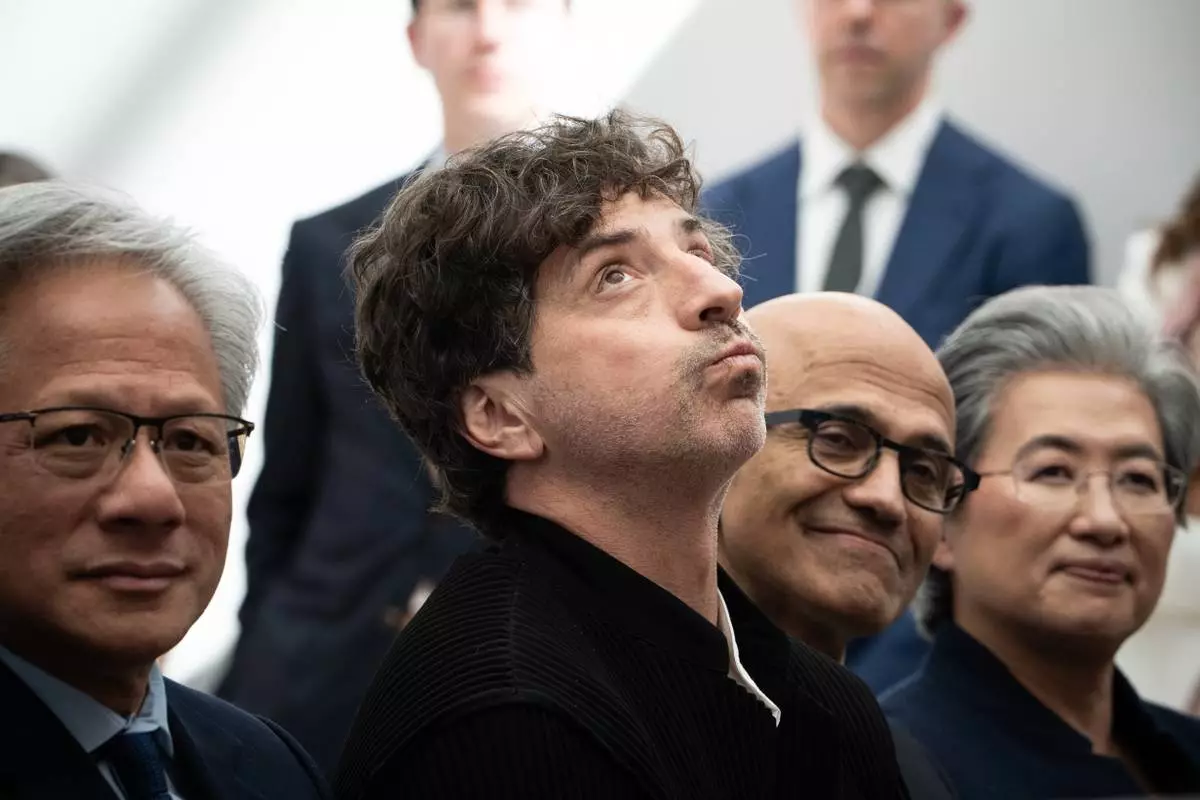
Nvidia CEO Jensen Huang, from left, Google co-Founder Sergey Brin, Microsoft CEO Satya Nadella and Lisa Su, CEO of Advanced Micro Devices, listen to Donald Trump speak at the U.S. Institute of Peace, Thursday, Oct. 8, 2026, in Washington. (AP Photo/Julia Demaree Nikhinson)

Nvidia CEO Jensen Huang, from left, Google co-Founder Sergey Brin, Microsoft CEO Satya Nadella and Lisa Su, CEO of Advanced Micro Devices, listen to Donald Trump speak at the U.S. Institute of Peace, Thursday, Oct. 8, 2026, in Washington. (AP Photo/Julia Demaree Nikhinson)

Rapper Common performs during a campaign rally in support of California Proposition 40, known as the billionaire tax, in Los Angeles, Monday, Oct. 5, 2026. (AP Photo/Jae C. Hong)

Rapper Common performs during a campaign rally in support of California Proposition 40, known as the billionaire tax, in Los Angeles, Monday, Oct. 5, 2026. (AP Photo/Jae C. Hong)

Sen. Bernie Sanders, I-Vt., speaks during a campaign rally in support of California Proposition 40, known as the billionaire tax, in Los Angeles, Monday, Oct. 5, 2026. (AP Photo/Jae C. Hong)

Sen. Bernie Sanders, I-Vt., speaks during a campaign rally in support of California Proposition 40, known as the billionaire tax, in Los Angeles, Monday, Oct. 5, 2026. (AP Photo/Jae C. Hong)

Recommended Articles