WASHINGTON (AP) — President Donald Trump and Iran's leadership appear to agree on one thing about their seven-month-old war: they each insist the U.S. election calendar isn't motivating them to find an end to it.
Persistent inflation and high gas prices fueled by the conflict have driven widespread American disapproval of the war — a sentiment casting a long shadow over the Nov. 3 election that will determine whether Trump's party keeps control of Congress. And U.S. economic sanctions and a naval blockade on Iranian oil are causing profound shocks for Tehran's economy.
Yet, Iranian officials remain insistent there won't be a deal until the U.S. lifts the blockade and delivers sanctions relief. Trump, meanwhile, is vacillating. He has dispatched more military resources to the region and threatened to resume strikes — even as he also declares that the U.S. “will not be attacking Iran at any time prior” to Nov. 3.
Speaking to fellow world leaders last month at the U.N. General Assembly, Trump insisted he “will not give credence to the election when it comes to Iran.”
Now, more than a week into a 32-day campaign blitz for Republican candidates, Trump is doubling down on that message, telling voters he's winning the war while darkly warning he's ready to "finish it off" if Iran doesn't capitulate.
“I will tell you what: Iran will be very quick one way or the other,” Trump said Friday as he campaigned in New York. “Either they give us everything, or they don’t exist any longer.”
Trump's campaign bravado comes after his stated war goals in Iran have shifted significantly over the course of the conflict.
He's moved from maximalist demands for unconditional surrender by the theocratic government to a focus on economic pressure, containing Tehran's nuclear program and reopening the Strait of Hormuz.
Iran's economy is certainly in shambles. Its navy and air force have been devastated, and key political and military leaders were killed in the first weeks of the conflict.
Yet, Iran has shown no small measure of resilience in the face of Trump's repeatedly being on the cusp of ordering big new strikes — only to back down at the last moment.
After months of grinding war, an American election season isn't fundamentally changing Iran's approach with the U.S. leader they've found to be an unreliable narrator, said Sasan Karimi, a former Iranian government official.
Iran's leadership, Karimi added, is concerned that “the U.S., especially in the Trump era, will not be compliant to any deal even if he himself signs it.”
Trump's message isn't easy for Republican candidates to embrace as they make their case to voters frustrated by elevated gas prices and food costs.
Most Americans, 69%, say the war has not been worth fighting, according to a poll published last week by the Associated Press-NORC Center for Public Affairs Research. That's up slightly from 64% in July. Only 28% approve of how Trump is handling Iran.
Some Republicans in competitive races have sought to distance themselves from Trump on the war.
In Michigan, Republican Senate candidate Mike Rogers has said the “war with Iran needs to end — and end quickly.” Rep. Ashley Hinson, who is in a competitive Senate race in Iowa, said Iowans shouldn’t have to “foot the bill” for the war. Seven House Republicans voted in favor of a war powers resolution aimed at curtailing Trump's war of choice.
Yet, trying to stand apart from Trump on Iran is almost impossible for Republicans so close to Election Day, says Christopher Borick, director of the Lehigh University Opinion Observatory in Pennsylvania.
“It's an enormous weight on Republicans,” Borick said. “Shifting the narrative to draw separation from Trump is going to be a Herculean task.”
Negotiations had appeared at a standstill after Trump late last month publicly rejectedIran’s proposal to quickly reopen the Strait of Hormuz if the U.S. met certain conditions.
Iranians, however, say they have since received a U.S. counterproposal and Foreign Minister Abbas Araghchi on Thursday said he expected Tehran would offer a formal reply within days. Trump on Thursday described the indirect negotiations as “productive.”
Iranian President Masoud Pezeshkian has said Tehran wants a return to the framework of the short-lived June deal. That agreement held out the promise of financial relief for Iran, which never materialized.
But the Iranian president also expressed skepticism. “We are trying to move the process forward. We are having conversations; every time we have held talks with them, they attacked us again," Pezeshkian said Thursday as he met with Russian President Vladimir Putin in Turkmenistan.
As part of any deal, Iranian officials say the U.S. must lift its blockade before Iran agrees to cease attacks on international oil tankers using the Strait of Hormuz.
“We are telling America, you have to act first. Enough talking, enough negotiations,” Mohsen Rezaei, a former Revolutionary Guard commander and secretary of Iran’s top security body, recently told Iranian state television, boasting that Iran had the upper hand in the conflict.
Some Iranian officials seem to believe that a return to full-scale war may be inevitable.
Mahdi Mohammadi, a Tehran-based analyst and an adviser to Parliament Speaker Mohammad Bagher Qalibaf, said on Telegram that while indirect talks with the U.S. have been “serious," he predicted that “the war will start" again soon.
At his rallies, Trump has pointed to a recent surge in Gulf oil making it through the Strait of Hormuz as he's made his argument that Iran's leadership will soon have to capitulate.
Indeed, Iran has lost its near-chokehold over oil flows through the waterway as U.S. Central Command shepherds oil tankers through the strait at night with their location systems turned off.
But in recent days, Iran has ramped up attacks on tankers passing through the strait. And overall, ship traffic remains well below prewar levels.
Tanker operators willing to risk running the gauntlet under Central Command’s protection are in some cases charging rates of $1 million a day or more, shipping analysts say.
The situation has become further complicated as Saudi Arabia and Yemen’s government have launched a military campaign aimed at driving Iran-backed Houthi rebels from the Bab el-Mandeb strait, another critical Middle East trade route for oil and other goods.
The Houthis, in turn, are targeting Saudi airports and key infrastructure in the kingdom with drone and missile strikes.
Trump insists that the U.S. naval blockade to prevent Iranian oil from getting to market has driven Tehran to the brink.
Iran’s oil minister Mohsen Paknejad recently resigned, Iranian state television announced this week. And the Iranian currency, the rial, continues to crater.
Iranian leaders appear convinced that they can still absorb military pressure, and impose further costs on the United States and the global economy, said Karimi, the former Iranian government official.
Hamzeh Safavi, a political scientist at the University of Tehran, said Iranian officials are giving little weight to the midterms as they calculate their next move.
“Iran knows that whether it’s Democrats or Republicans, there is a shared view about the fundamental confrontation with Iran," Safavi said. "They just might not agree regarding the method of confronting Iran. For that reason, the results won’t really create a foundational change in relations with Iran.”
AP writer Madhani reported from Jerusalem.
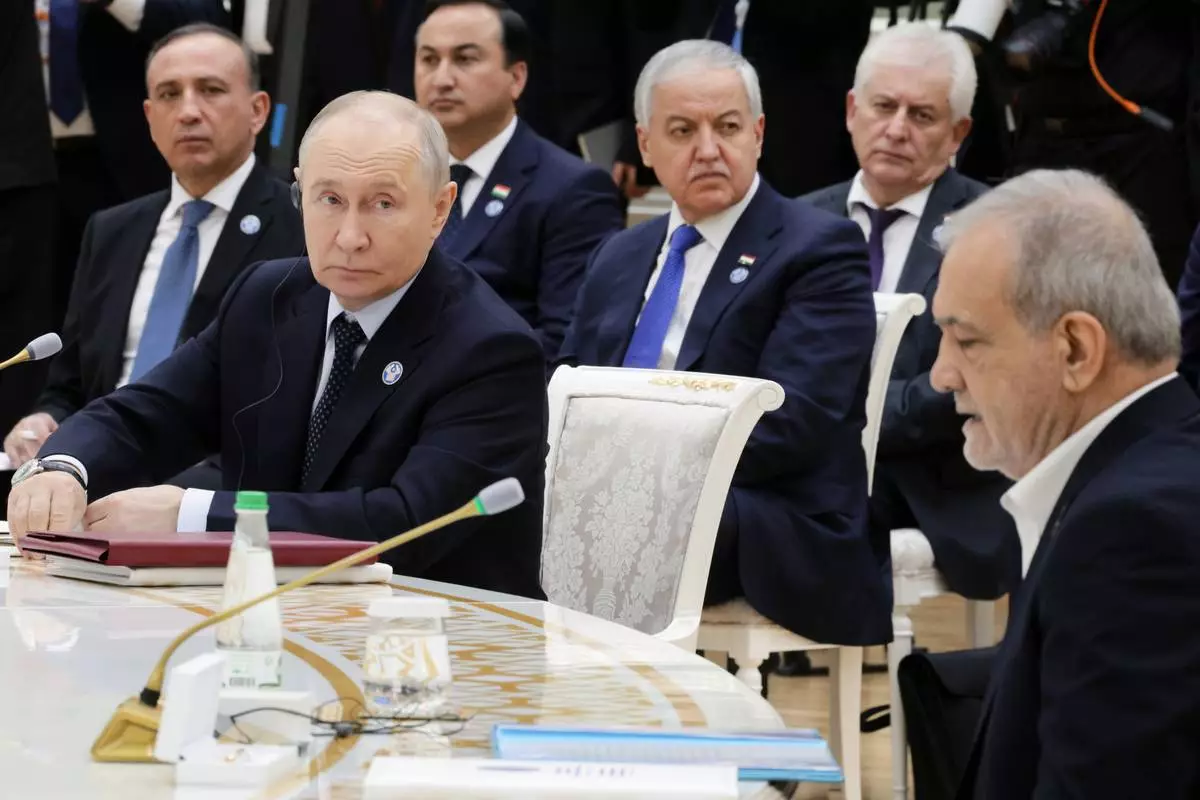
Russian President Vladimir Putin, second left, looks at Iranian President Masoud Pezeshkian, right, at the Commonwealth of Independent States (CIS) summit in Türkmenbaşy, Turkmenistan, Friday, Oct. 9, 2026. (Gavriil Grigorov, Sputnik, Kremlin Pool Photo via AP)
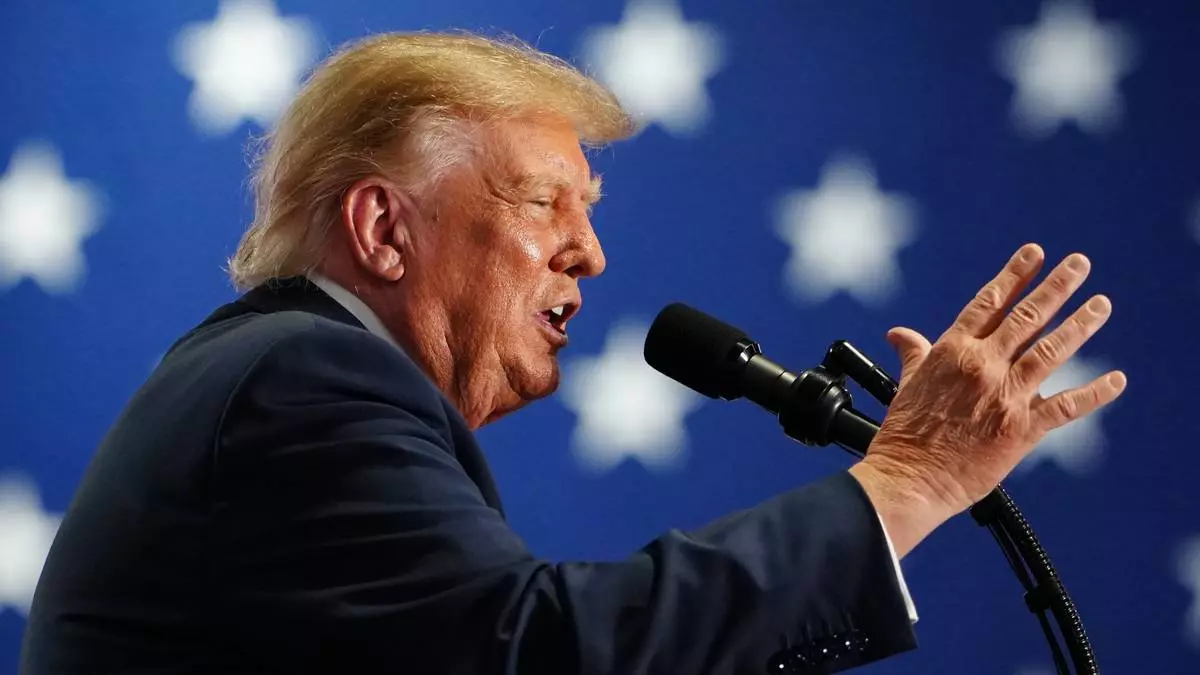
President Donald Trump speaks at a campaign rally at the Oncenter, Friday, Oct. 9, 2026, in Syracuse, N.Y. (AP Photo/Julia Demaree Nikhinson)
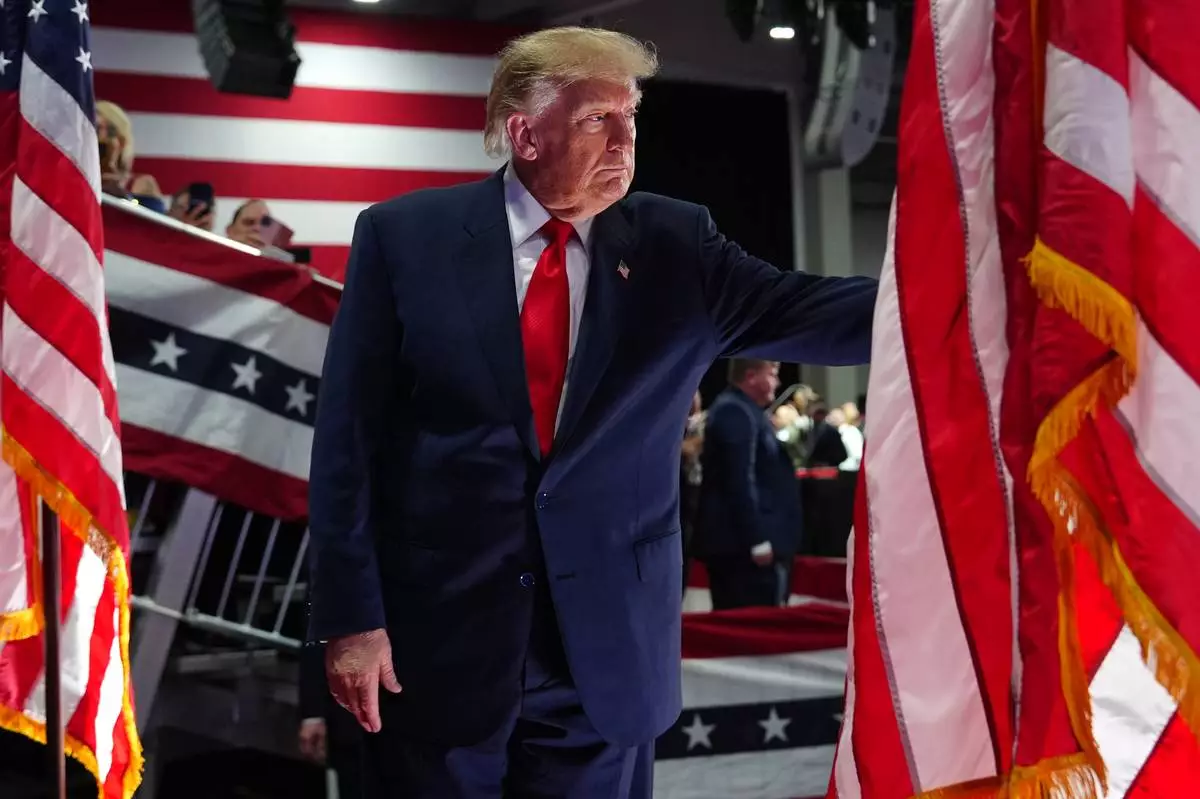
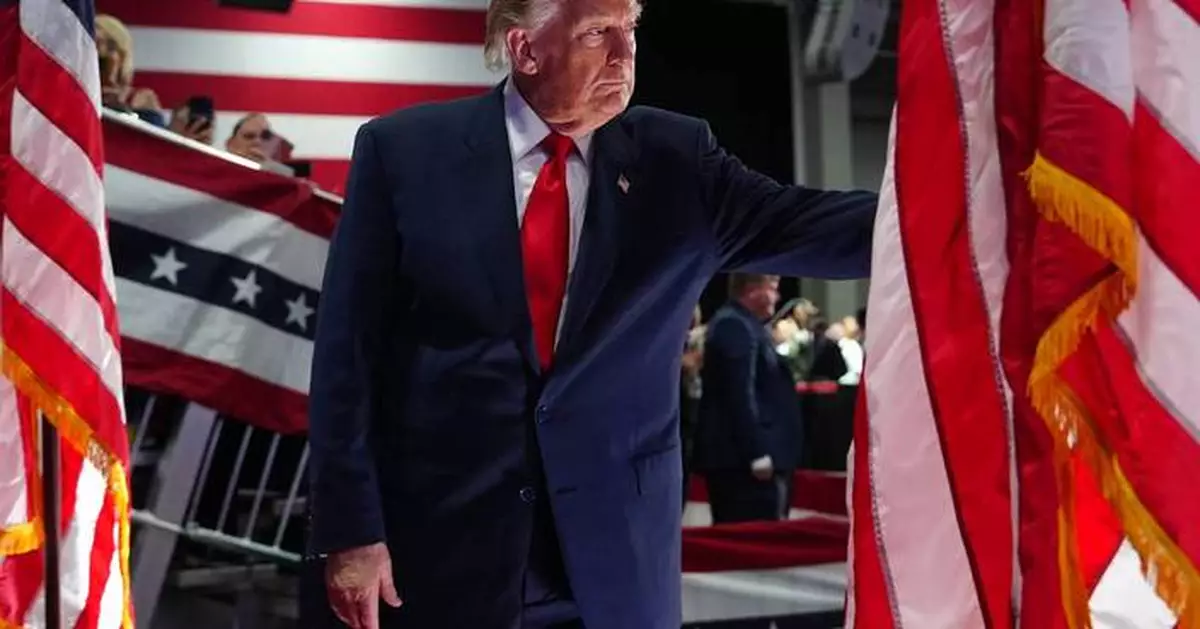
President Donald Trump departs a campaign rally at the Oncenter, Friday, Oct. 9, 2026, in Syracuse, N.Y. (AP Photo/Julia Demaree Nikhinson)
GULF BREEZE, Fla. (AP) — Hurricane Isaias crashed into the U.S. Gulf Coast on Friday as a dangerous Category 2 storm, hammering communities in Alabama and the Florida Panhandle with damaging winds, heavy rain, flooding and life-threatening storm surges.
The first hurricane of the Atlantic season made landfall near Destin, Florida, the Miami-based National Hurricane Center said. It had maximum sustained winds of 105 mph (169 kph). The storm weakened to just below major hurricane status before it came ashore.
“The storm is here. Buckle down at this point. Don’t be getting out on the roads," Florida Gov. Ron DeSantis said at a news conference, adding that flash flooding would be a hazard "throughout the region.”
Hurricane-force winds lashed the Gulf shoreline in the low-lying coastal area known for powdery white sand beaches that are dotted with vacation homes, waterfront bars and seafood shacks. Forecasters warned the conditions could also stir up tornadoes across the Florida Panhandle and into southern Georgia.
“We’re watching it very closely, the hurricane,” President Donald Trump told reporters at the White House late Friday night as he returned from a rally in upstate New York, adding that it was “under control.”
Roads in Destin were flooded, while in nearby Pensacola, police warned residents to stay off the streets because of debris across roadways. While the extent of the damage was not immediately known, many area residents posted pictures online of downed trees and power lines, and one video posted to social media showed a roof being ripped off of an inn in Pensacola. Some panhandle counties temporarily suspended emergency response Friday night due to dangerous conditions.
Parts of southern Alabama were also flooded, with officials in Mobile reporting downed trees and power lines.
More than 594,000 customers in Florida and Alabama were without power Friday evening, according to poweroutage.com.
One of the biggest concerns is a storm surge that could be as high as 6 to 9 feet (1.8 to 2.7 meters), according to the hurricane center. Places most at risk include Florida’s Pensacola Beach and the Gulf Islands National Seashore.
Anne Petzold, who lives with her husband in the Florida beach community of Gulf Breeze, said everyone in their neighborhood planned to ride out the storm. The couple installed hurricane shutters and picked up anything in their yard that could turn into a projectile.
“Everybody does what they can do, everybody asks if they need help — they ask for help, they offer help. All good,” she said. “It’s just another adventure.”
Dangerous conditions are expected throughout the western panhandle, southern Alabama and southern Mississippi, the National Hurricane Center said. Several counties announced mandatory evacuations while Mobile, Alabama, imposed a curfew through Saturday morning.
In a sign of how serious the warnings are, dozens of Waffle Houses in the Florida Panhandle were closed, according to the company's website. The beloved Southern breakfast chain is known for staying open through severe weather and often is a measuring stick of a storm’s severity.
Kelsei Frazier, a Florida native living in Pace who is no stranger to hurricanes, knows all about the Waffle House Index.
“We joke because if Waffle House is still open, then you know it’s not a bad hurricane, but all the Waffle Houses that I know of within at least a normal range from us are closed,” said Frazier.
DeSantis warned residents to expect power outages, gasoline shortages and closures of bridges and highways.
The state's National Guard deployed about 5,000 soldiers and airmen to help with the response, and search and rescue teams were ready to respond, while some prisons evacuated inmates.
Isaias was already slowing down after it reached land, and it was expected to weaken further and be downgraded to a tropical storm by Saturday afternoon, the center said.
Still, heavy rain is forecast as it moves inland, with 4 to 8 inches (10 to 20 centimeters) or even more expected through the weekend from southern Alabama to southwestern Georgia.
Isaias, which is the first hurricane to hit the eastern U.S. since Milton tore up the Gulf Coast of Florida in 2024, also is expected to bring heavy rain and potential flooding to much of the Southeast over the weekend, and then to parts of the Midwest and Northeast into Monday.
The storm grounded most Friday flights at several panhandle airports, including all flights into and out of Destin-Fort Walton Beach Airport. President Donald Trump, meanwhile, scrapped his plans to attend Saturday’s football game between the University of Georgia and the University of Alabama in Tuscaloosa. He said he didn’t want to disrupt the emergency response.
Isaias was expected to miss the oil industry’s biggest hubs along the Gulf Coast, but fuel prices could rise if power outages shut down refineries for processing crude, industry experts said.
On Dauphin Island, a barrier island off the Alabama coast, Mayor Jeff Collier said he didn't expect major damage, “but at the same time, these things are very fickle and a little jog here or there, or some last-minute increase in strength — we just have to be prepared for the worst.”
Meanwhile in the Pacific, Hurricane Simon became a Category 2 storm on Friday and was expected to strengthen further before making landfall in Mexico this weekend.
Tropical Storm Rachel was also expected to bring heavy winds and rain to northern Mexico and Southern California over the weekend.
Megnien reported from Panama City, Florida, and Seewer reported from Toledo, Ohio. These Associated Press journalists also contributed: Seth Borenstein and Collin Binkley in Washington; Rio Yamat in Las Vegas; Gerald Herbert in Pensacola, Florida; Dave Collins in Hartford, Connecticut; Sarah Raza in Sioux Falls, South Dakota; Kim Chandler in Montgomery, Alabama; Laura Turbay in Little Rock, Arkansas; and Hallie Golden in Seattle.
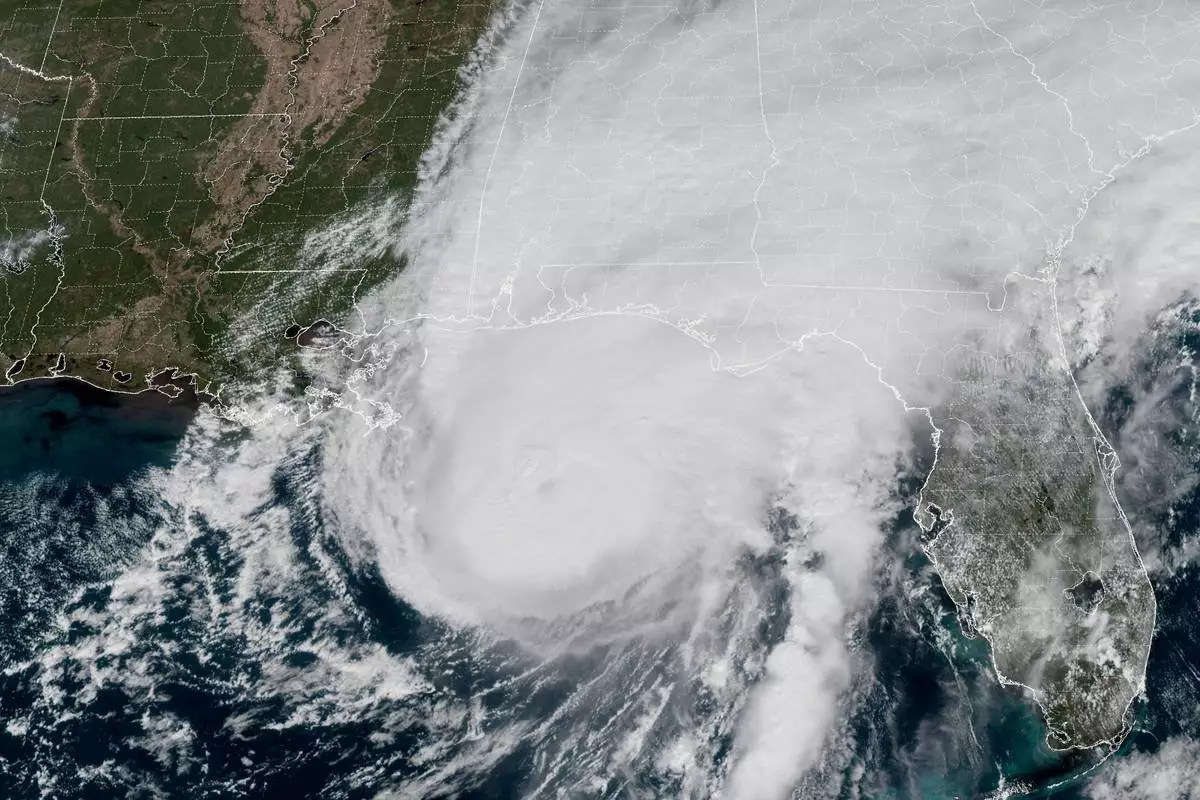
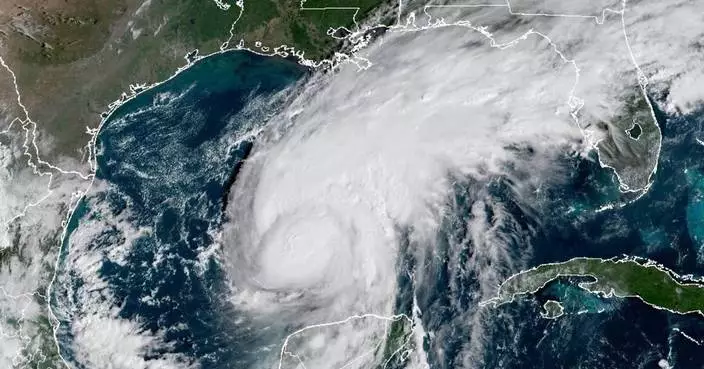
This GOES-19 GeoColor satellite image provided by the National Oceanic and Atmospheric Administration (NOAA) and taken at 1:06 p.m. EDT, Friday, Oct. 9 2026, shows Hurricane Isaias approaching the Gulf Coast of Alabama and Florida . (NOAA via AP)
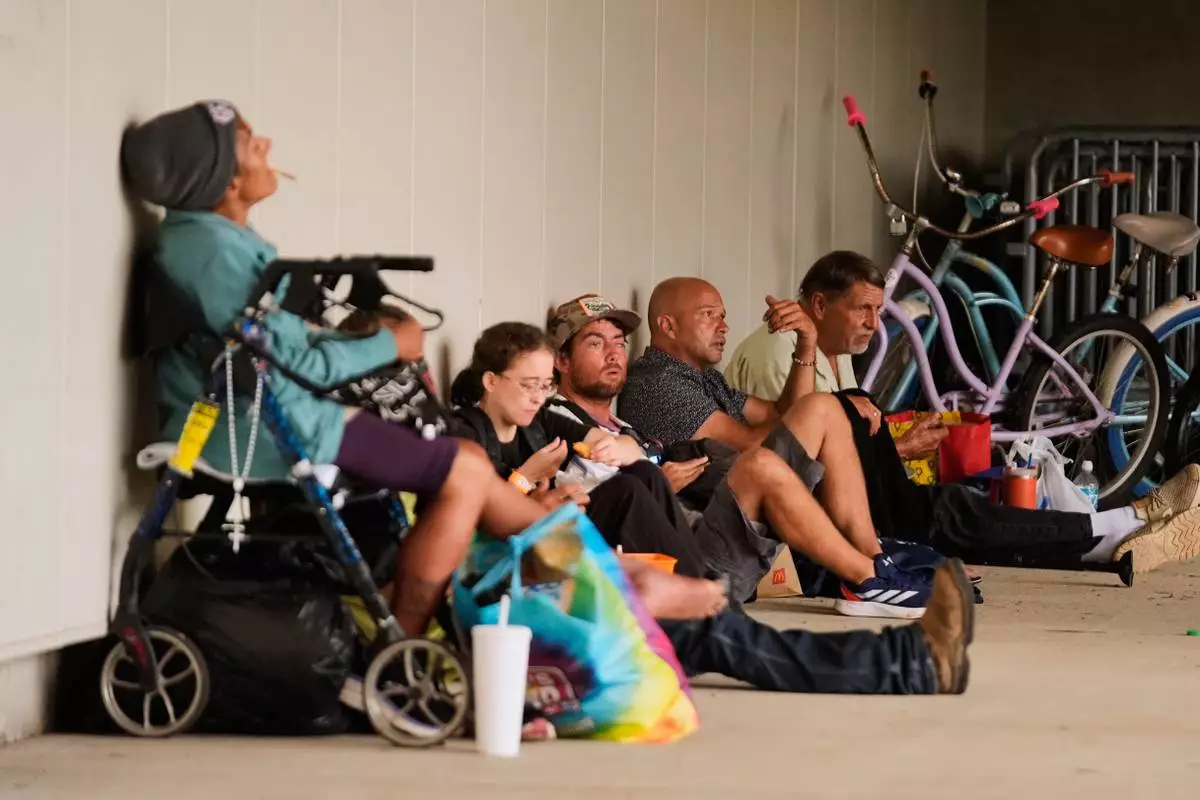
People sit outside an evacuation shelter as Hurricane Isaias approaches Pensacola, Fla., Friday, Oct. 9, 2026. (AP Photo/Gerald Herbert)
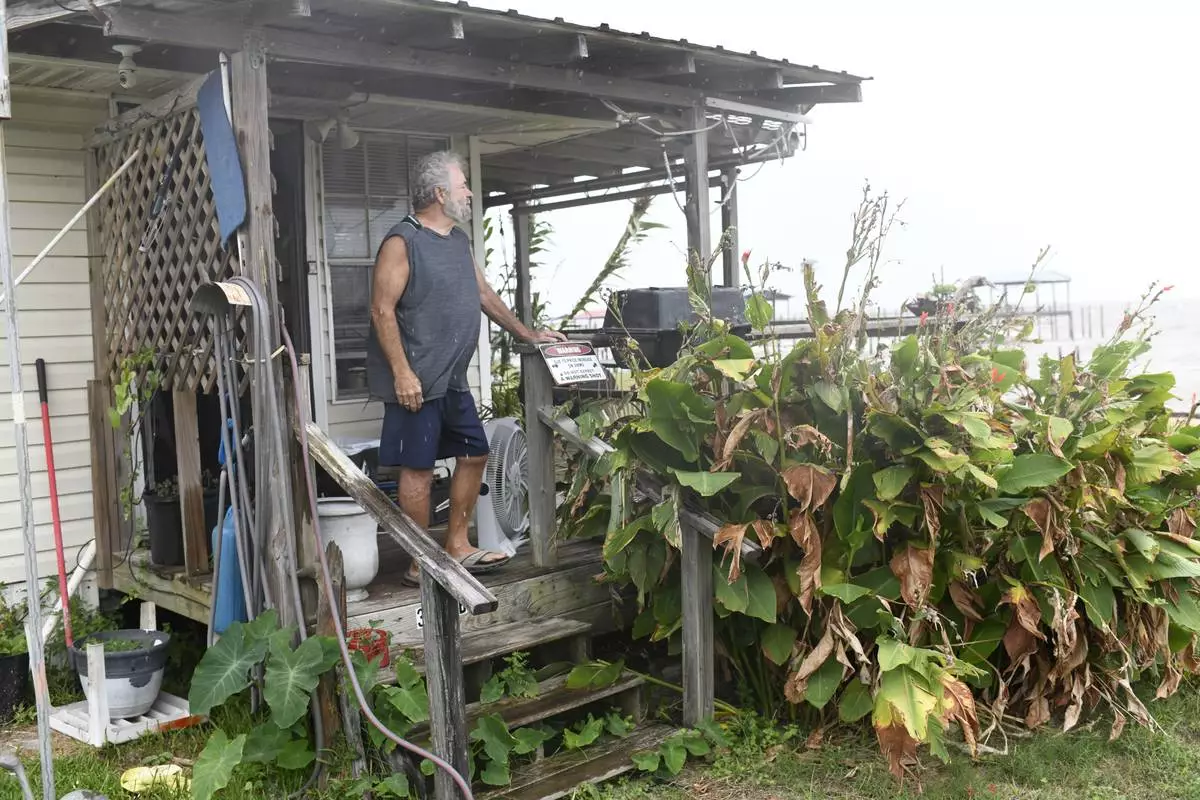
Jim McKenzie looks out over an empty beach as the effects of Isaias keep beachgoers away on Friday, Oct. 9, 2026, on Mon Louis Island, Ala.(AP Photo/Octavio Jones)
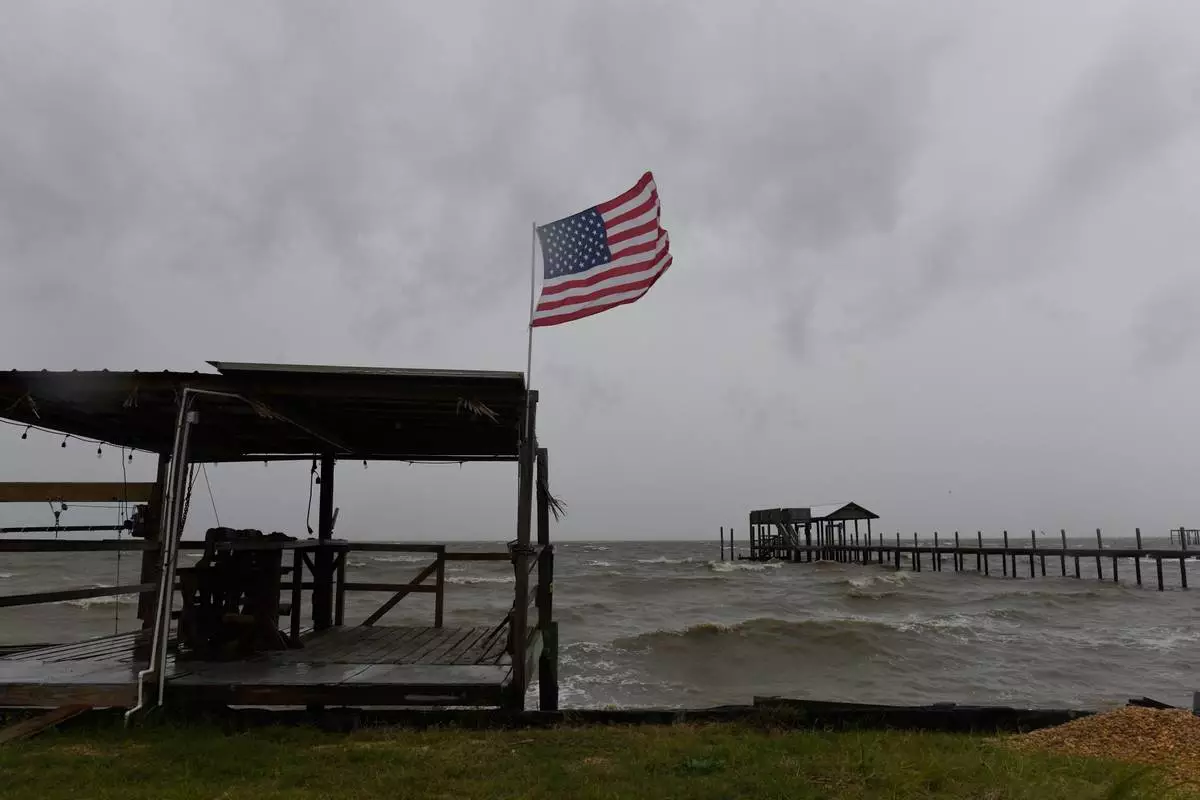
An American flag flaps in the wind generated by the effects of Isaias on an empty beach on Friday, Oct. 9, loom overhead on Friday, Oct. 9, 2026, in Mon Louis Island, Ala. (AP Photo/Octavio Jones)
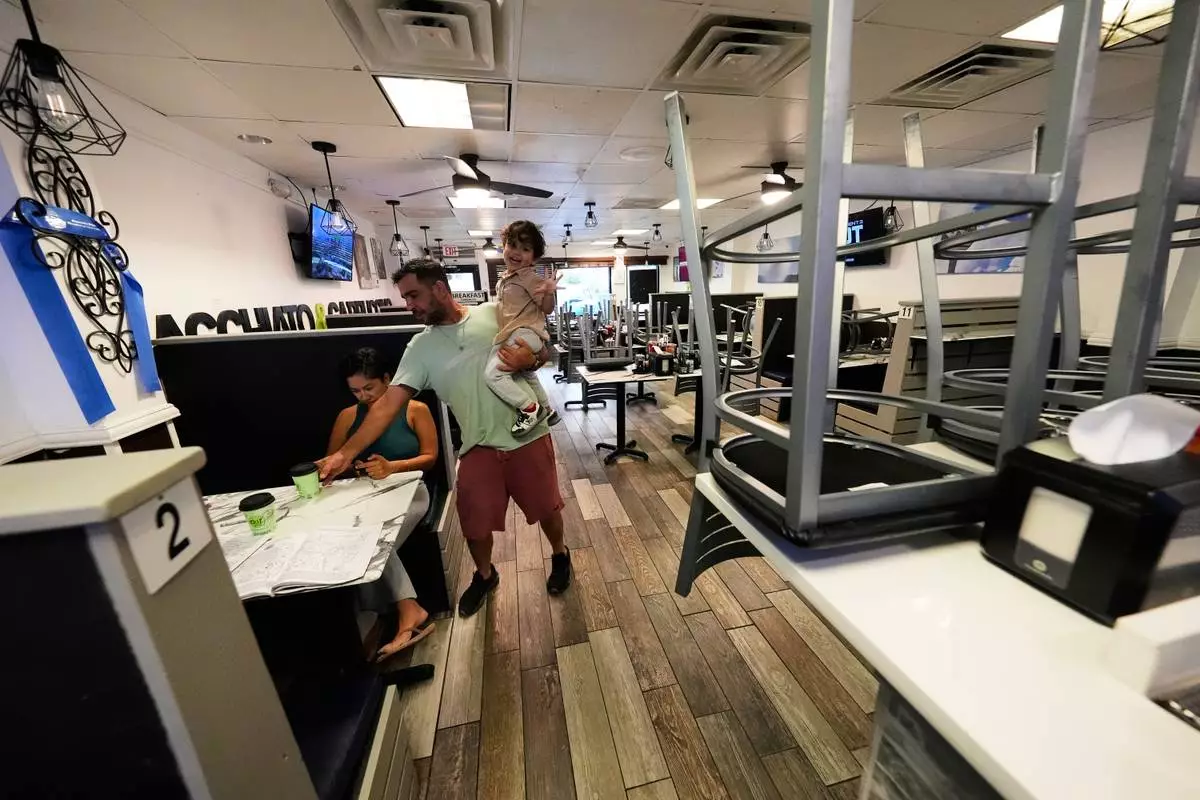
Shahar David, employee at Cafe Bistro, feeds his family before closing as Hurricane Isaias approaches Pensacola Beach, Fla., Friday, Oct. 9, 2026. (AP Photo/Gerald Herbert)
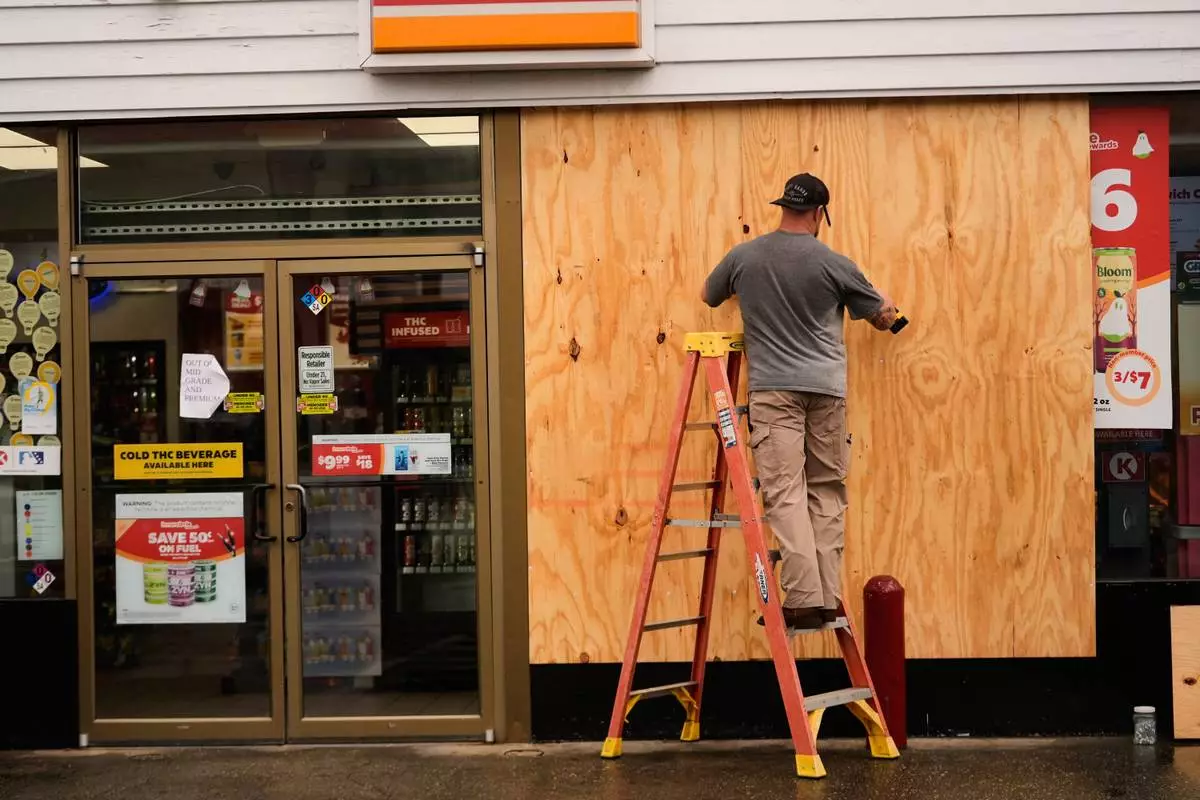
Jason Coffey boards up a convenience store at a gas station as Hurricane Isaias approaches Pensacola Beach, Fla., Friday, Oct. 9, 2026. (AP Photo/Gerald Herbert)
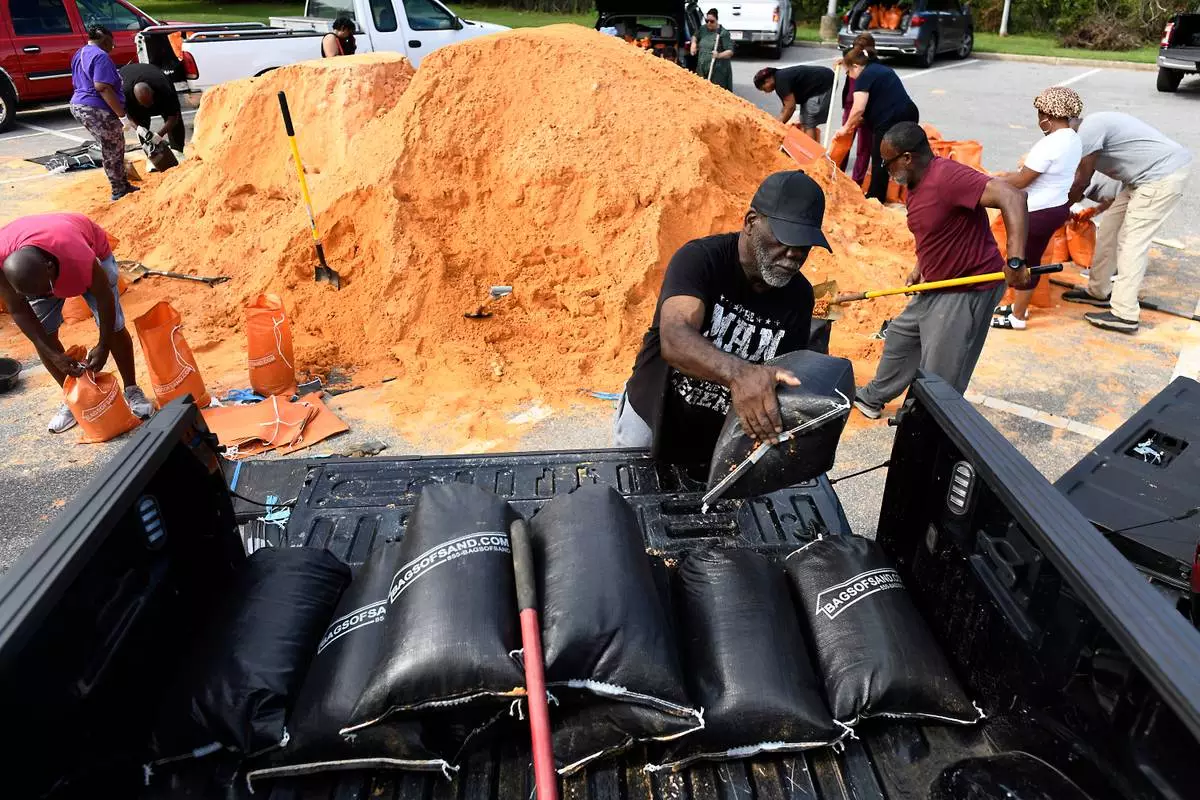
Residents pick up sandbags for storm preparation at the James Seals Jr. Parks & Recreation Center ahead of Hurricane Isaias' expected landfall along the Gulf Coast, Thursday, Oct. 8, 2026, in Mobile, Ala. (AP Photo/Octavio Jones)
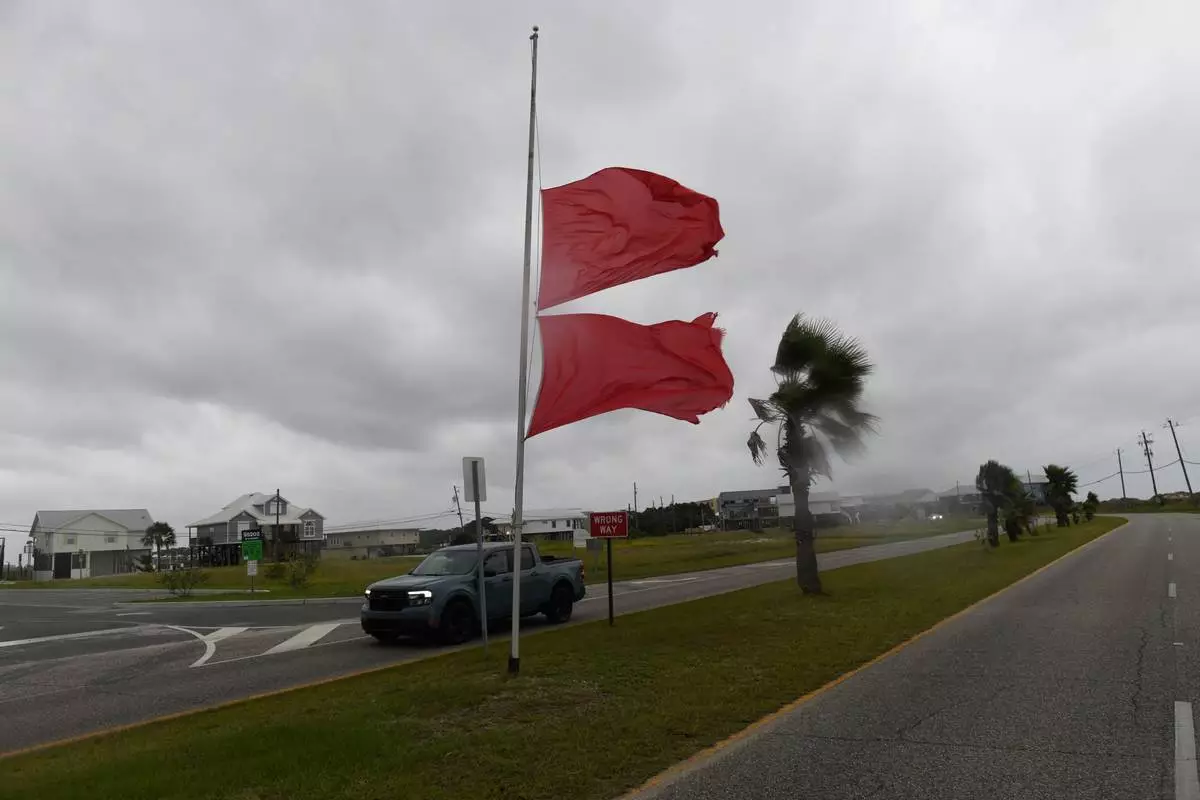
Marine flags flap in the wind generated by the effects of Isaias as a vehicle passes on Friday, Oct. 9, 2026, in Dauphin Island, Ala. (AP Photo/Octavio Jones)
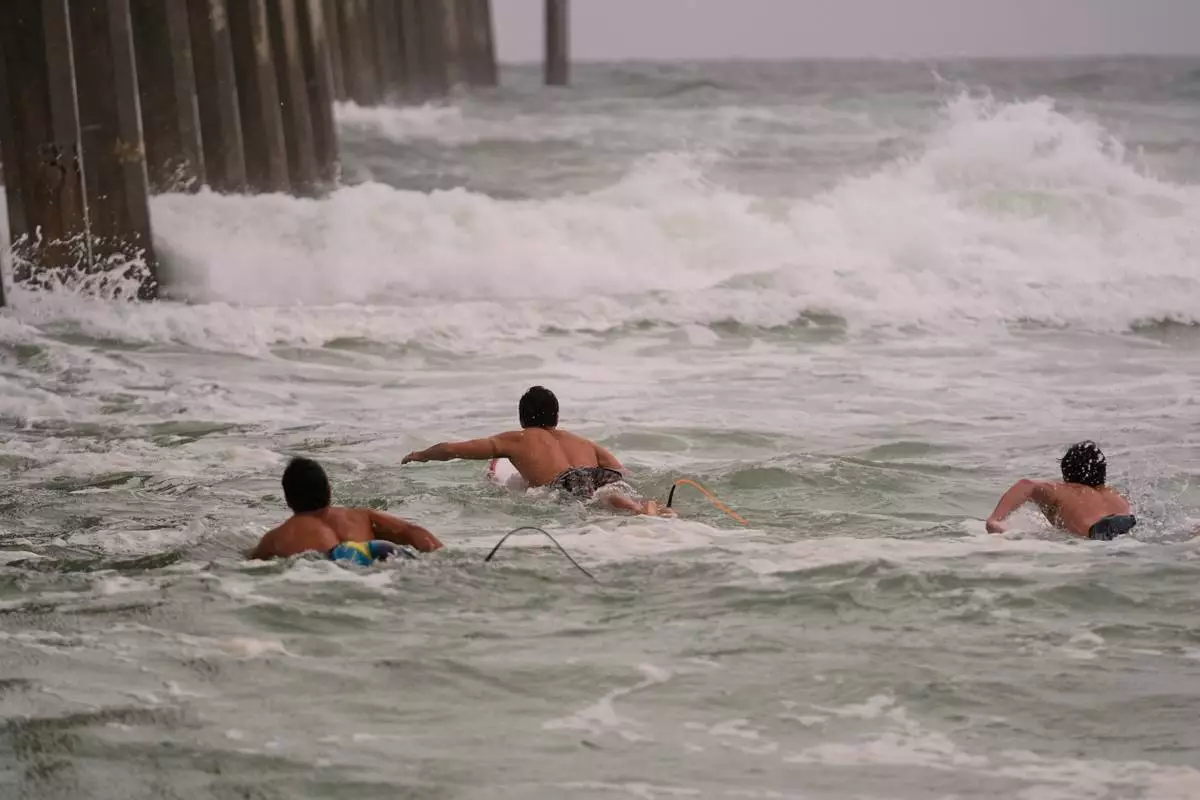
Surfers swim out to waves as Hurricane Isaias approaches Pensacola Beach, Fla., Friday, Oct. 9, 2026. (AP Photo/Gerald Herbert)
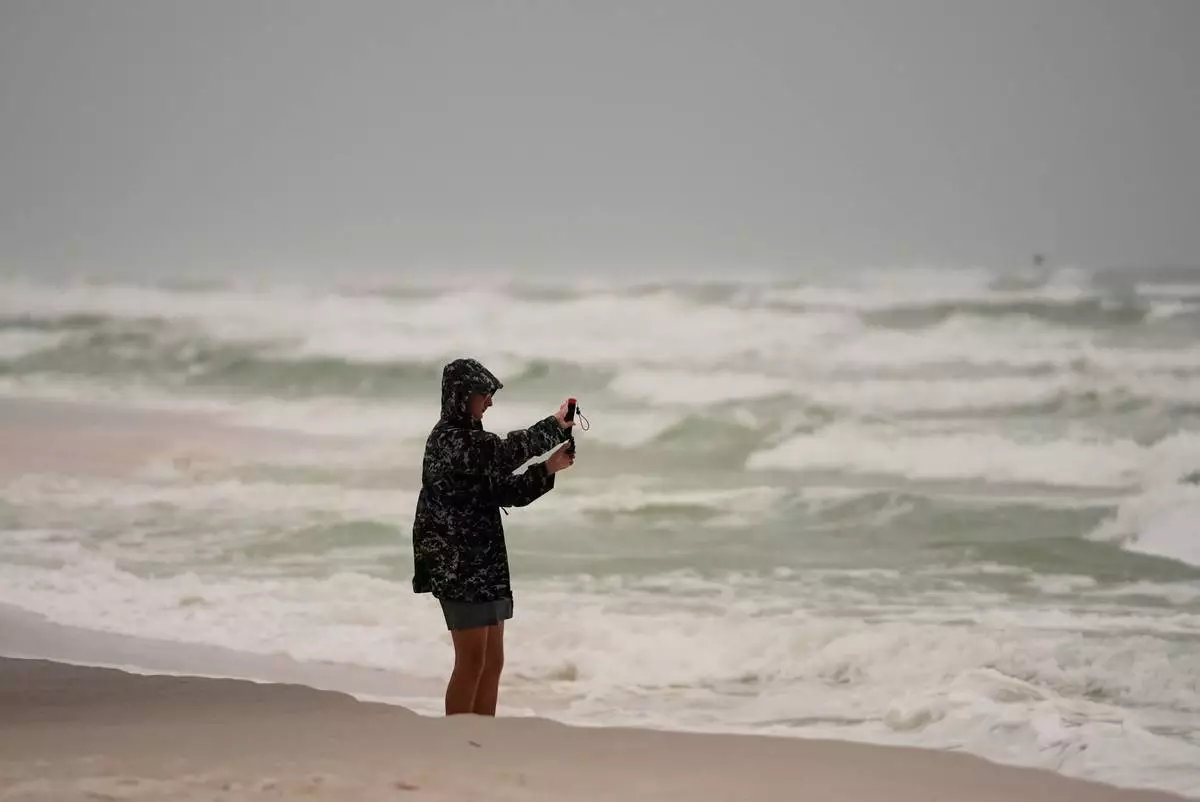
Silas Bowles, of Gulf Breeze, Fla. films the surf as Hurricane Isaias approaches Pensacola Beach, Fla., Friday, Oct. 9, 2026. (AP Photo/Gerald Herbert)
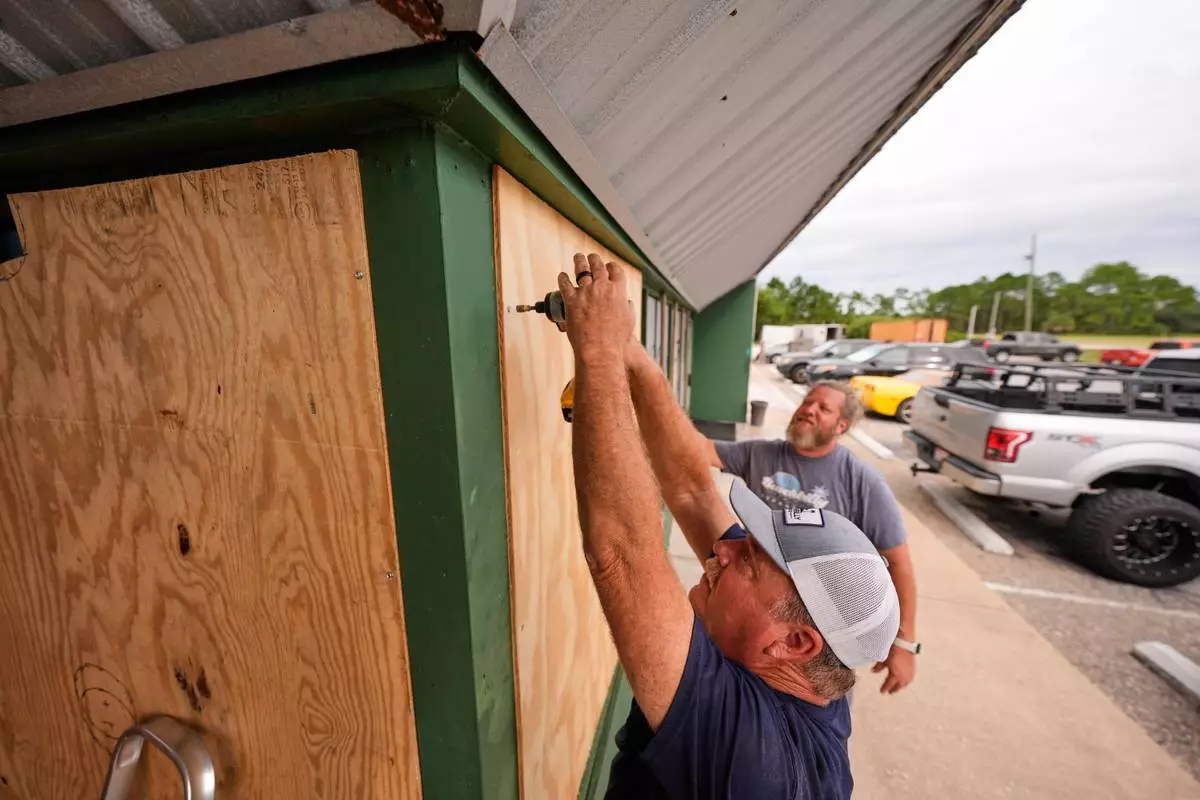
Mike Howard, foreground, and Joshua Brown board up Perdido Key Sports Bar as Hurricane Isaias approaches Perdido Key, Fla., Thursday, Oct. 8, 2026. (AP Photo/Gerald Herbert)
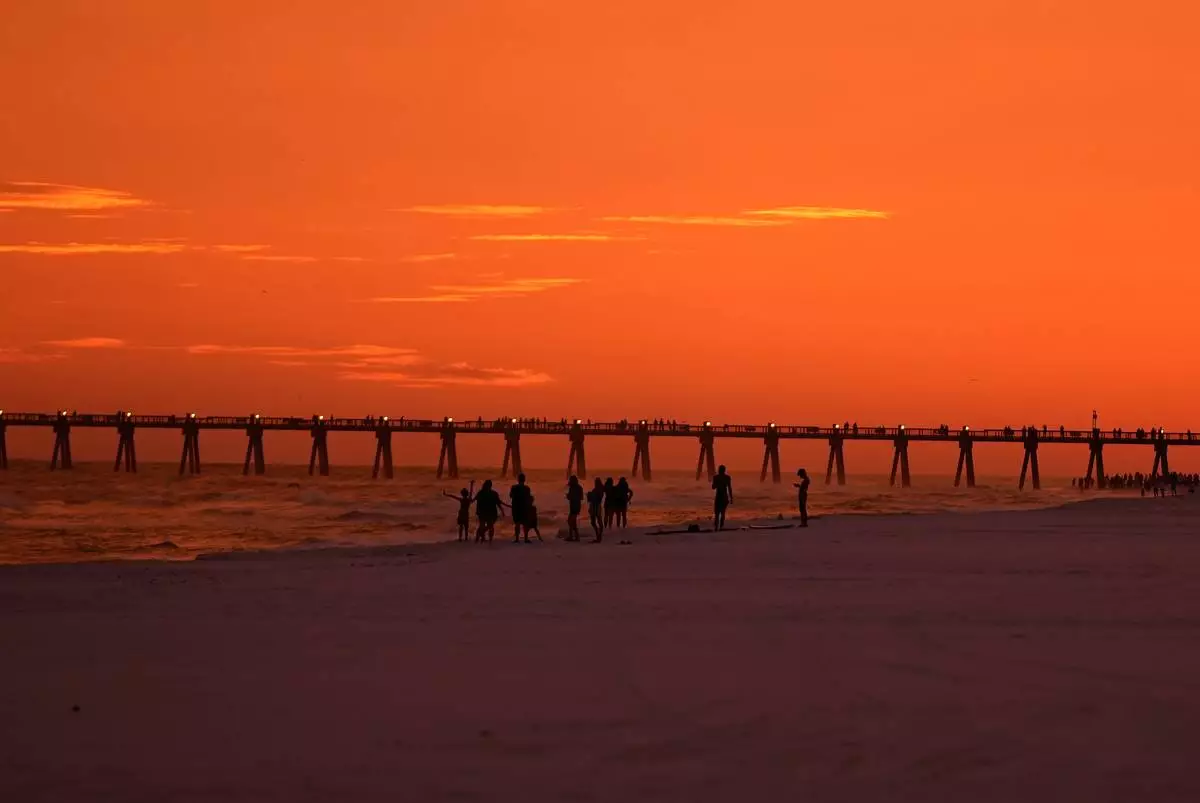
People walk on the beach at sunset as Hurricane Isaias approaches Pensacola Beach, Fla., Thursday, Oct. 8, 2026. (AP Photo/Gerald Herbert)
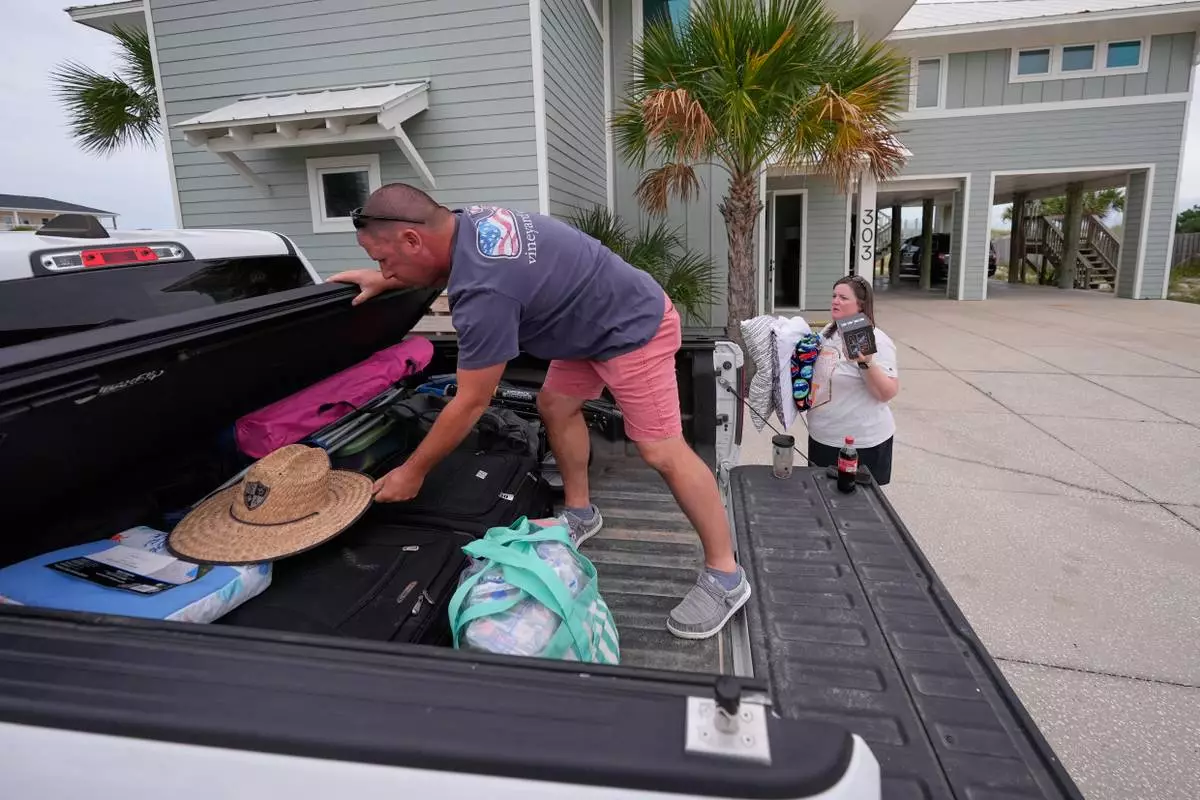
Daniel and Brand Harp, of Lebanon Tenn., here on vacation, pack their belongings to evacuate in the morning as Hurricane Isaias approaches Pensacola Beach, Fla., Thursday, Oct. 8, 2026. (AP Photo/Gerald Herbert)
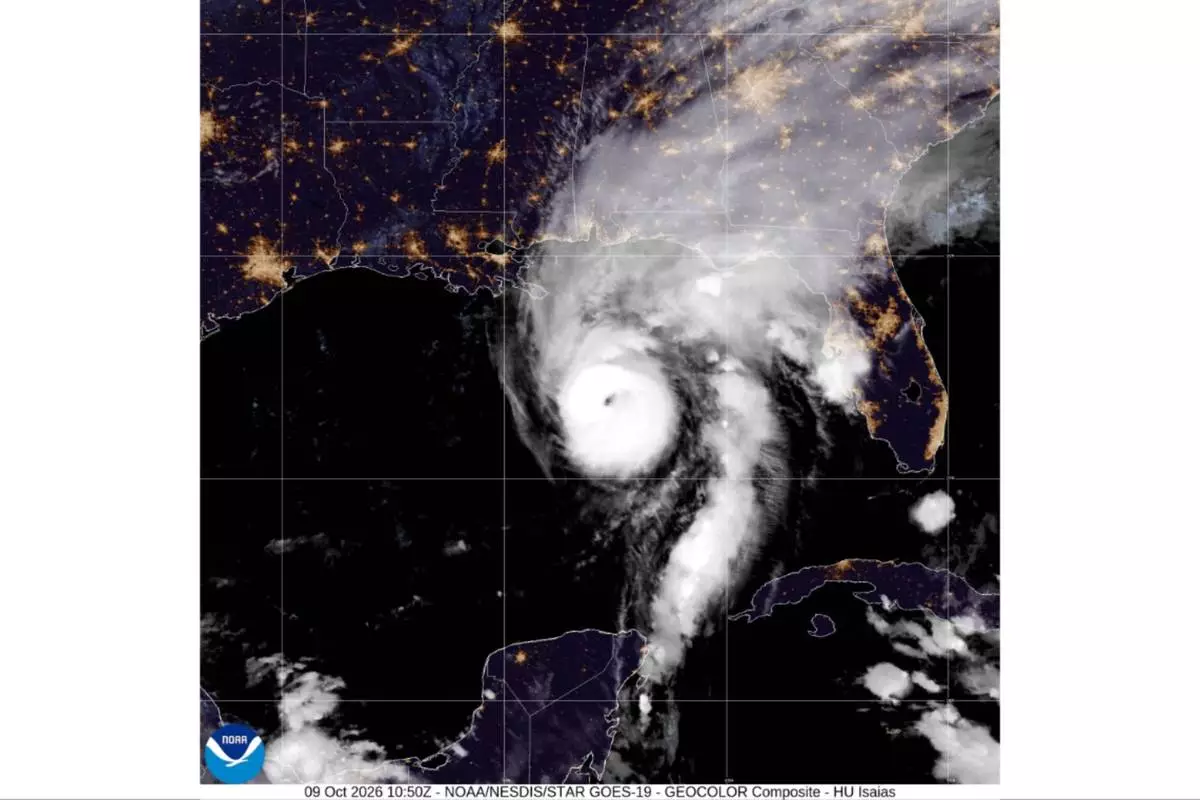
This satellite image from the National Oceanic and Atmospheric Administration shows Hurricane Isaias in the Gulf of Mexico, Friday, Oct. 9, 2026. (National Oceanic and Atmospheric Administration via AP)
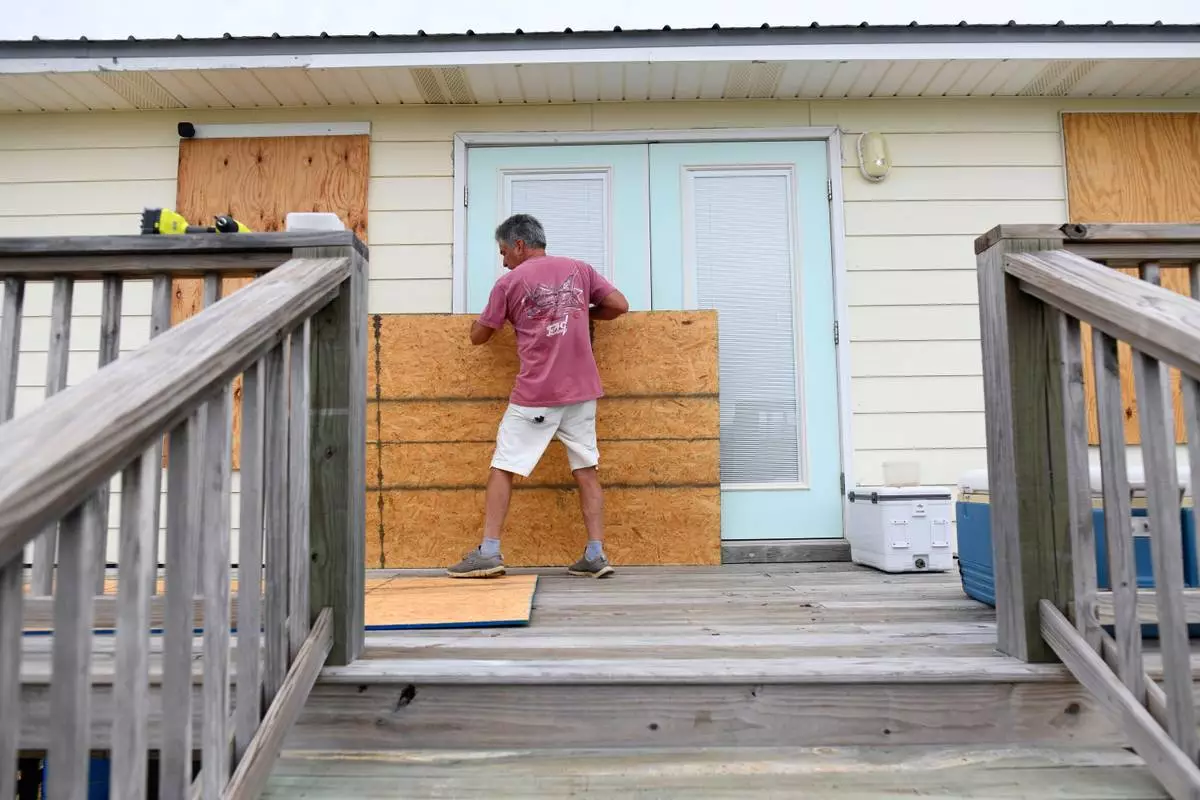
Larry Smith boards up his home with plywood ahead of Hurricane Isaias' expected landfall along the Gulf Coast in Dauphin Island, Alabama, Thursday, Oct. 8, 2026. (AP Photo/Octavio Jones)