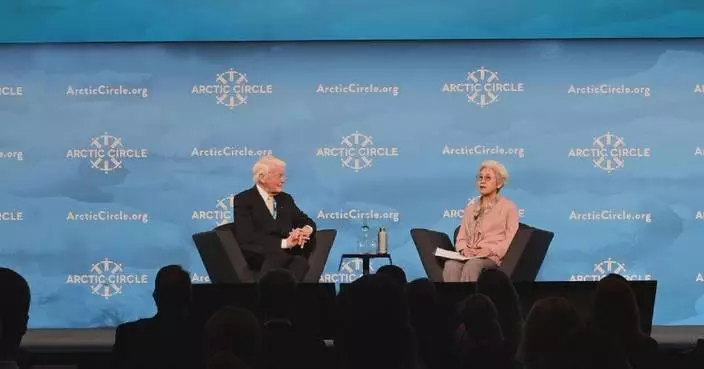
Experts and scholars from China and the United States at the annual Arctic Circle Assembly highlighted the opportunities for practical cooperation between the two countries in the Arctic, noting that the region offers a key arena for exploring constructive strategic stability.
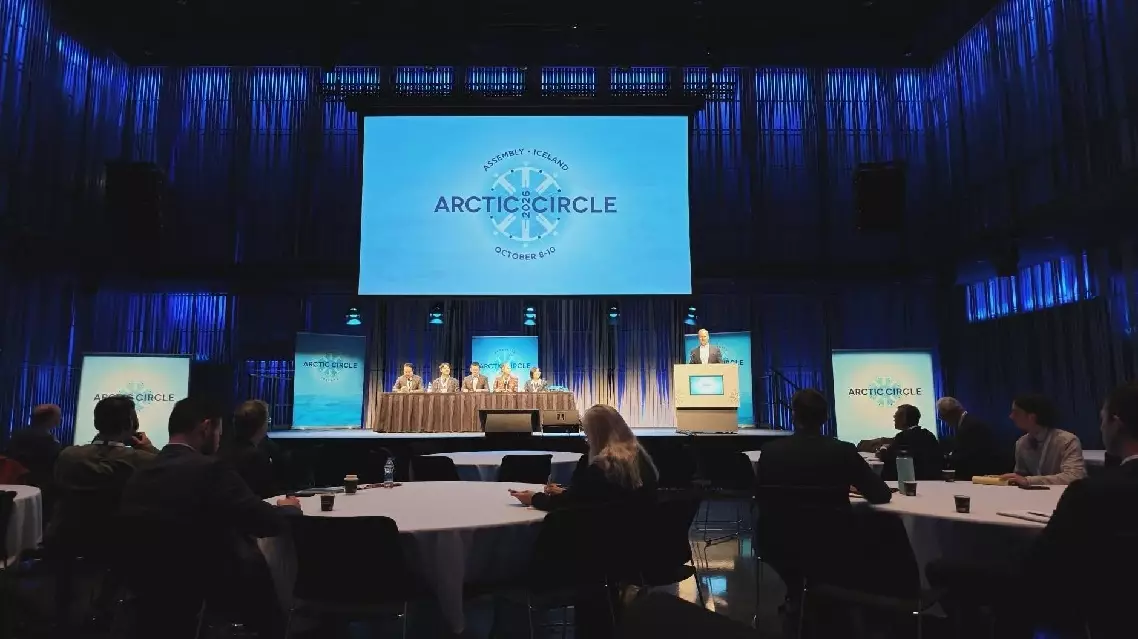
The 2026 Arctic Circle Assembly took place in Reykjavik, the capital of Iceland, from Thursday to Saturday.
More than 2,500 representatives from over 70 countries and regions attended the event to discuss issues related to understanding, protecting, developing and governing the Arctic.
Co-organized by China's Tongji University and the U.S.-based environmental nonprofit Ocean Conservancy, a side event titled "China-U.S. Relations in the Arctic: Prospects for Cooperation" was held on Friday, attracting scholars from both countries to explore topics such as future cooperation and governance in the region.
Attendees said that while Arctic cooperation cannot resolve all differences between China and the United States, it nevertheless provides a platform for identifying common ground in areas like scientific research, maritime security, and multilateral governance.
The cooperation between the two countries in this domain is not only essential for peace and stability in the Arctic, but also offers valuable reference for the world's two major countries to build a more stable relationship with greater predictability, according to the participants.
"The Arctic can serve as a 'test field' for China and the U.S. to explore constructive strategic stability. Through cooperation in areas such as scientific research, maritime safety, energy transition, and multilateral mechanisms, we can keep competition within a manageable and controllable range, while maintaining pragmatic cooperation," said Pan Min, deputy director of the Center for Polar and Ocean International Studies of Shanghai-based Tongji University.
During the event, U.S. experts emphasized that the Arctic should not become a theater for zero-sum competition. Instead, they said it could serve as a platform for building mutual trust, exploring cooperation potential, and gaining experience in collaboration between China and the United States.
"So the stakes are lower. The pressure is lower in the Arctic than it is in the other topics that China and the U.S. discuss or compete about. So I think it is a great place to explore cooperation precisely because it's outside of our core interests, and so the pressure is a bit lower, but there's still a lot that we can do together," said Henry Huntington, Arctic Science Director of the Ocean Conservancy.
Founded in 2013, the Arctic Circle holds its annual assembly in Iceland every October and serves as an important global platform for dialogue on Arctic affairs.
Arctic offers platform for practical cooperation between China, US: scholars