Residents of Tonosi, the Panama town closest to the epicenter of the earthquake that struck the country on Friday, spent a second day without running water or electricity as relentless aftershocks kept the community on edge and left dozens temporarily displaced.
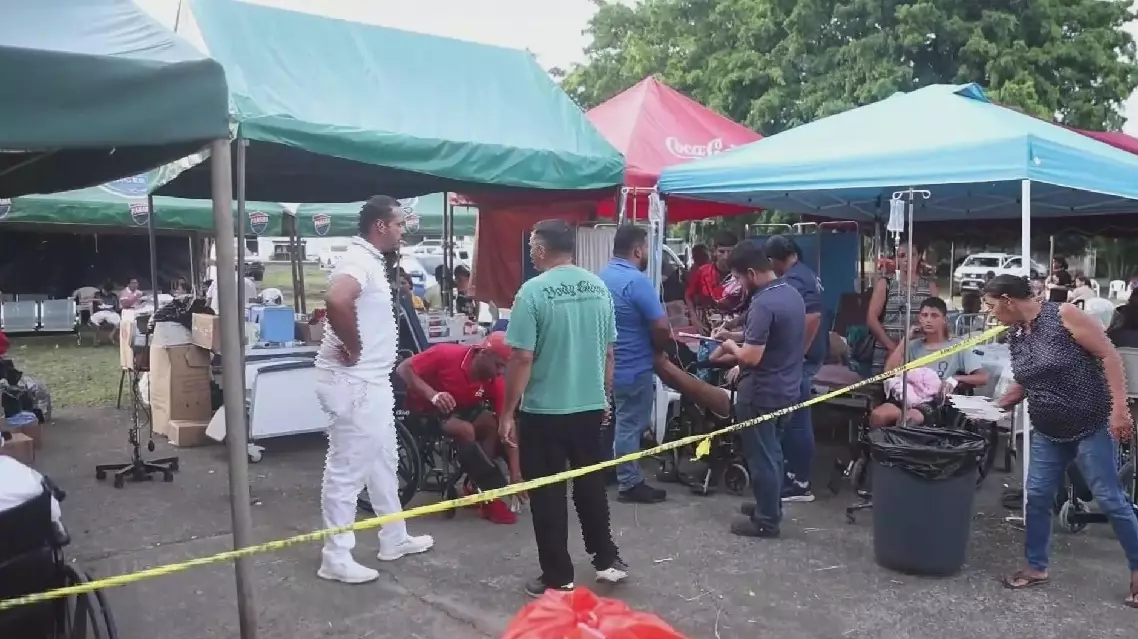
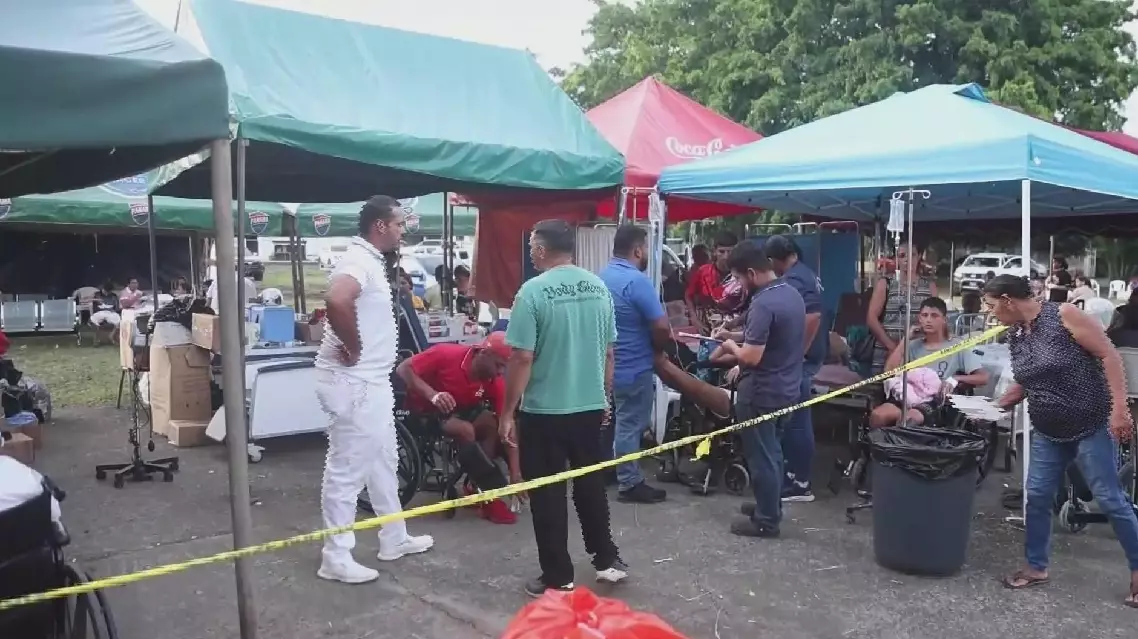
After the earthquake, a park in the town, located away from the Pan-American Highway -- the main road crossing Panama, has become a makeshift camp, soup kitchen, and field clinic, where three healthcare workers churned out breakfast, lunch, and dinner for displaced residents.
"We are supporting the people of Tonosi. We have been cooking since yesterday, supporting the town, and the town is supporting us with food. It was horrible. It was a massive event for us and for the people of Tonosi," said Argelis Ortega, a healthcare worker.
The earthquake struck at 12:56 local time (17:56 GMT) on Friday, with the United States Geological Survey (USGS) registering the magnitude at 7.7, while the University of Panama's Institute of Geosciences put it at 7.5.
The tremor severely damaged key access roads to Tonosi, severing one with a landslide and leaving the other cracked and blocked by debris, forcing government officials to arrive by helicopter to assess the damage.
The disaster has triggered a spate of aftershocks, terrorizing residents who slept on mattresses and plastic chairs in the town square.
Cristal Reyes, a local resident, said she was too afraid to return home after her husband sent a video showing their house in ruins.
"Well, I haven't made it to my house yet. I haven't dared to. My husband went home, and he sent me a video -- everything is on the floor. I haven't even dared to go inside. I was at work, with my daughter and a nephew. When the earthquake struck, they headed right for the exit, and I went out right behind them. As soon as we got out, everything started moving and knocked us down. We were here in front of the hospital. Nurses and everyone else started rushing outside. Everyone ended up on the ground. That was something completely terrifying. We had never experienced anything like this," said Reyes.
Aftershocks continued throughout Saturday.
Panamanian authorities declared a national state of emergency after the earthquake and announced an initial fund of up to 100 million U.S. dollars for relief efforts.
According to the latest official figures, the earthquake injured 27 people -- none in critical condition -- damaged 419 schools, and affected 426 homes.
Panama earthquake leaves epicenter town without water or power amid relentless aftershocks
Panama earthquake leaves epicenter town without water or power amid relentless aftershocks
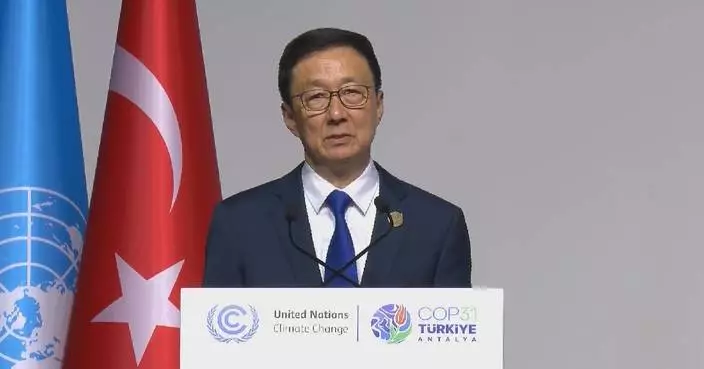
China unveiled its MAZU all-in-one device, an intelligent meteorological early-warning solution, to the world on Wednesday at a China Pavilion side event during the 31st United Nations Climate Change Conference (COP31) in Antalya, Türkiye, offering a Chinese solution for global meteorological disaster prevention and reduction.
MAZU, short for multi-hazard, alert, zero-gap and universal, is an AI-driven meteorological early-warning platform named after Mazu, the traditional Chinese goddess of the sea and protector of sailors.
The device looks like a carry-on suitcase and weighs about 20 kilograms, which is easy to ship anywhere and deploy quickly on site. Once online, it draws on global meteorological data via China's self-developed cloud-based early-warning system to deliver a complete meteorological service solution for local users.
As a comprehensive solution launched by China in response to the UN Early Warnings for All initiative, MAZU combines China's cloud resources with local data from each country, tailoring its approach to each nation's specific needs.
The MAZU solution has so far been deployed in eight countries, including Pakistan, Ethiopia and Sri Lanka, and has been tested through cloud-based trials in more than 50 countries. It has become a global public service product for disaster prevention and mitigation, helping more developing countries improve their climate governance capacity.
"We will share basic knowledge of managing disaster prevention and mitigation, experience in inter-agency coordination and government decision-making, as well as the most advanced forecasting software, satellite monitoring technology and artificial intelligence technology for disaster prevention and mitigation, along with personnel training, truly 'teaching people how to fish'," said Zhang Xingying, director of the Department of International Cooperation at the China Meteorological Administration.
"That will help us to get into people's hands with early warning. And they can make decisions, whether it's in agriculture, whether it's in mining, whether it's in tourism, or infrastructure, or in health. We like that very much," said Gilbert Siame, minister of Green Economy and Environment of Zambia.
"Its partners don't just receive this system; they build it with China. That's what South-South cooperation looks like. Who looks forward to working with China to align MAZU with each country's national early warning road-mode is WMO," said Josefina Bunge, chief of staff at the World Meteorological Organization (WMO).
COP31 opened Monday with a focus on translating global climate commitments into concrete action. According to the organizers, it will focus on three key areas: implementing emissions reduction targets, delivering climate finance to developing countries, and strengthening adaptation and resilience, with the aim of turning commitments made at previous climate summits into tangible outcomes.
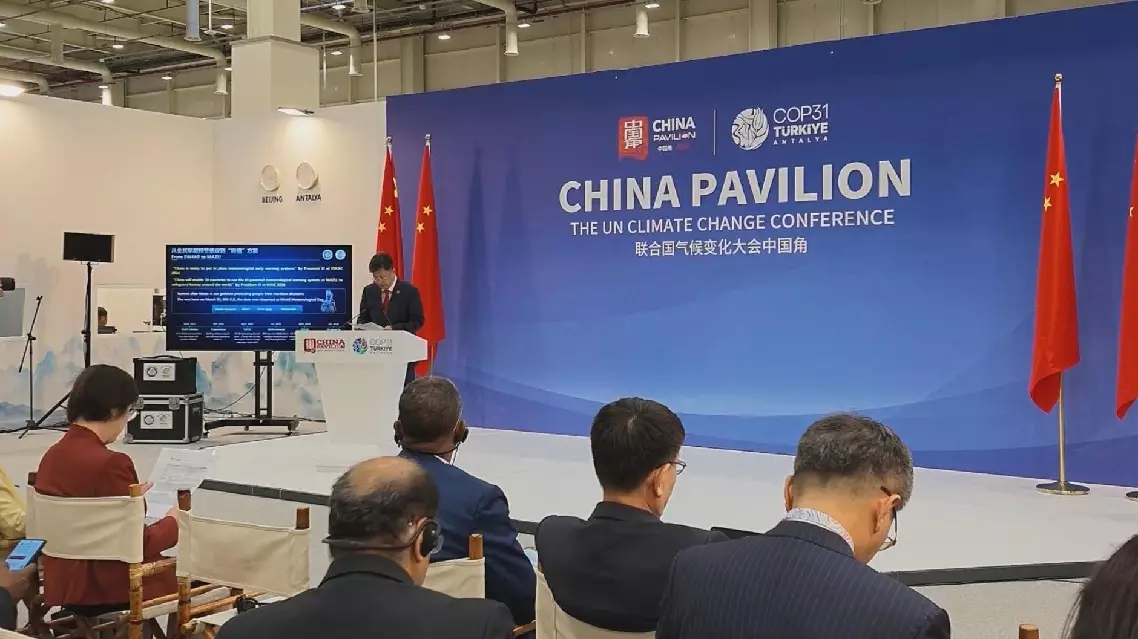
MAZU early warning device makes global debut at COP31