As 52,000 mu (about 3,466.7 hectares) of sea buckthorn ripens in Baiyang City, northwest China's Xinjiang Uygur Autonomous Region, local farmers, guided by agricultural technicians, are making the most of the fine weather to bring in the harvest.
At a sea buckthorn plantation base in Baiyang, farmers carefully cut branches with scissors, as fresh berries have short stems and thin, fragile skin. They say sea buckthorn is harvested in two seasons, autumn and winter, and the current harvest is the autumn-ripening variety.
"I planted 140 mu (about 9.3 hectares) of sea buckthorn this year, and the harvest will be largely finished by the end of the month," said Jia Yonglong, a farmer.
"We go to various planting areas to guide sea buckthorn harvesting and autumn-winter management, ensuring both this year's output and next year's returns," said Qin Wensheng, an agricultural technician.
Sea buckthorn is tolerant of drought and poor soil, resistant to wind, sand and salinity, and highly effective at soil stabilization, possessing considerable ecological and economic value. Baiyang City currently has 80,900 mu (about 5,393.3 hectares) of sea buckthorn under cultivation.
To better help farmers increase their incomes and maximize the economic value of sea buckthorn, the local authority has actively promoted contract farming.
On top of that, it has worked to develop e-commerce sales channels and a deep-processing industry chain, turning frozen, threshed sea buckthorn berries into products such as sea buckthorn juice concentrate, sea buckthorn oil and freeze-dried powder, which are sold across the country.
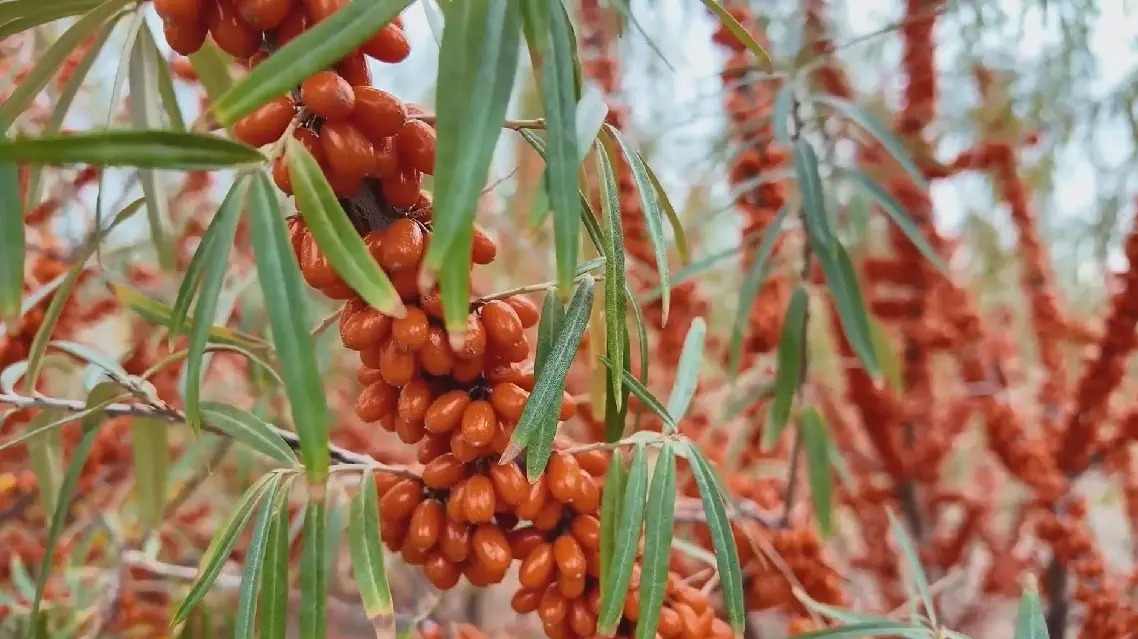
Farmers busy harvesting sea buckthorn with tech guidance in Xinjiang