Despite trade frictions, demand for Chinese goods in Europe remains strong, and Slovenia’s Port of Koper — a key gateway for Chinese goods entering Central and Eastern Europe — is expanding to accommodate the growing demand.
Located on the northern Adriatic coast, the port has efficient land-transport links with countries across Europe and serves as an important hub connecting Central and Eastern Europe with East Asian markets.
It is one of the shortest maritime gateways from East Asia to Central and Eastern Europe via the Suez Canal, making it an important entry point for goods bound for the region.
"We are, let's say, the best entry point for Central and Eastern Europe. The southern route is getting more and more popular, [which] means that if you go to the south compared to the northern ports, like Bremerhaven, Antwerp, and so on, you are saving seven days," said Gregor Belic, member of Port of Koper Management Board.
In 2025, China remained the EU's largest source of goods imports. EU imports from China reached 559.4 billion euros (about 627 billion U.S. dollars), up 6.4 percent year on year and accounting for 22.3 percent of the EU’s total goods imports.
Chinese automobiles are an important part of this trade, with the Port of Koper playing a growing role in handling their logistics. In 2025, the port handled a record 1.27 million twenty-foot equivalent units (TEUs) and more than 914,000 vehicles.
As Chinese automakers rapidly expand their presence in the European market, Chinese cars are entering Europe through the Port of Koper at an accelerating pace -- rising from 11,000 units in 2024 to an estimated 100,000 this year.
With demand expected to keep growing, a large new yard and warehousing terminal under construction will raise the port's capacity to about 62,000 vehicles.
Amid growing Chinese imports and the EU’s widening goods trade deficit with China, European officials have also expressed hope that ships carrying Chinese vehicles to Europe could transport European cars on their return journeys.
Industry experts stressed that if Europe wants truly sustainable trade growth with China, it should carefully consider where potential growth in its exports to China could come from.
"We still didn't really sit down and think about it -- what are those things that we can offer to China? And there are many, because the deficit between import and export is definitely not where the good partners should stand on. But on the other hand, Europe will need to do the work and will need to think about what are the things that we can offer to China," said Ziga Vavpotic, chairman of the Slovenian-Chinese Business Council.
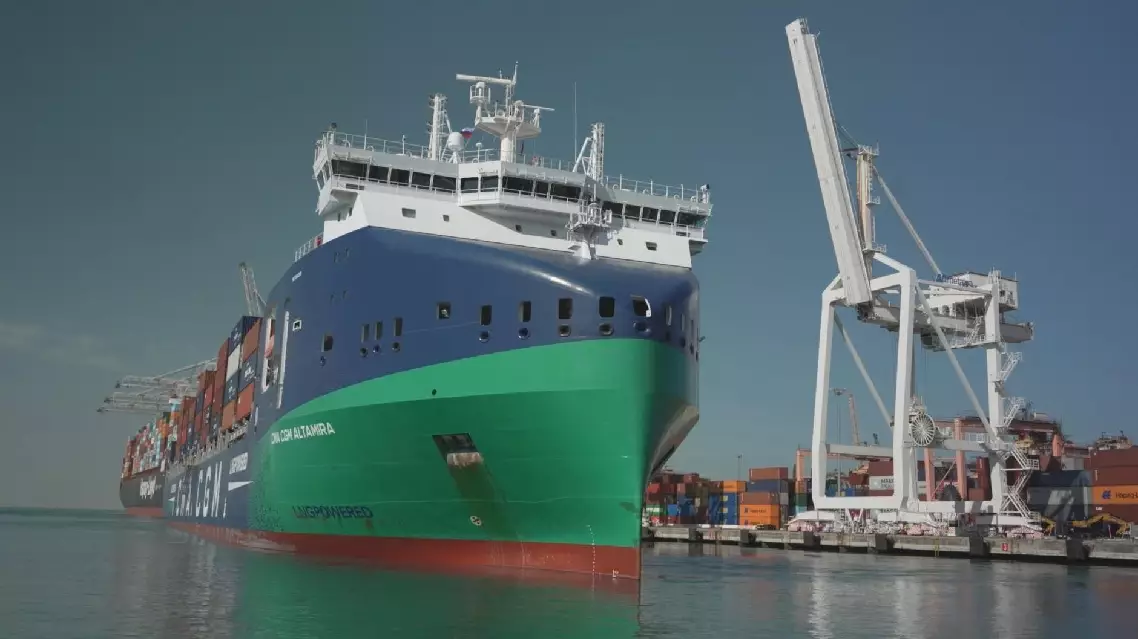
Slovenia expands Port of Koper as Europe's demand for Chinese goods surges