Beijing is planning to increase 30,000 new home-based elderly care beds over the next three years as part of efforts to improve its elderly care system, the Beijing Municipal Civil Affairs Bureau has announced.
By the end of 2025, the city had 5.288 million permanent residents aged 60 and above, accounting for 24.3 percent of its total permanent resident population.
That figure is projected to surpass 6 million by 2030, creating enormous demand for elderly care services.
In response, Beijing has been expanding its elderly care infrastructure.
Beyond relying on home-based care services, the city is planning to develop and certify 60,000 inclusive and affordable care beds at elderly care institutions, raise the share of nursing beds in the institutions to 73 percent, and add special care units for dementia patients during the 15th Five-Year Plan period (2026-2030), according to the municipal civil affairs bureau.
At the same time, Beijing will continue to expand community-based elderly care facilities and improve the city's elderly care service system, the bureau said.

Beijing to add 30,000 home-based elderly care beds with professional services
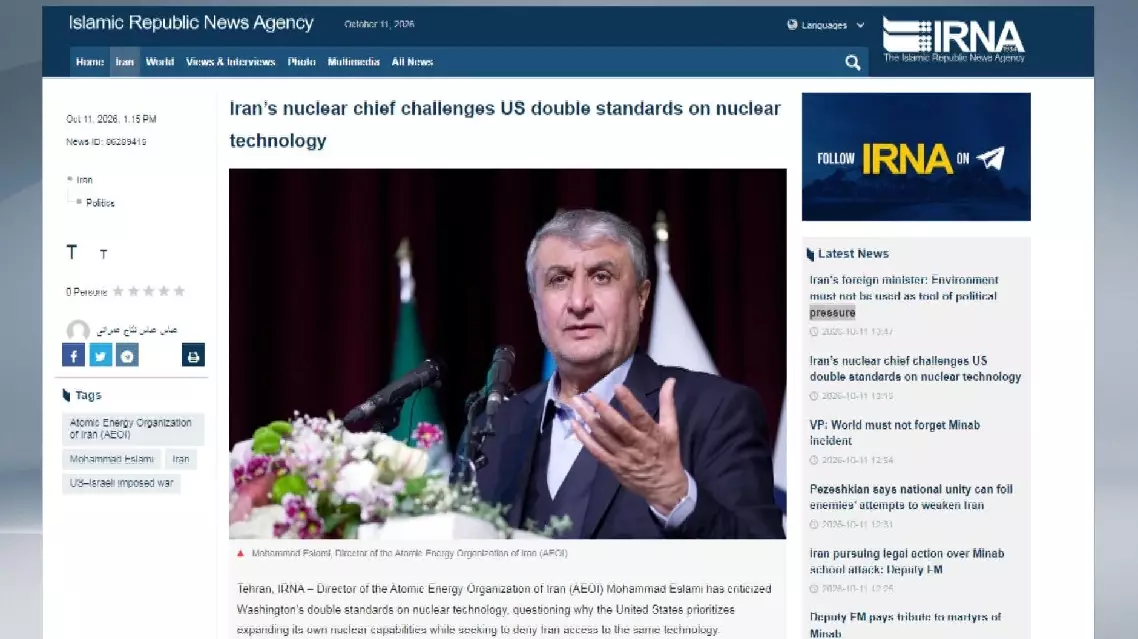
Iran's nuclear chief vowed on Sunday that the country will not give up the nuclear technology it has mastered under foreign pressures, and that no law allows any foreign country to deprive the Islamic Republic of that technology, the Iranian official news agency IRNA reported.
Mohammad Eslami, director of the Atomic Energy Organization of Iran, was speaking at an international conference "Ecocide: The Silent War Crime" held in Tehran, the report said.
Eslami criticized the United States for applying double standards on nuclear technology, questioning why Washington prioritizes expanding its own nuclear capabilities while seeking to deny Iran access to the technology, IRNA said.
He added that Iran would "continue pursuing its plan to generate 20,000 megawatts of nuclear electricity, despite wartime pressures," according to the report.
He also claimed that Iran's Bushehr nuclear power plant ranks among the world's top 10 in terms of safety and efficiency.
The comments came after U.S. Vice President JD Vance said in an interview on Oct 5 that Iran must "substantially" reduce its uranium enrichment capacity to meet Washington's demands and bring an end to the conflict.
In response, Eslami said U.S. threats are "nothing new."
Iran vows not to abandon nuclear technology under foreign pressures