Residents near the epicenter of the powerful earthquake that struck Panama on Friday have begun assessing the damage, after the 7.6-magnitude tremor forced many families out of their homes and into temporary shelters.
The quake jolted the country shortly after midday, with its epicenter about 39 km northwest of Tonosi in Los Santos Province. Officials have reported more than 900 homes damaged, along with 419 schools and 21 health facilities, and the government declared a state of emergency on Saturday to mobilize resources and assist communities in need.
The destruction extends beyond modern buildings to the region's colonial heritage. Part of the bell tower of the centuries-old San Atanasio Church collapsed in La Villa de Los Santos, a town in the country's southwest, while traditional homes suffered serious damage.
Among the displaced in La Villa de Los Santos, school worker Jesus Salvador Perez and his family took shelter at a local stadium, where medical workers were providing services in tents.
"The ceiling fell, air-conditioning units came down, and cracks appeared in the walls. It's a two-story building. There will be no school or work tomorrow," said Perez, recalling the moment the earthquake struck.
The timeline for their return remains far from certain. Perez said authorities had asked residents to wait 72 hours while experts inspected their homes and determined whether it was safe to return.
The scale of the response has drawn the country's leadership to the disaster zone, bringing Panamanian President Jose Raul Mulino to the affected area on Saturday. He talked with residents and called for patience as the authorities work to address the needs of affected communities.
The recovery, however, is about more than bricks and mortar, and it was visible at the local stadium, where baseball coach Luis Paredes was trying to help the youngest survivors cope with the disaster.
"We got them a soccer ball so they could play for a while and try to forget that nightmare. But I think it will stay in their memories," said Paredes.

Residents near epicenter of Panama's 7.6-magnitude quake assess damage

Residents near epicenter of Panama's 7.6-magnitude quake assess damage
The fourth meeting of the APEC Business Advisory Council (ABAC) opened on Saturday in Shenzhen City in south China's Guangdong Province, drawing members who underscored China's expanding leadership in driving trade integration, green energy and multilateral cooperation across the Asia-Pacific.
The three-day meeting has gathered more than 60 representatives from 21 APEC economies, along with nearly 200 experts and accompanying staff, according to the organizer, the China Council for the Promotion of International Trade (CCPIT).
As global trade faces mounting economic headwinds and shifts toward sustainability, international business leaders pointed to China's technological advancements as a crucial catalyst for regional development.
Kasemsit Pathomsak, a Thai representative on ABAC, APEC's private-sector advisory body, highlighted China's contributions to green technology.
"China has played a very important role all along, especially when it comes to the renewable and green initiatives, with solar production, green technology, EVs. China has been very forefront in innovating and bringing this technology to the masses. I think it's very important to try help the world to try and become more green and affordable, to try transition to this green technology," said Pathomsak.
Members also highlighted APEC's vital platform for bilateral and multilateral engagement, fostering commercial bridges across diverse markets.
"As one of the economies that's in APEC, China, as we all acknowledge, is a very important trade partner in this region in both bilateral and multilateral opportunities. For Canada, we see that it is very important for us to establish a proper conduit of opportunities where we can grow together and understand the risks where we have to be clear about where we can and cannot go together. So, we think that APEC is an excellent opportunity where the public sector and the private sector, which I represent, would be able to engage in a deeper conversation on this," said Joseph Fung, an ABAC member from Canada.
Meanwhile, Francisco Suarez Hernandez, an ABAC member from Mexico, praised China's logistical and organizational leadership in hosting the meeting.
"It's really important and China hosting this event is the best example of leading. I think creating a bridge between Mexico, next year Vietnam, and this year China is going to be a great example. We actually hosted ABAC II (Second meeting of APEC Business Advisory Council) this year in Mexico. So, I know the effort," he said.
Founded in November 1995, ABAC is the only non-governmental body with an official advisory role in the APEC Economic Leaders' Meeting, engaging in a formal dialogue and submitting annual policy recommendation reports to APEC leaders.
After the ABAC meeting, Shenzhen will host the 2026 APEC CEO Summit on Nov 17 to 18, drawing the region's top business and government leaders to chart a course for Asia-Pacific prosperity.
This is the third time China has hosted APEC meetings, and the first in 12 years.
Working with other member economies under the theme of "Building an Asia-Pacific Community to Prosper Together," China has focused on three priorities, namely openness, innovation and cooperation, and has hosted more than 300 meetings and events across the country during the year.
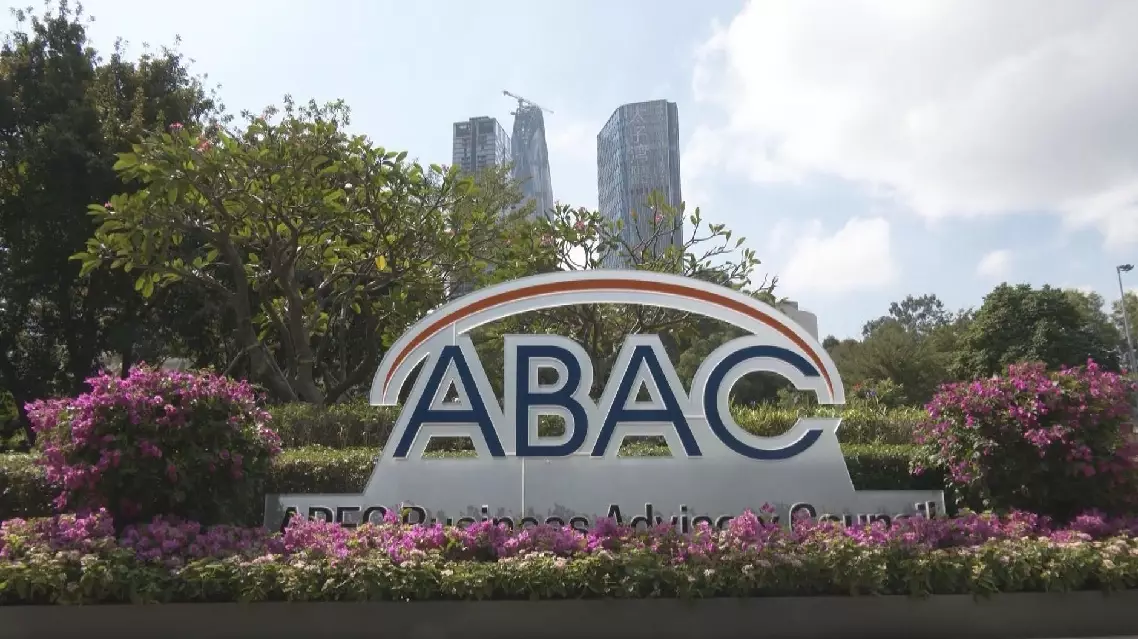
ABAC members laud China's role in Asia-Pacific economic integration