A majority expect retirement to happen in stages, as AI widens the range of possible career and retirement paths
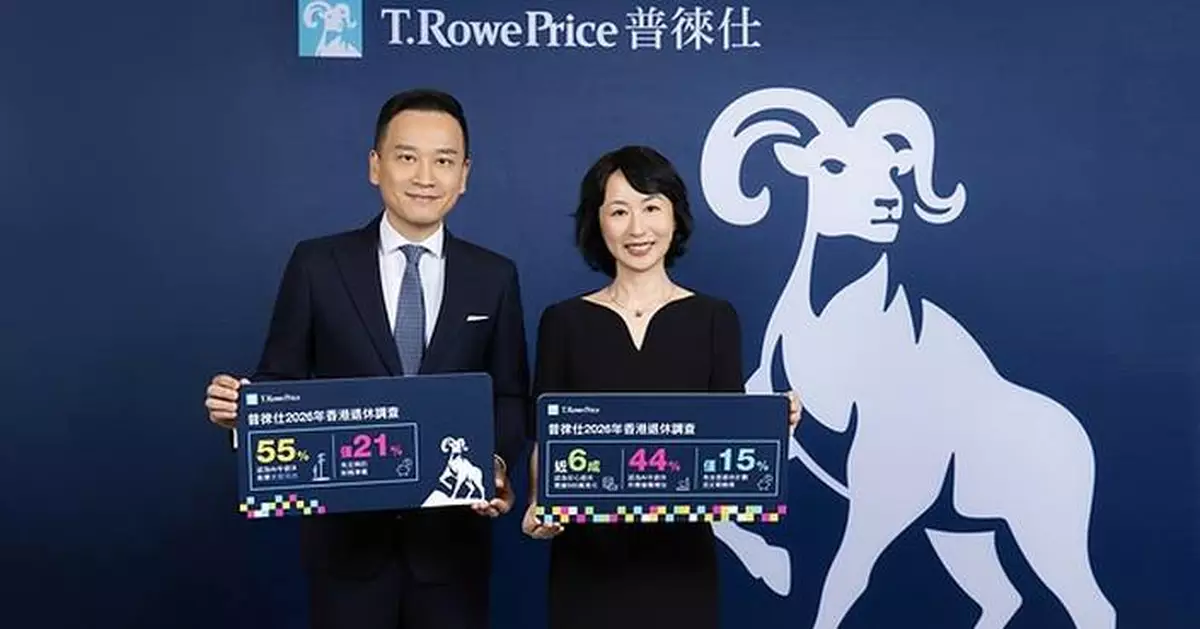
HONG KONG, Oct. 12, 2026 /PRNewswire/ -- More than half (55%) of Hong Kong working adults surveyed say artificial intelligence (AI) will make their path toward retirement more unpredictable than that of the previous generation, yet only 21% feel fully or substantially financially prepared to stay on track for their ideal retirement if AI changes their work, income or path toward retirement, according to a survey conducted by T. Rowe Price, a global asset management firm and a leader in retirement investment management.
This AI-related uncertainty comes as retirement itself is becoming less linear. Among respondents with a clear view on how they will retire, nearly three-quarters (72%) expect to move toward retirement through multiple stages rather than transition directly from full-time work into retirement. Meanwhile, 63% believe the growing use of AI in the workplace will increase the need for flexible retirement arrangements.
The 2026 T. Rowe Price Hong Kong Retirement Survey was conducted in August 2026 among 1,004 Hong Kong residents age 30 or older who were undertaking paid work and earning at least HK$15,000 per month.
Workers in their 30s expect particularly pronounced AI-related uncertainty. Among respondents aged 30 to 39, 61% expect AI to make their path toward retirement more unpredictable. The finding suggests that workers with longer careers ahead may increasingly need to plan for a wider range of possible career, income and retirement outcomes.
AI Could Take Working and Retirement Lives in Different Directions
Respondents expect AI to reshape working lives in both positive and disruptive ways. Over half (56%) think AI is likely to enable more flexible ways of working, while 43% see the potential for new career, business or income opportunities. At the same time, 70% expect to need new skills to adapt to AI-related changes, and 49% expect AI to disrupt their employment or business income.
This mix of opportunity and disruption could also affect when people retire. Some 72% are already using or would consider using AI to work more efficiently so they can extend their careers, while 60% have already started or would consider using AI to reduce their working hours or move towards retirement earlier than expected. The findings suggest AI could shift retirement timing in either direction.
AI could also make retirement less of a one-way exit. Some 69% have already returned or would consider returning to paid work after retiring from their main career, using AI to work more flexibly or effectively. AI could add further stages before retirement too: 81% have started or would consider investing time or money in developing skills that may become more valuable in the age of AI, 73% using AI to work independently through freelance, consulting or project-based work, and 58% using AI to start a business or side business.
However, financial preparation for these possibilities is much lower. Among those considering each path, only 35% have prepared financially for extending their careers, 27% for reducing working hours or moving towards retirement earlier, and 26% for returning to paid work after retirement.
Raymond Chan, Head of Greater China Intermediary Distribution at T. Rowe Price, said:
"Retirement is becoming less of a single point in time and more of a journey. AI adds another layer of uncertainty because it could enable some people to work longer or more flexibly, while prompting others to reskill, reduce their hours or rethink when they retire.
"Our survey suggests the question is no longer simply how much people need to retire, but whether their financial plans can adapt to different ways of getting there. As working lives become more varied, financial flexibility becomes increasingly important as career length, income and retirement paths change."
Financial Flexibility Has Yet to Keep Pace
Nearly 60% of respondents believe they will need more than HK$5 million in savings and investments to retire with peace of mind, including 22% who believe they will need more than HK$10 million.
AI could make that target harder to plan around, with 44% saying the potential impact of AI on their work, income and retirement journey means they will need more money for retirement. Yet only 21% feel fully or substantially financially prepared to stay on track for their ideal retirement if AI changes their work, income or retirement path. The planning gap is similarly stark: just 15% have a comprehensive retirement plan that they review regularly.
The most common financial response to AI is focused on short-term resilience: 43% have built or increased an emergency savings buffer, compared with only 28% who have reviewed or changed their retirement investment mix.
This short-term response contrasts with what respondents say they want from their retirement investments, with 40% citing inflation protection as one of the most important features of a retirement investment approach and a similar proportion (39%) citing long-term growth.
Wenting Shen, Global Investment Solutions Strategist and Portfolio Manager at T. Rowe Price, said:
"Building an emergency savings buffer is a sensible way to prepare for the short-term uncertainty workers may face in the age of AI, but an emergency fund and a long-term retirement investment strategy serve very different purposes. Retirement may last for decades, and holding too much of a long-term retirement portfolio in cash can leave purchasing power vulnerable to inflation. That matters when respondents themselves identify inflation protection and long-term growth as important retirement investment needs.
"If people retire earlier, later or in stages, their investment horizon and risk needs may change too. That makes it important to have an investment framework that can adapt over time, while allowing investors to adjust their retirement approach if their circumstances change.
"A retirement glide path is one such framework, gradually adjusting the balance between growth and more defensive assets as an investor moves toward and through retirement. This disciplined approach to asset allocation can help balance long-term growth, retirement income objectives and changing risk capacity, while providing flexibility as the retirement journey evolves."
To learn more about the survey findings and explore retirement planning resources, visit T. Rowe Price Hong Kong's retirement website at: troweprice.com/hk/retirement
About T. Rowe Price
T. Rowe Price is a leading global asset management firm, entrusted with managing US$1.89 trillion in client assets as of June 30, 2026, about two-thirds of which are retirement-related[1]. Renowned for over 85 years of investment excellence, retirement leadership, and independent proprietary research, the firm leverages its longstanding expertise to ask better questions that can drive better investment decisions. Built on a culture of integrity and prioritizing client interests, T. Rowe Price empowers millions of investors worldwide to thrive amidst evolving markets. For more information, visit troweprice.com.
Important Information
This material is being furnished for general informational purposes only. The material does not constitute or undertake to give advice of any nature, including fiduciary investment advice. Prospective investors are recommended to seek independent legal, financial and tax advice before making any investment decision. T. Rowe Price group of companies including T. Rowe Price Associates, Inc. and/or its affiliates receive revenue from T. Rowe Price investment products and services. Past performance is not a reliable indicator of future performance. Investment involves risks. The value of an investment and any income from it can go down as well as up. Investors may get back less than the amount invested.
The material does not constitute a distribution, an offer, an invitation, a personal or general recommendation or solicitation to sell or buy any securities in any jurisdiction or to conduct any particular investment activity. The material has not been reviewed by any regulatory authority in any jurisdiction.
Information and opinions presented have been obtained or derived from sources believed to be reliable and current; however, we cannot guarantee the sources' accuracy or completeness. There is no guarantee that any forecasts made will come to pass. The views contained herein are as of the date written and are subject to change without notice; these views may differ from those of other T. Rowe Price group companies and/or associates. Under no circumstances should the material, in whole or in part, be copied or redistributed without consent from T. Rowe Price.
The material is not intended for use by persons in jurisdictions which prohibit or restrict the distribution of the material and in certain countries the material is provided upon specific request.
Hong Kong — Issued by T. Rowe Price Hong Kong Limited, 6/F, Chater House, 8 Connaught Road Central, Hong Kong. T. Rowe Price Hong Kong Limited is licensed and regulated by the Securities & Futures Commission ("SFC"). This material has not been reviewed by the SFC.
© 2026 T. Rowe Price. All Rights Reserved. T. Rowe Price, INVEST WITH CONFIDENCE, the Bighorn Sheep design, and related indicators (see troweprice.com/ip) are trademarks of T. Rowe Price Group, Inc. All other trademarks are the property of their respective owners. Use does not imply endorsement, sponsorship, or affiliation of T. Rowe Price with any of the trademark owners.
202609-5929894
| [1] Firmwide AUM includes assets managed by T. Rowe Price Associates, and its investment advisory affiliates, in addition to SMA Model Delivery. |
[1] Firmwide AUM includes assets managed by T. Rowe Price Associates, and its investment advisory affiliates, in addition to SMA Model Delivery.
** This press release is distributed by PR Newswire through automated distribution system, for which the client assumes full responsibility. **
Over Half of Hong Kong Workers Surveyed Say AI Is Making Retirement More Unpredictable; Only 1 in 5 Feel Financially Prepared