DONG NAI, Vietnam, Oct. 12, 2026 /PRNewswire/ -- Last week, OJI Group held the groundbreaking ceremony for its US$110 million aseptic carton packaging plant in Vietnam. Operated under the Oji Liquid Pak (OLP) name, the 57,000-square-metre plant at Long Thanh High-tech Industrial Park positions Vietnam as a strategic production and supply base within the Group's Southeast Asia growth strategy. Scheduled to commence operations in 2028, it will supply aseptic carton packaging for beverages and liquid food products. The ceremony brought together representatives from OJI Group, Oji Liquid Pak, the Dong Nai Industrial Parks and Economic Zones Authority (DNIEZA) and AMATA Industrial Zone, alongside local partners and stakeholders.
An investment in Vietnam's manufacturing ecosystem
The facility will produce up to 8 billion packs per year and create more than 200 new jobs. It aligns with Vietnam's evolving Extended Producer Responsibility (EPR) framework and the transition toward a circular economy.
Mr. Terauchi Mikito, Corporate Officer, OJI Holdings Corporation, said: "Vietnam is an important market and an increasingly strategic manufacturing base within Southeast Asia. By establishing Oji Liquid Pak and investing in local production, we are strengthening our ability to serve customers in Vietnam and across the Asia-Pacific region."
Circular and flexible packaging solutions
Oji Liquid Pak draws on OJI Group's integrated experience across forest resources, paper, packaging and recycling. In Southeast Asia, OJI Group is also working to advance collection and recycling initiatives for aseptic carton packaging.
Mr. Kestutis Sliuzas, CEO of Oji Liquid Pak, said: "The packaging industry is moving toward a new standard in which performance, food safety, operational flexibility and circularity need to work together. At Oji Liquid Pak, our ambition is not simply to supply packaging materials, but to help customers navigate this transition with solutions that are ready for the market today and adaptable to the requirements of tomorrow."
Oji Liquid Pak's aseptic packaging materials can be integrated with roll-fed filling machines available in the market, allowing manufacturers to leverage existing filling infrastructure while optimizing operations. Customers can choose between materials only and a full system combining packaging materials, filling technology and technical services, all through one partner.
The new Oji Liquid Pak facility builds on more than 150 years of OJI Group's heritage and more than 40 years of aseptic packaging technology experience from Italian specialist IPI, bringing the Group's international expertise to local production.
Oji Liquid Pak and IPI now operate as sister companies within OJI Holdings, sharing the same vision, mission, values and strategic direction as one integrated team providing aseptic carton packaging solutions, including materials, equipment and services.
About Oji Liquid Pak (OLP)
Oji Liquid Pak (OLP) is part of OJI Group and was established in Vietnam in 2025 to develop the Group's liquid packaging business across the Asia-Pacific region. Together with IPI - an Italian aseptic carton packaging and equipment company part of OJI Holdings since 2023, it forms the Group's integrated aseptic carton packaging business. IPI's technology has served customers across Asia for decades.
About OJI Group
Founded in 1873 in Japan, OJI Group (OJI Holdings Corporation) is one of the global leaders in the paper, packaging and forest resource management industries, ranking first in Japan and fifth globally in pulp and paper-related sales (FY2023). In Vietnam, the Group has established a business footprint spanning forest resources, paper and packaging manufacturing to finished packaging solutions, including Ojitex Vietnam, Oji Interpack, United Packaging and Oji Liquid Pak. For more information, please visit: ojiholdings.co.jp
** This press release is distributed by PR Newswire through automated distribution system, for which the client assumes full responsibility. **
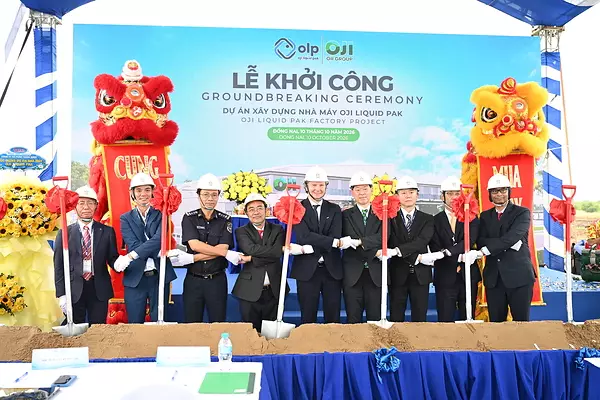
US$110M Oji Liquid Pak Aseptic Packaging Plant Marks Oji Group's Southeast Asia Expansion
BEIJING, Oct. 12, 2026 /PRNewswire/ -- T-MAXIMUM PHARMACEUTICAL ("T-MAXIMUM") today announced that the U.S. Food and Drug Administration (FDA) has cleared the company to initiate a Phase 2 clinical study of MT027, its internally developed, B7-H3-targeted universal (allogeneic) CAR-T therapy, for the treatment of patients with brain metastases from lung cancer and breast cancer.
This is the second Phase 2 study of MT027 to receive FDA clearance. MT027 was previously cleared by the FDA to proceed with a Phase 2 study in recurrent glioblastoma, and has been granted Orphan Drug Designation (ODD) and Fast Track Designation (FTD). With two FDA-cleared Phase 2 programs, T-MAXIMUM has established a dual-indication portfolio for universal CAR-T therapy covering both primary and metastatic intracranial solid tumors.
Brain Metastases: An Unanswered Clinical Question Despite Advances in Systemic Therapy
Brain metastases commonly arise in patients with lung cancer, breast cancer, melanoma, renal cell carcinoma, and colorectal cancer. International studies estimate that approximately 20% of cancer patients may develop brain metastases over the course of their disease, a proportion that can reach 20% to 40% among patients with advanced solid tumors.[1][2] For patients, this means far more than an additional lesion on imaging: brain metastases may be accompanied by headaches, seizures, and cognitive and motor impairment, directly affecting daily life and subsequent treatment options.
This is a truly global clinical challenge. In 2022, there were nearly 20 million new cancer cases worldwide, including nearly 2.5 million new cases of lung cancer and approximately 2.3 million new cases of female breast cancer – the two leading primary tumor types giving rise to brain metastases.[3] Asia accounts for roughly half of all new cancer cases globally;[4] in the United States, an estimated 200,000 to 300,000 patients are newly diagnosed with brain metastases each year.[2] This large patient population means brain metastasis is not a niche need, but a question that oncology worldwide must continue to answer.
Systemic therapies can help control disease throughout the body, but treatment of intracranial lesions often remains constrained by multiple factors, including the blood-brain barrier, tumor heterogeneity, and the need to preserve neurological function. This is especially true for patients who experience intracranial progression after prior therapy, for whom there remains a need for more treatment options that are validated intracranially while balancing safety and accessibility.
Consecutive Clinical Milestones Built on Long-Term Product and Translational Groundwork
MT027's recent series of regulatory milestones is no coincidence. It reflects an integrated capability across product, manufacturing, clinical development, and regulatory affairs built around intracranial solid tumors – one that is now advancing from early exploration toward more systematic clinical validation.
First, a foundation of clinical data. The company has accumulated sustained clinical experience in local delivery, repeat dosing, and safety monitoring for intracranial solid tumors. Years of clinical experience and data with MT027 have already led to two FDA-cleared Phase 2 programs. Data from an investigator-initiated trial (IIT) of MT026, a program built on the same platform, were published in Nature Communications in 2026: among 5 patients with recurrent high-grade glioma, 1 complete response and 3 partial responses were observed, for an objective response rate (ORR) of 80%, with no treatment-related Grade 3 or higher adverse events.
Early clinical data for MT027 in patients with refractory brain metastases from lung cancer were previously presented at the IASLC 2026 World Conference on Lung Cancer (WCLC 2026). Five heavily pretreated patients with no guideline-recommended subsequent treatment options completed treatment; among the 3 evaluable patients, 2 partial responses were observed. The safety profile was favorable, with no Grade 3 or higher adverse events and no graft-versus-host disease (GvHD). These rigorous exploratory clinical studies provide an important basis for the clinical translation of allogeneic, locally delivered CAR-T therapy in intracranial solid tumors.
Second, a well-defined manufacturing process. MT027 is manufactured using a fully non-viral gene-editing process – a generational departure from the industry's mainstream lentiviral vector approach – offering potential advantages in product safety, batch-to-batch consistency, and cost control. The manufacturing process was established and locked prior to entering Phase 2 clinical development.
Third, leadership measured not only by getting there first, but by advancing systematically. For an innovative cell therapy company, leadership in regulatory progress comes from coordinated advancement across product, manufacturing, clinical development, and regulatory strategy. MT027's consecutive entry into FDA-cleared Phase 2 clinical development demonstrates T-MAXIMUM's ability to translate its prior groundwork into a repeatable and scalable clinical development capability.
Management Commentary
"Receiving FDA clearance for two consecutive Phase 2 studies of MT027 marks a pivotal step built on our sustained work in intracranial solid tumors. From glioma to brain metastases, we have always let the data speak and put clinical value first. Going forward, we will continue to rigorously evaluate the product's safety and potential clinical value through well-designed clinical studies, steadily advancing product supply, clinical execution, and the generation of key data, as we explore new possibilities for patients who lack effective treatment options."
About MT027
MT027 is an investigational, B7-H3-targeted universal (allogeneic) CAR-T cell therapy developed by T-MAXIMUM using a fully non-viral gene-editing process and administered via local intracranial delivery. MT027 has received FDA Orphan Drug Designation and Fast Track Designation and is being evaluated in FDA-cleared Phase 2 studies in recurrent glioblastoma and in brain metastases from lung cancer and breast cancer.
About T-MAXIMUM PHARMACEUTICAL
T-MAXIMUM PHARMACEUTICAL is a clinical-stage cell therapy company focused on developing universal (allogeneic) CAR-T therapies for intracranial solid tumors with high unmet medical need, including recurrent glioblastoma and brain metastases. Through engineered cell therapies, local delivery strategies, and clinical translation capabilities, the Company is advancing more accessible treatment approaches with the potential to support repeat dosing. Its lead program, MT027, is a B7-H3-targeted universal CAR-T therapy that has received FDA clearance to initiate Phase 2 clinical studies in recurrent glioblastoma and brain metastases. MT027 has also received Orphan Drug Designation (ODD) in high-grade glioma and Fast Track Designation (FTD) for recurrent or progressive glioblastoma. T-MAXIMUM is working to translate its accumulated capabilities in product development, manufacturing, and clinical execution into continued innovation across both primary and metastatic intracranial solid tumors, with the goal of creating new possibilities for patients with limited treatment options.
Forward-Looking Statements
This press release contains forward-looking statements, including statements regarding the clinical development, potential therapeutic benefits, manufacturing advantages, and regulatory progress of MT027 and other product candidates. These statements are based on current expectations and are subject to risks and uncertainties, including those inherent in clinical development, regulatory review, and manufacturing, that could cause actual results to differ materially. Early clinical results from small numbers of patients may not be predictive of results in larger studies. MT027 is an investigational product, and its safety and efficacy have not been established. T-MAXIMUM undertakes no obligation to update any forward-looking statement, except as required by law.
References
| [1] Achrol AS, et al. Brain metastases. Nature Reviews Disease Primers. 2019;5:5. DOI: 10.1038/s41572-018-0055-y |
| [2] Moravan MJ, et al. Current multidisciplinary management of brain metastases. Cancer. 2020;126:1390-1406. DOI: 10.1002/cncr.32714 |
| [3] Bray F, et al. Global cancer statistics 2022. CA Cancer J Clin. 2024. DOI: 10.3322/caac.21834; IARC GLOBOCAN 2022 |
| [4] Current and future burden of breast cancer in Asia: A GLOBOCAN data analysis for 2022 and 2050. 2024 |
[1] Achrol AS, et al. Brain metastases. Nature Reviews Disease Primers. 2019;5:5. DOI: 10.1038/s41572-018-0055-y
[2] Moravan MJ, et al. Current multidisciplinary management of brain metastases. Cancer. 2020;126:1390-1406. DOI: 10.1002/cncr.32714
[3] Bray F, et al. Global cancer statistics 2022. CA Cancer J Clin. 2024. DOI: 10.3322/caac.21834; IARC GLOBOCAN 2022
[4] Current and future burden of breast cancer in Asia: A GLOBOCAN data analysis for 2022 and 2050. 2024
** This press release is distributed by PR Newswire through automated distribution system, for which the client assumes full responsibility. **
T-MAXIMUM's B7-H3-Targeted Allogeneic CAR-T MT027 Receives FDA Clearance for Phase 2 Study in Brain Metastases from Lung and Breast Cancer