Skip to Content Facebook Feature Image

Fear strikes Yemen's 3rd largest city Taiz as Houthi rebels encircle it in a new siege

News

Fear strikes Yemen's 3rd largest city Taiz as Houthi rebels encircle it in a new siege
News

News

Fear strikes Yemen's 3rd largest city Taiz as Houthi rebels encircle it in a new siege

2026-10-13 13:02 Last Updated At:13:20

CAIRO (AP) — As word came of Houthi rebels closing in, Weam Abdullah and her family decided it was time to leave their home in Taiz, Yemen’s third largest city. They had survived a yearslong siege by the rebels earlier in their country’s civil war, and they didn’t want to endure that again.

They made it out just in time: Just after Abdullah, her husband and two young children left, the rebels on Oct. 4 captured a key town, largely encircling the city and cutting off most access to supplies from government-held areas.

“We already feel dead, there was already despair” in the city, Abdullah said, speaking by phone to The Associated Press from a province further south. “We feel as if we are cursed. Everyone is conspiring against us even though we’re not affiliated with any party or politics.”

The Iranian-backed Houthis — even as they escalate attacks on Saudi Arabia with a string of deadly attacks on the airport in the capital Riyadh — are trying to make a major gain in Yemen's 12-year-old civil war by moving on Taiz, a prize they have long sought to capture. Their assault comes after the rebels' lightning offensive last month that seized Yemen’s Red Sea coast, strengthening their hand to attack Saudi oil shipping and further throwing world energy prices into turmoil..

Their advance has triggered fear among the more than 1 million residents of Taiz, located in the high rugged mountains of southwestern Yemen. On a recent day, crowds mobbed groceries in the city center to buy up food and other essentials, fearing they will soon run out. Deisel fuel and cooking gas supplies are running low, residents said.

Some people are collecting cardboard and wood to burn for cooking, and merchants are jacking up prices for food and water, said Shaif al-Gabiri, a child protection consultant at a local non-profit group, the Civic Center for Advocacy and Support. “If the siege continues, then these stocks will run out.”

Explosions can be heard in the distance from fighting between Houthis and pro-government forces in the surrounding mountains. Some strikes have landed in the city itself, reminding residents of the hell they lived through previously and had hoped might be over.

Taiz has been a front line ever since Yemen’s civil war erupted in 2014 when the Houthi rebels seized the north and much of the west of the country, including the capital Sanaa. Saudi Arabia then entered the war heaading a coalition backing the internationally recognized government, which was forced to flee south.

Taiz is a strategic gateway to the south. It is also one of Yemen’s most important historical and cultural centers, serving centuries ago as the capital of several Islamic dynasties and as a major site for religious learning. Al-Qahira Castle, a monumental fortress dating back more than 800 years, stands on a hill overlooking the city. Towering south of the city is Mount Sabir, one of Yemen’s highest ranges at more than 3,000 meters (9,000 feet), cut with agricultural terraces yielding fertile farmlands.

For years after 2015, Houthi forces surrounded most of the city and cut off main roads out. Bombardment regularly hit the city center, electricity was often cut off, and residents struggled to find food. Access to government-held areas was only through steep, winding mountain back roads that took hours to bring in supplies or get people to hospitals in the main southern port city of Aden.

Taiz at that time was “a jungle,” Abdullah said. If people didn’t die “from artillery, then they would die from the siege, malnourished because of lack of food,” she said. After nightfall, “many streets were deserted and looked scary.”

A truce reached in 2022 quieted the war across Yemen and returned some life to Taiz. Many who fled the city came back, and homes were rebuilt. But prices remained high, and residents struggled to get by, Abdullah said. Houthi forces still controlled north, east and west of the city, and charged “customs” duties to let supplies through.

The truce fell apart in August when the Houthis launched a new assault. Last month, they seized the Red Sea coast, capturing the port city of Mocha and several strategic islands. Since then, the Houthis began advancing around Taiz.

Abdullah said they feared that a new siege would be even worse than the past. Her children were afraid to go outside and play, she said. “This is why we left,” she said. “The situation was terrible, you couldn’t get essentials, and there’s a shortage in everything … There is no diesel to work water pumps.”

On the road out of Taiz, she said they saw government reinforcements moving in and heard the sounds of explosions and gunfire. They made it through the town of Turbah, about 40 kilometers (24 miles) south of Taiz, and from there to the government-controlled province of Lahj.

Only days later, the Houthis captured Turbah, encircling Taiz and a pocket of government-held territory.

Along with the main roads out ot Taiz, some of the alternative mountain routes used the past have also been shut down.

The closures “caused some confusion and panic,” Abdelrahman al-Qaliaa, director of the Taiz branch of the Industry and Trade Ministry, told the AP. He called on the people rushing the stores to only buy immediate necessities to prevent shortages.

Pro-government forces are fighting Houthis in the mountains southwest of Taiz, trying to break the rebels’ hold.

Ahmed Abdel-Jaber said shelling hit near his house in one mountain village, wounding his 7-year-old grandson with shrapnel to his stomach. The boy was rushed to a hospital in Taiz.

Abdel-Jaber said he moved his nine-member family to another village farther from the fighting. “If we decide it’s unsafe there, we’ll flee to another area,” he told the AP by phone.

Government soldiers and women and children wounded in the fighting have been brought in increasing numbers to Taiz hospitals. “Hospitals could run out of diesel at any point” and it has become more difficult to deliver medical supplies, said Dr. Fahd Nazary, of the Taiz provincial health office. “This is a huge catastrophe.”

Al-Gabiri, the child protection consultant who is currently in Taiz, spoke of the fear that fighting could get even worse.

“Here I am sitting in a coffeeshop,” she said, “knowing that at any moment a shell could fall on me or an explosive could come from any direction, hitting any house and any street.”

———

Associated Press freelancer Marzouk Al-Jaberi in Taiz contributed to this report.
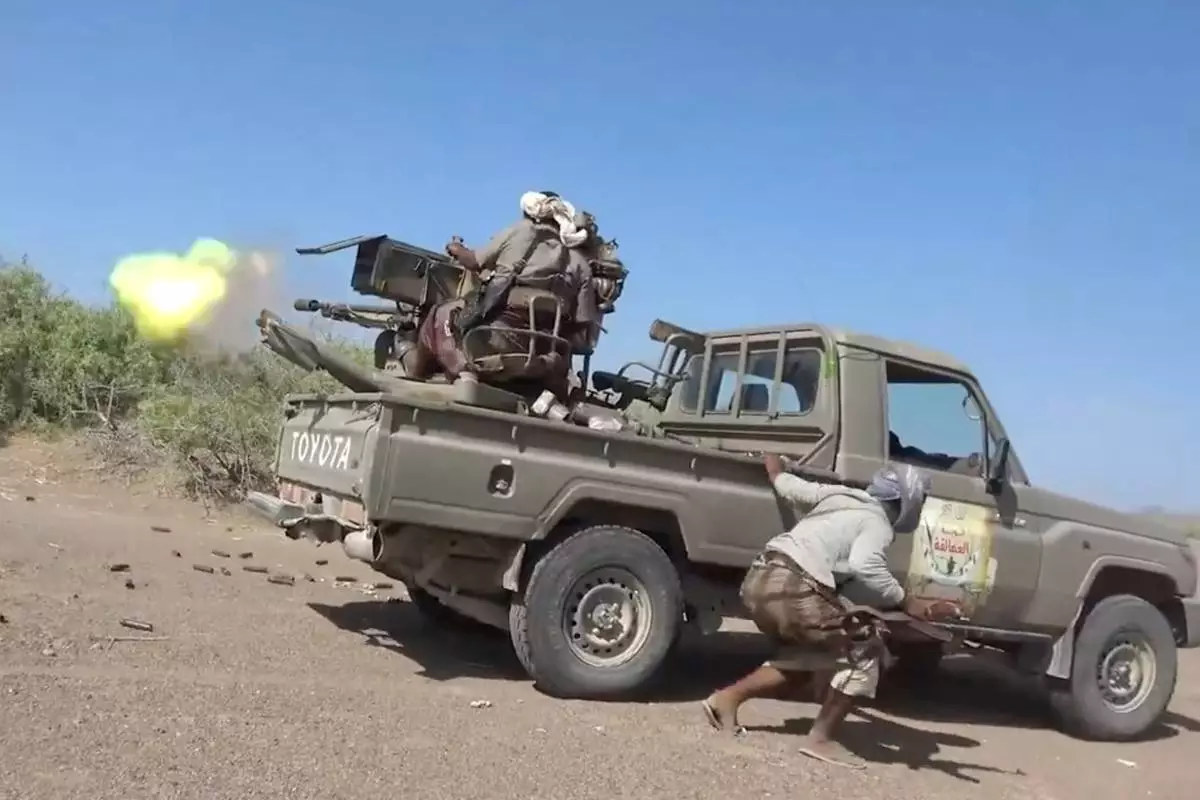
FILE - This image taken from undated video released Monday, Oct. 5, 2026, by the Yemeni government-allied Southern Giants Brigades media office shows, what the group says, are its fighters firing a weapon mounted on a pickup truck during clashes with the Iran-backed Houthi group in Dhobab district, Taiz, Yemen. (Southern Giants Brigades Media Office via AP, File)
FILE - This image taken from undated video released Monday, Oct. 5, 2026, by the Yemeni government-allied Southern Giants Brigades media office shows, what the group says, are its fighters firing a weapon mounted on a pickup truck during clashes with the Iran-backed Houthi group in Dhobab district, Taiz, Yemen. (Southern Giants Brigades Media Office via AP, File)

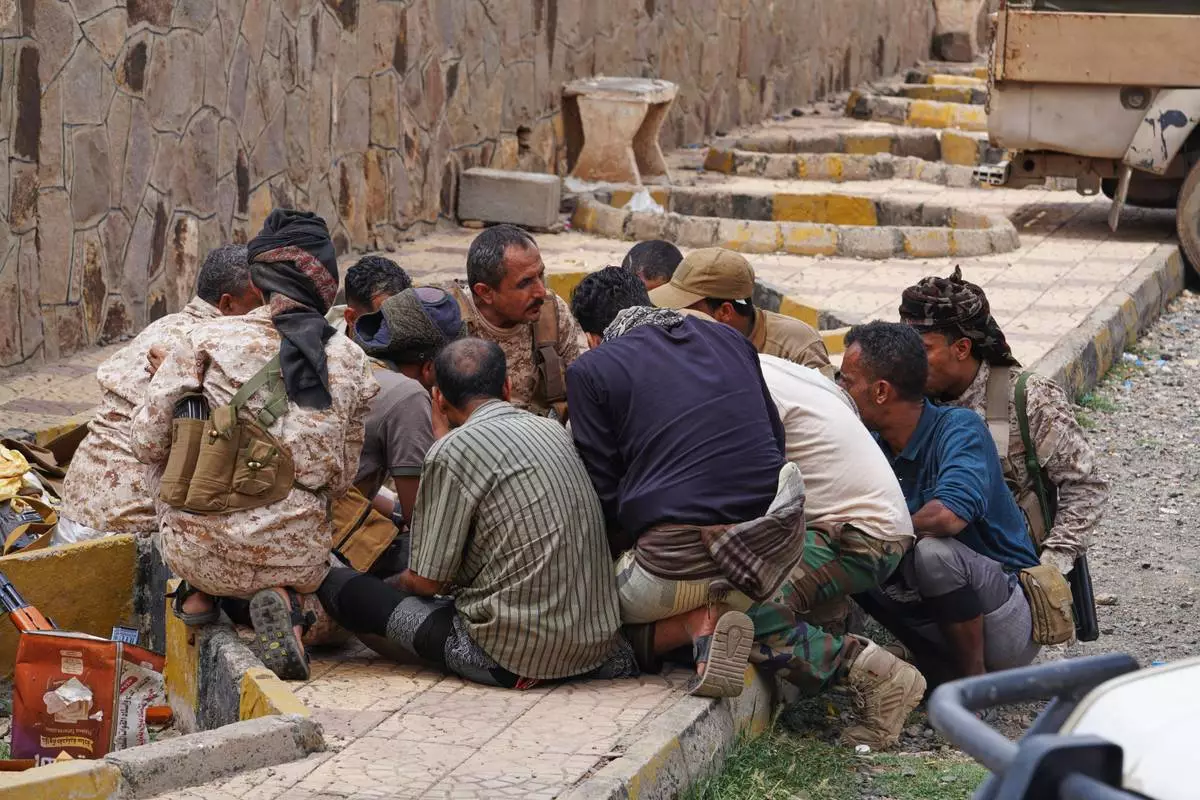
FILE - Yemeni soldiers eat at a military position in the Al-Kadha, in Taiz, Yemen, Saturday, Sept. 26, 2026. (AP Photo/Abdulnasser Alseddik, File)
FILE - Yemeni soldiers eat at a military position in the Al-Kadha, in Taiz, Yemen, Saturday, Sept. 26, 2026. (AP Photo/Abdulnasser Alseddik, File)

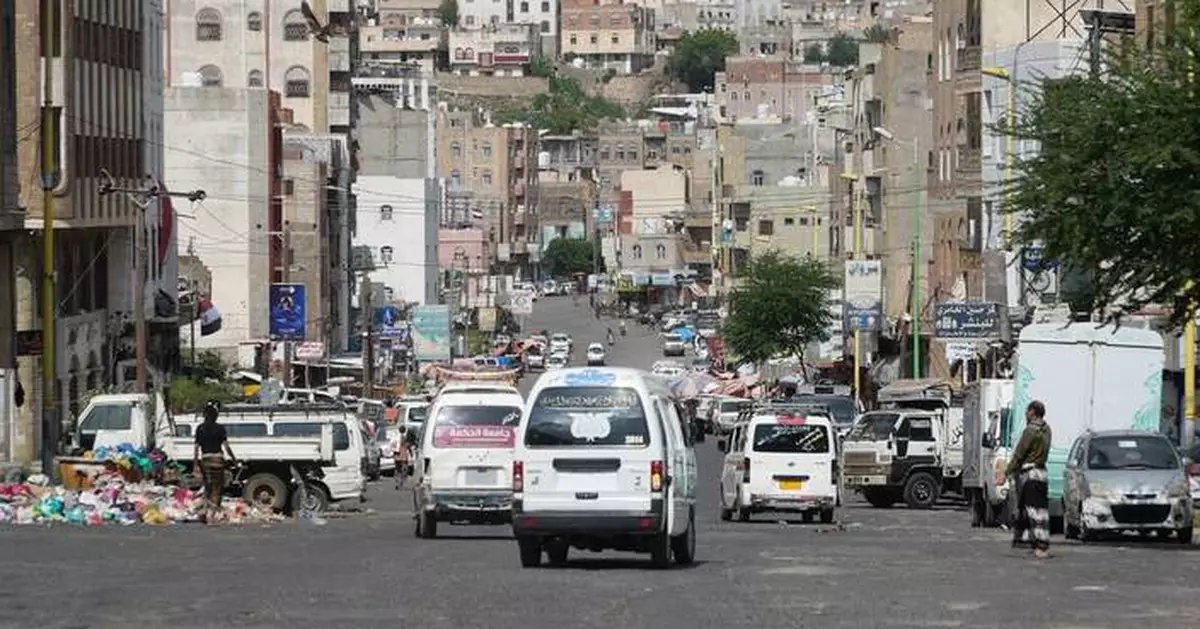
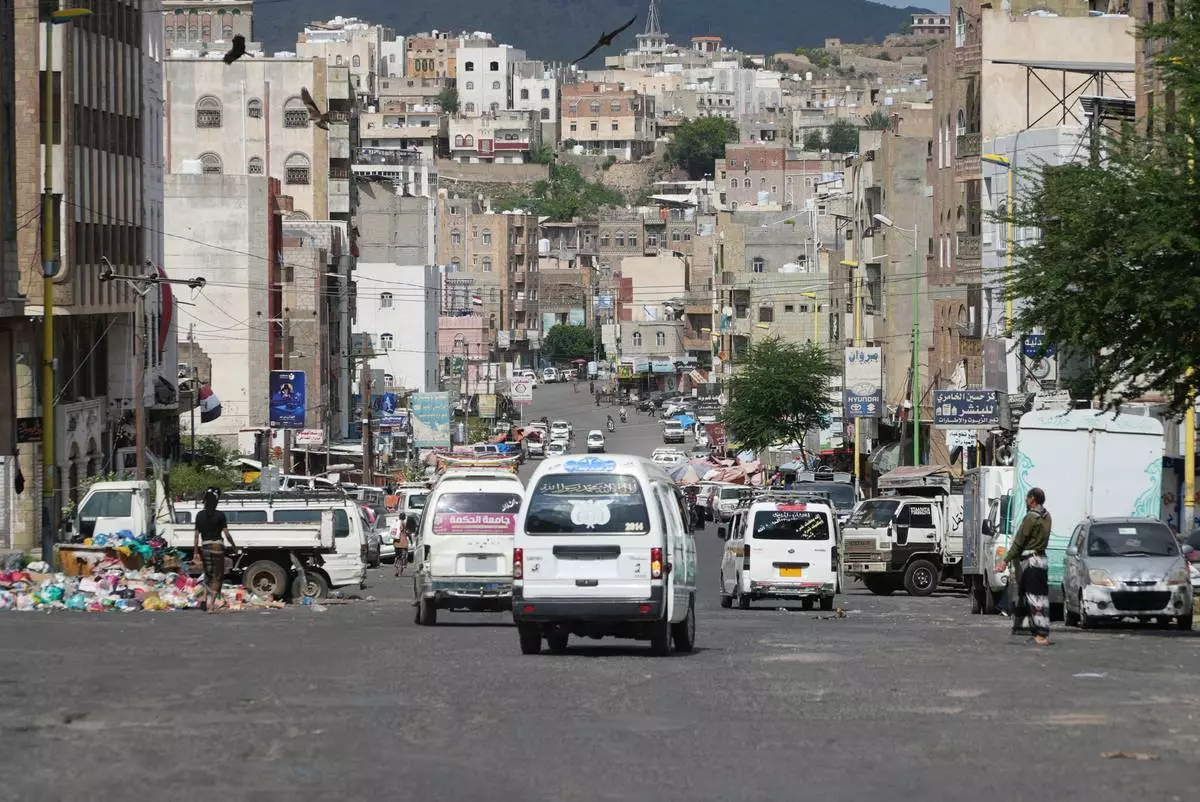
FILE - People use minibuses to save gasoline in Taiz, Yemen, Wednesday, Oct. 7, 2026. (AP Photo/Marzouq Al Jabri, File)

FILE - People use minibuses to save gasoline in Taiz, Yemen, Wednesday, Oct. 7, 2026. (AP Photo/Marzouq Al Jabri, File)
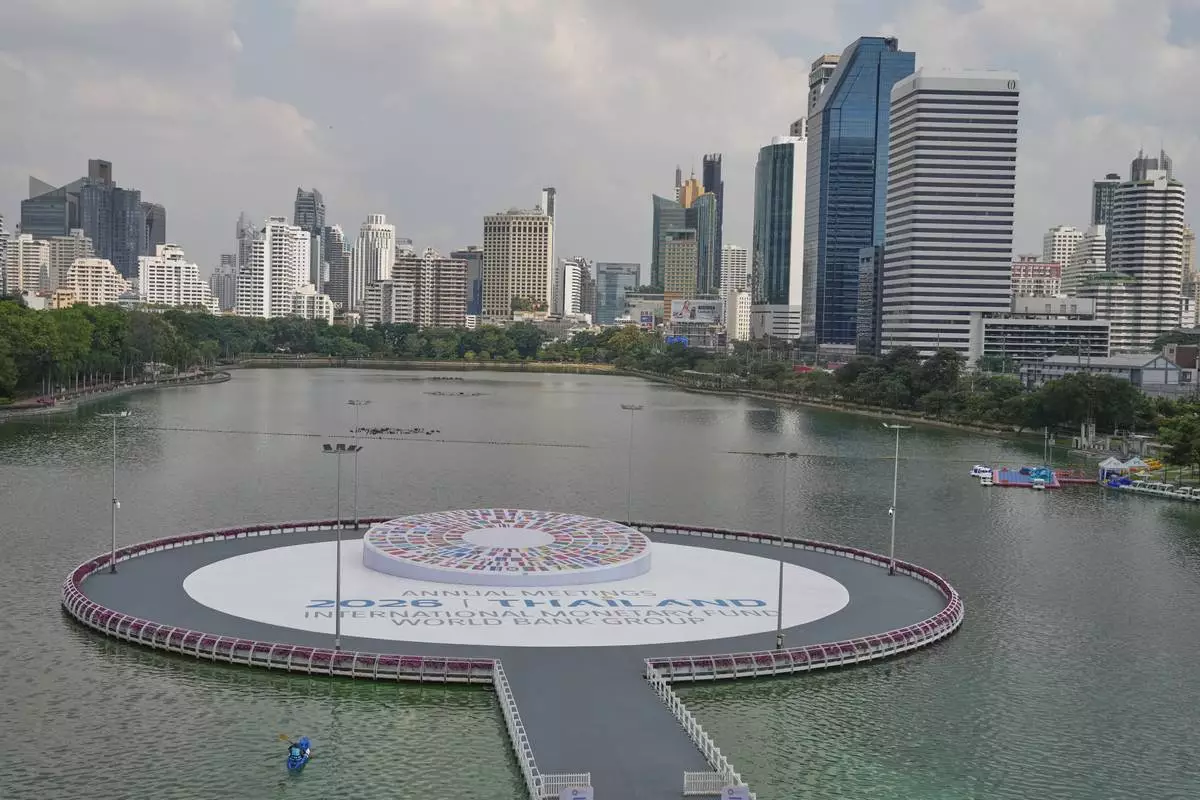
BANGKOK (AP) — The International Monetary Fund on Tuesday slightly upgraded its outlook for the world economy for this year, while warning of growing risks from rising debt, including borrowing related to artificial intelligence.

The IMF says it expects the global economy to grow at a 3.1% pace this year. That's up from its July forecast for 3.0% growth and well below the 3.5% expansion in 2025. Growth in 2027 should rebound to 3.4%, it said in its latest Economic Outlook.

The report, released as world economic and financial leaders gather in Bangkok for the fall meetings of the IMF and World Bank, predicts that growth in the United States will remain steady at 2.3% in 2026 and 2027.

Collectively, advanced economies will grow 2.1% this year, up from 2.0% in 2025. But growth is forecast to slow to 1.9% next year, it said.

The forecasts are based on a nearly 41% increase in oil prices this year, at an average of $96 a barrel. Global inflation is foreseen at 4.7% in 2026, falling to 4.1% next year. They also are based on the assumption that shipments of oil and gas through the Strait of Hormuz will resume by March, and that the boom in AI demand will moderate.

The boom in artificial intelligence is offsetting damage from sharply higher prices for oil and gas, IMF economists say, but it also carries risks.

Its benefits are not shared equally: the U.S. and China account for more than three-quarters of net demand for imports of computer chips and other AI-related equipment, the report said.

“The outlook is highly uneven,” Silvana Tenreyro, the IMF's director of research, told reporters in Bangkok.

Growth is increasingly concentrated, with 32 countries accounting for 95% of global growth, the report said. That compares with 54 countries as of April.

“The global economy is not simply slowing or accelerating; rather, growth is being reallocated across countries according to their exposure to the war-induced supply shock and AI-related demand strength,” it says.

Athanasios Vamvakidis, deputy director at the IMF's Monetary and Capital Markets Department, said an AI-related correction in stock markets is just one of the risks. Rising bond yields are another evolving problem, along with cyberthreats that could disrupt financial systems, he said.

AI's effects on employment are another key focus of the meetings in Bangkok, which IMF Managing Director Kristalina Georgieva described during an event Monday as “a slow moving tsunami, but a tsunami nonetheless."

"The impact over time on jobs globally we estimate to be around 40% — jobs either augmented or downgraded or eliminated. And we are already seeing some of this impact,” she said.

Last week, the IMF chief urged countries both rich and poor to do a better job of improving their national finances, urging policymakers to do more to tame mounting levels of debt.

That's especially true at a time of high borrowing costs, Tenreyro said.

Countries that are somewhat insulated from the energy shocks of the Iran war and that are benefiting from rapid adoption of AI are managing to keep growth on track. But developing economies and emerging markets more vulnerable to higher costs for oil and gas will see growth slow to 3.7% this year from 4.5% in 2025, the report says. It forecasts they will regain momentum next year, expanding at a 4.4% annual pace.

The situation is much worse in the Middle East and Central Asia, where those regions' economies are expected to contract this year before recovering to a 6.3% rate of growth in 2027.

The 21 European countries that share the euro currency are expected to grow by 1.1% this year and 1.2% in 2027.

China, the world’s No. 2 economy, is expected to expand 4.5% this year, down from 5% in 2025, in line with the government's official target.

India is once again forecast to be the world’s fastest-growing major economy, advancing at a 7% clip, down from a sizzling 7.7% last year.

The IMF is a 191-nation lending organization that works to promote economic growth and financial stability and to reduce global poverty. At the meetings in Bangkok, finance ministers and central bank governors will assess the state of the world economy and discuss strategies to support financial stability and sustained growth.

AP journalists Haruka Nuga and Tian Macleod Ji contributed.

FILE - The logo of the International Monetary Fund is visible on its building, April 5, 2021, in Washington. (AP Photo/Andrew Harnik, File)

FILE - The logo of the International Monetary Fund is visible on its building, April 5, 2021, in Washington. (AP Photo/Andrew Harnik, File)

A person rows a boa beside a logo displayed at the Queen Sirikit National Convention Center ahead of the annual meetings of the International Monetary Fund (IMF) and the World Bank group in Bangkok, Thailand, Friday, Oct. 9, 2026. (AP Photo/Sakchai Lalit) (edited)

A person rows a boa beside a logo displayed at the Queen Sirikit National Convention Center ahead of the annual meetings of the International Monetary Fund (IMF) and the World Bank group in Bangkok, Thailand, Friday, Oct. 9, 2026. (AP Photo/Sakchai Lalit) (edited)

International Monetary Fund (IMF) Managing Director Kristalina Georgieva speaks at the World Bank Group Flagship Small AI: More and Better Jobs forum during the annual meetings of the IMF and the World Bank Group in Bangkok, Monday, Oct. 12, 2026. (AP Photo/Sakchai Lalit)

International Monetary Fund (IMF) Managing Director Kristalina Georgieva speaks at the World Bank Group Flagship Small AI: More and Better Jobs forum during the annual meetings of the IMF and the World Bank Group in Bangkok, Monday, Oct. 12, 2026. (AP Photo/Sakchai Lalit)

International Monetary Fund (IMF) Managing Director Kristalina Georgieva speaks at the Small AI, Real Jobs forum during the annual meetings of the IMF and the World Bank Group in Bangkok, Monday, Oct. 12, 2026. (AP Photo/Sakchai Lalit)

International Monetary Fund (IMF) Managing Director Kristalina Georgieva speaks at the Small AI, Real Jobs forum during the annual meetings of the IMF and the World Bank Group in Bangkok, Monday, Oct. 12, 2026. (AP Photo/Sakchai Lalit)

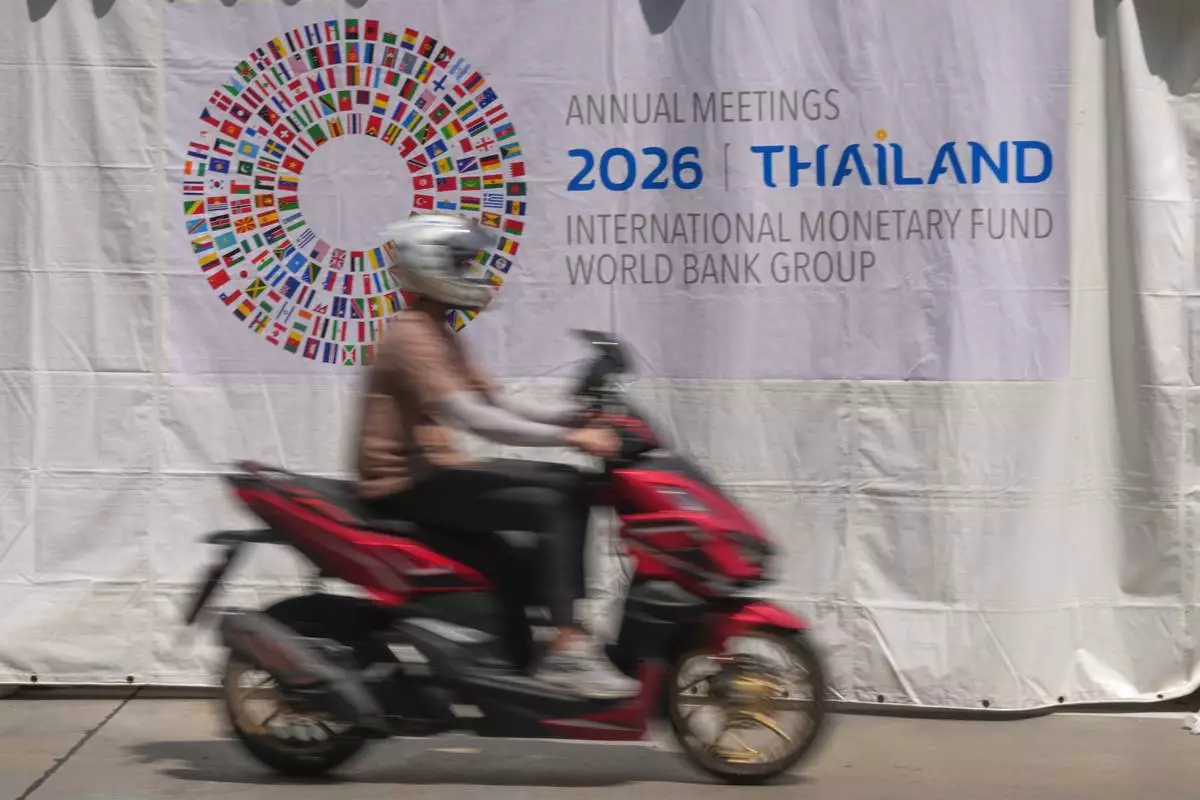
A motorcycle taxi rides past a banner at the Queen Sirikit National Convention Center ahead of the annual meetings of the International Monetary Fund (IMF) and the World Bank Group in Bangkok, Thailand, Friday, Oct. 9, 2026. (AP Photo/Sakchai Lalit)

A motorcycle taxi rides past a banner at the Queen Sirikit National Convention Center ahead of the annual meetings of the International Monetary Fund (IMF) and the World Bank Group in Bangkok, Thailand, Friday, Oct. 9, 2026. (AP Photo/Sakchai Lalit)

Recommended Articles