The Organization of Petroleum Exporting Countries (OPEC) has sharply lowered its 2026 global oil demand growth forecast to 400,000 barrels per day, down from an earlier projection of 1.4 million barrels, Secretary General Haitham Al Ghais said Monday.
Speaking at the 25th WPC Energy Congress in Riyadh, Saudi Arabia, Al Ghais attributed the sharp downward revision to broader economic headwinds and shifting consumption developments recorded throughout the year. He emphasized that this unused demand has not disappeared entirely, but rather been deferred, with OPEC expecting pent-up consumption to gradually materialize in 2027.
Al Ghais also highlighted that global primary energy demand is projected to rise 23 percent by 2050, warning that widespread underinvestment across energy production is already squeezing key sectors such as oil refining.

OPEC cuts global oil demand forecast, sees recovery deferred to 2027
China will cut the value-added tax (VAT) export rebate rate for new energy vehicles (NEVs) to 9 percent from 13 percent and scrap rebates for e-cigarette devices from April 1, 2027, the Ministry of Finance and the State Taxation Administration said on Monday.
Export consumption tax policies for products subject to the tax will remain unchanged, with existing refund and exemption arrangements continuing to apply, the statement said.
The change continues China's optimization of export tax rebate policies. The country scrapped VAT export rebates for photovoltaic products from April 1, 2026, and cut the rebate rate for battery products to 6 percent from 9 percent on the same date, with battery rebates to be eliminated from Jan. 1, 2027.
The move comes as China's NEV sector continues to expand rapidly, with automakers increasingly looking to overseas markets for growth. China is the world's largest market for NEVs, a category covering battery-electric and plug-in hybrid vehicles.
China exported 1.05 million vehicles in September, up 61.4 percent year on year, including 571,000 NEVs, more than double the number a year earlier. NEVs accounted for more than half of total vehicle exports for the fourth consecutive month.
The shift is even more pronounced in the domestic market, where NEVs have become the dominant force, making up a record 62 percent of new car sales in September, according to the China Association of Automobile Manufacturers. More broadly, in the first three quarters of 2026, NEV output and sales each reached around 12.5 million units, up 11 percent year on year, with NEVs accounting for more than half of total new car sales.
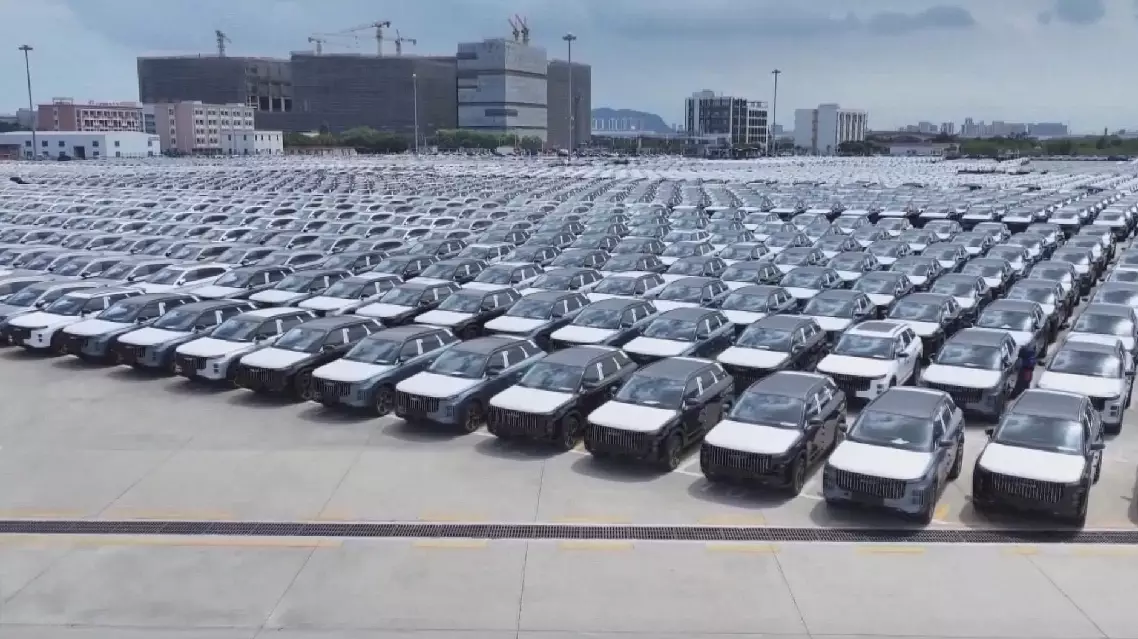
China to cut NEV export tax rebate rate to 9 pct from April 2027