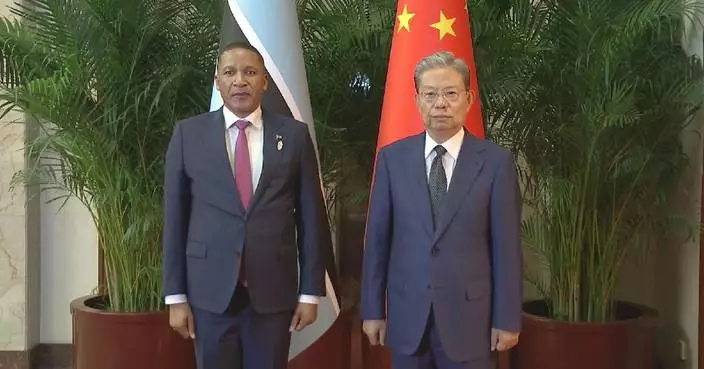
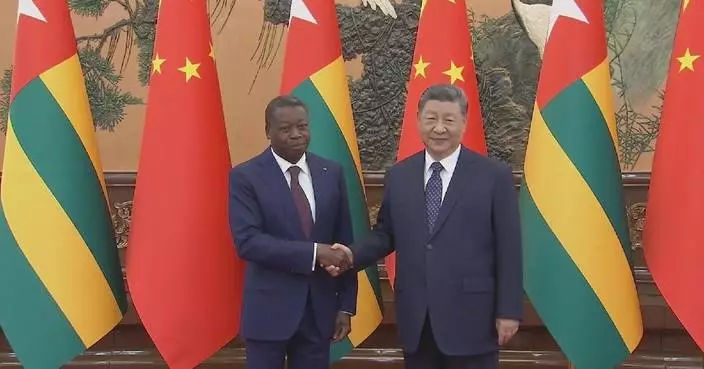
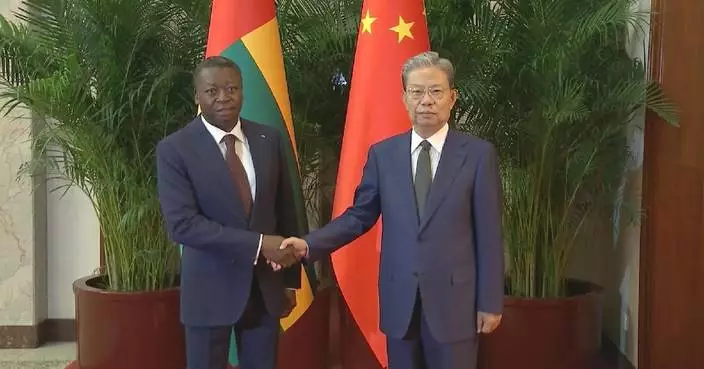
Chinese President Xi Jinping and Botswana's President Duma Gideon Boko announced the elevation of bilateral relations to a comprehensive strategic cooperative partnership in Beijing on Tuesday.
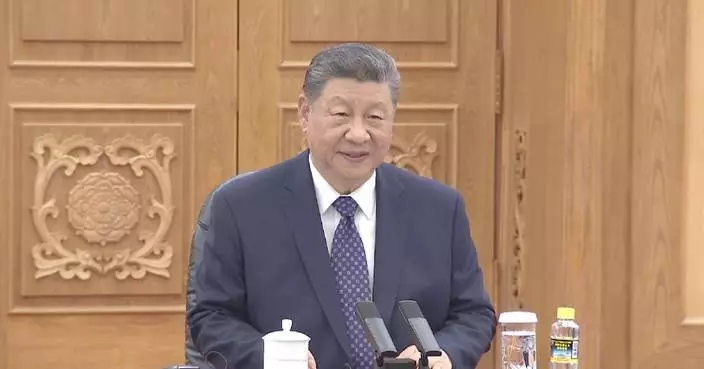
During their talks, Xi said the friendship between China and Botswana should be as brilliant and lasting as a diamond. Both sides should bear in mind the history of mutual support and reliance, and make efforts for the development of bilateral relations in the new era, thus making contributions to the development and progress of the world.
Noting that this year marks the 105th anniversary of the founding of the Communist Party of China and the 60th anniversary of Botswana's independence, Xi said the ruling parties of the two countries should enhance cooperation, deepen the exchange of experience in governance and administration, and promote the integration of ideas.
China supports Botswana in following a development path that suits its national conditions. Both sides should further improve the framework of economic and trade cooperation and make good use of the new opportunities brought by China's full implementation of the zero-tariff treatment for the African countries with diplomatic relations, Xi said.
China is willing to enhance cooperation with Botswana in areas such as the digital economy, agriculture and livestock, and implement the smart education projects, so as to contribute to Botswana's economic and social development, the Chinese president said.
Xi put forward four proposals on promoting mining cooperation between China and Botswana as well as between China and Africa.
First, adhering to the cooperative premise that African resources belong to Africa. China is willing to share its own experience to help African countries formulate mining development plans that are in line with their national conditions, Xi said.
Second, adhering to the cooperative concept of pursuing the greater good and shared interests while upholding mutual benefit. China will continue to encourage Chinese enterprises to enhance their operational capabilities, transfer green technologies suited to Africa's realities, and promote South-South cooperation in the mining industry, he noted.
Third, adhering to the cooperative direction of high-quality development. China will continue to promote China-Africa mining cooperation toward industrial value addition, explore affordable and sustainable innovative financing models, and support Africa's modernization process with high-level cooperation, Xi said.
Fourth, adhering to a fair and open cooperative environment. Africa's resources should not become a tool for geopolitical rivalry. China welcomes genuine efforts by all parties to assist Africa's development and stands ready to work with Africa to create a more favorable condition for business investment and operation, he said.
For his part, Boko said China has made world-shaking development achievements, lifting all impoverished population out of poverty and blazing a successful path of development with Chinese characteristics, which is well worth studying and drawing on for Botswana.
Boko said his country attaches great importance to the relations with China, firmly adheres to the one-China principle, and opposes any attempt to seek Taiwan secession, as well as any force's interference in China's internal affairs.
Boko expressed gratitude to China for its long-term support and assistance to his country's development, saying Botswana is willing to enhance strategic alignment with China, welcomes more Chinese enterprises to invest and start businesses there, and strengthen cooperation in areas such as the Belt and Road Initiative, industry, agriculture, mining, innovation, and digital transformation, so as to achieve more tangible results in bilateral relations.
The four major global initiatives proposed by the Chinese leader -- the Global Development Initiative (GDI), the Global Security Initiative (GSI), the Global Civilization Initiative (GCI) and the Global Governance Initiative (GGI) -- demonstrate China's responsibility and commitment as a major country, and are conducive to maintaining the international order with the United Nations at its core, Boko said.
He added that Botswana is willing to closely coordinate and cooperate with China, adhere to multilateralism, strengthen unity among developing countries, promote unity and cooperation between Africa and China, and make the global governance system more inclusive and representative.
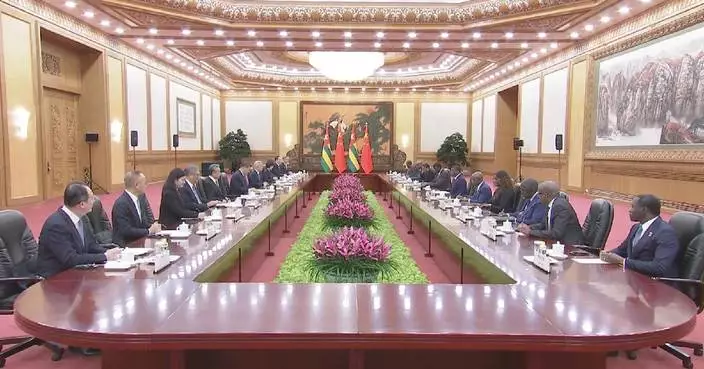
After the talks, the two heads of state attended a signing ceremony of cooperation documents on implementation of the GSI, the joint construction of the Belt and Road Initiative, green mining, healthcare, and human resources.
Xi and his wife Peng Liyuan held a banquet at the Great Hall of the People to welcome Boko and his wife on Tuesday evening.
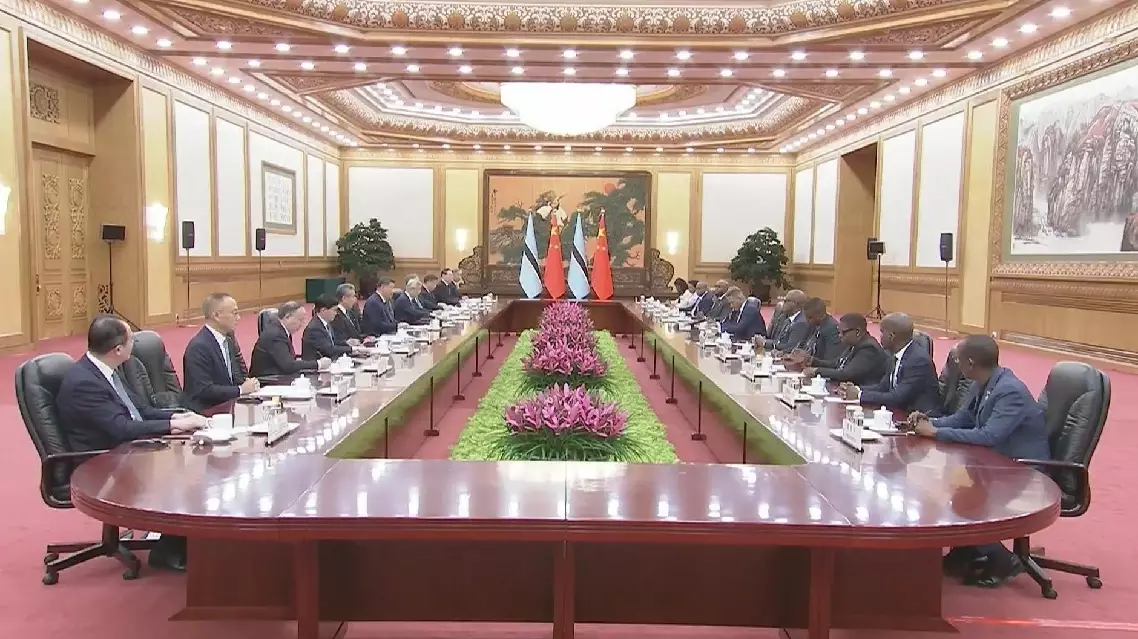
China, Botswana establish comprehensive strategic cooperative partnership