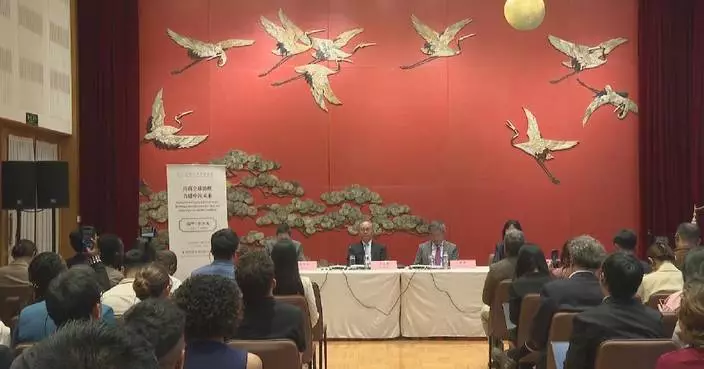
The 2026 Beijing Forum on Swift Response to Public Complaints, which brought together participants from around the world to exchange ideas on how cities can better meet public needs, wrapped up on Tuesday.
More than 240 international guests from 70 countries and regions took part in this year's two-day forum.
For international participants, the forum provided a platform to share insights, examine Beijing's approach to public service delivery, and consider how its practices could be applied in their own cities.
"I'm very happy to see how the Beijing government and how the people's government works to help the needs of the people because you have a people's government for the people and by the people. I think that's how real democracy should work," said Gonzalo Fiore Viani, a researcher at the National Scientific and Technical Research Council of Argentina.
"There are possibilities of mutual learning, possibilities of technology transfer, possibilities of building the capacity of those administrators of local government to be able to replicate a model like this one, which combines people, politics and technology into one and provides a solution for the people of Beijing," said Busani Ngcaweni, Professor of Public Policy at the Johannesburg Business School.
Participants also examined research findings and case studies from around the world, then visited local communities to observe how public services are delivered in practice.
"Ultimately, we want to involve as many countries as possible so that we have a holistic overview about how urban governance should be done properly and how to serve citizens," said Helen Bao, Professor of Urban Economics and Public Policy at the University of Cambridge.
Since 2019, Beijing's 12345 hotline has handled around 200 million requests, covering everything from everyday problems to citywide challenges.
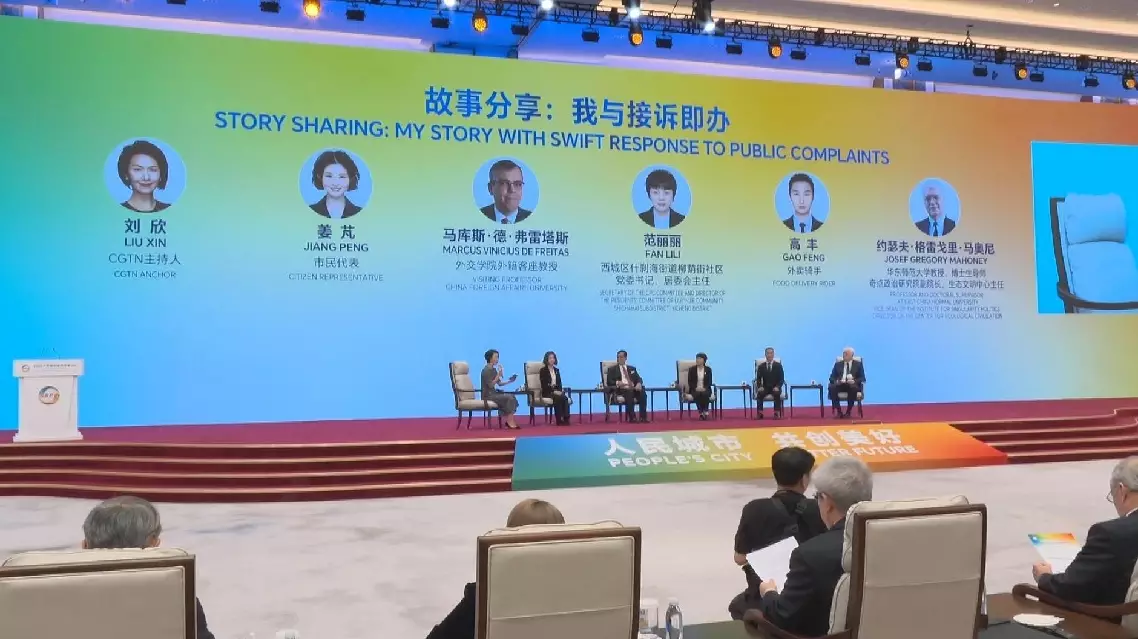
Forum on Swift Response to Public Complaints concludes in Beijing