WHITE SULPHUR SPRINGS, Mont. (AP) — “You can’t hit me, Will. You know that,” Katherine Walter says to her 11-year-old son, deflecting a swat.
“Why?” William asks, half-heartedly pushing his chest into his mother’s open hands.
Click to Gallery
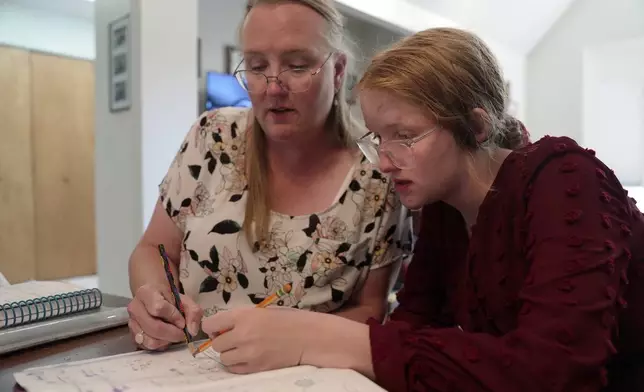
Ella Walter, 11, works with her mom, Katherine, on schoolwork at home in White Sulphur Springs, Mont., July 15, 2026. (AP Photo/Shelby Lum)
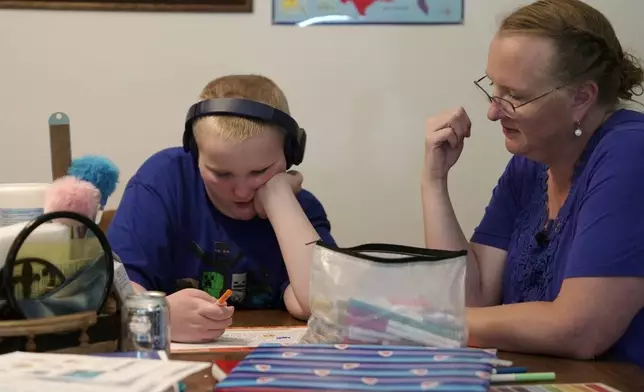
William Walter, 11, and his mother, Katherine, work during homeschooling hours in their home in White Sulphur Springs, Mont., July 16, 2026. (AP Photo/Shelby Lum)
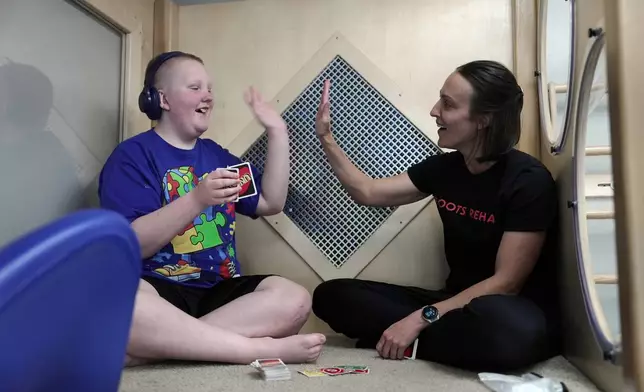
William Walter, 11, high fives his therapist, Charla Banks, at his occupational therapy appointment at Roots Rehab in Montana City, Mont., July 15, 2026. (AP Photo/Shelby Lum)
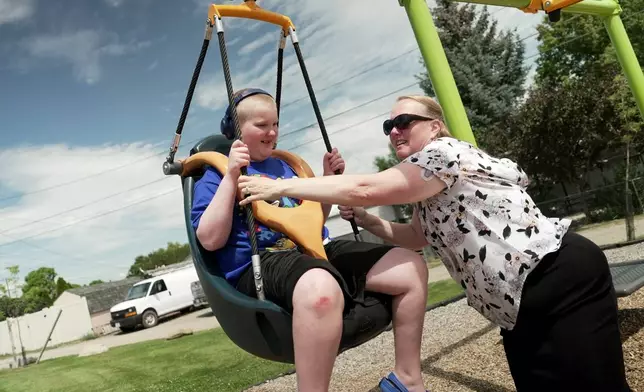
William Walter, 11, is pushed on a zipline style swing by his mother, Katherine, in Helena, Mont., July 15, 2026. (AP Photo/Shelby Lum)
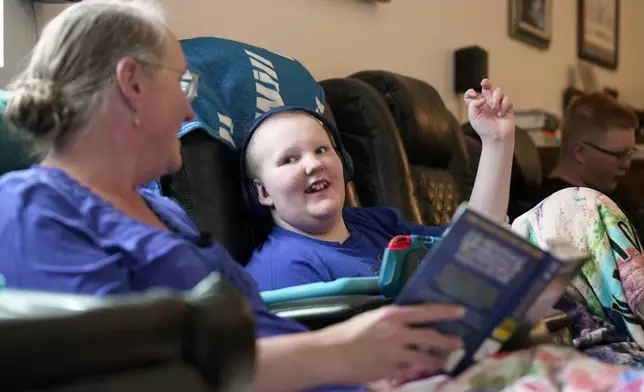
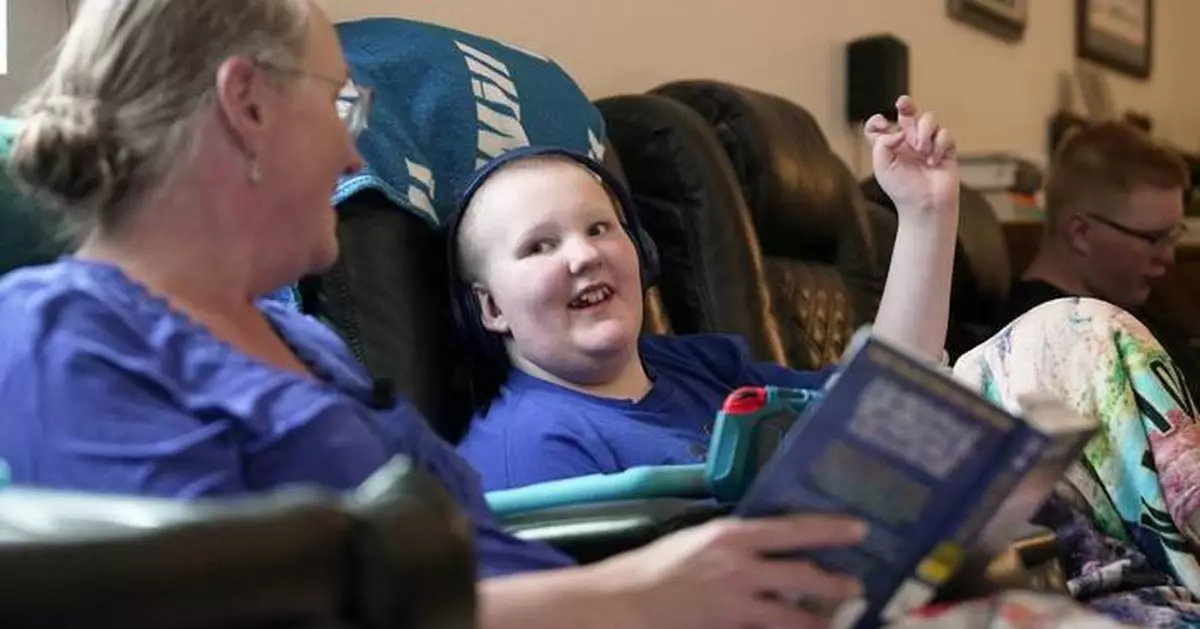
William Walter, 11, and his mother, Katherine, read a book together during homeschooling hours in White Sulphur Springs, Mont., July 16, 2026. (AP Photo/Shelby Lum)
“You are in the red zone,” she says. “I need you to take it back to the green. What can I do to help you? Are you hungry? Do you need a snack?”
A few hours later, Will is curled up in his favorite chair, listening to his mother read a novel and asking questions about the book.
It takes skill and patience to teach Will, who has autism and a neurological disorder that makes it difficult to speak. The Walters say they no longer trust their rural school system to educate him without restraining him or hurting him. Katherine Walter teaches him herself.
America’s public education system offers some of the world's best services and protections for students with disabilities, guaranteed by federal law. But more parents like the Walters are abandoning their rights to those services. They say public schools are failing their kids and they’re better off trying to educate them at home.
In many states, they’re receiving thousands of dollars from taxpayers to do it.
In the 1970s, when the United States first established the right to a “free and adequate” education for “handicapped” children, only 8% of U.S. school children were considered disabled.
Now the special education rate is 15%, boosted in part by the inclusion of autism-spectrum disorders. But disability screenings are also on the rise — both in schools and in medicine — with less stigma associated with diagnoses. It’s also possible that simply more Americans have disabilities: Advances in medicine mean more premature babies are surviving, and they often have developmental delays or medical conditions.
Before the Walters even married, they debated where their future children would go to school. They were set on living on the Montana ranchland that had been in Mike’s family since his ancestors came from Kansas by covered wagon.
Katherine was open to homeschooling. But Mike insisted their children would attend the same tiny school district he did. Mike graduated salutatorian of his five-person class, and he adored his teachers for catering to his interests.
“He had such a good experience. He wanted the same for his kids,” Katherine says. “But I’m not sure the school is the same now. It’s now a mass, one-size-fits-all approach.”
The Walters’ children also have more complex needs than Mike had, reflecting the trend nationwide. Their oldest child, Lester, 15, has dysgraphia, a neurological condition that made it difficult to learn to write. Along with autism, Will has apraxia — a rare speech disorder in which children typically know what they want to say but struggle to control their jaws, lips and tongue.
Will thrived in a privately run preschool program, learning and playing alongside twin sister Ella and other children. The preschool owner had trained as an elementary special education teacher and understood how to tailor instruction and routines for Will. He followed preschool routines well, according to school documents, but the academic expectations of elementary school would pose a challenge.
“Will’s speech and language delays will make it difficult for him to learn to read in kindergarten,” his preschool teacher wrote in his special education plan. “Until those skills improve he will have to learn in non-verbal ways which he will be quite capable of doing.”
The preschool teacher signaled another hurdle. “If he is interested in an activity, he can stay focused for as long as the activity lasts,” she wrote. “However, if he is not that interested, he has difficulty staying on task. Sometimes it’s hard to tell if Will can’t do something or just isn’t interested.”
Will’s mom was most concerned about Will’s inability to communicate, fearing he would get frustrated if he wasn’t understood.
Federal law guarantees the right for students with disabilities to study in what’s called the “ least restrictive environment.” They should receive support to learn alongside children without disabilities as often as possible, with the same access to activities and curriculum.
When families don't feel satisfied with the support their children receive, some leave public school and abandon their child's right to state-funded educational support for their disability. That may mean the family takes on tens of thousands of dollars in therapies usually provided in public school.
Increasingly, politicians — most of them conservative — say parents of kids with disabilities should receive financial support if they choose private or homeschool options. Thirty states, plus the District of Columbia, have taxpayer-funded scholarships for private school or homeschooling, and many give priority or more money to students with special needs.
But when Will entered kindergarten, his family wanted him to attend public school. The school district agreed to place Will in a mainstream classroom and provide a teacher’s aide to work with him.
Two weeks before Will would start kindergarten, Walter called the White Sulphur Springs superintendent to confirm they’d hired the assistant to help him. She wanted Will to meet the aide before school started. But, she says, the district hadn’t hired the teacher’s assistant.
She also says the school hadn’t hired a special education teacher, who would meet with Will daily and help him reach the goals outlined in his special education plan. Later, the superintendent disputed some of this, saying he did hire “extra” aides.
Walter kept Will home for kindergarten. In fact, she decided to teach all three children herself, for convenience. She planned to send him back to school for first grade.
She kept taking Will to the school for his therapies, hoping to maintain a relationship with the district. She says one of those interactions with the school broke her trust in the public education system forever.
In March, on a visit to meet the newly hired special education teacher, Will’s future first grade teacher stopped by to meet him too.
Written accounts collected by law enforcement and the school district and supplied to The Associated Press by the Walters portray different versions of what happened that day.
According to the first grade teacher, Will hit her early in their encounter. Then, he approached her with an object she thought was a toy, holding it in front of her face. In interviews, Will’s mother explained it was actually his communication device — an iPad with software that speaks the pictures he chooses.
The teacher said she gripped Will's wrists and moved “the toy” down from her face. He tried to pull away, dropping to the ground. She followed him, still gripping his wrists, and he kicked her.
Will’s mother described the incident in starker terms. She said in an email to the superintendent that the first grade teacher pulled Will from where he had fled under a table and “pinned” him to the floor.
Afterward, the first grade teacher told other school staff, “Nobody can pay me enough to put up with a child hitting or kicking me,” according to a written statement she gave the superintendent.
Walter filed a complaint with the sheriff, alleging the teacher had assaulted Will that day. The county attorney concluded the teacher was defending herself. He continued: “While I do not believe that (the teacher’s) actions were criminal, her actions escalated an already difficult situation.”
The superintendent at the time determined the teacher had acted appropriately, calling Walter’s allegations “not credible.”
“I never set out to homeschool my kids,” Walter says. “We wanted our kids to have all of the big milestones you have when you attend the public schools. Being a Hornet is a big deal in this community. ... But we needed the school to say they would never restrain a child to the floor again.”
Walter tried various avenues, including filing a complaint with the U.S. Department of Education’s Office of Civil Rights, to no avail. She spent a year lobbying the state Legislature to ban restraint and physical isolation in public schools.
The family pursued filing a civil rights lawsuit, but said they couldn’t find a qualified Montana attorney willing to take their case. One of the few disability rights attorneys working in Montana declined to represent Will unless he reenrolled at the public school, so his case would stand for more students, not just him. And returning to the school under the current circumstances was a deal-breaker, the Walters felt.
Katherine Walter came to see the federal law guaranteeing disabled students equal access to a public education as a “beautiful piece of paper.”
“The deck is stacked against us as parents,” she said. “School districts use our tax dollars to fund their lawyers to fight us. And we can’t access what is entitled to our children without an attorney.”
When all else failed, the family filed a personal injury lawsuit against the district, arguing it was negligent and didn’t properly train its staff to work with students like Will. They settled last year for $40,000, with no admission of wrongdoing by the district. And the current superintendent, Meredith Feddes, told AP the school district has trained its staff in de-escalation.
The whole Walter family kept homeschooling.
Every Wednesday for the last nine years, Will and his mom have driven 90 minutes to Helena for his specialized therapies. As they drive through hay fields one morning in July, away from their two-gas-station town, Will plays a video game on an iPad strapped to the seat in front of him. Fireworks fill the screen.
“Aaah!” Will says as he taps the screen and blocks blow up.
Outside the office, his occupational therapist comes to the car and Will jumps out.
“Ready to have some fun?” therapist Charla Banks asks.
“Yuh-huh,” he says.
Inside, Will grabs some pool noodles and gets on a giant platform swing. He sits in front with his legs crossed, his therapist seated behind him. She uses a free leg to propel them forward.
Will reaches a noodle into the pretend water and almost loses his balance, then rights his body. The exercise helps Will strengthen his core, but more importantly, he practices monitoring and managing his emotions and behavior.
Practice like this has helped Will and the Walters minimize conflict at home and out in the world. He’s generally less frustrated here and more willing to take on difficult tasks, such as using his fingers to work out a small toy embedded in stiff Play-Doh.
But Will does still occasionally get frustrated, as he did recently when he lightly hit and pushed his mother during school time. The reasons can vary — a change in routine, guests in the home — and sometimes they're not apparent at all.
If upsets or resistance seem linked to a certain topic or activity, Walter sometimes adjusts her instruction. She stopped teaching Will science for a while and no longer gives him exams. To entice him to try something difficult, she offers to play a hand of Uno first.
“We’re like most families,” she says. “We’re doing the best we can.”
They follow a common homeschooling philosophy: Teach a lesson until it’s mastered. This year, Will is working on first and second grade reading, third grade math and sixth grade science and history. He’s progressed to doing more things independently, such as writing or filling out a worksheet.
“This is huge,” Walter said. “Two years ago, this was not possible.”
Therapies are vital to Will’s development, and the district would have provided them at least partially if he were enrolled in public school. The Walters pay for his therapies through their health insurance, which covers one visit a week for occupational and speech therapy.
His apraxia diagnosis calls for speech therapy three to five times a week. At $100 an hour, the Walters can’t afford that. On average, they told AP, they already spend $10,000 to $12,000 a year on his therapies and evaluations.
While Walter was lobbying at the Montana Capitol for a ban on physical restraint in public schools, she told her story to dozens of lawmakers. A legislator with a child with Down syndrome took interest in the Walters' work to homeschool Will on their own dime.
Inspired by Will’s experience, Montana legislators in 2023 created a taxpayer-funded scholarship to help students with disabilities pay for therapies after they leave public school. Families could also spend the money on homeschooling expenses or private school tuition.
Seventy-five students were approved for the scholarship, worth $6,600 on average, before meeting a court challenge from education and disability rights groups. The lawsuit argued the scholarships were unconstitutional because the law doesn't designate a way to pay for them.
Will wasn’t one of the students to receive the financial help; the scholarship is only for students who were recently enrolled in public school when they applied. His brother, Lester, did get the scholarship; the district counted him as recently enrolled because he played sports while homeschooling, according to Walter. But the state paused the scholarship distribution this year while the legal challenge makes its way through the courts.
Advocates for children with disabilities have lined up against taxpayer-funded scholarships like the ones in Montana. They argue the scholarships hurt students with special needs because their rights are no longer protected when they leave public school. And, they say, the money provided is insufficient to educate them adequately. They also say these programs incentivize parents to pull their children out of public schools, taking funding away from other kids who need it.
Walter doesn't think pulling her children out of the local school system has hurt remaining public school students. And she’s convinced she’s the best person in White Sulphur Springs to provide Will's education.
The conclusion is one that hundreds of thousands of families have made across the country.
In Arizona, for example, 20,000 students with disabilities are using the state’s education savings account to pay for home education or private school. In Florida, 140,000 students use the state scholarship for children with “unique abilities.” One in 5 recipients has autism.
Starting next year, the Walters may have another option for paying for homeschooling or private school, when the federal government gives taxpayers a credit for donating to new school choice scholarships in dozens of states.
That’s welcome news for the Walters. Their other children may return to their public school at some point. But until there’s a ban on restraint in schools, they don't think Will would be safe there. His mother plans to homeschool him from now on.
The Associated Press’ education coverage receives financial support from multiple private foundations. AP is solely responsible for all content. Find AP’s standards for working with philanthropies, a list of supporters and funded coverage areas at AP.org.
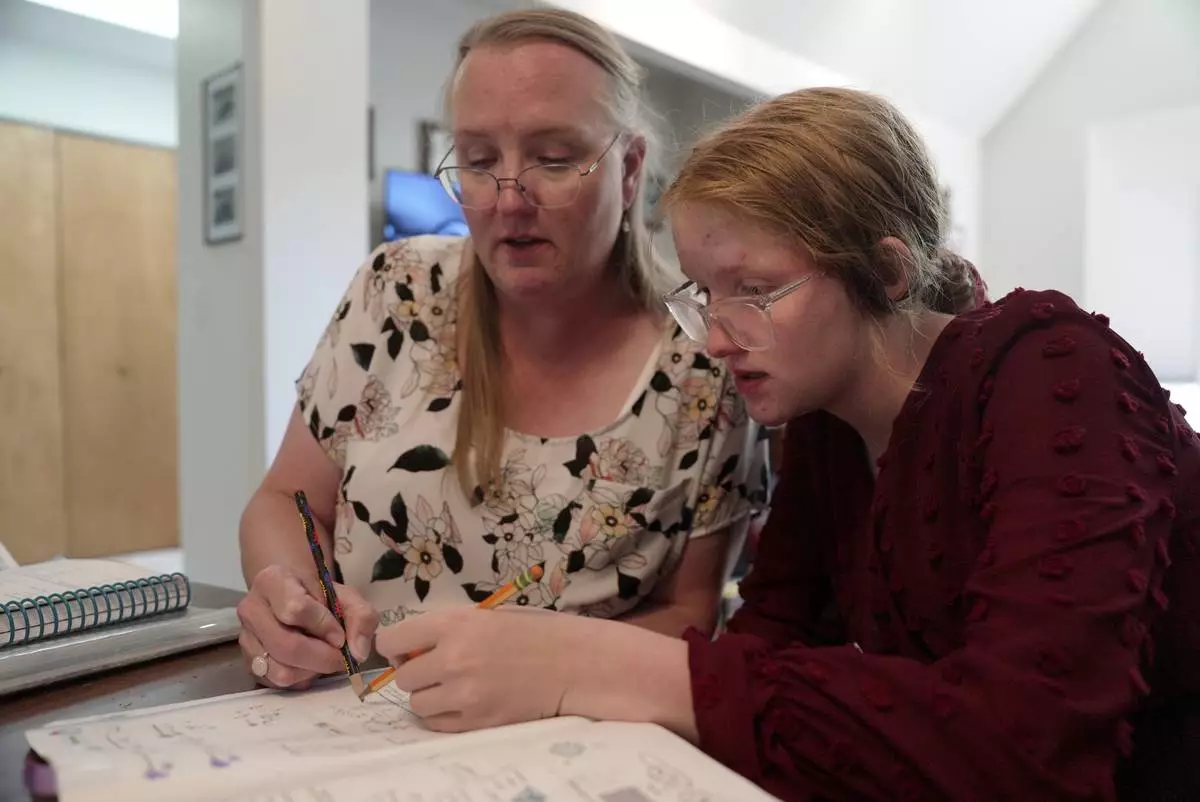
Ella Walter, 11, works with her mom, Katherine, on schoolwork at home in White Sulphur Springs, Mont., July 15, 2026. (AP Photo/Shelby Lum)
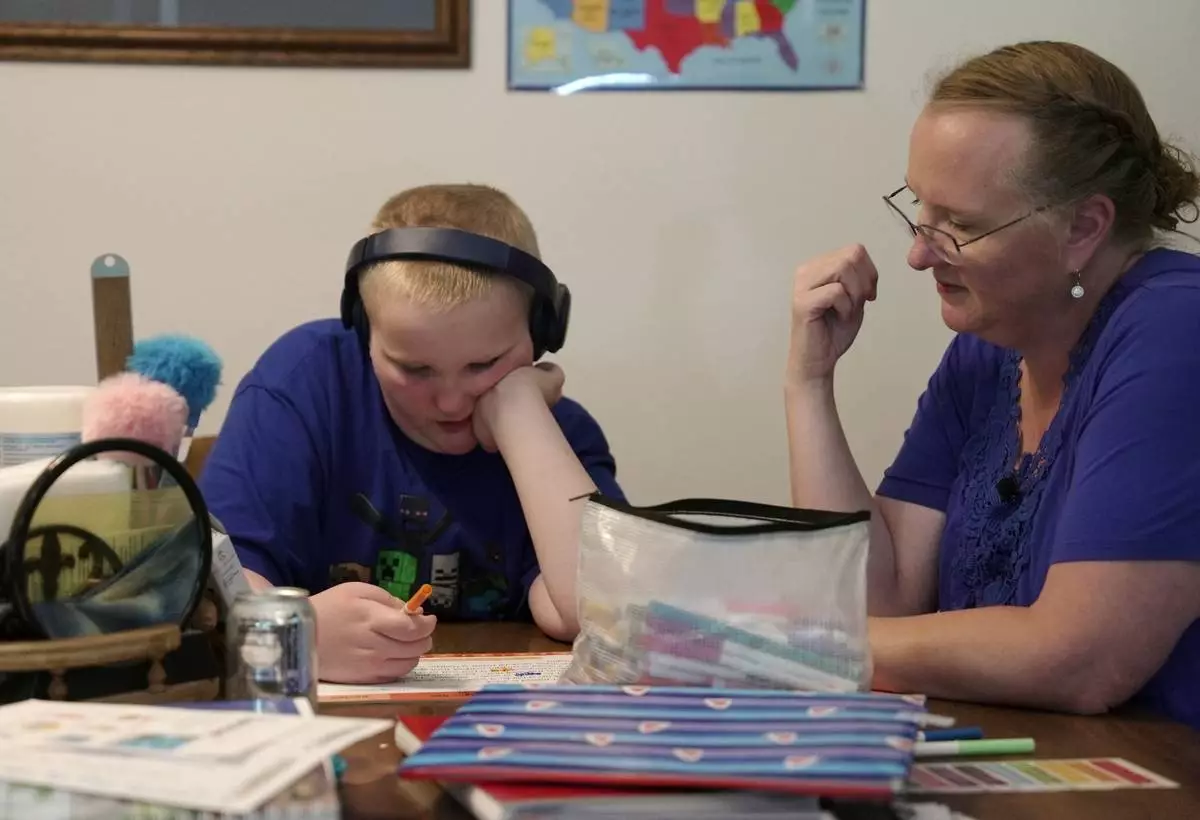
William Walter, 11, and his mother, Katherine, work during homeschooling hours in their home in White Sulphur Springs, Mont., July 16, 2026. (AP Photo/Shelby Lum)
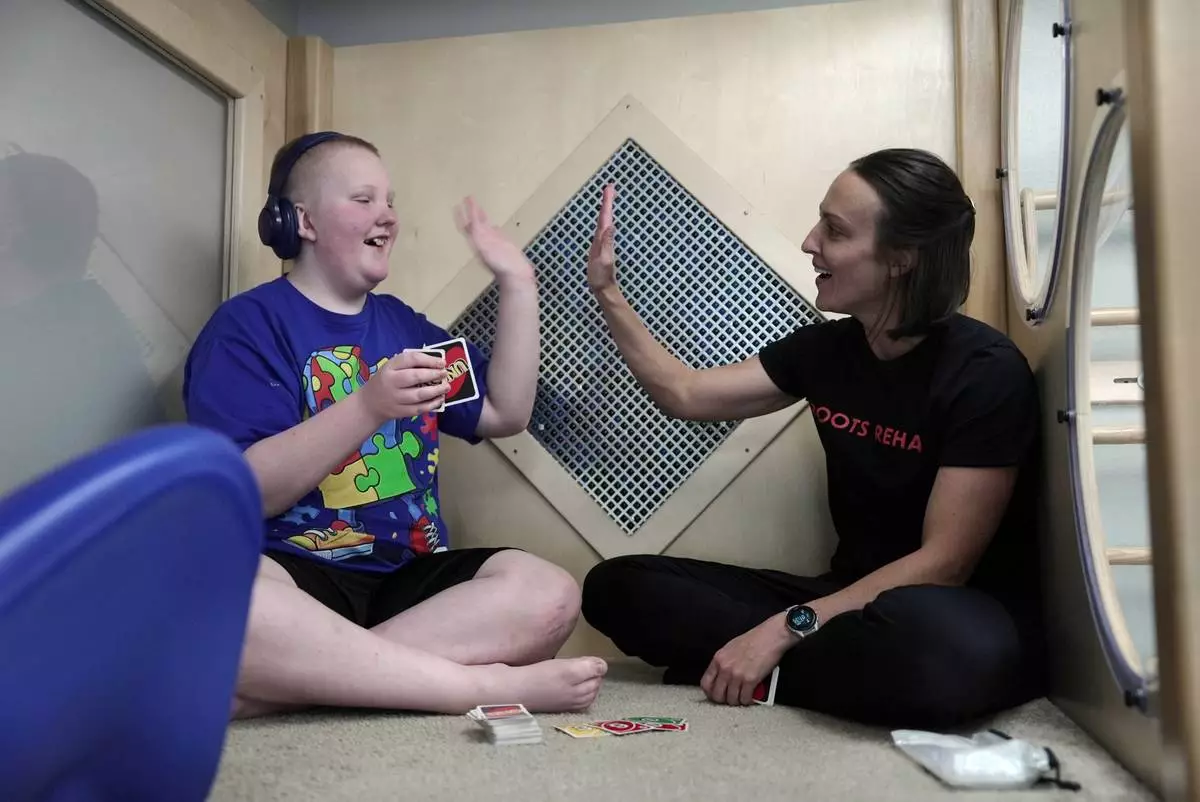
William Walter, 11, high fives his therapist, Charla Banks, at his occupational therapy appointment at Roots Rehab in Montana City, Mont., July 15, 2026. (AP Photo/Shelby Lum)
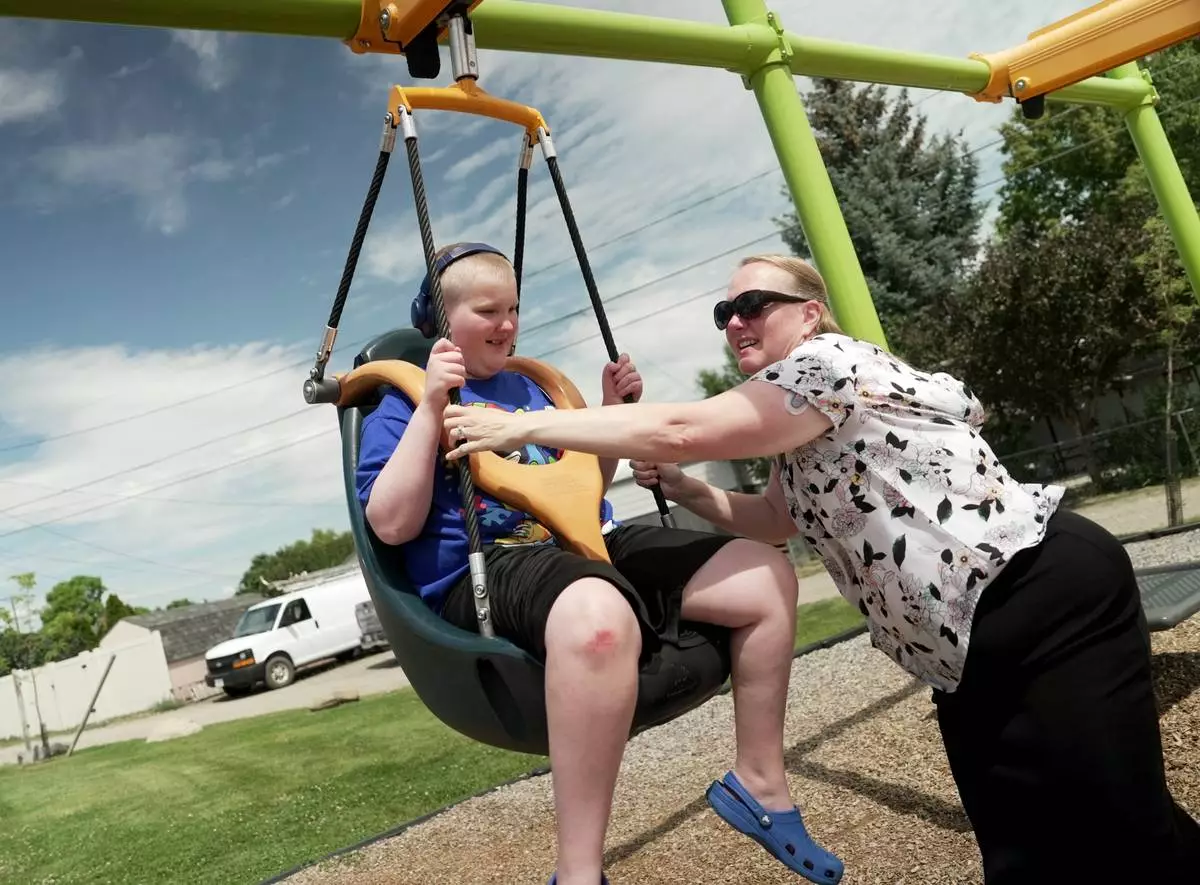
William Walter, 11, is pushed on a zipline style swing by his mother, Katherine, in Helena, Mont., July 15, 2026. (AP Photo/Shelby Lum)
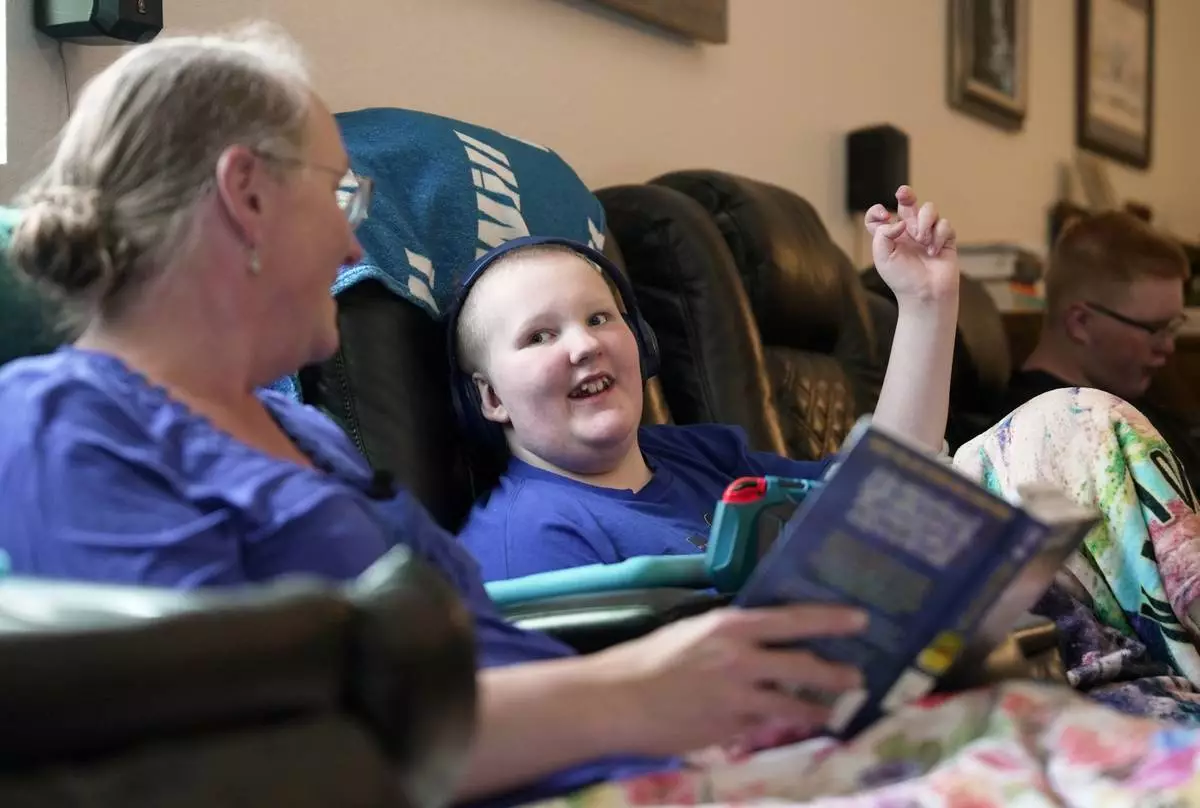
William Walter, 11, and his mother, Katherine, read a book together during homeschooling hours in White Sulphur Springs, Mont., July 16, 2026. (AP Photo/Shelby Lum)