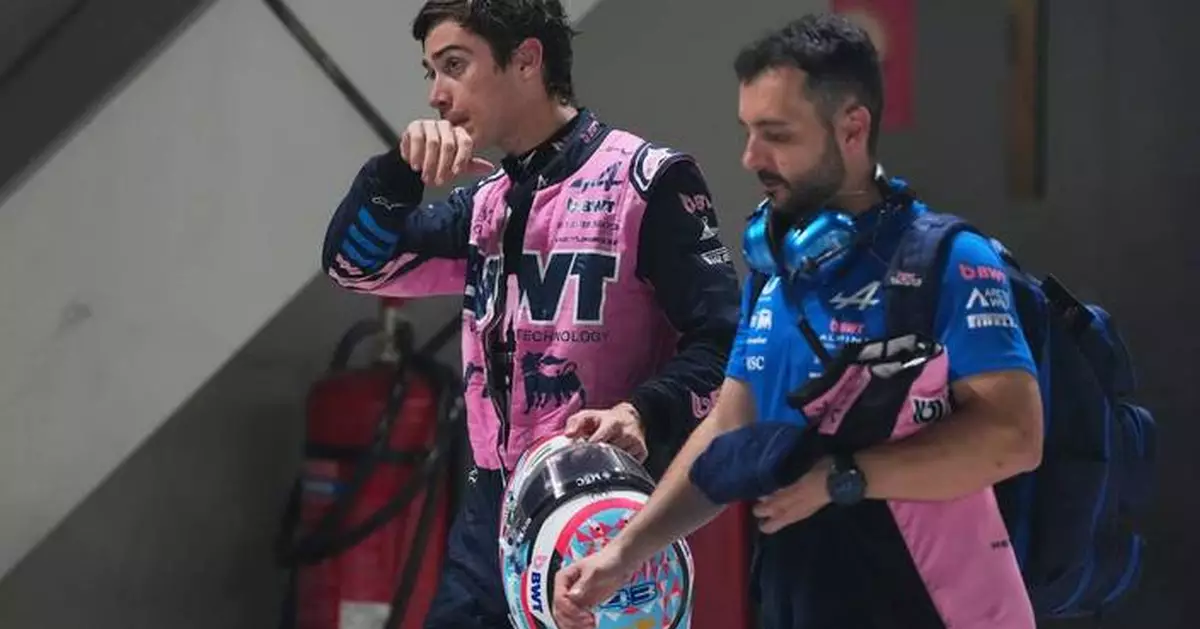
ENSTONE, England (AP) — Formula 1 driver Franco Colapinto has called on his fans to stop social media campaigns attacking other drivers and his Alpine team staff, saying they're holding back his career.
Since the Argentine driver's F1 debut in 2024, fans have sent negative and sometimes abusive comments on social media targeting drivers who clashed with him on the track. Among them were champion Lando Norris and FIA race stewards who penalized Colapinto.
Alpine also stepped in this year to condemn online abuse and deny claims it was trying to “sabotage” Colapinto to favor teammate Pierre Gasly.
“I know it makes you feel very proud when things go well for me, when I score points, for me and for the whole team, and I’ll always be very grateful for that," Colapinto said in a video on Instagram late Wednesday.
"But there are times when we go over the line, when instead of supporting me we end up criticizing, we end up attacking other drivers, other colleagues, my teammates, my mechanics, my engineers, people I work with day in and day out.
“I know you’re thinking that you’re defending me, but you’re actually doing the opposite. You don’t help me or my future, and I really want you to understand that this is what we have to change, all of us together.”
Colapinto became racing-mad Argentina’s first F1 driver in 23 years when he made his debut in 2024 with Williams.
He moved to Alpine the following year, initially as a reserve, then was promoted when the team fired Jack Doohan, who later complained he'd received death threats around that time.
Colapinto is having his most successful season this year and is 12th in the standings, as well as picking up a best career race finish of sixth. Alpine confirmed in August his contract was being extended for next season.
See AP’s full auto racing coverage here
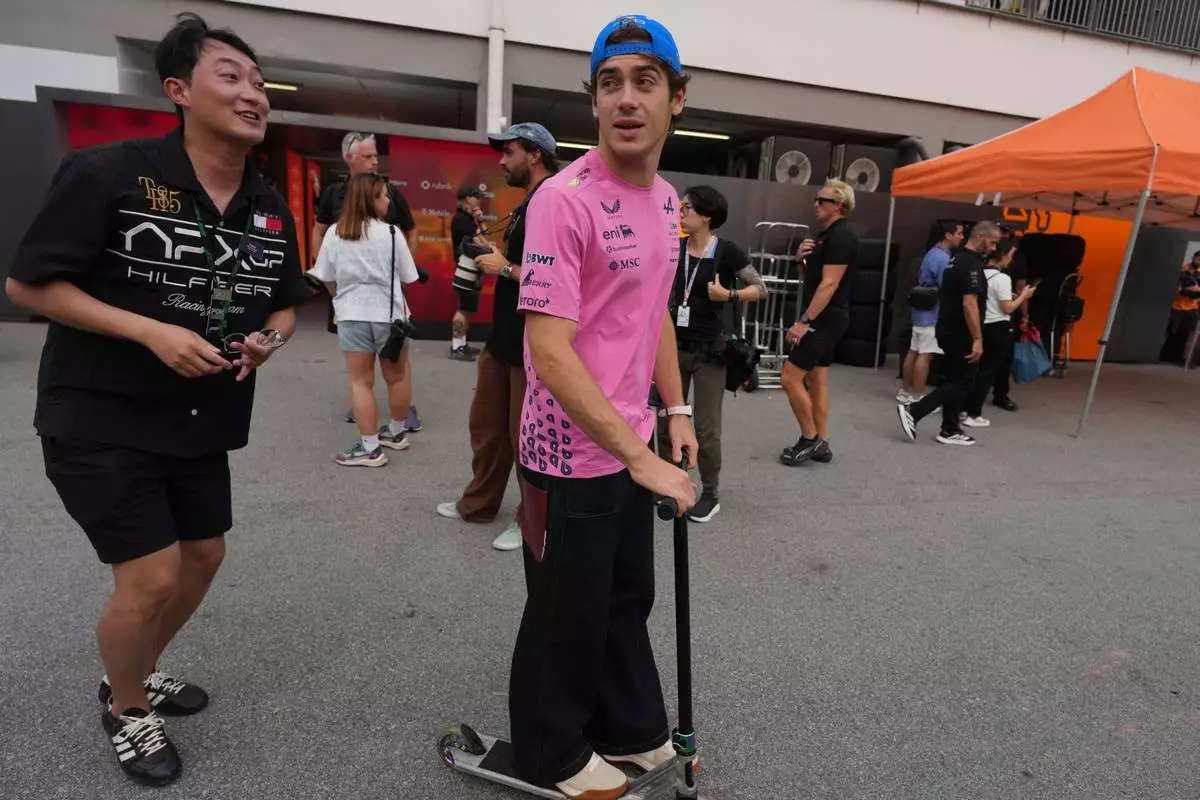
Alpine driver Franco Colapinto of Argentina drives past a fan on the way to a press conference ahead of the Singapore Formula One Grand Prix weekend at the Marina Bay Street Circuit in Singapore. Thursday, Oct. 8, 2026. (AP Photo/Ng Han Guan)
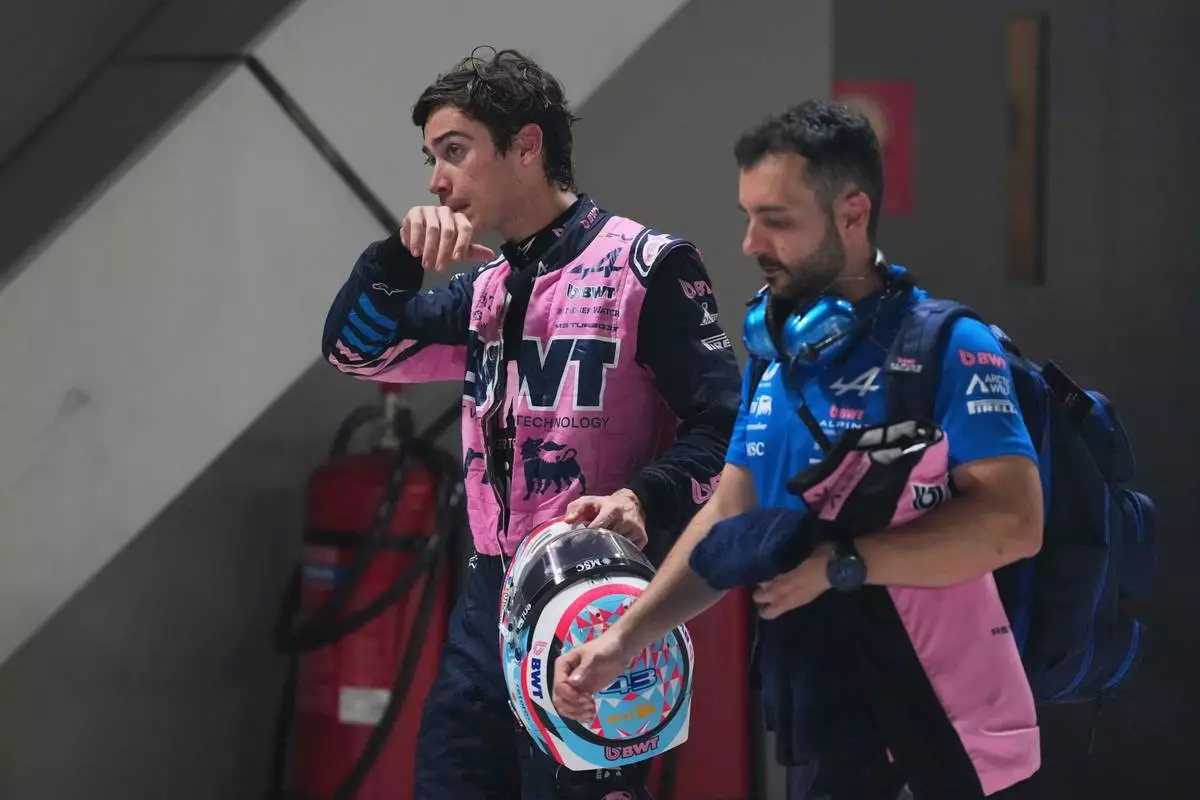
Alpine driver Franco Colapinto, left, of Argentina walks away during the sprint qualifying session ahead of the Singapore Formula One Grand Prix in Singapore, Friday, Oct. 9, 2026. (AP Photo/Ng Han Guan, Pool)
The NCAA sued the governor of Ohio on Friday, accusing him of trying to give college athletes in his state a “hall pass” to circumvent a rule that denies players who graduated high school in 2022 from a fifth year of eligibility.
NCAA President Charlie Baker called the lawsuit, filed in federal court in Ohio, an “extraordinary step” designed to prevent Gov. Mike DeWine from making it “impossible for all schools to compete on a level playing field.”
DeWine issued an executive order Tuesday that undercut the NCAA rule, approved over the summer. That and the NCAA's federal lawsuit in reaction to it marks the latest tit-for-tat in a torrent of legal maneuverings that are creating new rules on a state-by-state basis.
“This whole thing has become comical,” Danny White, the athletic director at Tennessee, said on social media in reaction to the NCAA announcement.
Under DeWine's order, public and private universities in Ohio would be able to allow the Class of ’22 athletes to play, even though the NCAA’s new guidance excludes those who have already played four seasons. The rule, passed in June, is the subject of multiple court fights.
In its court filing, the NCAA said it was trying "to halt a misguided attempt to give Ohio colleges and universities an unfair, unprecedented and unwarranted competitive advantage in stadiums and arenas throughout the country,”
“College sports, like all sports, depend on participants following the rules. (DeWine) is attempting to give Ohio institutions a hall pass to break the rules," the lawsuit says.
In reaction to the governor's move, the Ohio Supreme Court said it would step in and determine the legality of the executive order. As part of that, it paused an appeals court ruling in a case there that had declared the ’22 athletes ineligible. The court asked both sides to file briefs in the case, in which basketball player Filip Borovićanin is the lead plaintiff, by next Monday.
Baker said the NCAA did not believe the Supreme Court's order did, in fact, declare those players immediately eligible to compete and said it would submit arguments in that case.
That case, like others around the country, is becoming more urgent by the day, as it involves a handful of basketball players whose status for the upcoming season is in jeopardy. Among them: Gonzaga transfer Javon Bennett, Cincinnati's MJ Collins and Borovićanin himself, who played in an exhibition against Tennessee on Thursday night after DeWine's order put him back on the eligible list.
The NCAA has long explained that it knew excluding the Class of '22 from the five-year rule would cause those athletes hardship, but the decision was between them and the new class of high school recruits coming into college this year, many of whom would be displaced if the veterans were allowed another year.
Ultimately, the NCAA made its decision based on which move harmed fewer people.
The NCAA lawsuit goes through the history of the rule and the flood of legal actions that have come since. One of the original cases, a federal lawsuit involving basketball player Brock Wisne, is leaning in the NCAA's direction, though victories there have only spawned more lawsuits in state court.
“The results of this second wave of lawsuits were mixed, with the NCAA winning some and losing others,” it said. “But the lawsuits unquestionably destabilized college sports, with ever-more disruptive lawsuits challenging foundational rules at the heart of organized sport.”
During testimony in a similar case in Kentucky earlier this week, an NCAA attorney asked Louisville basketball coach Pat Kelsey why he was among those looking for Class of '22 athletes when the NCAA rules forbid that.
“From a coach's standpoint, every time the NCAA says something, we all shrug our shoulders and say, ‘Is that going to stand up? Is that a rule?’” Kelsey said. “We don't think there are rules right now. That's why we want guardrails, we want Congress to act, we want the chaos to end. Because nobody knows what the crap is going on. No one.”
The NCAA has long called for a federal law to tamp down on the lawsuits undermining its rules for hundreds of thousands of athletes across the country. The Senate has sent the Protect College Sports Act to the House, where its fate is uncertain in this election year.
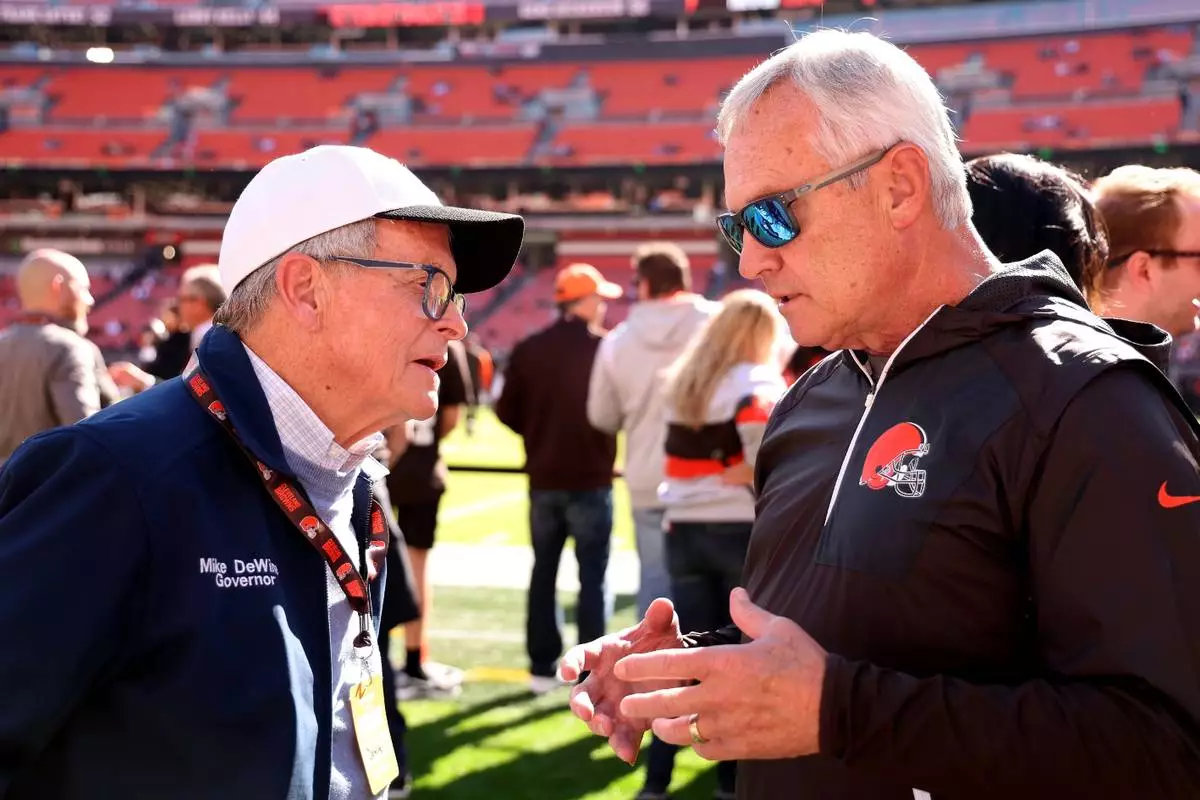
FILE - Ohio Gov. Mike DeWine talks with former Ohio State coach Jim Tressel while standing on the sideline prior to the start of an NFL football game between the Cincinnati Bengals and the Cleveland Browns, Oct. 20, 2024, in Cleveland. (AP Photo/Kirk Irwin, File)