ZURICH (AP) — Gianni Infantino gave an apology to the toughest critics who want to oust him as FIFA president but no new details or documents on issues that most concern them at a showdown meeting of the ruling council of soccer's governing body on Thursday.
Infantino provided no documents about the $4.2 billion World Cup sell-off plan he launched and quickly dropped in July.
Nor did he give details to explain the Folarin Balogun red-card case at the World Cup or how U.S. President Donald Trump intervened to help the national team forward.
FIFA will, however, review whether to continue awarding the peace prize that was created to give to Trump last December.
Infantino was pressed by European soccer officials for written evidence about his secretive private equity plan for the World Cup with investor Joshua Kushner, which provoked a global rift and the biggest crisis of his near 11-year presidency.
He frustrated them further by asking for written questions, FIFA vice president Debbie Hewitt said after the 3 1/2-hour meeting that is the last before a Nov. 18 deadline to field an election candidate to challenge him.
“The man has to answer those questions. If he doesn’t answer those questions, no, he is not fit to be the FIFA president," said Hewitt, who leads the English Football Association.
Infantino did not meet with media at FIFA headquarters Thursday.
European soccer's ruling body UEFA is leading attempts to remove Infantino before or at the FIFA presidential election in March and heard little to change that view Thursday.
“No satisfactory answers were provided,” said German soccer leader Bernd Neuendorf, one of eight UEFA delegates in the 37-member FIFA Council that Infantino chairs.
The council is the main decision-making body at FIFA with a global spread of officials — most are presidents of their national federation, like Cindy Parlow Cone of the U.S. — who are elected by their continental soccer bodies for four-year terms.
FIFA pays each an annual stipend of $250,000, with $300,000 for the continental presidents.
Infantino infuriated soccer leaders in Europe, North America and Asia by working for months in secret on the Kushner plan. It deepened a long-standing perception in UEFA that the FIFA boss plans his biggest projects without consulting them.
“We need a person of integrity, someone who can be expected to restore the reputation of the association, which has undoubtedly been lost,” Neuendorf told reporters.
Infantino did start the meeting by apologizing to his Council colleagues for blindsiding them and creating a furor over his private investor plan with Kushner that was revealed in media reports nine days after the World Cup final in July.
“He said that with some contrition,” Hewitt said.
For most of the last 50 years, FIFA voters from Africa — which now counts 54 of the 211 member federations — have been key to gaining and staying in power.
“The key point for us,” said FIFA Council member Ahmed Yahya, the head of Mauritania’s soccer federation, “is that we see Gianni as the right person to continue leading football.”
Infantino's offer to add $15 million in FIFA funding to each of the 211 members over the next four years made progress Thursday.
“I’ve said that President Gianni Infantino is taking football forward worldwide," Yahya said. "I come from the African continent and know what I’m talking about.
The FIFA presidential election meeting is on March 18 in Rabat, Morocco — a political ally of Infantino, whose soccer leader Fouzi Lekjaa is an influential council member and which will co-host the 2030 World Cup.
The FIFA Council should next meet on Dec. 16 in Doha, Qatar — the 2022 World Cup host that still is loyal to Infantino.
Another ally is Azerbaijan — whose most senior soccer official Elkhan Mammadov is an aide in Infantino's inner circle — which will host a global boys' tournament for under-15 teams later this month. That event shapes to be a lobbying opportunity for his campaign.
FIFA also will host an online extra congress on Nov. 23 — five days after the candidate deadline — to confirm hosts for the Women's World Cup in 2031 and 2035. The only bids are a U.S.-Mexico-Costa Rica-Jamaica plan for 2031 and the four British federations for 2035.
UEFA also has asked courts in the United States for the right to get evidence for a criminal complaint against Infantino in Switzerland. The court filings allege possible mismanagement of FIFA finances in the value he put on the intended subsidiary running tournament commercial rights.
It was to be at least 20% owned by investors led by Kushner, the brother of Trump’s son-in-law Jared Kushner.
FIFA lawyers' filings in response to stall or stop the evidence requests said they were a “smear campaign” by UEFA.
See AP’s full soccer coverage here
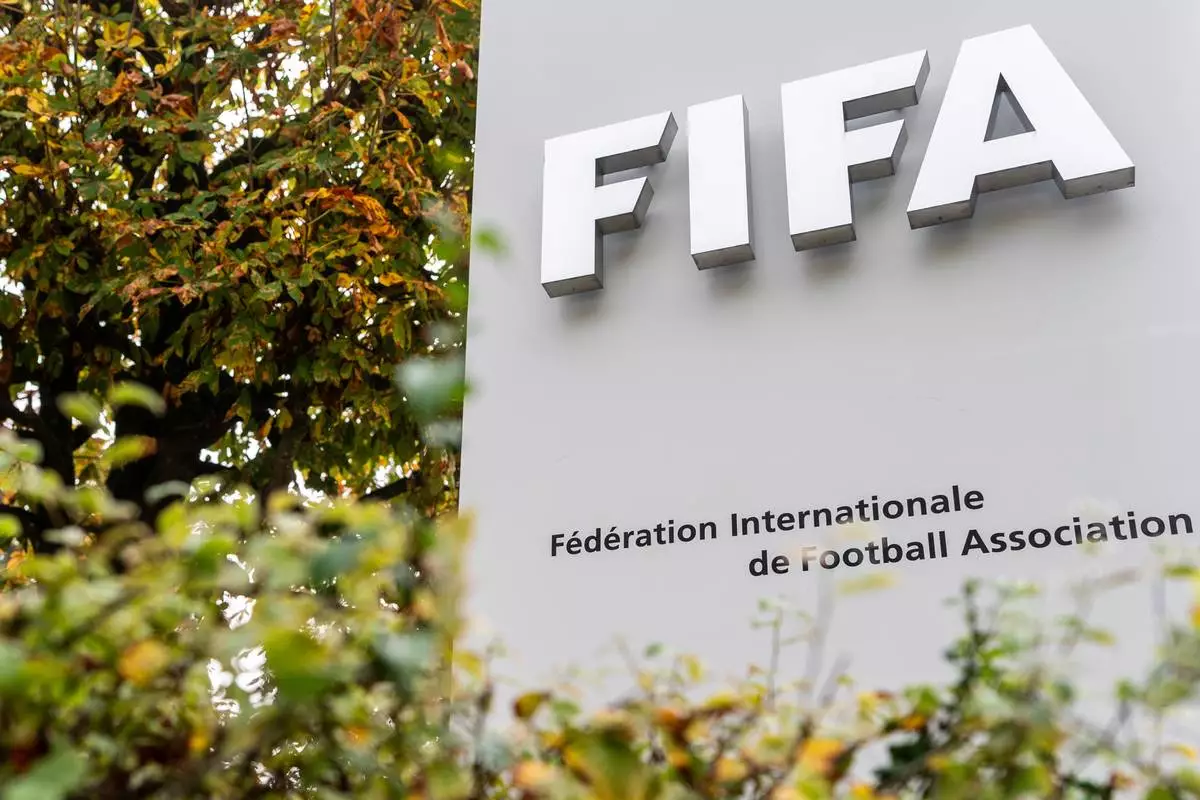
A view of the FIFA headquarters during the FIFA council meeting, in Zurich, Switzerland, Thursday, Oct. 15, 2026. (Claudio Thoma/Keystone via AP)
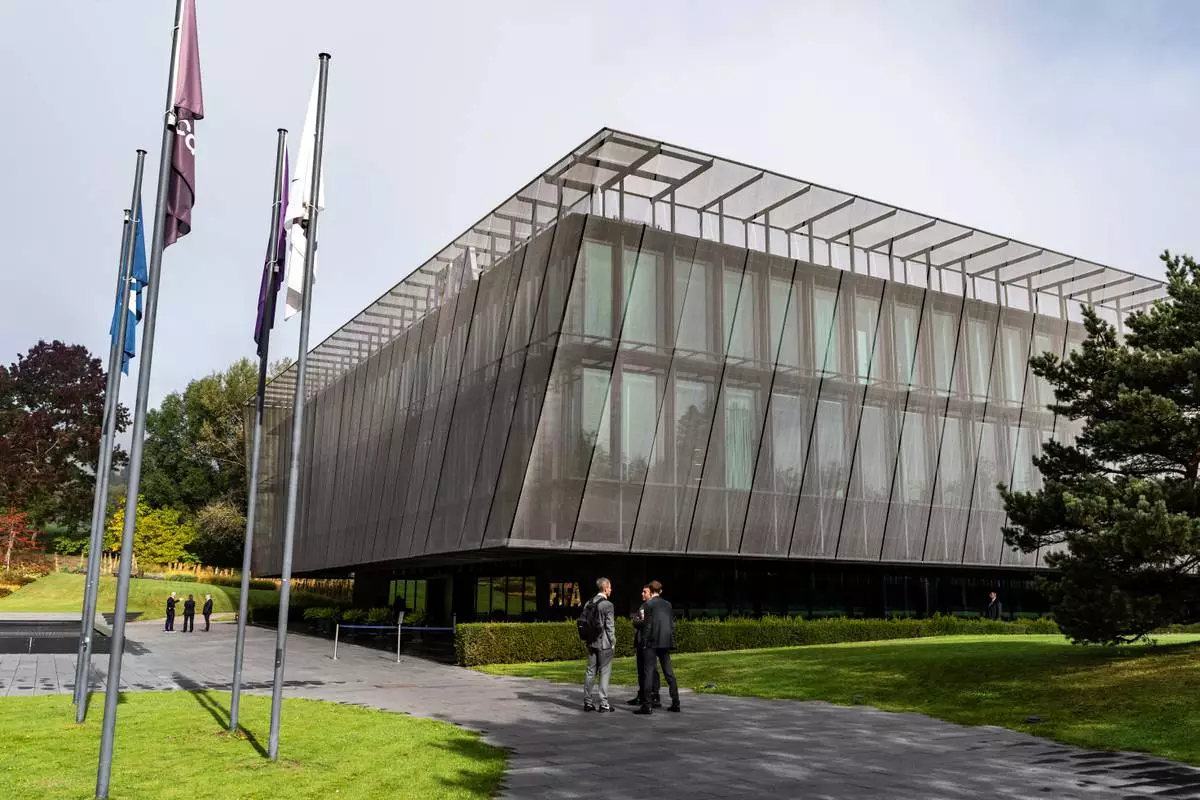
People stand outside the FIFA headquarters during the FIFA council meeting, in Zurich, Switzerland, Thursday, Oct. 15, 2026. (Claudio Thoma/Keystone via AP)
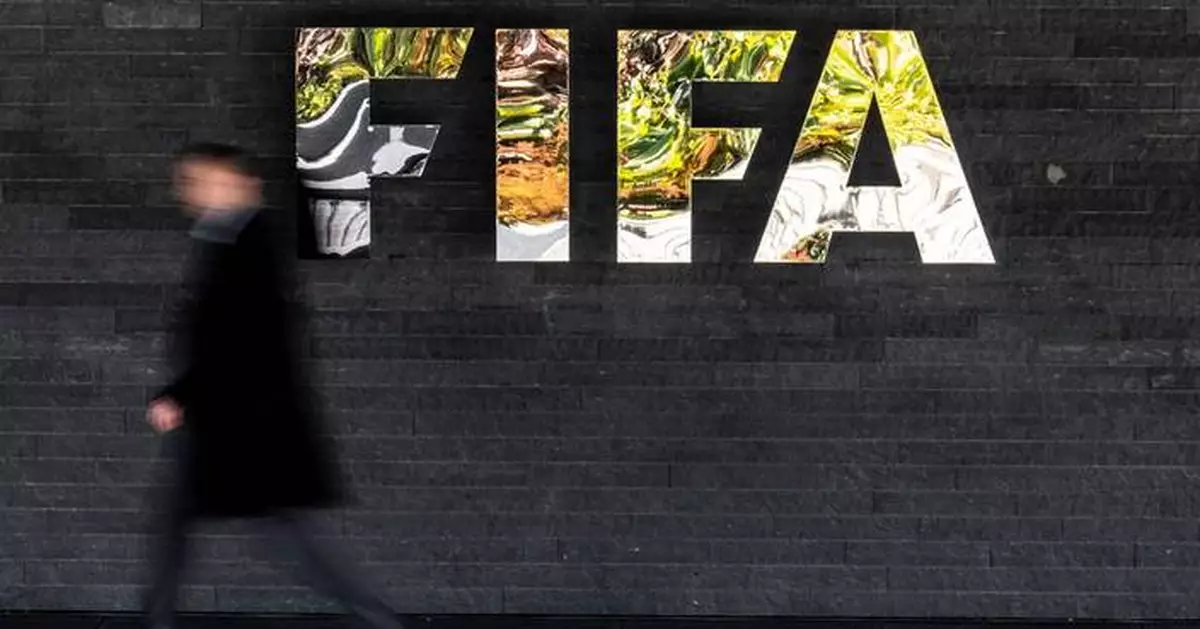
A man walks past a FIFA sign at the headquarters during the FIFA council meeting in Zurich, Switzerland, Thursday, Oct. 15, 2026. (Claudio Thoma/Keystone via AP)
NEW YORK (AP) — Wall Street is steadying Thursday following jarring drops for stocks worldwide in the artificial-intelligence industry on worries about how much longer the AI frenzy will last.
After initially falling to a loss following its worst day since July, the S&P 500 quickly erased it and added 0.1% to edge closer to its all-time high set last week. The weakness for AI stocks dragged the Nasdaq composite down 0.4%, but the Dow Jones Industrial Average was up 482 points, or 0.9%, as of 11:45 a.m. Eastern time as the majority of U.S stocks climbed.
Markets were much shakier earlier in the day. A sell-off for AI stocks that began on Wall Street Wednesday whipped around the world and sent South Korea’s Kospi stock index down 7.6% and Japan’s Nikkei 225 down 4.9%.
They're the latest swings for AI stocks after they led the market for years. Companies are pouring money into the technology in hopes of bigger profits and improved productivity. But data centers and AI chips cost money, and many companies have been borrowing the cash to get them.
Now, after yields in bond markets worldwide hit their highest levels in years, worries are rising about how resilient that boom in spending can be. Many AI-related companies have already taken on debt to build out their aspirations, and stocks are struggling under the debt loads.
CoreWeave, which offers AI computing power to customers over the cloud, fell 3.5% a day after tumbling 15.5%. It said in the summer that it had $4.41 billion in principal payments to make on its debt over the second half of this year and another $6.18 billion in 2027. It had more than $5.5 billion in cash, as of June 30.
High yields in the bond market also generally make investors less willing to pay high prices for stocks, particularly those seen as the most expensive.
Nvidia, the chip company that’s ridden the AI boom to become Wall Street’s most valuable company, fell 2% and was the heaviest weight on the S&P 500. It came into the day with a nearly 1,415% gain since the end of 2022.
The losses for AI stocks moderated as the day progressed, which helped broad U.S. indexes improve. CoreWeave had been down as much as 9.5% in the morning before more than halving its loss, while stocks outside of AI were much more resilient.
Marsh & McLennan helped lead the market after the insurance and professional services firm reported a stronger profit for the summer than analysts expected. The company, which updated its brand name to Marsh earlier this year, also delivered higher revenue than expected, and its stock climbed 6%.
Expectations are high for profits at all kinds of companies this reporting season, which began in earnest this week. That's what's allowed U.S. stocks to set records despite the high inflation and many other worries weighing on Wall Street. Now, companies will need to surpass those high expectations to drive their stock prices even higher.
Seven out of every 10 stocks within the S&P 500 rose. But because AI stocks have become so big in value, their stock movements have more effect on the index and can drown out the rest of the market.
In the bond market, Treasury yields fell, which means investors are willing to pay higher prices to buy U.S. government bonds. Treasurys have a reputation as a safer investment, one with less risk of the borrower going bankrupt, and investors often flock to them when feeling nervous.
The yield on the 10-year Treasury sank to 5.09% from 5.19% late Wednesday. It had topped 5.30% earlier this month and touched its highest level since 2002 because of worries about high inflation, signals of a strong U.S. economy and other factors.
The drop in yields came even though another report signaled inflation has worsened in the United States by even more than economists expected.
Several reports on the U.S. economy also came in stronger than economists expected, which typically push yields upward. One report said U.S. retailers made more money last month than economists expected, while another said fewer U.S. workers applied for unemployment benefits last week than expected.
In stock markets abroad, South Korea’s loss was the headliner. Its Kospi index is dominated by two chip companies, Samsung Electronics and SK Hynix, and it fell to its worst day since July. It has dropped 39% since setting a record in June.
Indexes were stronger in Europe, and London's FTSE 100 rallied 1.1% for one of the world's biggest gains.
AP Business Writers Chan Ho-him and Matt Ott contributed to this report.
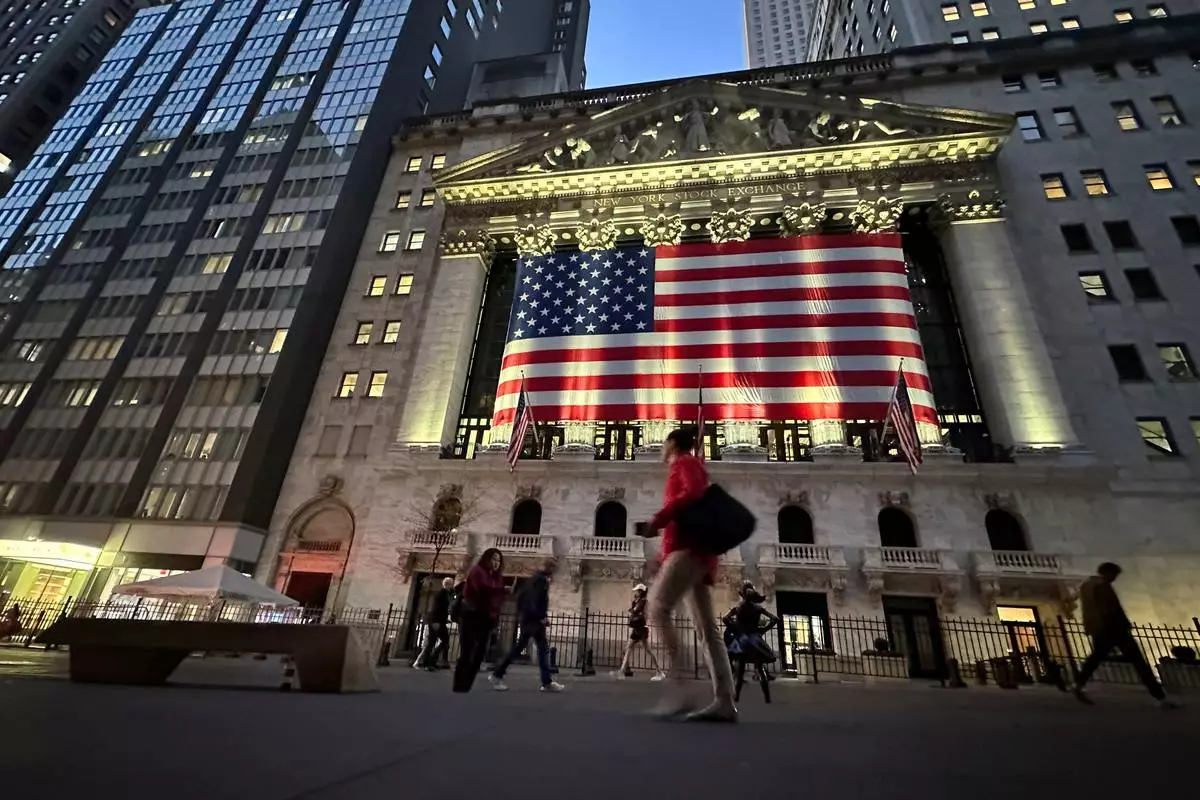
FILE - People pass the New York Stock Exchange on Nov. 5, 2024, in New York. (AP Photo/Peter Morgan, File)
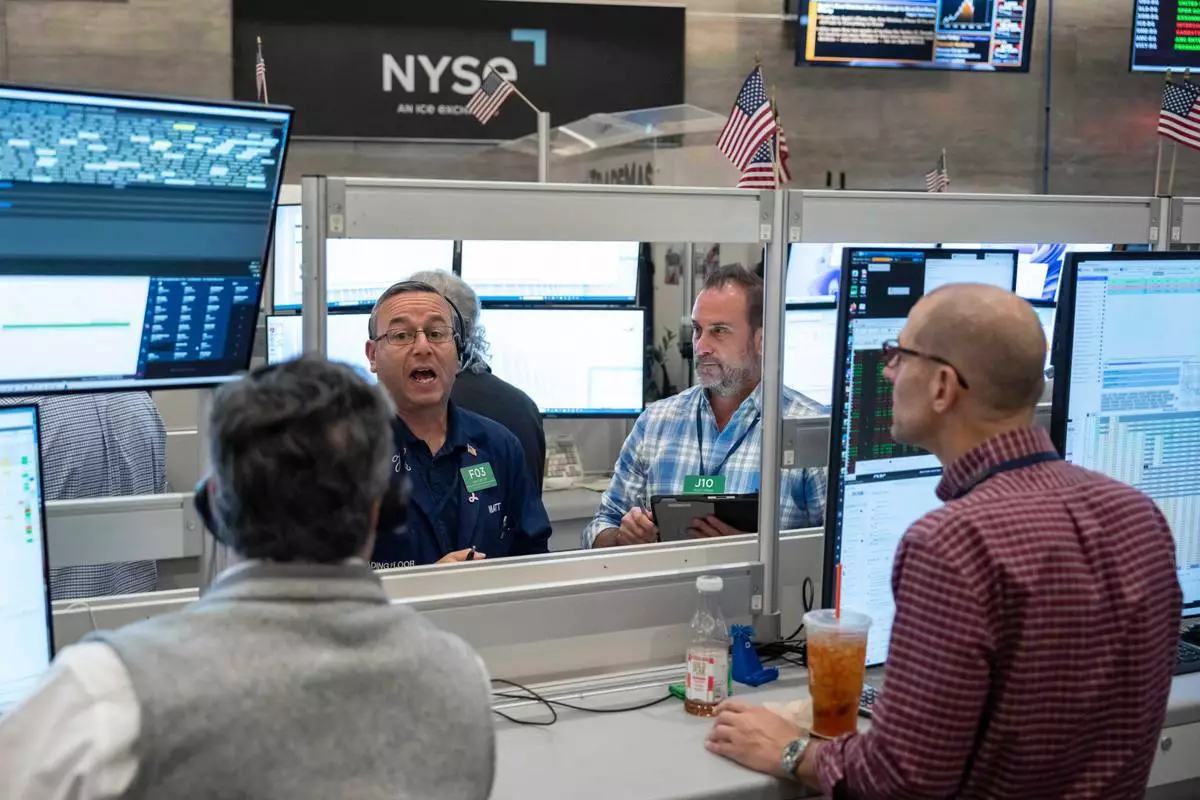
Options trader Matt Hefter works on the floor of the New York Stock Exchange, Thursday, Oct. 8, 2026, in New York. (AP Photo/Yuki Iwamura)
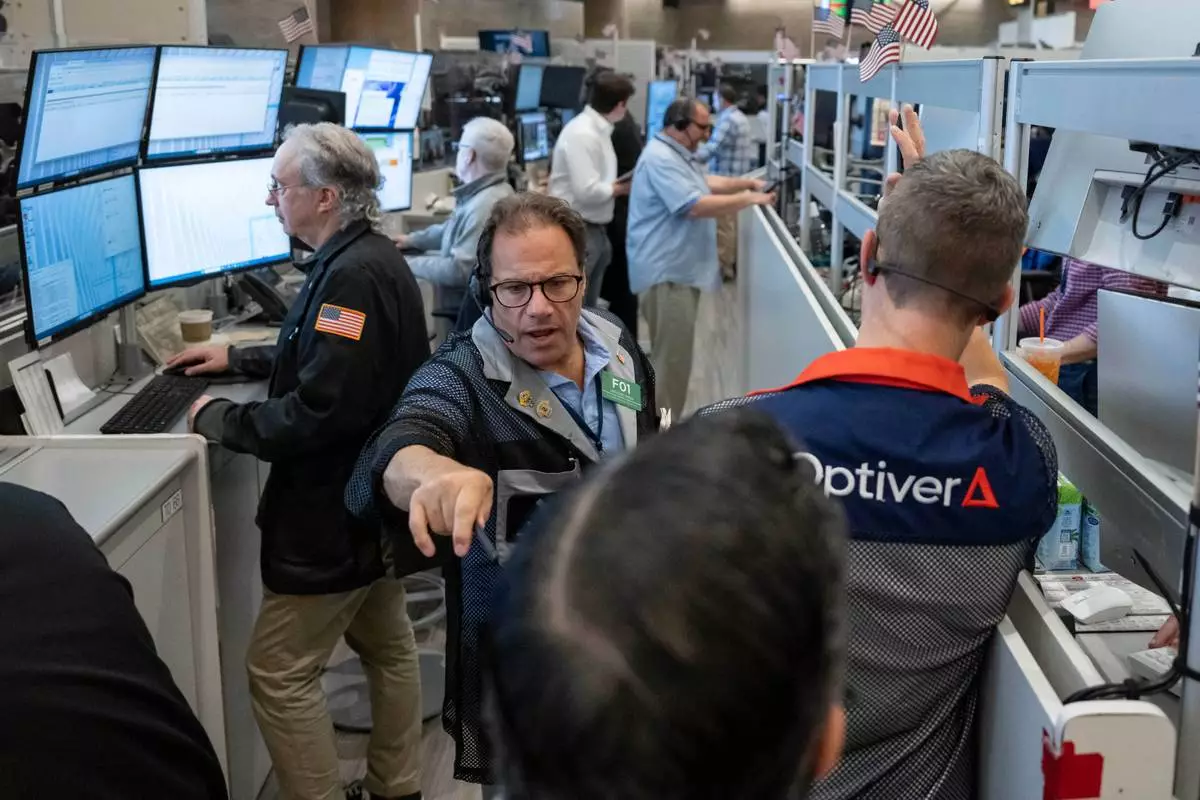
Options trader Anthony Spina works on the floor of the New York Stock Exchange, Thursday, Oct. 8, 2026, in New York. (AP Photo/Yuki Iwamura)
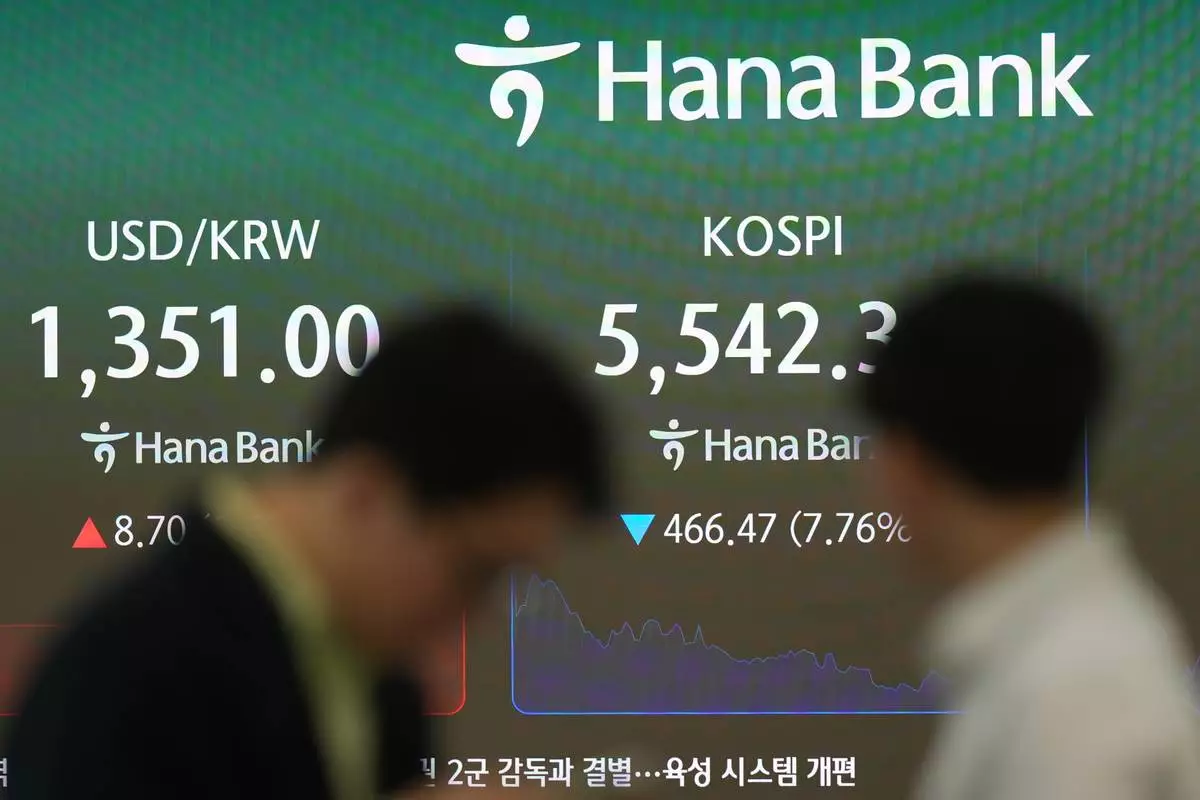
Dealers stand near the screens showing the Korea Composite Stock Price Index (KOSPI), left, and the foreign exchange rate between U.S. dollar and South Korean won at a dealing room of Hana Bank in Seoul, South Korea, Thursday, Oct. 15, 2026. (AP Photo/Lee Jin-man)
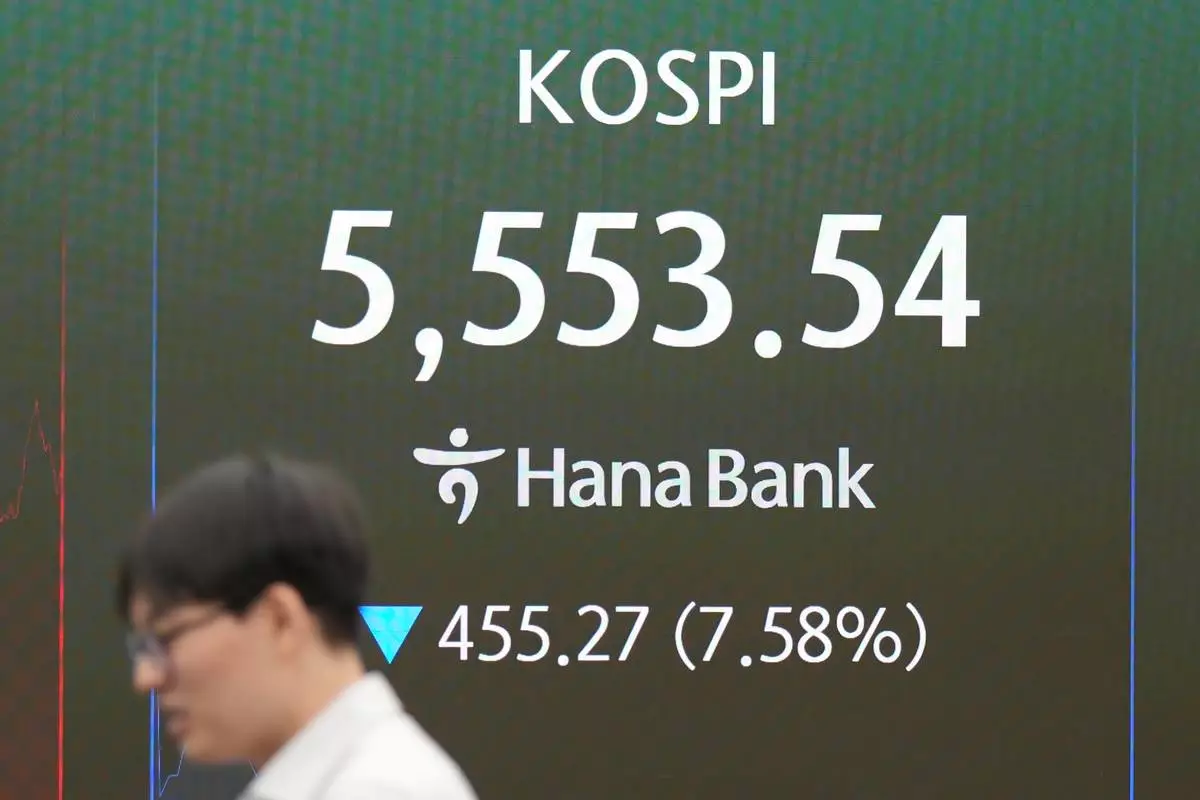
A dealer stands near the screen showing the Korea Composite Stock Price Index (KOSPI) at a dealing room of Hana Bank in Seoul, South Korea, Thursday, Oct. 15, 2026. (AP Photo/Lee Jin-man)
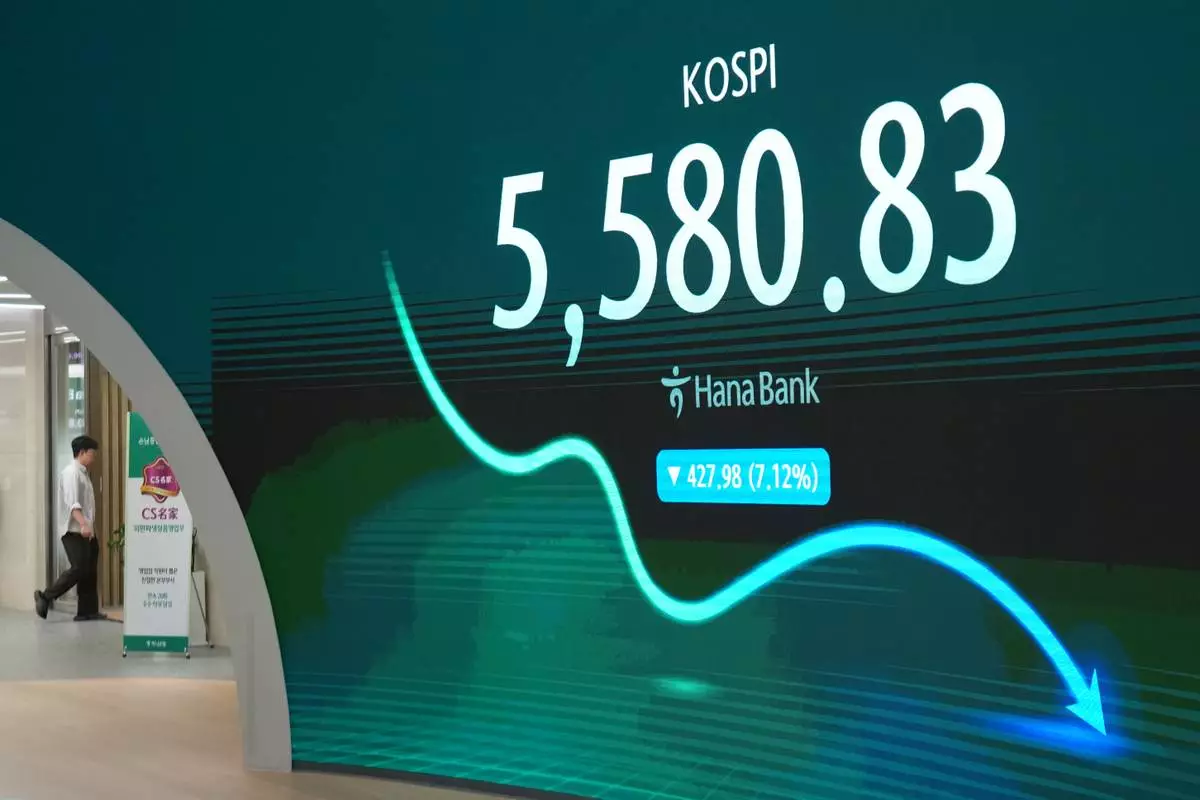
A dealer walks near the screen showing the Korea Composite Stock Price Index (KOSPI) at a dealing room of Hana Bank in Seoul, South Korea, Thursday, Oct. 15, 2026. (AP Photo/Lee Jin-man)
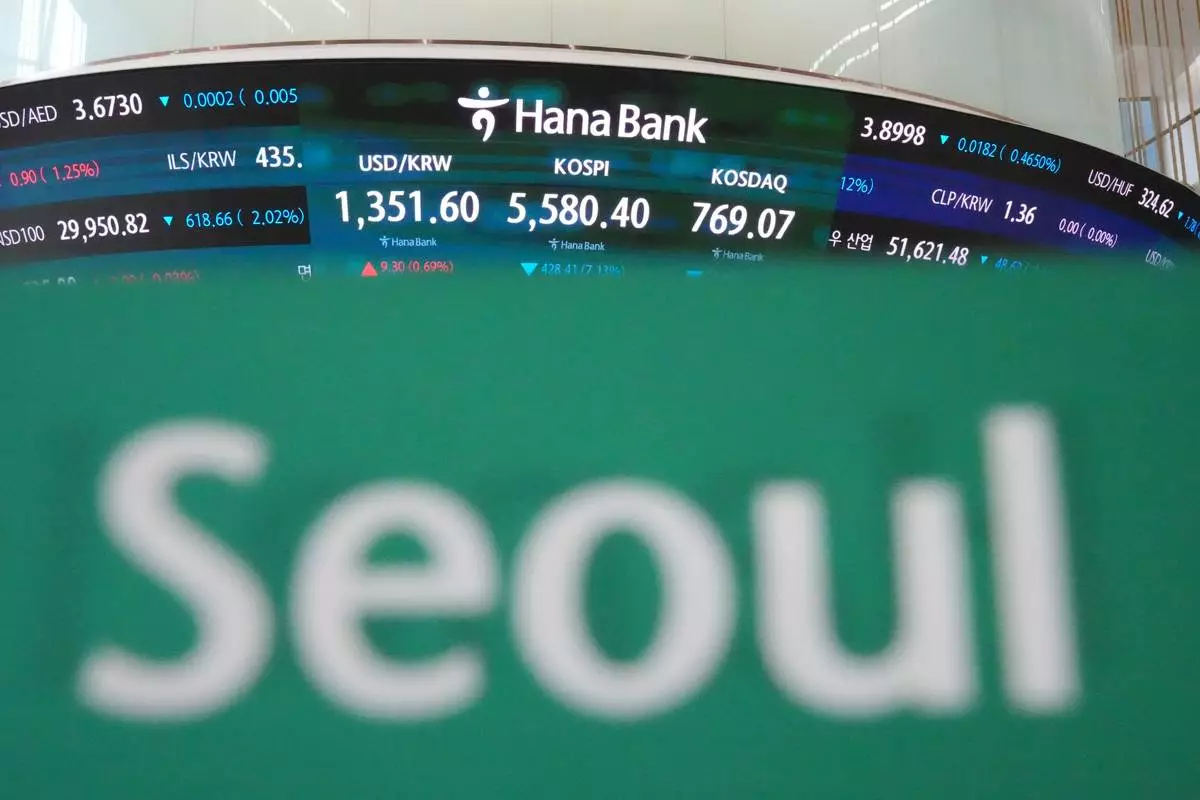
Screens showing the Korea Composite Stock Price Index (KOSPI), the Korean Securities Dealers Automated Quotations (KOSDAQ) and the foreign exchange rate between U.S. dollar and South Korean won are seen at a dealing room of Hana Bank in Seoul, South Korea, Thursday, Oct. 15, 2026. (AP Photo/Lee Jin-man)
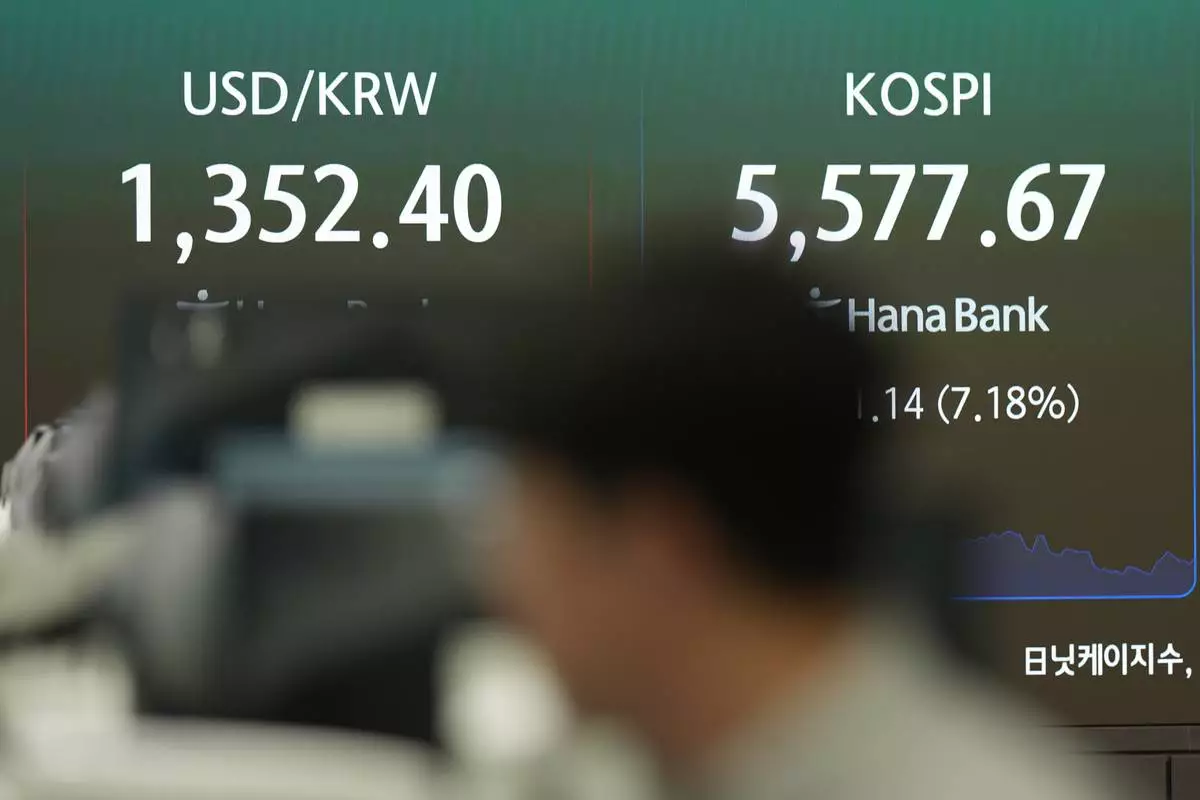
A dealer walks near the screens showing the Korea Composite Stock Price Index (KOSPI) and the foreign exchange rate between U.S. dollar and South Korean won at a dealing room of Hana Bank in Seoul, South Korea, Thursday, Oct. 15, 2026. (AP Photo/Lee Jin-man)
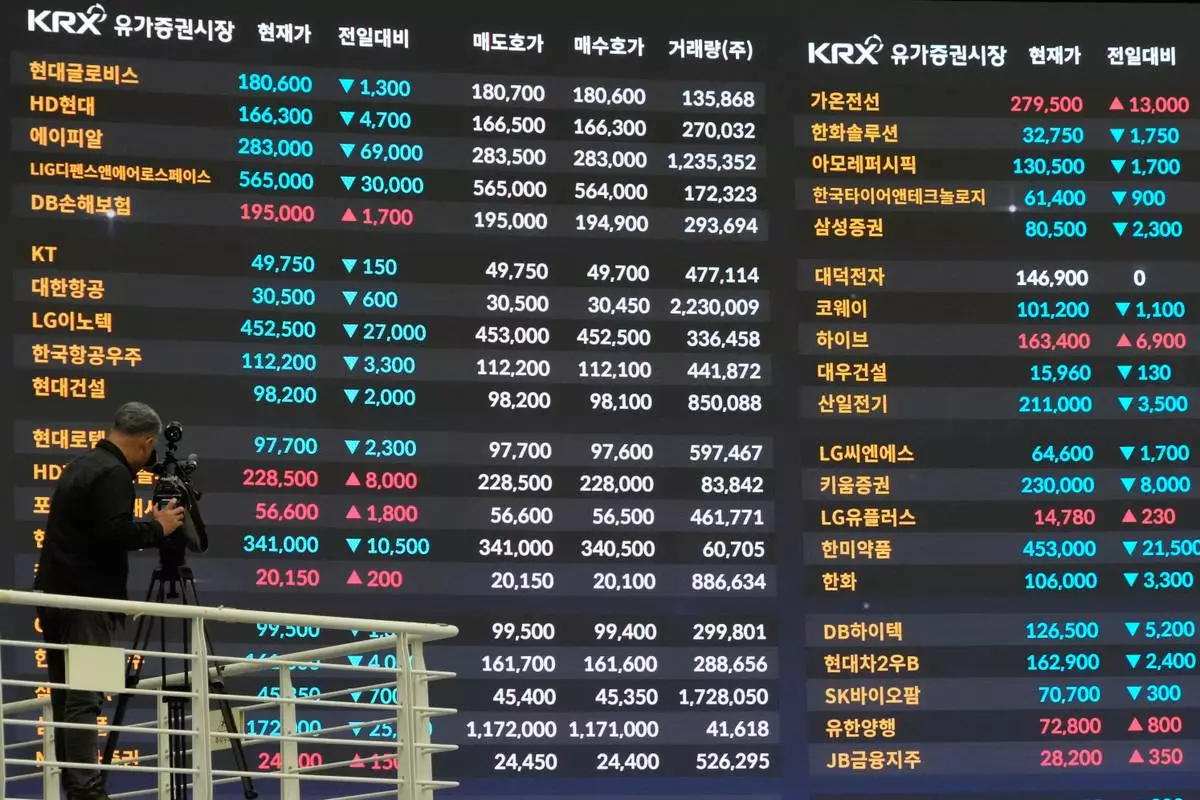
A TV camera man works in front of a screen showing stock prices at the Korea Exchange in Seoul, South Korea, Tuesday, Oct. 13, 2026. (AP Photo/Ahn Young-joon)