Spain's inflation has been climbing for months, with fuel, food, electricity and gas prices all rising, prompting residents to complain of mounting pressure on the cost of living.
Data recently released by Spain's National Statistics Institute shows the country's inflation rate hit 4.9 percent in September, the highest since February 2023. The figure marks a third straight monthly rise since July, with surging oil prices fueled by the Middle East conflict serving as the main driver behind the sustained increase.
"Gasoline is really too expensive now. This time I filled up with diesel, and it's also very expensive, around 2.1 euros a liter," said Francisco, a Madrid resident.
Meanwhile, food prices in Spain have also risen sharply, with farm products such as eggs and vegetables seeing the steepest increases.
"I feel food prices are now 30 to 40 percent higher than two years ago. A grocery run used to cost maybe 60 euros, but now it's 90 to 100," said Sonia, another Madrid resident.
Apart from fuel and food, electricity and gas prices in Spain are also rising. Residents say inflation has kept driving up the cost of living, while wages and pensions have not increased accordingly, leaving many feeling the growing pressure of daily life.
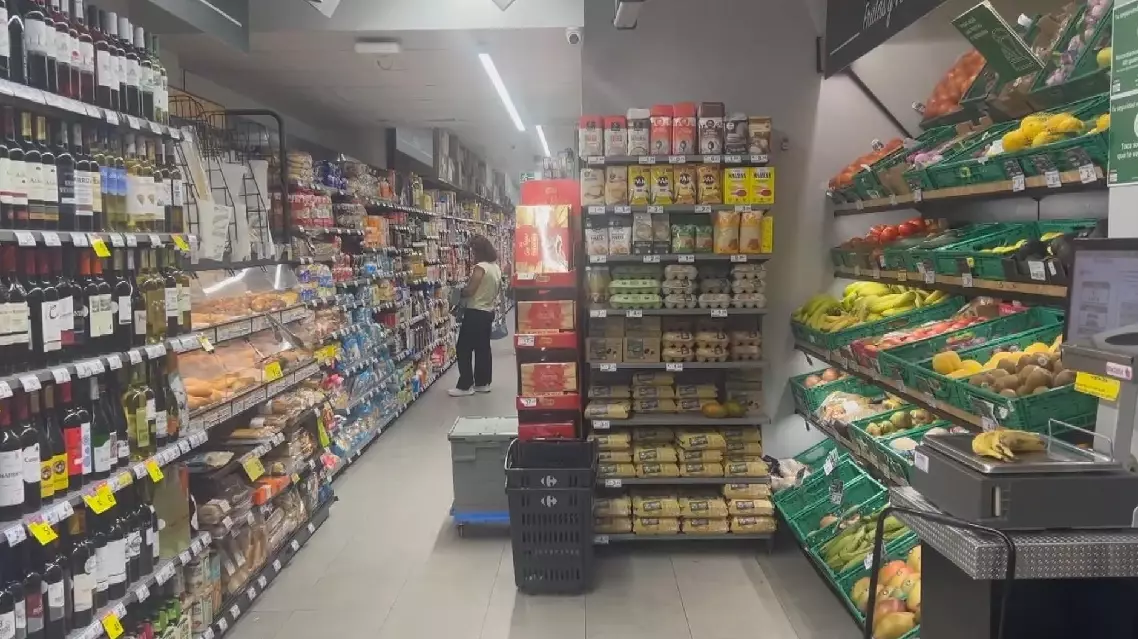
Spain's households face growing pressure as inflation keeps rising
China has more than 730 million tonnes of standard warehouse capacity for grain storage, as the widespread application of digital technology for grain storage contributes to strengthening national food security.
According to the latest official data from the National Food and Strategic Reserves Administration (NFSRA), a large number of modern and smart warehouses have been put into operation nationwide. Of the total standard capacity, the capacity of low-temperature and quasi-low-temperature grain storage has topped 250 million tonnes, and the capacity of controlled atmosphere grain storage has reaches 67 million tonnes.
At the Haigang Branch of the Qinhuangdao Depot in north China's Hebei Province, a smart sampling machine was in operation for grain inspection before entering the warehouse. When grain trucks enter the inspection zone, a smart sampling machine will automatically identify the vehicles and grain types, generate sampling plans and completes the sampling process in just two minutes.
"Previously, it would take us 20 minutes to collect samples from a single truckload, limiting us to a maximum of just over 20 truckloads per day. Now, with this smart sampling machine, it only takes two minutes per truck," said Liu Yu, deputy manager of the Haigang Branch of Qinhuangdao Depot of China Grain Reserves Group (Sinograin).
Inside the warehouse, a set of advanced technologies is used to maintain constant temperature and humidity levels to keep the grain fresh and with high quality.
"This silo stores 12,500 tonnes of corn. By combining the electronic temperature monitoring, mechanical ventilation, and internal circulation-based temperature control technologies, we ensure that the average grain temperature remains below 20 degrees Celsius throughout the year, meeting the standard for 'quasi-low-temperature storage'," said storekeeper Han Shuangqiu.
Over the years, China has leveraged smart technology to digitize workflows, automate key procedures and make storage management more intelligent. These efforts have advanced the construction of high-standard grain warehouses and further contributed to safeguarding food security in China.
Friday marks the World Food Day. China, the world's largest grain producer, harvested a record 714.88 million tonnes of grain in 2025. This marked the second consecutive year that the country's annual output had topped the 700-million-tonne threshold, according to the National Bureau of Statistics.
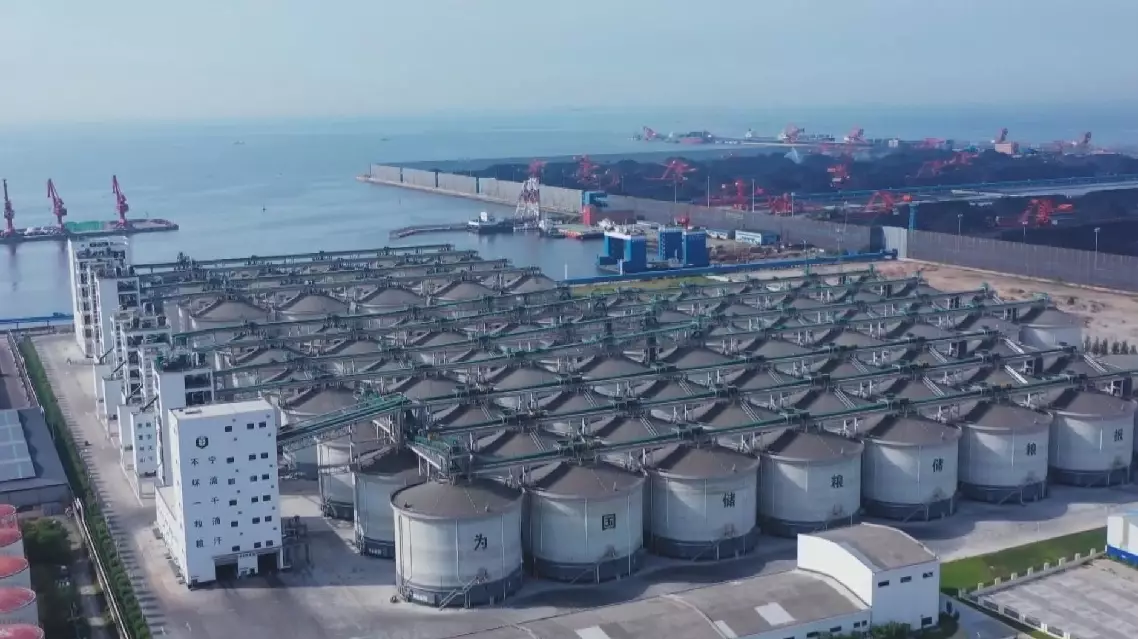
China's grain storage capacity hits 730 mln tonnes with smart technologies