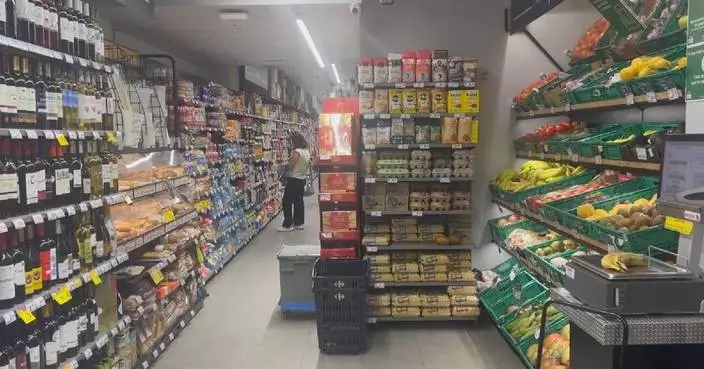
People in Yemen's Taiz have rushed to buy food as basic supplies are cut off due to the Houthi group's encirclement, driving up the prices of goods still left in the city.
Despite the Houthis gaining control of the majority of Taiz Governorate, the provincial capital city of Taiz remains in the hands of the Yemeni government forces. The Houthis have imposed a tight military blockade on entry and exit points to the city.
Deprived of supply routes, the residents of Taiz are struggling to obtain basic food supplies. Child malnutrition is becoming an ever-worsening problem, further exacerbated by the disruption of humanitarian aid from local and international relief organizations as well as United Nations agencies.
Concerns have mounted over food and energy shortages amid the siege.
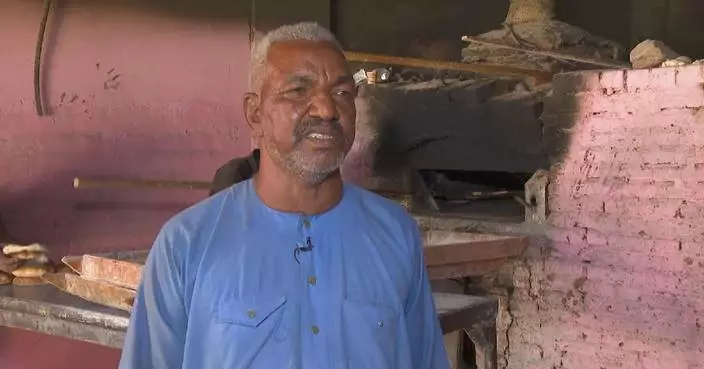
"We are faced with crises -- food crisis, fuel crisis, and gas crisis. We have nothing left. We are blockaded on all sides. Life has come to a standstill," said Tawfiq, a resident.
The prices of basic commodities that are still available in the city have shot up, with the cost of a 50-kilogram sack of flour increasing from 40,000 Yemeni rials (about 169.38 U.S. dollars) to 60,000 rials.
"We have noticed that in recent days, residents have been panic-buying food. What they buy far exceeds their actual needs. Some wholesalers have exploited this public panic to raise prices, and also hoarded certain goods and essential food items," said Maher Al-Zaghrouri, a wholesaler.
Officials have expressed grave concerns about the humanitarian plight in the city due to the potential escalation of conflict between the Houthi forces and the Yemeni government army.
"Taiz Governorate has been under a blockade for 12 years. Ongoing hostilities have further tightened this blockade. As a result, the blockade is now hindering the supply of daily necessities to residents across the governorate. The humanitarian catastrophe within the governorate is extremely severe," said Abdulrahman Al-Qulai'a, director general of the Office of Industry and Trade in Taiz Governorate.
Stephane Dujarric, spokesman for UN Secretary-General Antonio Guterres, warned on Tuesday that the city of Taiz is facing an increasingly severe shortage of essential supplies, with existing stocks of wheat and flour likely to run out in less than three weeks.
On Wednesday, the United Nations World Food Programme (WFP)'s Yemen office said in a social media post that eight out of 10 people in Yemen struggle to meet their basic food needs, and the escalating conflict has cut off life-saving assistance in Taiz.
Yemen's conflict erupted in late 2014 when the Houthis seized the capital Sanaa and much of northern Yemen, prompting a Saudi-led coalition to intervene in March 2015 in support of the internationally recognized government. A UN-brokered truce in 2022 largely halted major hostilities, but the latest territorial advances and the government's newly announced campaign have pushed the country into one of its sharpest military escalations in years.

Besieged Yemeni city Taiz faces acute food insecurity