A special conference was held in Tel Aviv for cadets of the pre-military programs who will be voting for the first time, aiming to connect young voters to the political world as various parties are trying to break the deadlock projected in the polls just over a week before Israel's elections.
More than 640,000 first-time voters are expected to cast ballots in the upcoming Israeli elections. The conference helps them finally make their own decision.
"It feels good just, you know, all these years like looking from the side, not really having a say on anything, and now finally being able to make an impact and actually like be part of the decision-making in this country," said Moshe, a first-time voter.
"I think a lot of young people like us, like the 18-year-olds voting for the first time, they don't really know what they are voting for. They don't really know the people who are running and what they represent. So it's really important that people come and talk to us face to face and ask us questions, and we ask them, and we get a visualization of who we are voting for," said Eliav, a first-time voter.
The event is an initiative of the Israel Democracy Institute, and this is not the first conference of its kind.
"Four years ago was the first one, and we saw how much it made an impact, how much of it was helpful for the kids and for the parties, so we decided to do it again, and I hope we can do it again in the future," said Noach Hecker, vice president for policy at the Israel Democracy Institute.
"To talk about the issues. Not only the parties, not only about the persons in charge, also the issues that drive the young people and, of course, the decision-makers in Israel," said Hecker.
Even politically engaged young people recognize that they can learn something new at the conference and that their views may change by election day.
"We all have values we care of, and I think because I heard a lot of like people speaking about those values, then I might change my decision," said Shira, another first-time voter.
The general elections for Israel's Knesset, the country's parliament, will be held on Oct 27. Forming a government typically requires a coalition controlling 61 of the Knesset's 120 seats.
An Oct 4 poll by Israeli public broadcaster Kan projected 51 seats for Netanyahu's right-wing bloc and 52 for four predominantly Jewish opposition parties spanning the political spectrum from right to left. Arab parties were projected to win 13 seats, with four going to a party outside either bloc. Even with those four seats, the opposition would remain five short of an outright majority in the Knesset.
In an election campaign that promises to be dramatically tight and close such as this one, any small element could be a decisive factor. That element could very well be first-time voters. Appealing to them could make the difference between winning and losing.
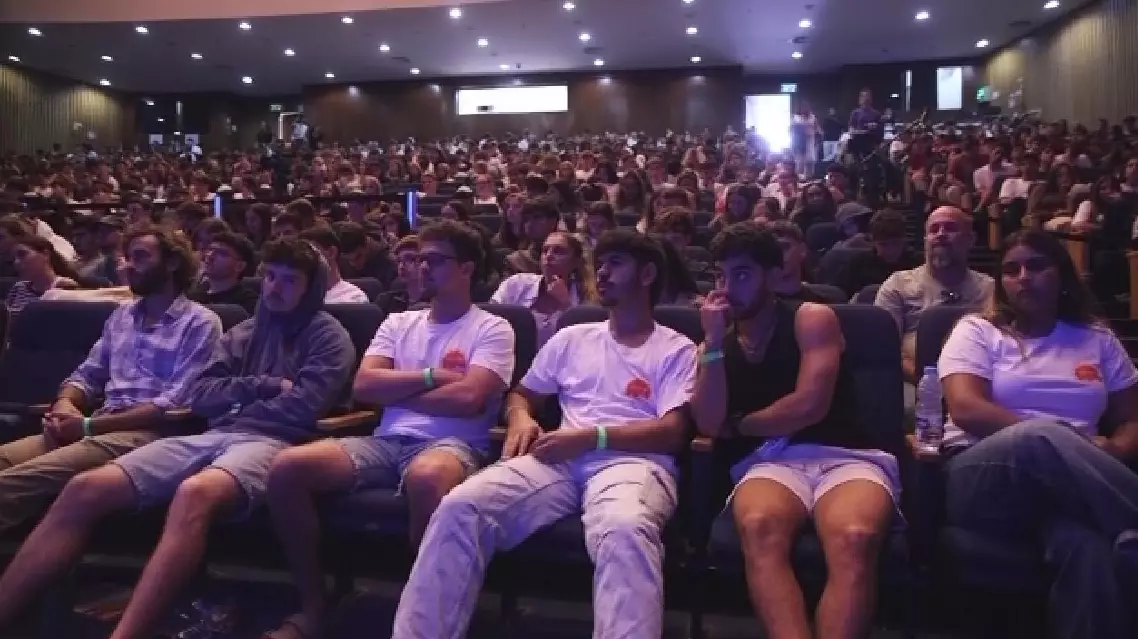
Tel Aviv event aims to engage first-time voters ahead of elections