Skip to Content Facebook Feature Image

Retail price impacts from the Iran war are uneven but add up for US households before midterms

News

Retail price impacts from the Iran war are uneven but add up for US households before midterms
News

News

Retail price impacts from the Iran war are uneven but add up for US households before midterms

2026-10-17 15:24 Last Updated At:15:30

NEW YORK (AP) — More than seven months into the U.S. war with Iran, sharply higher fuel prices are making it more expensive to drive and fly and adding to the cost of some goods, prolonging the strain on American households as the midterm elections approach.

Motorists and airline passengers have borne the clearest consequences as the fighting disrupts Middle East oil shipments. Some companies have raised delivery charges or prices on selected products. Yet the higher cost of making and moving goods has not translated into across-the-board price increases at stores.

More Images
A motorist fills the tank of a vehicle at a Shell gasoline station Thursday, Oct. 8, 2026, in Englewood, Colo. (AP Photo/David Zalubowski)
A motorist fills the tank of a vehicle at a Shell gasoline station Thursday, Oct. 8, 2026, in Englewood, Colo. (AP Photo/David Zalubowski)

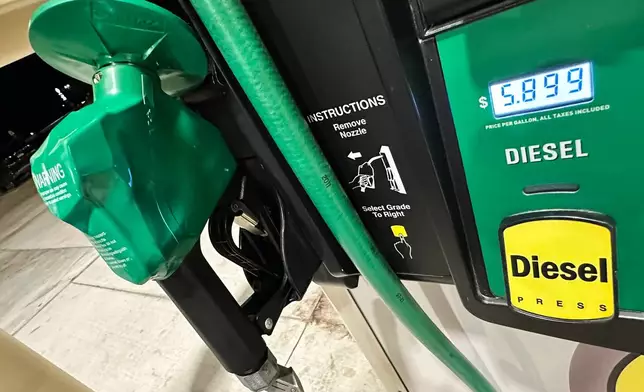
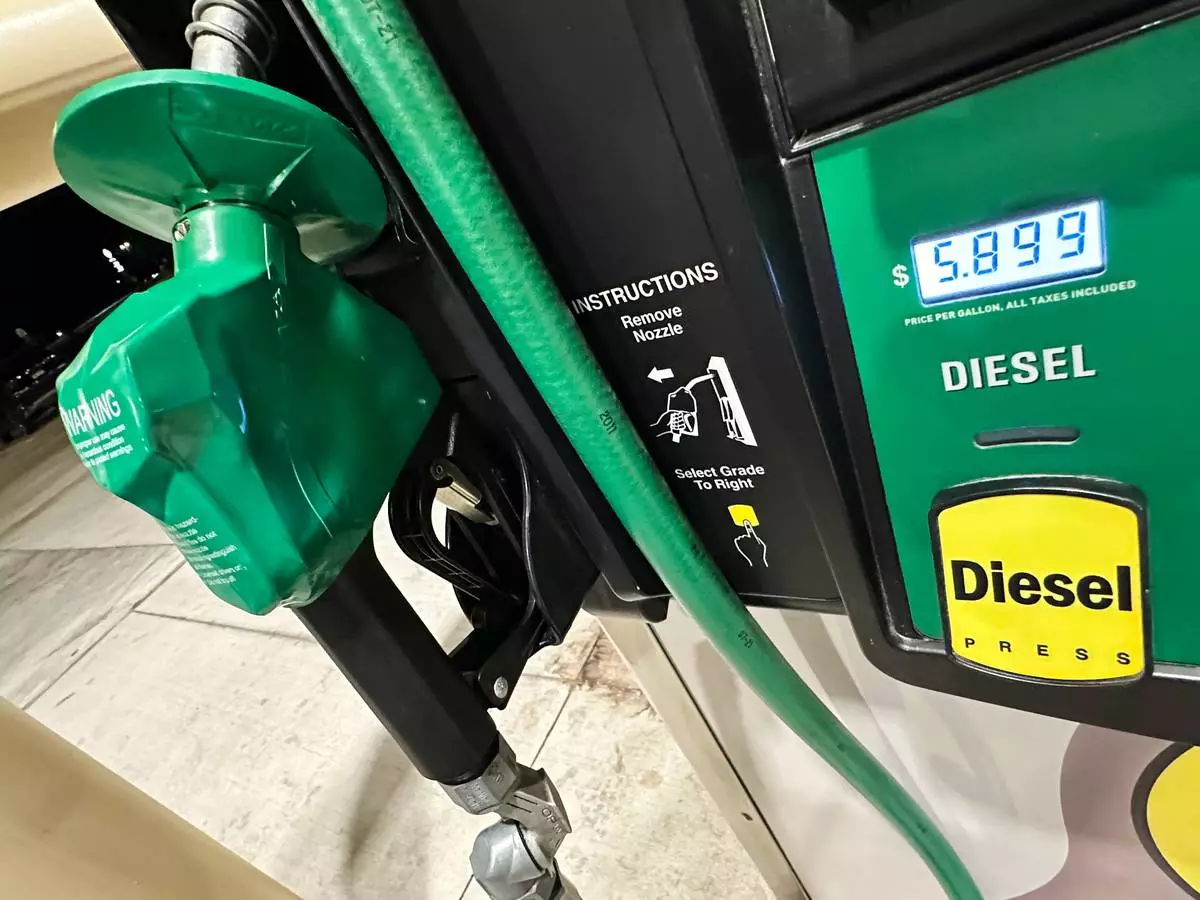
The per-gallon price for diesel fuel is displayed electronically on a pump at a Buc-ee's gasoline station Monday, Oct. 12, 2026, in Johnstown, Colo. (AP Photo/David Zalubowski)
The per-gallon price for diesel fuel is displayed electronically on a pump at a Buc-ee's gasoline station Monday, Oct. 12, 2026, in Johnstown, Colo. (AP Photo/David Zalubowski)

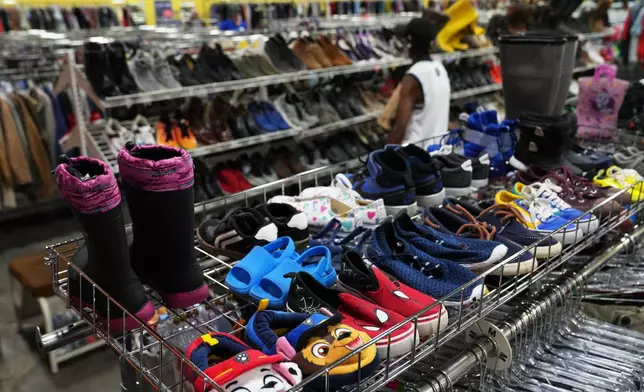
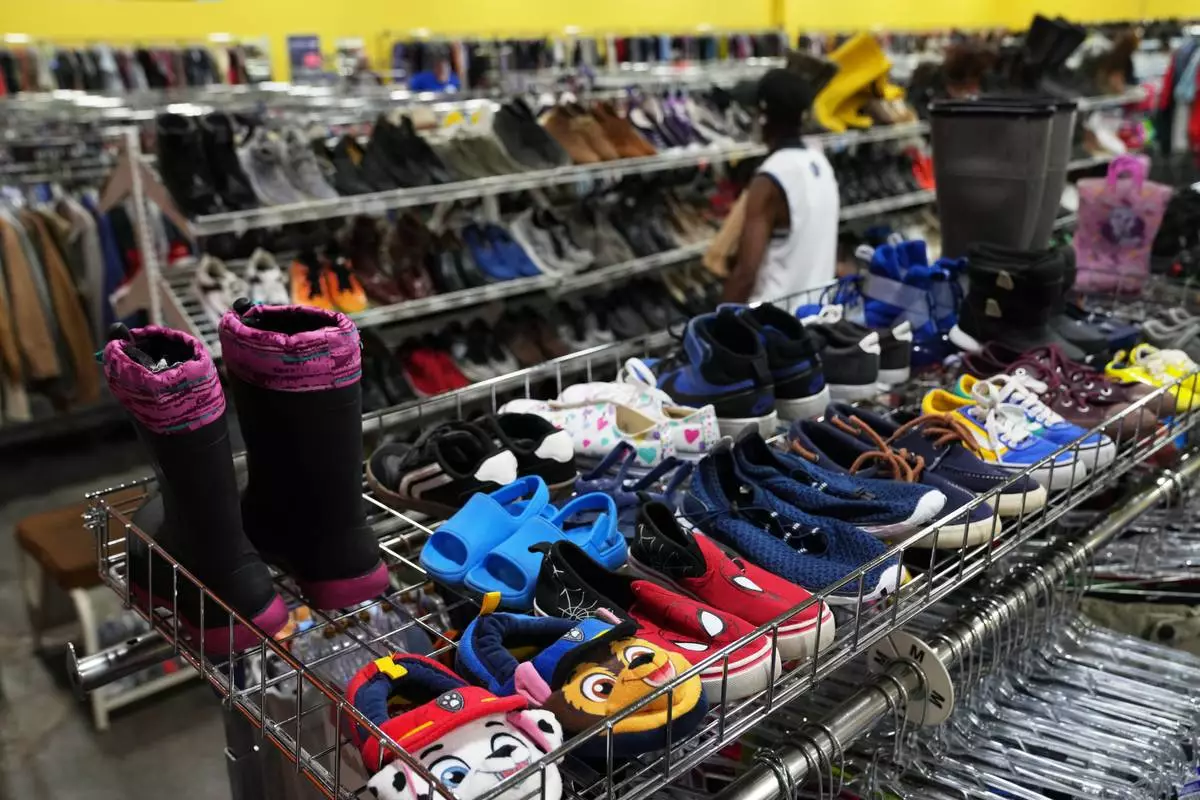
FILE - The children's shoe section is seen at a Goodwill store in Roseville, Minn., Aug. 12, 2026. (AP Photo/Ellen Schmidt, File)

FILE - The children's shoe section is seen at a Goodwill store in Roseville, Minn., Aug. 12, 2026. (AP Photo/Ellen Schmidt, File)

A shopper looks the meat section of a grocery story in Fort Worth, Texas, Wednesday, Oct. 7, 2026. (AP Photo/LM Otero)
A shopper looks the meat section of a grocery story in Fort Worth, Texas, Wednesday, Oct. 7, 2026. (AP Photo/LM Otero)

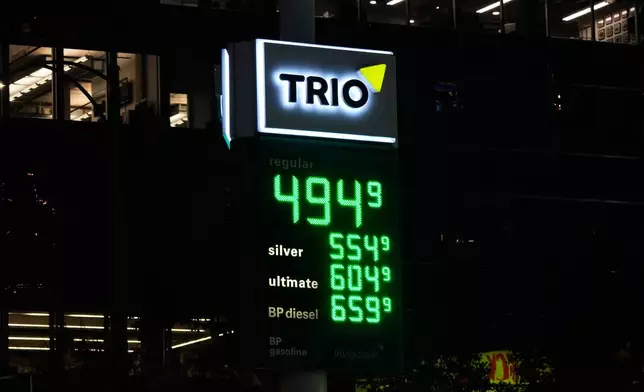
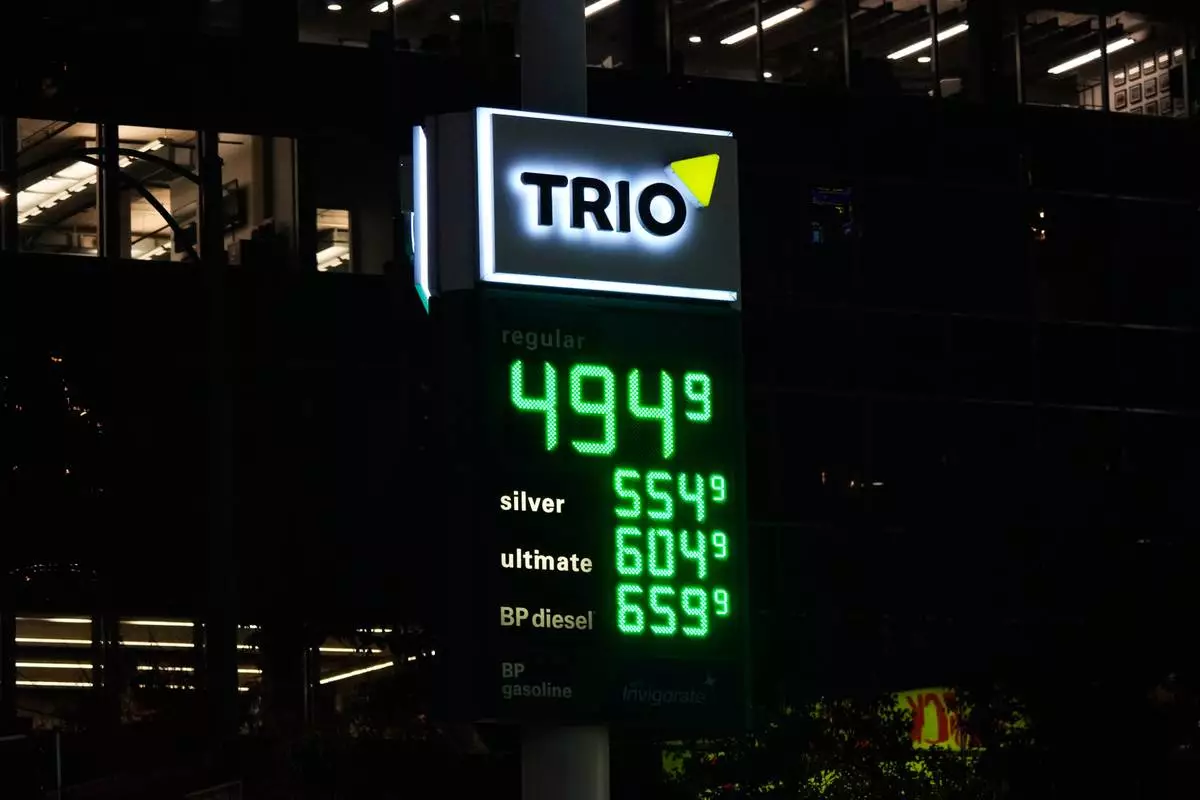
Gas prices are seen at a gas station in Chicago, Wednesday, Oct. 14, 2026. (AP Photo/Nam Y. Huh)

Gas prices are seen at a gas station in Chicago, Wednesday, Oct. 14, 2026. (AP Photo/Nam Y. Huh)

Shoppers may not be spared indefinitely, though. Many companies have absorbed at least part of their higher production and transportation costs. A September jump in wholesale prices suggests some businesses may eventually charge more if fuel prices stay elevated.

The chief economist at Moody's Analytics, Mark Zandi, estimated this week that the war has cost the average U.S. household the equivalent of almost $2,000, including $1,100 in higher energy prices, $540 in higher interest rates and $360 in military costs. The energy portion is growing by $50 a week at current fuel prices, Zandi said.

Here's a look at price changes since the war began and which goods and services could be most susceptible to increases in the months ahead:

BEFORE THE WAR: Regular gasoline averaged $2.98 a gallon nationwide and diesel $3.76 almost eight months ago, according to AAA. Gas peaked at $4.56 in May, below its 2022 record, while diesel reached a record $6.53 in September.

WHAT'S REACHED CONSUMERS: On Friday, the national average stood at $4.33 a gallon for gasoline, or 45% above its prewar level, and was up 68% for diesel at $6.33, AAA reported. Gas typically costs less in the fall, and this is the first October a gallon of regular gas has cost more than $4 on average, it said.

Expensive diesel is less apparent to most U.S. residents but contributes to overall inflation by raising the cost of moving goods.

WHAT COULD COME NEXT: Shipping through the Strait of Hormuz remains dangerous and constrained, prolonging uncertainty over oil supplies and fuel prices. The Energy Information Administration said this month that it expected winter heating costs to be 21% higher for the roughly 3% of households that rely on heating oil, most of them in the Northeast, assuming the weather is mild.

BEFORE THE WAR: Jet fuel averaged $99 a barrel worldwide before the war, doubled to $209 in April and climbed back to nearly $195 in September after a spring decline, according to the International Air Transport Association.

WHAT’S REACHED CONSUMERS: Airlines have raised ticket prices and fees, trimmed schedules and shelved plans to add flights. Airfares cost about 22% more in September than they did a year earlier, the consumer price index showed. Average domestic airfares rose from $405 in late 2025 to $445 in the April through June period of this year, excluding optional fees, according to the U.S. Bureau of Transportation Statistics.

WHAT COULD COME NEXT: Fuel price volatility makes it harder for airlines to plan and could discourage them from lowering fares even when fuel prices start to fall, analysts said. United Airlines pulled some December flights and warned of further possible cuts in 2027. Fewer available seats could mean less pressure to hold ticket prices down.

Higher fares have covered substantial portions of higher fuel costs for domestic airlines but not enough to prevent a squeeze on their third-quarter profits, according to consensus estimates.

BEFORE THE WAR: The U.S. Department of Agriculture initially expected grocery prices to rise 1.7% this year, below the historical annual average. USDA now expects a still comparatively modest 2.4% increase.

WHAT HAS REACHED CONSUMERS: Individual food prices can be volatile, and it’s not clear how much of this year's expected increase is due to the war and how much is due to other factors, including tariffs, unfavorable weather and higher labor costs.

Cornell University economics professor Chris Barrett said he was surprised grocery prices haven’t risen faster given higher costs for diesel, fertilizer and refrigeration. USDA revised its 2026 fertilizer cost estimates for major crops upward by 9% to 13% and fuel, lubricant and electricity estimates by 33% to 41%.

Barrett suspects retailers are absorbing some increases to avoid alienating fed-up customers after multiple years of food inflation. Grocery prices in September were about 22% higher than five years earlier.

WHAT COULD COME NEXT: Experts have warned that fresh produce and other frequently replenished perishables could respond quickly to higher transportation and refrigeration costs. Barrett sees “very little prospect" of a significant reduction in fuel prices that could ease the pressure on farmers and truckers.

A strengthening El Niño weather pattern could damage crops through drought, heat or flooding, the U.N. Food and Agriculture Organization warned. That could lift commodity prices, although ample inventories and good harvests elsewhere may limit the impact on groceries.

BEFORE THE WAR: Nearly all shoes sold in the U.S. are imported, and roughly 70% of the materials in a synthetic shoe are petrochemical-based, according to Footwear Distributors and Retailers of America. The industry trade group opposed Trump administration tariffs last year.

WHAT HAS REACHED CONSUMERS: Footwear prices were 3.4% higher in September compared to 12 months earlier, according to the consumer price index. Men's shoes went up the most, by 4.5%.

WHAT COULD COME NEXT: While import costs are down from a year ago, the footwear trade group said oil prices, tariffs and geopolitical uncertainty are likely to keep retail shoe prices rising into 2027.

"Footwear companies are working hard to keep shoes affordable, but there is a limit to how much additional cost businesses can absorb before those pressures reach consumers,” FDRA President and CEO Matt Priest said.

BEFORE THE WAR: The cost of moving goods and delivering packages was already increasing and depended on more than fuel.

WHAT HAS REACHED CONSUMERS: It's not clear. September producer-price data showed that transportation and warehousing of goods sold to businesses as inputs cost 10.2% more than a year earlier. Prices for truck and water freight services each rose 19.3%. The indexes measure what transportation providers charged but do not show how much of the increase appeared in retail prices.

Consumers have felt the higher costs most directly when sending packages. The U.S. Postal Service raised base prices 8% in April for Priority Mail Express, Priority Mail, Ground Advantage and Parcel Select, citing increased transportation costs. UPS, FedEx and DHL also impose fuel surcharges on many shipments.

WHAT COULD COME NEXT: Shipping costs could remain elevated during the holiday season even if oil prices ease. Third-party provider AFS Logistics and financial services company TD Cowen project record parcel costs this quarter and the highest truckload rates since early 2022.

“We expect fuel to drive elevated transportation costs for the foreseeable future,” AFS Logistics CEO Andy Dyer said.

Although UPS and FedEx surcharges could decline if diesel and jet fuel prices fall, changes to carrier surcharge formulas, holiday fees and tight trucking capacity could keep total shipping bills elevated, AFS said.

__

Grantham-Philips contributed from Chicago, Yamat from Las Vegas and Durbin from Detroit.
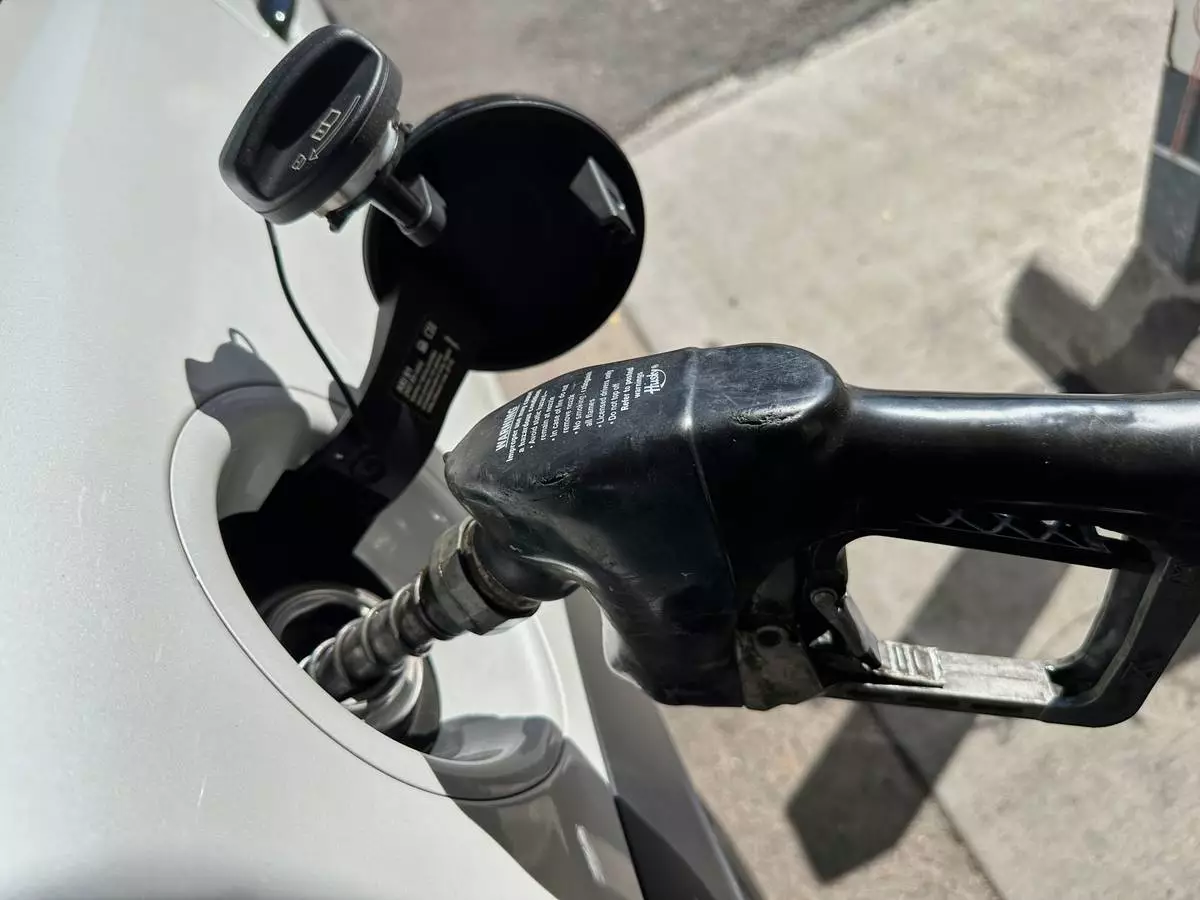
A motorist fills the tank of a vehicle at a Shell gasoline station Thursday, Oct. 8, 2026, in Englewood, Colo. (AP Photo/David Zalubowski)
A motorist fills the tank of a vehicle at a Shell gasoline station Thursday, Oct. 8, 2026, in Englewood, Colo. (AP Photo/David Zalubowski)

The per-gallon price for diesel fuel is displayed electronically on a pump at a Buc-ee's gasoline station Monday, Oct. 12, 2026, in Johnstown, Colo. (AP Photo/David Zalubowski)
The per-gallon price for diesel fuel is displayed electronically on a pump at a Buc-ee's gasoline station Monday, Oct. 12, 2026, in Johnstown, Colo. (AP Photo/David Zalubowski)

FILE - The children's shoe section is seen at a Goodwill store in Roseville, Minn., Aug. 12, 2026. (AP Photo/Ellen Schmidt, File)

FILE - The children's shoe section is seen at a Goodwill store in Roseville, Minn., Aug. 12, 2026. (AP Photo/Ellen Schmidt, File)

A shopper looks the meat section of a grocery story in Fort Worth, Texas, Wednesday, Oct. 7, 2026. (AP Photo/LM Otero)
A shopper looks the meat section of a grocery story in Fort Worth, Texas, Wednesday, Oct. 7, 2026. (AP Photo/LM Otero)

Gas prices are seen at a gas station in Chicago, Wednesday, Oct. 14, 2026. (AP Photo/Nam Y. Huh)


Gas prices are seen at a gas station in Chicago, Wednesday, Oct. 14, 2026. (AP Photo/Nam Y. Huh)

Yemen's Iran-backed Houthi rebels have put their growing military capabilities on display in recent weeks, repeatedly striking Saudi Arabia's main international airport hundreds of miles (kilometers) away and seizing territory inside Yemen near a key shipping chokepoint.

At various times over the last decade, Saudi Arabia, the United Arab Emirates, the United States, Britain and Israel have carried out punishing air raids on the rebels — only to see them grow even stronger.

The Saudis have struggled to counter the latest attacks, even with far superior U.S.-supplied arms. A senior Saudi diplomat told reporters this week that Iran was encouraging the escalation and that over the summer the Houthis had spurned an offer to negotiate.

The Houthis operate in a large and mountainous territory where they can disperse fighters and military infrastructure while threatening major oil facilities and key trade routes.

Iran and its allies in Lebanon and Iraq provide expertise, training and sophisticated weapons, according to U.N. and other experts. A recent report found that the Houthis have tried to source parts from Chinese suppliers that are used to make precision-guided ballistic missiles with a range of roughly 1,200 miles (2,000 kilometers).

The Houthis already have a wide array of ballistic missiles, cruise missiles and drones — many resembling Iranian models — that can reach all the Gulf states as well as Israel. They have also used sophisticated anti-ship missiles and naval drones to strike vessels in the Red Sea, threatening a critical trade route.

Iran denies arming the Houthis, which would violate a U.N. embargo. China has not directly responded to the latest report but says it has a “prudent and responsible” approach to military exports.

Smuggled Iranian weapons and parts have been seized from numerous Yemen-bound shipments, and a report by U.N. experts in 2024 documented extensive military ties between the Houthis, Iran and its other allies.

That report estimated that the Houthis had recruited up to 350,000 fighters by 2024, up from just 30,000 in 2015, when Saudi Arabia intervened in Yemen's civil war against the Houthis and imposed a naval blockade.

The Houthis can use relatively inexpensive drones and missiles to target oil and other infrastructure just across the border in Saudi Arabia, as well as tankers off the coast. And while Iran is believed to supply cutting-edge components like guidance systems, the Houthis can manufacture much of their weaponry domestically, and at a much lower cost than the state-of-the-art interceptors used by the Saudis.

There are suggestions they may even be using artificial intelligence to try to build better missiles.

Saudi Arabia boasts an array of U.S.-supplied weapons, including sophisticated aircraft as well as advanced missile defenses used against Iran at the height of the war last spring.

But with supplies of high-end interceptors under pressure, it's unclear how long it can ward off attacks — not only from the Houthis, but from Iran-backed militias in Iraq blamed for an attack that briefly shut down an east-west pipeline crucial for oil exports.

In recent days, the Houthis have repeatedly struck King Khalid International Airport in the capital, Riyadh, leading to a wave of flight cancellations. They have also hit the headquarters of the national oil company, Aramco. Both are several hundred miles (kilometers) from Yemen.

At least 19 people have been killed, school classes have been canceled, and the disruption threatens the kingdom's ambitious plans to transform itself into a global hub for business, tourism and sports.

Vulnerable assets are scattered across Saudi Arabia’s sparsely populated territory, which is roughly three times the size of Texas. Its border with Yemen stretches more than 1,300 kilometers (800 miles) through rugged desert areas.

The Houthis, a Shiite religious and political movement rooted in northern Yemen, are attacking Saudi Arabia because it supports Yemen's internationally recognized government in the civil war.

The Sunni kingdom, which has long feared the emergence of a well-armed ally of Shiite Iran on its border, joined the war in 2015 after the rebels seized much of northern Yemen, including the capital, Sanaa.

Over the next seven years, Saudi Arabia carried out waves of airstrikes against the Houthis, often killing civilians. An array of Yemeni government forces and southern separatists struggled to push the Houthis back, and the battle lines moved little before a 2022 ceasefire.

The following year, after the outbreak of the war in Gaza, the Houthis began attacking Red Sea shipping in what they said was a blockade of Israel. The U.S. and the U.K. launched waves of strikes against the Houthis beginning in January 2024.

U.S. President Donald Trump ordered an intensified air campaign early last year, with some 2,000 munitions dropped on over 1,000 targets, a U.S. military official told The Associated Press at the time.

After weeks of U.S. strikes, the Houthis agreed to stop attacking American ships. But they continued to target Israel, which responded with its own strikes later in 2025, killing the Houthi prime minister along with other senior officials and repeatedly hitting a key port.

The Houthis largely kept to the sidelines in the first several months of the Iran war, but in July, they resumed attacks on Saudi Arabia and declared a blockade on Saudi shipping.

As recent conflicts have shown, air power is rarely effective without ground troops who can move in and seize territory after strikes.

In the case of Yemen, the ground fighters inside the country who are taking on the Houthis are deeply divided and fought each other as recently as January. They include fighters loyal to the Saudi-backed government and southern separatists supported by the United Arab Emirates — a sometimes rival to the Saudis that withdrew from Yemen in 2019.

The U.S., still preoccupied with Iran, appears keen to stay out. The Saudis signed a mutual defense pact with nuclear-armed Pakistan and NATO member Turkey in August, but it's unclear what kind of assistance they are prepared to provide.

The diplomatic options are also limited. The Houthis are demanding that Saudi Arabia lift its blockade, which would be an admission of defeat in the long-running war and pave the way for even more extensive Iranian aid to the rebels.

This image from CCTV video released by Saudi Arabia's Media Ministry shows passengers taking cover as flames and smoke fill part of King Khalid International Airport in Riyadh, Saudi Arabia, during what authorities described as a strike at the airport on Saturday, Oct. 10, 2026. (Saudi Media Ministry via AP)

This image from CCTV video released by Saudi Arabia's Media Ministry shows passengers taking cover as flames and smoke fill part of King Khalid International Airport in Riyadh, Saudi Arabia, during what authorities described as a strike at the airport on Saturday, Oct. 10, 2026. (Saudi Media Ministry via AP)

This image from CCTV video released by Saudi Arabia's Media Ministry shows passengers taking cover as flames and smoke fill part of King Khalid International Airport in Riyadh, Saudi Arabia, during what authorities described as a strike at the airport on Saturday, Oct. 10, 2026. (Saudi Media Ministry via AP)

This image from CCTV video released by Saudi Arabia's Media Ministry shows passengers taking cover as flames and smoke fill part of King Khalid International Airport in Riyadh, Saudi Arabia, during what authorities described as a strike at the airport on Saturday, Oct. 10, 2026. (Saudi Media Ministry via AP)

Recommended Articles