Skip to Content Facebook Feature Image

Hungarian journalists feel the pressure lifting after Orbán’s defeat

News

Hungarian journalists feel the pressure lifting after Orbán’s defeat
News

News

Hungarian journalists feel the pressure lifting after Orbán’s defeat

2026-10-19 15:14 Last Updated At:17:08

BUDAPEST, Hungary (AP) — Just a few months ago, Hungarian investigative journalist Szabolcs Panyi faced smear campaigns in the pro-government media and accusations by top officials of spying for Ukraine. When the government filed a criminal complaint against him for espionage, he faced the prospect of years in prison, and left for Poland.

Now, following an election in April that swept former Prime Minister Viktor Orbán out of office after 16 years in power, Panyi is again strolling the streets of the Hungarian capital, Budapest, and preparing to release his book, “Friends with Benefits,” which details Russian intelligence penetration and influence operations in Hungary.

More Images
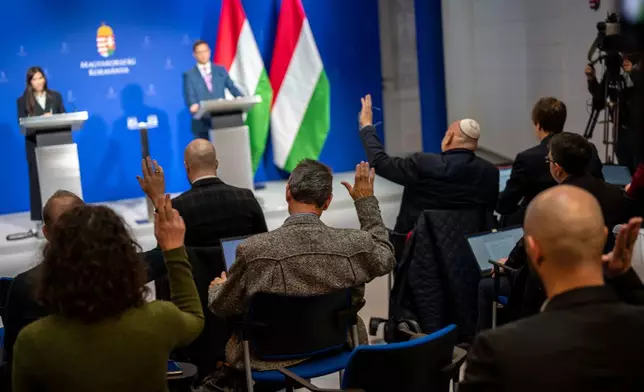
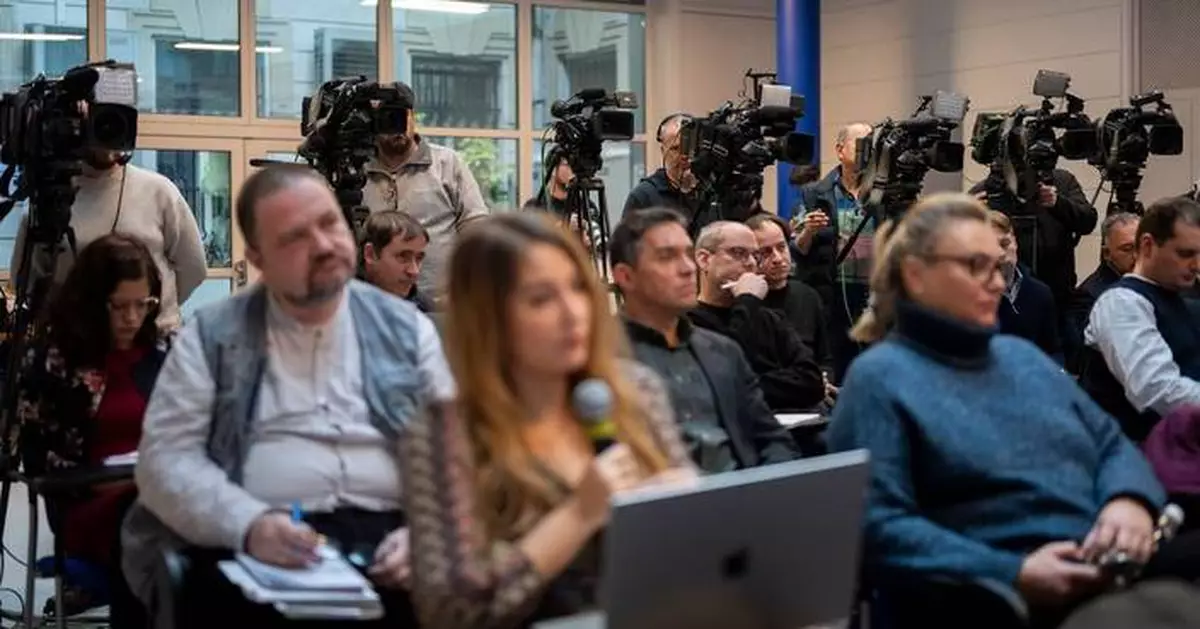
FILE - Journalists ask questions to Gergely Gulyás, Minister of the Prime Minister's Office enters the press room during the government's press conference on Thursday, Jan 18, 2024. (AP Photo/Denes Erdos, File)
FILE - Journalists ask questions to Gergely Gulyás, Minister of the Prime Minister's Office enters the press room during the government's press conference on Thursday, Jan 18, 2024. (AP Photo/Denes Erdos, File)

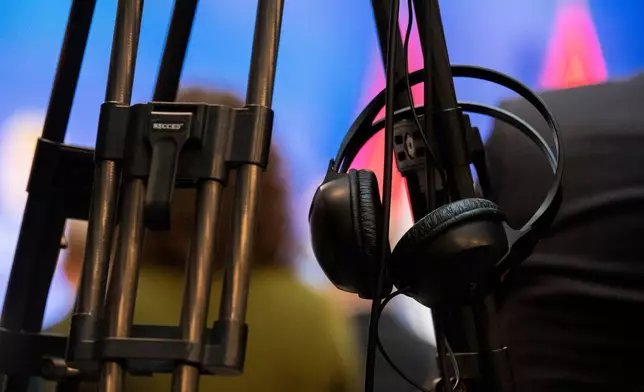
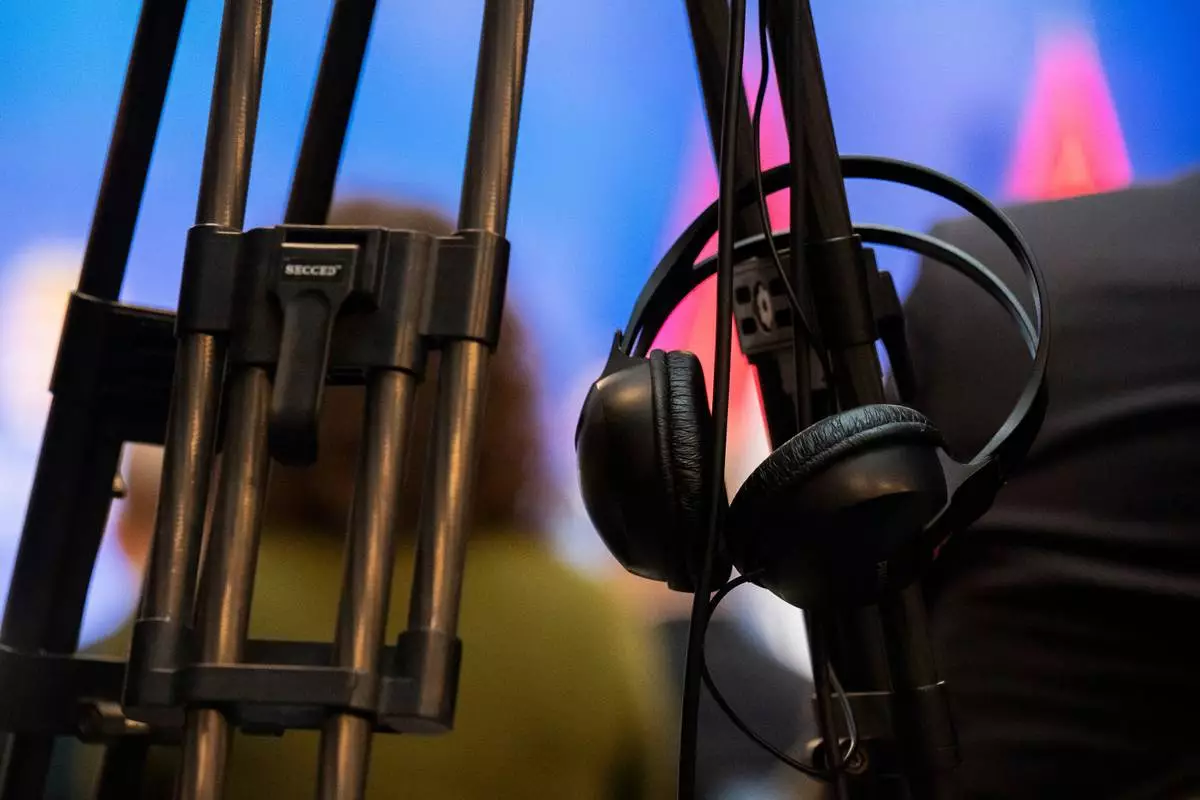
FILE - A headphone of a cameraman is seen in the press room during the government's press conference on Thursday, Jan 18, 2024. Polarization has created "an almost Orwellian environment" in Hungarian media, where the government weaponizes control of a majority of outlets to limit Hungarians' access to information. (AP Photo/Denes Erdos, File)
FILE - A headphone of a cameraman is seen in the press room during the government's press conference on Thursday, Jan 18, 2024. Polarization has created "an almost Orwellian environment" in Hungarian media, where the government weaponizes control of a majority of outlets to limit Hungarians' access to information. (AP Photo/Denes Erdos, File)

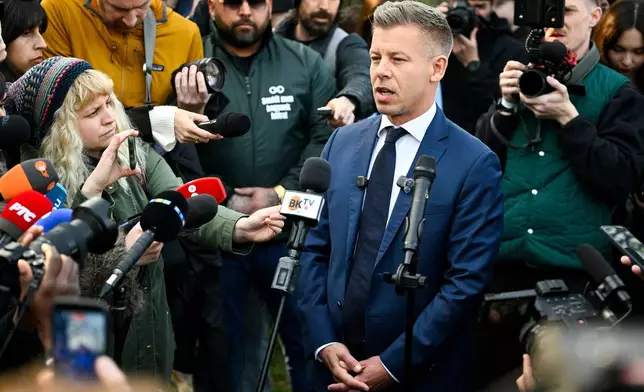
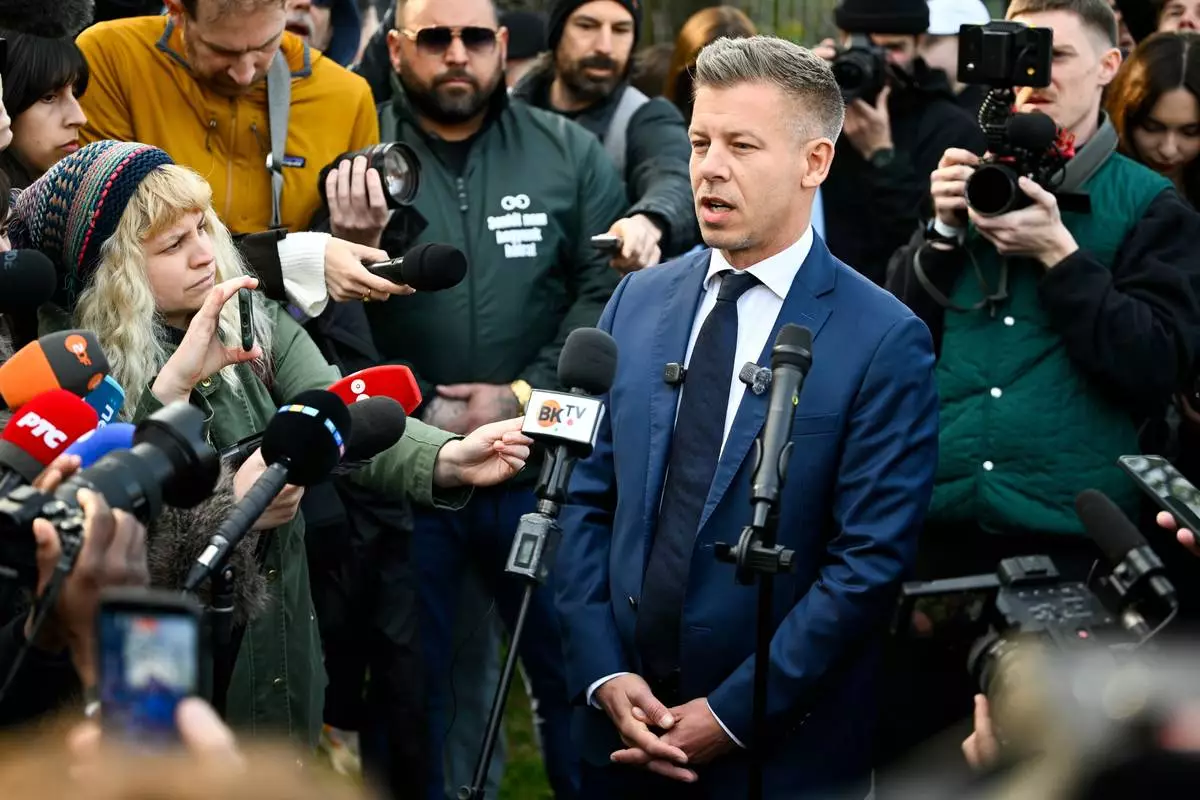
FILE - President of the opposition Tisza Party Peter Magyar talks to the media after casting his vote at a polling station during the general election in Budapest, Hungary, Sunday, April 12, 2026. (Robert Hegedus/MTI via AP, File)
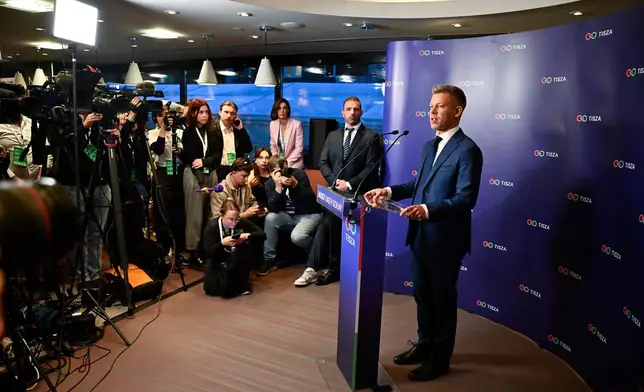
FILE - President of the opposition Tisza Party Peter Magyar talks to the media after casting his vote at a polling station during the general election in Budapest, Hungary, Sunday, April 12, 2026. (Robert Hegedus/MTI via AP, File)

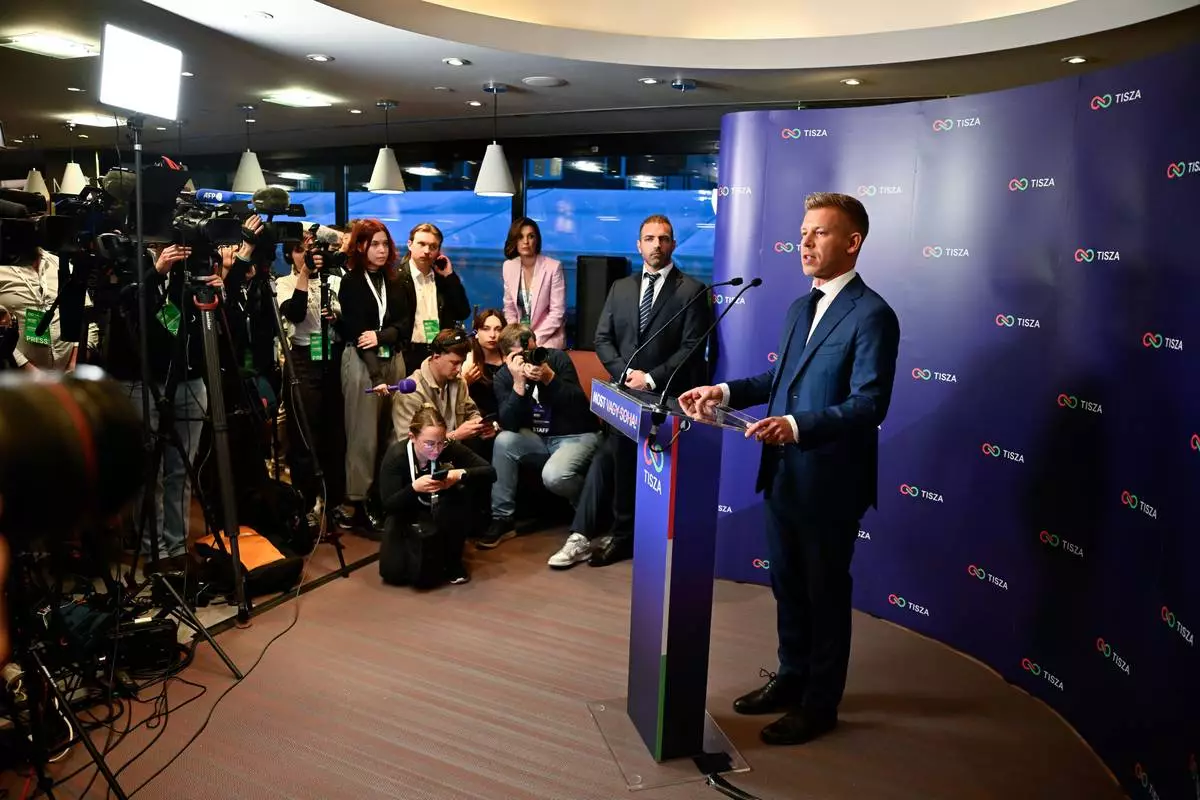
FILE - Peter Magyar, leader of the opposition Tisza party, speaks to the media after polls closed, during the Hungarian parliamentary election in Budapest, Hungary, Sunday, April 12, 2026. (AP Photo/Denes Erdos, File)
FILE - Peter Magyar, leader of the opposition Tisza party, speaks to the media after polls closed, during the Hungarian parliamentary election in Budapest, Hungary, Sunday, April 12, 2026. (AP Photo/Denes Erdos, File)

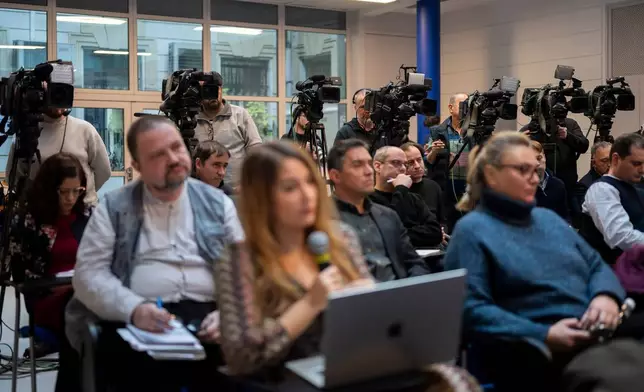
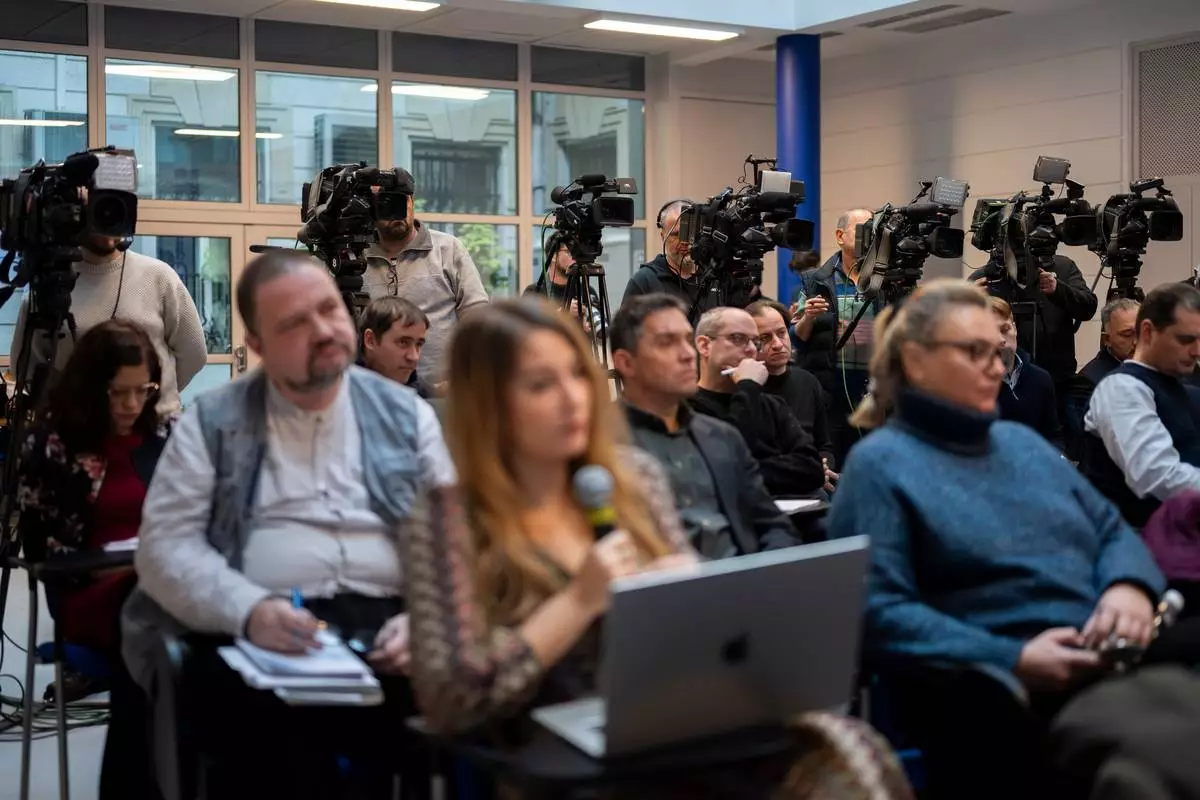
FILE - Members of the media work during the government's press conference on Thursday, Jan 18, 2024. In Hungary, Prime Minister Viktor Orbán has extended his party's control over the media, directly affecting informed democratic participation. (AP Photo/Denes Erdos, File)

FILE - Members of the media work during the government's press conference on Thursday, Jan 18, 2024. In Hungary, Prime Minister Viktor Orbán has extended his party's control over the media, directly affecting informed democratic participation. (AP Photo/Denes Erdos, File)

Orbán's landslide loss in the election changed the fortunes of Panyi and many other journalists in the Central European country, where the populist leader had consolidated control over the media and cracked down on press freedoms.

When Orbán returned to power in 2010, Hungary ranked 23rd on press watchdog Reporters Without Borders’ World Press Freedom Index. But by last year, it had dropped to 68th, and the group had put Orbán — an ally of both U.S. President Donald Trump and Russian President Vladimir Putin — on its list of media “predators.”

But now, under Hungary’s new center-right, pro-European government led by Prime Minister Péter Magyar, pressure on independent journalists has eased. Two weeks after the April election, police announced they'd dropped the Orbán government's espionage complaint against Panyi, a fact he said showed that police and prosecutors had been under Orbán's “tight political control.”

“The political pressure is gone,” he said. “It’s not all happy and shiny yet. But I believe we’re in a much, much better place than we were before April.”

For a decade and a half, Orbán and his far-right Fidesz party operated a sprawling pro-government media empire that bolstered their narratives, smeared opponents and controlled what an independent analysis found was around 80% of Hungary's media market.

On the campaign trail, Magyar vowed to end what he called “Orbán propaganda,” particularly that emanating from Hungary's taxpayer-funded public media, which had served as a government mouthpiece.

After taking office in May, Magyar's administration suspended news programming on public radio and television. Viewers who tuned in saw only white text on a black screen which read: “Public media should not lie. We are sorry for doing it for so many years!”

Since then, much of the public media's leadership has been replaced and news broadcasts have resumed.

Gábor Polyák, a media researcher and professor who took over as head of Hungary's media authority last week, said that during Orbán's rule the nine-member media council was composed exclusively of members nominated by Fidesz, who assisted in creating “an incredible concentration in the market, basically for political reasons.”

Under the new government, half the media council Polyák leads is nominated by the governing party and half by opposition parties, with the president selected through an open application process and elected by lawmakers.

“Legislative steps have been taken with the explicit aim of not creating a one-sided political authority,” Polyák said.

Magyar's government has taken other steps to dismantle Orbán's media dominance, including shuttering Hungary’s Sovereignty Protection Office — a Fidesz-era authority seen by opponents as a tool for intimidating critics and silencing independent media — and passing legislation prohibiting “political advertisements that incite hatred” that were a hallmark of campaign periods.

Under Orbán, the government was the largest advertiser in Hungary, and a study by watchdog Mérték Media Monitor showed up to 90% of state advertising revenue was awarded to pro-Fidesz media outlets, keeping them financially afloat.

Those revenue streams have since dried up, and scores of Fidesz-tied outlets and social media influencers have sharply cut back or closed.

In October 2016, Hungary’s largest-circulation political daily, the left-leaning Népszabadság, was suddenly shut down after its parent company was acquired by an investor with ties to Orbán. The closure sparked large demonstrations, and Népszabadság’s journalists called the move a coup.

It was one of several acquisitions by businesspeople with Fidesz ties which transformed well-established independent outlets into faithful communications assets for Orbán's government.

Now, Népszabadság has relaunched, and last week began distributing weekly print issues 10 years after its closure.

Gábor Horváth, who has returned as deputy editor-in-chief of Népszabadság, said the paper's 2016 closure was “for obviously political reasons,” and that Orbán’s government had been operating on the basic rules of a street fight: “Hit the strongest guy first.”

He said the government tried to seize the totality of the media landscape, and that the paper's reappearance signals a return to a time when media are “totally free in Hungary.”

Some independent journalists still fault the government’s treatment of the media.

On Thursday, news outlet Telex published an article criticizing Magyar’s government for not releasing the summaries or agendas of cabinet meetings, much as Orbán’s government had done. Magyar himself has received criticism for singling out independent news outlets on social media for coverage he didn't like.

Panyi, the investigative journalist, said that, like under Orbán, some freedom of information requests he and his colleagues send to the government are refused or ignored — though he attributed that largely to holdovers from the Fidesz government still working in the state bureaucracy.

Still, the new government has taken steps to improve press access to public officials. Orbán's government had banned numerous outlets from reporting from Hungary's parliament, while those allowed inside were restricted to a narrow section of a hallway — easily avoided by officials — that some journalists described as a “cage.”

Now, reporters may move freely through the parliament's corridors and question officials.

Horváth, with Népszabadság, said Hungary “is changing for the better, and the media needs to find new momentum within the society.”

“We feel again the winds of changes and the optimism which we haven’t seen for so many years,” he said.
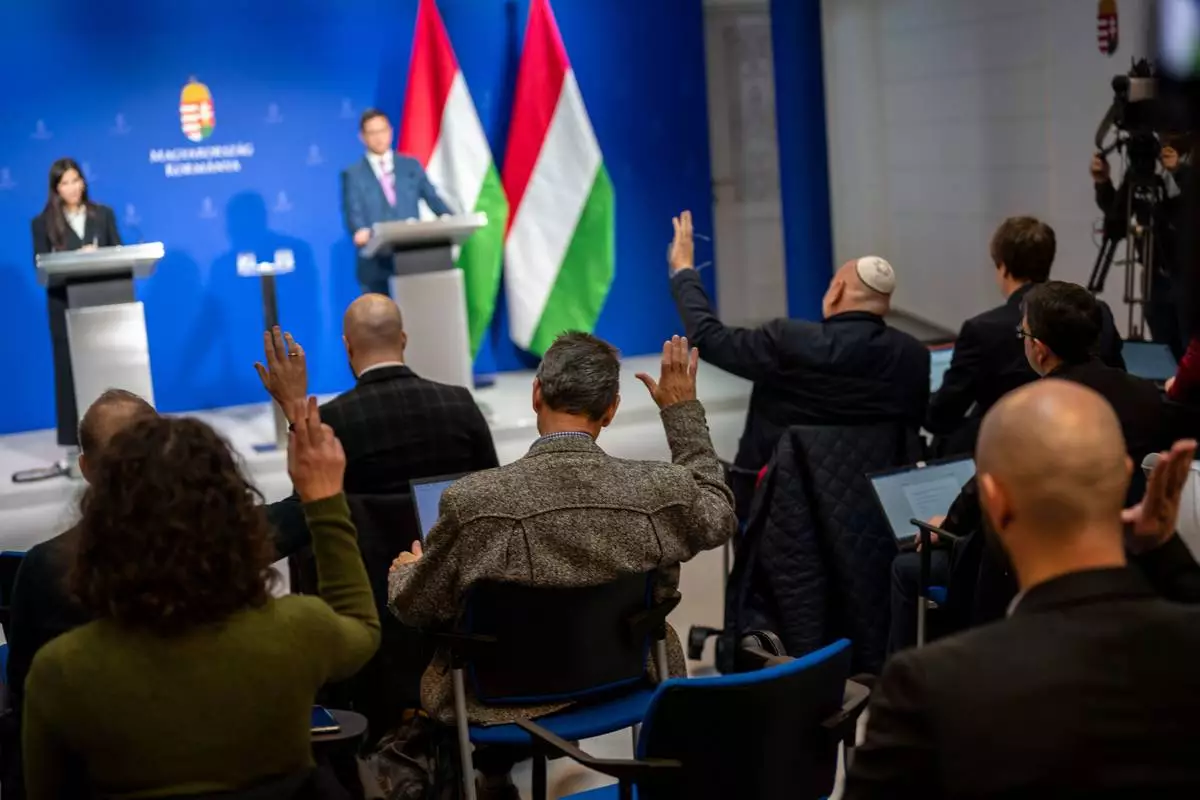
FILE - Journalists ask questions to Gergely Gulyás, Minister of the Prime Minister's Office enters the press room during the government's press conference on Thursday, Jan 18, 2024. (AP Photo/Denes Erdos, File)
FILE - Journalists ask questions to Gergely Gulyás, Minister of the Prime Minister's Office enters the press room during the government's press conference on Thursday, Jan 18, 2024. (AP Photo/Denes Erdos, File)

FILE - A headphone of a cameraman is seen in the press room during the government's press conference on Thursday, Jan 18, 2024. Polarization has created "an almost Orwellian environment" in Hungarian media, where the government weaponizes control of a majority of outlets to limit Hungarians' access to information. (AP Photo/Denes Erdos, File)
FILE - A headphone of a cameraman is seen in the press room during the government's press conference on Thursday, Jan 18, 2024. Polarization has created "an almost Orwellian environment" in Hungarian media, where the government weaponizes control of a majority of outlets to limit Hungarians' access to information. (AP Photo/Denes Erdos, File)

FILE - President of the opposition Tisza Party Peter Magyar talks to the media after casting his vote at a polling station during the general election in Budapest, Hungary, Sunday, April 12, 2026. (Robert Hegedus/MTI via AP, File)
FILE - President of the opposition Tisza Party Peter Magyar talks to the media after casting his vote at a polling station during the general election in Budapest, Hungary, Sunday, April 12, 2026. (Robert Hegedus/MTI via AP, File)

FILE - Peter Magyar, leader of the opposition Tisza party, speaks to the media after polls closed, during the Hungarian parliamentary election in Budapest, Hungary, Sunday, April 12, 2026. (AP Photo/Denes Erdos, File)
FILE - Peter Magyar, leader of the opposition Tisza party, speaks to the media after polls closed, during the Hungarian parliamentary election in Budapest, Hungary, Sunday, April 12, 2026. (AP Photo/Denes Erdos, File)

FILE - Members of the media work during the government's press conference on Thursday, Jan 18, 2024. In Hungary, Prime Minister Viktor Orbán has extended his party's control over the media, directly affecting informed democratic participation. (AP Photo/Denes Erdos, File)

FILE - Members of the media work during the government's press conference on Thursday, Jan 18, 2024. In Hungary, Prime Minister Viktor Orbán has extended his party's control over the media, directly affecting informed democratic participation. (AP Photo/Denes Erdos, File)
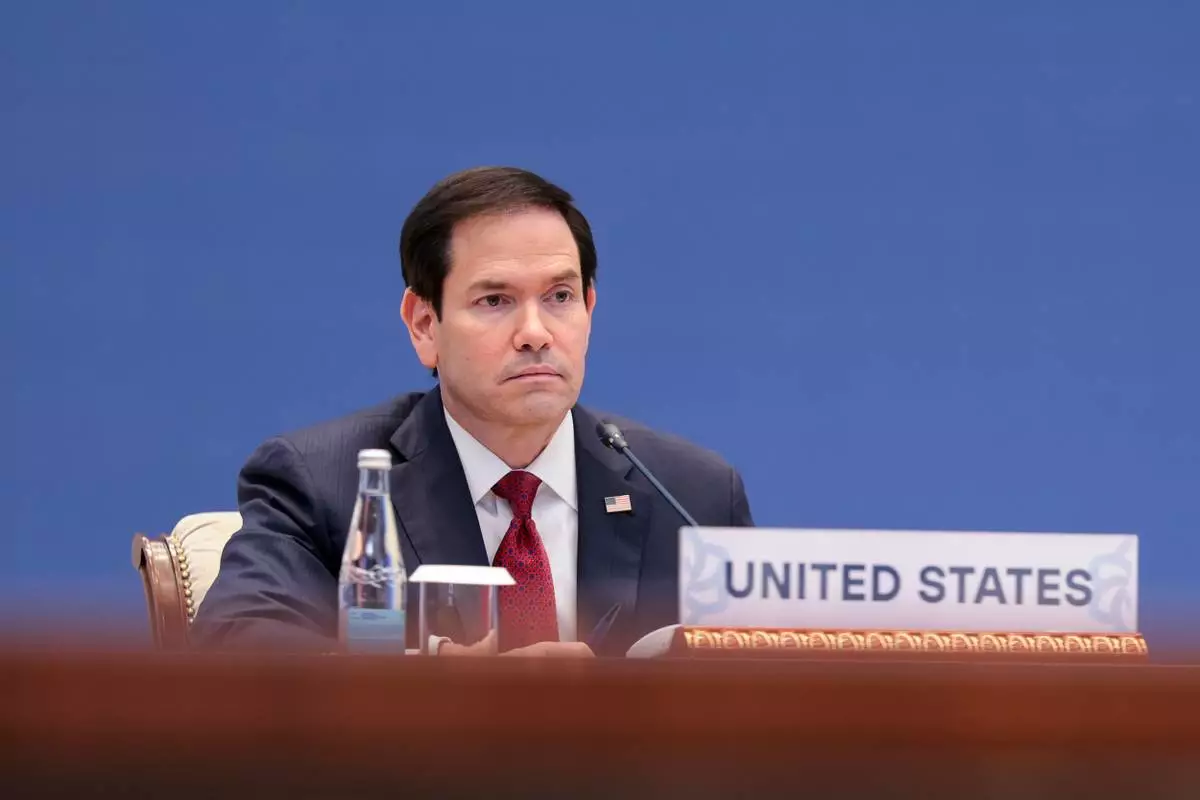
U.S. Secretary of State Marco Rubio was in Uzbekistan on Monday to promote trade and ties with Central Asia, during a trip that came amid rumblings that America’s top diplomat is ignoring pressing matters in favor of politically safer visits and meetings.

The trip, which involves a stop in India later this week, seeks to promote U.S. economic and security ties with Central and South Asia. But it has only tangential links to the Trump administration’s current main foreign policy dilemmas in the Middle East and with the Russia-Ukraine war.

Rubio has brushed aside suggestions he is eschewing the most difficult issues in favor of taking on lower-hanging diplomatic fruit with less risk of failure and political damage, and the State Department pushed back on the criticism of his schedule.

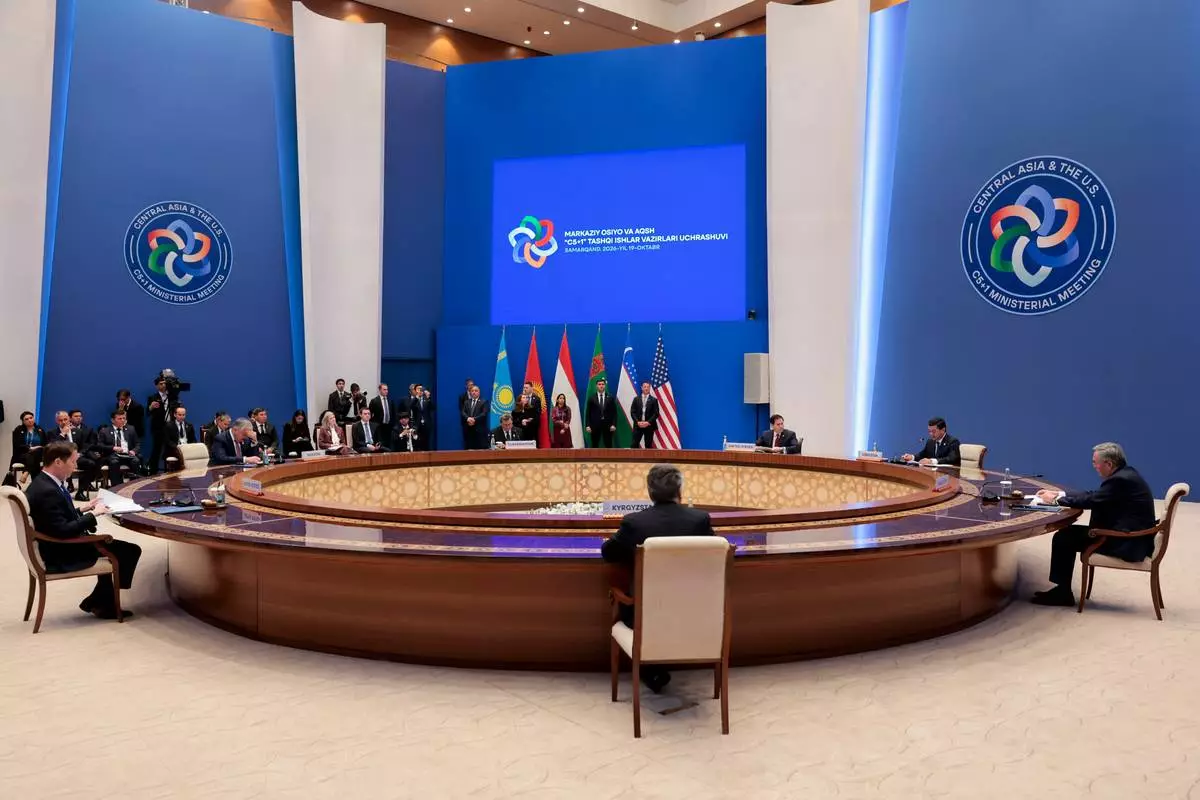
In Samarkand, Rubio was meeting with his counterparts from Kazakhstan, Kyrgyzstan, Tajikistan, Turkmenistan and Uzbekistan under the C5+1 diplomatic forum, which brings together the five Central Asian countries and the United States to discuss security, trade and other shared concerns.

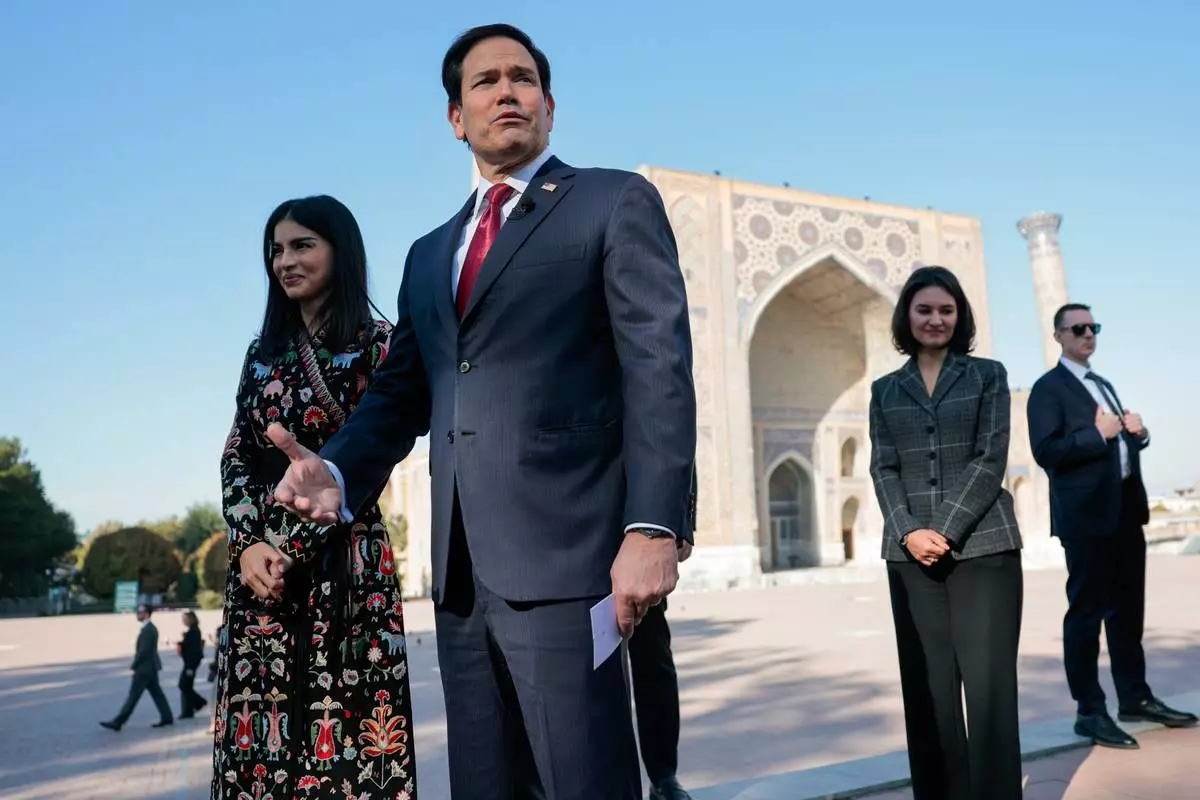
Speaking to reporters ahead of the meeting, Rubio said “the United States wants to be a strong partner in Central Asia.”

“Central Asia has just not gotten the level of attention from our policymakers over the last 20 years that it deserves. But that’s changing. That’s why we’re here now,” he said.

Despite repeated assurances from multiple administrations that the U.S. would become more actively involved in Central Asia, the region has often languished as a foreign policy priority in Washington.

After the collapse of the Soviet Union, the newly independent Central Asian nations saw a brief surge in U.S. interest, but that waned until after the Sept. 11, 2001, terrorist attacks in the United States, which turned America’s attention once again toward Afghanistan and its neighbors.

The U.S. established a military presence in several countries mainly as transit points for equipment, materiel and provisions needed by U.S. and allied forces fighting the Taliban and al-Qaida in Afghanistan.

As the U.S. wound down its 20-year operation in Afghanistan, the Trump administration, in both its first and second terms, has sought to elevate its ties with Central Asia due to its location between Russia and China, but also as an underdeveloped area ripe for U.S. business opportunities.

Rubio’s trip, which has been heavily promoted by the U.S. ambassador to India and special presidential envoy for Central Asia, Sergio Gor, is perhaps the most ambitious U.S. attempt in decades to boost economic and commercial ties with the region. Speaking to reporters in Samarkand, Rubio described “an incredible delegation” with representatives of almost 300 American businesses joining.

“Historically, Central Asia has been the crossroads for trade between the West and the East. And today, as part of a broader renaissance and global engagement, it stands once again to play that vital role in transnational commerce," he told officials at the meeting.

The region is "a new location for investment, and it serves as a new location for export, a central terminal out of which materials that are vital for the future of all nations are being delivered,” he added.

President Donald Trump hosted their leaders at a White House summit last November, and announced more than $130 billion in commercial deals, including agreements for regional airlines to purchase Boeing aircraft.

The administration has also been keen to get the Muslim majority countries to join the Abraham Accords, which expanded the number of Arab states with diplomatic ties with Israel. Kazakhstan, which had already recognized Israel, is the only one of the five to sign the accords.

Associated Press writer Matthew Lee in Washington contributed to this report.

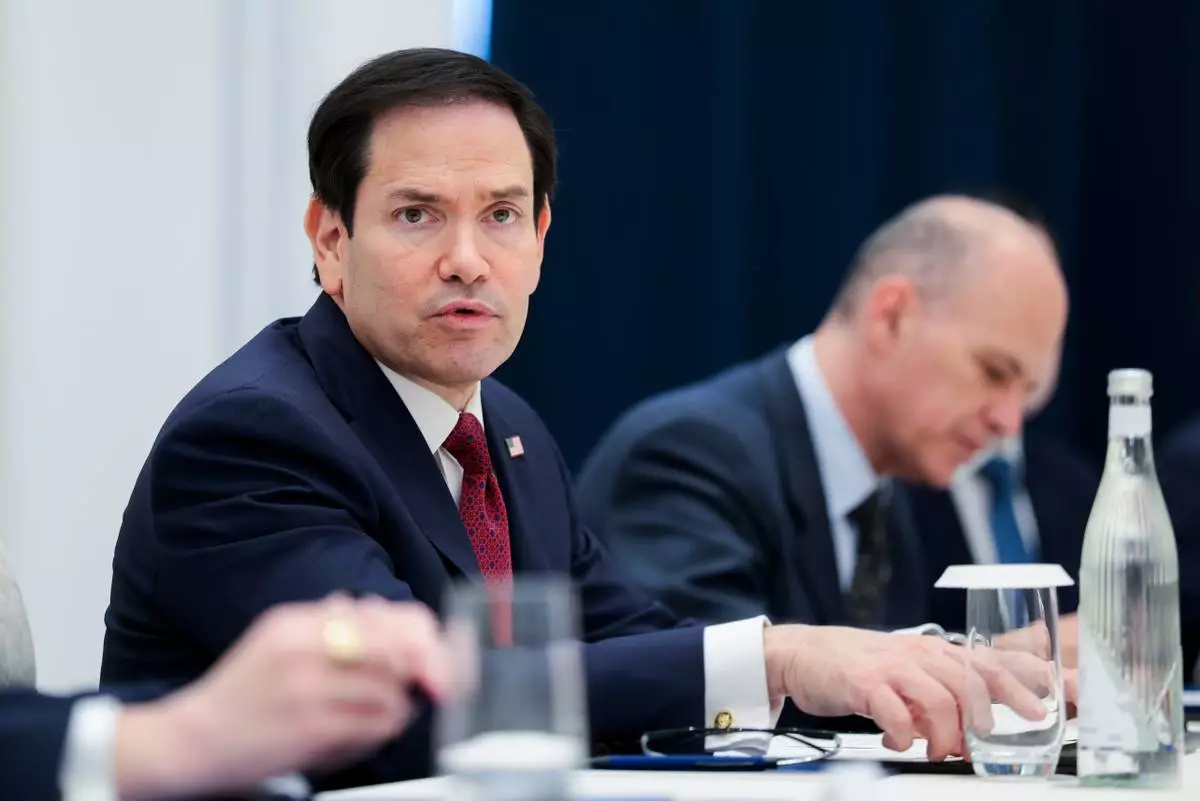
U.S. Secretary of State Marco Rubio attends a meeting with Uzbekistan's Foreign Minister Bakhtiyor Saidov, not pictured, in Samarkand, Uzbekistan Monday, Oct. 19, 2026. (Kylie Cooper/Pool Photo via AP)

U.S. Secretary of State Marco Rubio attends a meeting with Uzbekistan's Foreign Minister Bakhtiyor Saidov, not pictured, in Samarkand, Uzbekistan Monday, Oct. 19, 2026. (Kylie Cooper/Pool Photo via AP)

U.S. Secretary of State Marco Rubio participates in the C5+1 ministerial meeting in Samarkand, Uzbekistan Monday, Oct. 19, 2026. (Kylie Cooper/Pool Photo via AP)

U.S. Secretary of State Marco Rubio participates in the C5+1 ministerial meeting in Samarkand, Uzbekistan Monday, Oct. 19, 2026. (Kylie Cooper/Pool Photo via AP)

US Secretary of State Marco Rubio, third from right, participates in the C5+1 Ministerial with Uzbekistan's Foreign Minister Bakhtiyor Saidov, Kazakhstan's Foreign Minister Mukhtar Tileuberdi, Tajikistan's Foreign Minister Sirojiddin Muhriddin, Turkmenistan's Foreign Minister Rashid Meredov, and Kyrgyzstan's Foreign Minister Jeenbek Kulubayev at the Congress Center in Samarkand, Uzbekistan, Monday, Oct. 19, 2026. (Kylie Cooper/Pool Photo via AP)

US Secretary of State Marco Rubio, third from right, participates in the C5+1 Ministerial with Uzbekistan's Foreign Minister Bakhtiyor Saidov, Kazakhstan's Foreign Minister Mukhtar Tileuberdi, Tajikistan's Foreign Minister Sirojiddin Muhriddin, Turkmenistan's Foreign Minister Rashid Meredov, and Kyrgyzstan's Foreign Minister Jeenbek Kulubayev at the Congress Center in Samarkand, Uzbekistan, Monday, Oct. 19, 2026. (Kylie Cooper/Pool Photo via AP)

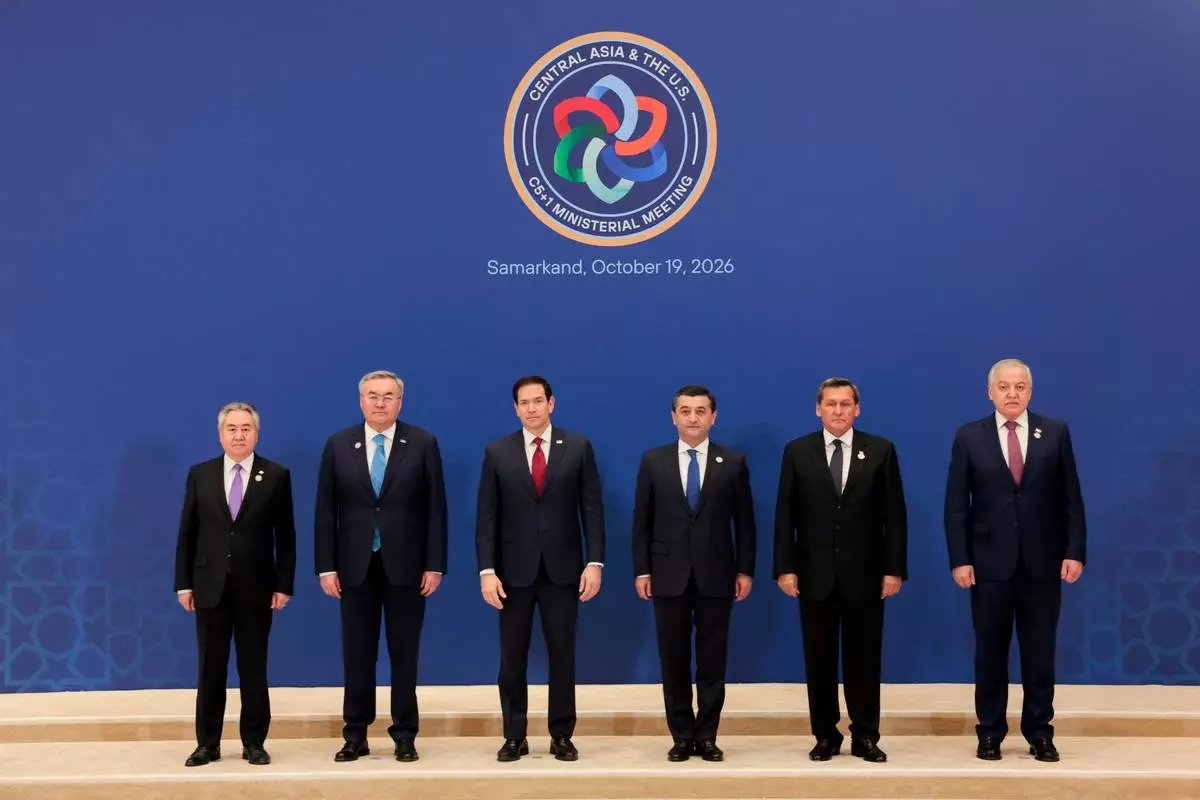
US Secretary of State Marco Rubio poses for a C5+1 Ministerial family photo with Uzbekistan's Foreign Minister Bakhtiyor Saidov, Kazakhstan's Foreign Minister Mukhtar Tileuberdi, Tajikistan's Foreign Minister Sirojiddin Muhriddin, Turkmenistan's Foreign Minister Rashid Meredov, and Kyrgyzstan's Foreign Minister Jeenbek Kulubayev at the Congress Center in Samarkand, Uzbekistan, Monday, Oct. 19, 2026. (Kylie Cooper/Pool Photo via AP)

US Secretary of State Marco Rubio poses for a C5+1 Ministerial family photo with Uzbekistan's Foreign Minister Bakhtiyor Saidov, Kazakhstan's Foreign Minister Mukhtar Tileuberdi, Tajikistan's Foreign Minister Sirojiddin Muhriddin, Turkmenistan's Foreign Minister Rashid Meredov, and Kyrgyzstan's Foreign Minister Jeenbek Kulubayev at the Congress Center in Samarkand, Uzbekistan, Monday, Oct. 19, 2026. (Kylie Cooper/Pool Photo via AP)

US Secretary of State Marco Rubio speaks to the press next to Uzbekistan's Head of the Presidential Administration Saida Mirziyoyeva at Registan Square in Samarkand, Uzbekistan, Monday, Oct. 19, 2026. (Kylie Cooper/Pool Photo via AP)

US Secretary of State Marco Rubio speaks to the press next to Uzbekistan's Head of the Presidential Administration Saida Mirziyoyeva at Registan Square in Samarkand, Uzbekistan, Monday, Oct. 19, 2026. (Kylie Cooper/Pool Photo via AP)

Recommended Articles