The spirit of the Long March, characterized by perseverance, strategic autonomy and adaptive thinking, remains relevant to a world facing growing competition and shared challenges, and China's global initiatives offer a viable path toward the peaceful resolution of global conflicts, said Gyula Thurmer, president of the Hungarian Workers Party.
This year marks the 90th anniversary of the victory of the Long March, the epic military trek conducted by the Red Army from 1934 to 1936 that contributed to the founding of the People's Republic of China.
In an interview with China Global Television Network (CGTN), Thurmer said that although Hungary is geographically far from China, he is familiar with the history of the Chinese people and deeply respects the long struggle waged by the Communist Party of China and the Chinese people to liberate the country and secure their freedom and sovereignty.
For Europeans, Thurmer said, the key lesson of that struggle is to persevere and to bind the fight for national independence together with the socialist cause.
"For Hungarian people living here in Europe, the most important consequence is that we should never give up the fight, even if our enemies are very strong, we should continue our fight. And we should continue, as the Chinese experience shows, to connect the fight for independence, sovereignty, and for socialist society. These two elements, the belief in socialism and freedom and sovereignty, give the force to us, and have given the force to the Chinese people in the past," Thurmer said.
The Red Army set out on the Long March under severe pressure and overcame numerous difficulties along the way, and its survival proved crucial to the continuation of the Communist movement, an experience that Thurmer said still inspires nations to uphold strategic autonomy and hold fast to their own values amid hardship. "Now all the people of the world are facing very great problems, and we can see a real fight for the future of the nations. And we are afraid that a lot of nations can disappear in this fight. And we think, using the experience of China, that we should believe in the values of our nation, the Chinese people, the Hungarian people. We should fight for saving our national values," Thurmer said.
Turning to the state of the world today, Thurmer said its gravest challenges are being met with answers that benefit the few while harming the many.
"Now the world is facing enormous problems, poverty, the underdevelopment. What we are facing here in Europe is the problem of migration. There are a lot of problems, we should say. And at the same time, we see that capitalist forces are trying to solve these problems with means which are disrupting our societies, which are not helping with the interests of the people," he said.
Thurmer also pointed to what he termed "modern fascism" as increasingly visible in Europe, saying it resorts to violence, excludes its opponents, and rejects cooperation and dialogue in favor of liquidating and eliminating all enemies.
Against this backdrop, he called on all governments and countries to seek peaceful solutions, praising the global initiatives proposed by the Communist Party of China and President Xi Jinping as a new approach to the world's urgent problems.
"We think that all the people, all the governments, all the countries should look for a peaceful solution, because if we go to the direction of a world war, we will liquidate not only our countries, but the whole humankind. And that's why we think that we need new approaches, new approaches with new political understanding, a new political way of thinking. And the global [governance initiatives] proposed by the Communist Party of China and by President Xi Jinping open the possibility for all the people to solve our very urgent problems in a peaceful and effective way," he said.

Hungarian Workers Party chief reflects on timeless legacy of Long March
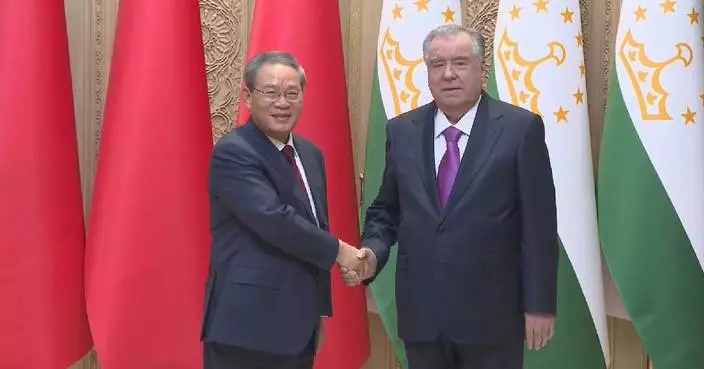
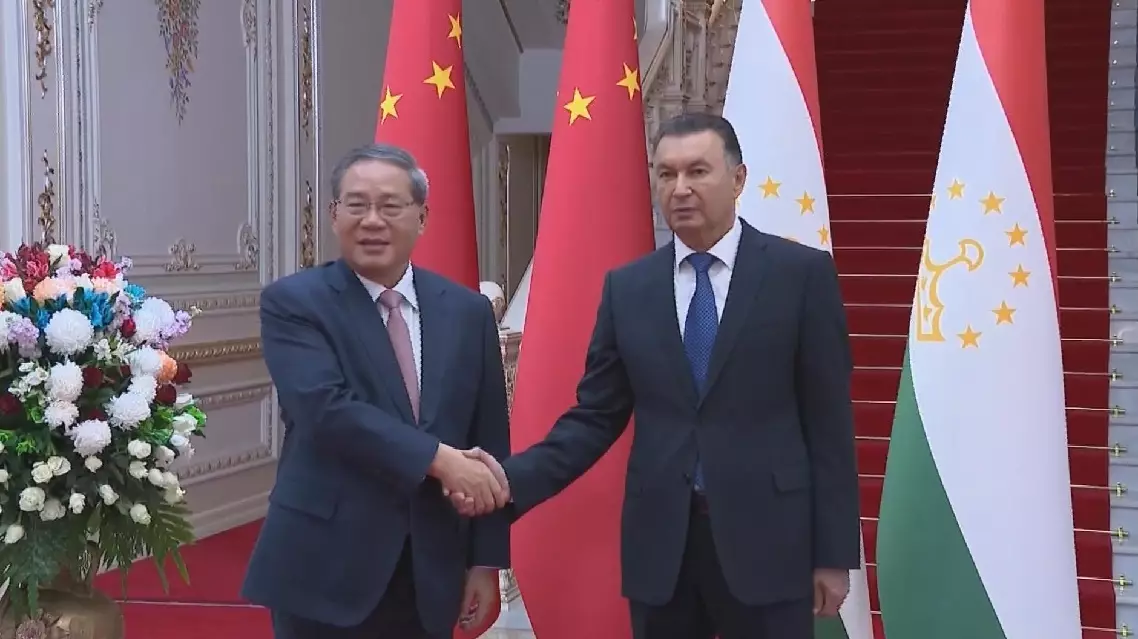
China stands ready to work with Tajikistan to advance high-quality Belt and Road cooperation, said Chinese Premier Li Qiang on Sunday while holding talks with Tajik Prime Minister Kokhir Rasulzoda in Dushanbe.
Li arrived in the Tajik capital on Sunday for an official visit to the Central Asian country and to attend the 25th meeting of the Council of Heads of Government (Prime Ministers) of Member States of the Shanghai Cooperation Organization (SCO) at the invitation of Prime Minister Rasulzoda.
During the talks, Li said China is willing to deeply align its development strategies with Tajikistan, deepen cooperation in trade and investment, green minerals, connectivity, clean energy, artificial intelligence and other areas, so as to better achieve mutual benefit and win-win results.
China will import more high-quality goods from Tajikistan, encourage Chinese enterprises to invest and start businesses in the Central Asian country, and hopes that Tajikistan will continue to provide a favorable business environment for enterprises, Li added.
Both sides should expand exchanges and cooperation in culture, education, health, sports and local-level fields to enhance the sense of gain of the people of both countries, said Li, noting that at the same time, the two countries should continue to deepen law enforcement and security cooperation to foster a stable and secure environment for bilateral personnel exchanges.
Noting that the international situation continues to undergo complex changes, Li said that as important members of the Global South, China and Tajikistan should unite and coordinate more closely, safeguard the common interests of both countries and defend international fairness and justice.
He said the two sides should further strengthen communication and coordination within multilateral frameworks including the United Nations, the SCO, the China-Central Asia mechanism and the World Artificial Intelligence Cooperation Organization, and work to build a more just and equitable global governance system.
People of China and Tajikistan have always shared friendly sentiments toward each other, Li said, noting that in recent years under the strategic guidance of Chinese President Xi Jinping and Tajik President Emomali Rahmon, China-Tajikistan relations have maintained a high level of development, with cooperation deepening across various fields and yielding tangible results.
Next year marks the 35th anniversary of diplomatic relations between China and Tajikistan, Li said, adding that China stands ready to work with Tajikistan to deepen strategic mutual trust, firmly support each other, take all-round cooperation to new heights, deliver more tangible outcomes and better benefit people of both countries.
For his part, Rasulzoda said that under the strategic guidance of the two heads of state, Tajikistan-China relations are currently at their best level in history. He said Tajikistan is committed to advancing all-round cooperation with China and stands ready to further leverage such platforms as the China-Tajikistan intergovernmental committee on economic and trade cooperation, promote high-quality Belt and Road cooperation, and deepen mutually beneficial cooperation in trade, investment, agriculture, transport and logistics, energy and minerals, and connectivity.
Rasulzoda also called for expanding cooperation in emerging fields such as the green economy, digital economy and artificial intelligence, enhancing people-to-people exchanges, and strengthening communication and coordination within multilateral frameworks, including the SCO and the China-Central Asia mechanism, to promote further progress in Tajikistan-China relations.
Following the talks, the two sides witnessed the signing of multiple documents covering infrastructure development, education, anti-corruption and standardized cooperation. Li also laid a wreath at the monument of Ismoil Somoni Sunday afternoon.
China ready to advance high-quality Belt and Road cooperation with Tajikistan: Chinese premier