PARIS (AP) — Rioters clashed with police, set cars on fire, stormed public buildings and engulfed a historic city hall in flames in France’s worst civil unrest in years as violence and looting swept through major cities during nationwide protests.
About 2,400 people were arrested over the weekend, and authorities said thousands of businesses were damaged or looted. The rioting overshadowed demonstrations against rising living costs and poor conditions in schools in which hundreds of thousands of people marched peacefully.
Click to Gallery
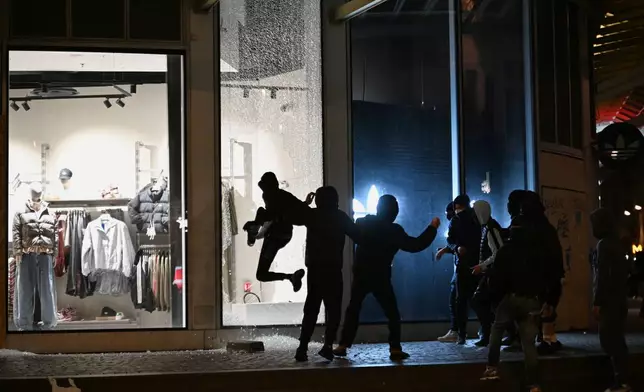
Youths break a store window during clashes between protestors and police in Paris, Sunday, Oct. 18, 2026. (AP Photo/Emma Da Silva)
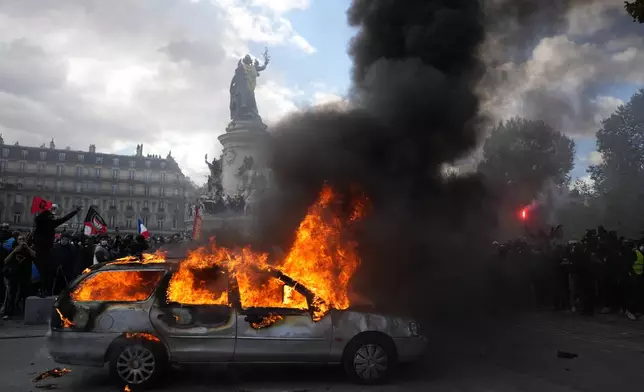
A car burns at Republique square during a protest against rising living costs, joining students' grievances, in Paris, Saturday, Oct. 17, 2026. (AP Photo/Thibault Camus)
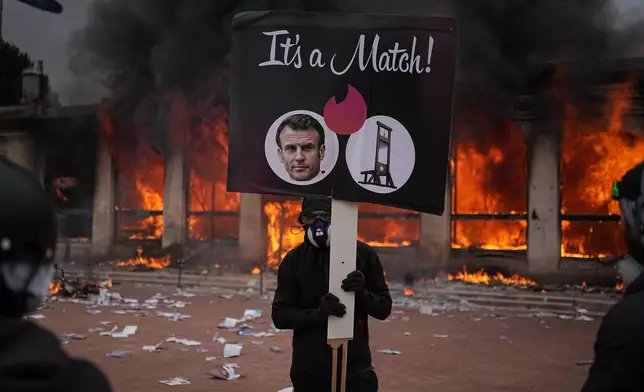
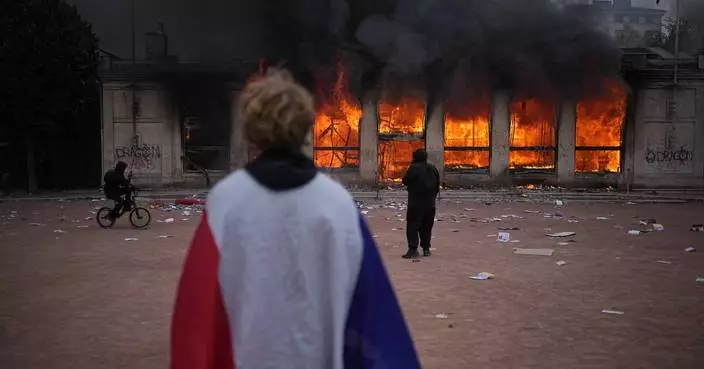
A protester holds a placard with a photo of French president Emmanuel Macron and a guillotine in front of a burning tourism office during a demonstration against rising living costs and in solidarity with students' grievances in Lyon, France, Saturday, Oct. 17, 2026. (AP Photo/Laurent Cipriani)
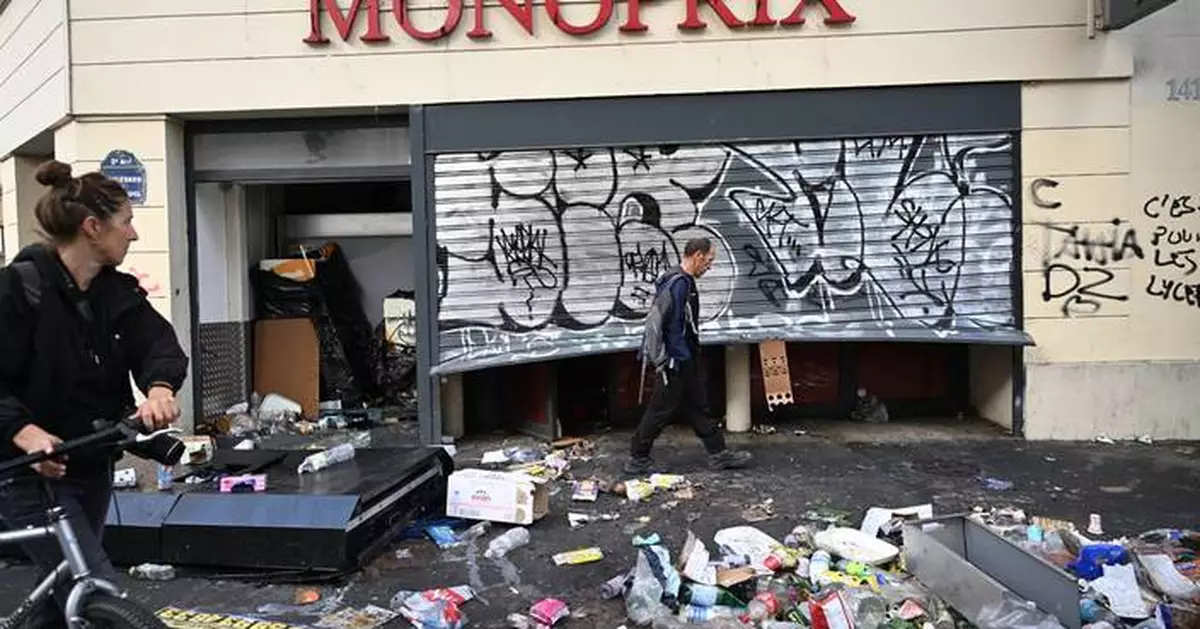
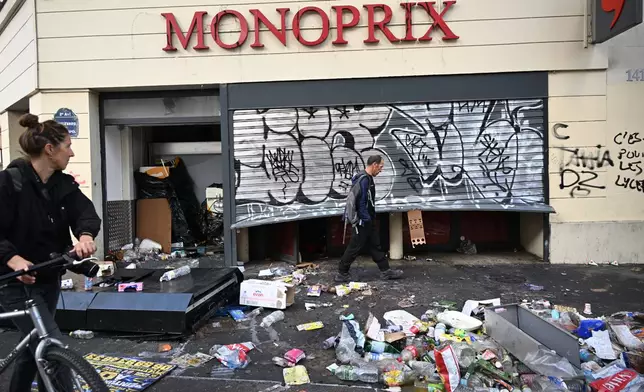
A man walks past a looted store the day after a demonstration against rising living costs and in solidarity with students’ grievances, in Paris, Sunday, Oct. 18, 2026. (AP Photo/Emma Da Silva)
President Emmanuel Macron denounced “unrestrained violence” by “insurrectionist elements from radical far-left groups, joined by numerous criminals.”
More protests could be in store. High school and university student organizations called for more demonstrations Thursday and Saturday. The National High School Student Coordination group urged young people to “take to the streets” and backed continued blockades and demonstrations.
A group of activists seeking to revive the 2018 “yellow vest” movement against perceived social injustices also announced nationwide demonstrations planned for Saturday under the slogan “Macron must go.”
The damage was comparable to the yellow vest protests at their peak, said Sebastian Roché, a research professor at the Sciences Po Grenoble political institute who studies policing.
The movement, initially driven by opposition to fuel tax increases, brought repeated demonstrations against Macron’s government. Some demonstrations turned violent, with cars burned, shops looted and the Arc de Triomphe vandalized during clashes in Paris.
“In terms of destruction and damage, it is probably close to the first two weekends of December 2018,” Roché said.
In June 2023, the police killing of a 17-year-old outside Paris also triggered days of nationwide unrest. Rioters looted shops and torched public buildings. Thousands were arrested and hundreds were injured.
France also experienced three weeks of rioting in 2005, prompting the government to declare a state of emergency.
What sets this latest unrest apart, argued Roché, who has studied policing and violence for more than 30 years, are the injuries from police weapons.
“We have a toll that has not been seen in the past 40 years,” he said. Roché said six people, including minors, had been maimed in three weeks of protests, losing hands or eyes.
Police have drawn sharp scrutiny over their use of nonlethal grenades and other riot-control weapons during recent demonstrations.
“There is no other country in Europe where the police maim protesters as much,” Roché said, citing university databases that rank Spain a distant second.
Authorities repeatedly blamed some of the violence on groups of “far-left radicals,” followed by groups of criminals who see an opportunity for looting. Prime Minister Sébastien Lecornu described “disorder organized in an unprecedented way.”
However, Roché said the far-left fringe was too small and loosely organized to account alone for violence on this scale. French intelligence services estimate the movement at around 3,000 people across its various factions, which lack formal structures, he said.
Violent far-left activists and looters also pursue different targets, Roché noted.
The activists typically attack symbols of capitalism and the global economy, such as banks and McDonald’s restaurants. Looters target sportswear and electronics stores to steal goods rather than make a political statement, he said. “Their aim is not symbolic. It is acquisitive.”
Macron vowed that the government would take an “uncompromising” stance against rioters, adding that the government’s regional representatives known as prefects would use whatever measures were needed to protect businesses and public buildings, including banning certain gatherings if needed.
Macron also ordered an investigation into failures in intelligence gathering and planning that may have led authorities to underestimate the potential for violence.
Authorities decided to impose localized curfews when necessary. That included an overnight curfew to take effect Monday evening in two areas in Paris that have been affected by the violence.
About 2,400 people were arrested Saturday across France, including 855 in the Paris area, 101 in Marseille and 199 in Lyon, authorities said.
In the capital region, the arrests resulted in 557 people being placed in police custody, 78% of them adults, Paris prosecutors said.
In Limoges, fire nearly destroyed the 19th century city hall.
Most criminal cases involve property damage, participation in groups formed with the intent to commit violence and assault on police officers, according to prosecutors.
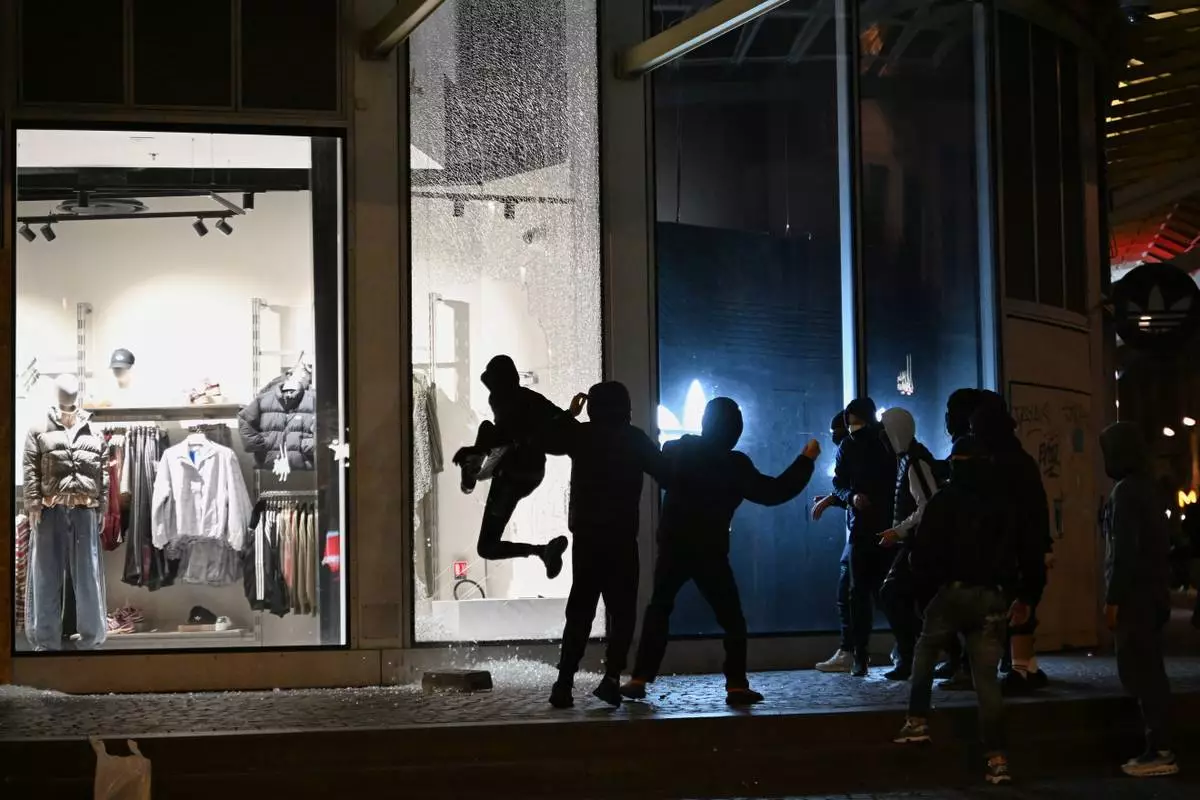
Youths break a store window during clashes between protestors and police in Paris, Sunday, Oct. 18, 2026. (AP Photo/Emma Da Silva)
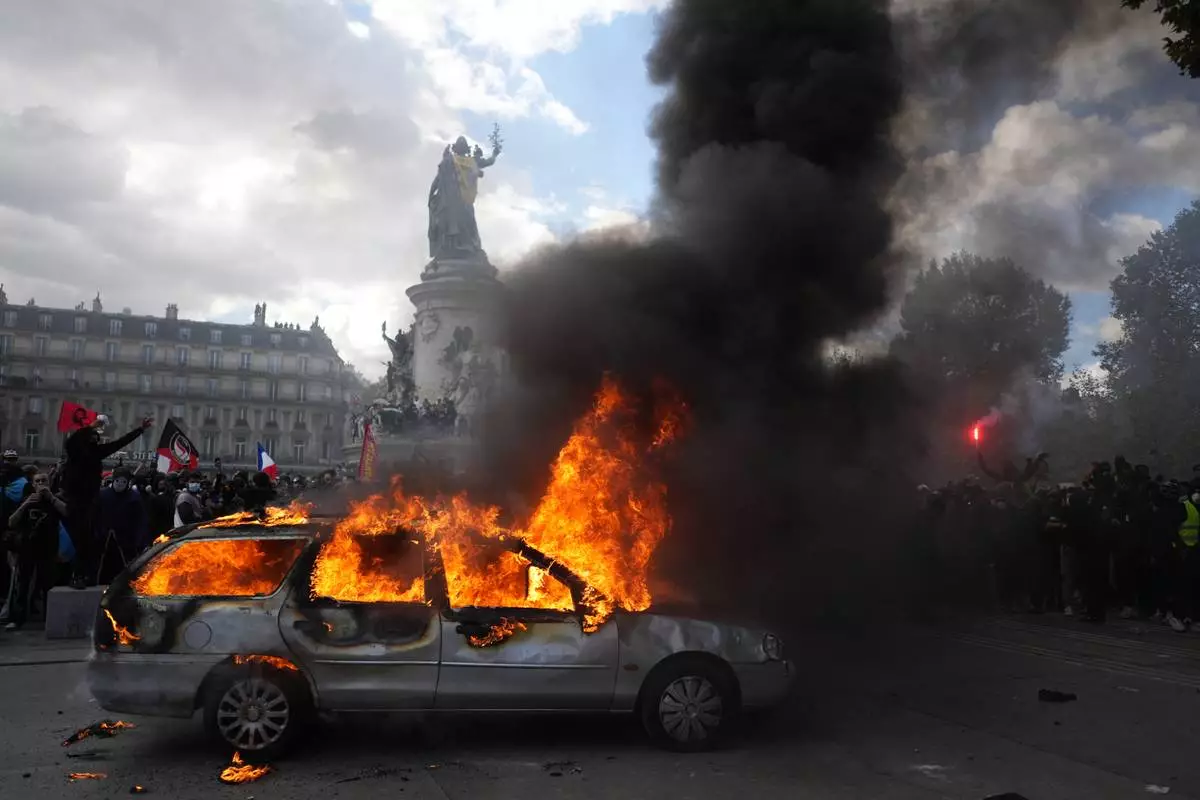
A car burns at Republique square during a protest against rising living costs, joining students' grievances, in Paris, Saturday, Oct. 17, 2026. (AP Photo/Thibault Camus)

A protester holds a placard with a photo of French president Emmanuel Macron and a guillotine in front of a burning tourism office during a demonstration against rising living costs and in solidarity with students' grievances in Lyon, France, Saturday, Oct. 17, 2026. (AP Photo/Laurent Cipriani)
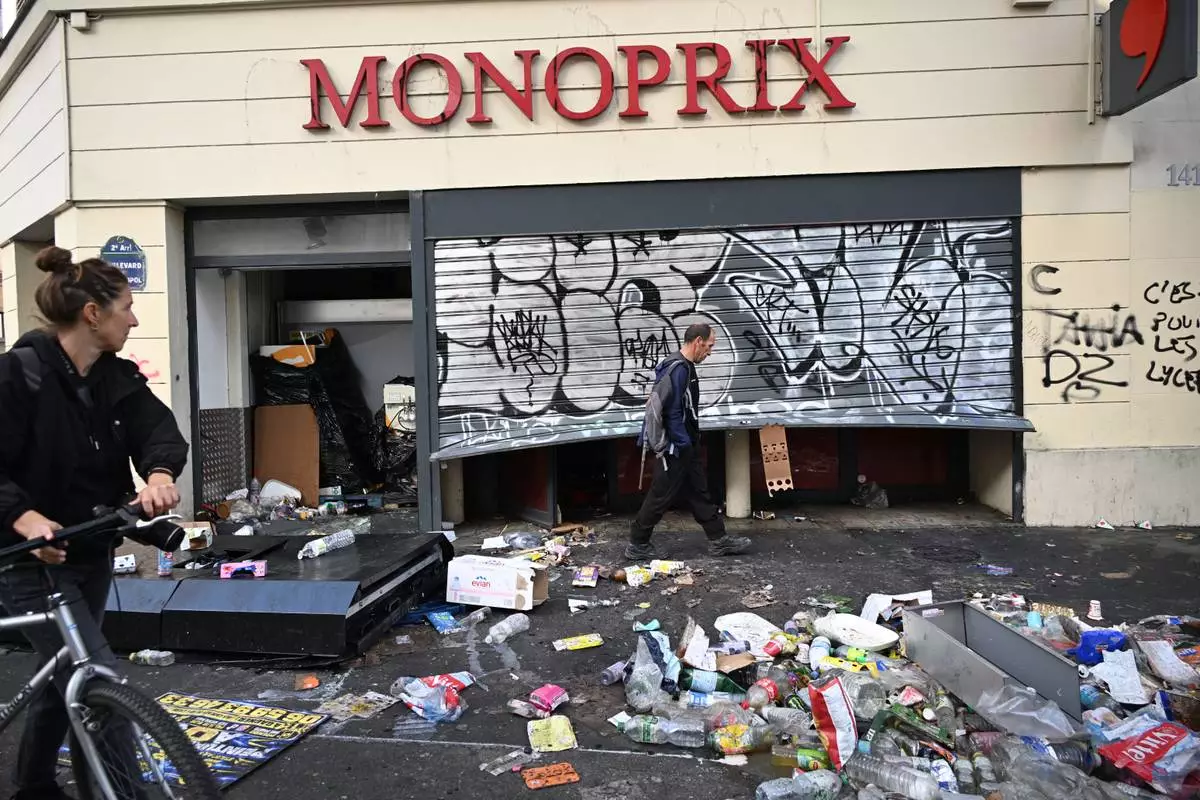
A man walks past a looted store the day after a demonstration against rising living costs and in solidarity with students’ grievances, in Paris, Sunday, Oct. 18, 2026. (AP Photo/Emma Da Silva)
NEW YORK--(BUSINESS WIRE)--Oct 20, 2026--
Blackwall today announced it has raised $100 million at a valuation of $2.2 billion. This C Round was led by AVP, who join existing investors Dawn Capital, MMC Ventures and Tera Ventures.
This press release features multimedia. View the full release here: https://www.businesswire.com/news/home/20261020736847/en/
The new round of financing accelerates Blackwall's objective to build a global traffic management ecosystem around its hosting-provider network. By connecting providers, infrastructure and technology, Blackwall aims to provide greater control over how internet traffic is managed, secured and monetized.
Blackwall will use the investment to scale its global presence across the web traffic management market, establishing and expanding operations across 12 strategic regions spanning North America, Europe, Asia-Pacific and the Middle East.
Currently spanning bot mitigation, DDoS protection, web application firewall, load balancing, server-side encryption and management of agentic AI traffic which is rapidly taking over the Internet, Blackwall is deployed inside the web hosting providers’ own infrastructure, identifying real visitors and legitimate automated traffic from malicious bots, attacks and traffic abuse, filtering billions of requests per day.
The new funding will also be leveraged to expand Blackwall’s platform, introducing new traffic security capabilities for the hosting market that enable hosting, cloud and managed service providers to address a broader share of their customers' traffic management needs through a single infrastructure layer.
"The web is becoming more automated, more distributed and more complex, but the infrastructure that powers it remains highly fragmented," said Nikita Rozenberg, Co-Founder and CEO of Blackwall. "Our ambition is to build the traffic management ecosystem that brings those worlds together. This funding allows us to expand globally, deepen our platform and give hosting and infrastructure providers the technology they need to participate in the next generation of the web."
Blackwall partners with web hosting, managed service and cloud providers that run much of the web. Hosting is a $200 billion market, and a fragmented one, because infrastructure has to stay close to the businesses it serves; for most of the web, the provider is the only route to a site at scale. Unlike the hyperscale and content-delivery platforms that compete with providers for their own customers, Blackwall sits inside the provider's infrastructure and strengthens the relationship between the provider and the businesses it hosts.
For web hosting providers the economics of Blackwall’s platform work in two ways. First, Blackwall stops unwanted traffic before it reaches their servers, cutting infrastructure and operating costs and making their customers' sites faster. Second, with the modular nature of Blackwall’s customer-facing web security features, providers can package, bundle and tier its components as products of their own, earning new revenue without building or maintaining the technology themselves.
"Blackwall has built something rare: a security company that grows with the internet itself," said Warda Shaheen, General Partner at AVP. "It is already the layer in front of millions of websites, and as more of the web's traffic comes from agents, the company in that position becomes indispensable. That's why we're leading this round."
Norman Fiore, General Partner at Dawn Capital, commented: “A tsunami of agents will overwhelm infrastructure optimised for human traffic. Nik and Denis are already delivering to their millions of customers the infrastructure optimised for the coming agentic web, and commercial success will flow to those businesses that are retooling today.”
Mina Samaan, General Partner, MMC Ventures, added: "We've backed Blackwall from its early days and have seen the business scale into critical infrastructure for the web. As AI changes how traffic moves across the internet, Blackwall's position at the front door of millions of websites has never been more important."
Stanislav Ivanov, Founding Partner, Tera Ventures: “Nik and Denis combine real grit, deep technical knowledge and a rare grasp of where the opportunity lies and how to capture it. Blackwall, now protecting millions of websites, is exactly the kind of born-global company Tera exists to back. We were their first believers, backing them from day one through the early years of building the product and winning its first partners and customers. This round shows we’re far from the last.”
About Blackwall
Blackwall is building the global web traffic management ecosystem, enabling hosting, cloud and managed service providers to manage, secure and optimize traffic across their entire customer base. Through a single integration, Blackwall gives providers a scalable platform to deliver and monetize security, performance and traffic management services while retaining control of their infrastructure and customer relationships. Built to grow with its partners, Blackwall is expanding its platform and global footprint to become the technology partner behind the service providers that power the web. Blackwall is backed by AVP, Dawn Capital, MMC Ventures and Tera Ventures.
About AVP
AVP is an independent global investment platform dedicated to high-growth, tech (from deep-tech to tech-enabled) companies across Europe and North America, managing more than €2.5bn of assets across venture and growth strategies. Its multi-stage platform combines global research with local execution to drive investment. Since its establishment in 2016, AVP has invested in more than 80 technology companies. Beyond providing equity capital, its expansion team works closely with founders, providing the expertise, connections, and resources needed to unlock growth opportunities and create lasting value through meaningful collaborations.
About Dawn Capital
Dawn is Europe's leading specialist B2B software investor, with assets under management of over $2bn. Dawn is primarily an early-stage investor, backing companies from Series A and B, and continuing to fund the top-performing through growth rounds to exit. Its roster of investments includes Mimecast (formerly NASDAQ-listed, taken private by Permira in a $5.8bn transaction), iZettle (sold to PayPal for $2.2bn cash), Tink (purchased by Visa for $2.0bn), LeanIX (acquired by SAP), as well as current market leaders, Collibra, Dataiku, Quantexa, Soldo, and Copper, amongst others.
Dawn is currently investing from Dawn Capital V, the firm's $620m fifth flagship fund, and Dawn Opportunities Fund, an $80m fund to enable Dawn to double down on its best performing companies to exit.
About MMC Ventures
MMC is a leading European venture capital firm with a research-driven approach. It invests in early-stage transformative technology companies that utilize AI and data science across sectors including enterprise AI, fintech, data-driven health and cloud & data infrastructure. Examples of companies MMC has backed include: Synthesia, Copper, Signal AI, Interactive Investor, Current Health, YuLife and Cloudsmith.
About Tera Ventures
Tera Ventures is a Tallinn-based seed-stage venture capital firm and one of the longest-running seed investors in the Nordic and Baltic region. Tera backs born-global founders from the Nordics, the Baltics and Central and Eastern Europe. It invests with high conviction, often as a company’s first institutional backer, and stays alongside founders well beyond the first cheque, including through the toughest stretches of building a company.

Blackwall founders Denis Prochko and Nikita Rozenberg (L-R)