Speech by DCS at Opening Session of Ageing Well Hong Kong 2026 Conference
Following is the speech by theDeputy Chief Secretary for Administration, Mr Cheuk Wing-hing, at the Opening Session of the Ageing Well Hong Kong 2026 Conference organised by the Actuarial Society of Hong Kong (ASHK) today (October 21):
Clement (Executive Director (Policy and Legislation) of the Insurance Authority, Mr Clement Lau),Mark (President of the ASHK, Mr Mark Saunders), Council members of the ASHK, ladies and gentlemen,
It is my great pleasure to join you today at Ageing Well Hong Kong 2026. My thanks to the Actuarial Society of Hong Kong for organising this meaningful event and for bringing together such a diverse group of experts to address one of the most profound demographic shifts of our time.
Your expertise in risk assessment, longevity analytics and financial modelling places you at the forefront of understanding the changes that are reshaping our society. This Conference is held at a most timely juncture, in that the HKSAR (Hong Kong Special Administrative Region) Government has just announced its Report on Ageing Society Strategies last month. It is therefore most fitting that I share with you the Government's vision and achievements in tackling population ageing, in particular, our work to enhance silver financial security for our senior citizens and promote the immense potential of the silver economy.
We are proud that Hong Kong has one of the highest life expectancies in the world. This is the result of our excellent healthcare system, rising living standards and greater health awareness. However, this success brings with it a structural challenge that impacts on every facet of our society.
The numbers are clear. By 2046, it is projected that the population aged 65 and above will rise to 2.74 million, accounting for more than one-third of the total population. This demographic reality may evoke concerns about healthcare costs, pension sustainability and shrinking labour forces. But I would like to offer a different perspective, that is: the massive potential for developing a thriving silver economy that can drive innovation and enable our elderly people to not only live longer but to live better with purpose, dignity and security.
This is precisely why our Government has placed population ageing high on our policy agenda. Back in 2024, the Chief Executive announced in the Policy Address the setting up of a Working Group on Promoting Silver Economy, which announced 30 measures in May last year in five areas, namely: boosting "silver consumption", developing "silver industry", promoting "quality assurance of silver products", enhancing "silver financial and security arrangements", and unleashing "silver productivity".
Furthermore, Hong Kong's First Five-year Plan and the 2026 Policy Address announced by the Chief Executive last month steer more proactive and strategic planning. Central to this is the Working Group on Ageing Society Strategies, with me as the leader and all the 15 government policy bureaux as members. Our mandate is to break down silos and drive a co-ordinated, whole-of-government response.
The Report on Ageing Society Strategies released last month is a comprehensive blueprint, putting forward 73 strategic measures across 11 areas, ranging from healthcare, technology, economy, mobility, elderly care, finance to manpower, learning, social life, and age-friendly urban design. Together, these measures form a holistic, cross-bureau response to population ageing.
It would be mighty onerous to walk you through all the 73measures. So I would like to focus more today on the silver economy arena. Among the 11 areas of our strategies, one key area is elderly financial security and safety, which serves as the bedrock of a worry-free retirement. With longer life expectancy, we must plan for a longer period without a regular salary. We believe that our role as the Government is to provide the enabling framework, the right products and the education to help our citizens manage longevity risk effectively.
This is why we are strengthening our retirement financial planning tools. At the centre of our toolkit is the "HKMC Retire 3" operated by the Hong Kong Mortgage Corporation Limited (HKMC) and its subsidiaries. This package of three powerful products, namely the HKMC Annuity Plan, the Reverse Mortgage Programme and the Policy Reverse Mortgage Programme, are designed to unlock the value of assets many seniors already hold. To date, these products have benefited over 49 000 customers.
We see immense potential for further growth for these products given the size of our elderly population. Hence as part of our measures in the Ageing Society Strategies, the Government will continue to explore further enhancements to the "HKMC Retire 3" suite in response to market conditions and public feedback. At the same time, we will also actively encourage insurers to partner with enterprises in the elderly care, medical and other sectors, and to develop insurance product offerings targeting financially better-off elderly people. With encouragement from the Insurance Authority, insurers in Hong Kong have already offered savings-oriented insurance products that provide policyholders with the right to access retirement facilities in the Chinese Mainland.
In addition, we will step up public education on retirement planning and longevity risk management. The HKMC, the HKMC Annuity Limited, the Investor and Financial Education Council and the Mandatory Provident Fund (MPF) Schemes Authority are intensifying efforts to raise awareness of retirement planning. Educational materials will reach MPF scheme members turning 65 through the eMPF Platform. Seminars, media campaigns and community outreach continue to dispel misconceptions and encourage earlier planning, ideally well before retirement.
Financial security for retirement is not just about having enough savings for retirement, but also about keeping the savings secure. In today's increasingly digital world, seniors often fall prey to sophisticated scams and fraud. To lower the chance of the elderly encountering fraudulent information at source, the Hong Kong Police is planning to implement a Cyber Hygiene Operation in collaboration with technology and telecommunications companies in 2027 to use AI to proactively filter and remove fraudulent content from social media platforms popular among seniors. The Police will also launch a Project Gatekeeper scheme next year to specifically enhance the ability of carers and frontline bank staff to identify and tackle scams involving the elderly.
Intelligence sharing and partnership are pivotal to helping safeguard our elderly people’s financial assets. A key milestone is the Financial Intelligence Evaluation Sharing Tool, an intelligence sharing platform under the public-private partnership of the HKMA (Hong Kong Monetary Authority), the Police and the banking sector. As of mid-2026, all 28 retail banks are participating, covering over 90 per cent of our bank accounts.
The "Money Safe" initiative is another powerful tool. It allows customers to designate a portion of their deposits as protected, requiring an extra verification step to withdraw. As of the end of March 2026, over 14000 customers have used "Money Safe" to safeguard a total of $4billion in deposits.
The Broader Silver Economy Opportunity
The above measures in financial security and fraud prevention are part of a much larger, holistic vision. They also sit within our broader strategy to promote the silver economy which has massive potential: it is estimated that consumer spending by the elderly aged 60 and above in Hong Kong will increase by 45 per cent from $342 billion in 2024 to $496billion in 2034, reflecting the continuously growing purchasing power of the elderly.
To capture the vast market potential, the Government has been proactively promoting silver consumption, such as encouraging the business sector to incorporate silver elements in major exhibitions. For instance, in August this year, three major exhibitions (namely the Food Expo, the Beauty and Wellness Expo and the Home Delights Expo) attracted over half a million visits. We will continue to incorporate more silver-economy elements into other relevant exhibitions, offering retail and catering concessions to the elderly, encouraging e-commerce platforms to diversify their range of silver products and facilitate online shopping, as well as making more silver products available at restaurants and retail outlets.
On developing the silver industry, the Government is dedicated to enhancing the innovation and technology ecosystem, including gerontechnology. At present, there are about 140 companies engaging in solutions and services related to gerontechnology in the Hong Kong Science and Technology Parks and Cyberport. To foster a vibrant gerontechnology ecosystem, the Government will earmark $100million to launch the Gerontechnology Promotion Scheme to encourage and support local technology enterprises to proactively develop elderly care products and solutions.
On promoting quality assurance of silver products, collaboration among the Government, businesses and social welfare organisations has resulted in the official promulgation of the Care Food Greater Bay Area (GBA) Standard, enhancing consumer confidence and boosting the competitiveness of local brands. Under the Government’s facilitation, the industry has also introduced various registration schemes, such as the Hong Kong Q-Mark Silver Scheme and the Hong Kong Quality Assurance Agency's Hong Kong Registration – Silver-friendly Series, to recognise and promote quality silver-friendly products and services. The Government will further explore with relevant organisations to expand the scope of certification to other lines of products, such as walking sticks, wheelchairs and exoskeleton systems, and explore including them in the list of GBA Standards. We will facilitate the inclusion of more silver products and services in the list of GBA Standards to enhance the competitiveness and marketability of Hong Kong silver products and services, and assist the industry in expanding into the GBA and other Chinese Mainland markets.
Unleashing silver productivity is another important element in driving Hong Kong’s silver economy. It does not only help strengthen our labour force, but also allows our elderly citizens to make good use of their valuable work experiences. The Re-employment Allowance Pilot Scheme has received over 86000 participants and over 56000placements have been recorded, of which about one quarter involved persons aged 60 or above. The Government also continues to provide dedicated training courses to persons aged 50 or above. In 2025-26, for example, the enrolment of persons aged 50 and above in the ERB (Employees Retraining Board)’s courses exceeded 98000. From 2026 onwards, the Labour Department will organise about 75 large-scale and regional thematic job fairs a year for older and middle-aged persons.
Ladies and gentlemen, an ageing population requires us to rethink our approach to work, healthcare, housing, finance and community as a whole. Government action alone is not enough. Building a truly age-friendly Hong Kong requires the concerted efforts of the Government, the business sector, professional bodies, non-governmental organisations, and indeed of every family.
In this endeavour, the actuarial profession has a distinctive and indispensable role to play. Your expertise provides the evidence base upon which sound policy must rest. By working closely with the actuarial community, financial institutions, and other stakeholders, we can continue to refine our retirement products, strengthen our protective mechanisms, and ensure that our policies remain responsive to evolving demographic realities.
Ladies and Gentlemen, we together can build Hong Kong into a city that turns the challenge of ageing into an opportunity for a more inclusive, resilient and compassionate society. On this note, I wish this Conference a huge success and all of you a very fruitful time at the event. Thank you very much.
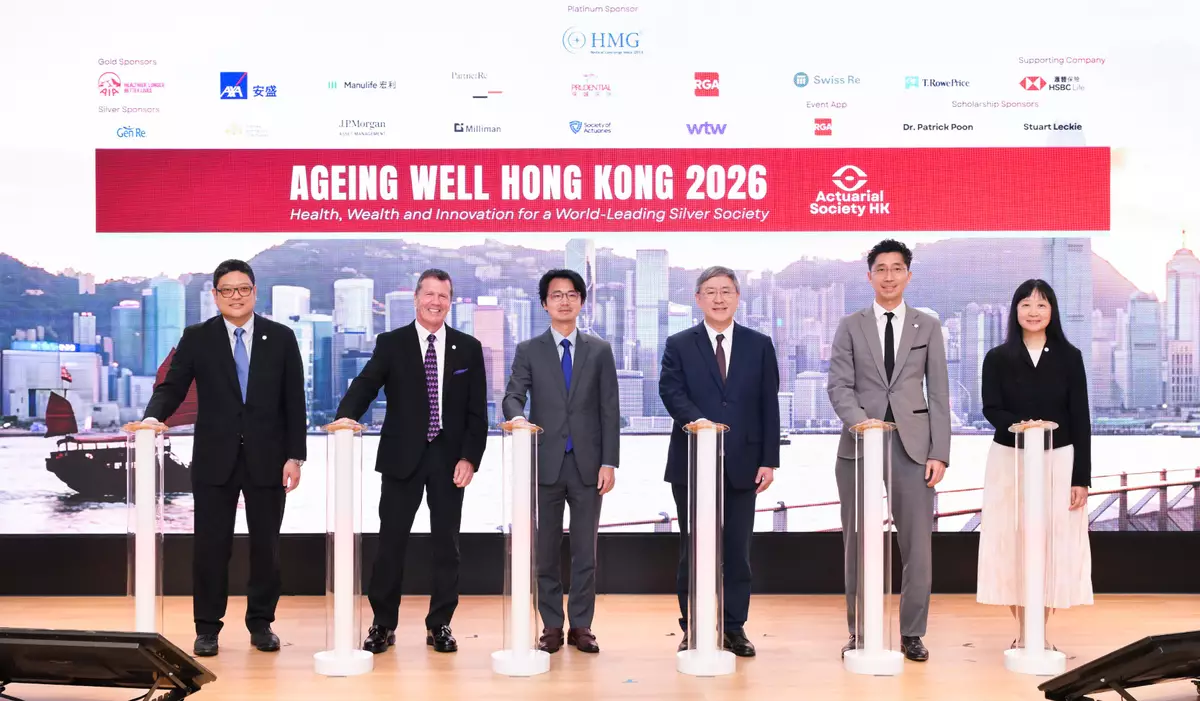
Speech by DCS at Opening Session of Ageing Well Hong Kong 2026 Conference Source: HKSAR Government Press Releases
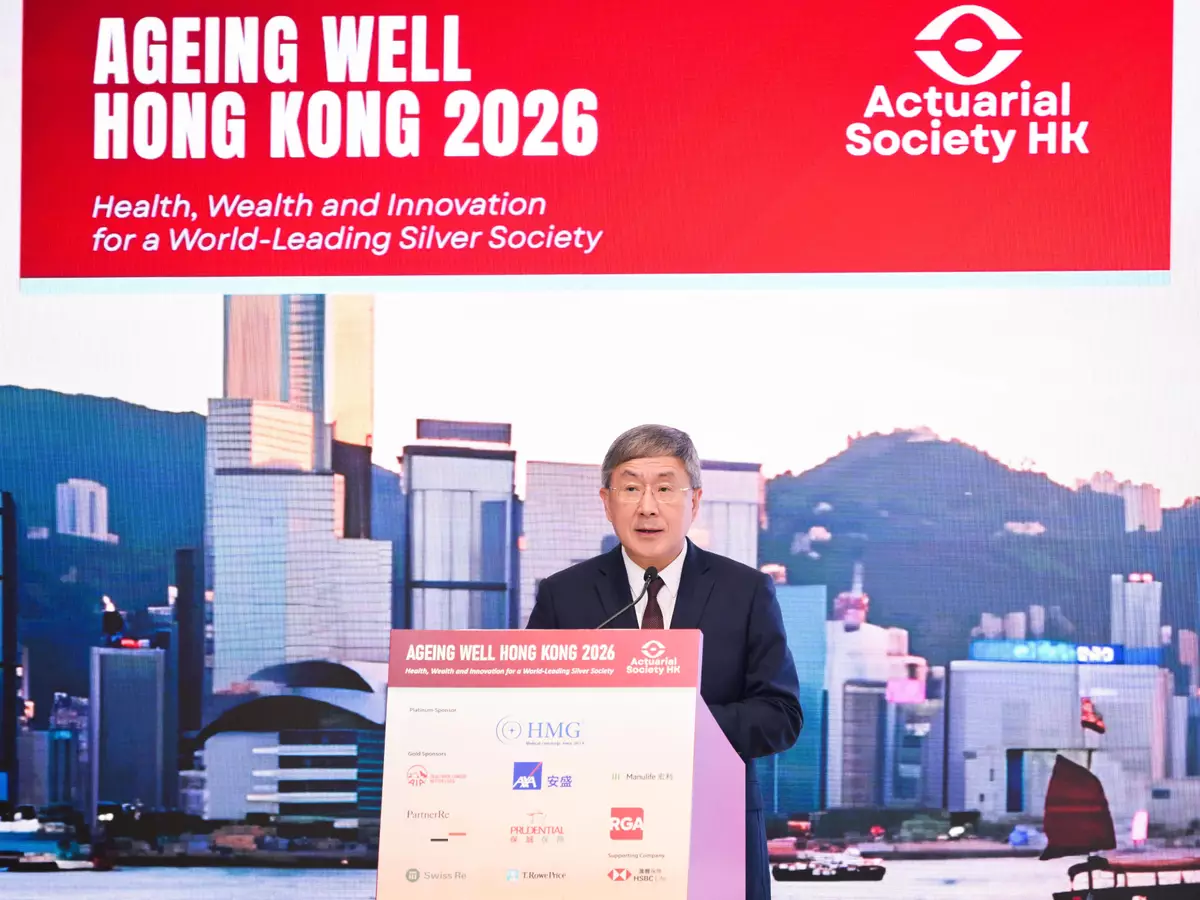
Speech by DCS at Opening Session of Ageing Well Hong Kong 2026 Conference Source: HKSAR Government Press Releases