Skip to Content Facebook Feature Image

Eurozone, EU government debt ratios rise in Q2: Eurostat

HotTV

HotTV

HotTV

Eurozone, EU government debt ratios rise in Q2: Eurostat

2026-10-22 12:07 Last Updated At:15:40

The government debt-to-GDP ratio across the eurozone and the broader European Union increased at the end of the second quarter of 2026, indicating a continued rise in public debt burdens, according to data from the EU's statistical office Eurostat on Wednesday.

In the euro area, the government debt-to-GDP ratio stood at 88.8 percent, an increase of 0.4 compared with the figure at the end of the first quarter of 2026. In the EU, the ratio also climbed from 82.5 percent to 82.9 percent.

Among EU member states, Greece recorded the highest debt ratio at 140.8 percent, followed by Italy at 139.9 percent and France at 119.1 percent. Belgium and Spain also saw their debt ratios exceed 110 percent and 100 percent, respectively.

In the second quarter of 2026, the government deficit as a percentage of GDP in the eurozone rose from 3.2 percent in the first quarter to 3.3 percent, while the deficit ratio for EU member states went up from 3.1 percent to 3.5 percent.

The Euro area (EA21) is composed of Belgium, Bulgaria, Germany, Estonia, Ireland, Greece, Spain, France, Croatia, Italy, Cyprus, Latvia, Lithuania, Luxembourg, Malta, the Netherlands, Austria, Portugal, Slovenia, Slovakia and Finland.

The European Union (EU 27) consists of Belgium, Bulgaria, Czechia, Denmark, Germany, Estonia, Ireland, Greece, Spain, France, Croatia, Italy, Cyprus, Latvia, Lithuania, Luxembourg, Hungary, Malta, the Netherlands, Austria, Poland, Portugal, Romania, Slovenia, Slovakia, Finland and Sweden.

Eurozone, EU government debt ratios rise in Q2: Eurostat

Eurozone, EU government debt ratios rise in Q2: Eurostat

Eurozone, EU government debt ratios rise in Q2: Eurostat

Eurozone, EU government debt ratios rise in Q2: Eurostat

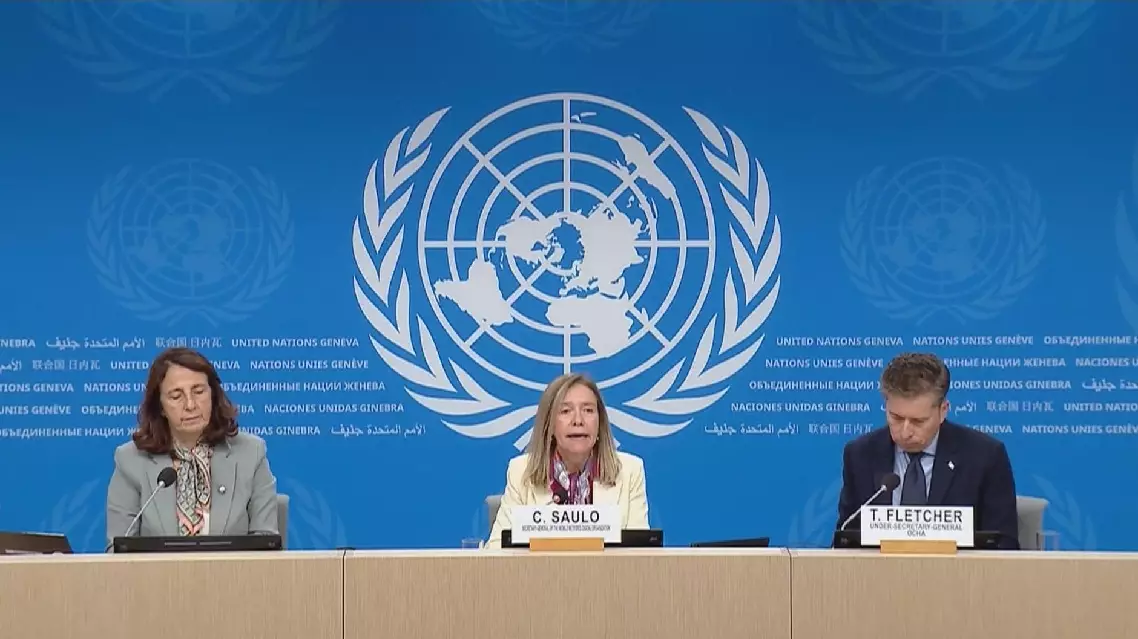
The current El Nino event could be unprecedented in strength, literally off the monitoring charts that have been used for the past four decades, said Celeste Saulo, secretary-general of the World Meteorological Organization (WMO), on Wednesday.

The WMO released its latest Global Seasonal Climate Update at a briefing in Geneva, Switzerland.

"The World Meteorological Organization is today releasing a new seasonal climate outlook, which indicates that the current El Nino event could be unprecedented in strength, literally off the monitoring charts that we have used for the past four decades. El Nino will peak towards the end of 2026, but its impacts will be felt long after that," said Saulo at the briefing.

"Our latest global seasonal climate update forecasts that sea surface temperatures in the tropical Pacific -- the epicenter of El Nino -- may rise to 3.8 degrees Celsius above average during November 2026 to January 2027," she added.

The WMO called on all countries to enhance early warning and disaster prevention capabilities, noting that El Nino is expected to further bring heavy rain and flood risks to some regions in eastern Africa, droughts to southern Africa, high temperatures and insufficient precipitation to Southeast Asia, and abnormal rainfall or drought to some regions in the Americas.

Current El Nino event could be unprecedented in strength: WMO

Current El Nino event could be unprecedented in strength: WMO

Recommended Articles