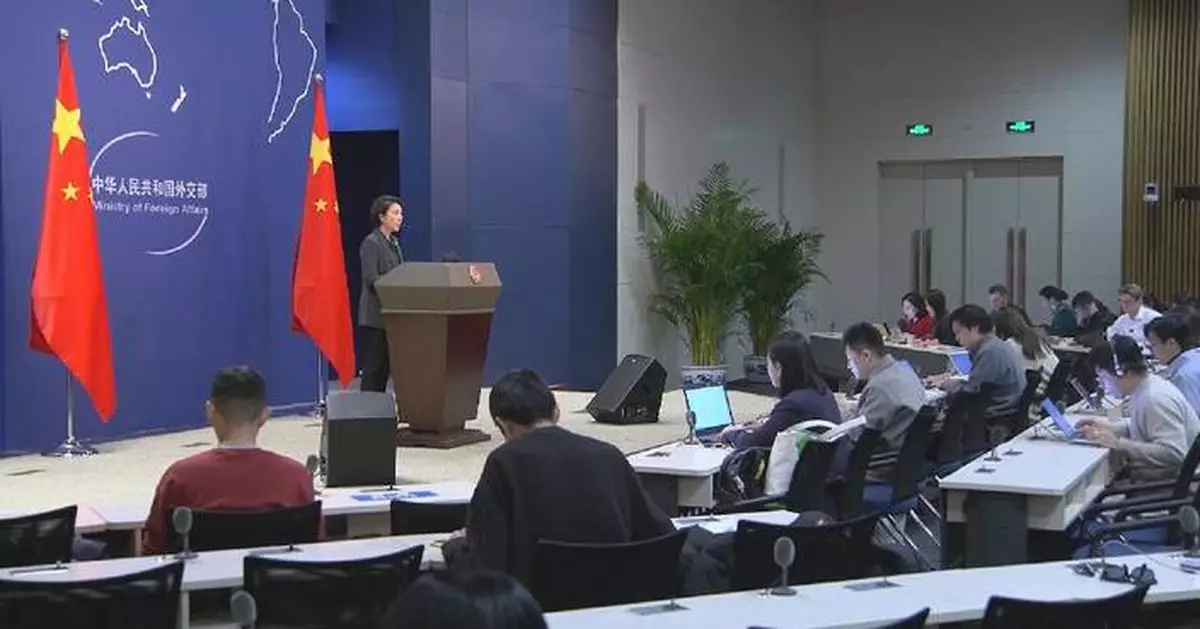
The Philippines should abide by the one-China principle with concrete actions, foreign ministry spokeswoman Mao Ning said at a regular press briefing in Beijing on Thursday.
The spokeswoman made the remarks in response to a media query about Philippine claim of seeking deeper cooperation with Taiwan to protect undersea Internet cables and address so-called "gray zone" activities.
"There is no gray zone on Taiwan question. The Philippines should abide by the one-China principle with concrete actions. Any external exchanges conducted by China's Taiwan region must be handled in strict accordance with the one-China principle," said Mao.
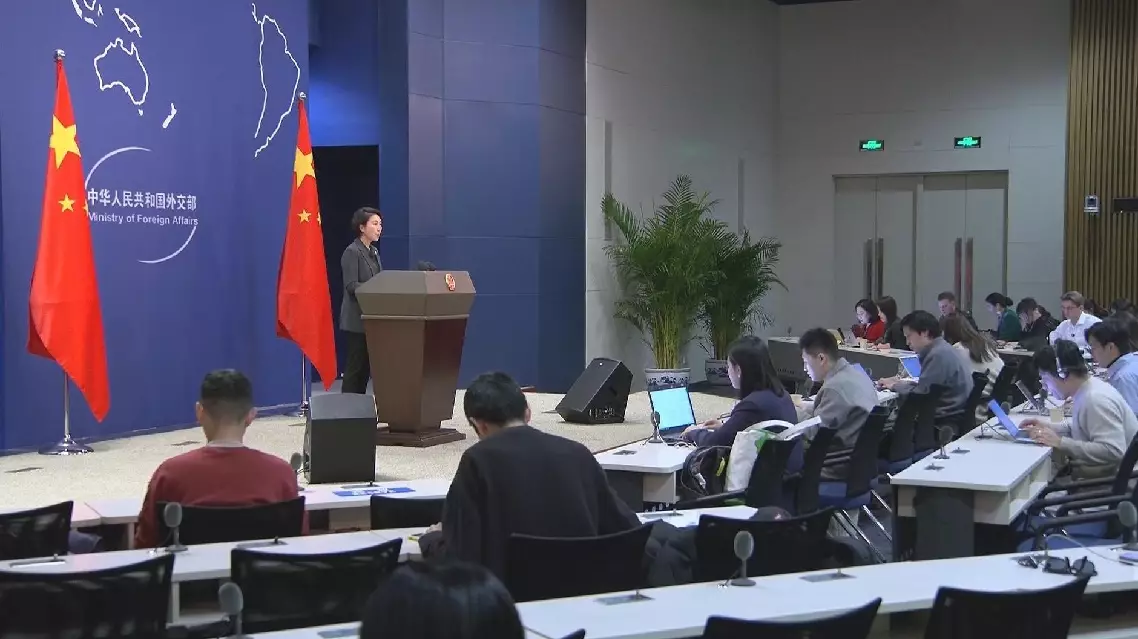
Philippines should abide by one-China principle with concrete actions: spokeswoman
American Journalist Edgar Snow brought global attention to China's revolution with his landmark 1937 book, "Red Star Over China." As this year marks the 90th anniversary of the Long March, Snow's nephew Eric Foster has called on the world to remember the deep historical significance of those events.
In October 1934, the Communist Party of China (CPC) was forced to retreat from the Central Soviet Area in east China's Jiangxi Province and move northwest after enduring a series of encirclement campaigns by rival forces of the Chinese Kuomintang party.
The CPC-led Red Army broke through enemy blockades, crossed rugged terrain, and endured fierce battles and immense hardship. Tens of thousands of soldiers lost their lives along the way.
In October 1936, three main Red Army forces converged in northwestern China, marking the end of the Long March.
Edgar Snow recorded the legendary journey in his book, offering the world a rare, firsthand account of China at a time when the country was largely misunderstood by the West. His account included his interviews and experiences in Bao'an, a temporary base during the Long March, and Yan'an, the revolutionary heartland of the Communist Party of China after the Long March.
Speaking from central Beijing's Kuijiachang Hutong, a former residence of Edgar and his then wife Helen Foster Snow, the journalist's nephew emphasized that the revolutionary spirit of determination remains deeply relevant today, inspiring modern generations to overcome challenges and preserve positive values.
"I have visited Bao'an and Yan'an several times, and of course, it always makes me feel sort of sentimental or historical nostalgia to explain it, especially, if I see a live performance in Yan'an concerning the Red Army, as I know what about the great sacrifices that they went through, so I always get emotional. Because the heroic Red Army were determined to press forward, no matter how hard and difficult, or how many sacrifices they had to make to reach their historic destination," Foster said.
"What drove the spirit of determination was that they knew that the Red Army was the answer to save China from imperialism and from the bondage that was like slavery that many of them had been under for thousands of years. They knew that socialism and treating people more equal was the truth that they needed to fight for at any cost. So, the spirit remains highly relevant today as it inspires us to overcome challenges, no matter how difficult they are, and pass on positive values across generations," he said.

Nephew of "Red Star Over China" author hails steadfast determination of Long March