Rescue and relief operations are continuing in Baqen County of Nagqu City in southwest China's Xizang Autonomous Region after a 7.0-magnitude earthquake struck Thursday night, with rescue teams from various sectors mobilized by Friday and relief supplies reaching the disaster zone.
The shallow quake, at a depth of 10 km, had killed 16 people and injured 76 as of 1 p.m. Friday. Houses collapsed and power and communications facilities were damaged at the epicenter.
After the earthquake, Xizang deployed more than 5,000 rescue personnel, with relief forces from the Joint Command Center of the Western Theater Command, the Xizang Military Command, and the Xizang Armed Police Corps reaching the disaster area overnight.
Early on Friday, rescuers successfully pulled out one trapped person in Maru Township of Baqen County.
Resettlement work is also underway, with disaster relief supplies from governments at all levels arriving. In the epicenter of Maru and other worst-hit areas, 18 resettlement sites have been set up to provide basic living and medical support, with the remaining sites under construction. More than 12,400 affected residents have been relocated.
Meanwhile, medical treatment is being stepped up. Nagqu City has mobilized more than 130 medical personnel to provide targeted treatment at the scene, carrying medicines, medical equipment, and disease control supplies.
Xizang's telecommunications sector organized emergency teams to provide communications support. As of 10:30 a.m. Friday, all quake-hit base stations in Baqen County had been restored, with communications capacity back to pre-earthquake levels.
The central government is also introducing emergency relief measures.
The office of the State Council Earthquake Relief Headquarters and the Ministry of Emergency Management upgraded the national earthquake disaster emergency response from Level IV to Level III on Friday.
The National Development and Reform Commission arranged 30 million yuan (about 4.49 million U.S. dollars) to support emergency post-disaster recovery of infrastructure and public service facilities in the disaster area.
The Ministry of Finance and the Ministry of Emergency Management allocated 50 million yuan (about 7.49 million U.S. dollars) to support earthquake emergency rescue and relief work.
The Ministry of Transport also dispatched a work team to guide local rescue efforts and ensure road access.
On the financial front, the National Financial Regulatory Administration activated a Level III emergency response for the insurance industry after the disaster, directing insurance companies, banks, and local financial regulatory bureaus to make all-out efforts in emergency response, insurance claims processing, and financial support.
In response to local relief needs, the Red Cross Society of China added 50 sets of emergency toilets and, in coordination with the Chinese Red Cross Foundation, sent 500 family relief kits, 500 warm packages, and more than 1,000 boxes of food to the disaster area. It also dispatched the Chinese Red Cross (Yunnan) Public Health Rescue Team to carry out rescue work.
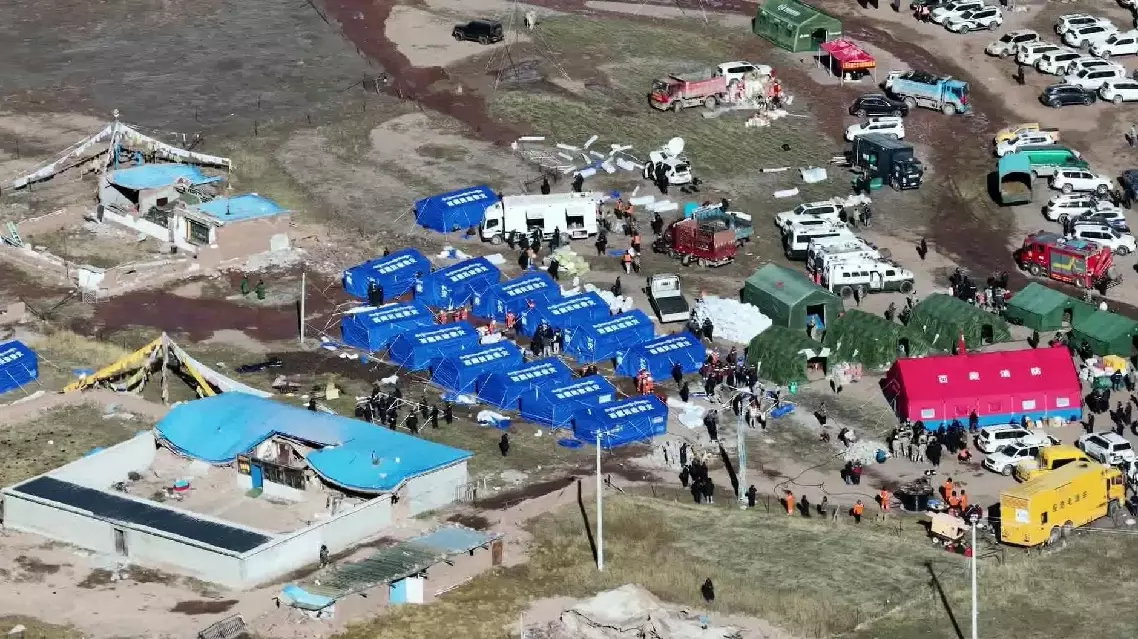
Rescue, relief operations continue after Thursday night's Xizang earthquake