Macao's three major annual economic and trade expos, namely, the 31st Macao International Trade and Investment Fair (MIF), the Portuguese Speaking Countries Products and Services Exhibition (Macao) and the 2026 Macao Franchise Expo, have provided a platform to further connect the Chinese mainland with the international market, according to exhibitors.
This year's exhibitions lasted for four days, offered 30,000 square meters of gross exhibition space, and brought together exhibitors and professional buyers from more than 50 countries and regions.
Leveraging a diversified industrial portfolio, these events showcased the latest achievements and new opportunities for cooperation in fields such as technological innovation, health and wellness, trade and investment, agriculture, cross-border e-commerce and professional services.
During the events, more than 90 economic and trade exchange activities were held, with about 1,100 business matchmaking sessions and about 140 agreements signed.
"We brought two projects this time: a cultural heritage robot and a space science popularization robot. We are grateful to the MIF for providing this platform, which has enabled our projects to connect directly with the international market and better promote the commercialization of our innovations," said Fu Zhiyong, an exhibitor.
"Macao boasts the market advantage of connecting the mainland with the international market. The three exhibitions have provided us with more opportunities for exchange. We hope to leverage the expos to expand our business channels, strengthen ties with domestic and international enterprises and broaden our overseas markets," said Jiang Fujing, another exhibitor.
The three expos concluded on Saturday.
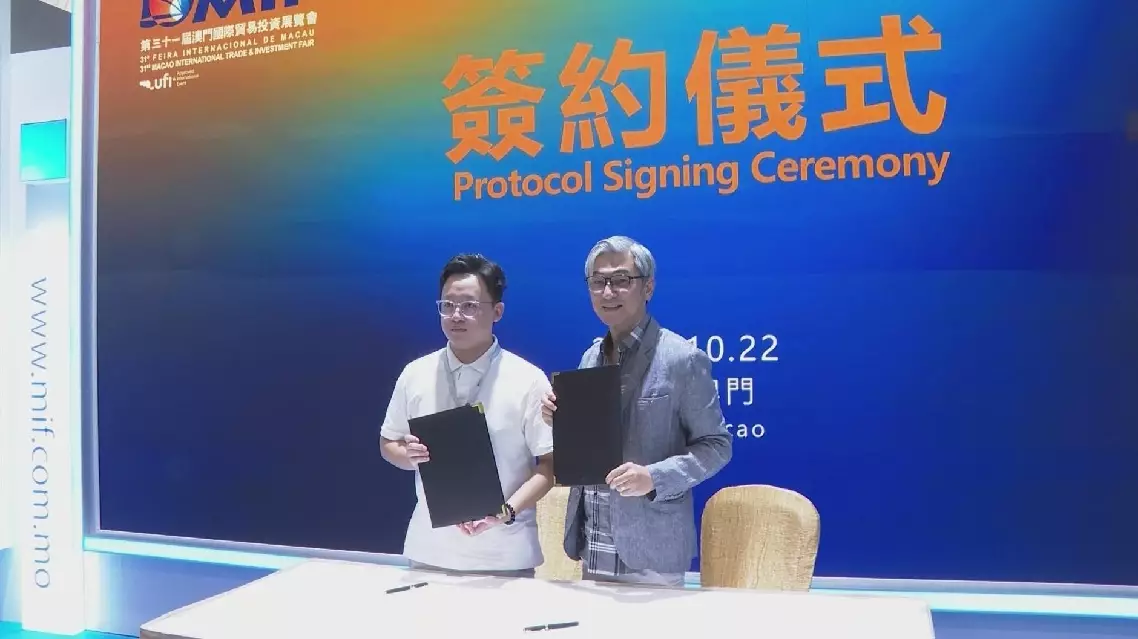
Three expos in Macao bridge mainland with int'l market: exhibitors
The United Nations needs deep reforms to become more focused on people and better respond to today's global challenges, former UN Under-Secretary-General Erik Solheim said on the sidelines of the 2026 Global Governance Forum in Xiong'an, north China's Hebei Province.
Hosted by the Chinese People's Institute of Foreign Affairs, the three-day forum opened on Friday in Xiong'an New Area under the theme "Rebuilding Confidence and Cooperation: Reforming and Improving Global Governance in a Transforming World," with discussions centered on multilateral cooperation, artificial intelligence and sustainable development.
In an interview with China Global Television Network (CGTN), Solheim echoed Chinese Foreign Minister Wang Yi's remarks on multilateralism at the forum, saying that solidarity among countries is the only way to address shared challenges.
"You have huge international challenges: peace in Ukraine, Gaza, Sudan, other places, protecting the planet against destruction and climate change and bringing everyone out of poverty, and these are huge global challenges. We cannot solve them -- one country by itself. We need to find a common solution. If we work together, we are stronger. It's nothing like a zero-sum game. All the big issues of our time, we can win together or lose together," he said.
Stronger multilateral cooperation and a reformed UN are essential to tackling those challenges, Solheim added.
"I think that's absolutely critical, because all big challenges of our time need answers to come from China, from the United States, but also from India, Europe or Africa -- all the rest of the world together. We can resolve these issues. There's nothing we cannot achieve if we work together. However, the United Nations, which is at the core of the multilateral system, needs deep reforms. We need a new leadership; we need a new Security Council composition. And we need a different culture in the UN much more focused on the people out there, much less focused on bureaucracy and process. It's not like there will be peace tomorrow, it is not that simple, but unless you make a concerted effort, you will never get there," he said.
Solheim also hailed the way Xiong'an has been planned and built, saying its scientific approach has produced a smart, digital and livable city from which others can learn.
"What makes Xiong'an different from any other city in the world is that [it was] a planned city from the very beginning. All other great cities in the world where there is Xi'an and Beijing in China, or Mumbai in India, or Paris in Europe, they have grown organically over a long time. Xiong'an is a planned city and that has made it probably the smartest city in the world, most digital city in the world, with a fantastic underground network of canals which can solve problems for people, all that has been taken care of in the planning process in Xiong'an. While of course other cities cannot just take a blueprint from Xiong'an because they already exist, they can learn from this planning so that all other cities are better planned than they are at the moment, because without a plan, we cannot make a people-friendly city," he said.
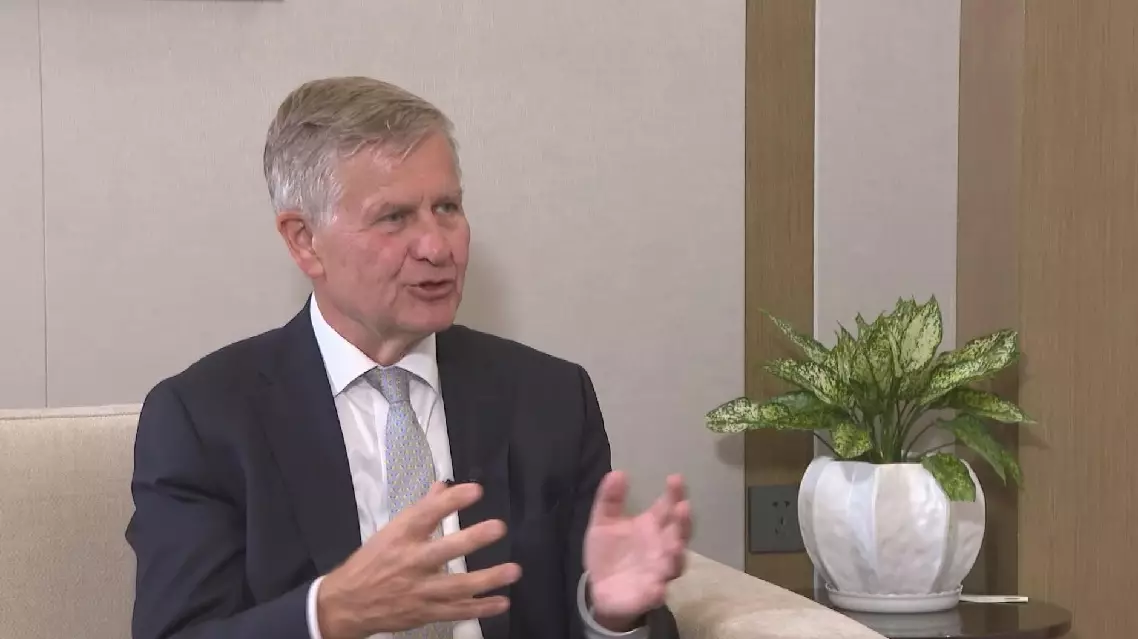
Former UN official urges deep reforms to help world body meet today's challenges