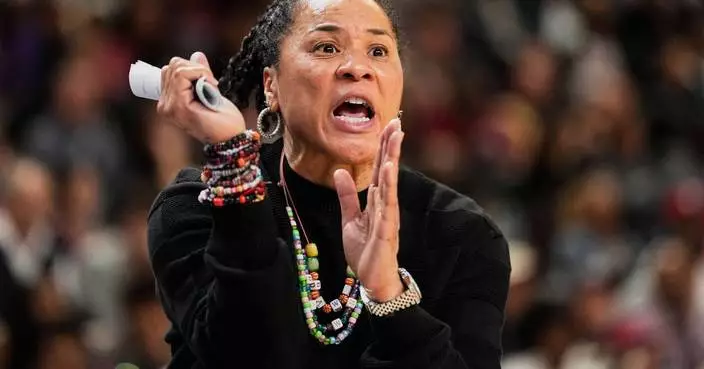
SAN FRANCISCO (AP) — Natalie Nakase's shakeup of the Golden State starting lineup for Game 4 of the WNBA Finals brought back memories of a similar move made by Warriors coach Steve Kerr in the NBA Finals more than a decade ago with his team in the very same spot.
Veteran guard Tiffany Hayes joined the first five for the Valkyries on Saturday as they evened the best-of-seven WNBA Finals with a 67-62 win at Atlanta — and in 2015 it was veteran Andre Iguodala who delivered in his increased role against LeBron James and the Cleveland Cavaliers as the Warriors went on to capture their first championship in 40 years.
Click to Gallery
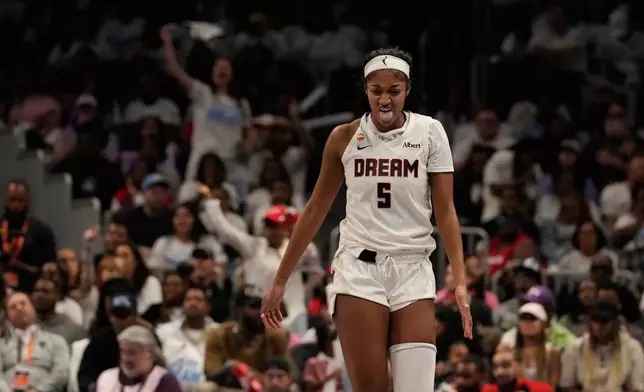
Atlanta Dream forward Angel Reese (5) reacts to an injury in the second half during Game 4 of the WNBA basketball finals against the Golden State Valkyries on Saturday, Oct. 24, 2026, in Atlanta. (AP Photo/Brynn Anderson)
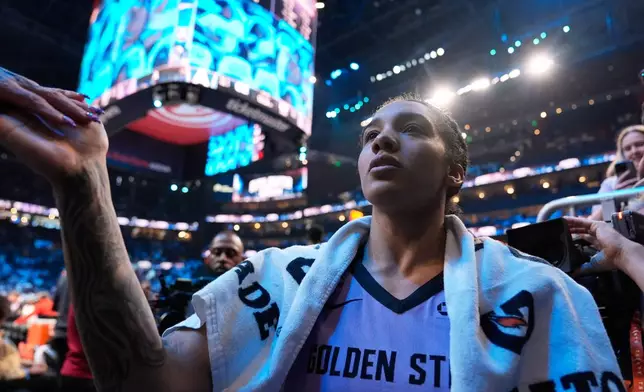
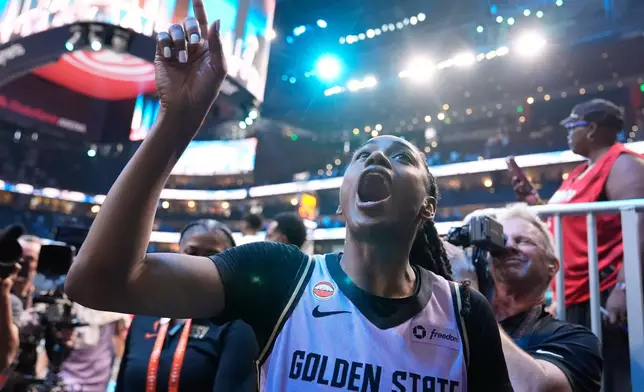
Golden State Valkyries forward Gabby Williams (1) high fives fans after Game 4 of the WNBA basketball finals against the Atlanta Dream on Saturday, Oct. 24, 2026, in Atlanta. (AP Photo/Brynn Anderson)
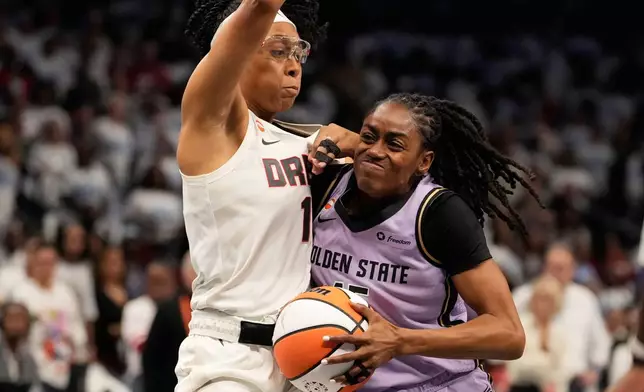
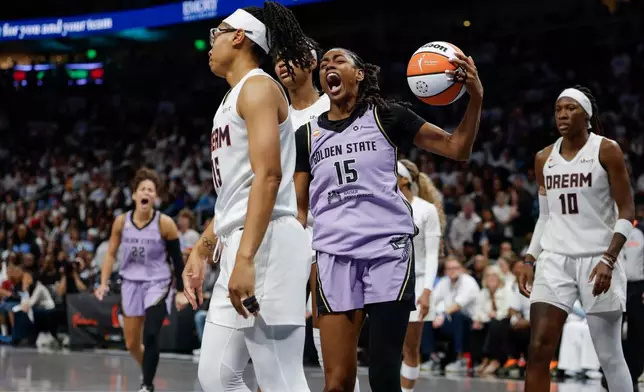
Golden State Valkyries guard Tiffany Hayes (15) drives the ball to the basket against Atlanta Dream guard Allisha Gray (15) during Game 4 of the WNBA basketball finals on Saturday, Oct. 24, 2026, in Atlanta. (AP Photo/Brynn Anderson)
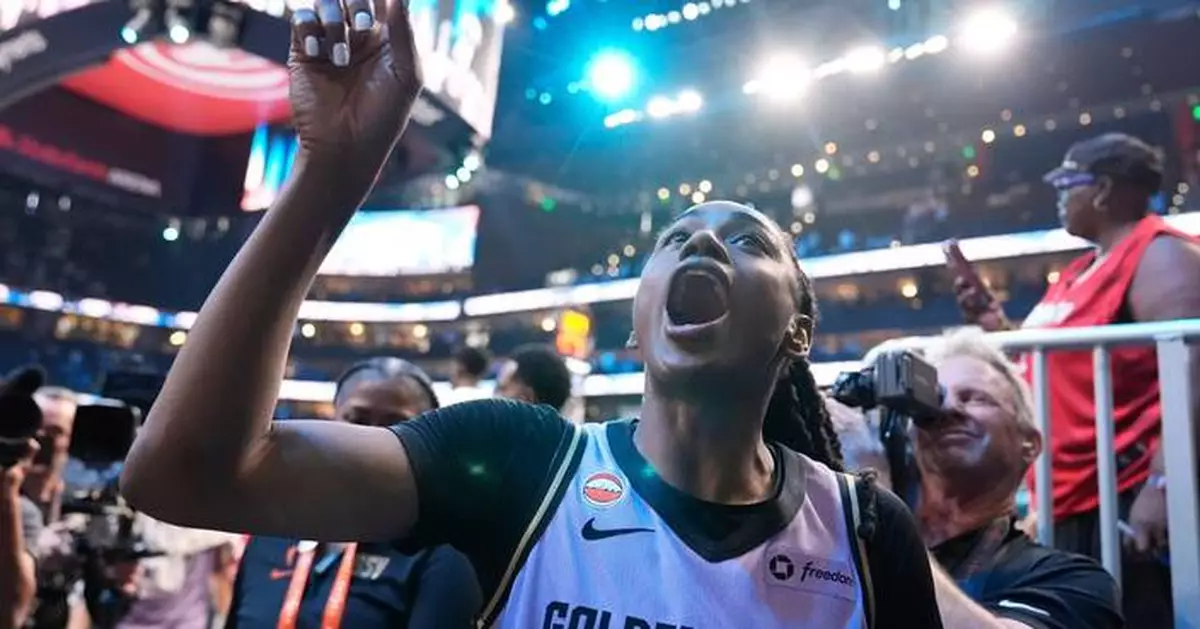
Golden State Valkyries guard Tiffany Hayes (15) reacts after scoring against the Atlanta Dream during the second half in Game 4 of the WNBA basketball finals against the Atlanta Dream, Saturday, Oct. 24, 2026, in Atlanta. (Carlos Avila Gonzalez/San Francisco Chronicle via AP)
Golden State Valkyries guard Tiffany Hayes (15) talks to fans after Game 4 of the WNBA basketball finals against the Atlanta Dream on Saturday, Oct. 24, 2026, in Atlanta. (AP Photo/Brynn Anderson)
The 37-year-old Hayes knew her job. She came out of retirement two years ago for opportunities like this.
“Just to give it all I have which is what I always do but of course you’ve got to give a little more, so instead of 110 you’ve got to give 120," she said. "We’re all fighting, battling something but at the end of the day we’re here for each other, we do it for each other. I think we showed that today.”
In much the same scenario as the Valkyries and having won Game 1 at home, the Warriors were trailing 2-1 to the Cavs when Kerr turned to defensive star Iguodala to start Game 4 and the spot-on switch helped swing the NBA Finals. Golden State went on to win three straight and close the series in six games, and Iguodala received Finals MVP honors. Kerr used Iguodala again the next year in the Western Conference Finals against Keivn Durant and Oklahoma City.
The Valkyries will now come home for Game 5 on Monday night with that raucous “Ballhalla” crowd backing them against Angel Reese and the Dream. Many of those violet-clad, towel-waving fans packed Chase Center for a Game 4 watch party.
“Hey, get loud and get ready, show 'em what the crowd really do," Hayes said.
Then, Game 6 back in Georgia is scheduled for Thursday with the location still to be determined. The past two games were played at the NBA Atlanta Hawks' State Farm Arena and brought in 17,000 fans for each thanks to some schedule alterations, compromise and cooperation from both Atlanta franchises.
The Dream will try again to grab some momentum on the Valkyries' home court.
“We knew they were going to come out aggressive. We knew they were going to come out with a different mentality,” Reese said.
“... As long as we stay together and get back to our identity, we’ll be fine,” she said.
Nakase tightened her rotation to just seven playing significant minutes Saturday. Kaila Charles also moved into the starting five, while Nakase brought Kayla Thornton and Cecilia Zandalasini off the bench to provide a spark and new look.
“I just wanted to change it up,” Nakase said. “The best thing about our team is no one cares who starts, no one cares. People coming off the bench it doesn't matter ... because we have a really selfless team, egoless team. So, yeah, I just wanted to change it and you definitely saw some energy, better fight.”
Perhaps part of that fire came from Gabby Williams' viral postgame moment in a team huddle immediately following an embarrassing 97-71 defeat in Game 3 on Wednesday to which she described as “I think I’ve been a little bit too loose as a leader."
“So I just wanted to show my team something different because we need something different,” she said ahead of Saturday.
After the win, in which she had 17 points, five rebounds, three assists and two steals, Williams said it served a dual purpose.
“I think it got me going,” she said. “I didn't like my last game, I didn't like who I was in that last game so I think stepping up in that role made me step up also individually. If I want to lead my team I have to have to be the one that sets the tone and I have to lead by example as well, so I think that motivated me to set the tempo today.”
The Valkyries trust everyone on this team to come through when it counts, no matter the role.
All year long, Nakase has referenced her players' love for one another, through any challenge.
“We’re about caring for each other,” she said. "We’re about pouring into each other, and I think what’s really big key is they want to see success in their teammates more than themselves.”
See AP’s full WNBA coverage here
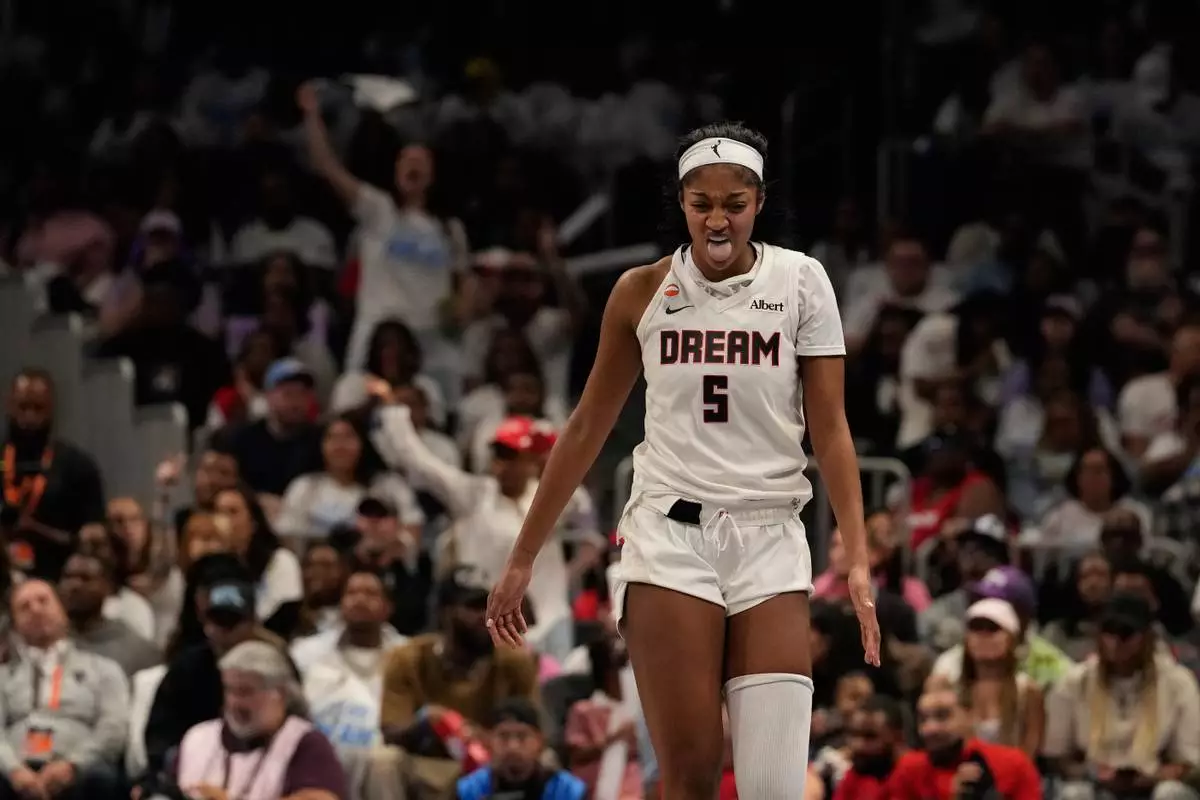
Atlanta Dream forward Angel Reese (5) reacts to an injury in the second half during Game 4 of the WNBA basketball finals against the Golden State Valkyries on Saturday, Oct. 24, 2026, in Atlanta. (AP Photo/Brynn Anderson)
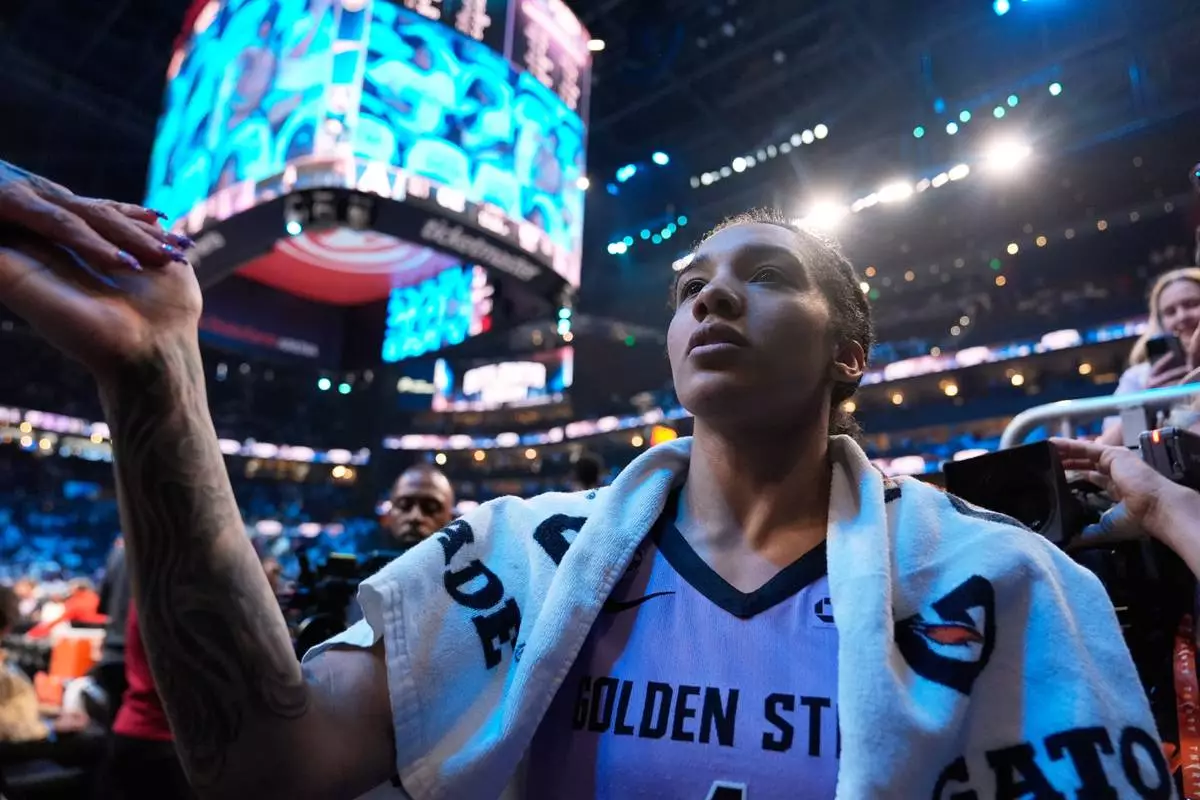
Golden State Valkyries forward Gabby Williams (1) high fives fans after Game 4 of the WNBA basketball finals against the Atlanta Dream on Saturday, Oct. 24, 2026, in Atlanta. (AP Photo/Brynn Anderson)
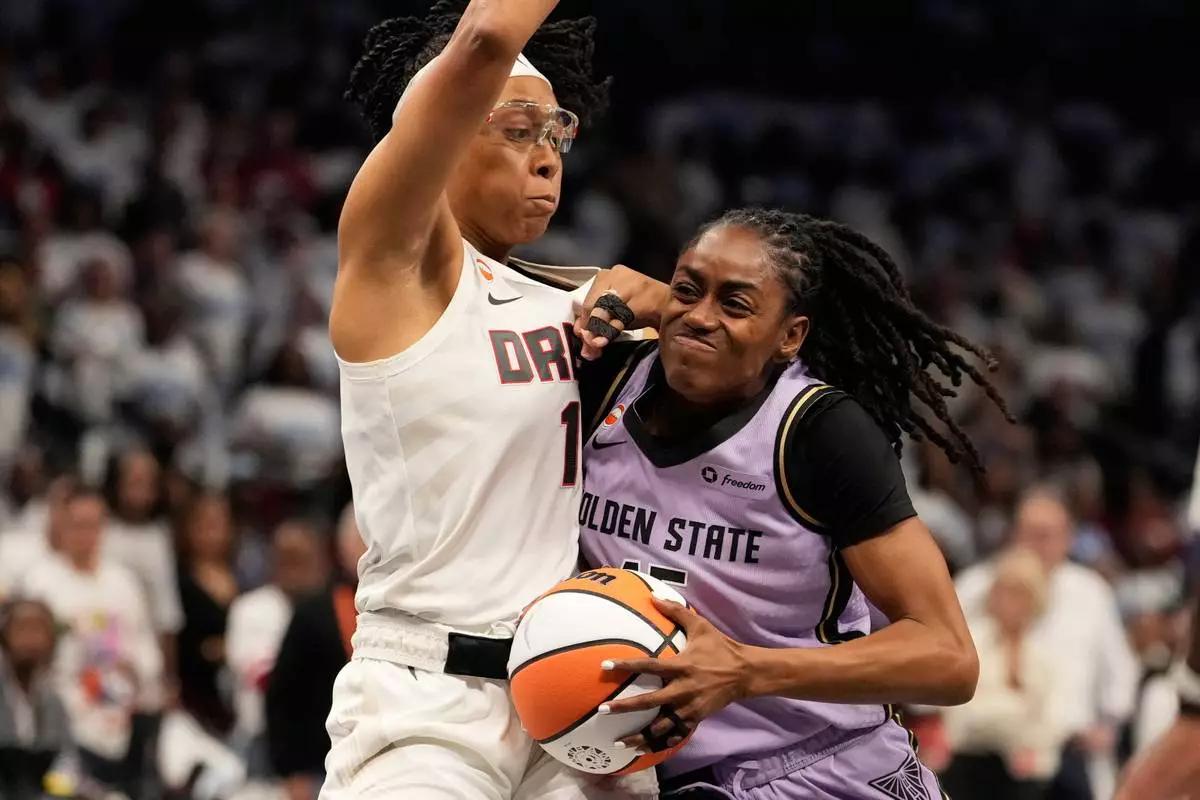
Golden State Valkyries guard Tiffany Hayes (15) drives the ball to the basket against Atlanta Dream guard Allisha Gray (15) during Game 4 of the WNBA basketball finals on Saturday, Oct. 24, 2026, in Atlanta. (AP Photo/Brynn Anderson)
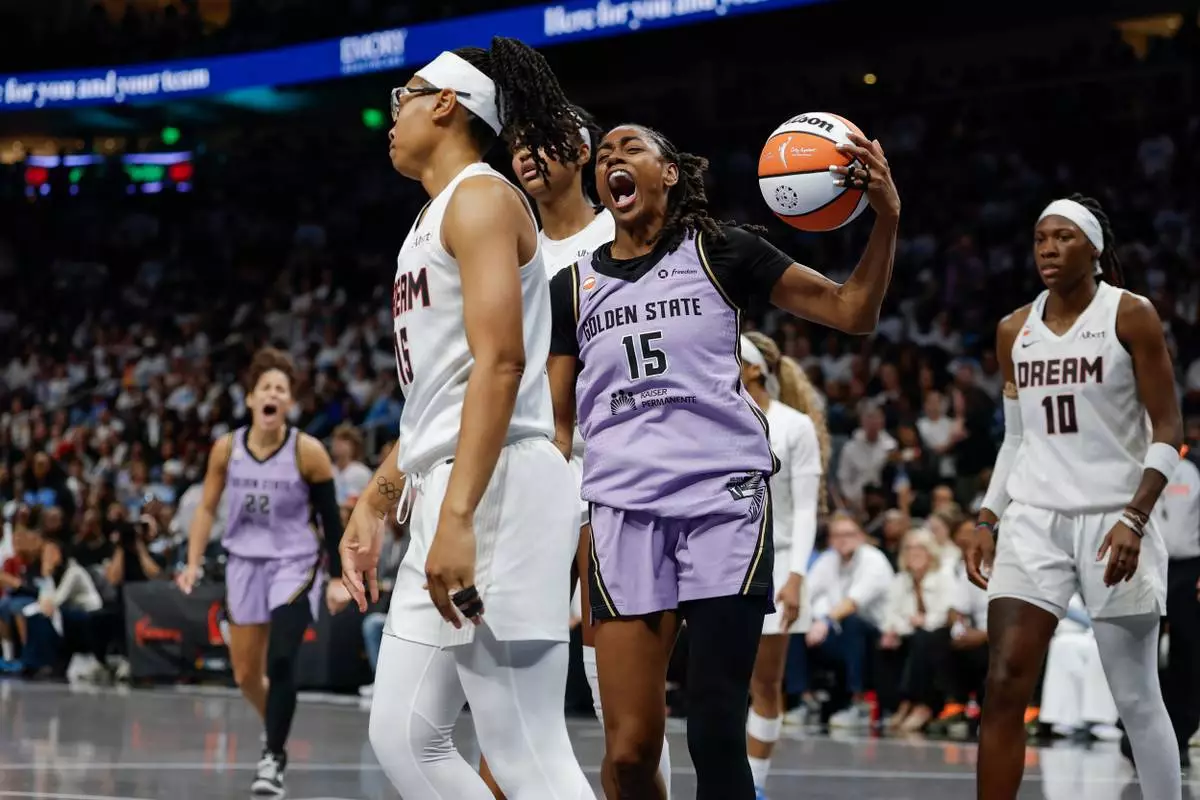
Golden State Valkyries guard Tiffany Hayes (15) reacts after scoring against the Atlanta Dream during the second half in Game 4 of the WNBA basketball finals against the Atlanta Dream, Saturday, Oct. 24, 2026, in Atlanta. (Carlos Avila Gonzalez/San Francisco Chronicle via AP)
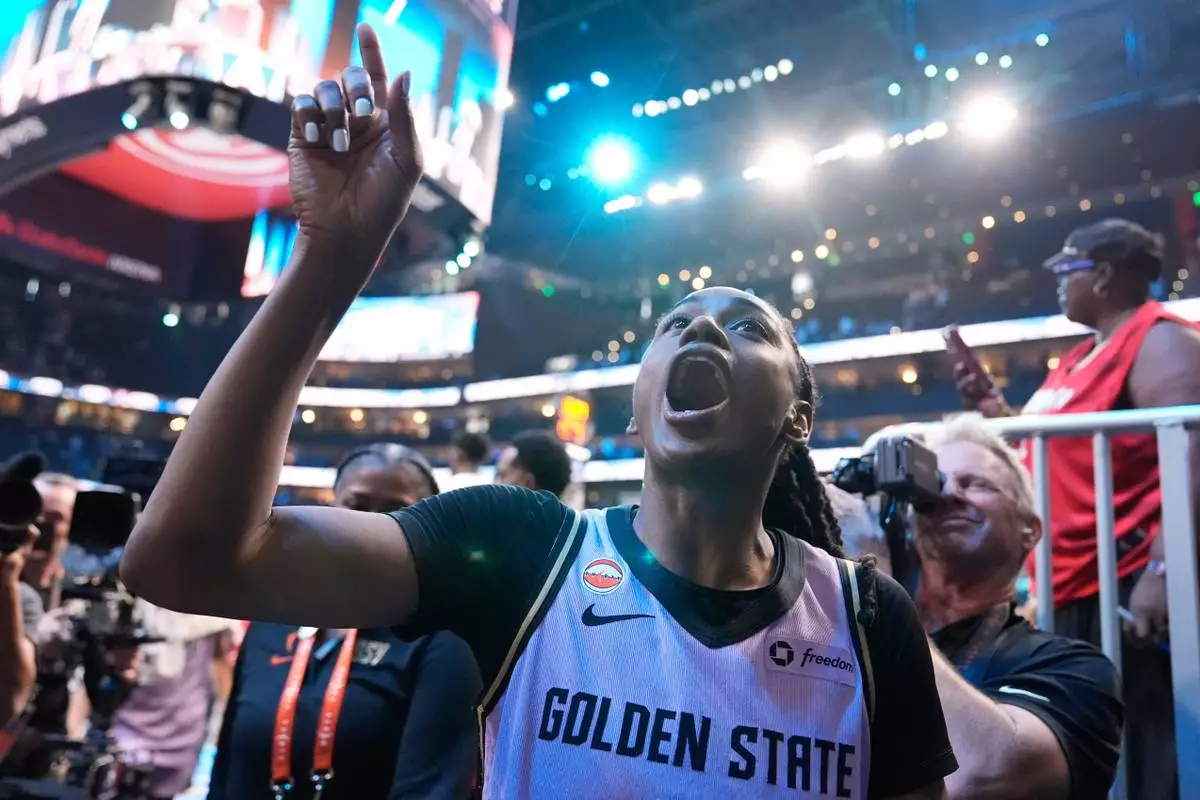
Golden State Valkyries guard Tiffany Hayes (15) talks to fans after Game 4 of the WNBA basketball finals against the Atlanta Dream on Saturday, Oct. 24, 2026, in Atlanta. (AP Photo/Brynn Anderson)
Brazilians are voting Sunday in a presidential runoff that pits leftist incumbent Luiz Inácio Lula da Silva against Sen. Flávio Bolsonaro, a far-right ally of U.S. President Donald Trump.
Bolsonaro, the son of imprisoned former President Jair Bolsonaro, bested Lula by more than 2.2 million votes in the first round of the election earlier this month. More than 33 million of the nearly 160 million registered voters did not turn out.
The difference between the two candidates is stark. Bolsonaro and Lula have opposing ideological views on issues ranging from U.S.-Brazil relations and climate change to social welfare. A win for Bolsonaro would signify a pivot to the right by Latin America’s most populous country and its largest economy in a year when Trump allies have notched victories in Chile, Peru and Colombia.
Here's the latest:
After the first-round results confirmed a runoff between Flávio Bolsonaro and Luiz Inácio Lula da Silva, eliminated candidates started trying to influence the final vote.
Third-place finisher Augusto Cury, a writer who describes himself as a moderate and garnered 3.4 million votes, endorsed Bolsonaro to align anti-establishment voters. Conservative former governors Ronaldo Caiado and Romeu Zema, who combined received almost 3 million votes, also endorsed Flávio Bolsonaro. Renan Santos, who drew 2.4 million votes on a reject-all-other-candidates platform, has endorsed neither Lula nor Bolsonaro.
Lula voted in the city of Sao Bernardo do Campo, where he began his political career as a union leader in the 1960s.
“I am thankful to the Brazilian people. What people did to me in recent days is something I cannot repay,” he said before casting his vote and holding Brazil’s flag in front of the cameras.
He said he was still emotional about Saturday’s demonstration of support from voters in São Paulo. “I don’t think Paulista Avenue had so many people in any political event.”
“It is a lot of generosity, a lot of care, a lot of love. I will be forever grateful,” Lula said.
First lady Rosângela da Silva, Vice President Geraldo Alckmin and other allies accompanied Lula to the polling station.
Voting is mandatory for literate Brazilians aged 18 to 70. But that has never been a real consideration for nonvoters, who must either submit a formal justification online or at a polling station, or pay a small fine of less than $1.
More than 33 million people did not vote in the first round of the elections on Oct. 4. Some of those were hospitalized, living overseas or working outside their voting areas. And others just chose not to.
Unexcused absences in three consecutive elections freeze tax IDs, block nonvoters from applying to state jobs, hinders loans from state banks, and delays the issuance of passports. For those who don’t want to choose a candidate even when they show up, they can cast blank or null votes.
Fabianne Borges Santoro, a 45-year-old physiotherapist who lives in the neighborhood where Bolsonaro voted, said she voted for change.
“The Workers’ Party has been in power for a long time and the voice of the people is saying that we need change to see improvements in security and the cost of living,” she said, wearing a top featuring Brazil’s national colors, yellow and green. “Things are really expensive and taxes are too high.”
Santoro said she once voted for Lula’s party but now associates it with corruption, particularly after the so-called Operation Car Wash that started in 2014, when the Workers’ Party was in power and entangled dozens of politicians.
Roulen Azeredo, a 76-year-old army reservist, said he had always voted right. He also echoed the desire for a shift in the country’s direction.
“The current government did nothing,” said Azeredo, who hopes Jair Bolsonaro, who is currently serving a 27-year sentence for attempting a coup, will be freed if the former president’s eldest son wins. “His imprisonment is a disgrace.”
Sunday’s runoff is a battle of politics as much as personalities. Brazil’s next president — Lula or Bolsonaro, a Trump ally — will determine whether U.S. influence further expands in Latin America, where Trump-allied candidates have won elections in countries that include Colombia, Argentina and Peru.
Brazil is the region’s most populous country and its largest economy. A Lula win would leave Brazil and Mexico, the region’s second most populous country, with left-of-center leaders; a Bolsonaro win would likely bring Brazil closer to Washington.
Presidential candidate Flávio Bolsonaro voted at a local school in Rio de Janeiro just after 8 a.m., accompanied by his wife, Fernanda Bolsonaro. Wearing a light yellow shirt, he smiled and waved to supporters waiting to see him in the rain.
“The time of real change has arrived,” Bolsonaro told journalists. “Brazil can’t go on another four years on its current trajectory.”
As Bolsonaro voted, supporters of the opposition candidate shouted “Lula, thief, your place is in prison,” while fans of the incumbent responded with clapping and the chant “Olé olé olé ola, Lula!” The two anthems are common in demonstrations.
In Brazil, voting is fully electronic — meaning votes are counted much more quickly than in some other countries.
Polls opened at 8 a.m. and will close at 5 p.m. Brasilia time (2000 GMT) in most of the country.
On the ballot: the presidential face-off between Lula and Bolsonaro and six gubernatorial races. Votes are tallied quickly because each ballot box calculates results locally and prints a paper summary. The encrypted data is transmitted via secure networks to the nation’s top electoral court in capital Brasilia, which aggregates and publishes the counts within hours.
The system has been in place since the 1990s with few questioning its efficiency. One of its critics is former President Bolsonaro.
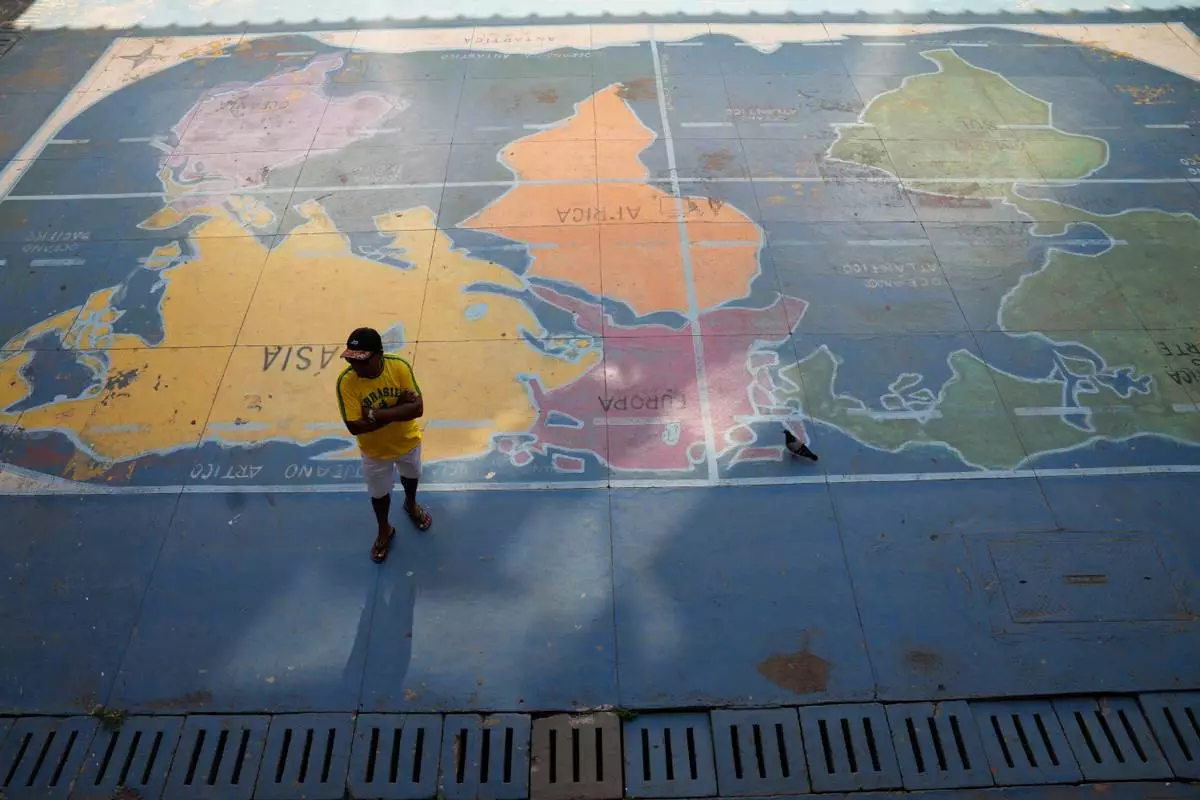
A voter stands at a polling station during a presidential runoff in Brasilia, Brazil, Sunday, Oct. 25, 2026. (AP Photo/Eraldo Peres)
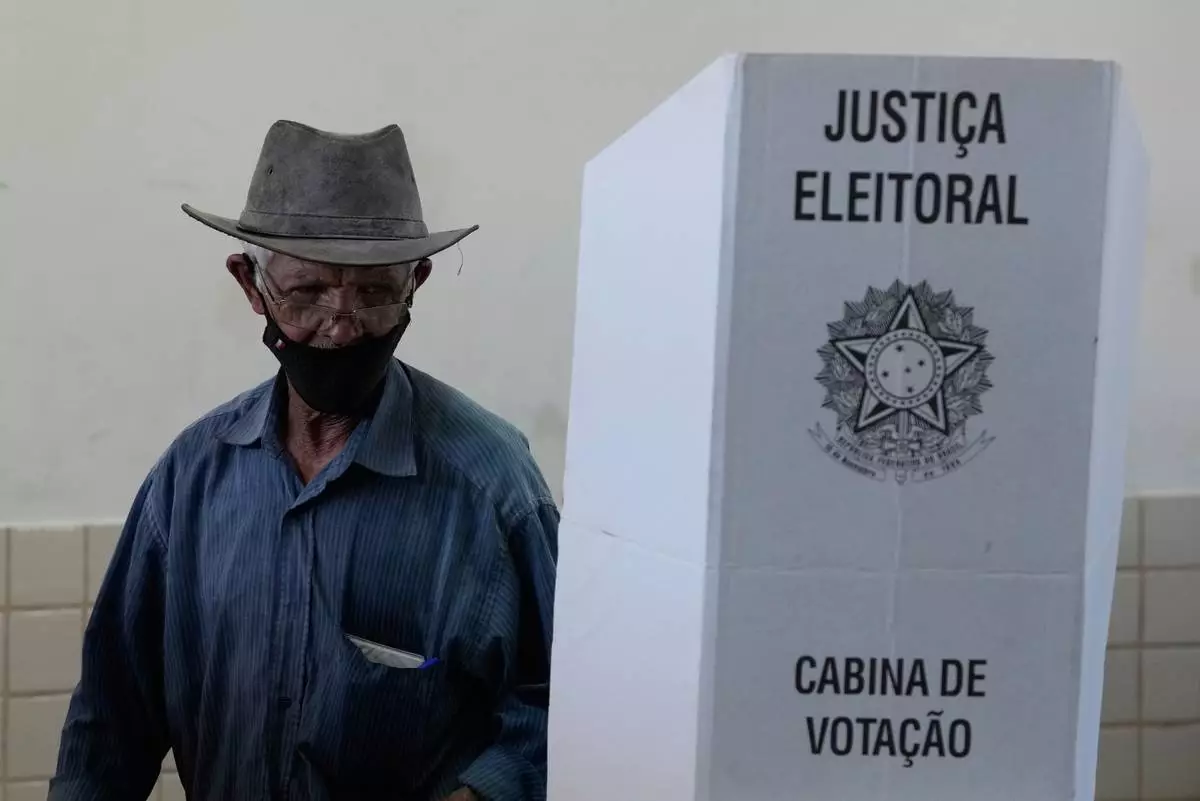
A man votes in the presidential runoff in Brasilia, Brazil, Sunday, Oct. 25, 2026. (AP Photo/Eraldo Peres)
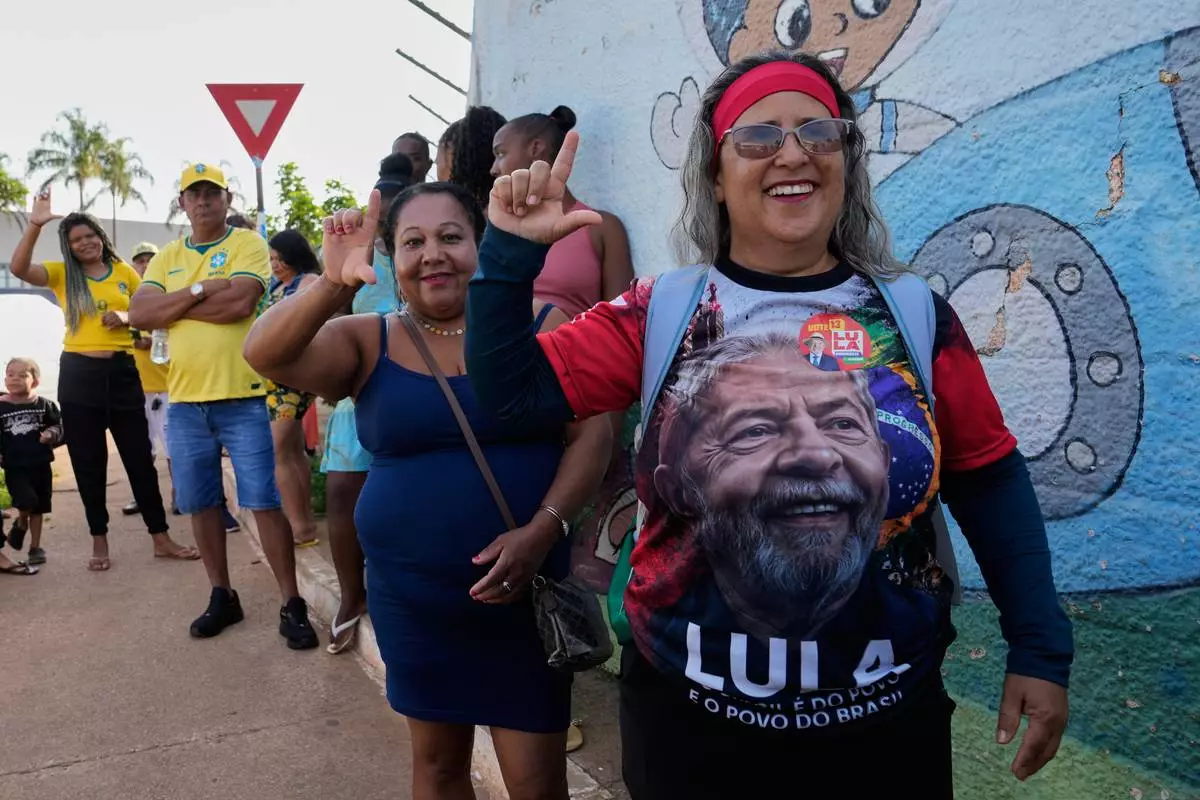
A supporter of President Luiz Inacio Lula da Silva, who is seeking reelection, lines up at a polling station during a presidential runoff in Brasilia, Brazil, Sunday, Oct. 25, 2026. (AP Photo/Eraldo Peres)
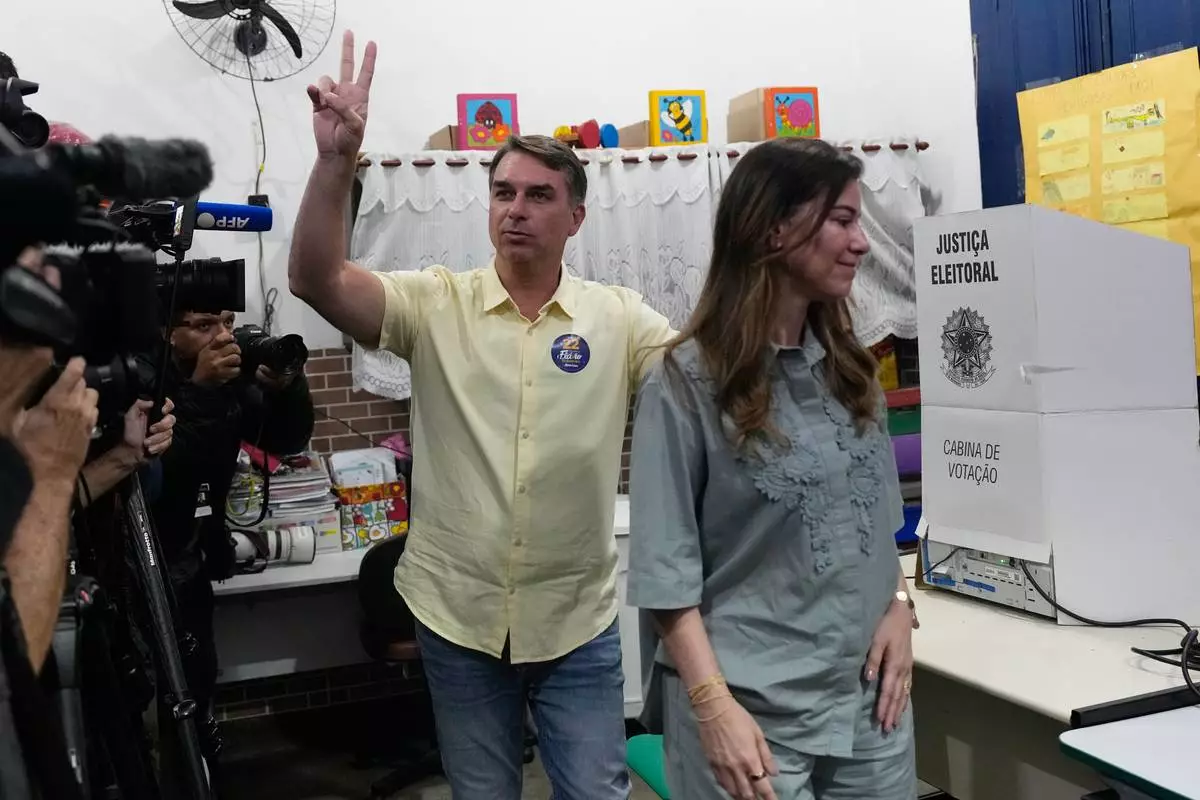
Opposition presidential candidate Sen. Flavio Bolsonaro makes the victory sign after voting in the presidential runoff in Rio de Janeiro, Sunday, Oct. 25, 2026. (AP Photo/Silvia Izquierdo)
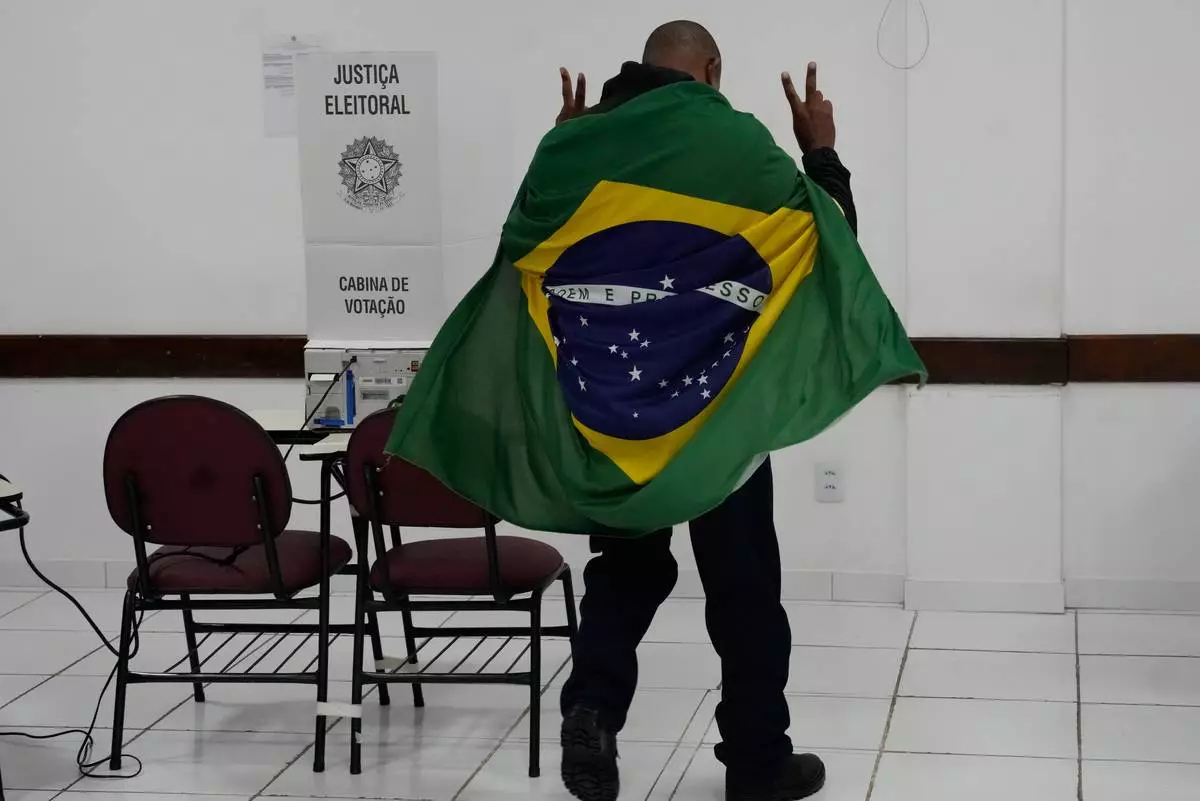
A man wrapped in a Brazilian flag arrives to vote in the presidential runoff in Brasilia, Brazil, Sunday, Oct. 25, 2026. (AP Photo/Eraldo Peres)
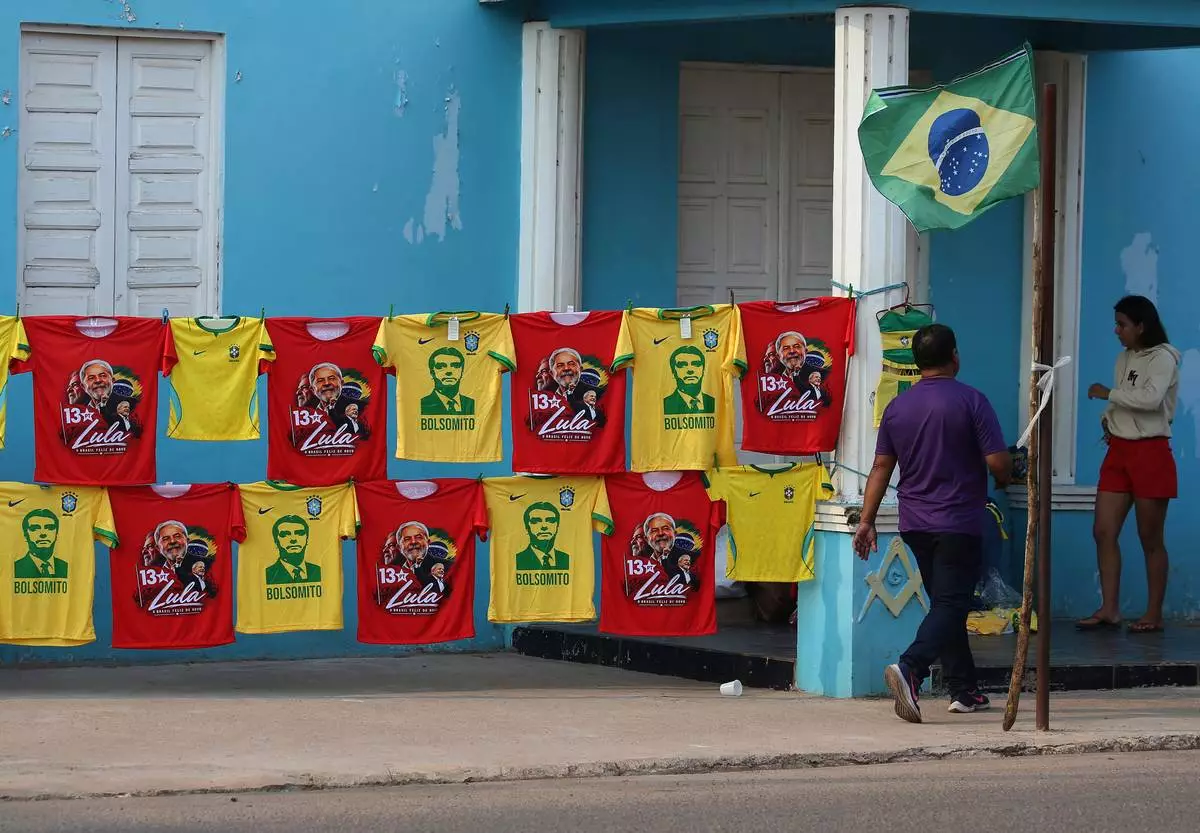
Red T-shirts depicting Brazilian President Luiz Inacio Lula da Silva, who is running for reelection, and yellow T-shirts depicting opposition presidential candidate Sen. Flavio Bolsonaro hang for sale outside a building ahead of Brazil's presidential runoff election in Autazes, Amazonas state, Brazil, Saturday, Oct. 24, 2026. (AP Photo/Edmar Barros)
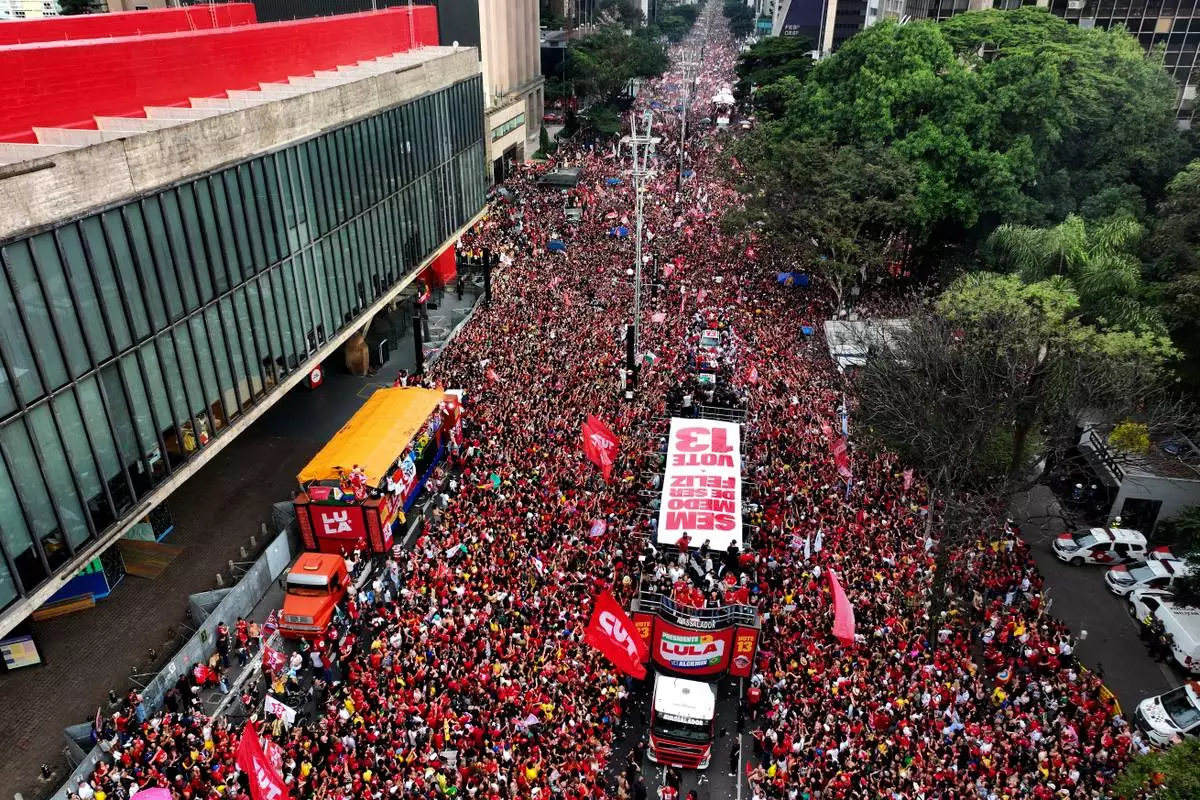
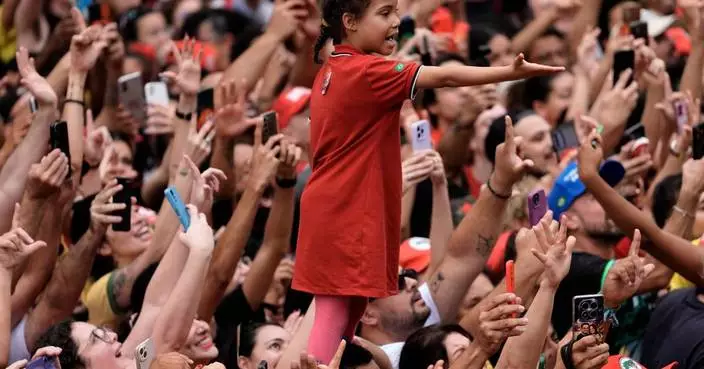
Supporters of Brazilian President Luiz Inacio Lula da Silva, who is running for reelection, crowd Paulista Avenue as his campaign vehicle passes during his final campaign rally ahead of Brazil's presidential runoff election in Sao Paulo, Brazil, Saturday, Oct. 24, 2026. (AP Photo/Andre Penner)
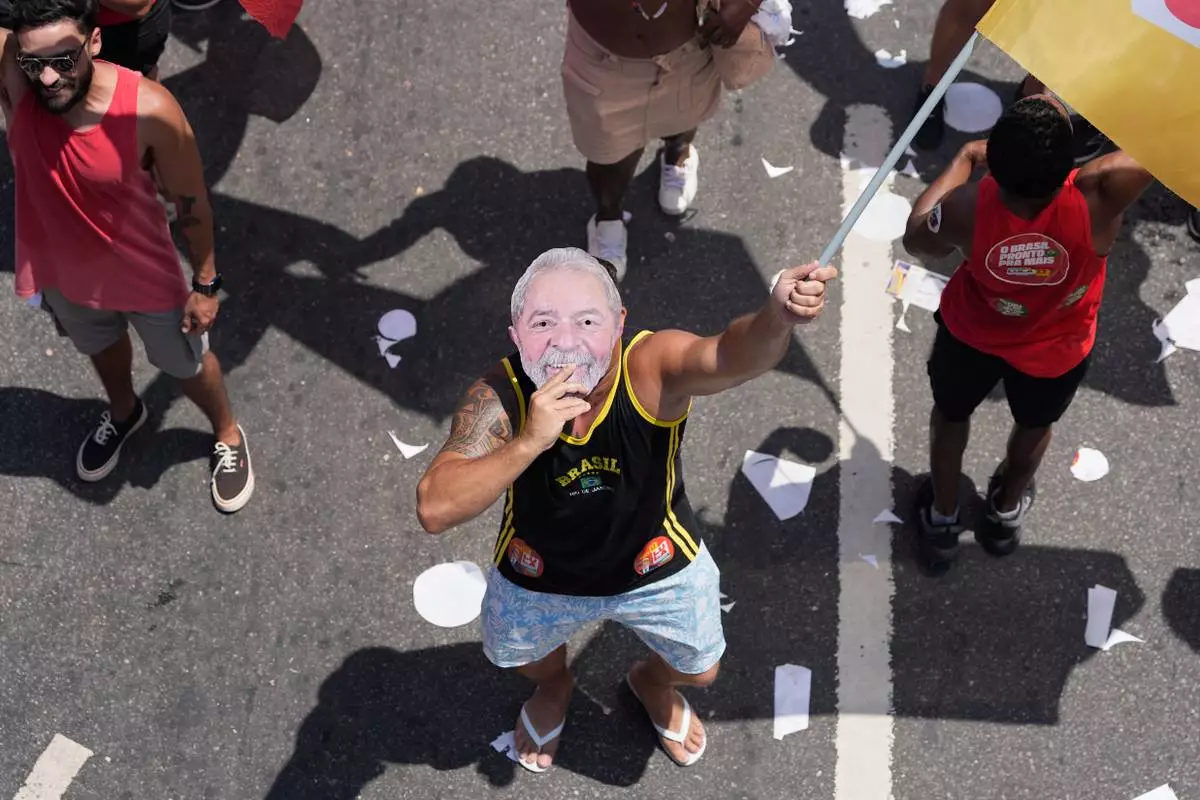
A supporter wears a mask of Brazilian President Luiz Inacio Lula da Silva, who is running for reelection, during his final campaign rally on Copacabana beach a day ahead of the presidential runoff election in Rio de Janeiro, Saturday, Oct. 24, 2026. (AP Photo/Silvia Izquierdo)
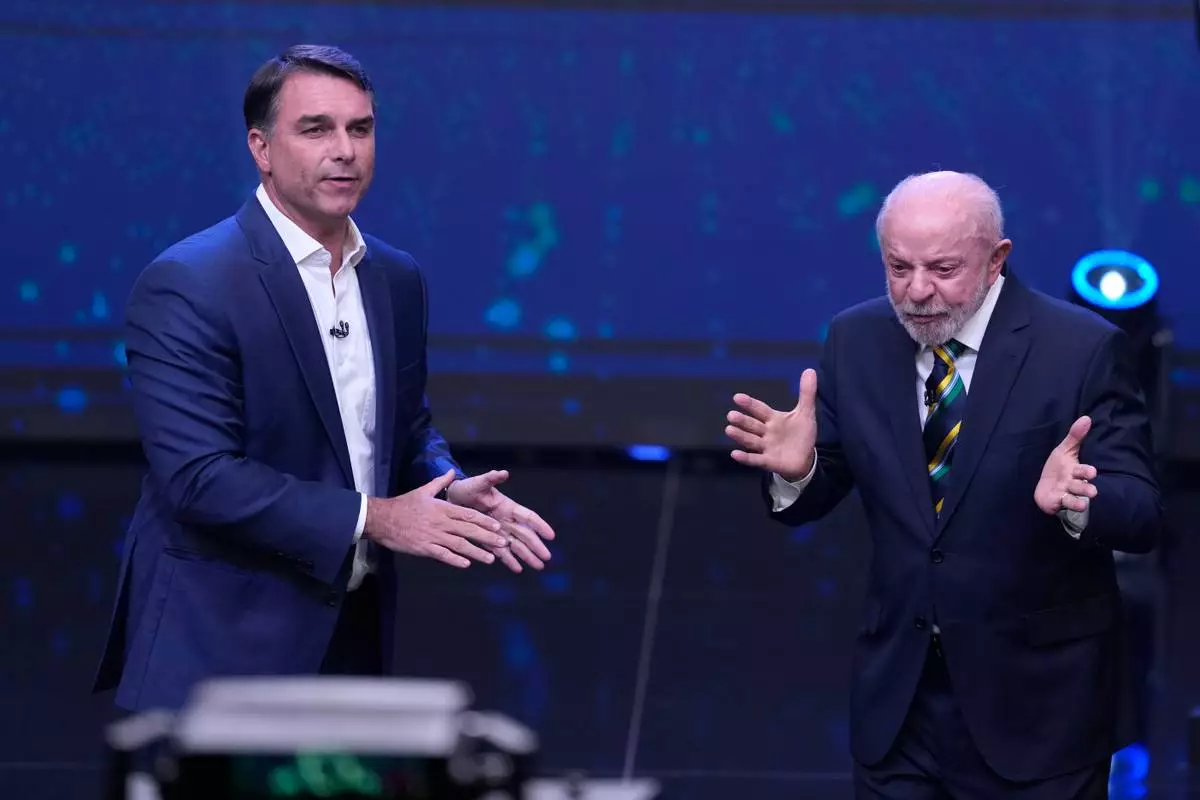
FILE - Brazil President Luiz Inacio Lula da Silva, right, who is running for reelection, gestures as opposition presidential candidate Sen. Flavio Bolsonaro stands beside him during a televised presidential debate one week before the runoff election in Sao Paulo, Brazil, Oct. 18, 2026. (AP Photo/Andre Penner, File)