Skip to Content Facebook Feature Image

Participants of Global Governance Forum hail China's contribution to fairer international order

China

China

China

Participants of Global Governance Forum hail China's contribution to fairer international order

2026-10-25 18:02 Last Updated At:22:47

Amidst overlapping global challenges, international experts at the 2026 Global Governance Forum in north China's Hebei Province emphasized that rebuilding confidence and cooperation in global governance requires enhanced dialogue, the establishment of common rules in emerging fields, and a fairer, more inclusive international system that amplifies the voice of the Global South.

Held from October 23 to 25 in Xiong'an, China's "city of the future" built on the North China Plain, the forum brought together nearly 400 representatives from over 90 countries. Spanning five major sectors and 22 thematic seminars, the event provided a platform for diverse stakeholders in politics, economy, technology, culture, and think tanks to jointly address governance challenges and promote inclusive, multi-stakeholder global governance reform.

"In this conference, I met some American representatives, a remarkable businessman. I asked him, 'what are you doing here?' And he said, 'I wanted to discuss Global Governance Initiative.' I said, 'Listen, I don't believe because whatever China proposes, the U.S. will object. And he said no. And he mentioned specific subject -- AI. He said, 'I want to make my humble contribution into establishing (of) global governance in AI.' So among Americans, this idea is also receiving some understanding. More dialogue is required and I would underline the weight of this forum," said Djoomart Otorbaev, former prime minister of Kyrgyzstan.

In today's world, where deficits in peace, development, security, and governance are intertwined, rebuilding confidence and cooperation is the most scarce international public good. In response, China has proactively set the agenda to address pressing concerns, such as advancing the reform of the UN-centered governance system, cooperating on new frontiers like cyberspace, outer space, and AI, and bridging civilizational divides amidst geopolitical rivalry.

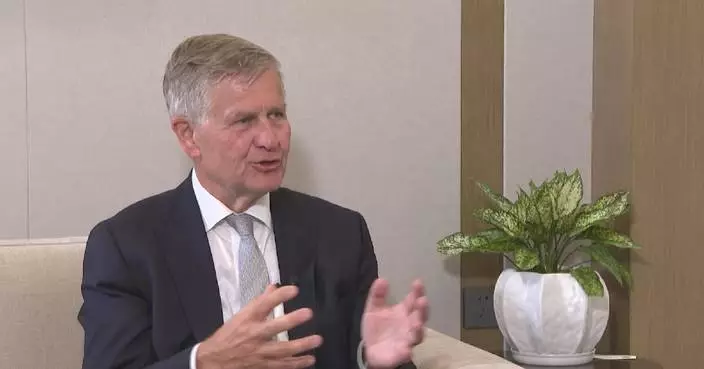
"And there were some specific initiatives which we also have discussed, which is to set the global governance for the outer space, for the deep seas, for some areas of the planet like the Antarctica, where there is various needs for more common rules. One area the world is looking for is artificial intelligence and we need to regulate globally and efficient intelligence to avoid the worst. So if we work together, we can get the benefits and make sure that we make it much more difficult to do the harm," said Erik Solheim, chairman of the EU-Asia Centre and former UN under-secretary-general and former executive director of the UN Environment Programme.

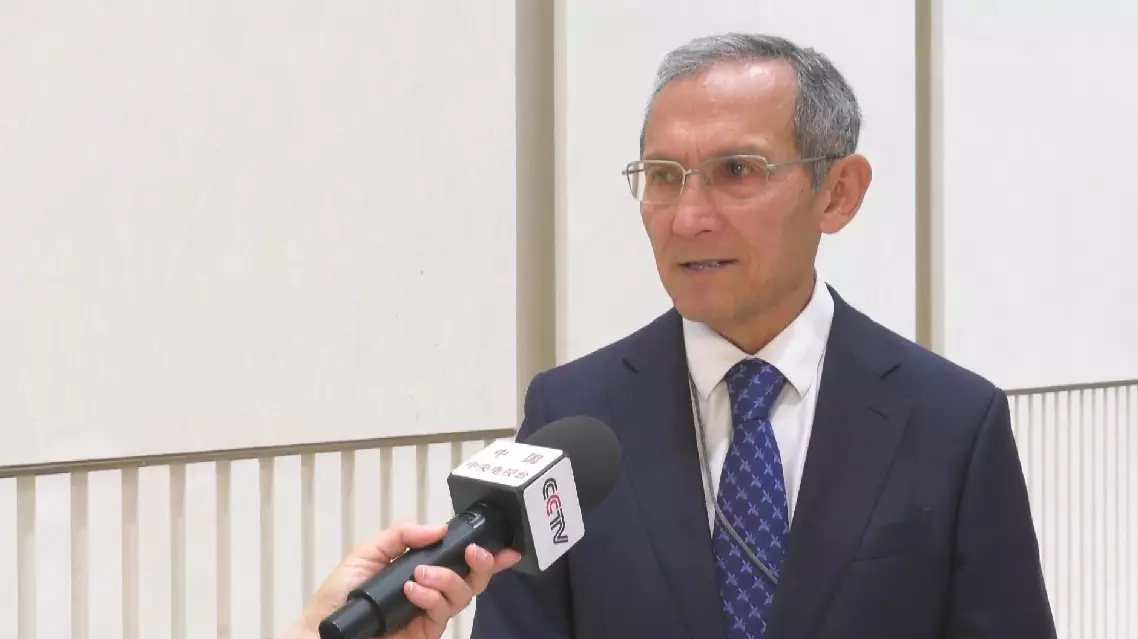
"The world has become a global village, but this global village is now fighting. There's a problem going on in the Middle East, there's a problem going on in Africa, but China is trying to promote a conclusive thing so that the world can be peaceful. Because of this Global Governance Initiative, China has been able to tell the world (that) how to work together," said Khalid Taimur Akram, executive director of the Pakistan Research Center for a Community with a Shared Future.

Since its proposal over a year ago, the Global Governance Initiative has garnered support and responses from over 160 countries and international organizations.

During the forum, China announced pragmatic measures to further implement the initiative, reaffirming its firm support for multilateralism and the core status of the United Nations, while emphasizing the need to enhance the representation and voice of the Global South in international affairs to translate the initiative from a Chinese proposal into broader international practice.

"It's that combination of defense of the games that arise from the existence of the international system, but improving it, updating it, performing it, making it fairer, particularly to the great mass of developing countries, which is why the Chinese proposals meet a lot of support, particularly from the Global South, but also from fair minded people in other countries," said Keith Bennett, vice chairman of UK 48 Group Club.
Participants of Global Governance Forum hail China's contribution to fairer international order

Participants of Global Governance Forum hail China's contribution to fairer international order
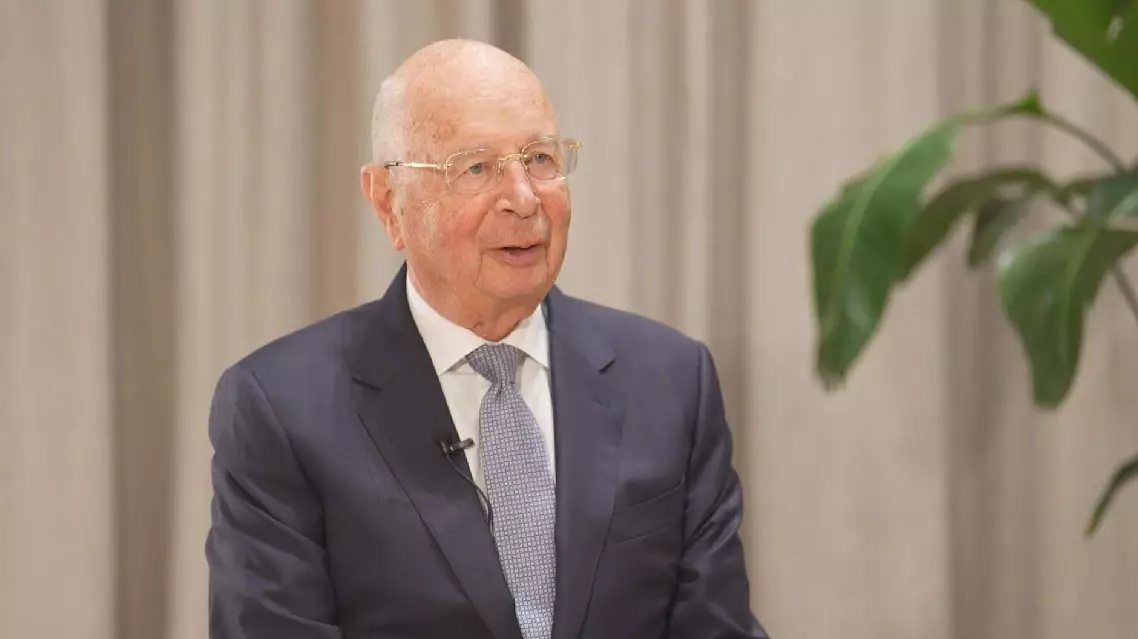
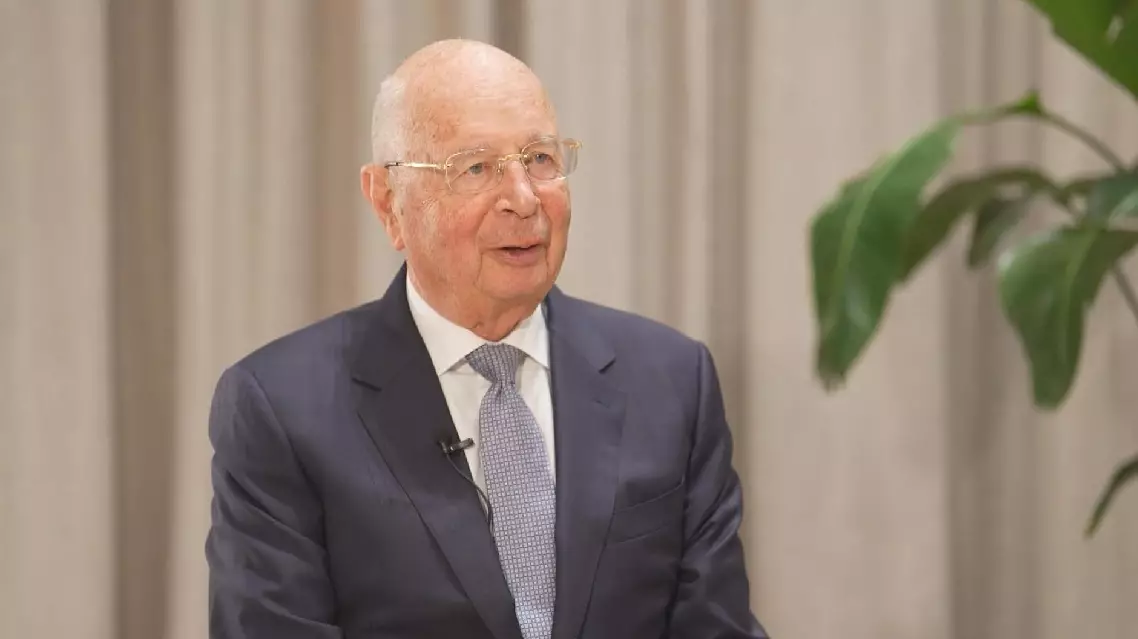
Klaus Schwab, founder of the World Economic Forum (WEF), has commended China's global governance proposal and called for translating consensus into practical action, urging a fundamental rethink of global governance in the face of rapid artificial intelligence development, at the 2026 Global Governance Forum in Xiong'an.

The three-day forum concluded on Sunday in Xiong'an New Area in north China's Hebei Province, drawing about 400 officials from around the world to tackle a shared challenge -- restoring trust, rebuilding cooperation and reforming global governance in a rapidly transforming world.

In an exclusive interview with China Central Television (CCTV) on the sidelines of the forum, Schwab said he first came to China in 1979 and has since witnessed the country's rapid economic development and its evolving role in global governance over more than four decades. China, he said, is now taking on more international responsibilities.

Visiting Xiong'an for the first time, Schwab said he was struck by the city's seamless fusion of modernity and environmental responsibility. "It's the first time [I came to Xiong'an], and I'm very impressed, because the modernity of the city, the functionality is unique. It's a combination of modernity and also environmental responsibility. And I think it's a city built for efficiency, but built also for an enjoyable life, so it combines, let's say, the bests in a very innovative way. So I'm very impressed," he said.

In 2025, Xi proposed the Global Governance Initiative (GGI), which is designed to offer a Chinese solution to the two pressing questions of the era: what kind of global governance system should be established, and how global governance can be reformed and improved.

At the Xiong'an Forum's opening ceremony, China unveiled eight practical actions to further implement the GGI. Schwab said the move is a concrete manifestation of China taking on its responsibilities as a major country, and that the initiative is steadily being transformed from concept into practice.

"I think the message was very important. Of course, we speak about the reform of the global governance system since a long time, but we have made little progress. We need to think more about how should global governance really look like. We have some broad ideas. I think President Xi's Global Governance Initiative has set the ground, but now we have to develop the details. The eight proposals are concrete actions in order to move forward. I feel the Institute for Global Governance is a very good idea," he said.

Schwab said he strongly identifies with China's vision of global governance based on extensive consultation, joint contribution and shared benefits. Artificial intelligence, he noted, is now reshaping knowledge systems, economic life and human society, and the window of time in which humanity can steer this transformation is short.

The international community, he stressed, urgently needs a global governance system suited to the needs of the intelligent age to address the real risk of AI systems spinning out of control.

"Particularly in the last year, we have a new dimension, which becomes a priority for global governance. And that's what I call the intelligent age, which means artificial intelligence, but it's not only artificial intelligence. We have many other new technologies, and those technologies cannot be above the law. We have to create very fast. We have to create the necessary protective frameworks to make sure that those technologies, and particularly AI, really serves the common good, and provide us with new opportunities, and not just with risks," said Schwab.

WEF founder urges int'l community to translate consensus on governance into practical action

WEF founder urges int'l community to translate consensus on governance into practical action

WEF founder urges int'l community to translate consensus on governance into practical action

WEF founder urges int'l community to translate consensus on governance into practical action

Recommended Articles