Skip to Content Facebook Feature Image

What to know about Venezuela's opposition leader Maria Corina Machado

News

What to know about Venezuela's opposition leader Maria Corina Machado
News

News

What to know about Venezuela's opposition leader Maria Corina Machado

2026-10-26 03:21 Last Updated At:03:30

CARACAS, Venezuela (AP) — María Corina Machado has long been the face of resistance to Venezuela’s ruling party, in power for 27 years. Now, after months in exile, she has returned to the South American country to push for a presidential election.

Machado, the opposition leader who prompted millions of Venezuelans to reject President Nicolás Maduro in the 2024 election, reappeared in the country on Sunday. She had left Venezuela in December to travel to Norway, where she was honored with the Nobel Peace Prize, and remained abroad, spending time in Washington and touring several countries.

Before leaving Venezuela, Machado had been in hiding since Jan. 9, 2025, when she was briefly detained after joining supporters during an anti-government protest in the capital, Caracas. Weeks after her departure, the United States military captured Maduro in a stunning operation in Caracas.

In December, hours after waving from the balcony of a Norwegian hotel to a cheering crowd gathered outside, Machado told reporters that she would continue the fight for her homeland’s democracy and promised to return soon.

“My return will be when we believe the security conditions are right, and it won’t depend on whether or not the regime leaves,” she said. “It will be as soon as possible.”

Machado, an industrial engineer and daughter of a steel magnate, began challenging the ruling party in 2004, when the nongovernmental organization she co-founded, Súmate, promoted a referendum to recall then-President Hugo Chávez. The initiative failed, and Machado and other Súmate executives were charged with conspiracy.

She drew the anger of Chávez and his allies the following year for her Oval Office meeting with then-U. S. President George W. Bush. Chávez considered Bush an adversary.

Her full transformation into a politician would come in 2010, when she was elected to a seat in the National Assembly, receiving more votes than any aspiring lawmaker ever. It was from this position that she boldly interrupted Chávez as he addressed the legislature and called his expropriation of businesses theft.

“An eagle does not hunt a fly,” he responded. The exchange is seared in voters’ memories.

Machado sought Venezuela’s presidency for the first time in 2012, but she finished third in the primary race to be the candidate for the Democratic Unity Roundtable.

The National Assembly ousted Machado in 2014 and, months later, the Comptroller General’s Office barred her from public office for a year, citing an alleged omission on her asset declaration form. That same year, the government accused her of being involved in an alleged plot to kill Maduro, who succeeded Chávez after his 2013 death.

Machado denied the charge, calling it an attempt to silence her and opposition members who had called tens of thousands of people to the streets in anti-government protests that at times turned violent.

She kept a low profile for the next nine years, supporting some anti-Maduro initiatives and election boycotts and criticizing opposition efforts to negotiate with the government. By the time she announced a new bid for the presidency in 2023, her careful messaging had softened her image as an elitist hard-liner, allowing her to connect with skeptics on both sides.

She won the opposition’s presidential primary with more than 90% of the vote, unifying the faction — as noted by the Nobel Prize committee. But ruling party loyalists who control the country’s judiciary kept her from appearing on the ballot, which forced her to throw her support behind former diplomat Edmundo González.

Machado hiked on overpasses, walked highways, rode motorcycles and sought shelter in supporters’ homes as she kept campaigning across Venezuela. Many of her closest collaborators were arrested.

She repeatedly joined thousands of supporters chanting in unison, “Freedom! Freedom! Freedom!” in rallies and asked them to vote for González, a virtual unknown who had never run for office.

González crushed Maduro by a more than a two-to-one margin, according to voting machine records collected by the opposition and validated by international observers. Still, Venezuela’s National Electoral Council, loyal to the ruling party, declared Maduro the winner of the July 28, 2024, contest.

People protested the results across the country, and the government responded with full force, arresting more than 2,000 people and accusing them of plotting to oust Maduro and sow chaos. Most were released over the following months, but the government simultaneously arrested dozens of people who actively participated in Machado’s efforts.

Some of Machado’s closest collaborators, including her campaign manager, avoided prison by sheltering for more than a year at a diplomatic compound in Caracas, where they remained until May 2025, when they fled to the U.S.

González meanwhile went into exile in Spain after he became the subject of an arrest warrant.

Machado’s brief detention in January 2025 took place as she left a demonstration against Maduro’s planned swearing-in ceremony. Her and González’s inability to stop Maduro from taking the oath of office led to a decline in support for her.

Venezuelans' trust in Machado has diminished since then, primarily over her unquestioning support for Trump. She gifted him her Nobel medal, even after his administration passed her over and chose to work with Maduro ally Delcy Rodríguez instead.

Machado and her allies have demanded that the Rodríguez government set a date for a presidential election.

After Maduro was deposed, Venezuela’s highest court said Rodríguez could serve as acting president for up to 90 days — an interim appointment that could be extended by the National Assembly for an additional 90 days. But the ruling party-controlled assembly never voted to extend her term which expired in July.

Machado had repeatedly vowed to return to Venezuela and, according to her party, she made seven unsuccessful attempts.

Opposition activists have accused Venezuela’s government of blocking Machado’s return, a claim denied by Venezuelan authorities. Others have also questioned whether the Trump administration has also been involved in the efforts to stop her from returning.

Administration officials deny they are holding Machado back but have said that, on some occasions, they have advised her against returning due to safety concerns.
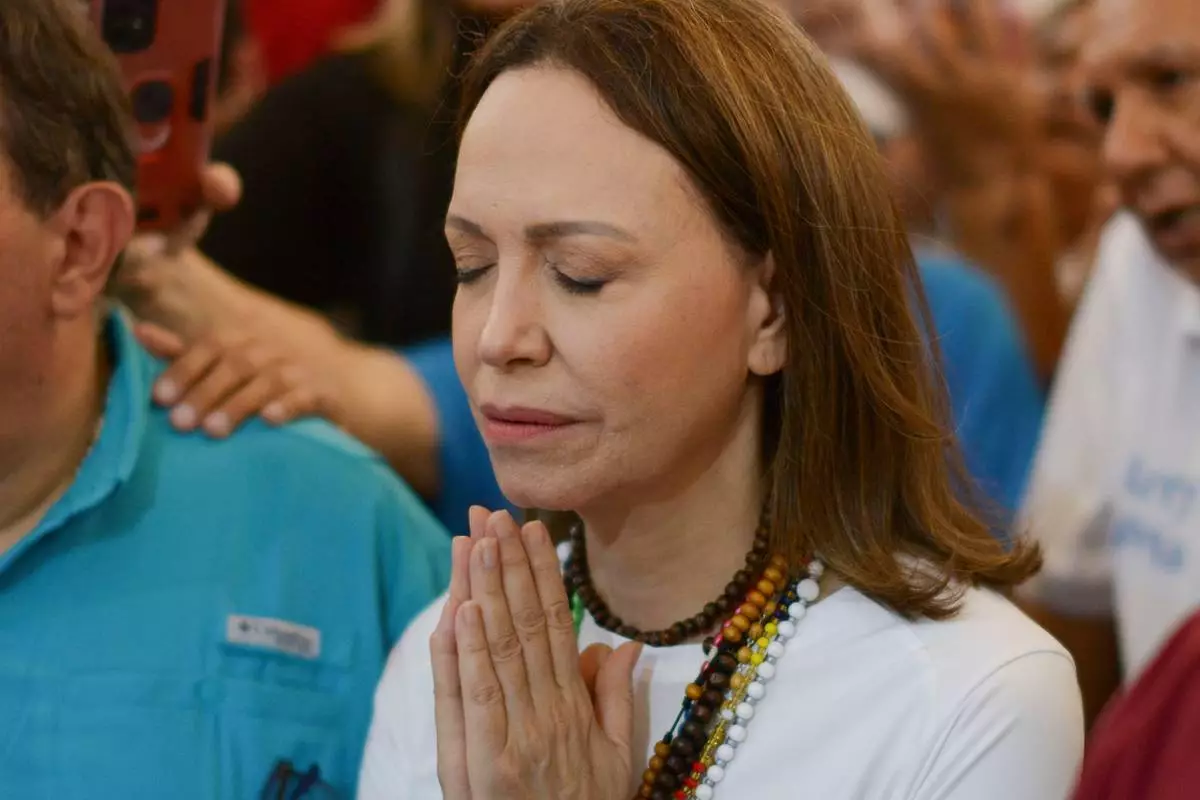
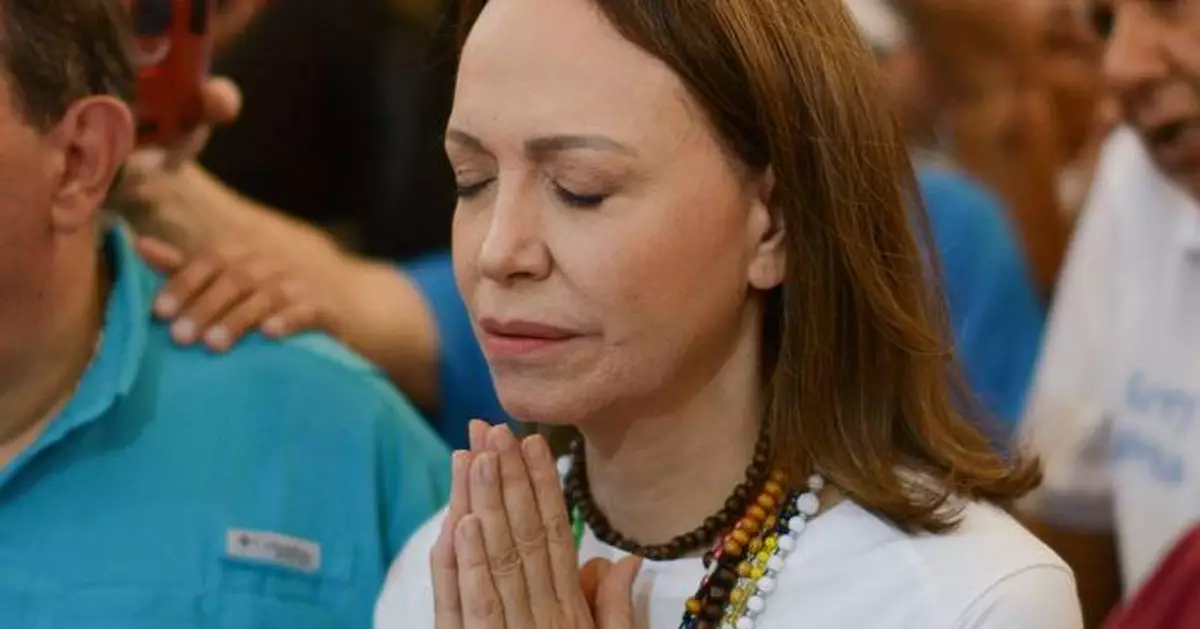
Venezuelan opposition leader Maria Corina Machado attends a religious Mass outside a church in Barquisimeto, Venezuela, Sunday, Oct. 25, 2026. (AP Photo/Jesus Hernandez)

Venezuelan opposition leader Maria Corina Machado attends a religious Mass outside a church in Barquisimeto, Venezuela, Sunday, Oct. 25, 2026. (AP Photo/Jesus Hernandez)
TEL AVIV, Israel (AP) — The Israeli military pressed ahead Sunday with a massive military operation in the occupied West Bank that has displaced hundreds of Palestinians and placed major restrictions on movement in response to a gun attack last week that killed two Israeli soldiers and wounded three others.

The operation, focused on the city of Hebron, the site of Friday's attack, came as Israel enters the final days before a tense election, which is largely seen as a referendum on current Prime Minister Benjamin Netanyahu’s leadership and security policies during the past three years of war.

In new measures, the army said that most Palestinian workers with permits will not be allowed to enter Israeli West Bank settlements on Sunday and Monday, and crossings into Israel will remain closed until after Israel’s elections on Tuesday.

The military said it operated in more than 400 different locations over the weekend and arrested 40 Palestinians it claimed were affiliated with the Hamas or Islamic Jihad militant groups. No militant group has taken responsibility for the attack.

The Hebron municipality said the operation displaced more than 2,600 people.

The military said that troops were conducting searches in the area where the gunmen operated, and warned residents to evacuate Deir Bahha, the suspected gunmen’s neighborhood. After Friday’s attack, Israel’s military said it found weapons in the gunmen’s car and that they were likely planning to attack Israeli civilians before being stopped at the checkpoint where the shootout erupted.

All entrances and exits to the city remained sealed, with the operation focused in Deir Bahha and another part of the city called Al-Jalda, according to Hebron Mayor Yousef Zuhair Al-Jabari.

“People cannot reach or enter the city, and they cannot leave it. The blockade has affected every aspect of life,” Al-Jabari said. He added that the blockade is forcing businesses to close and has also shuttered a mosque.

“The army told us that this area would be closed for 12 days. Now they’re saying 12 days, but maybe they’ll leave the area after two or three days,” said Shadi al-Qawasmi, a Hebron resident who was displaced with his family. “This may be because of the elections or some political matter. No one knows except God Almighty.”

The army declined to say how long the operation might last.

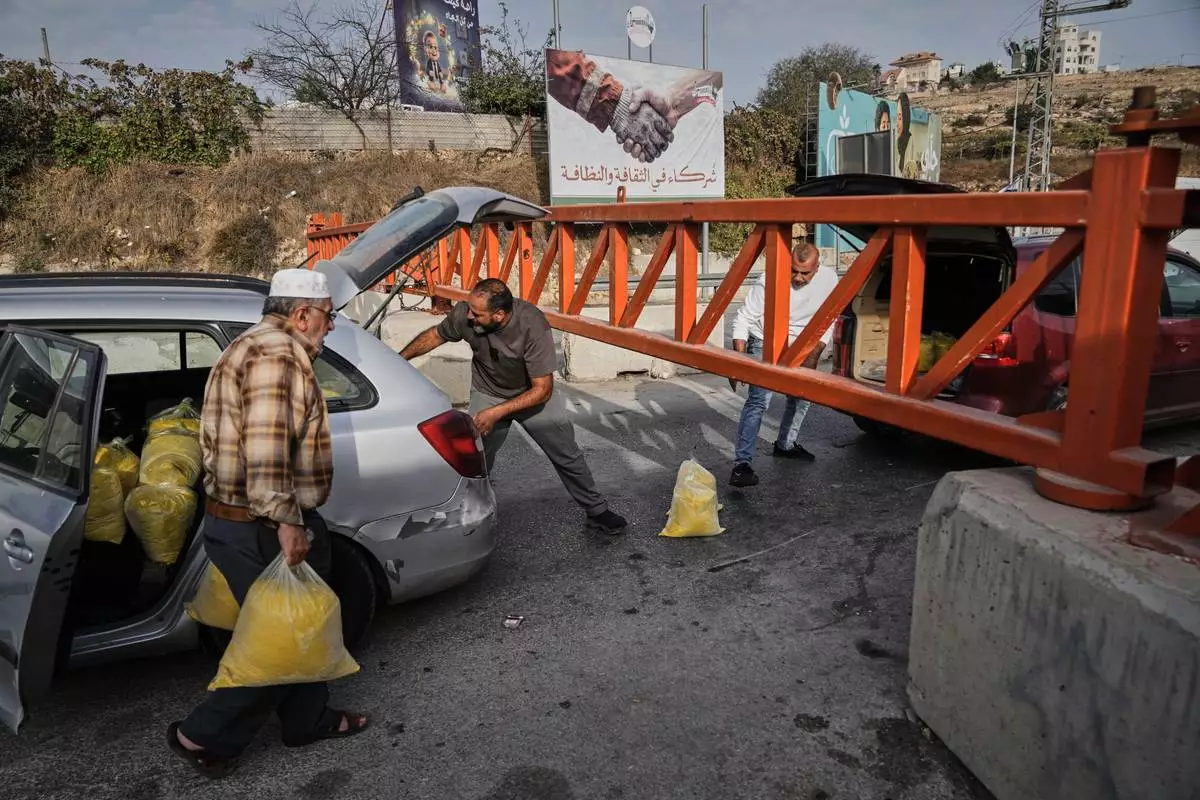
The operation forced some families to leave the city on foot. At some military gates, people passed sacks of flour and gas canisters through the gates, while an elderly man pushed his wife in a wheelchair through an opening beside one of them. Another family attempted to navigate the gate to access medical appointments.

Hebron municipal officials said families had been displaced from nearly 500 apartments in Deir Bahha and surrounding neighborhoods.

Six Israelis have been killed this year in attacks in the West Bank, which is experiencing a surge of violence. During the same period, 112 Palestinians have been killed, including the suspected gunmen, according to the Palestinian Health Ministry.

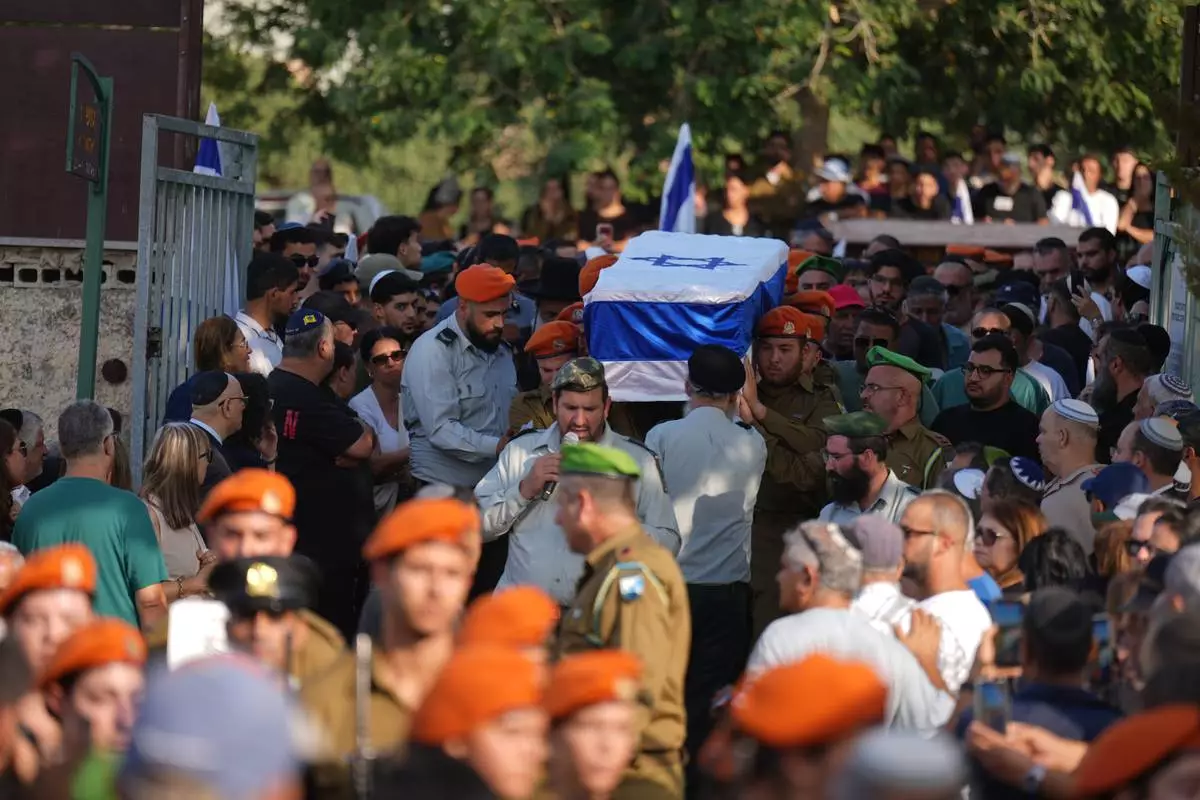
The attack sparked outrage in Israel, with Netanyahu traveling to the attack site and vowing to respond forcefully. On Sunday, hundreds of mourners attended the funeral in Hod Hasharon of Sgt. Yuval Shai Svilem, 20, one of the Israeli soldiers killed.

With the election approaching, Netanyahu is under pressure to demonstrate a strong show of force against Palestinian attackers to bolster his image for Israelis concerned with security.

Roughly 3 million Palestinians and 540,000 Israeli settlers live in the West Bank, which Israel occupied in the 1967 Mideast war. Hebron is one of its most tense cities and the only place where Jewish settlers live in the heart of a densely populated Palestinian area under Israeli military protection. The international community overwhelmingly considers all Israeli settlements illegal.

Associated Press writer Sam Metz in Hebron, West Bank, contributed to this report.

Israeli soldiers carry the casket of Sergeant Yuval Shai Svilem, who was killed in a Palestinian shooting attack during his funeral in Hod Hasharon, Israel, Sunday, Oct. 25, 2025. (AP Photo/Ariel Schalit)

Israeli soldiers carry the casket of Sergeant Yuval Shai Svilem, who was killed in a Palestinian shooting attack during his funeral in Hod Hasharon, Israel, Sunday, Oct. 25, 2025. (AP Photo/Ariel Schalit)

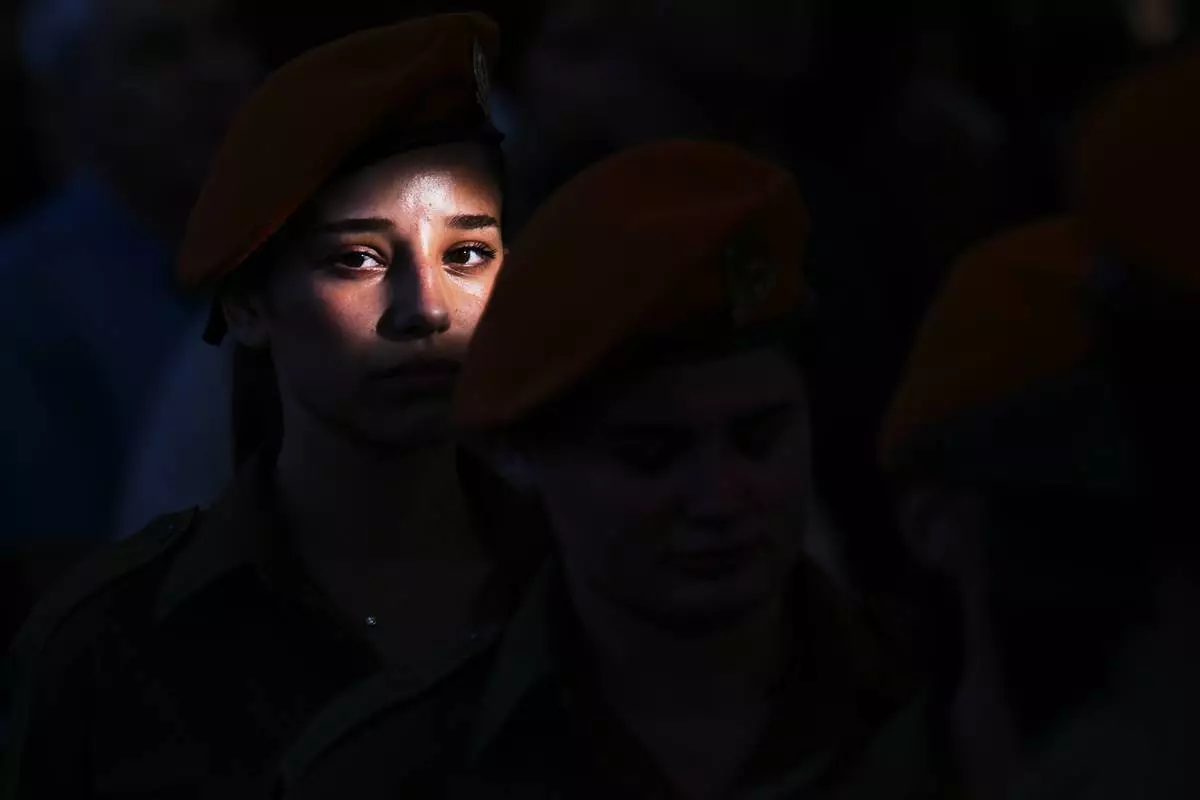
Israeli soldiers attend the funeral of Sergeant Yuval Shai Svilem, who was killed in a Palestinian shooting attack in Hod Hasharon, Israel, Sunday, Oct. 25, 2025. (AP Photo/Ariel Schalit)

Israeli soldiers attend the funeral of Sergeant Yuval Shai Svilem, who was killed in a Palestinian shooting attack in Hod Hasharon, Israel, Sunday, Oct. 25, 2025. (AP Photo/Ariel Schalit)

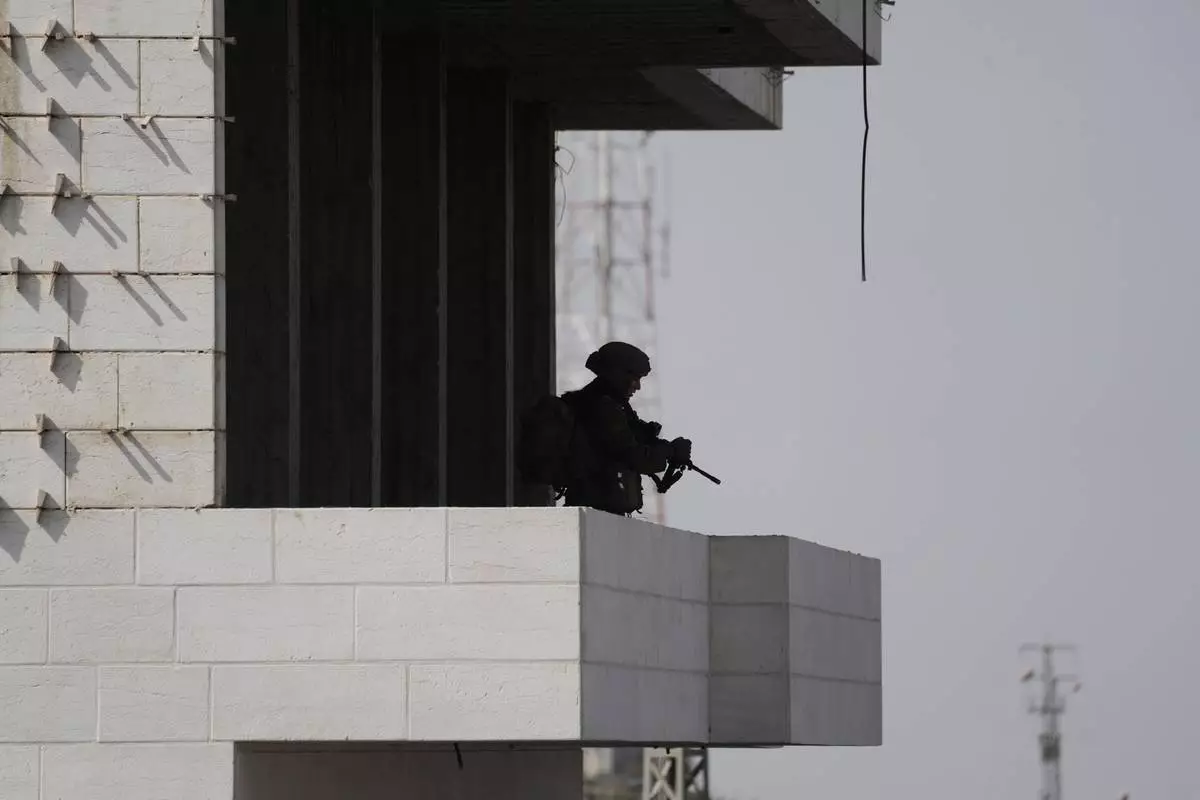
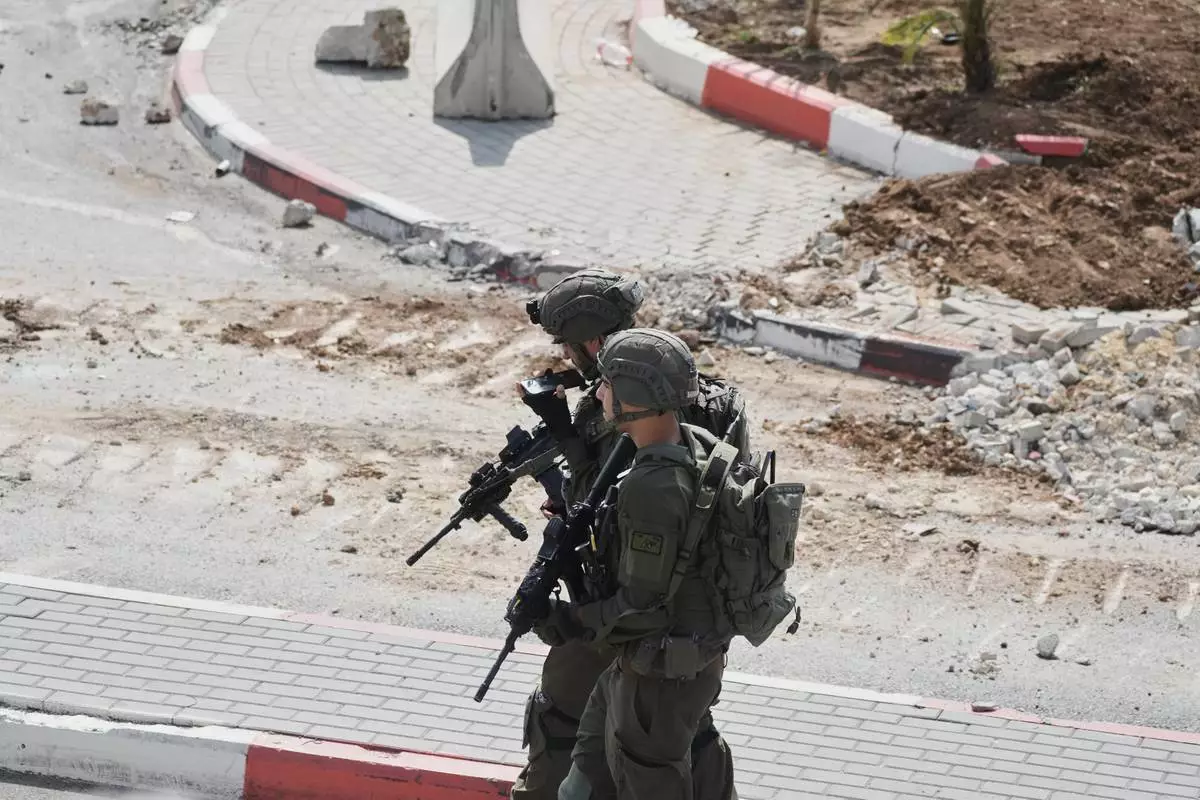
Israeli soldiers take up positions during an army operation in the West Bank city of Hebron Saturday, Oct. 24, 2026. A day after a Palestinian shooting attack in the area. (AP Photo/Mahmoud Illean)

Israeli soldiers take up positions during an army operation in the West Bank city of Hebron Saturday, Oct. 24, 2026. A day after a Palestinian shooting attack in the area. (AP Photo/Mahmoud Illean)

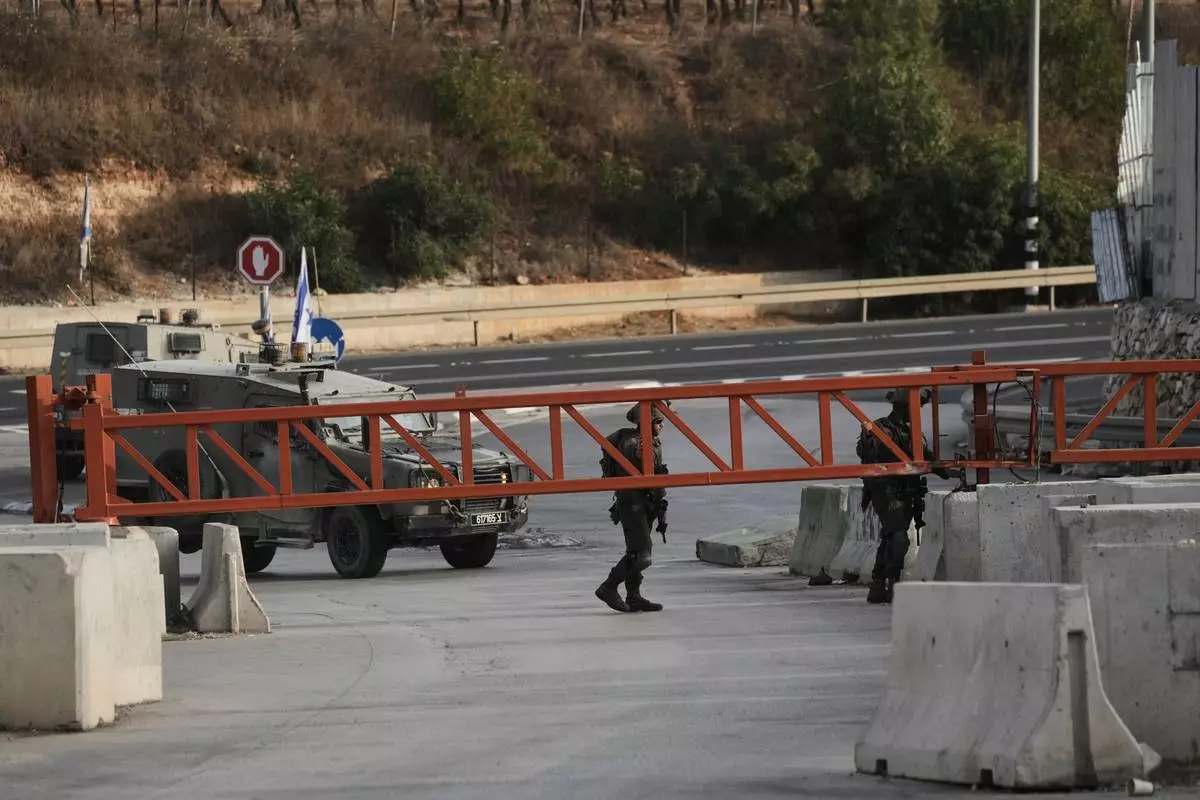
Israeli soldiers close a gate to vehicles during an army operation in Hebron, in the occupied West Bank, Saturday, Oct. 24, 2026, a day after a Palestinian shooting attack in the area. (AP Photo/Mahmoud Illean)

Israeli soldiers close a gate to vehicles during an army operation in Hebron, in the occupied West Bank, Saturday, Oct. 24, 2026, a day after a Palestinian shooting attack in the area. (AP Photo/Mahmoud Illean)

Israeli soldiers take up positions during an army operation in the West Bank city of Hebron Saturday, Oct. 24, 2026. A day after a Palestinian shooting attack in the area. (AP Photo/Mahmoud Illean)

Israeli soldiers take up positions during an army operation in the West Bank city of Hebron Saturday, Oct. 24, 2026. A day after a Palestinian shooting attack in the area. (AP Photo/Mahmoud Illean)

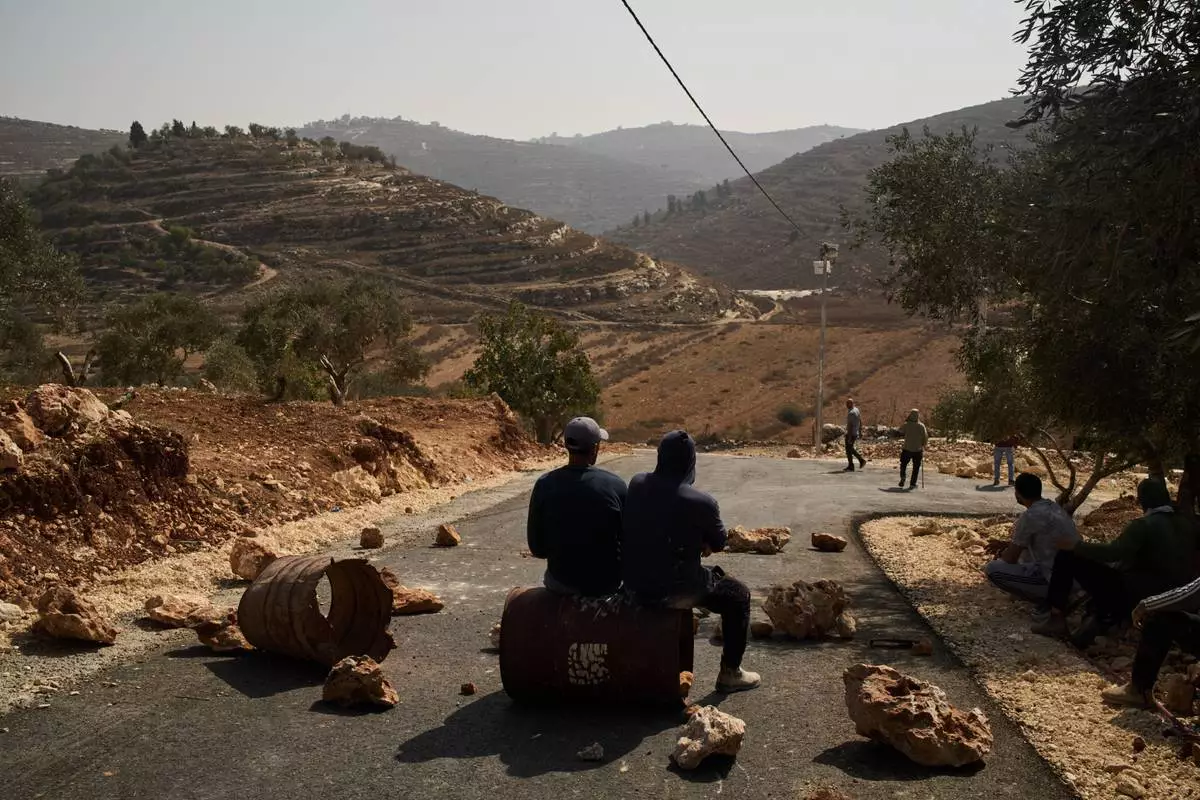
Palestinian men sit at a road, blocked in an effort to prevent Israeli settlers from entering the area, after settlers were spotted nearby in the West Bank town of Sinjil, Saturday, Oct. 24, 2026. (AP Photo/Leo Correa)

Palestinian men sit at a road, blocked in an effort to prevent Israeli settlers from entering the area, after settlers were spotted nearby in the West Bank town of Sinjil, Saturday, Oct. 24, 2026. (AP Photo/Leo Correa)

Palestinians transport bags of semolina past a military gate closed to vehicles during an Israeli army operation in Hebron, in the occupied West Bank, Saturday, Oct. 24, 2026, a day after a Palestinian shooting attack in the area. (AP Photo/Mahmoud Illean)

Palestinians transport bags of semolina past a military gate closed to vehicles during an Israeli army operation in Hebron, in the occupied West Bank, Saturday, Oct. 24, 2026, a day after a Palestinian shooting attack in the area. (AP Photo/Mahmoud Illean)

Recommended Articles