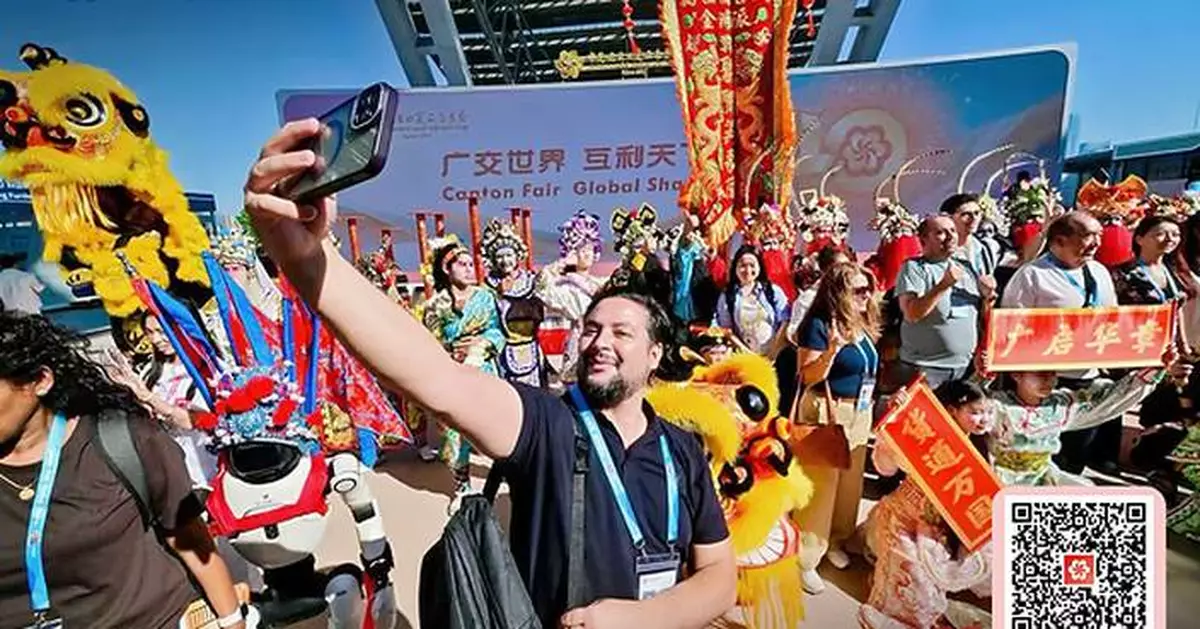
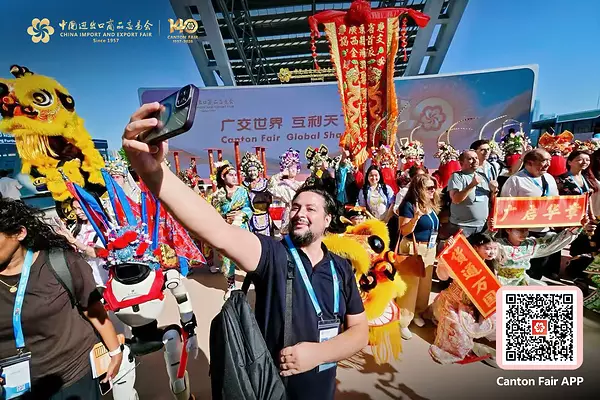
GUANGZHOU, China, Oct. 26, 2026 /PRNewswire/ -- The 140th Canton Fair has entered Phase 2 (October 23–27) with vibrant lion dances and Yingge dance performances welcoming exhibitors and buyers worldwide. As China's longest-running trade fair, it has evolved into a venue for cultural exchange, where people from different countries connect through shared experiences, building mutual understanding alongside commercial engagement.
Immersive Experiences Bridge Business and Culture
The fair has also expanded opportunities for intercultural exchange through a variety of programs organized for international buyers. At the Canton Fair Convention Center, a team of 25 traditional Chinese medicine experts provided cultural and wellness experiences, allowing buyers to explore acupuncture, herbal teas, nutritional therapy products and traditional therapeutic techniques.
Food has become another gateway to cultural understanding. The Canton Cuisine event transformed the fair into a celebration of Lingnan cuisine, culture and social interaction. Visitors sampled Cantonese favorites such as shrimp dumplings and siu mai, while a dedicated intangible cultural heritage zone featured 30 representative heritage projects, including Cantonese opera, Tongcao painting, olive-pit carving and traditional incense making. Buyers could also participate in hands-on activities ranging from pastry mold printing and Lingnan pressed-flower art to Cantonese tea culture experiences.
Chinese Culture Comes Alive in the Halls
Chinese martial arts are central to the fair's cultural showcase. During the opening ceremony of Phase 1, a representative inheritor of Foshan Wing Chun under the Ip Man lineage, demonstrated traditional kung fu alongside his students and exchanged techniques with international martial arts enthusiasts. The performance was presented alongside a humanoid robot, highlighting the intersection of cultural heritage and advanced technology.
Beyond performances, Chinese craftsmanship can be found within many exhibits. Products across categories including leather goods, jewelry, home décor and accessories incorporate traditional intangible cultural heritage techniques, demonstrating how centuries-old craftsmanship inspires contemporary design.
Meanwhile, a series of networking events continues to strengthen people-to-people connections among global participants. Activities such as the Canton Fair Global Cooperative Partners Carnival, Benelux Night and Canada Night have provided opportunities for buyers and exhibitors from different markets to connect beyond the exhibition floor.
Throughout the 140th Canton Fair, these cultural encounters demonstrate that international trade fairs can serve product marketplaces, as well as platforms for dialogue, friendship and deeper cross-cultural understanding.
For more convenient attendance, please click here for pre-registration:
https://buyer.cantonfair.org.cn/register/buyer/email?source_type=16
** This press release is distributed by PR Newswire through automated distribution system, for which the client assumes full responsibility. **
Canton Fair Expands Human-Centered Approach Through Shared Experiences, Culture and Dialogue
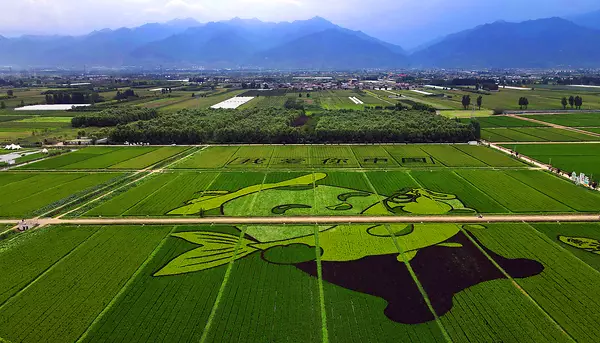
XI'AN, China, Oct. 26, 2026 /PRNewswire/ -- The northwestern Chinese city of Xi'an presented its work in smart farm machinery and digital crop monitoring, while proposing cooperation with partner cities abroad on joint research, machinery demonstrations and exchanges of agricultural technicians.
City agriculture officials laid out the proposals on Oct. 21 at a forum on technology and agriculture during the 2026 China International Friendship Cities Conference, held in Xi'an on Oct. 20-22.
Xi'an's agricultural technology development draws on collaboration among research institutes, equipment manufacturers and farms. A major area of focus is on small, smart machinery designed to operate on terrain and plots that are difficult to manage with conventional equipment, such as hillsides, loess tablelands, greenhouses, and small, fragmented fields.
More than 89.7% of plowing, sowing and harvesting of major crops in Xi'an is now mechanized, according to the Xi'an Municipal Bureau of Agriculture and Rural Affairs. The bureau also reported an agricultural science and technology progress contribution rate of more than 70%.
The city has also developed a smart agricultural monitoring platform that integrates satellite, aerial and ground-based sensing with the Internet of Things and AI. The platform monitors farmland conditions, soil moisture, crop growth and signs of pests and disease, enabling farmers to detect problems earlier. The city is also promoting smart drip irrigation systems that manage water and fertilizer delivery.
Currently, Xi'an has developed 10-billion-yuan ($1.4 billion) industry chains in dairy, vegetables and kiwifruit, and a 5-billion-yuan industry chain in grapes. To maintain quality across these industries, the city coordinates seed breeding, cultivation and processing, and uses smart testing and digital traceability systems to support quality control.
According to the introduction, Xi'an is also a national pilot city for whole-process quality control of high-quality specialty agricultural products. Its agricultural testing center is the only local body in China with five national authorizations for agricultural product testing.
The cooperation proposals build on Xi'an's existing global connections in agricultural research and trade. The city hosts the Shaanxi center of the China-New Zealand Belt-and-Road Joint Laboratory on Kiwifruit, a bilateral research partnership. Kiwifruit, pomegranates, flowers and other specialty agricultural products from the city reach 26 countries and regions, with some transported via the China-Europe Railway Express freight service.
The Xi'an Municipal Bureau of Agriculture and Rural Affairs said the city hoped to use the forum to deepen agricultural cooperation. Its proposals included sharing experience in smart agriculture and digital rural development, carrying out smart machinery demonstrations and joint research, and supporting two-way learning and exchanges among agricultural technicians.
The bureau also called for exploring mutual recognition of agricultural product standards, expanding trade and developing markets for green agricultural products. Cooperation would reflect each partner city's needs and circumstances, the bureau said.
The agriculture forum was one of four parallel forums at the conference, which drew more than 700 guests, including local government representatives from 61 countries. The other forums covered urban development, environmental protection and cultural heritage, with participants signing a series of friendship city and cooperation agreements.
Xi'an, the starting point of the ancient Silk Road, has 42 friendship cities in 35 countries and 73 friendly exchange cities in 44 countries. It has worked with partners on urban planning, heritage protection, resilience and technology through platforms including the Euro-Asia Economic Forum, United Cities and Local Governments, and the League of Historical Cities.
** This press release is distributed by PR Newswire through automated distribution system, for which the client assumes full responsibility. **
Xi'an Highlights Smart Agriculture and Looks to Expand International Cooperation