BOSTON--(BUSINESS WIRE)--Oct 26, 2026--
Teledyne FLIR Defense, part of Teledyne Technologies Incorporated (NYSE:TDY), announced it has been awarded a $48 million contract by the U.S. Army to deliver Nuclear, Biological and Chemical Reconnaissance Vehicle (NBCRV) Sensor Suite Upgrades (SSU) to the Republic of Bulgaria for its new fleet of Stryker vehicles.
This press release features multimedia. View the full release here: https://www.businesswire.com/news/home/20261026441933/en/
The contract was awarded by the U.S. Army Contracting Command at Aberdeen Proving Ground, Md., as part of a Foreign Military Sales agreement to support Bulgaria’s military modernization. Bulgaria is acquiring nearly 200 U.S.-made Stryker armored vehicles to replace its Soviet-era tactical vehicle fleet and to enhance interoperability with NATO forces. It will outfit 10 of the Strykers with NBCRV SSU systems.
Teledyne FLIR Defense is the lead integrator in modernizing the Army’s NBCRV system with improved and autonomous chemical, biological, radiological and nuclear (CBRN) sensors. Following successful development and testing, the company began delivering the new NBCRV sensor suites to Army units in 2025. The system provides standoff detection of CBRN threats, reducing risks to troops by providing decision-quality data to commanders and optimizing freedom of maneuver during combat operations.
In January, the company announced it had won a contract worth up to $32 million to deliver and integrate advanced thermal imaging sights and radars for Bulgaria’s Stryker fleet. That effort will give vehicle crews enhanced situational awareness, including 360-degree visibility and long-range threat detection.
“The upgraded Stryker vehicles will provide Bulgaria with the most advanced mounted CBRN reconnaissance capabilities in Europe,” said Dr. JihFen Lei, President of Teledyne Defense and Aerospace Group and Senior Vice President of Teledyne Technologies. “Together, our two Stryker modernization efforts highlight the breadth of sensor solutions Teledyne FLIR can deliver to NATO allies and partners, helping warfighters detect, identify and respond effectively to an array of battlefield threats.
“We’re proud to support this U.S. Army-led program and look forward to working closely with end-users in Bulgaria during integration,” Lei added.
Since 2024, the company has been awarded contract vehicles worth more than $240 million to support the Sensor Suite upgrade program.
Among other third-party solutions, the Sensor Suite features the FLIR Defense R80D SkyRaider™ drone, integrated with its MUVE™ B330 biological detection payload designed for small unmanned aerial systems. A Teledyne FLIR-developed command and control system combines all devices and platforms with sensor fusion and automation features that reduce cognitive burden on users and enhance decision-making.
Work on the Bulgaria Stryker program is expected to continue through 2028 across multiple Teledyne FLIR facilities in the U.S. The NBCRV sensor suites will be integrated on-site after the vehicles are delivered to Bulgaria.
To learn more about Teledyne FLIR Defense’s CBRN solutions, visit us online.
About Teledyne FLIR Defense
Teledyne FLIR Defense has been providing advanced, mission-critical technology and systems for more than 45 years. Our products are on the frontlines of the world’s most pressing military, security and public safety challenges. As a global leader in thermal imaging, we design and build sophisticated surveillance sensors for air, land and maritime use. We develop the most rugged, trusted unmanned air and ground platforms, as well as intelligent sensing devices used to detect chemicals, biological agents, radiation and explosives. At Teledyne FLIR Defense we bring together this expertise to deliver solutions that enable critical decisions and keep our world safe – from any threat, anywhere. To learn more, visit us online or follow @flir.
About Teledyne Technologies
Teledyne Technologies is a leading provider of sophisticated digital imaging products and software, instrumentation, aerospace and defense electronics, and engineered systems. Teledyne's operations are primarily located in the United States, the United Kingdom, Canada, and Western and Northern Europe. For more information, visit Teledyne's website at www.teledyne.com.
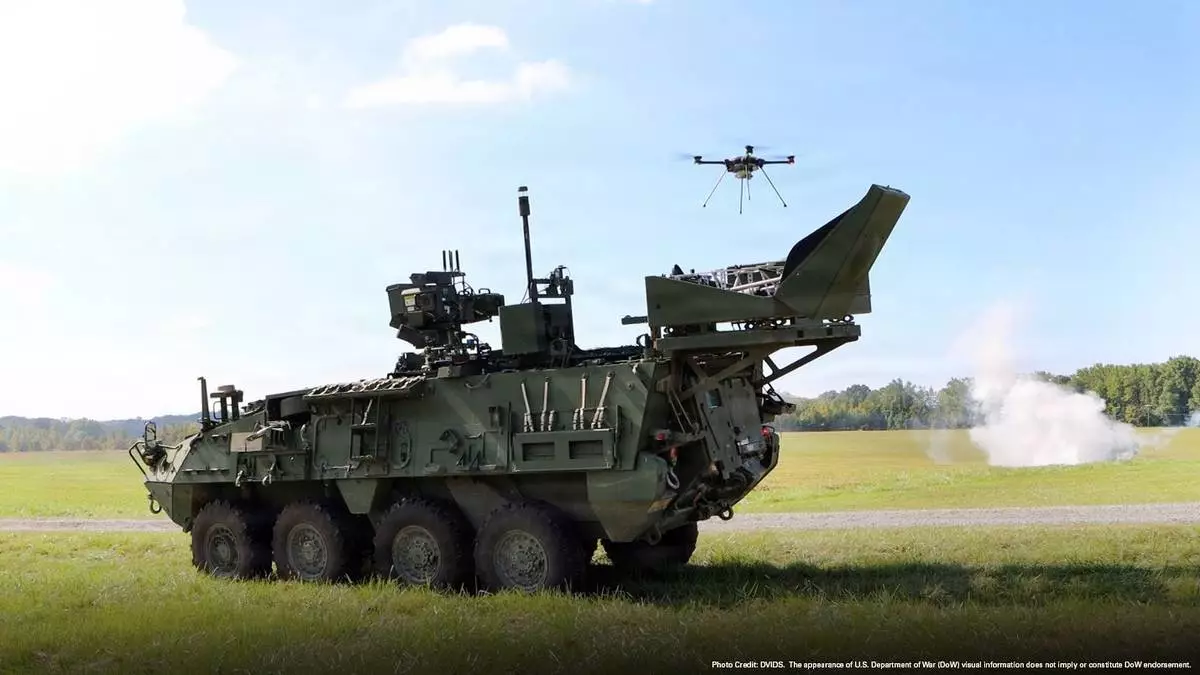
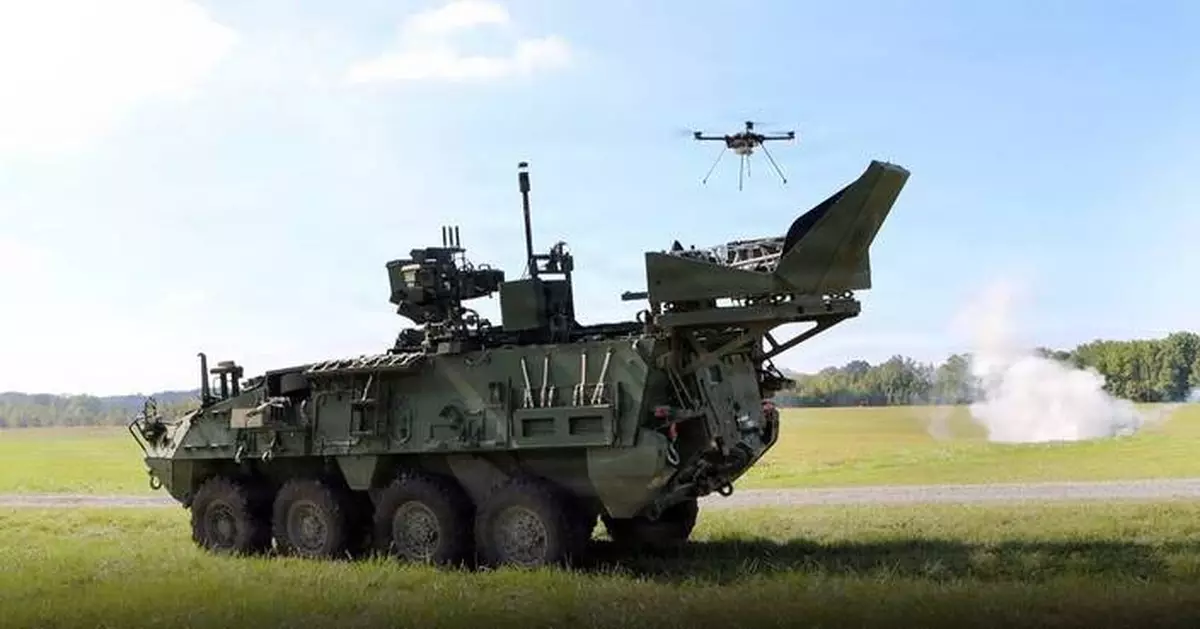
A Stryker Nuclear, Biological and Chemical Reconnaissance Vehicle (NBCRV) Sensor Suite Upgrade (SSU) and a dismounted CBRN Unmanned Aircraft System (UAS). Photo Credit: DVIDS. The appearance of U.S. Department of War (DoW) visual information does not imply or constitute DoW endorsement.
JALUD, West Bank (AP) — Israel's elections Tuesday could mark the end of Prime Minister Benjamin Netanyahu's decades-long political career.
But his legacy in the Israeli-occupied West Bank — of massive settlement expansion, the displacement of tens of thousands of Palestinians and the empowerment of armed settler extremists — will likely endure, even if his opponents seek to rein it in.
Israelis are deeply divided over Netanyahu's leadership and moral character, but they largely support settlement expansion and are opposed to a Palestinian state. So while Netanyahu's opponents have vowed to crack down on settler violence and remove the most contentious outposts, they are mostly against a two-state solution, seen internationally as the only realistic way to resolve the conflict.
“There shouldn’t be any illusions,” said Mairav Zonszein, senior Israel analyst at the International Crisis Group.
“At best, (a new government) would be able to slow down the extremely crazy acceleration that we’ve seen in the last four years of every aspect of Israel’s aggression in the occupied territories and inside Israel itself.”
One legacy of Netanyahu’s nearly unbroken 17-year rule — the longest of any Israeli leader — is that large groups of armed settlers now routinely defy the Israeli military as they rampage through Palestinian communities, drive people from their homes and seize ever larger swaths of their land.
Hamas' Oct. 7, 2023, attack out of Gaza turbocharged the process. Netanyahu's opponents could bring in more troops and authorize stricter measures, but the genie may already be out of the bottle.
Netanyahu's government has distributed thousands of firearms to the settlers, who have allies in the military and security forces. Some extremist settlers have become like sheriffs — making arrests, killing Palestinians they say posed a threat, summoning security forces and driving Palestinian families from their homes.
The Palestinian Tubasi family was forced out in July after settlers besieged their hilltop home in the West Bank village of Jalud for 19 days. The settlers cut off their water access and their electricity, and threatened to “barbecue” them if they didn’t leave, said Mahmoud Tubasi, 60, the patriarch.
An Israeli court ordered the military to bring the family back, but that hasn't happened. Troops aborted their latest mission soon after it began, when a mob of over 150 armed settlers quickly assembled, scaled the walls of the home and set a car on fire.
Troops threw Tubasi and his family into an armored jeep and drove them away as settlers torched the place. They now live in relatives' houses in the valley below their gutted and blackened home, around which settlers still roam.
Israel’s military did not respond to a request for comment.
“If they wanted to evacuate them, of course, 100%, they can do that,” Tubasi said. “This is an army that fights in Lebanon, Gaza and in Iran — they can’t control 150 or 200 settlers?”
Under Netanyahu, settlers have established over 250 rustic camps across the territory, focusing particularly on areas where Palestinian herding communities have dwelled for decades.
The outposts allow the settlers to effectively run Palestinians off vast rural areas by attacking shepherds, taking over water resources and grazing their own herds, all under the eye of Israeli troops.
Dror Etkes, a researcher with an Israeli anti-settlement group, says the outposts have allowed the settlers to seize effective control of around a fifth of the West Bank. Israel captured the territory, along with Gaza and east Jerusalem, in the 1967 Mideast war. The Palestinians want all three territories for their future state.
Since 2023, the strategy has forced at least 127 Palestinian herding communities off their land, according to data gathered by Etkes' organization, known as Kerem Navot, and B'Tselem, another Israeli anti-settlement group.
The departures have cleared nearly the entire eastern flank of the West Bank, along the border with Jordan, of Palestinians. The settlers' explicit goal is to prevent the establishment of a viable Palestinian state.
Netanyahu’s opponents say they will go after the most violent settlers and dismantle outposts — which are illegal under Israeli law. But they will not evacuate the over 100 new settlements Netanyahu's government legalized, including 44 that were formerly outposts. Nor will they remove settlements dating back decades, many of which now resemble fully developed suburbs.
Most of the international community views all Israeli settlements as illegal and an obstacle to a two-state solution. Israel views the West Bank as the biblical and historical heartland of the Jewish people and says its future status should be decided by negotiations — which have not been held in over a decade.
Even if some outposts are removed, many Palestinians seeking to return would find their homes burned and looted, and would continue to face threats from nearby settlers.
“The story is over. There will be no massive dismantlement of settlement,” said Etkes. “It’s now a full and prouder-than-ever apartheid regime.”
Amnesty International and other major rights groups accused Israel of the international crime of apartheid even before the Oct. 7 attack and its aftermath. Israel denies the allegation.
The politician most likely to replace Netanyahu as prime minister is retired general Gadi Eisenkot, a political centrist. He hopes to form a majority coalition with three other parties spanning Israel's political spectrum and without Arab-led parties advocating a two-state solution.
Beth Oppenheim, an Israel analyst for the European Council on Foreign Relations, said the opposition has “struggled to formulate a convincing alternative" to the right's new security strategy of “aggressively pre-empting threats, maintaining complete freedom of operation and imposing buffer zones.”
Palestinian attacks, like a shooting on Friday that killed two Israeli soldiers, and efforts on the right to cast the Israeli left as enemy sympathizers, have taken their toll. “The net effect is that talk of ‘peace’ and compromise has become politically toxic,” Oppenheim said.
Eisenkot does not support a Palestinian state but is open to limited self-rule in the 40% of the West Bank currently administered by the Palestinian Authority under agreements reached in the 1990s. He would allow settlement growth in the other 60% of the territory, which is under direct Israeli military rule.
He has also vowed to empower Israeli troops and paramilitary Border Police to crack down on settler violence.
Eisenkot “is interested in lowering the friction in the West Bank and interested in definitely lowering the sanctions and the intention for sanctions by European countries,” Zonszein said. “He’ll do kind of the minimum necessary to get the maximum effect.”
Eisenkot's prospective allies include left-wing politicians who oppose settlements and have favored a two-state solution, but they have agreed to set those positions aside to form a coalition to oust Netanyahu.
Israeli leaders have long balanced their ambitions in the occupied territories with demands from Washington aimed at resolving the conflict. But they are unlikely to face any significant pressure from U.S. President Donald Trump, who endorsed Netanyahu and has long backed his policies.
Krauss reported from Ottawa, Ontario.
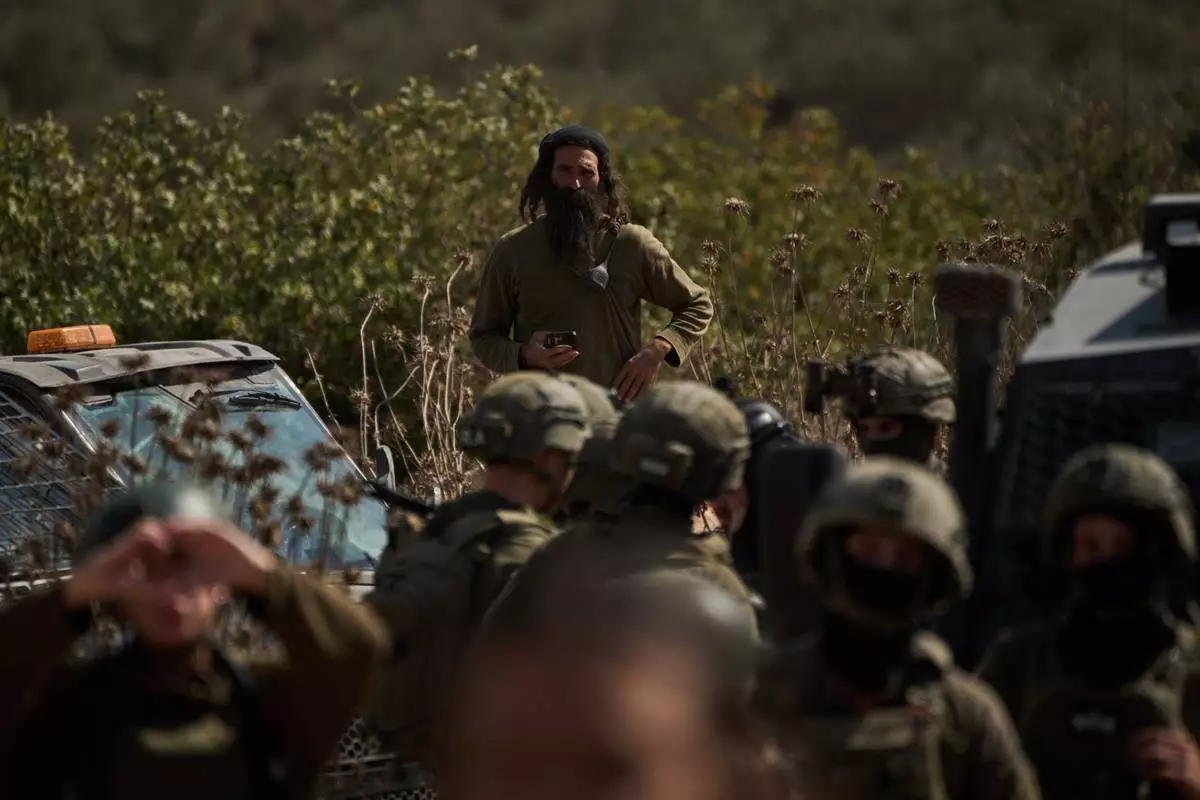
FILE - An Israeli settler overlooks members of Israeli forces blocking a road preventing Palestinians from reaching groves to harvest olives in the West Bank town of Turmus Ayya, Oct. 21, 2026. (AP Photo/Leo Correa, File)
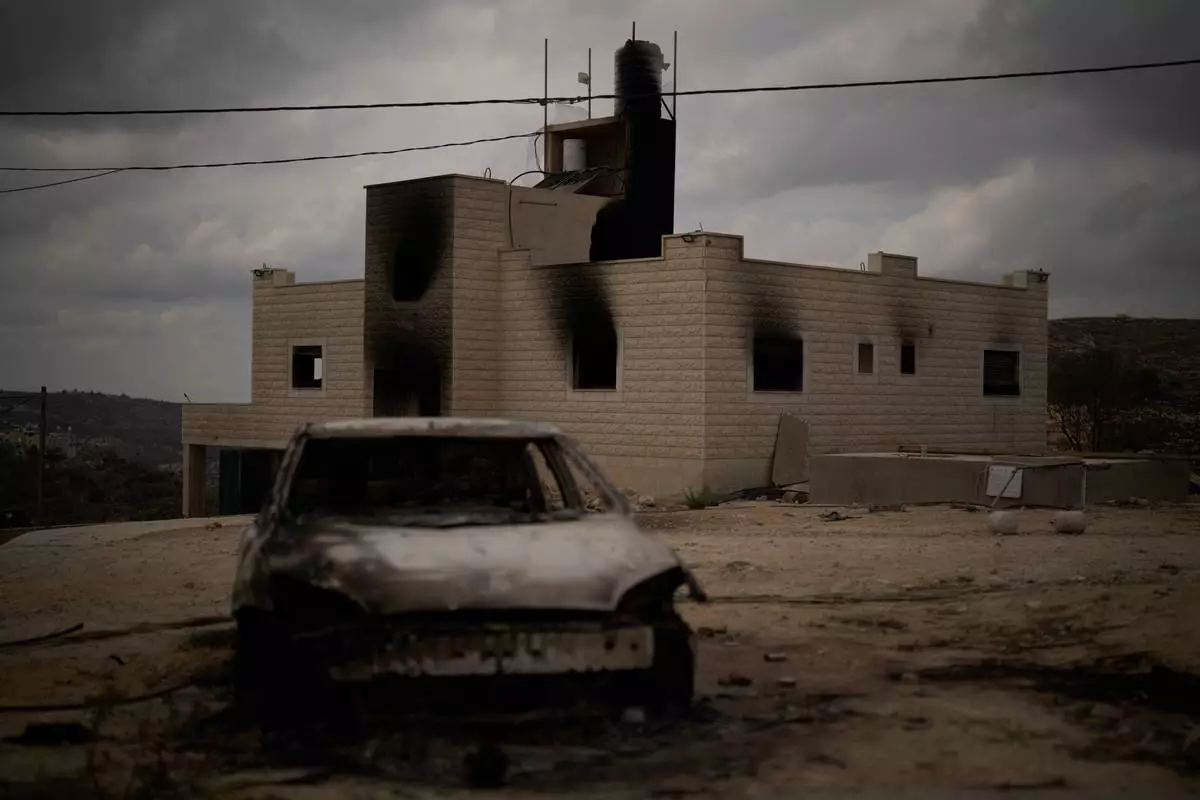
FILE - A burnt car is seen in front of one of the two Palestinian houses belonging to the Tubasi family, which were burned in the West Bank village of Jalud, Sept. 29, 2026, following an overnight attack by Israeli settlers. (AP Photo/Leo Correa, File)
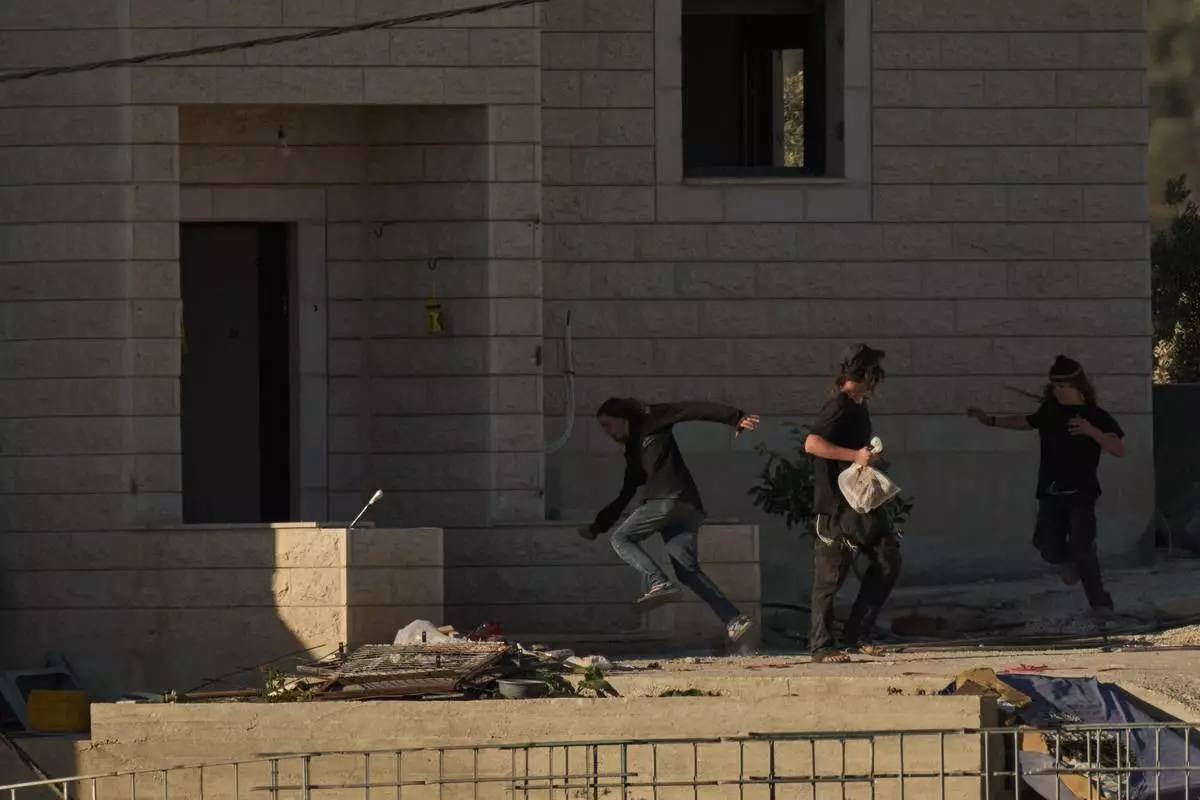
FILE - Israeli settlers are seen at one of the Palestinian houses belonging to the Tubasi family after they took it over in the West Bank village of Jalud, Aug. 25, 2026. (AP Photo/Leo Correa, File)
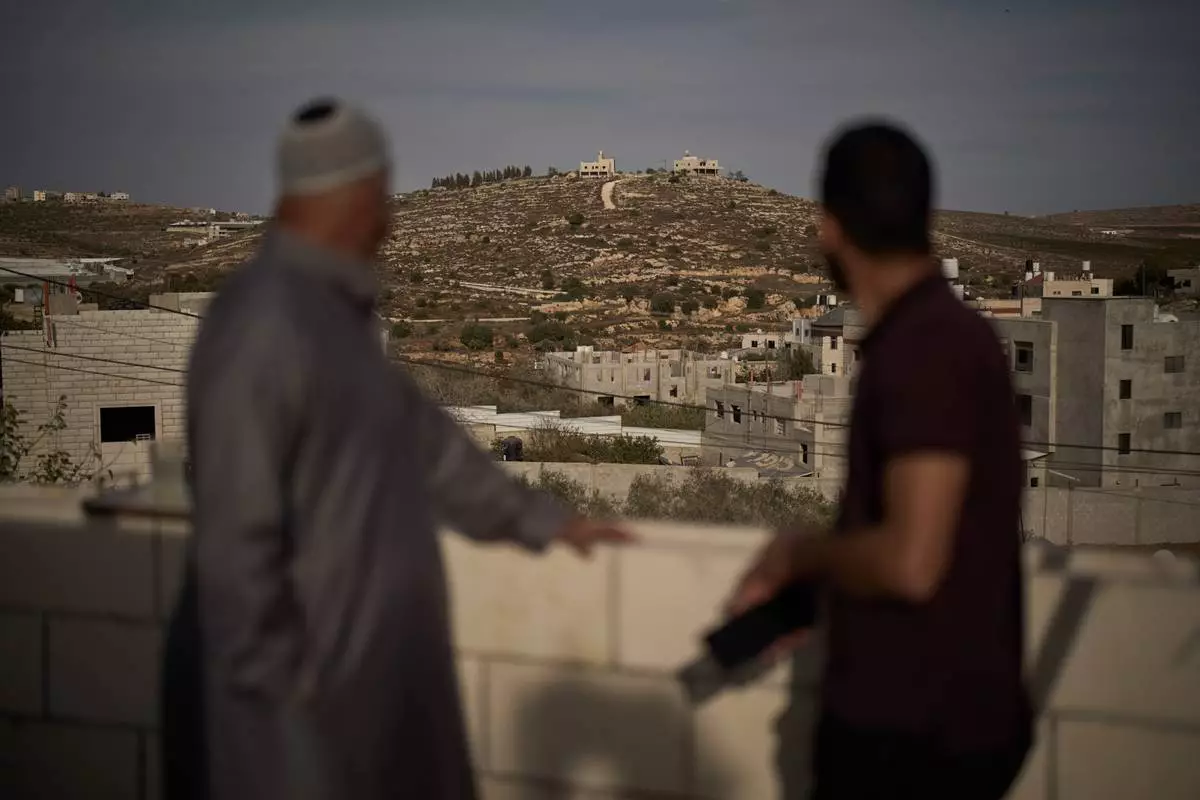
Mahmoud Tubasi, left, and his son Wael, over look their family's houses, which were burned by Israeli settlers in the West Bank village of Jalud, Tuesday, Oct. 20, 2026. (AP Photo/Leo Correa)
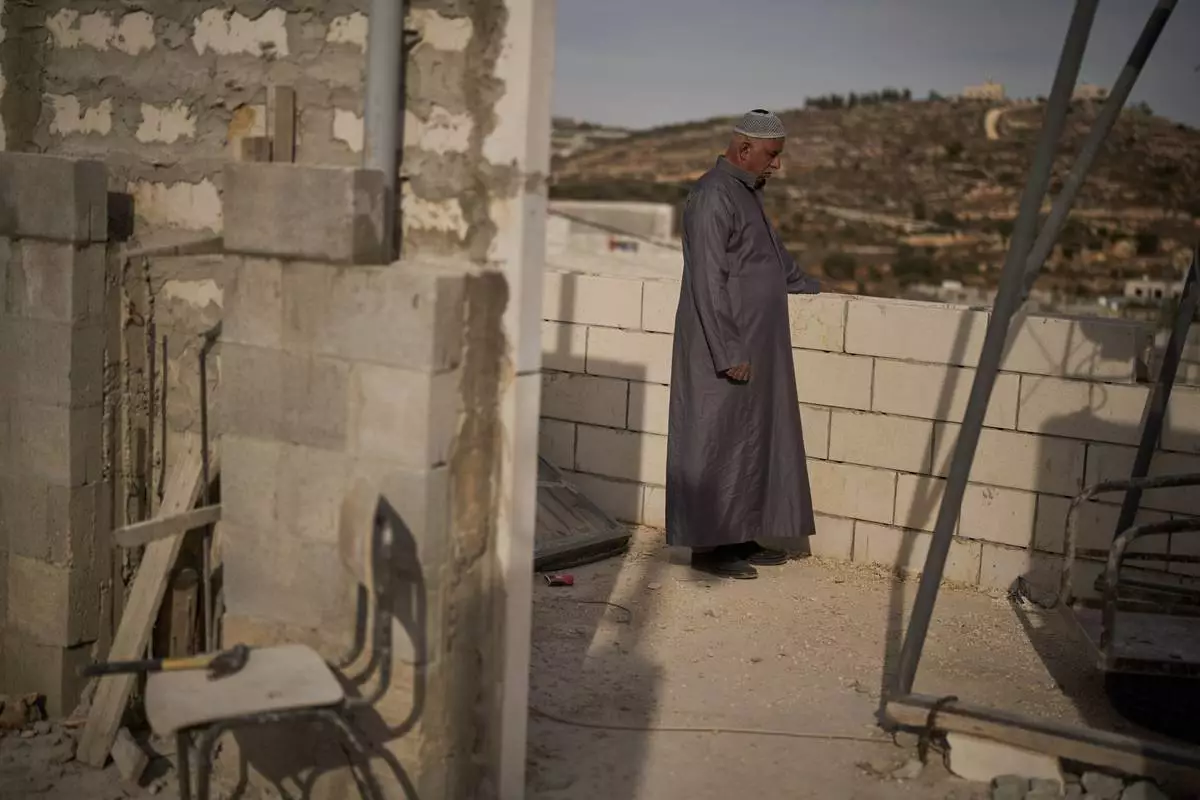
Mahmoud Tubasi stands on a rooftop near his two family's houses, which were burned by Israeli settlers in the West Bank village of Jalud, Tuesday, Oct. 20, 2026. (AP Photo/Leo Correa)