TUTUBUKA, Suriname (AP) — Deep in Suriname’s rainforest, a group of Saamaka men hacking their way up a forested mountain discovered an abandoned excavator and logging camps in an area they believed should have remained untouched.
The discovery highlights growing threats to one of the world’s most heavily forested countries, where roads, logging and gold mining are pushing deeper into largely intact rainforest.
Click to Gallery
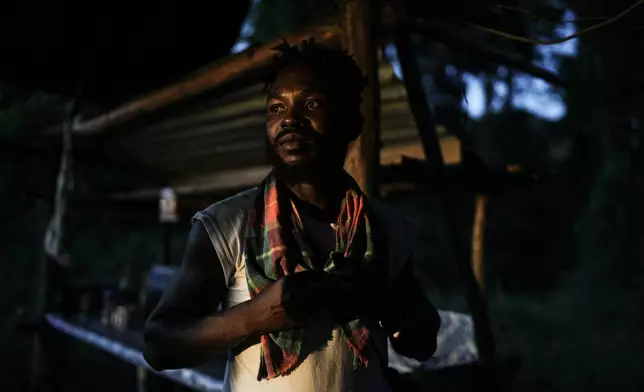
Navaldo Vola, a member of the Saamaka community pauses during an interview in Ebbatop, Suriname, Saturday, Sept. 26, 2026. (AP Photo/Ivan Valencia)
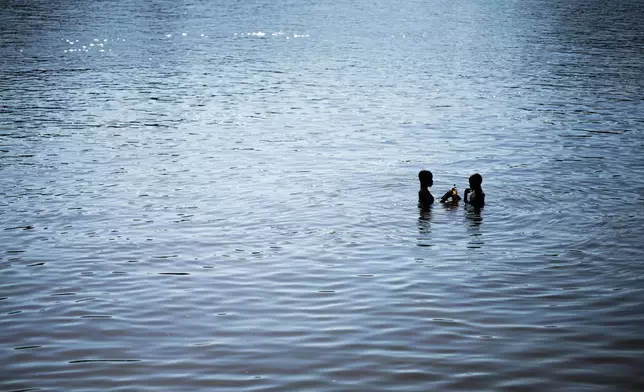
Two children take a bath in the morning in the Suriname River near Nieuw Aurora, Suriname, Wednesday, Sept. 30, 2026. (AP Photo/Ivan Valencia)
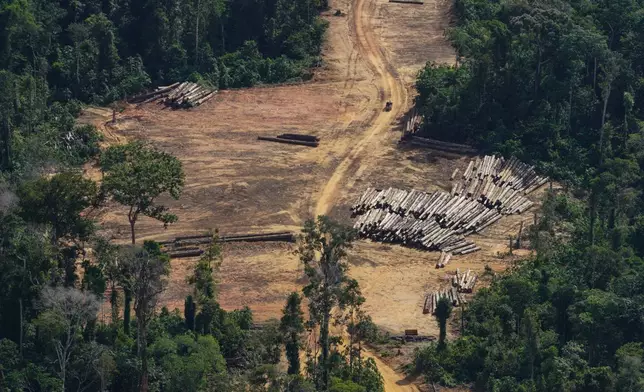
An illegal logging camp is visible in Saamaka territory of the Amazon rainforest in Suriname, Wednesday, Sept. 30, 2026. (AP Photo/Ivan Valencia)
The Suriname River flows in the Saamaka territory, near Nieuw Aurora, Suriname, Wednesday, Sept. 30, 2026. (AP Photo/Ivan Valencia)
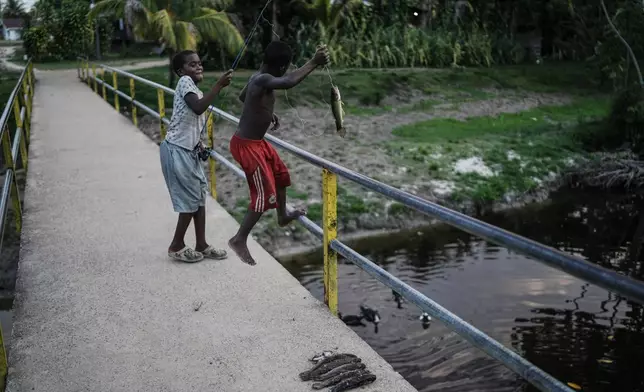
Children fish on a bridge in Nieuw Aurora, Suriname, Monday, Sept. 28, 2026. (AP Photo/Ivan Valencia)
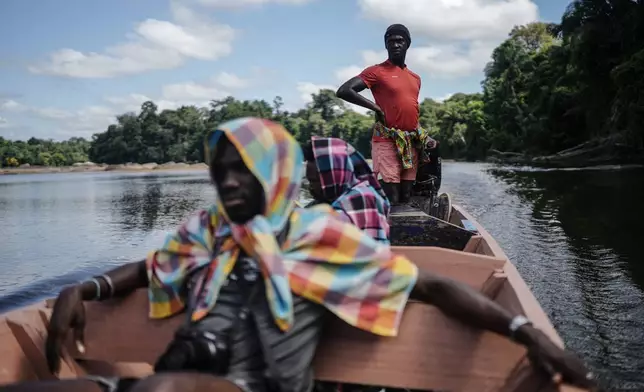
A boat transports local people on the Suriname River near Nieuw Aurora, Suriname, Monday, Sept. 28, 2026. (AP Photo/Ivan Valencia)
An illegal mining camp is visible in the Saamaka territory of the Amazon rainforest in Suriname, Wednesday, Sept. 30, 2026. (AP Photo/Ivan Valencia)
Saamaka communities are fighting back with satellite images, GPS mapping and forest patrols, documenting areas they have protected for generations in hopes of securing government recognition of their traditional forest management system.
The Associated Press accompanied community patrols and a helicopter flyover to see how the Saamaka are responding to the incursions.
Here are takeaways from AP’s reporting:
Suriname, a small South American country of about 650,000 people, remains roughly 93% forested. Its forests absorb more greenhouse gases than the country emits, making it one of the world’s few carbon-negative countries.
But expanding roads are opening previously inaccessible areas to logging and gold mining. Tribal territories have lost nearly 154,000 hectares (380,500 acres) of forest since 2001, roughly twice the size of New York City.
During a helicopter flyover, the AP witnessed new roads and clearings pushing into largely intact forest. The damage was less extensive than in parts of neighboring Amazon countries, but offered signs of expanding development in Suriname’s interior.
For generations, Saamaka clans have governed how their forests are used through traditional agreements, setting aside areas for farming while protecting others for their spiritual, cultural or historical importance.
Now, communities are mapping those traditionally protected areas under an initiative called Apaki, named after a container made from dried calabash fruit traditionally used to preserve food. Just as the container keeps food safe, the initiative aims to safeguard the forest for future generations and strengthen the case for government recognition of their traditional forest management system.
Satellite images help identify suspicious clearings and roads, while GPS mapping, forest patrols and helicopter flyovers allow communities to document incursions on the ground. Young people are also being trained to collect evidence that can support complaints and legal action.
The aim is to document a forest management system that has existed for generations and strengthen the case for its formal recognition by the government.
In 2007, the Inter-American Court of Human Rights ordered Suriname to recognize the Saamaka’s collective land rights after ruling that the government had violated their property rights by granting logging and mining concessions on their traditional territory.
Nearly two decades later, Saamaka leaders say key parts of the ruling remain unimplemented, leaving communities without the legal authority to control development on their land.
John Goedschalk, an adviser to Suriname’s president, said the government is updating its legal framework to allow community-protected areas to be formally established. He also said the president had imposed a moratorium on new gold mining concessions and extensions.
But defending the forest carries risks. Hugo Jabini, managing director of the Association of Saamaka Communities, said he received a death threat earlier this year after communities challenged a mining concession near a protected forest area.
For Navaldo Vola, 31, who helped lead the forest patrol, the fight is about preserving the forest for future generations.
Follow Steven Grattan on Instagram: @steven.grattan.
The Associated Press’ climate and environmental coverage receives financial support from multiple private foundations. AP is solely responsible for all content. Find AP’s standards for working with philanthropies, a list of supporters and funded coverage areas at AP.org.
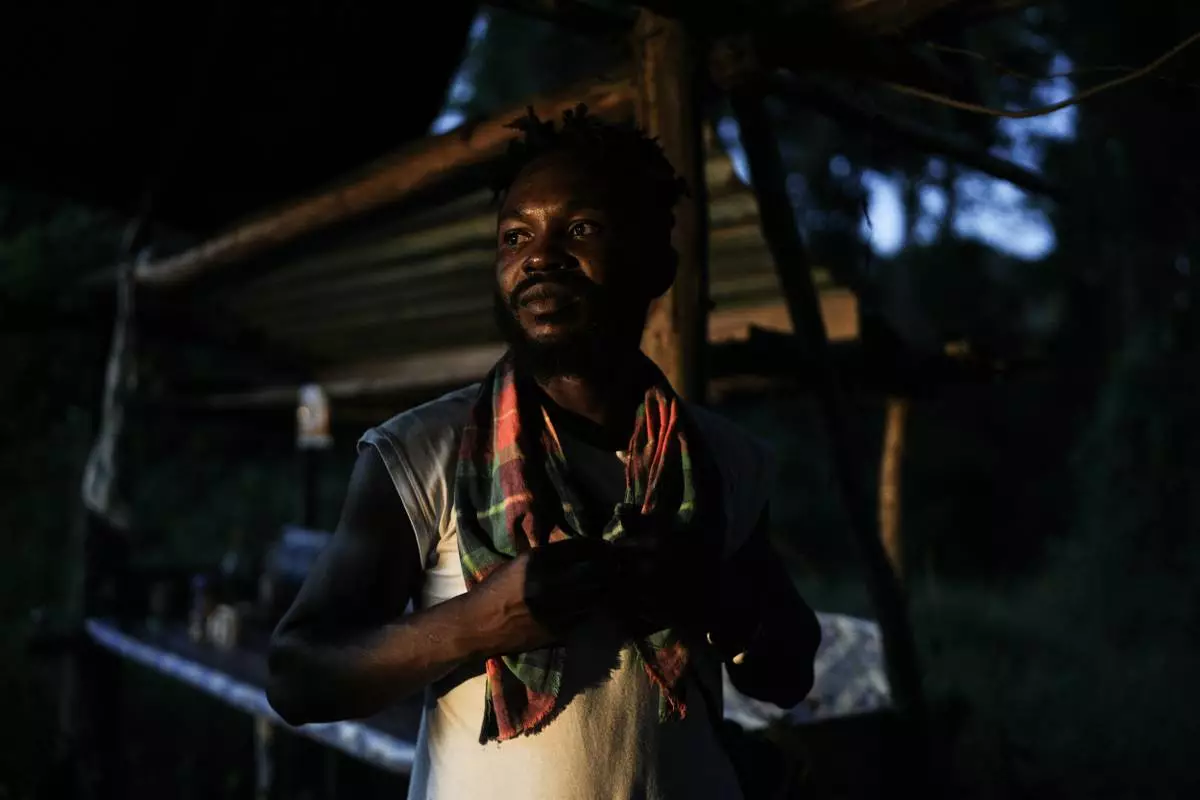
Navaldo Vola, a member of the Saamaka community pauses during an interview in Ebbatop, Suriname, Saturday, Sept. 26, 2026. (AP Photo/Ivan Valencia)

Two children take a bath in the morning in the Suriname River near Nieuw Aurora, Suriname, Wednesday, Sept. 30, 2026. (AP Photo/Ivan Valencia)
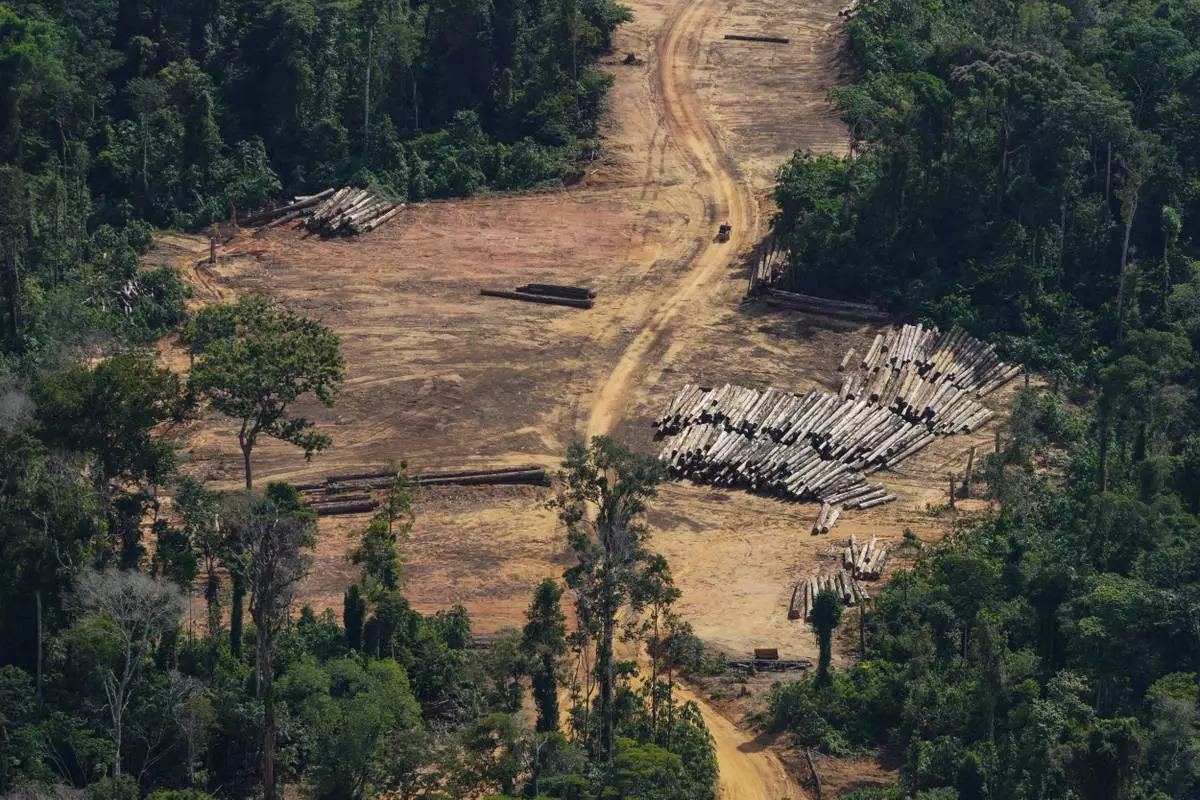
An illegal logging camp is visible in Saamaka territory of the Amazon rainforest in Suriname, Wednesday, Sept. 30, 2026. (AP Photo/Ivan Valencia)

The Suriname River flows in the Saamaka territory, near Nieuw Aurora, Suriname, Wednesday, Sept. 30, 2026. (AP Photo/Ivan Valencia)
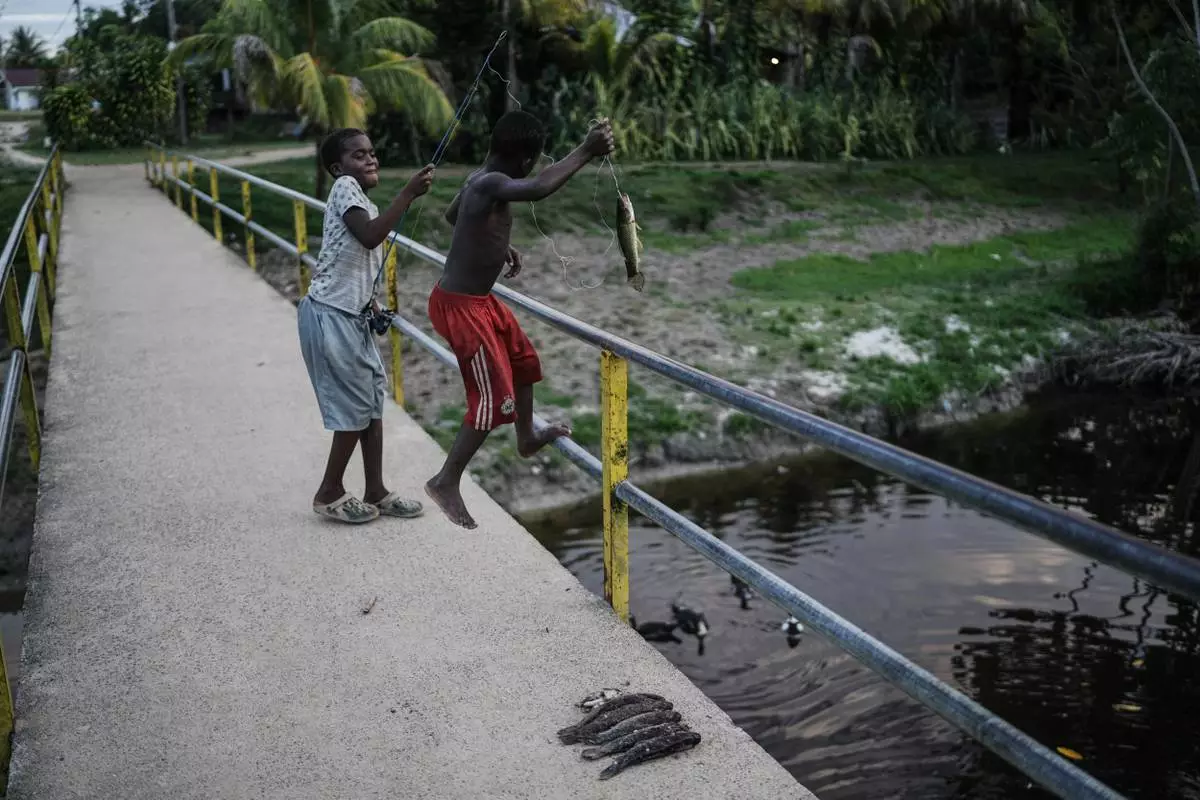
Children fish on a bridge in Nieuw Aurora, Suriname, Monday, Sept. 28, 2026. (AP Photo/Ivan Valencia)
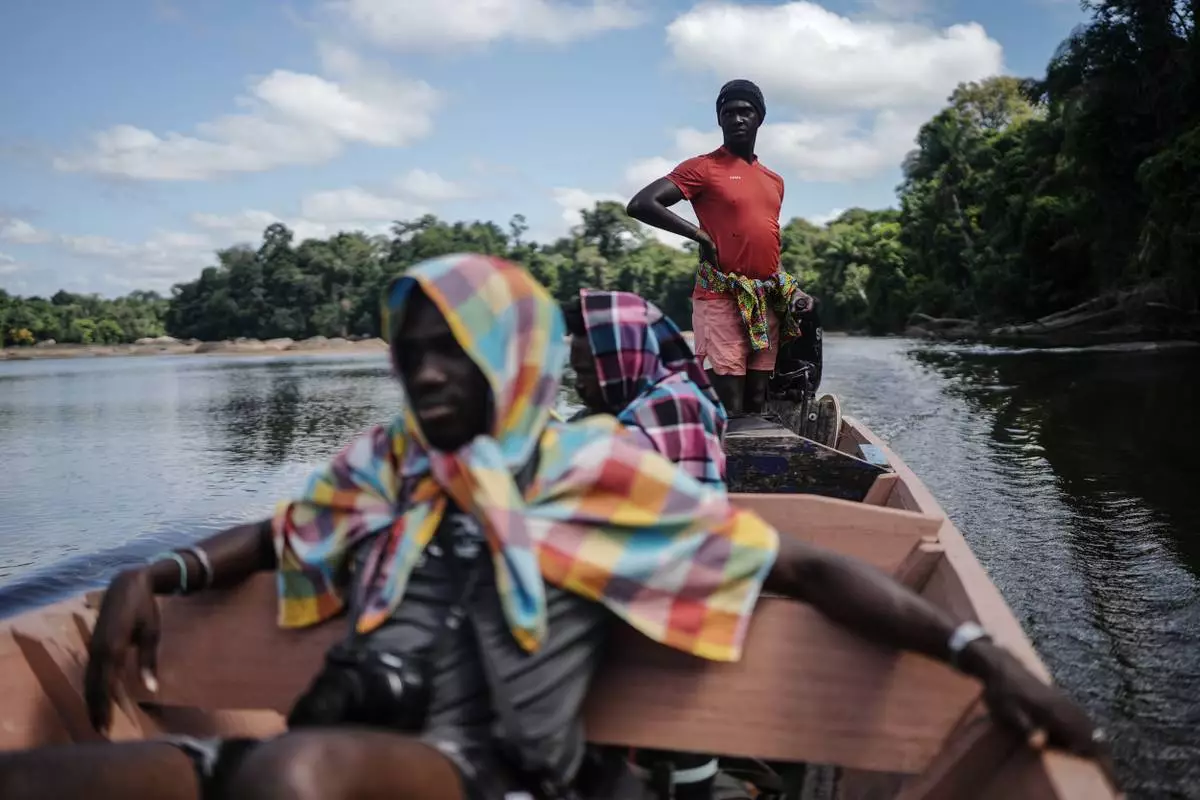
A boat transports local people on the Suriname River near Nieuw Aurora, Suriname, Monday, Sept. 28, 2026. (AP Photo/Ivan Valencia)

An illegal mining camp is visible in the Saamaka territory of the Amazon rainforest in Suriname, Wednesday, Sept. 30, 2026. (AP Photo/Ivan Valencia)
SIOUX CITY, Iowa (AP) — Senate Majority Leader John Thune says he wouldn't be offended if some Republicans didn't want to campaign with him. He knows that he's taken intense criticism from the party's base — and from President Donald Trump — for his chamber's inability to pass voter legislation this year.
But Republican candidates in marquee Senate races have welcomed Thune's help as he’s traveled around the country in the weeks before the midterm elections, scrambling to save his majority.
That includes Rep. Ashley Hinson in this deep red corner of Iowa, a state that Republicans couldn’t have envisioned as a tossup race a year ago. Hinson is locked in a tight contest against Democrat Josh Turek to replace retiring Republican Sen. Joni Ernst.
Hinson said she was grateful for Thune’s visit as the two spent Friday campaigning together in the northwest part of the state — a luncheon at the Sioux City chamber of commerce, a tour of the Iowa Air National Guard’s refueling wing, a roundtable with local business owners and meet-and-greets at a packed high school football game that night.
“I’m absolutely convinced that she flat has to win, and if she doesn’t, we’re not going to be in the majority,” Thune said in a joint interview with Hinson between stops, during a brief moment of rest in the back of her campaign bus. He acknowledged the environment for Republicans is tough, but “we have to be able to deliver a message that you have a clear choice in front of you about two very different paths.”
The stakes for Thune and his party are enormous in Iowa and in several other traditionally Republican states as voters voice frustration with Trump, his war in Iran and high gasoline and grocery prices. Despite a map favoring Republicans, Democrats are hopeful that they can win the Senate. And like several other Democrats running in red states, Turek, a state legislator, is telling Iowa voters that he would be a bipartisan voice in Washington.
Hinson acknowledges that voters have concerns. But “there is a lot at stake in this election,” she says, “and Iowans are pretty savvy people to understand that this is a six-year term.”
Thune told voters who showed up to the business roundtable to “do everything you can to help her get there.”
“We’ve got to turn out the vote," he said.
Beyond Iowa, Thune has campaigned with Republican Senate candidates in Nebraska, Georgia, North Carolina, South Carolina, Mississippi, Kentucky, Florida and Minnesota. He's headed to Ohio in the coming days to help Republican Sen. Jon Husted, who is facing a tough challenge from Democratic former Sen. Sherrod Brown.
It wasn’t always a given that Thune, elected by his conference to replace Kentucky Sen. Mitch McConnell two years ago, would have so much face time with voters and candidates.
Some on the right blame Thune for the failed effort to pass the SAVE America Act, which would require proof of citizenship for voters and mandate voter ID across the country. Thune supports the bill, but it has no chance in the 100-member Senate with the filibuster intact, because Republicans need Democratic support for any piece of legislation to win the necessary 60 votes.
Trump has pressed Thune to change the rules of the Senate and ditch the filibuster, but Thune has staunchly refused, citing the need to stop Democratic legislation if and when Republicans lose power again.
Tensions between the two men peaked this summer, when Trump appeared to question Thune’s leadership. Asked in the Oval Office if the South Dakota Republican was the man for the job, Trump replied that “we’re going to find out, and I’ll let you know.”
Still, Trump has said more than once that he likes Thune personally, and Thune’s office released photos earlier this month of the majority leader and his grandchildren at the White House, on a personal tour led by a smiling Trump.
Thune is also well-liked among his colleagues and enjoys strong support from within his GOP conference — and from possible future members like Hinson.
Thune joked at one of the Iowa events that “I tell all of our candidates, I’ll come out for you or against you, whichever helps you the most.”
Voters in Iowa weren't asking Thune and Hinson about the SAVE America Act. Instead they were mostly focused on issues like childcare and how the economy and farm input costs are affecting their businesses.
Like Thune, Hinson has been navigating Trump throughout her campaign — appearing with him at a rally in Sioux City the night before but also speaking out against decisions she disagrees with, like increasing beef imports and a deal with Russia to import diesel fuel.
When the president is right about something, “I’m going to be with him, and if he’s wrong about something, I’m going to be in his ear telling him,” Hinson said.
Both are also having to answer for Trump’s war in Iran, as they have joined most Republicans in voting against repeated Democratic attempts to stop it. Rising gas prices since the war’s inception along with Trump's trade war have hit farmers in the state particularly hard.
Despite those votes, Hinson has said on the campaign trail that she wants to see the war come to a “successful and immediate end.”
Thune told attendees at the chamber of commerce lunch that the war is “not going to be a long-term thing.”
“There’s going to be a solution there, an answer there soon,” he said, and fuel prices will eventually come down.
It’s unclear whether enough voters will trust them. Outside one of Hinson’s events, two Turek supporters staged a small protest.
Hinson is “doing Trump’s bidding,” said Valerie Conaway Cote, a Democrat from Sioux City.
Cote said she used to like Thune and thought he was “a respectable man that saw both sides and made reasonable decisions."
“But,” she said, "he is firmly in Trump’s corner, and he seems to bend the knee.”
In the nation's capital, Senate Republicans will gather a week after the Nov. 3 election to decide whether to reelect Thune as leader. It’s a secret ballot, and no one has stepped up to challenge him.
“The guy’s an extraordinarily nice human being,” said Republican Sen. Bernie Moreno of Ohio earlier this month. “Do I think he’s got broad support? Yes.”
Moreno said he doesn’t think Thune will be blamed if they suffer losses in the midterms.
“At the end of the day, if there’s any Republican losses, it’s going to be about gas prices,” Moreno said.
If Republicans do hold on to the Senate, Thune said part of next year’s agenda would be trying to put guardrails around artificial intelligence along with renewed attempts at housing and tax reform. He said they would also try again on permitting legislation and a broad bill to regulate college sports, if those don’t get done this year.
If Democrats win, “you’re going to have two years of paralysis,” Thune said, with Trump in the White House. “And I don’t think that’s good for anybody.”
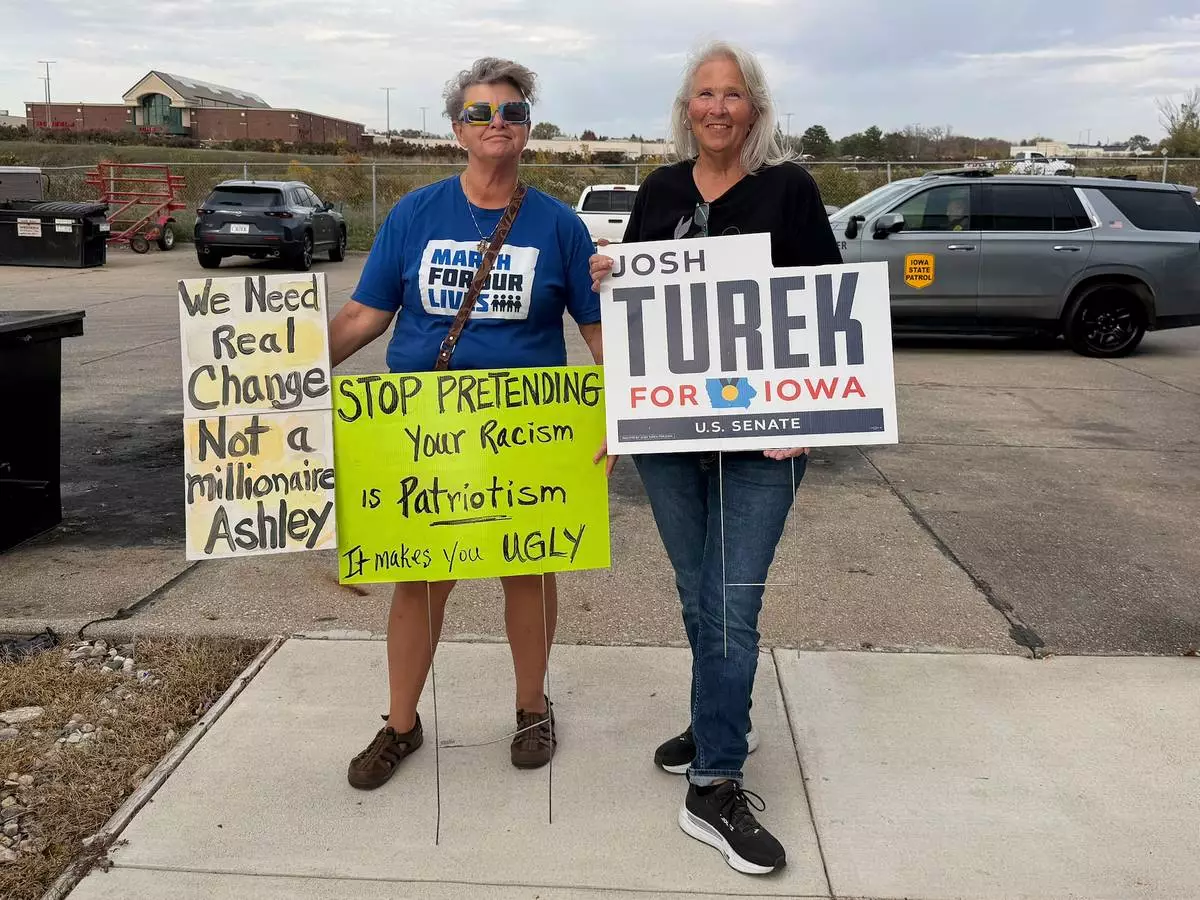
In this photo taken with a smart phone, Iowans Valerie Conaway Cote, a Democrat, right, and Jeanne Gates, an Independent, stage a small protest outside an event for Republican Senate candidate Ashley Hinson, Friday, Oct. 23, 2026, in Sioux City, Iowa. (AP Photo/AP Photo/Mary Clare Jalonick)
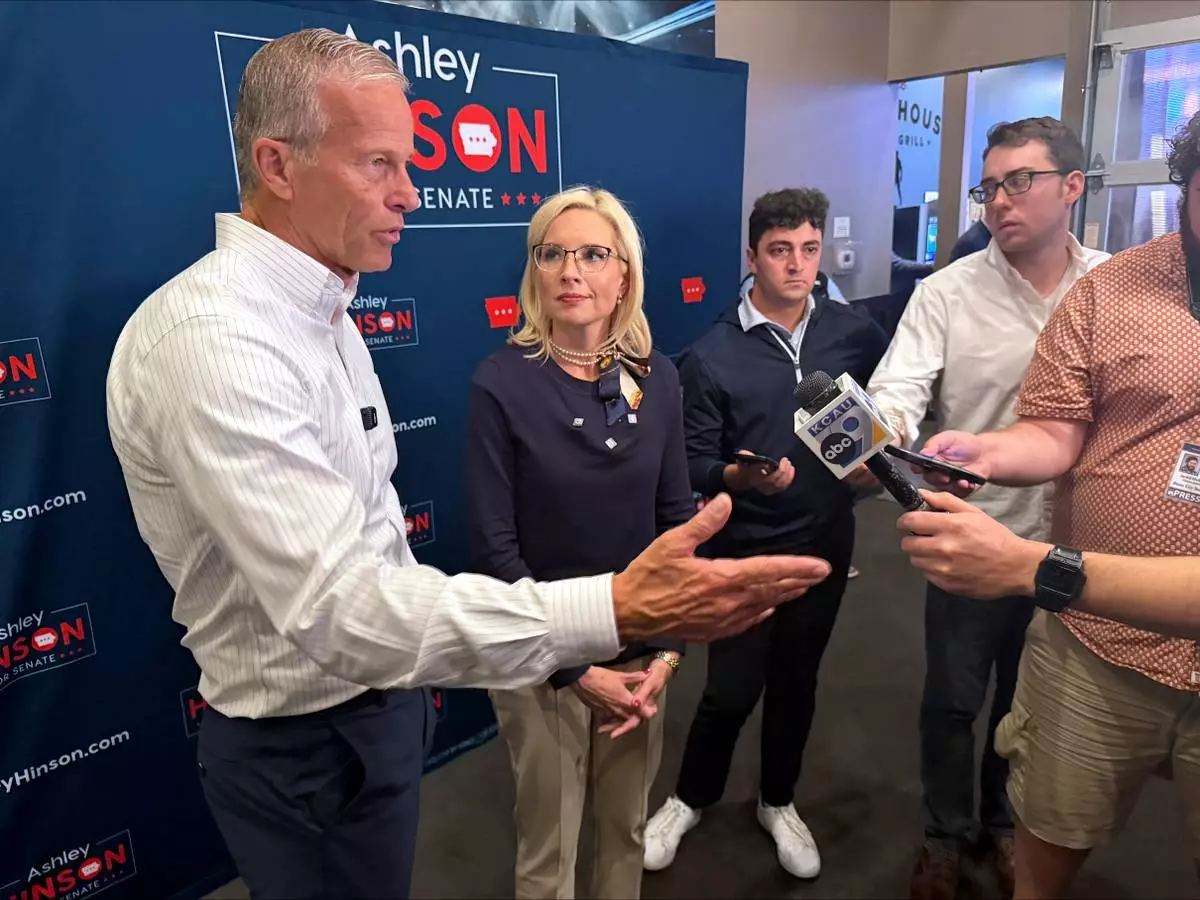
In this photo taken with a smart phone, Senate Majority Leader John Thune, R-SD., from left, and Iowa Rep. Ashley Hinson, a Republican running for Senate, talk to reporters at a campaign event, Friday, Oct. 23, 2026, in Sioux City, Iowa. (AP Photo/AP Photo/Mary Clare Jalonick)
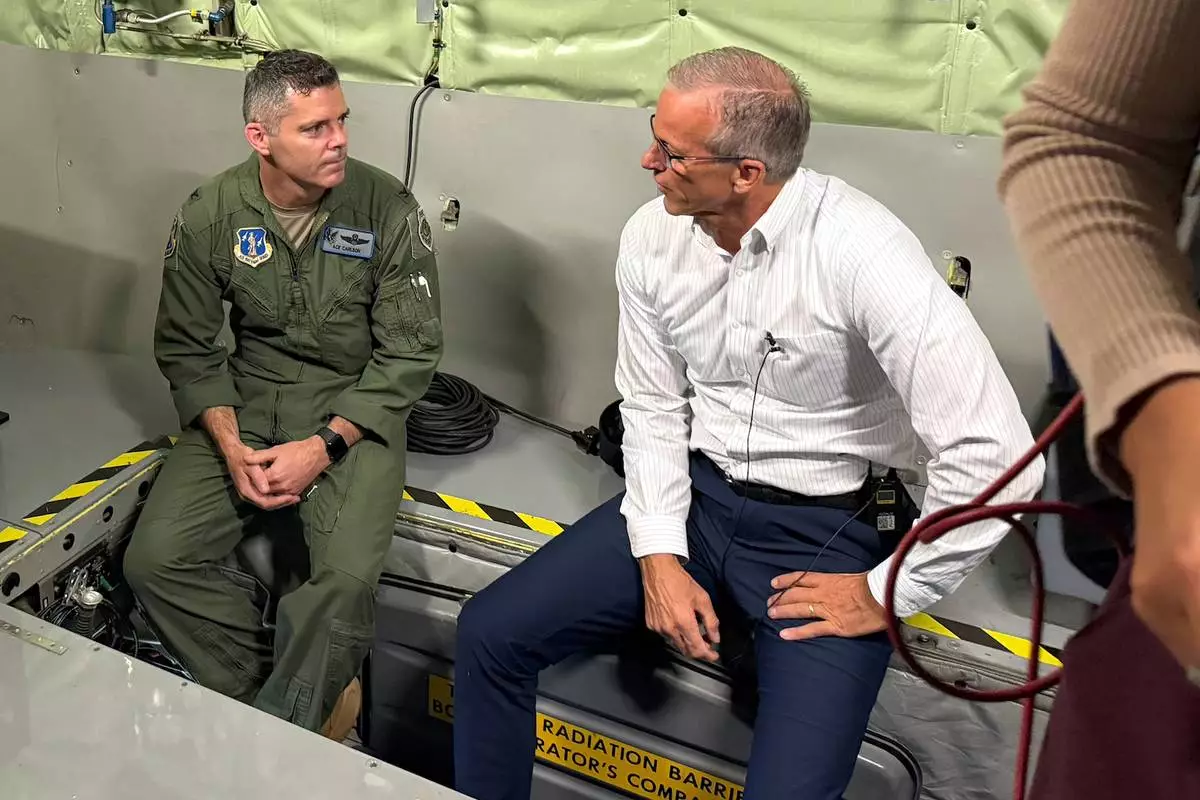
In this photo taken with a smart phone, Senate Majority Leader John Thune, R-SD., seated right, is briefed during a tour of a KC-135 Stratotanker at the 185th Air Refueling Wing, Iowa Air National Guard, Friday, Oct. 23, 2026, in Sioux City, Iowa. (AP Photo/AP Photo/Mary Clare Jalonick)
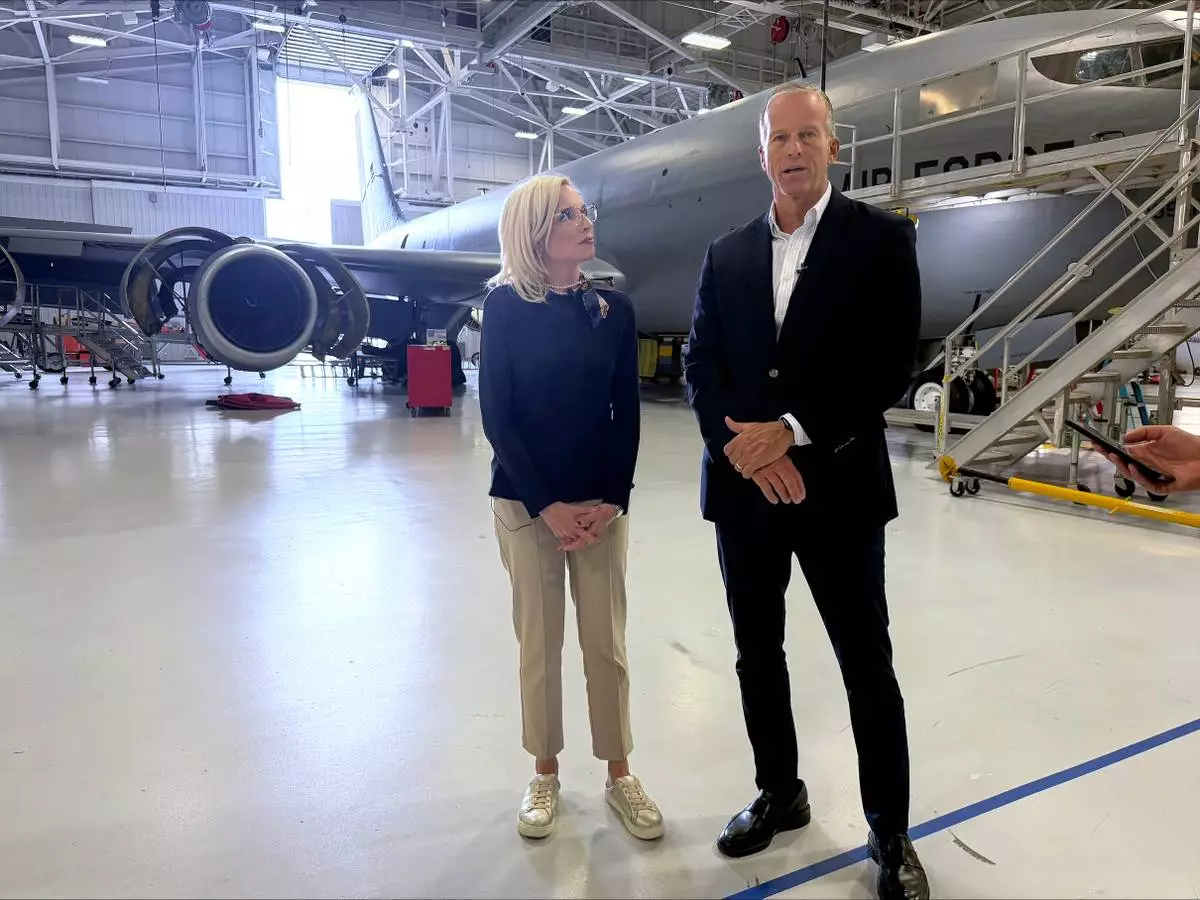
In this photo taken with a smart phone, Senate Majority Leader John Thune, R-S.D., right, and Iowa Rep. Ashley Hinson, a Republican running for Senate, talk to reporters at the 185th Air Refueling Wing, Iowa Air National Guard, Friday, Oct. 23, 2026, in Sioux City, Iowa. (AP Photo/AP Photo/Mary Clare Jalonick)