In the increasingly bitter legal standoff between President Donald Trump and media outlets whose reporting he dislikes, a new and crucial third party has emerged: citizens who watch and read the news and need it to do their jobs.
A lawsuit filed Monday on behalf of six such citizens — essentially representing the wider public audience — argues that it’s not only the rights of news organizations that are violated when Trump bans them from White House premises. Even more fundamentally, the lawsuit argues, such bans violate the public’s right to independent reporting about its president and government.
“The ultimate injury here … is to the democratic public,” says the suit, filed in federal district court in New York against Trump and three key aides, including the White House chief of staff, Susie Wiles.
“The First Amendment protects the public’s right to know what its government is doing,” said Katie Fallow, deputy litigation director at the Knight First Amendment Institute, which filed the lawsuit on behalf of the plaintiffs, along with the Media Freedom & Information Access Clinic at Yale Law School.
“The White House cannot decide what information Americans receive by punishing critical reporting," Fallow said in a statement. "When the White House expels reporters because of their coverage and threatens others with expulsion, it isn’t just the press that suffers — the public loses access to independent reporting and gets something closer to government propaganda.”
The Trump administration, asked for comment on the lawsuit, responded in a statement that it attributed to an unidentified White House official: “No person may demand access to the Oval Office.” It said media that peddle “misinformation and defamation are completely capable of reporting their manufactured stories from directly outside.”
The six plaintiffs are all people who say they rely on independent and diverse White House reporting for their teaching, journalism or advocacy. They include a noted human rights advocate, a political journalist, a Yale history professor, a high school civics teacher, a legal journalist, and a student journalist at the University of Pennsylvania.
The complaint filed Monday recounts how various news organizations that have been targeted by Trump are already battling the administration in the courts. These cases include the current lawsuit by CNN, MS NOW and Politico, whose journalists were banished from the White House in September.
A federal judge recently extended an order preventing the White House from enforcing the ban while the case makes its way through the legal system. Still affected, though, is CNN’s pool coverage of Trump. The White House has been denying the network its usual slots in the video pool covering the president’s activities and travel, and CNN has threatened further action.
Also continuing is the legal case involving The Associated Press, whose reporters were barred last year from the Oval Office, Air Force One and some events in retaliation for the outlet’s decision not to follow Trump’s lead in changing the name of the Gulf of Mexico, which lies partially in Mexican and other waters, to the Gulf of America.
The New York Times is also involved in litigation, over a Pentagon policy requiring escorts for journalists on its grounds. And ABC is fighting back against the Trump administration in a dispute over renewal of its broadcast licenses.
The new lawsuit filed Monday, though, is different from previous legal action against the president — first, in that the plaintiffs are ordinary citizens, shifting the focus from news gatherers to news consumers, and thus implying a much larger pool of stakeholders.
The lawsuit reframes the current debate over White House access in at least one key way. The public right to receive information is part of established law, said Jameel Jaffer, executive director of the Knight Institute. However, nobody has yet asserted this right in relation to the White House press corps and the issues currently at stake.
“We wanted to put the injury to the public at the center of the conversation,” Jaffer said.
“It’s one thing for CNN to say, ‘We are here because the public needs us,’” he said. “It’s another for a member of the public to say that interference with the White House press corps undermines our right to information about the government.”
In addition, the litigation seeks more wide-ranging relief.
The suit, which names Trump as defendant along with Wiles, White House Communications Director Steven Cheung and Secret Service Director Sean M. Curran, calls not merely for reinstatement of access that has already been impacted, but for a broad injunction that would protect from retaliation every news outlet that covers the White House —- now, and in the future.
“Defendants' policy of restricting the access of disfavored news organizations deprives the public of the reporting of those organizations," the complaint says. It also "inevitably deprives them of the independent reporting of other news organizations as well, since every journalist who reports from the White House must now account for the possibility that a critical or ill-advised word about the president may result in their access being summarily restricted or revoked."
“Plaintiffs ... seek a declaration that the policy is unconstitutional because it imposes restrictions on a limited public forum that are viewpoint-based and unreasonable," the complaint adds. "They also seek an injunction barring defendants from enforcing the policy.”
Plaintiff Ethan Young, a student at the University of Pennsylvania and editor-in-chief of The Daily Pennsylvanian, said in an interview that White House reporting has become increasingly important at his college newspaper during Trump’s second term.
“Over the last two years we’ve seen college campuses be a key avenue where President Trump’s policies have really affected people across the country, and Penn’s campus is no stranger to that,” he said.
“So I use White House reporting almost daily to look at what’s happening in both national higher education trends, but also just general federal policy changes, to see what might impact Penn,” Young said. “You never know what policy could have an impact on the Penn student body.”
Especially important to Young and his colleagues at the paper is a diversity of news outlets to choose from.
“We are not in the room. We are not in Washington,” Young said. “The benefit of having access to a variety of publications ... means I am constantly seeing different questions being asked of White House officials.”
And more often than not, he said, that means he’ll get the answer to a question he has, too.
The other plaintiffs are:
— Kenneth Roth, former longtime executive director of Human Rights Watch and a lecturer at Yale’s law school and school of global affairs.
— Daniel Froomkin, media and political journalist and editor of Press Watch, a nonprofit that encourages political journalists to “fulfill their essential mission of creating an informed electorate and holding the powerful accountable.”
— Beverly Gage, Pulitzer Prize-winning historian and professor at Yale University.
— Peter Schmidt-Nowara, a social studies and civics teacher at Brooklyn Technical High School in New York.
— Benjamin Wittes, editor-in-chief of Lawfare and a senior fellow at the Brookings Institution.
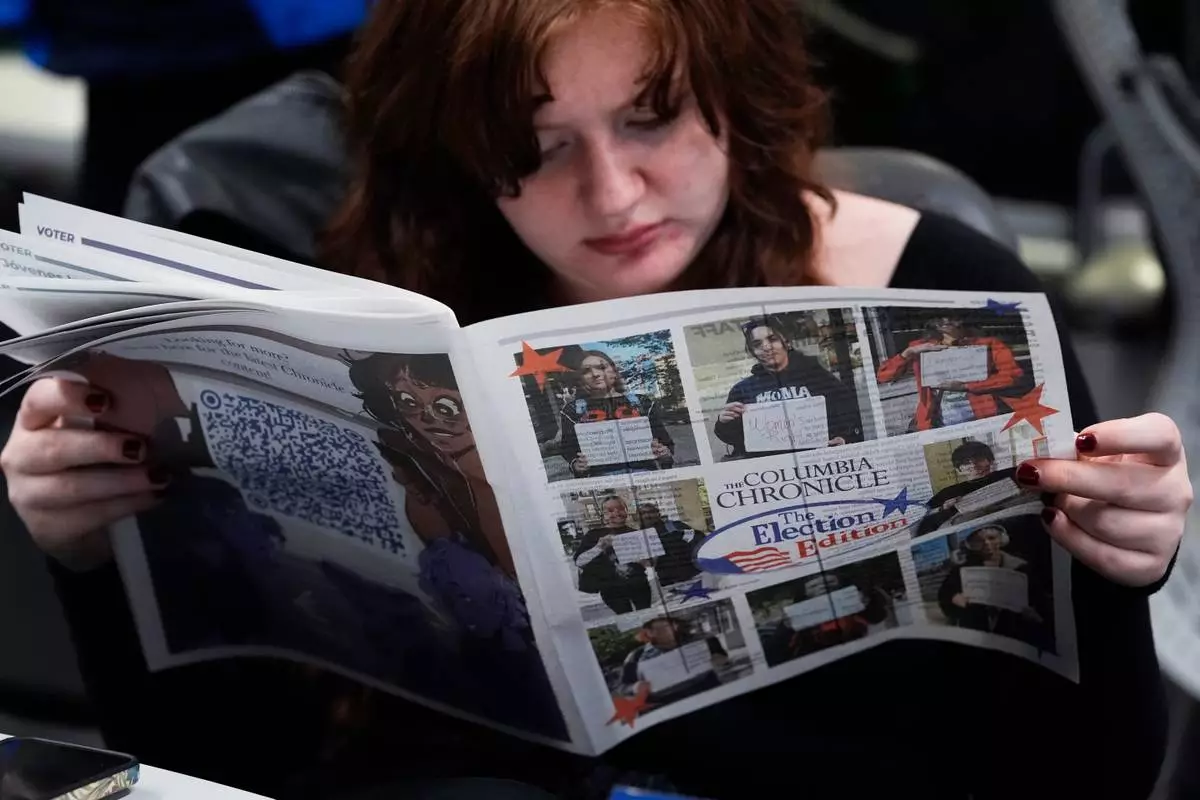
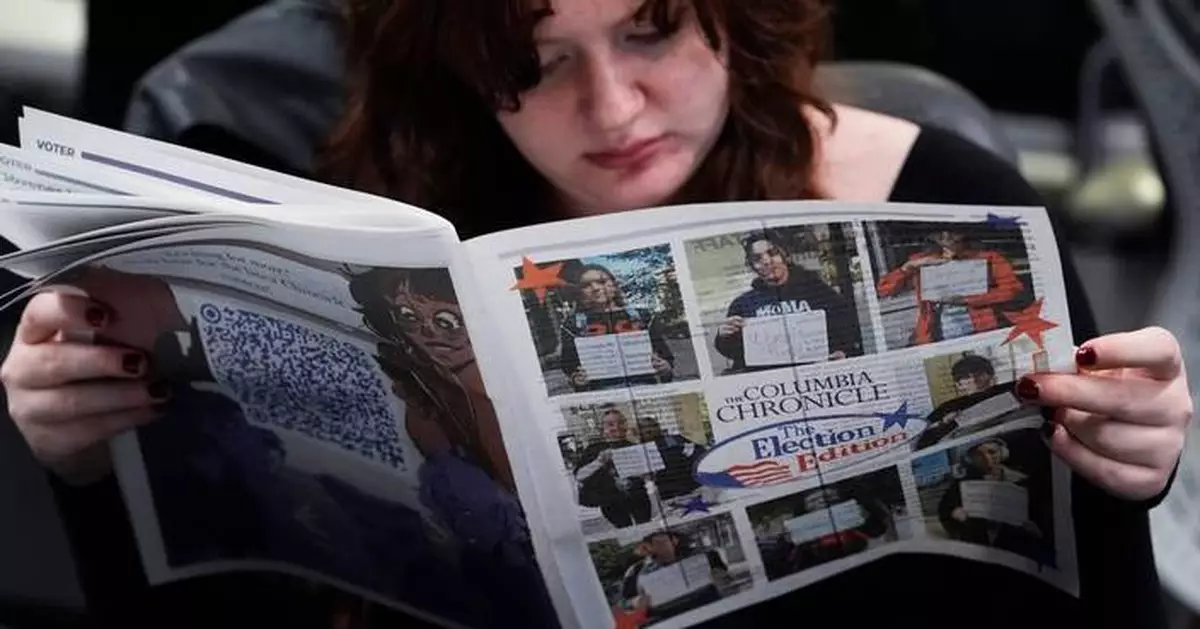
FILE - Columbia College Chicago student Kailey Ryan reads a newspaper in Chicago on Nov. 5, 2024. (AP Photo/Nam Y. Huh, File)
WASHINGTON (AP) — President Luiz Inácio Lula da Silva ’s comeback to win Brazil’s presidential runoff Sunday is already facing its first hurdle as his competitor, Sen. Flávio Bolsonaro, challenges the results, setting the stage for a possible showdown between the country’s two polarizing political forces.
Lula, who convinced an extra 10.4 million voters to support him in the runoff, is expected to take office on Jan. 5, 2027, for his fourth non-consecutive term. He will serve as a counterweight in a region where leaders are shifting to the right and aligning with U.S. President Donald Trump. Bolsonaro, son of former President Jair Bolsonaro, promised to cozy up to the Trump administration.
President Donald Trump suggested on Monday, without providing evidence, that Brazilian President Luiz Inácio Lula da Silva ’s reelection was “rigged.”
“Elections have to be indisputable and it looked very bad to me,” Trump told reporters before flying to Mississippi for a rally. He added, “I thought it had a very bad look, the way it was tabulated.”
Trump also said: “It looked like another rigged election, frankly.”
At a news conference Sunday, Bolsonaro said he planned to request an annulment of the election following a chaotic extension of voting at the request of both candidates. However, it's unclear what legal avenue he would have to do that. His father, now serving a 27-year sentence for a coup attempt, unsuccessfully contested his loss to Lula four years ago. Flavio Bolsonaro visited his father, who is under house arrest, on Monday, the younger Bolsonaro's public relations office said.
Early signs from Brazil’s institutions and from leaders across the region, including conservative presidents who oppose Lula, suggest the results will be respected nationally and internationally.
Even with the vote extension, Lula’s win was decisive. The soon-to-be 81-year-old incumbent won more than 64 million votes compared to just under 60 million for Bolsonaro, a margin of nearly 4%.
President of Brazil’s electoral authority, Kassio Nunes, who was appointed to the Supreme Court by ex-president Jair Bolsonaro, was among those who recognized Lula’s victory Sunday.
“This is a really uphill battle for Flavio Bolsonaro. Important Brazilian power brokers are closing ranks behind Lula, sometimes begrudgingly," said Brian Winter, Brazil analyst and editor-in-chief of Americas Quarterly.
“I sense that Brazilian power brokers that matter don’t really want to go down the path of a truly contested election,” he said.
The key to Lula’s win was the additional 14.1 million voters who showed up for the second-round election, including those who voted for other candidates in the first round. Analysts say three-quarters of those votes went to Lula, handing him the victory. And notably, the first round set a record for the number of Brazilians who decided not to vote, while the second round had the least number of abstentions ever.
Lula gave his digital campaign to lawmaker André Janones, who mounted a fierce and persistent social media operation that mobilized many of those previously uncommitted voters. Janones' key tool was a channel on messaging app WhatsApp called “Lula's Army,” which gathered almost 11 million people and mobilized them to campaign via social media for the incumbent.
Janones “basically embraced the right’s style of aggressive politics, very intense, constant messaging,” said Oliver Stuenkel, a professor of International Relations at Fundação Getulio Vargas in Sao Paulo.
“The defeat in the first round jolted the Lula campaign into action. The strategy during the first round was lackluster and saw a lot of infighting,” Stuenkel said.
Juliano Cortinhas, international relations professor at the University of Brasília, said Lula's social media initiative in the runoff was also key to pressuring Meta, the owner of Instagram, WhatsApp and Facebook, to end what the president's campaign denounced as bias helping Bolsonaro.
Brazil’s top electoral court ruled on Oct.15 that Meta must adopt measures that assure equal treatment of the two presidential candidates, which the company later said it addressed.
There was “external interference we were suffering by major platforms,” Cortinhas said. “It wasn't only Meta, many others were using their algorithms to repost many images and many messages of the far-right, and they did not do the same to the left.”
It was the first time since 1989 that a candidate came from behind in the first round to win in the second.
Results show voter turnout surged overall, particularly in wealthier metropolitan centers, but Lula achieved his highest gains in lower-income municipalities where his base was already established. He mobilized former non-voters, those who voted blank in the first round and supporters of third-party candidates.
Jorge Henrique Oliveira Sena, a 26-year-old maintenance worker in Brasilia, was one of those who didn’t vote in the first round. Neither candidate excited him much, but he cast his vote for Lula. “It’s not a question of supporting, but between the two, I had more of a connection with him,” he said.
Brazil holds general elections every four years, and its electronic voting machines have made the tallying process quick and secure.
Brazilian authorities adopted electronic voting machines in the 1990s to combat fraud and the system has been largely reliable since then. Results are usually reported mere hours after polls close.
In the lead-up to the 2022 vote, Jair Bolsonaro repeatedly cast unfounded doubts on Brazil’s electronic voting system. No significant fraud has ever been detected.
But the usually swift voting process was thrown into disarray Sunday after a last-minute decision to extend voting nationwide at both candidates’ requests.
Lula made the request because of issues with public transportation in metropolis, Sao Paulo, and the northeastern city of Salvador, two of his strongholds. Bolsonaro requested it after heavy rains in the south, which he won by a strong margin in the first round.
The decision was made by a Supreme Court justice mere minutes before polls were set to close at 5 p.m. and the speed of Brazil’s counting process meant many polling stations didn’t receive the news until they were already wrapping up.
Yet given the reliability of Brazil's voting system and Lula's win by a significant margin, a path to annul the results could be difficult for Bolsonaro.
Benjamin Gedan, senior fellow and director of the Stimson Center Latin America program, said Bolsonaro's rejection of his loss was not surprising.
“False claims of fraud are becoming commonplace, though that does not make them any less dangerous," he said. He noted “Lula’s margin of victory, and the quick recognition of the result by conservative leaders in the region."
Nevertheless, Lula still faces challenges moving forward, including political polarization in the country, a possible fiscal crisis and a right-wing Congress in which Bolsonaro's party will have more seats than any other. Bolsonaro himself remains a senator, though his term ends in January.
“We shouldn’t underestimate the power of the Bolsonaro family," said Winter, the Brazil analyst. "They can make life difficult for Lula for weeks and months to come.”
Savarese reported from Sao Paulo.
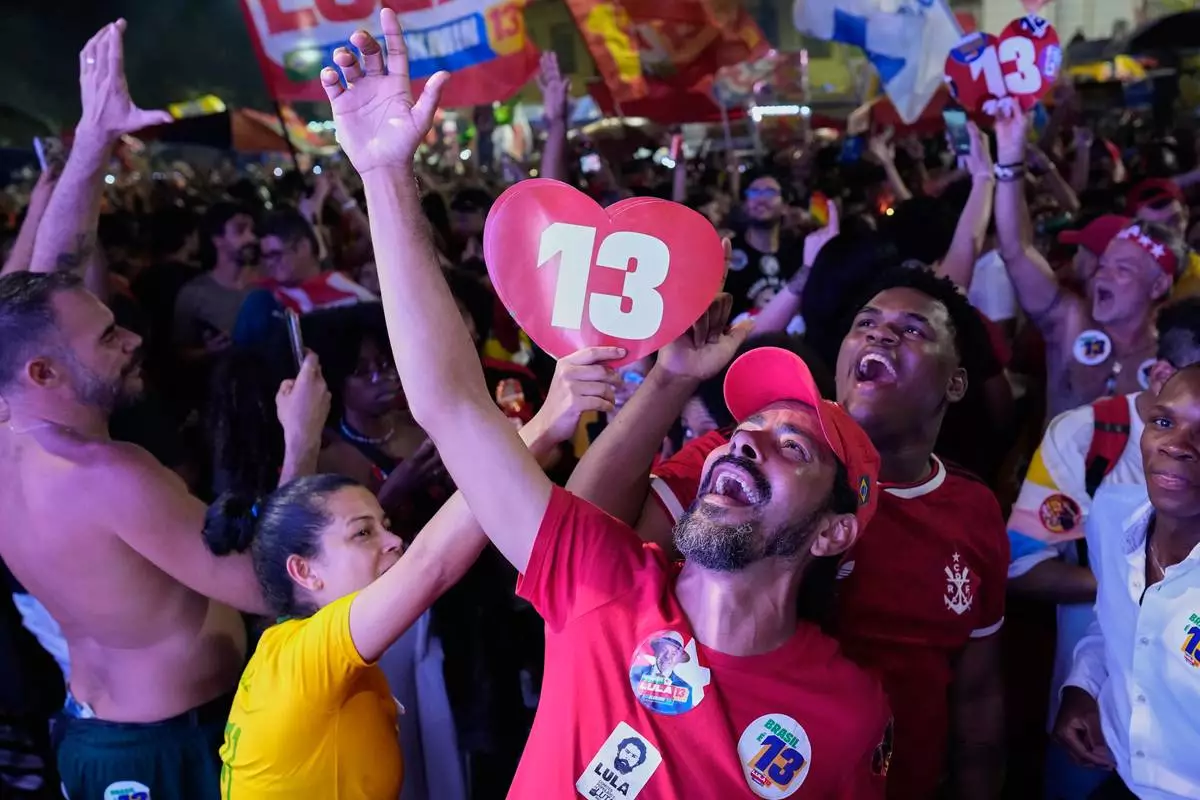
Supporters of President Luiz Inacio Lula da Silva celebrate after he wins a fourth term in the presidential runoff in Rio de Janeiro, Brazil, Sunday, Oct. 25, 2026. (AP Photo/Silvia Izquierdo)
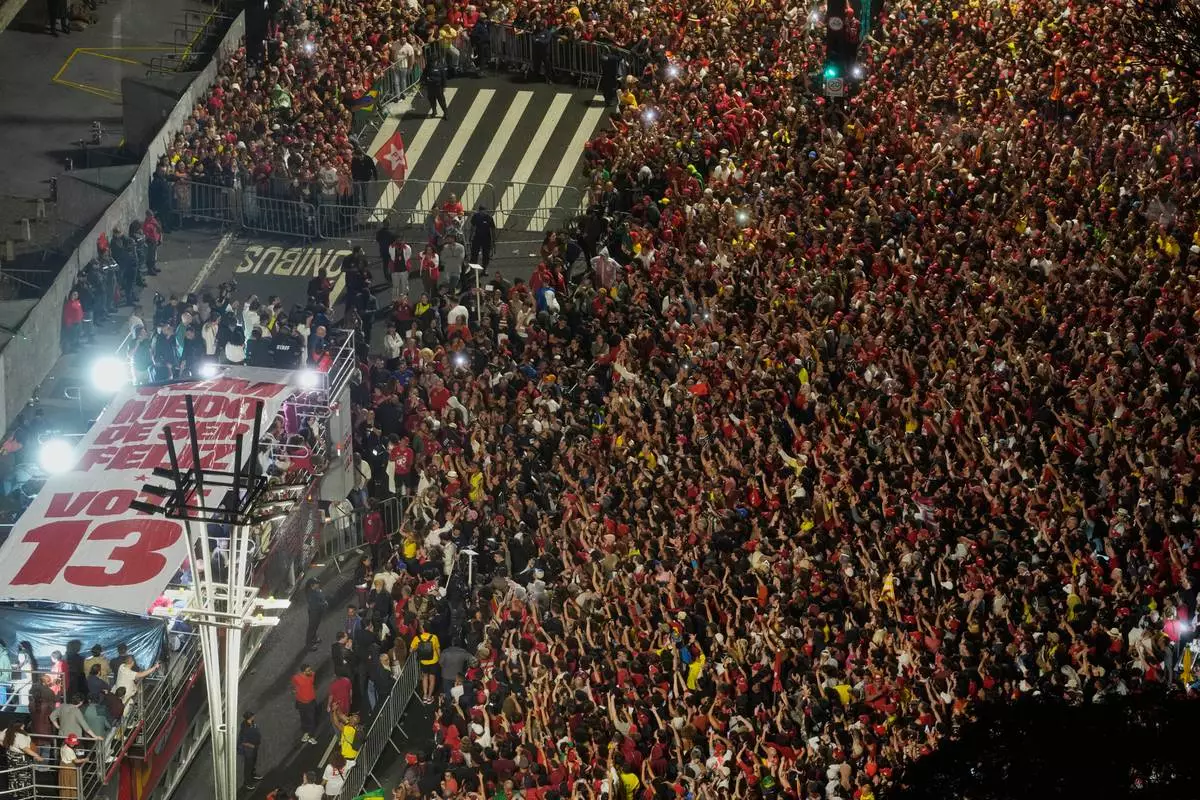
President Luiz Inacio Lula da Silva addresses supporters during a victory rally after winning a fourth term in the presidential runoff on Paulista Avenue in Sao Paulo, Brazil, Sunday, Oct. 25, 2026. (AP Photo/Andre Penner)
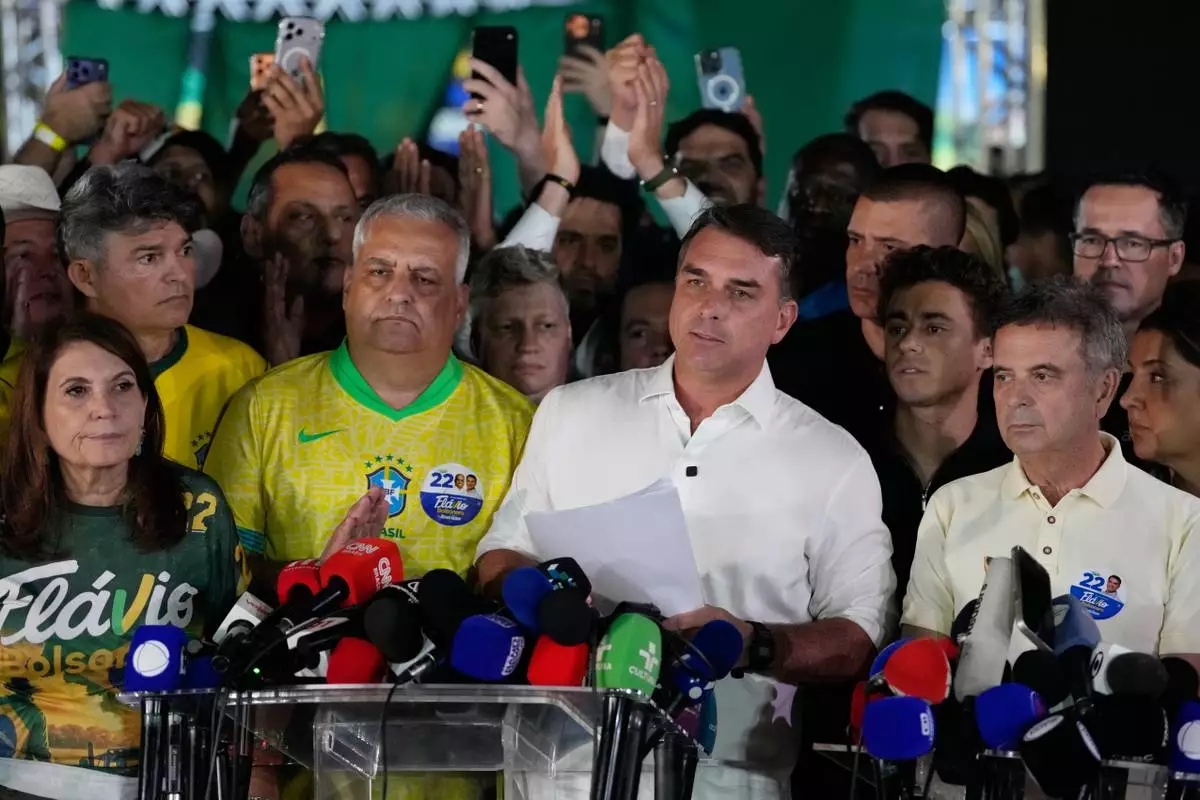
Opposition presidential candidate Sen. Flavio Bolsonaro speaks after the presidential runoff in Brasilia, Brazil, Sunday, Oct. 25, 2026. (AP Photo/Eraldo Peres)
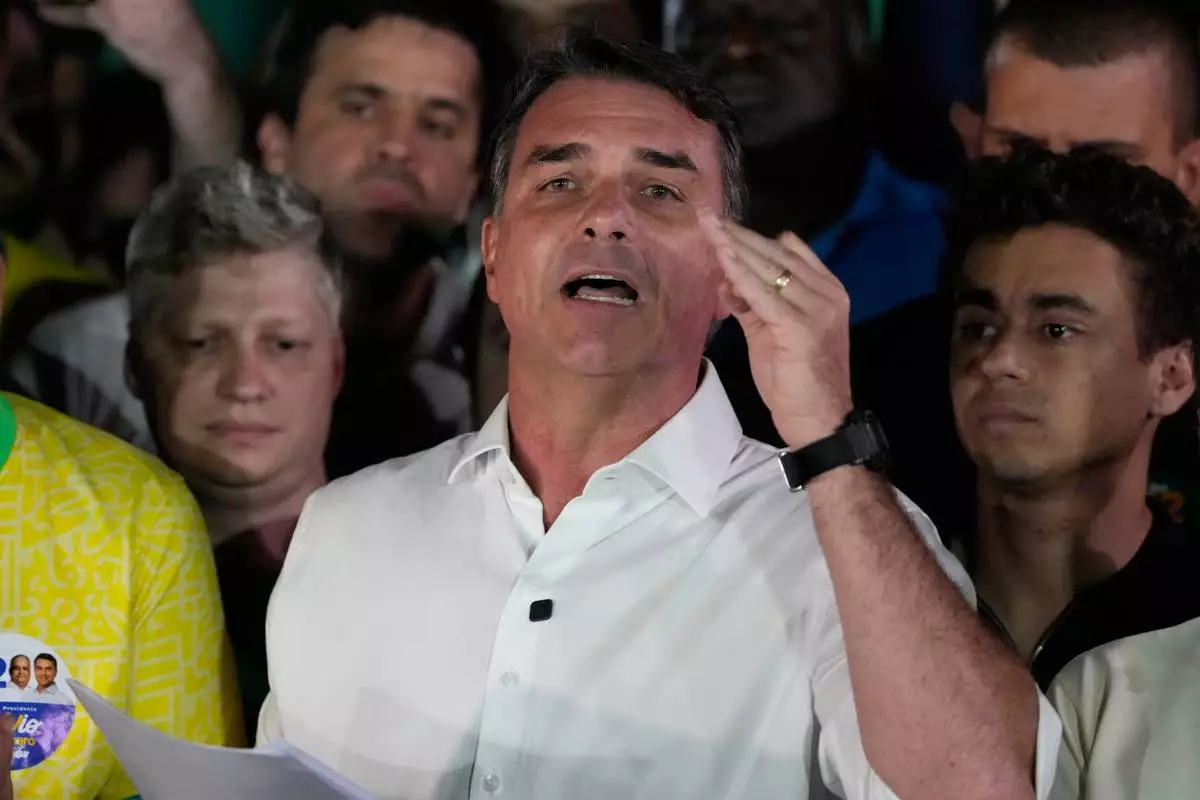
Opposition presidential candidate Sen. Flavio Bolsonaro speaks after the presidential runoff in Brasilia, Brazil, Sunday, Oct. 25, 2026. (AP Photo/Eraldo Peres)
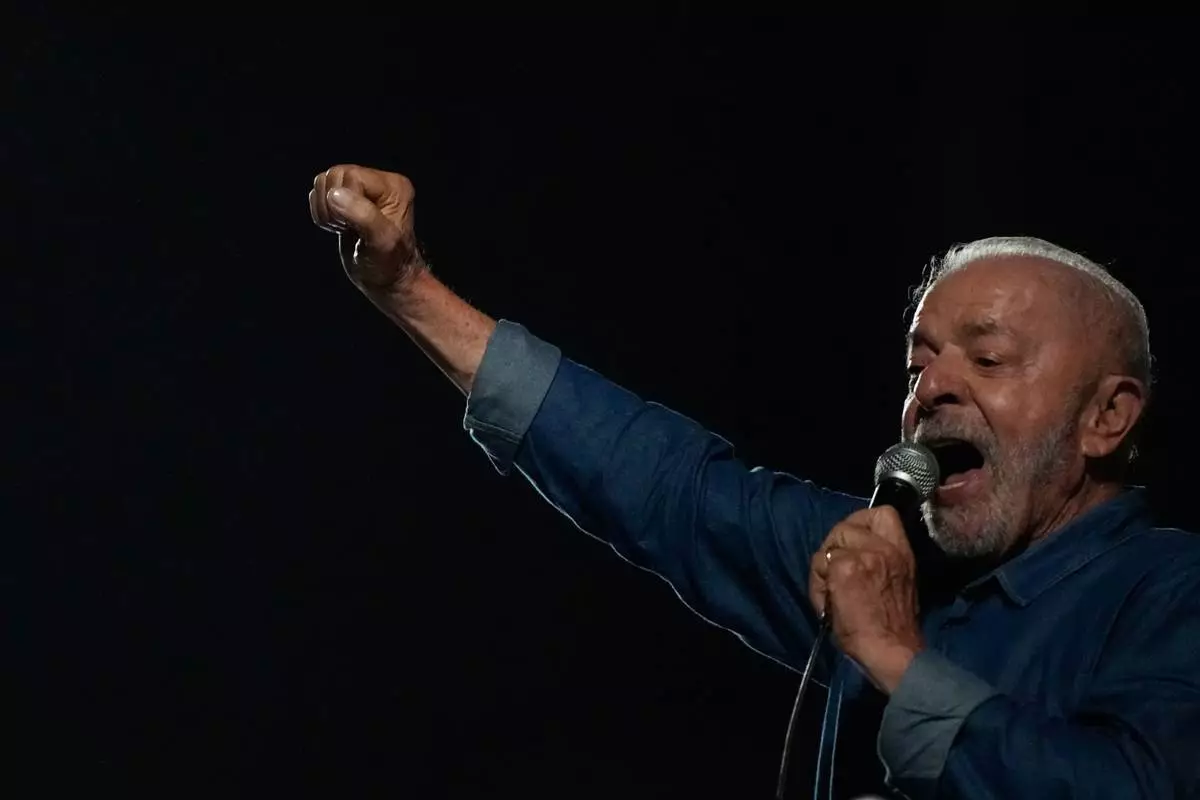
President Luiz Inacio Lula da Silva addresses supporters during a victory rally after winning a fourth term in the presidential runoff on Paulista Avenue in Sao Paulo, Brazil, Sunday, Oct. 25, 2026. (AP Photo/Natacha Pisarenko)