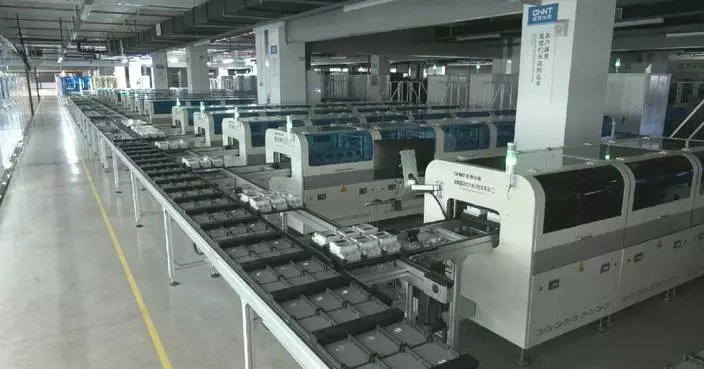
China's elderly supplies industry, boosted by government policies, has exceeded 5 trillion yuan in scale, with age-friendly scenarios expanding rapidly into a full industrial chain covering products and services ranging from residential renovation to smart devices.
Since the start of this year, multiple government departments have rolled out special policies to develop age-friendly living environments.
The measures include subsidies for home renovation for disadvantaged seniors, upgrades for old residential compounds, and barrier-free revamp of public spaces.
"Over the next five years, China plans to renovate 115,000 old urban residential compounds and around 500,000 dilapidated apartments. This year, 97 billion yuan have been allocated to improve residential conditions, benefiting 8 million households," said Wang Lili, a researcher at the aging industry research office of the China Research Center on Aging.
A three-year action plan to expand and upgrade the assistive rehabilitation device sector prioritizes health and elderly-care robots and smart care equipment. It promotes age-friendly products in senior care institutions, communities and households, to enrich consumption scenarios for elderly-oriented goods.
"Age-friendly renovation is a livelihood issue of great concern to seniors as it directly affects their quality of daily life and participation in social activities. China's silver economy reached 9 trillion yuan in 2025, and is projected to surpass 30 trillion yuan by 2035," said Zhang Xiaofeng, deputy head of the department of elderly-related work under the Ministry of Civil Affairs.
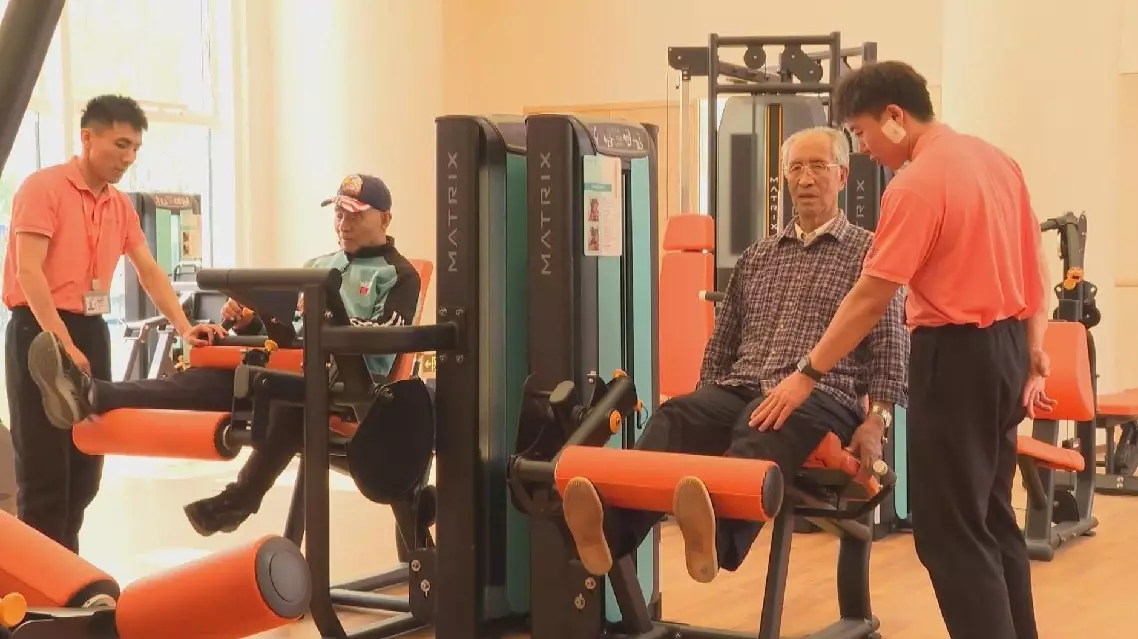
Age-friendly products boom amid expanding silver economy
Israel is scheduled to hold parliamentary elections on Tuesday, its first national vote since the Oct. 7, 2023 outbreak of the Palestine-Israel conflict, amid deep divisions among voters over national security and the country's political direction.
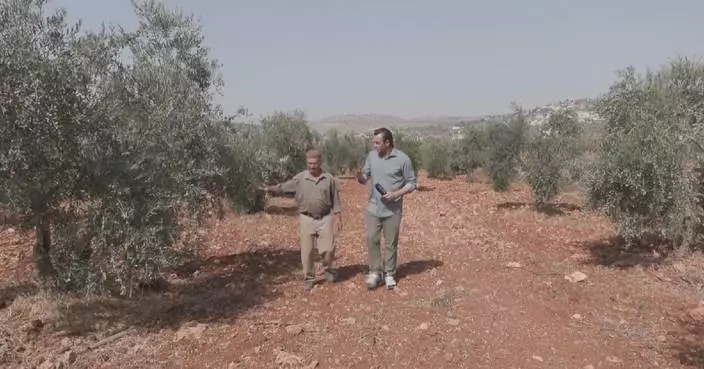
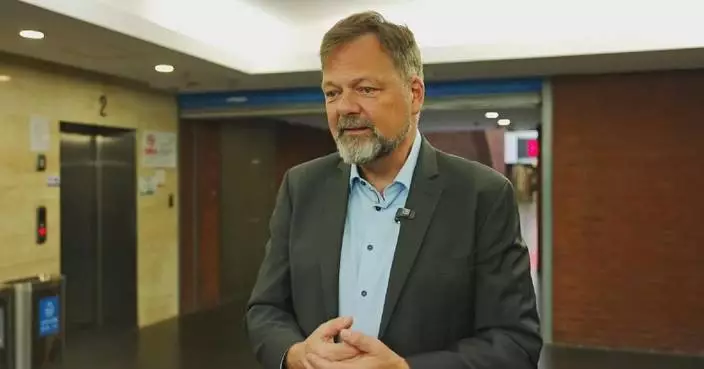
Ahead of polling day, voters interviewed by China Global Television Network (CGTN) in Jerusalem identified security concerns and whether to continue supporting Prime Minister Benjamin Netanyahu as key issues shaping their electoral choices.
"The most topic issue for me is the security of the country and what we deal with, and second also the unification of our country, of our people. So, for the unification of the country, I will say that I would support the others, not Netanyahu. But for the safety of the country, I think Netanyahu is the best manager of the situation right now, so I would vote for him probably," said Benny, a Jerusalem resident.
Still, prolonged geopolitical tensions and ongoing fighting have shaken many voters' confidence in the incumbent government's ability to ensure national security.
"I think that this has been an absolute failure; someone who put himself as Mr. Security, I think we're in a worse position than we were. The stalemate that we have with Iran, we haven't accomplished our goals. Politically, we're in a worse situation than we were before. And again, with Hezbollah, despite the military successes, we're still stuck there again. And so all this is a stalemate, he hasn't been able to prove himself, he's not able to move forward," said Evan, another resident.
Meanwhile, some moderate voters are calling for greater unity among different social and ethnic groups within the country, arguing that this is a more pressing priority than security concerns.
"I am most concerned about social issues, there seems to be a big divide in Israel between left and right. I think we need more unity," said Jerusalem resident Raphael.
For peace advocates, ending the Palestine-Israel conflict and the occupation, and promoting coexistence among different communities, remain top priorities. Many ordinary citizens say they are tired of political polarization and prolonged conflict, and are calling for meaningful change.
"Security means peace and it means that taking care of what we did in Gaza and to let people, Jews, Arabs, all nations to live here in peace. Settlers are able to do whatever they do because on their side there are the army and the police, and I hope that there would be someone else on top that really wants to solve it. We didn't achieve anything; we didn't achieve it. It all went the wrong way," said Jerusalem resident Tamara.
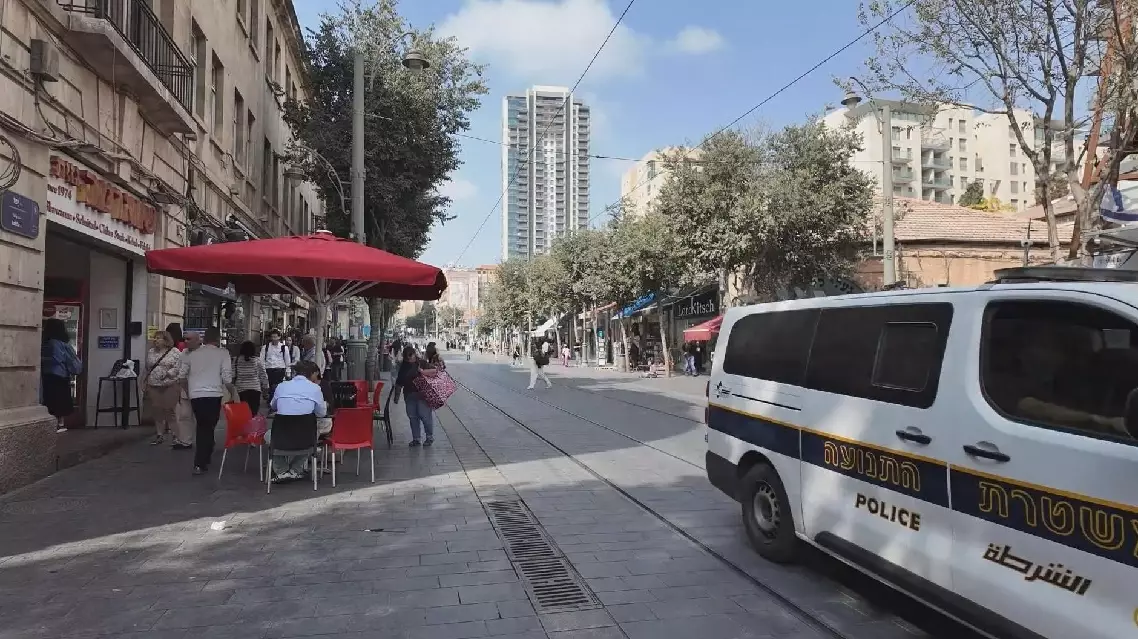
Israeli voters divided ahead of national elections